Running Gear
Best Running Packs and Hydration Vests: What to Look For and Five Vests Worth Considering
A practical guide to choosing a running pack or hydration vest, covering volume, fit, storage, pole carrying, and five vests that cover most runner needs.
Introduction
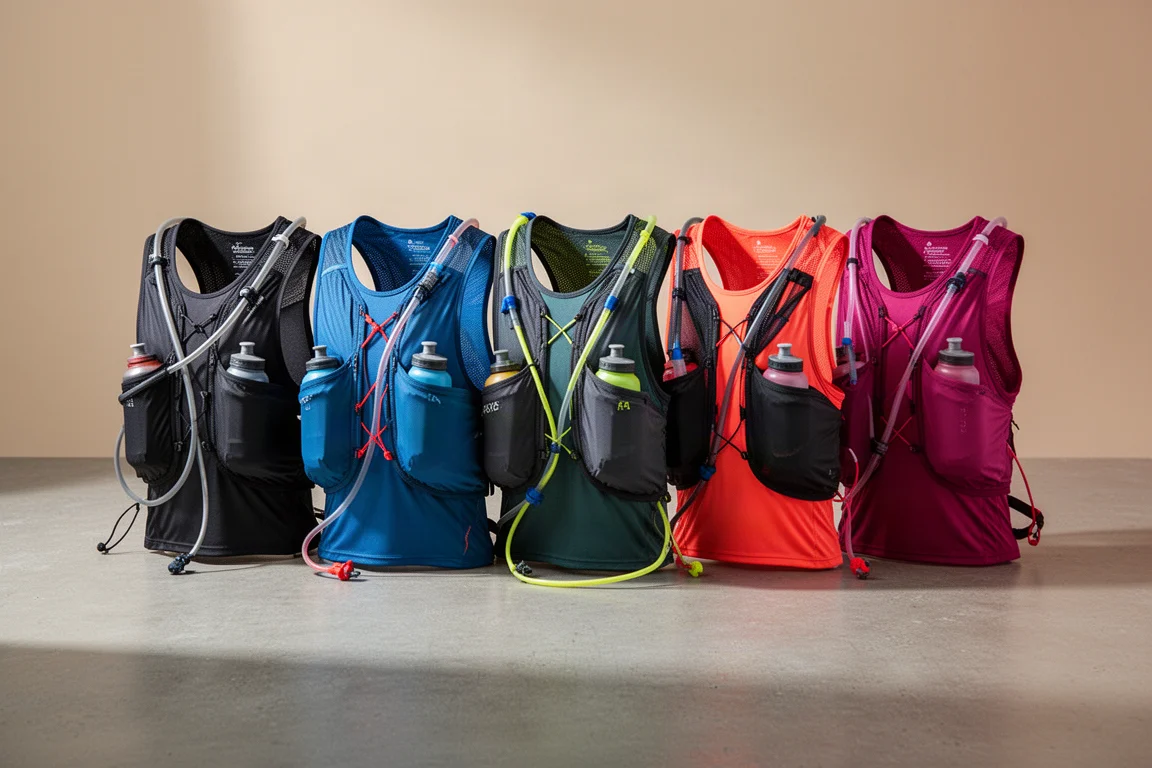
Running packs and hydration vests have quietly become mainstream. Where a few years ago it was rare to see a runner carrying anything more than a hand bottle, it is now common to see everything from marathon runners to weekend trail explorers wearing some form of running pack, whether that is for long training runs, a trail marathon stuffed with snacks, or an ultra race crammed with mandatory kit.
The tricky part is that these products come in a confusing range of shapes, colours and volumes, and the terminology does not always help. This guide breaks down how to choose the right type and size of vest, the features that genuinely matter, and five vests that cover most of what a runner is likely to need.

Running Pack vs Hydration Vest: What Is the Difference?
A running backpack is similar in construction to a traditional backpack, just designed for a running environment. It tends to sit a bit higher up the back, closer to the shoulders, with a lightweight and breathable construction, and it carries fluids either via a hydration bladder in the back or soft flasks and hard bottles in the front pockets. Running packs are typically one size with lots of adjustment straps on the sides and front so you can pull them in tighter or loosen them off to suit your body shape.
A race vest or hydration vest, on the other hand, is more like a piece of clothing. Rather than one adjustable size, it comes in actual sizes such as extra small, small, medium and large, which gives a much more specific fit. Vests tend to be a bit more stripped back and lighter in construction, while still offering front storage for soft flasks or bottles, accessible on-the-move pockets, and a main compartment in the back for essential kit.
Choosing the Right Volume
The first decision to make is how much storage you actually need, and volume is the cleanest way to split the market up.
- 2 to 3 litres: Ideal for road marathon training runs where you want some fluid, a phone, a bit of nutrition and maybe a lightweight jacket. A vest in this range can also work for trail marathons or even 50K races if you pack light.
- 5 to 8 litres: More versatile. You get everything the smaller packs offer plus more storage in the main compartment, making them great for long training runs, trail marathons and 50Ks, and still usable for 50-mile or 100K events if you pack efficiently.
- 10 to 12 litres: In our view the sweet spot and the most versatile category, especially if you want one pack that does everything.
- 25 to 30 litres: Specialist territory for multi-day races and fastpacking, where you need to be self-sufficient. Brands such as Salomon, Raidlight and Ultimate Direction make these, but they are not versatile for shorter runs with less kit.
If you only have the budget for one pack, or you are starting out on your trail running journey and expect your distances to grow over the years, a 10 to 12 litre vest is the most sensible all-rounder.
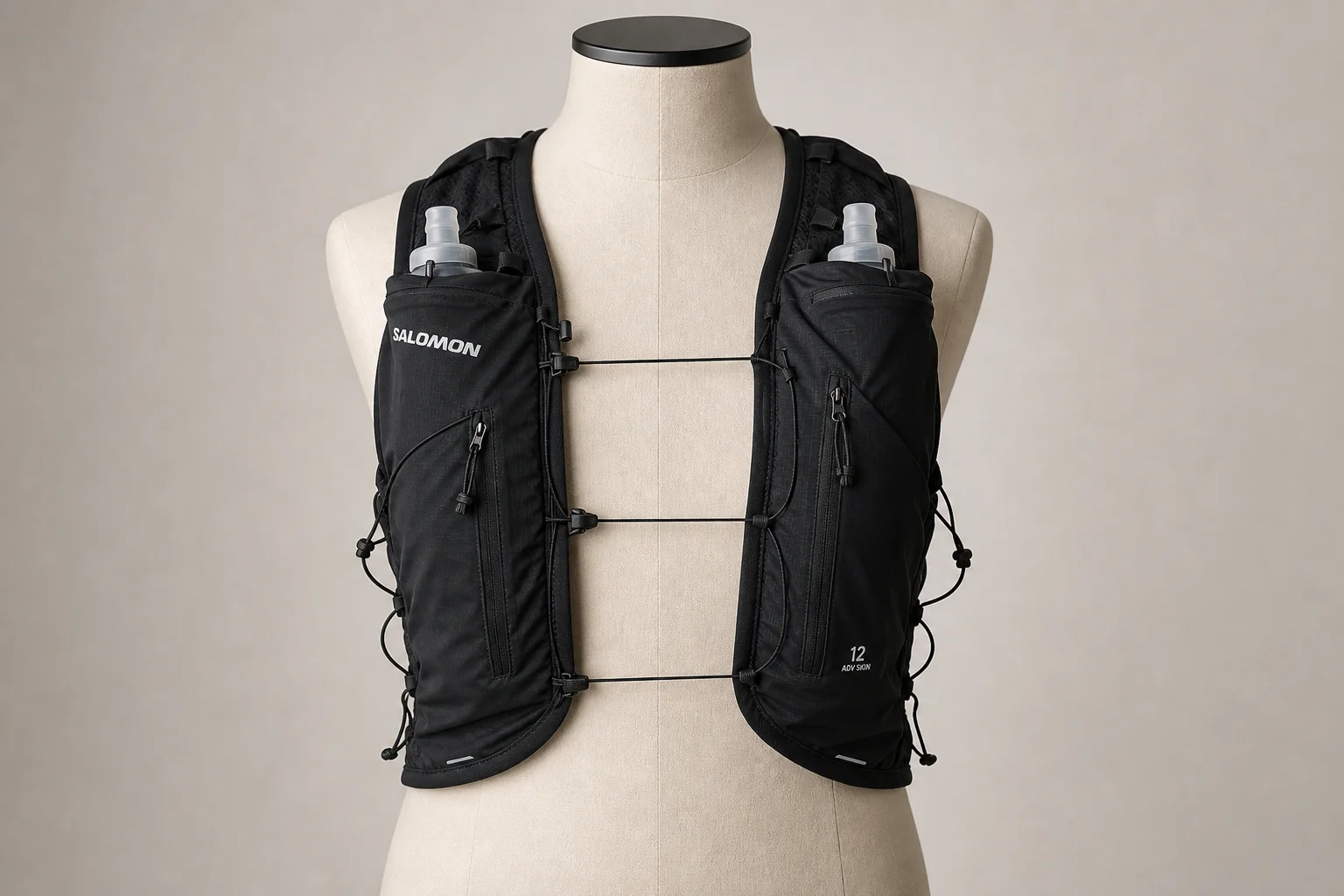
Our Pick: Salomon Advanced Skin 12
The Salomon Advanced Skin 12 Set is the vest we keep coming back to. It has handled long training runs, 50K trail races, and even UTMB, where the mandatory kit list is about as substantial as it gets. Across all of that, it has performed really well.
Part of its appeal is the adjustability on the closure system, which lets you tailor the fit to your body shape, and it also supports a pole quiver accessory that clips onto the back of the pack for carrying poles on mountain routes.
Versatile Mid-Volume: Salomon Sense Pro 5
The Salomon Sense Pro 5 Set is a five-litre vest that punches well above its stated volume. It has a very stretchy main pocket on the back plus lots of small stow-away pockets that you can reach while moving.
It is genuinely impressive how much kit these smaller vests can swallow. In a packing challenge, the mandatory kit for a 100-mile race was fitted into this five-litre vest by packing light and compressing everything into a dry bag. If you tend to pack minimal kit but race long, this is a strong option.
Full-Pocket Option: Inov-8 Race Ultra Pro 5
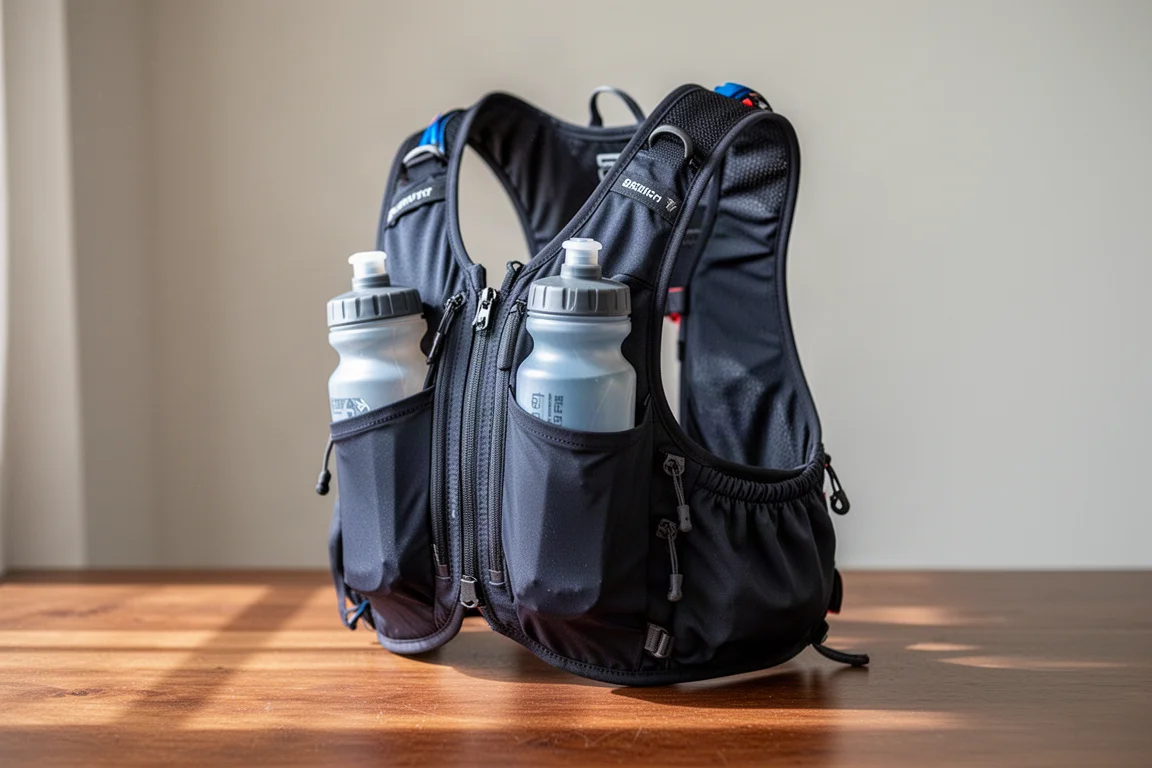
The Inov-8 Race Ultra Pro 5 is a great example of how far running vest design has come. It has pockets absolutely everywhere, so you can carry your phone, head torch, gels, bars, gloves, buffs, salt tablets and more, each in its own sensible place.
If you value accessible storage above all else, and you want a race vest where every piece of kit has a dedicated home, this is the kind of layout to look for.
The One-Stop Shop: Harrier Kinder 10
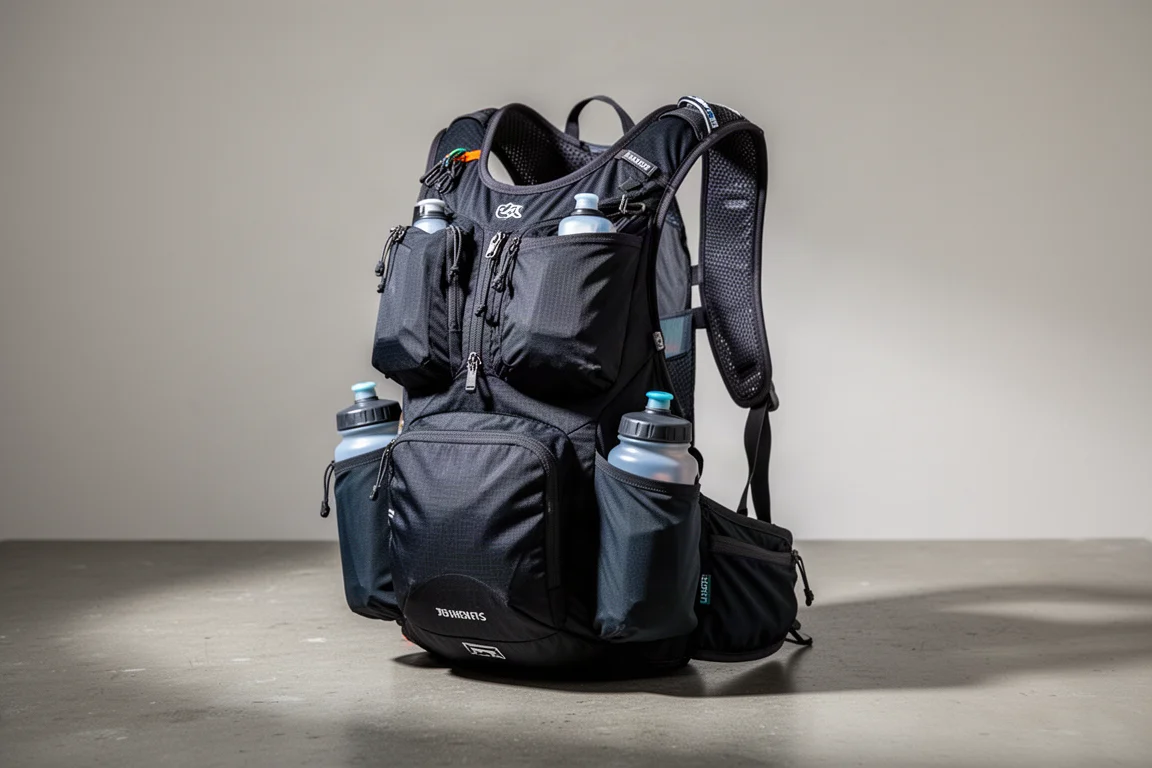
The Harrier Kinder 10 is a ten-litre vest that shows why this volume class is so versatile. The key feature is a bungee system on the back: if you are heading out with only a lightweight jacket, you can cinch the main compartment down so nothing inside bounces or moves around while you run.
It is also thoughtful on pole carrying, with two mounting options. You get two front bungees that loop around your poles for a front-mounted system, plus two bungees on the back, so you can stow poles wherever it suits you best. For anyone building up towards longer runs and ultra distances over time, this is a very capable single purchase.
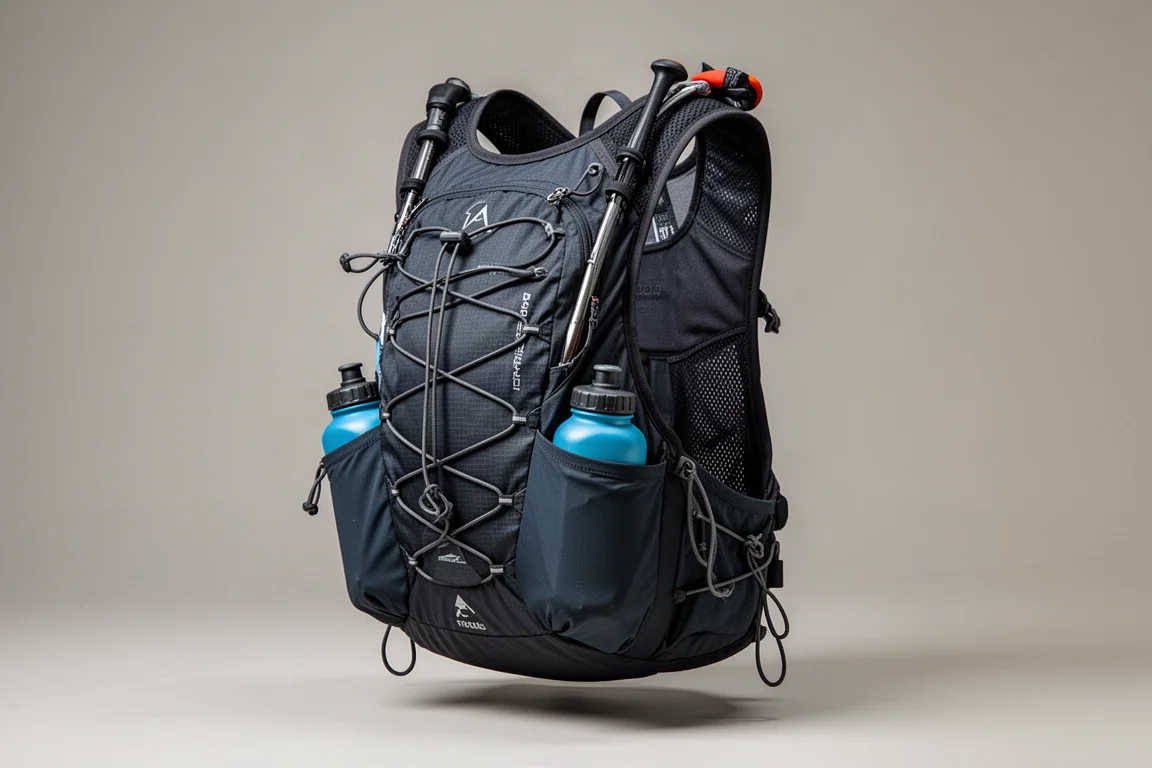
Mid-Range All-Rounder: Salomon Active 8
Sitting between the smaller race vests and the bigger ultra options, the Salomon Active 8 Set occupies the eight-litre class that suits long training runs, trail marathons and 50K racing particularly well. It offers the accessible storage and comfortable fit you would expect from the category, with enough main compartment space to cover longer days out.
If five litres feels a touch tight but twelve feels like more than you need, this is the volume band to shop in.
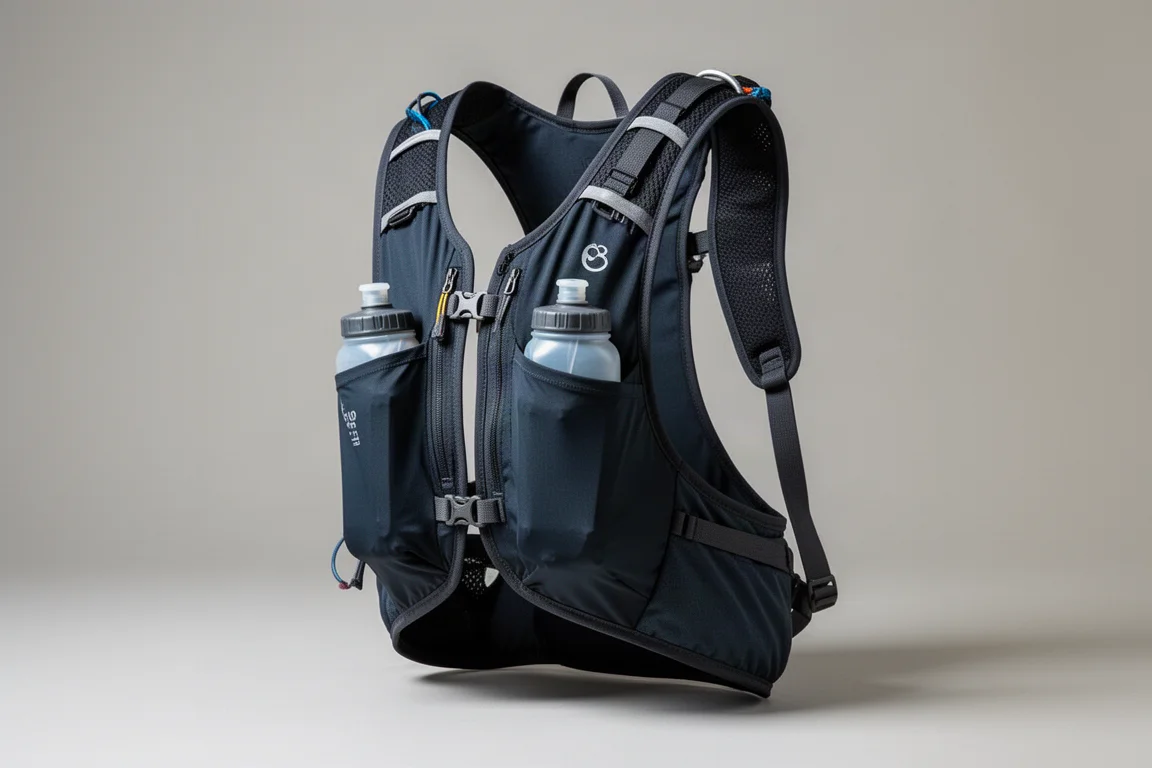
Why Accessible Storage Matters So Much
If there is one feature we cannot emphasize enough, it is accessible storage. You really cannot have too many pockets you can reach while moving. Nothing is more annoying in a race than having to stop, take the pack off, and dig into the main compartment every time you need a gel.
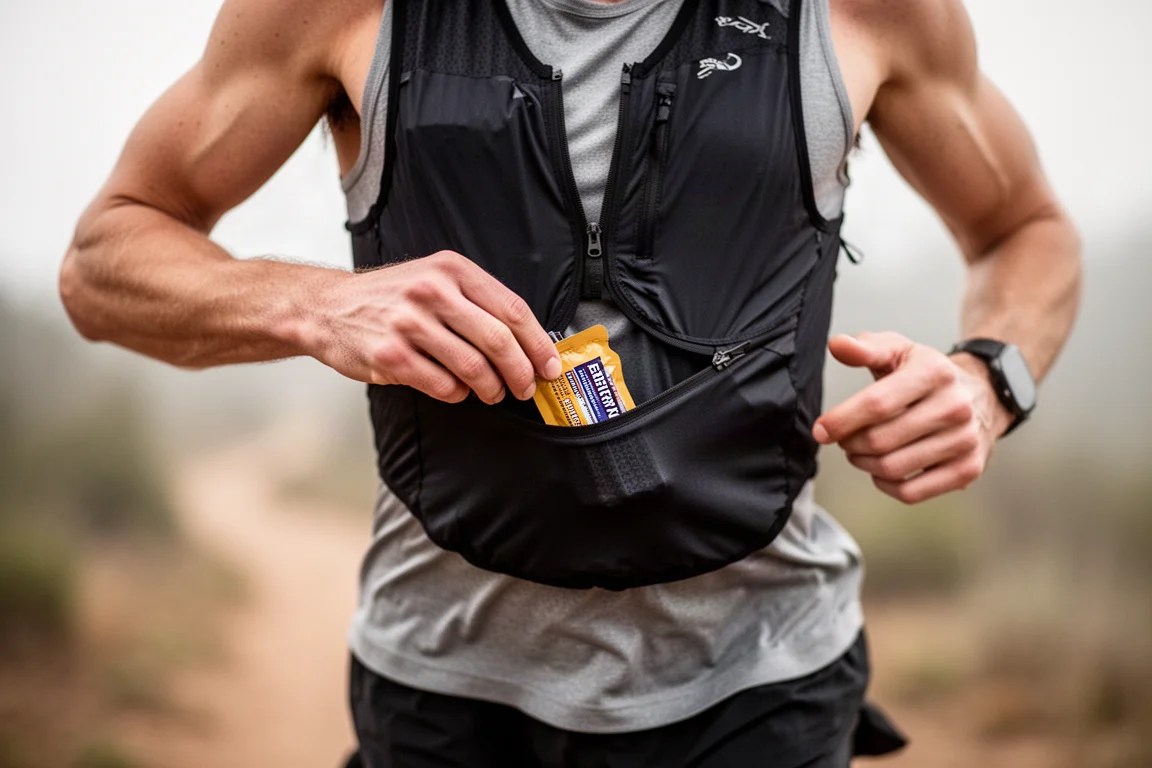
Vest design has improved enormously over the years. Early packs had a big main compartment, two front pockets for heavy plastic bottles, and two tiny pouches underneath where you could just about squeeze in a gel and a bar. Modern vests, by comparison, offer dedicated pockets for phones, head torches, gels, bars, gloves and everything in between.
Fit and Sizing: Vests Beat Adjustable Packs
We have run in a lot of packs over the years, across many brands and volume classes, and that experience has consistently favoured running vests over one-size adjustable packs. A vest in the right size gives a much more tailored fit. Adjustable packs, by contrast, tend to leave you with excess straps flapping around and slapping you in the face, and there always seems to be a little more movement while running.
Our advice: visit a running specialist store that stocks running vests, talk to someone knowledgeable, and try several brands and sizes on until you find one that is genuinely tailored to your body shape.
Pole Carrying and Adjustment Features
With poles becoming ever more popular among runners, a secure pole carrying system is worth looking out for, especially if mountain training or mountain racing is in your plans, where poles genuinely make a difference. Some vests use simple bungee loops, while options like the Salomon Advanced Skin 12 also accept a separate pole quiver, a narrow pocket that clips onto the back of the pack so you can stow poles on descents and pull them out again for the climb.
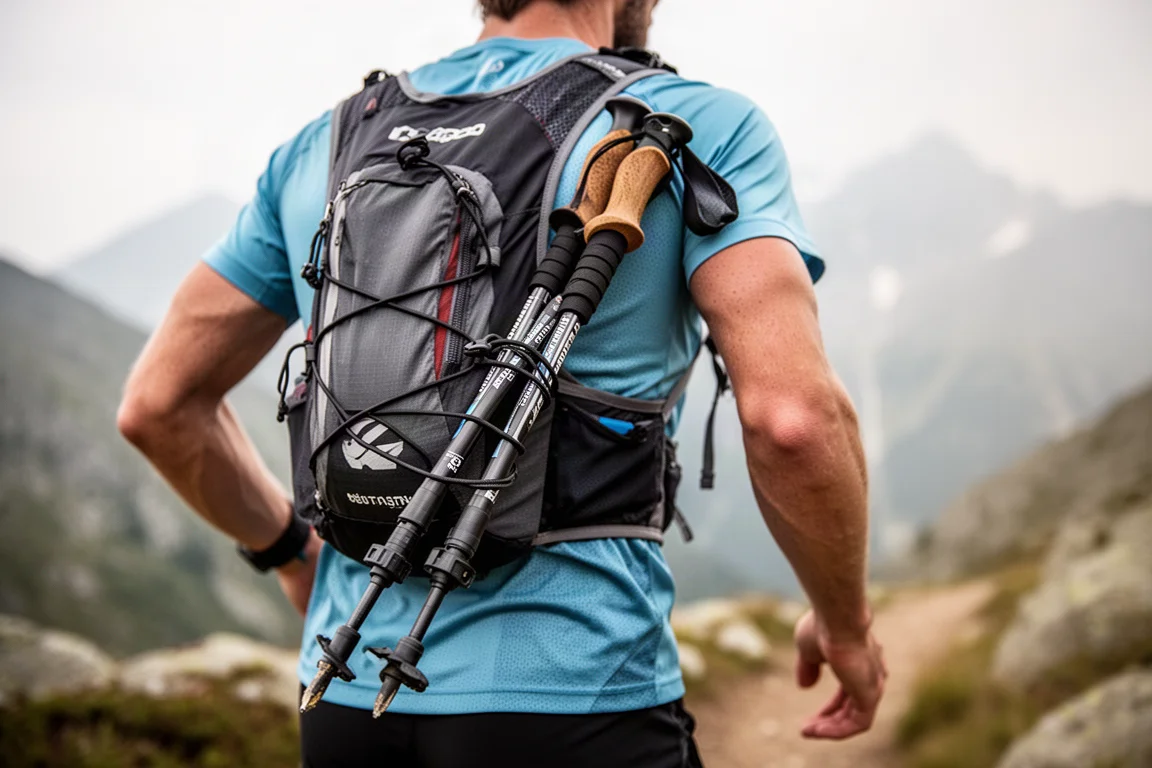
A little adjustability on the closure system is also a good thing, since runners come in all shapes and sizes. Look for hook-and-loop style systems that let you move the closure up or down to position the fit exactly where you want it.
Bottles and Soft Flasks
Finally, make sure the pack or vest you choose comes with bottles specifically designed for its front pockets. A few packs over the years have shipped without bottles, and finding a bottle that fits those pockets is surprisingly hard: too big and it will not go in, too narrow and it slides down inside.
We always favour a soft flask system. Soft flasks contour with the body better than hard plastic bottles, so they run more comfortably, and as you drink, air leaves the flask so the fluid stays held in place rather than sloshing around while you run.

Conclusion
Running packs and hydration vests are now a normal part of the runner’s kit list, and choosing well comes down to three things: the right volume for your typical runs, a fit that works for your body shape, and enough accessible storage that you never have to stop mid-race. The Salomon Advanced Skin 12 remains the standout all-rounder for long and demanding days, the Harrier Kinder 10 is a superb one-pack answer as your distances grow, and the Sense Pro 5, Race Ultra Pro 5 and Active 8 each cover specific needs within the five-to-eight-litre band. Match the vest to the distance you actually run, and you will get years of comfortable use out of it.
Further reading
Related Reviews
Running Gear
Best Running Caps 2026: Nine Tested Options for Summer and Winter
A comprehensive guide to nine running caps tested across different conditions, from lightweight summer options to waterproof winter choices.
Running Gear
Best Running Caps: A Guide to Summer and Winter Options
A comprehensive review of nine running caps for different conditions, styles, and preferences, from lightweight summer options to waterproof winter choices.
Running Gear
Best Running Gear 2026: Five Picks That Earn Their Place
Five running upgrades covering heart rate, audio, fuelling, carrying and weather protection, with the trade-offs worth knowing before you buy.