Power Tools
Best Rotary Hammers for Masonry Drilling: Four Options Tested in Concrete
Four rotary hammers from Bosch, DeWalt, Hilti, and Milwaukee put to work in fully cured concrete, with real drilling performance and dust extraction compared.
Introduction
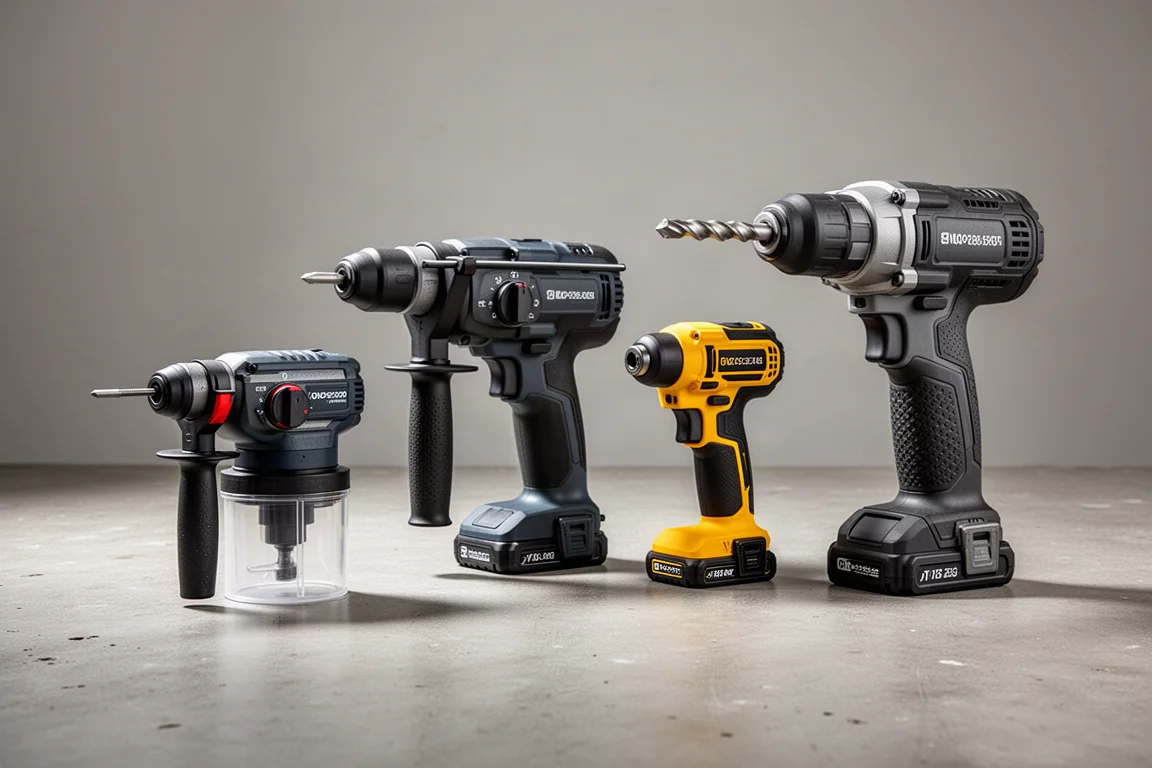
Rotary hammers are the tool of choice when you need to put large holes in concrete, and four current options make that decision genuinely interesting: the Bosch Bulldog, a DeWalt 1-1/8-inch compact rotary hammer, Hilti’s Nuron TE 30-22, and Milwaukee’s M18 1-1/8-inch rotary hammer with a dedicated hammer vac. All four were run through the same real-world job: drilling large-diameter holes into 4,000 psi fully cured, fiber-reinforced concrete with a one-inch rebar-rated bit.
Any of these can get the job done. The differences show up in drilling feel, dust control, and price, and those differences matter most if you drill masonry day in and day out.
The Control Drill: An Older Milwaukee on Fully Cured Concrete
As a baseline, an older Milwaukee rotary hammer was run through the same concrete. It tops out at 1,400 rpm and 4,900 blows per minute, and it was originally run with the largest 5 amp-hour and 9 amp-hour batteries of its era. With Milwaukee’s later XC 6.0 battery, it still delivers solid drilling on this material.
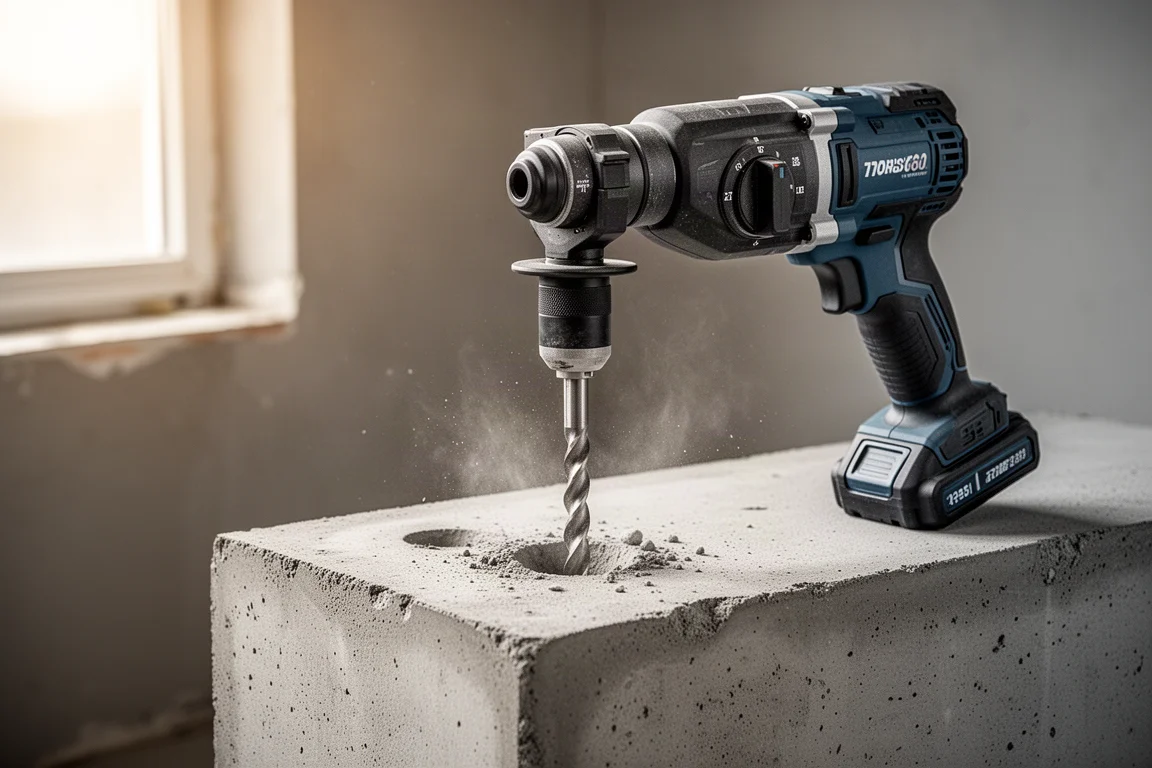
That older unit carries a $299 price tag, and it has proven dependable for years. It is a useful reminder that even a dated rotary hammer can hold its own in cured concrete, and it sets a fair bar for what the newer tools need to justify.
Bosch Bulldog 1-Inch Rotary Hammer
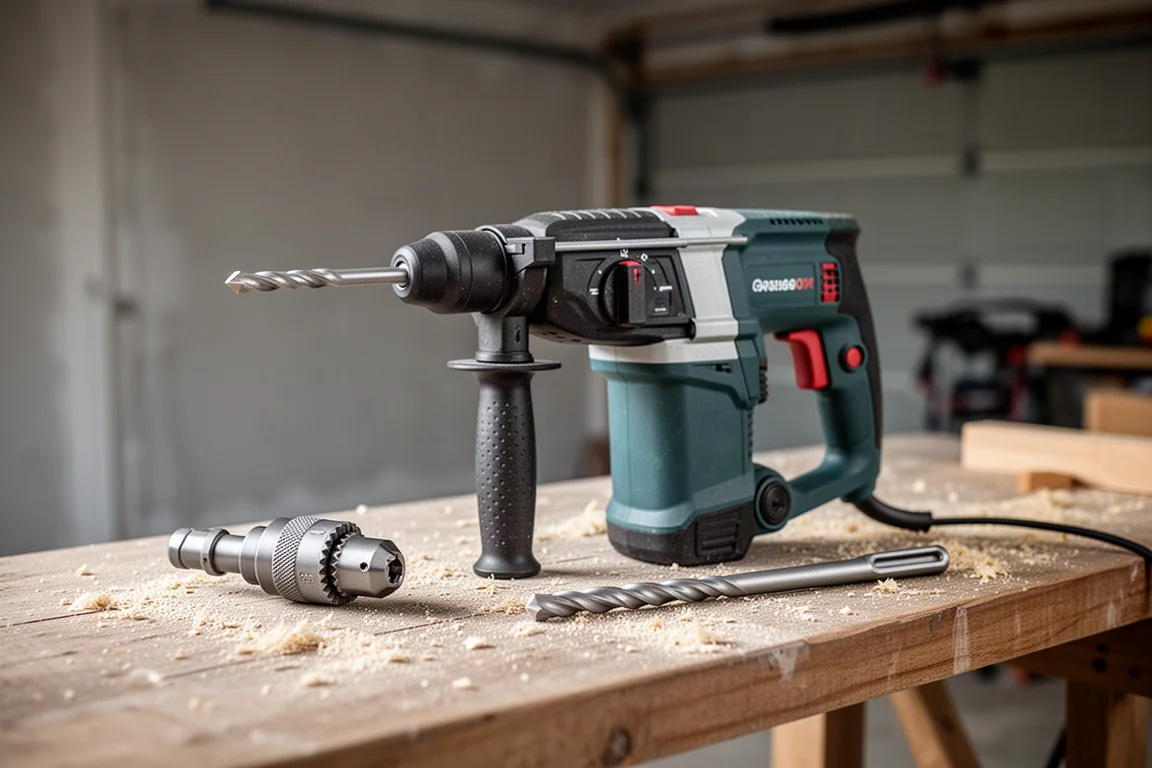
The Bosch Bulldog has been a mainstay in masonry drilling for a lot of people for a lot of years, and it is the most affordable of the group at $199. It delivers 890 rpm and 4,350 blows per minute.
One thing worth liking is the dedicated dust extraction setup, but there is a caveat: the vacuum does not run off the rotary hammer’s own battery, so you will need to keep two batteries on hand.
DeWalt 1-1/8-Inch Compact Rotary Hammer
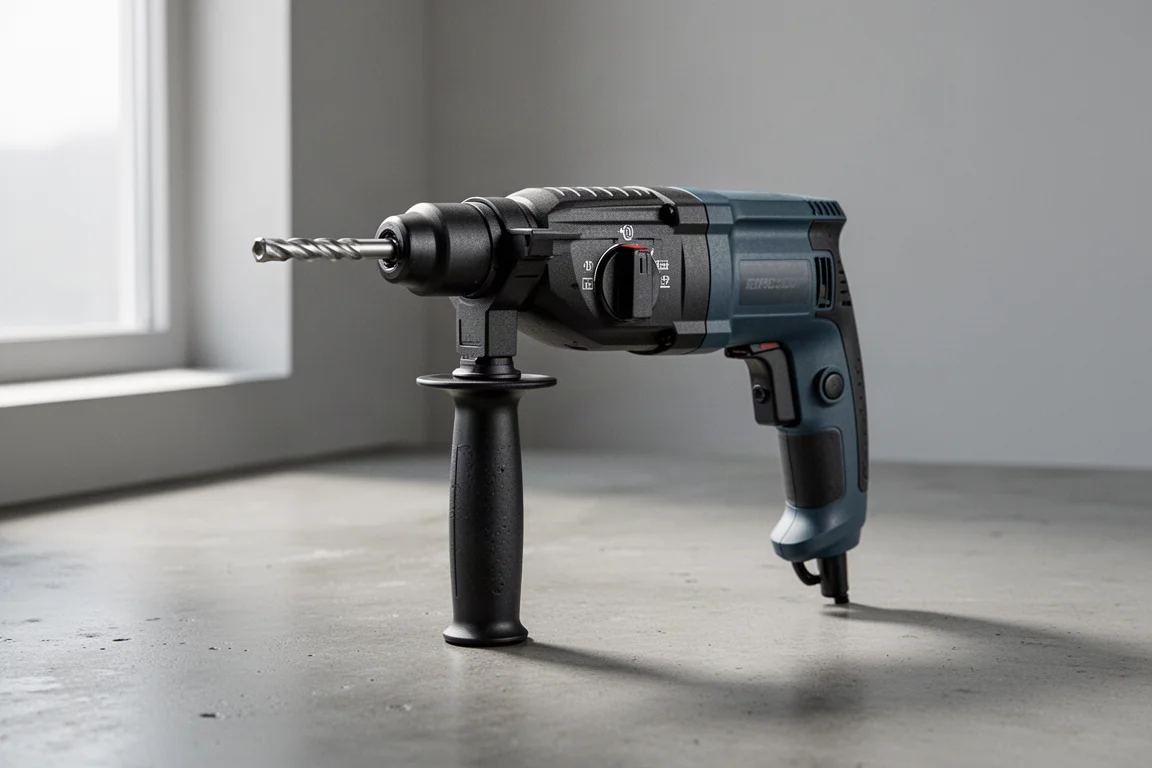
Similar in size to the Bosch is DeWalt’s compact rotary hammer, with a 1-1/8-inch capacity. Unlike the Bosch setup, its vacuum does not need a separate battery; it runs off the tool’s own battery. It delivers 1,165 rpm and 4,300 blows per minute at $339.
Drilling through the concrete, this one felt a touch slower, but the built-in dust extraction without a second battery is a practical advantage worth weighing.
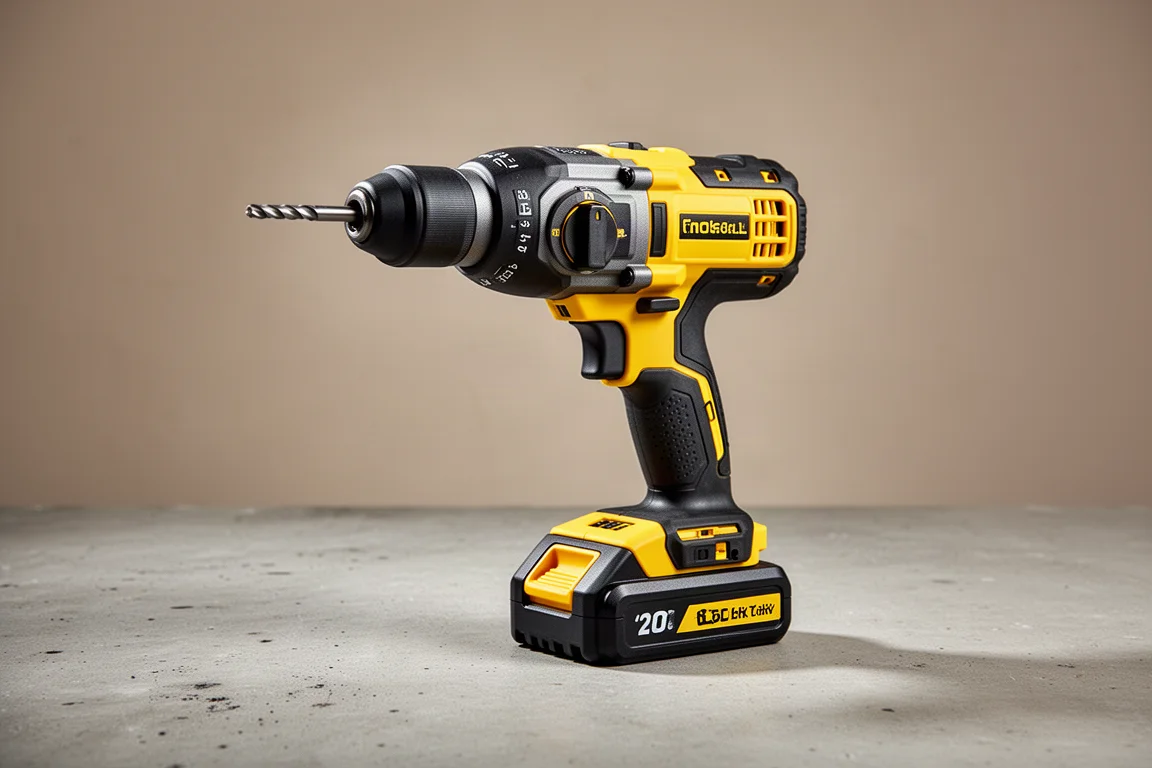
Hilti Nuron TE 30-22
A lot of people treat Hilti as the benchmark for rotary hammers, and the Nuron TE 30-22 is its newest entry from the 22-volt Nuron platform. It delivers 777 rpm and 4,500 blows per minute, priced at $787.
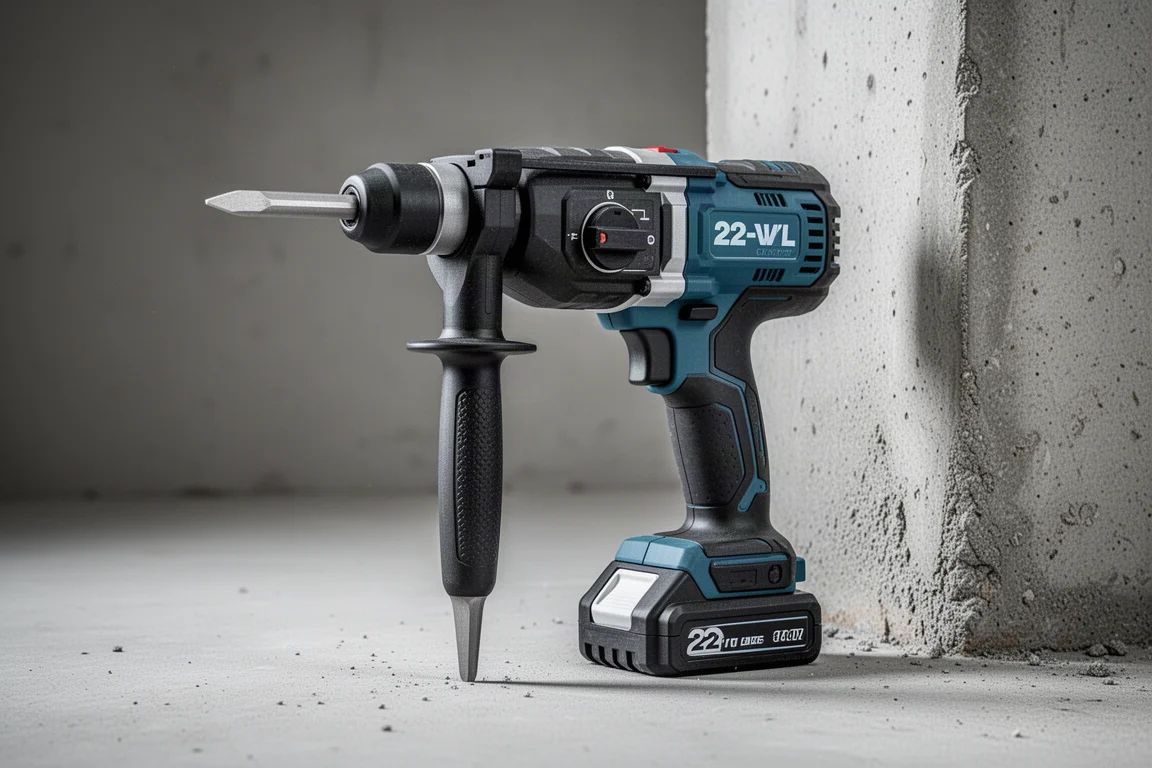
In use, it simply felt good: smooth, controlled drilling with no dedicated suction attached, since it does not include dust extraction at that price. If you value the drilling performance and platform, keep in mind that dust extraction is a separate consideration.
Milwaukee M18 1-1/8-Inch Rotary Hammer with Hammer Vac
Milwaukee’s new M18 1-1/8-inch rotary hammer with dedicated hammer vac is built to be a daily driver, and it looks the part. It delivers 800 rpm and 4,600 blows per minute at $799, and it was the best performer of the group.
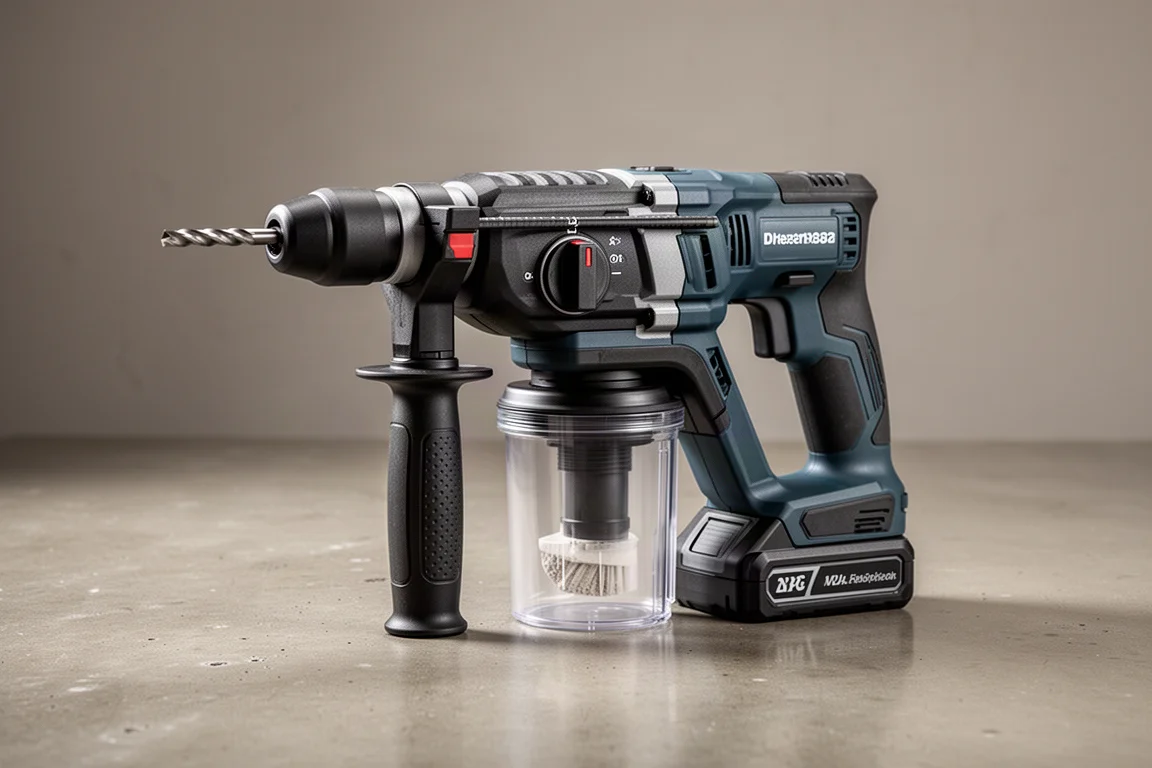
The hammer vac has a self-cleaning function, and drilling felt noticeably smoother the second time through once the bit was lubricated before insertion. That dust extraction is included in the package, which matters when airborne particulate is a concern.
Buying Advice
If drilling large-diameter holes in concrete is your job day in and day out, upgrading from an older rotary hammer makes sense; otherwise, any of these can handle occasional work. Cost and benefit should always be weighed together. If airborne particulate is a concern, look at the models with built-in dust extraction: the Milwaukee includes its hammer vac, while the DeWalt runs its vacuum off the tool’s own battery.
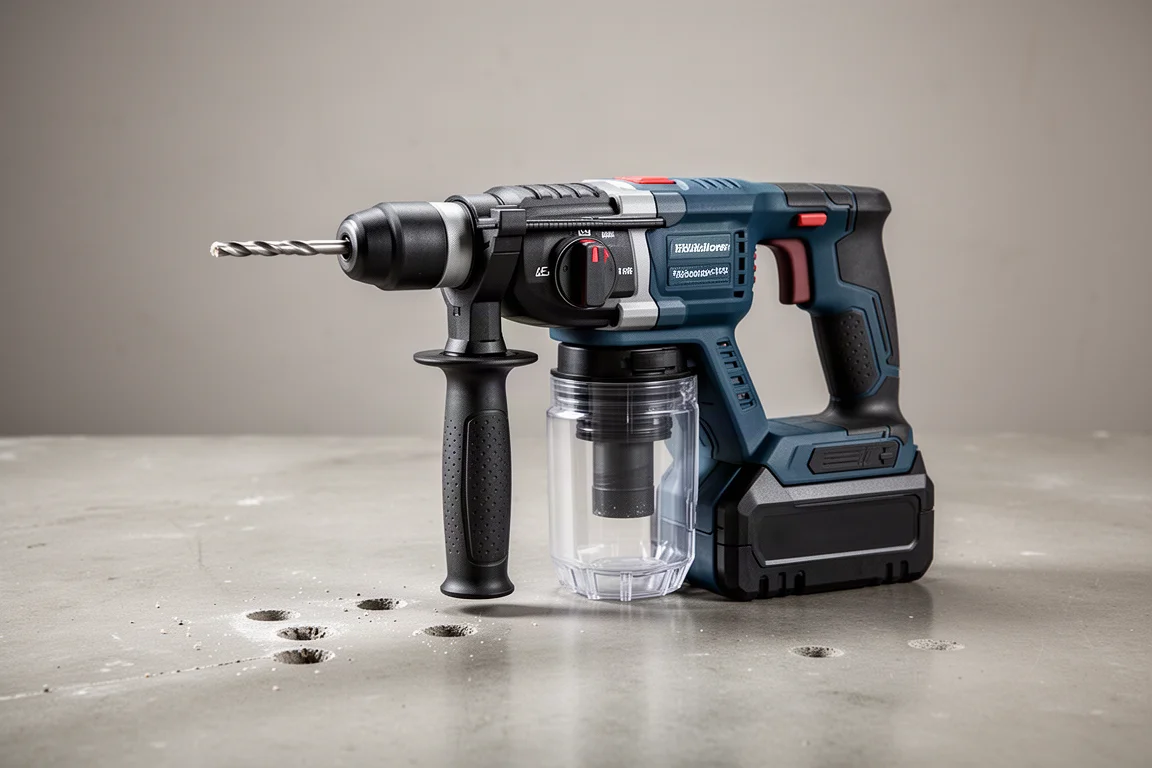
On price, the Milwaukee was the best performer and also the most expensive at $799, but that includes the hammer vac. The Hilti was the second most expensive and a stellar performer, though its $787 price does not include dust extraction.
Conclusion
The Bosch Bulldog is the budget-friendly mainstay, the DeWalt adds cordless dust extraction in a compact body, the Hilti Nuron brings benchmark drilling feel, and the Milwaukee pairs the strongest performance with included dust extraction. Match the tool to how often you drill masonry and how much dust control matters on your sites, and any of these four will serve you well.
Further reading
Related Reviews

Power Tools
Best 1-Inch Pistol Impact Wrenches: Three Heavy-Duty Options Compared
We compare three 1-inch pistol impact wrenches, from a budget-friendly Harbor Freight model to a premium Caterpillar unit, to help you choose the right one.

Power Tools
Best 3/4-Inch Impact Wrenches 2026: Five Contenders Compared
We compare five 3/4-inch impact wrenches across price and performance, from a budget Amazon option to Snap-on's most powerful model yet.

Power Tools
Best Budget Cordless Tools 2026: Walmart Finds That Punch Above Their Price
We tested five cordless tools from Walmart, including a high-torque impact wrench that trades blows with Milwaukee and a $35 duster that outperforms its price class.