Power Tools
Best Rotary Hammers for Concrete, Tile, and Light Demolition: Four Tools Compared
From a compact cordless rotary hammer for delicate tile work to a spline shank Milwaukee machine for serious concrete drilling, here is how four rotary hammers stack up for different job sizes.
Introduction
People have been drilling holes in rock and concrete for a very long time. The folk song about John Henry driving holes for the railroad with a star drill, struck and turned between blows, describes exactly what a modern rotary hammer does on a smaller scale: it hits and turns, hits and turns. What has changed is the size of the holes most of us actually need. For hanging a picture, setting a tapcon on a patio, or drilling into porcelain tile in an expensive shower, the job usually calls for holes between an eighth of an inch and, at worst, three quarters of an inch.
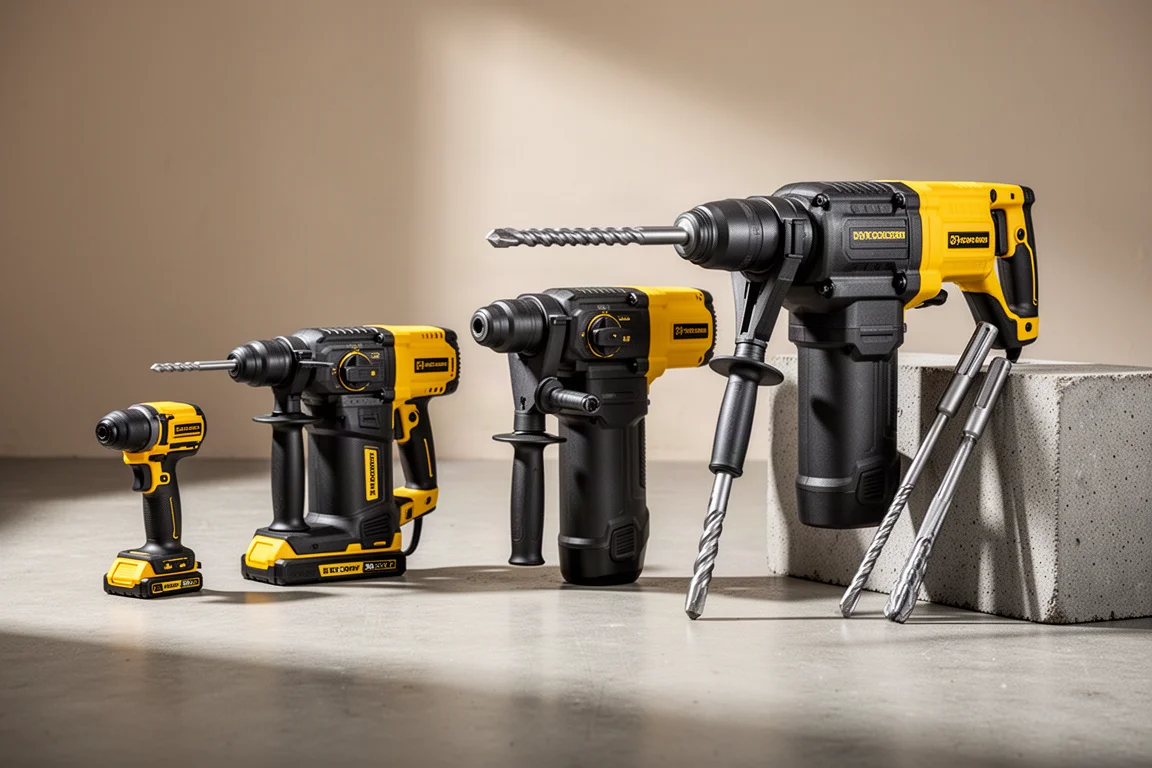
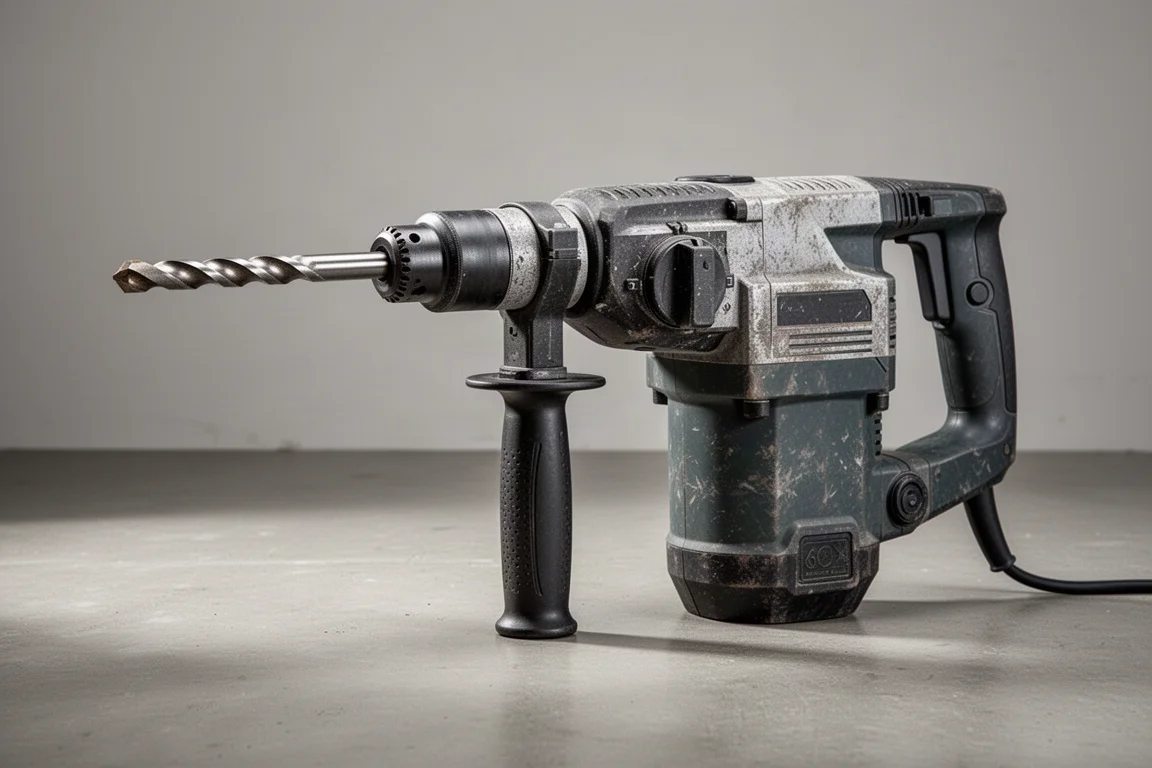
This guide covers four rotary hammers suited to that range: a compact cordless model for delicate work, two SDS Plus machines that handle nearly everything, and a spline shank Milwaukee for the heavy end of the spectrum.
Light Work and Delicate Materials: The Compact Cordless Route
The compact Ridgid cordless rotary hammer is the smallest of the group. It uses a Jacobs chuck that holds straight shank drill bits, with sets available well below an eighth of an inch for fussy household work. It offers both a hammer setting and a plain drill setting, and that switch is the whole point. In hammer mode, the impact does the penetrating while the rotation clears the hole, which makes drilling into hard material feel controlled instead of brute-force.
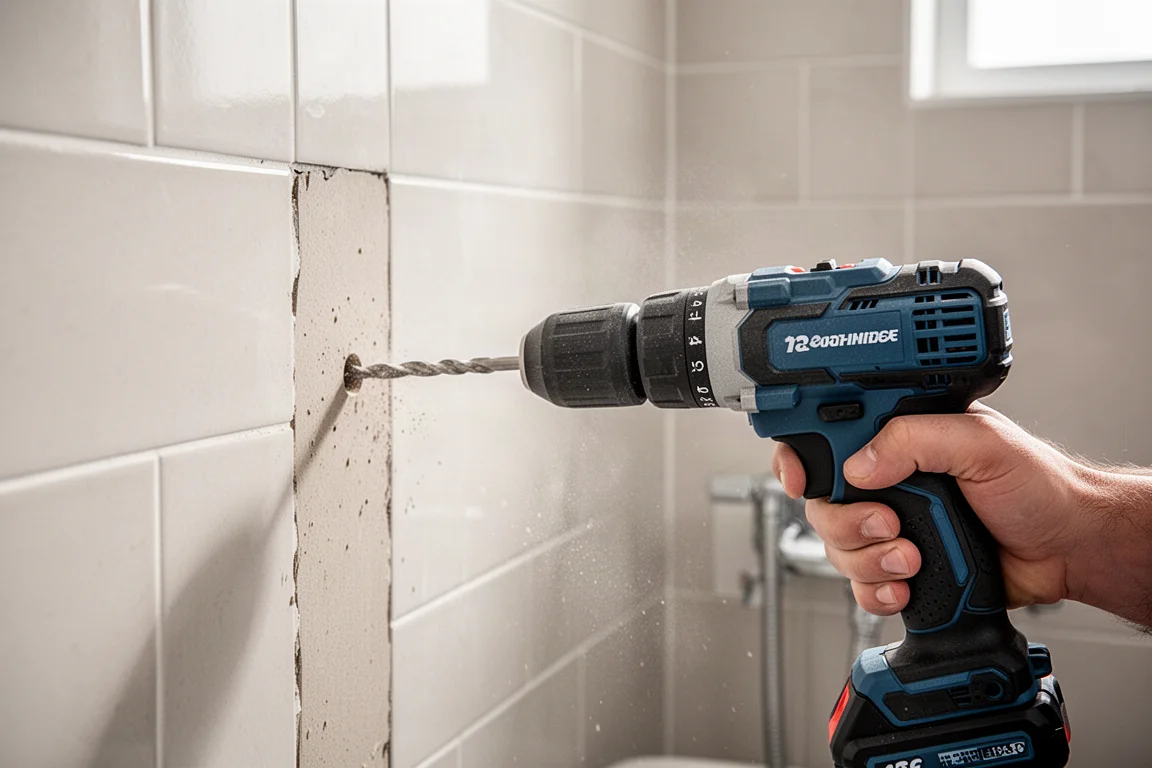
Where this little tool shines is fragile, expensive material. Walk into somebody’s granite shower, switch modes appropriately, use light pressure and high speed, and you are far less likely to shatter thin tile or brittle stone. One practical note from real use: the larger the work, the more the money. SDS Plus bits cost real money, so for a single half-inch hole in a tight clearance, borrowing a compact cordless and buying a straight shank bit can be the smarter play. Once you are used to a full-size tool, it can feel like a frustration, but it will get the job done, and a cordless rotary hammer from any brand is genuinely nice for fine work.
The Everyday Workhorse: Bosch Bulldog SDS Plus
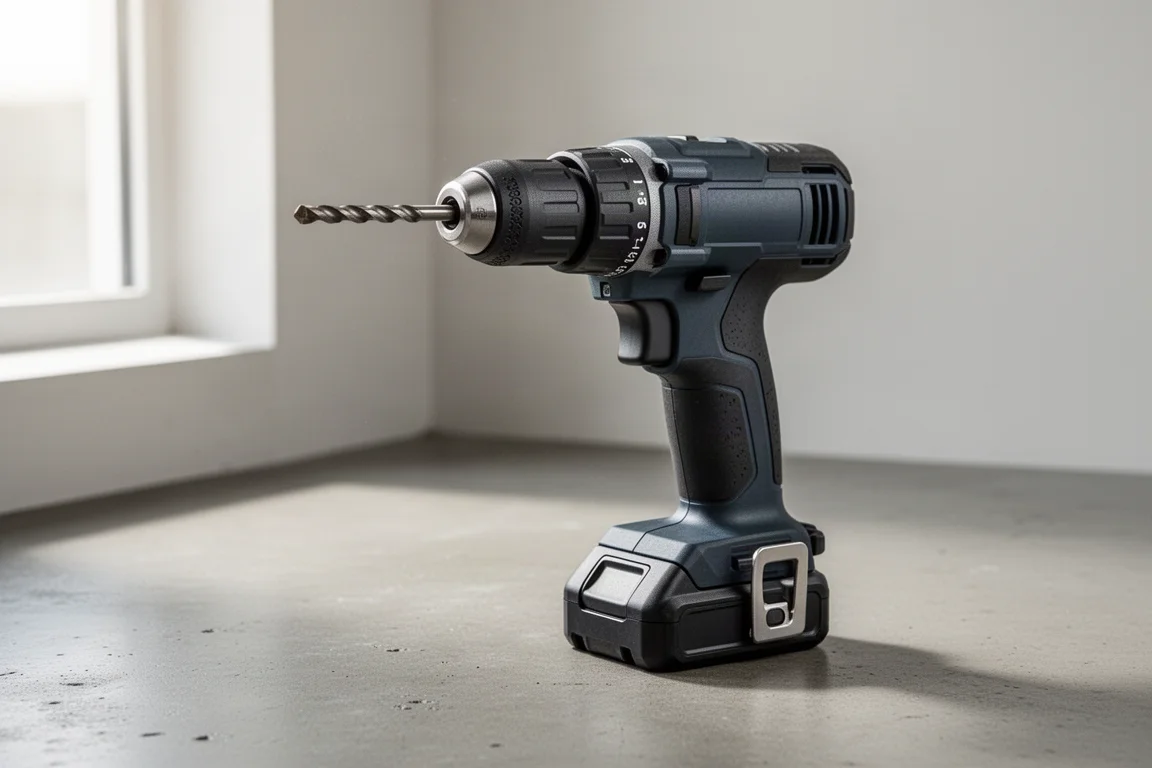
The Bosch Bulldog is the tool this category is named around. SDS and SDS Plus refer to the connection between the bit and the motor, and it is a much more positive connection than a plain chuck. On tilt-up construction jobs in Las Vegas, crews kept four or five Bulldogs on the slab drilling fastener holes all day, and they ran and ran. That kind of endurance is why, when it came time to buy a rotary hammer for general contracting work, the choice was a Bulldog. One even turned up abandoned under a house after a difficult job, still in working order.
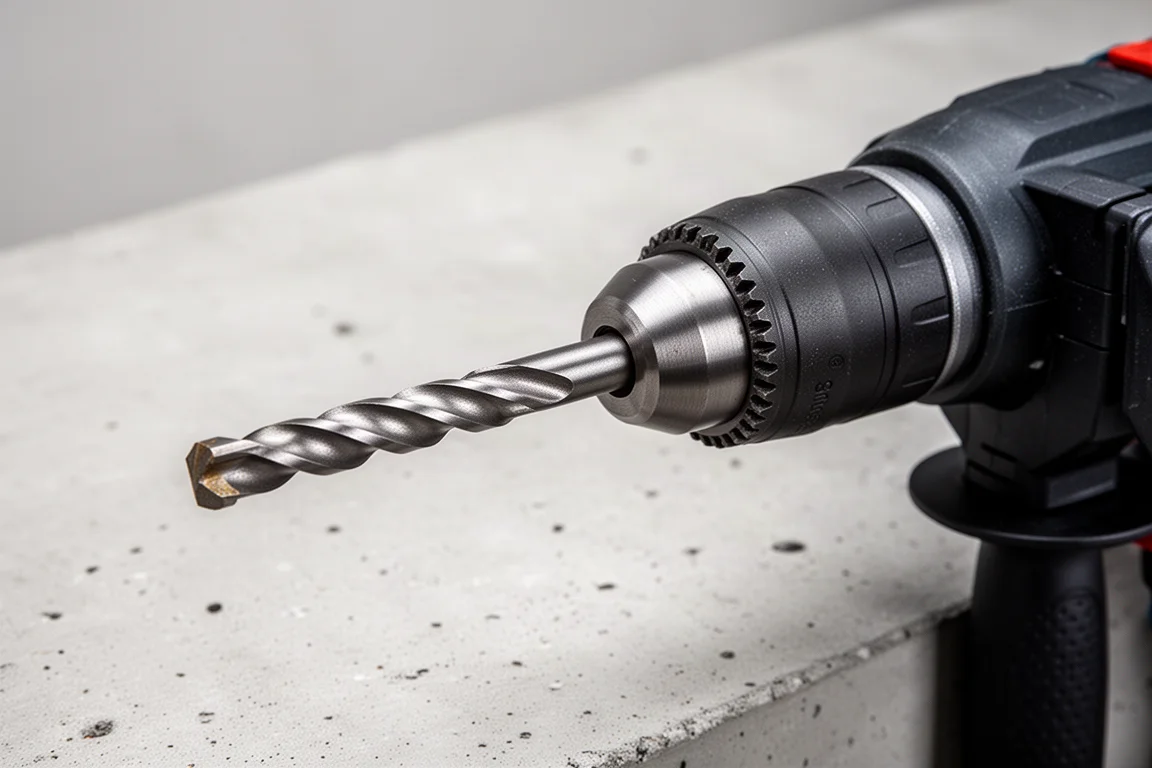
Bringing in a DeWalt for comparison, it is a good tool that compares favorably, but the Bosch still seems the better buy. The connections feel more positive, and Bosch is hard to beat in this class. A Bulldog or its equivalent will drill 98 percent of the holes anybody ever needs to drill in concrete, from an eighth of an inch up to an inch and an eighth in diameter, at almost any depth, in one tool that lives in the truck.
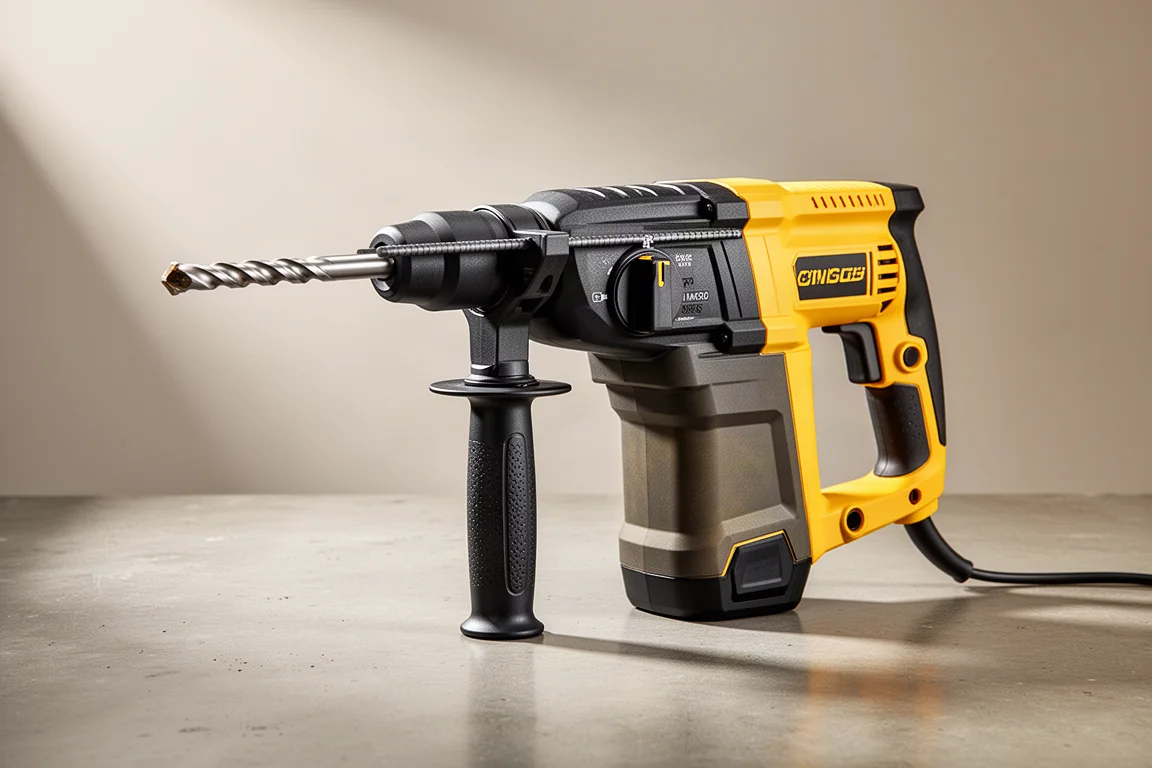
Why SDS Plus Covers Most Jobs
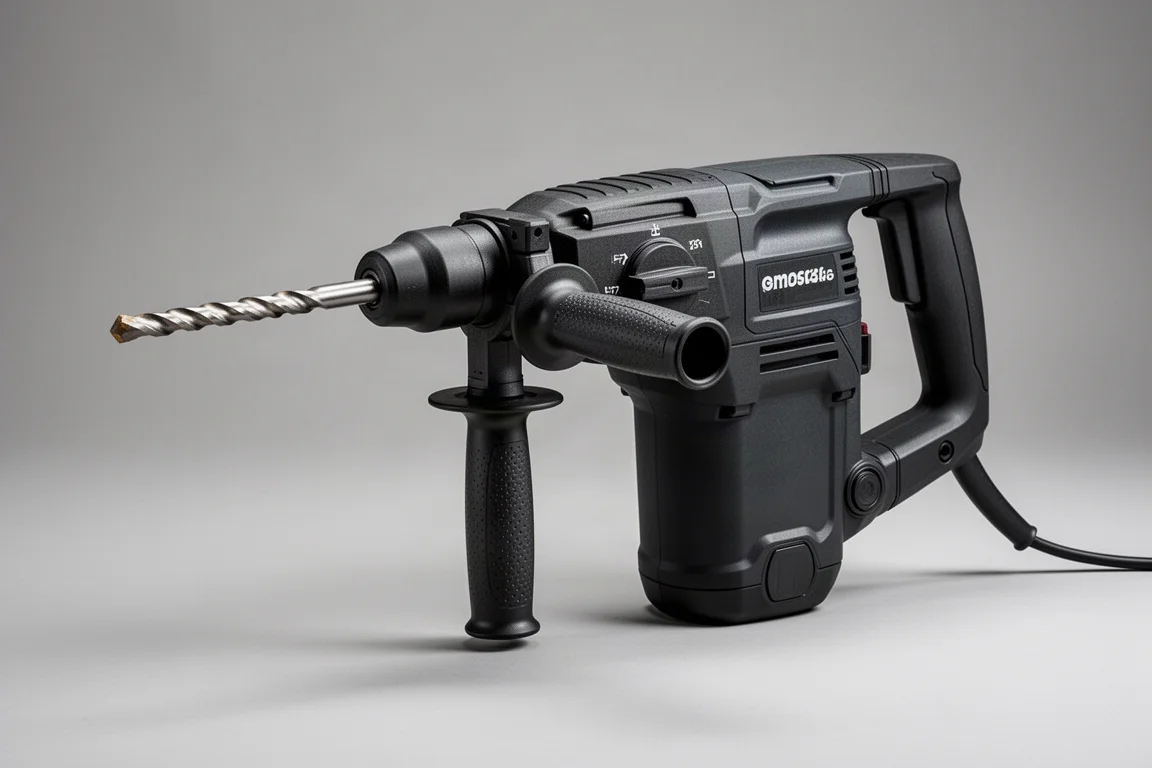
The honest trade-off between the compact cordless and a full-size SDS Plus machine is about matching the tool to the risk. With the small tool, you are careful and unlikely to break anything, but you can exhaust yourself and still fail to finish. With the big tool, the holes go faster and deeper, but you are more liable to crack something delicate. You can drill the same holes with either; one goes in farther, one goes in faster.
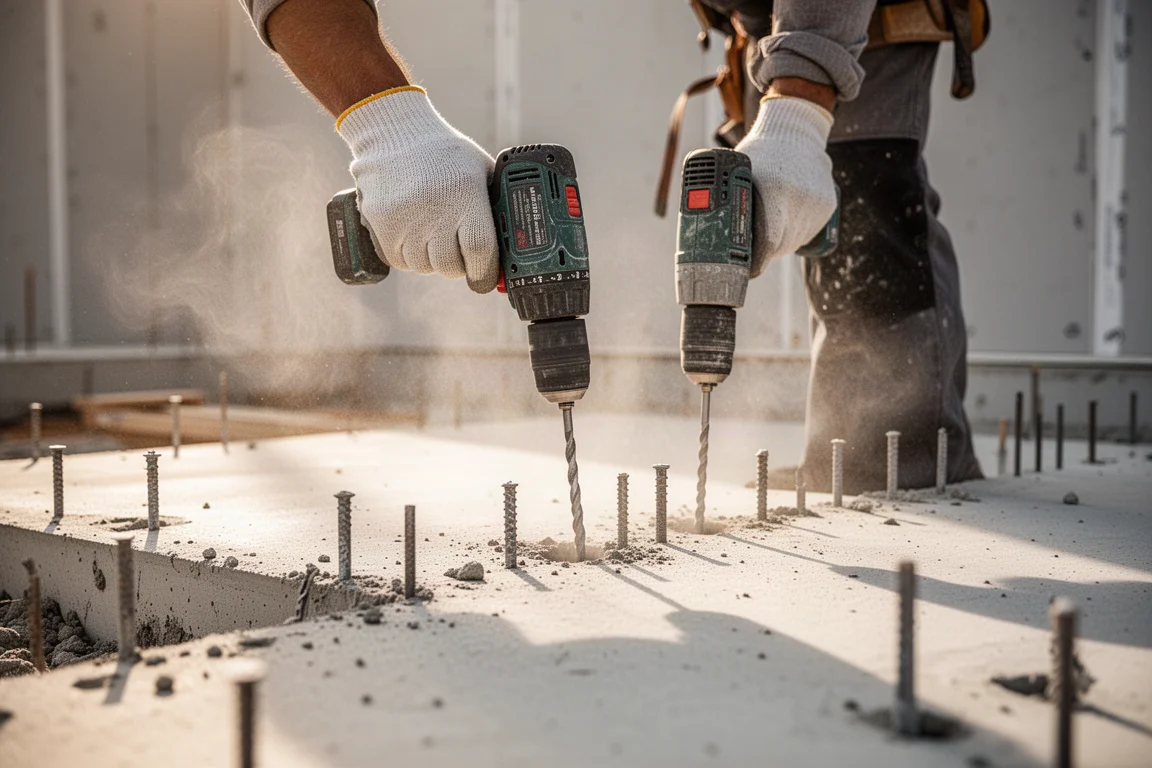
Consider a real remodel scenario: granite tile up, shower curtain hangers to attach with 3/16 tapcons inside, and a series of 3/4 inch wedge anchors to hold down a ledger or base plates on a new deck outside. The interior work belongs to the small, careful approach almost every time. The 3/4 inch deck holes are never getting done with a light-duty drill, but an SDS Plus machine handles them without drawing a long breath. If you could only own one tool for drilling into hard substrate, this middle category is the one to get.
Heavy Duty: Milwaukee Spline Shank Rotary Hammer
At the top of the range sits the Milwaukee spline shank rotary hammer, a step up in an entirely different class. Spline shanks exist because at this power level the connection between the motor and the bit needs to handle serious torque and abuse. These machines drive large diameter bits, commonly up to an inch and a half or so, and they are powerful enough to run hole saws in solid concrete. Extension setups even let you drill deep into a slab. Rental yards and tool suppliers keep them because most contractors need one occasionally rather than own one.
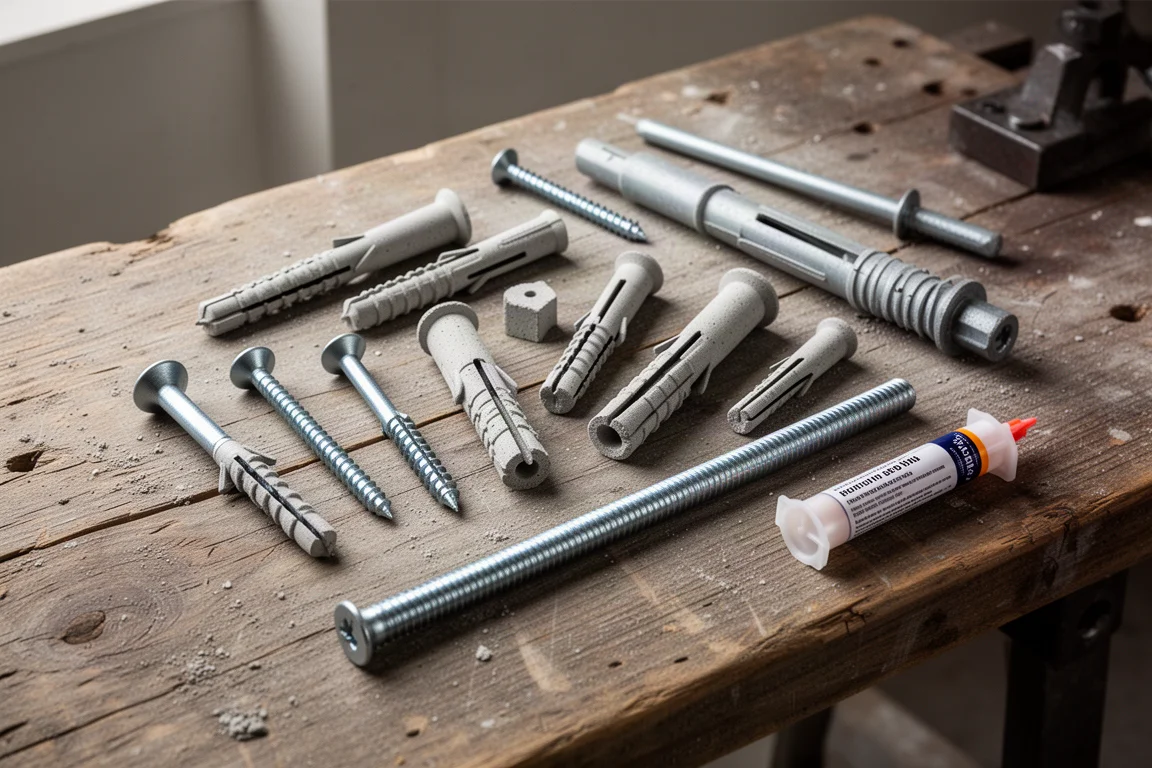
This category also opens up the full range of anchoring options. Tapcons are the simplest: drill the hole, thread it in, tighten. Wedge anchors cost a little less, are still useful, and install by drilling the hole and hammering the anchor home as the expanding shield flares for a tight grip, though the projecting bolt can be marred during installation. Epoxy anchors with threaded rod are arguably the best embedded connection available: drill the hole about an eighth of an inch oversize, blow it out and wire-brush it assiduously, then set the rod. Above all of these, removable anchors are fast, convenient, hard to mess up, and can be backed out later leaving nothing but a clean hole, which is why they end up being the go-to for many jobs.
Matching the Tool to the Anchor
One more boundary case is worth knowing about. Very old-school large capacity cord drills can swing bits up to perhaps ten inches in diameter for setting posts through slabs or big sewer pipe penetrations through walls. A bit that size costs about as much as a car payment, and most people will never need one, but it illustrates that there is almost no functional limit to the hole size you can punch through masonry if you have the right machine. For the vast majority of remodel and construction work, though, the decision comes down to the four tools covered here.
Conclusion
If your work is mostly delicate tile, tapcons, and hanging things, a compact cordless rotary hammer gives you the lightest touch. If you want the one-size-fits-all answer, an SDS Plus machine like the Bosch Bulldog covers nearly every hole anyone needs in concrete, with the DeWalt as a capable alternative. For serious slab work, large diameter anchors, and hole saws in concrete, the Milwaukee spline shank machine is the whole next step up. Match the tool to the hole, the material, and the anchor, and each of these has a clear place on the truck.
Further reading
Related Reviews
Power Tools
Best 1-Inch Pistol Impact Wrenches: Three Heavy-Duty Options Compared
We compare three 1-inch pistol impact wrenches, from a budget-friendly Harbor Freight model to a premium Caterpillar unit, to help you choose the right one.
Power Tools
Best 3/4-Inch Impact Wrenches 2026: Five Contenders Compared
We compare five 3/4-inch impact wrenches across price and performance, from a budget Amazon option to Snap-on's most powerful model yet.
Power Tools
Best Budget Cordless Tools 2026: Walmart Finds That Punch Above Their Price
We tested five cordless tools from Walmart, including a high-torque impact wrench that trades blows with Milwaukee and a $35 duster that outperforms its price class.