Power Tools
Best Right Angle Drills: Three Standouts From Hands-On Testing
We compared ten right angle drills on speed, torque, endurance, and ergonomics. These three brushless, two-speed models came out on top.
Introduction
A right angle drill earns its place in a toolkit the moment you need to drive a screw or bore a hole where a standard drill simply will not fit. The question worth asking is whether an affordable model gets the job done just as well as one that costs considerably more.
We looked at ten right angle drills across a wide price range, comparing driving speed, maximum torque, endurance under continuous load, and everyday ergonomics. Only a handful stood out as genuinely well-rounded tools, and all three of our picks share the same recipe: a brushless motor, a two-speed transmission, and comfortable handling.
How the Field Compares
The fastest screw-driving times went to the Kobalt 24V at 1.2 seconds per deck screw, with the Ridgid and Makita tied for second at 1.41 seconds. On maximum torque in low gear, the DeWalt led at 211 inch pounds, followed by the Ryobi One+ HP at 196 and the Ridgid at 179.
A clear pattern emerged: every drill with a two-speed gearbox outperformed the single-speed tools on demanding tasks like driving lag bolts and boring large holes with self-feeding bits. Endurance testing also separated the field sharply. Only four drills survived a full two-minute run under a 33 inch-pound continuous load, and most models that quit early did so with sensible overload protection. A few, however, overheated badly without shutting down, which is worth considering if you expect sustained heavy use.
Front-to-back length matters too, since a shorter head reaches further into tight spaces. The most compact tools measured around 3.45 to 3.56 inches, and the lightest models weighed just over two pounds.
Top Pick: Ryobi One+ HP Right Angle Drill
At around $100, the Ryobi One+ HP pairs a brushless motor with a two-speed transmission and claims up to 350 inch pounds of torque. It measured 3.56 inches front to back, weighed 2.4 pounds, and spun the fastest of any drill tested at 1,685 rpm in high range, roughly 30 percent faster than the standard Ryobi One+.
Its low-speed control was the best in the group, creeping down to just 18 rpm without stalling, which makes delicate starts much easier. In lag bolt testing it more than tripled its high-range output in low gear, reaching 196 inch pounds, and it was the first drill able to bore holes with an inch-and-a-half self-feed bit. It also survived the two-minute endurance test.
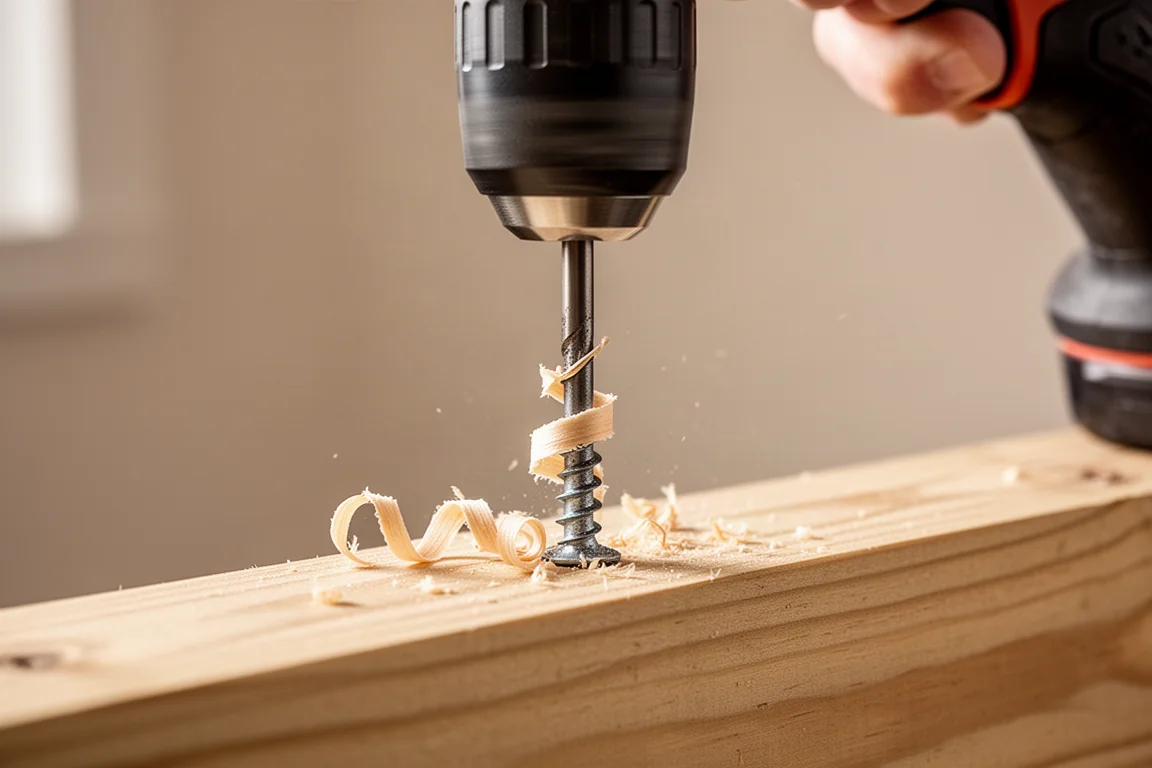
Ergonomically it earned top marks: a forward-reverse switch positioned out of the way but within easy reach, a slim grip that reduces hand fatigue, and one-finger trigger access. The LED light lingers for about 20 seconds after the trigger is released, a small but useful touch. Considering the price alongside its performance, this is the best overall value in the group.
Best Torque Value: Kobalt 24V Brushless Right Angle Drill
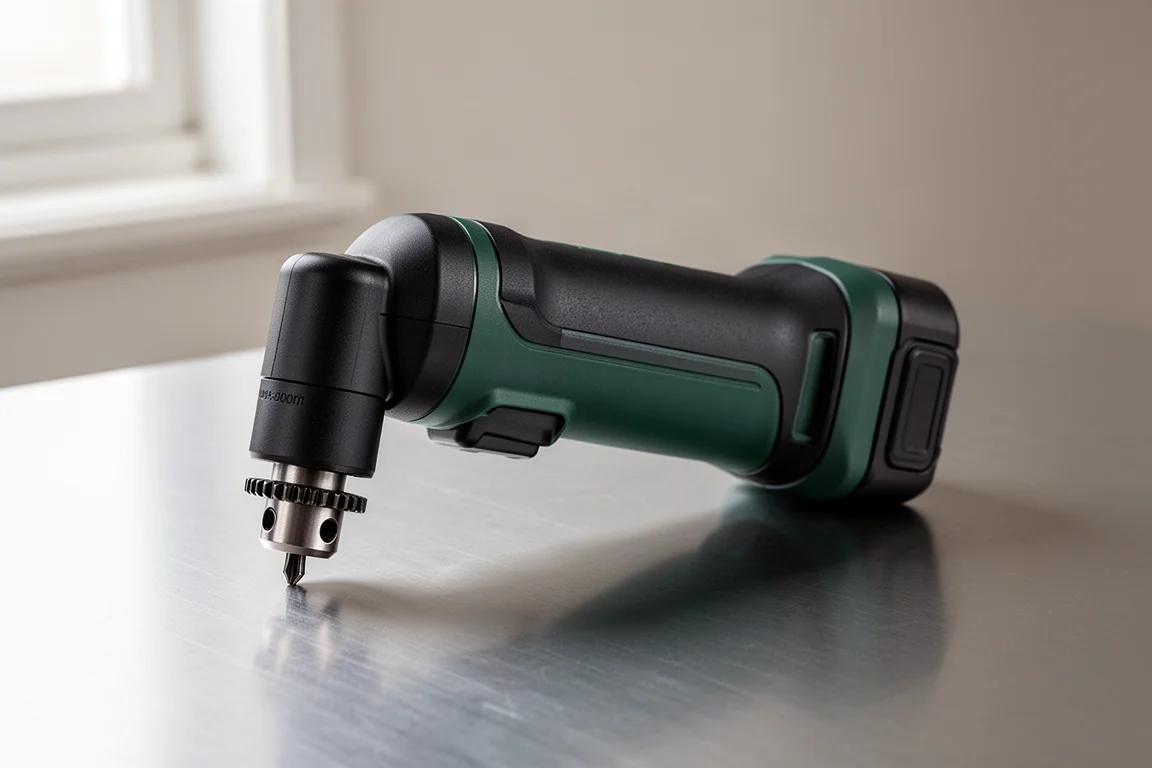
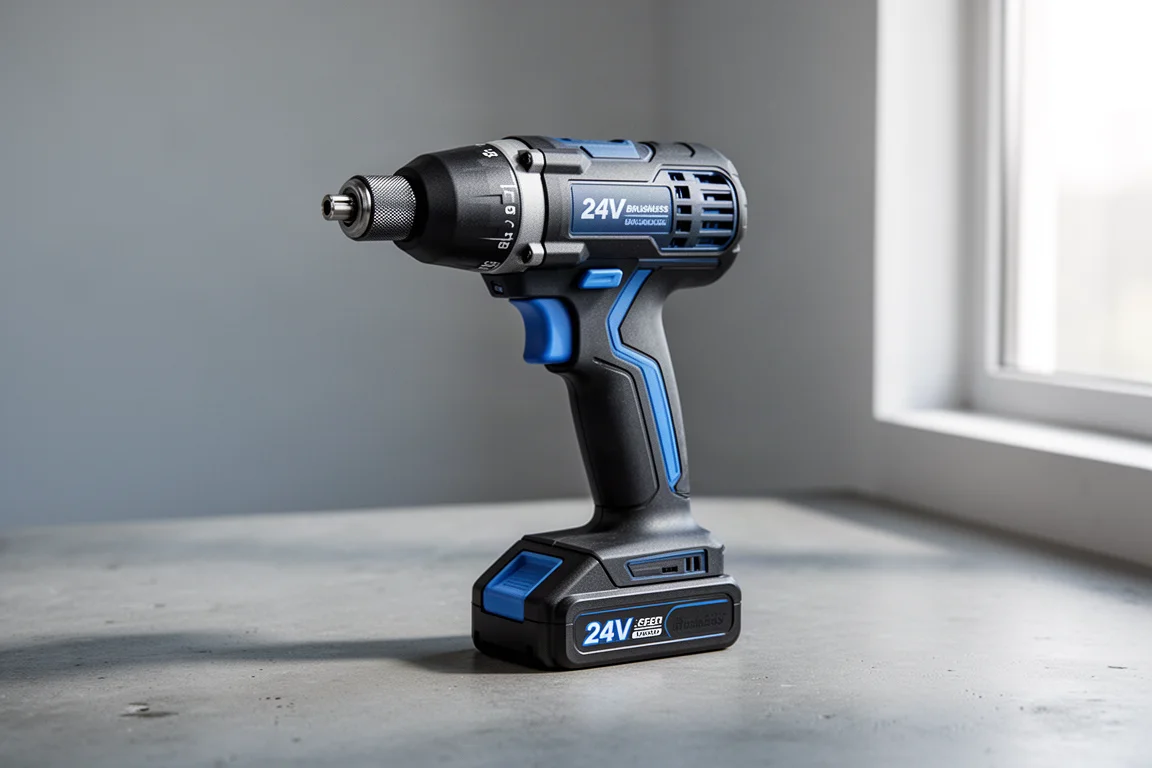
Priced at $119, the Kobalt 24V brushless was the fastest drill in screw-driving tests, averaging just 1.2 seconds per deck screw. Its two-speed gearbox spans 0 to 600 rpm in first gear and 0 to 2,000 rpm in second, with up to 250 inch pounds of claimed torque and three torque settings plus drill mode.
In lag bolt testing it reached 167 inch pounds in low range, and it was consistently quick in the wood-boring tests, including a standout 4.3 seconds with an inch-and-a-half self-feed bit, roughly twice as fast as the Ryobi One+ HP on that task. It handled a two-and-a-bit-inch bit in 4.86 seconds and comfortably survived the two-minute endurance run in low range.
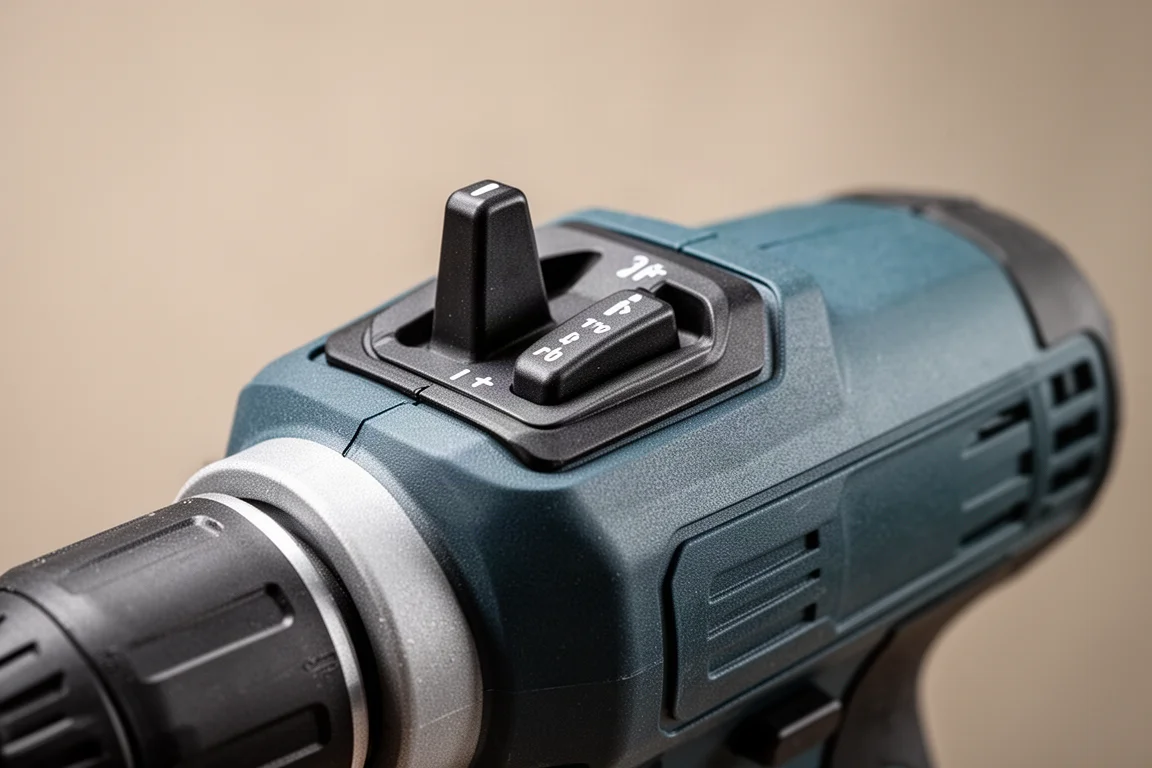
At 2.8 pounds and 3.9 inches long it is not the most compact option, and it was the loudest drill tested at 82 decibels. But the ergonomics earned an A-plus rating thanks to a slim handle, well-placed forward-reverse switch, and easy one-finger trigger access, and the LED stays lit for about 10 seconds after trigger release.
Best Power-to-Weight: Ridgid Right Angle Drill
At $139, the Ridgid claims the most compact head in its class at 3.5 inches and best-in-class power at 375 inch pounds of claimed torque. In testing it proved to be the lightest tool of all ten at just 2.04 pounds, yet it delivered second-place screw-driving times of 1.41 seconds on average.
Its two-speed gearbox reaches 1,852 rpm in high range, and in low gear it produced 179 inch pounds, enough to take second place in the lag bolt test. It was the fastest drill with a one-inch bit at 1.82 seconds, made easy work of an inch-and-a-half self-feed bit at 5.06 seconds, and bored a two-and-a-bit-inch hole in 5.47 seconds. It also handled the two-minute endurance test without issue in low range.
Handling is excellent, earning the same A-plus ergonomic rating as our other picks, with a well-located forward-reverse switch and a compact grip. The LED remains lit for about 15 seconds after the trigger is released. If weight matters most to you, this is the drill to get.
Buying Advice
If you mostly drive screws and drill smaller holes, any of these three will serve you well, and the choice comes down to platform and price. The Ryobi One+ HP is the value play, especially if you already own compatible batteries. The Kobalt offers the quickest driving speed for the money, while the Ridgid is the one to choose when weight and compactness are priorities.
Two features matter more than marketing numbers. First, a two-speed transmission is essential if you ever plan to bore large holes with self-feed bits; every single-speed drill in the group ran out of torque on those tasks. Second, pay attention to overload protection, since a couple of otherwise capable tools overheated without shutting themselves down during sustained load testing.
Conclusion
Three drills rose above a crowded field by combining brushless motors, two-speed gearboxes, and genuinely comfortable ergonomics. The Ryobi One+ HP stands out as the best value, the Kobalt 24V as the speed pick, and the Ridgid as the lightest and most compact of the strong performers. Match the tool to the platform you already own and the tasks you actually do, and any of these three will be a solid investment.
Further reading
Related Reviews

Power Tools
Best 1-Inch Pistol Impact Wrenches: Three Heavy-Duty Options Compared
We compare three 1-inch pistol impact wrenches, from a budget-friendly Harbor Freight model to a premium Caterpillar unit, to help you choose the right one.

Power Tools
Best 3/4-Inch Impact Wrenches 2026: Five Contenders Compared
We compare five 3/4-inch impact wrenches across price and performance, from a budget Amazon option to Snap-on's most powerful model yet.

Power Tools
Best Budget Cordless Tools 2026: Walmart Finds That Punch Above Their Price
We tested five cordless tools from Walmart, including a high-torque impact wrench that trades blows with Milwaukee and a $35 duster that outperforms its price class.