Power Tools
Best Quarter-Inch Cordless Die Grinders: Snap-on, Makita, and Milwaukee Compared
Three compact cordless die grinders tested under real load: high free-speed specs look great on the box, but sustained power under load tells the real story.
Introduction
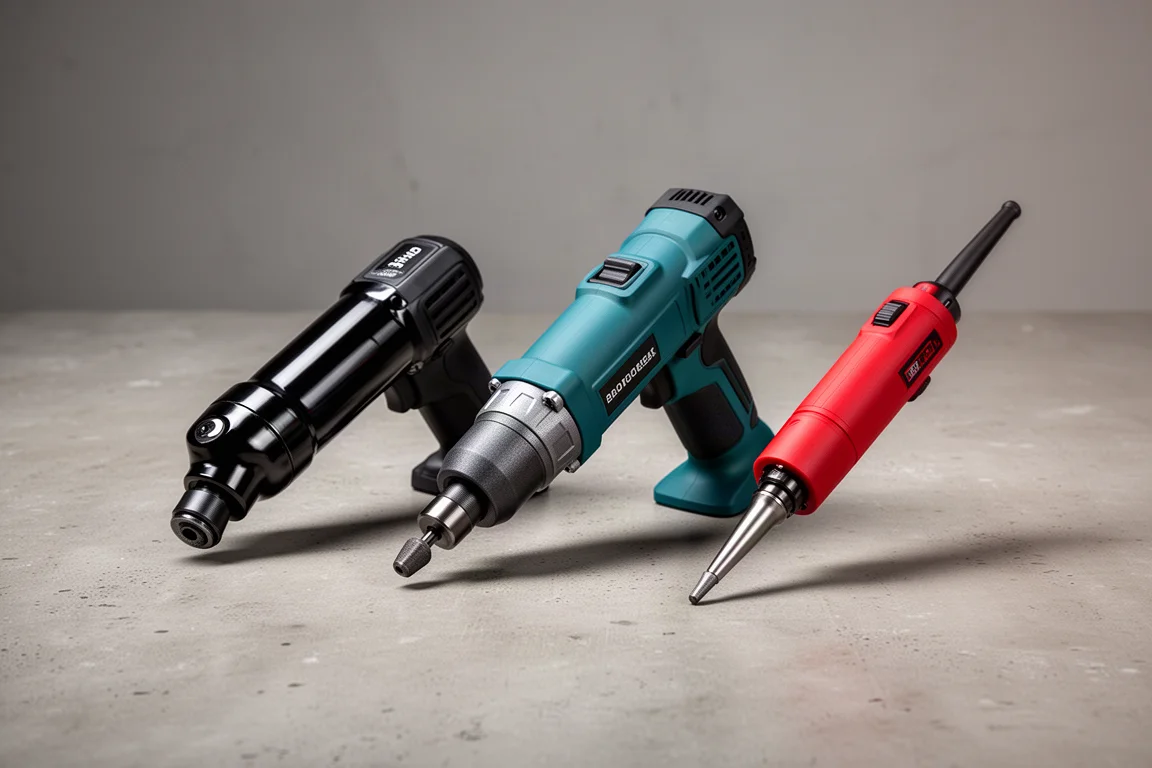
Quarter-inch cordless die grinders are a rare breed. Only a handful exist that are small and light enough to use one-handed like an air die grinder, and after covering the field, three models stand out for comparison: the Snap-on CGR861G 14.4V, the Makita XDG02Z compact LXT, and the Milwaukee M12 die grinder. These are the tools that sit at the smallest end of the spectrum, and each makes very different trade-offs in size, speed, and power delivery.
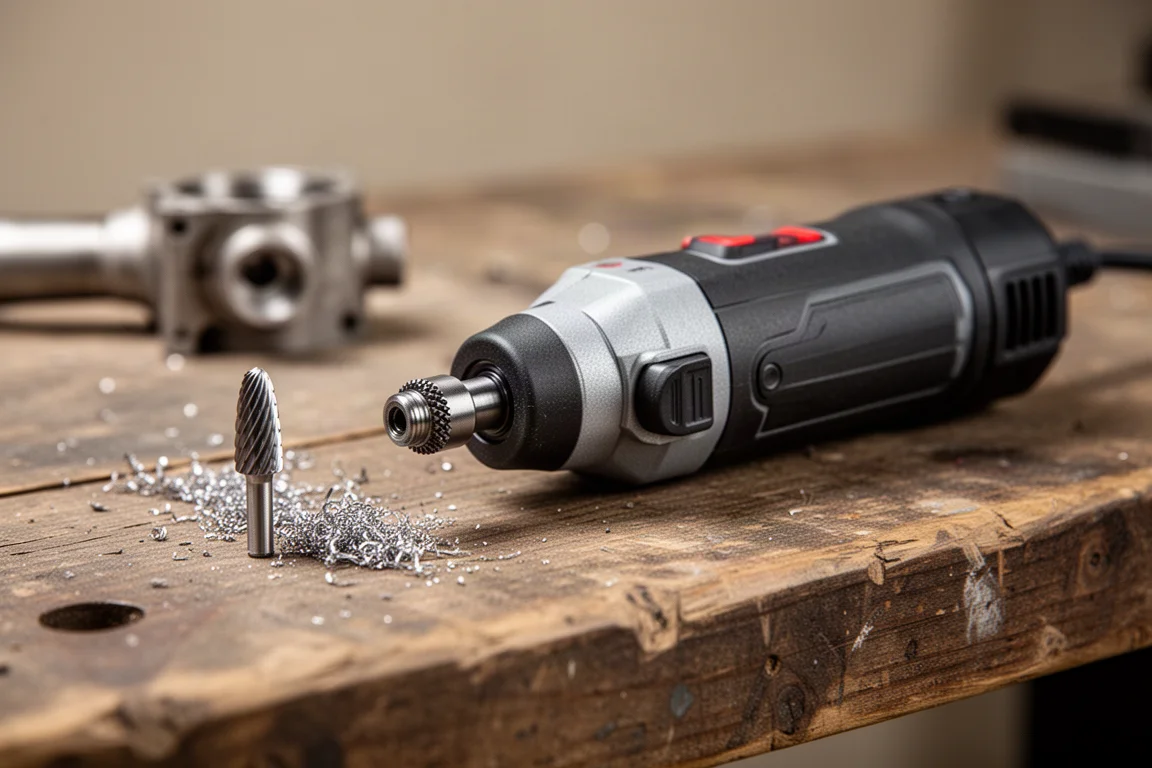
The key thing to understand going in is that a die grinder’s claimed free speed on the box is only half the story. What matters is how much of that speed survives when you put a real burr against real material.
How We Compare These Tools
The fairest way to separate these tools is to load them down and see what remains. A high free-speed spec is useless if it collapses the instant the attachment touches work. So each tool is run under a sustained load on a dynamometer setup, measuring how much RPM it holds and how many watts it can put out before cutting out or giving up.
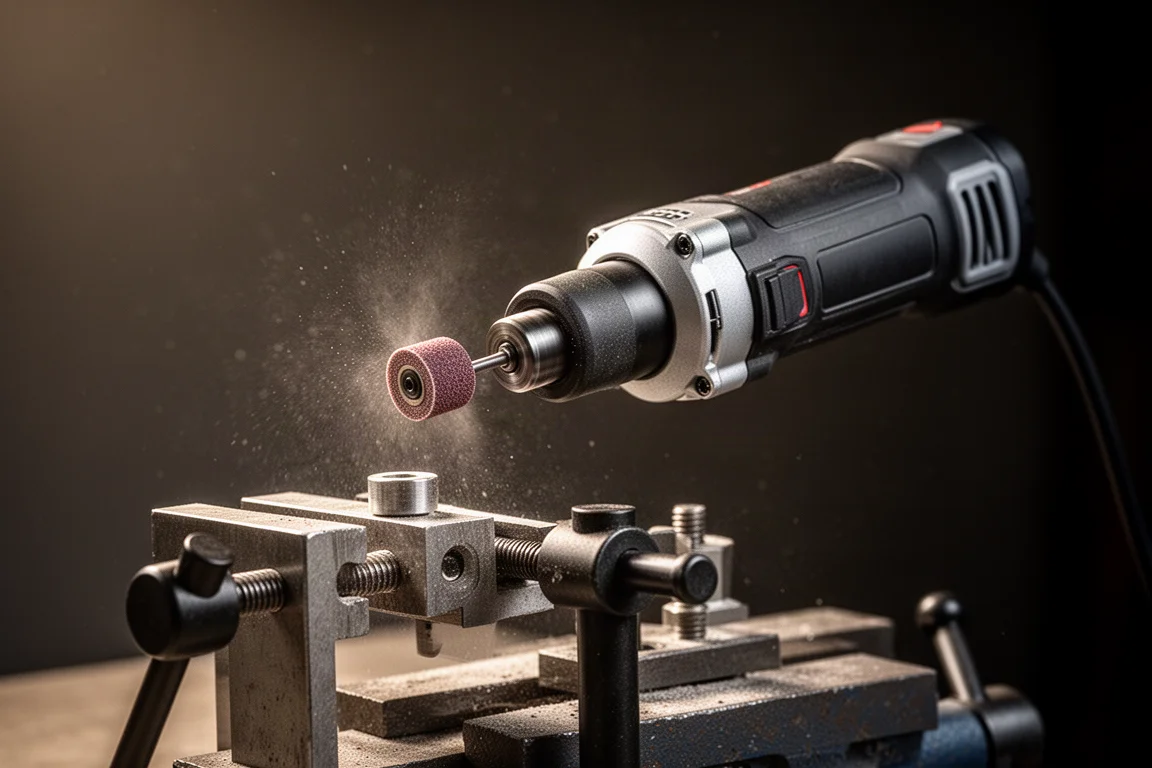
Attachment ratings matter too. Tools that spin at very high RPM are only useful with small attachments rated for that speed, so a grinder that can dial down its speed adds flexibility, though dialing down also means dialing down the power.
Snap-on CGR861G 14.4V Cordless Die Grinder
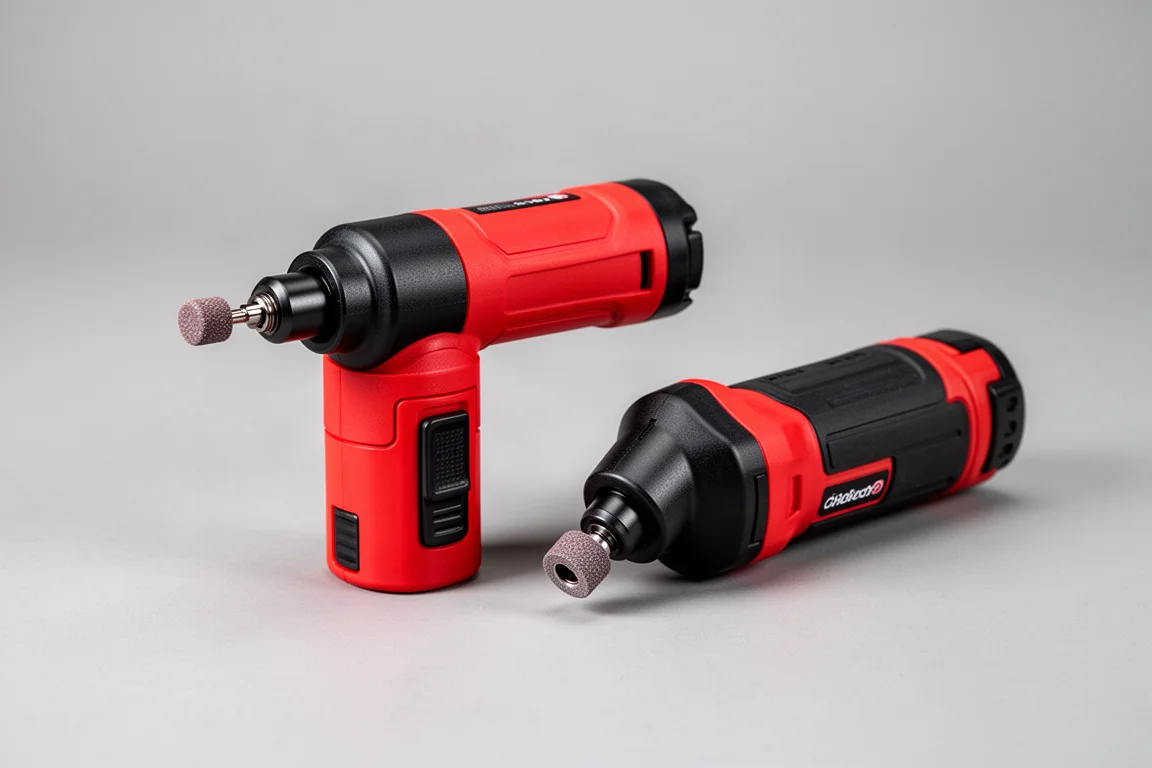
The Snap-on CGR861G is a kit that was purchased for about $602, with retail now around $629. That is a serious price for a compact die grinder, and it sets a high bar for performance. Physically it is very close in size to the Milwaukee M12 straight version, though it displaces a measured 675cc, so it is slightly larger while staying in the same compact wheelhouse. Inside is a brushless motor spinning at 28,000 RPM, well above the Milwaukee’s roughly 24,000 and the Ryobi’s 22,000, which is a lot of material removal capability with small enough attachments. Speed can be dialed down for larger attachments.
Under a 130-watt load, the Snap-on held around 17,000 to 17,500 RPM, a notable drop from its 28,000 free speed. On the power test it peaked at 180 watts before cutting out, sustaining about 160 watts, converting to roughly 0.24 horsepower. The spindle speed falls off quickly under load, which sometimes caused unexpected cut-outs during testing, though with quarter-inch burrs it is mostly no issue. In practice, doing similar tasks to the Milwaukee, it cut out somewhat less often and got more work done between interruptions thanks to the higher speed. Combined scores landed it at 446 points, just above the Milwaukee options, with a performance-per-dollar figure that is the lowest in the field at 1.28.
Makita XDG02Z Compact LXT
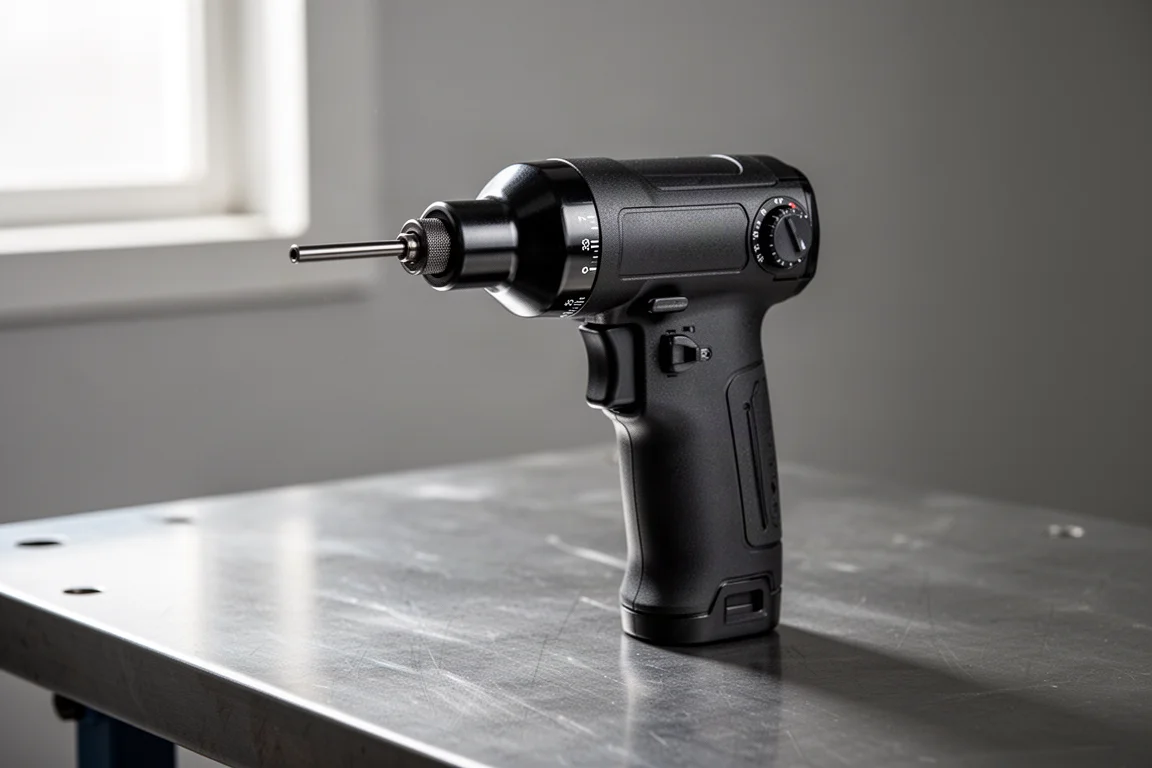
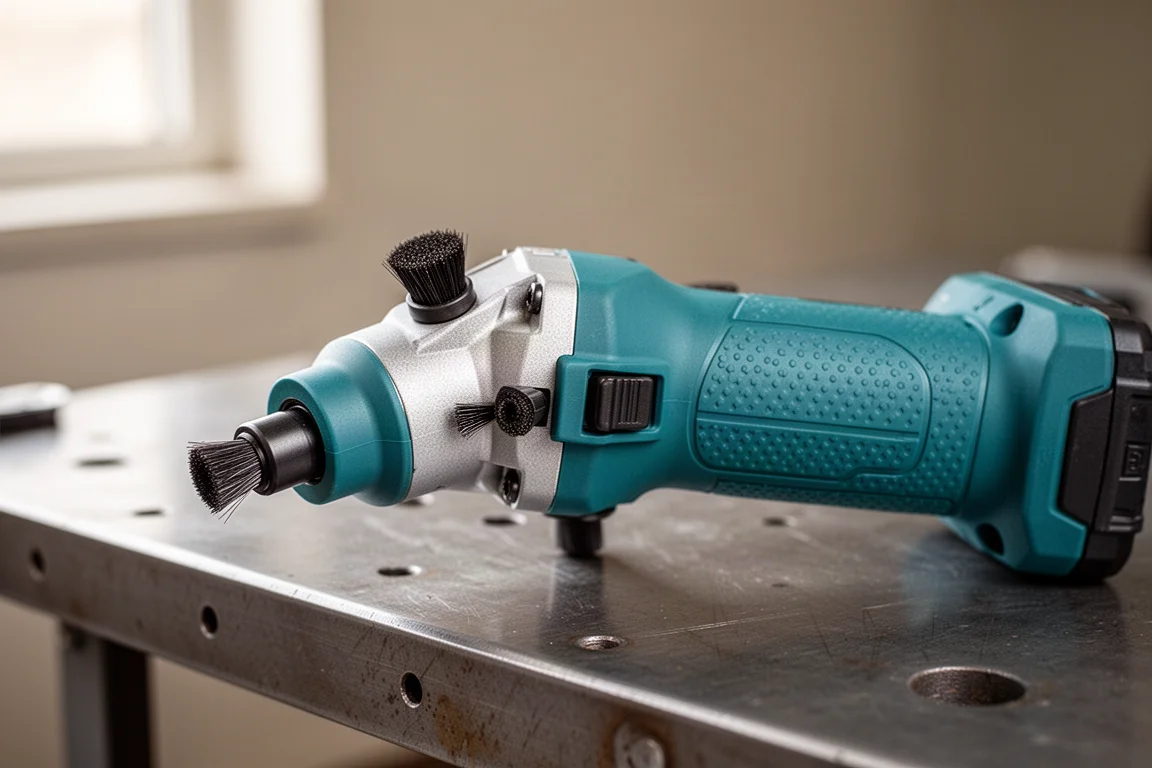
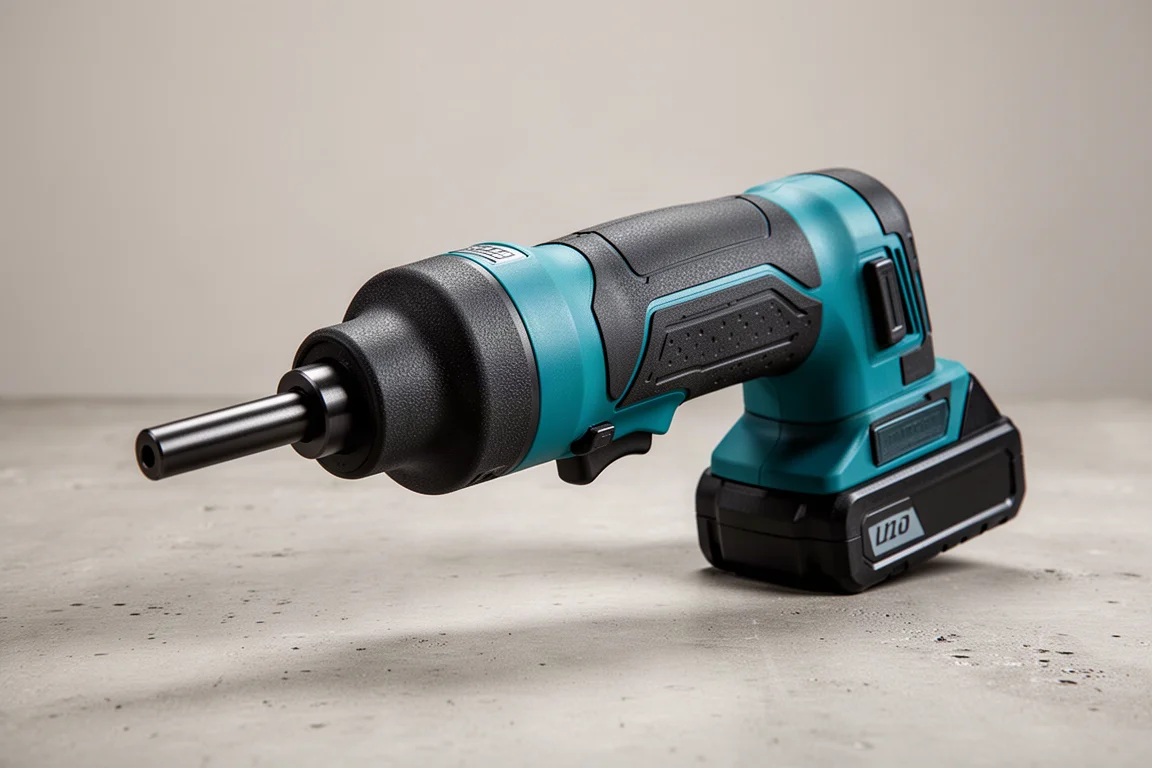
The Makita XDG02Z is the compact model in Makita’s LXT die grinder lineup, purchased for around $180. Unlike the others here, it is a brushed tool, and Makita does not hide it: there are small access ports with caps for swapping out brushes. That construction contributes to a chunky feel in the hand, especially next to the Milwaukee, displacing a hefty 1,350cc. It feels like a mallet compared to the compact right-angle tools, but the question is whether it can swing like one.
Under the same 130-watt load, the 5.0Ah LXT pack managed 15,600 RPM, below both the Snap-on and the Milwaukee. But where it counts, the Makita dominates. With the 5.0Ah pack it peaked at 330 watts, sustaining 290 to 310 watts all day and 320 for extended periods, or about 0.44 horsepower as measured. A larger capacity pack nudged it into the 340-watt range, but the 5.0Ah remains the sensible pairing given the tool’s already large footprint. That translated to 661 combined points and a performance-per-dollar score of 3.44. It is not brushless and it is not new, but for any decent power in this category, it is a clear step up.
Milwaukee M12 Die Grinder
The Milwaukee M12 die grinder, particularly the long straight version, is the most direct size comparison to the Snap-on. The two are very close in dimensions, with the Snap-on feeling slightly larger in hand. The M12 spins at around 24,000 RPM free speed, comfortably below the Snap-on’s 28,000 but above the Ryobi.
On the power tests, the Milwaukee options put out around 420 combined points, slightly below the Snap-on’s 446. Its power output peaks lower than both the Snap-on and the Makita, which means it will cut out more often under sustained heavy work. For small tasks, though, it is fine: it is decent to hold and genuinely compact. Just do not plan on using it as a cut-off tool for anything serious.
Buying Advice
If the goal is maximum performance per dollar, the Ryobi remains the strongest cordless die grinder overall, offering nearly four times the performance per dollar of the Snap-on, at 4.9 points versus 1.28, despite an awkward battery shape. Among the three featured here, the choice depends on priorities: the Makita XDG02Z delivers by far the most sustained power for the money, the Snap-on CGR861G offers the highest free speed and the most refined brushless package if budget is no object, and the Milwaukee M12 is the compact pick for light-duty small work. It will be interesting to see brands like DeWalt enter this category, because right now the field is small and none of these tools is perfect.
Conclusion
These three die grinders cover different corners of a very small market. The Snap-on brings speed and refinement at a premium price, the Makita brings serious sustained power in a larger, brushed body, and the Milwaukee brings compact convenience for lighter tasks. Match the tool to the work you actually do, and any of the three can earn its place in the toolbox.
Further reading
Related Reviews
Power Tools
Best 1-Inch Pistol Impact Wrenches: Three Heavy-Duty Options Compared
We compare three 1-inch pistol impact wrenches, from a budget-friendly Harbor Freight model to a premium Caterpillar unit, to help you choose the right one.
Power Tools
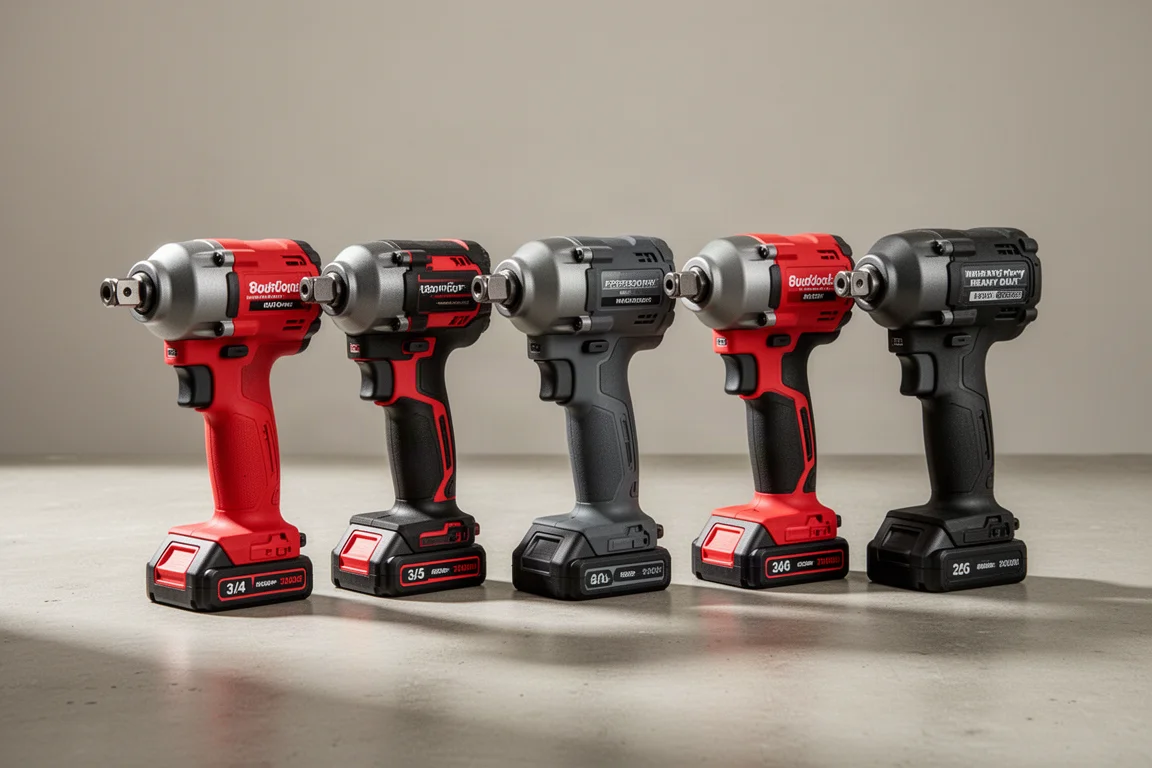
Best 3/4-Inch Impact Wrenches 2026: Five Contenders Compared
We compare five 3/4-inch impact wrenches across price and performance, from a budget Amazon option to Snap-on's most powerful model yet.
Power Tools
Best Budget Cordless Tools 2026: Walmart Finds That Punch Above Their Price
We tested five cordless tools from Walmart, including a high-torque impact wrench that trades blows with Milwaukee and a $35 duster that outperforms its price class.