Power Tools
Best Power Cutters Tested: The Top Performers for Cardboard, Plastic, and Tough Materials
We compare seven cordless power cutters across cardboard, plexiglass, MDF, carpet, and aluminum flashing to find the fastest, smoothest, and safest options.
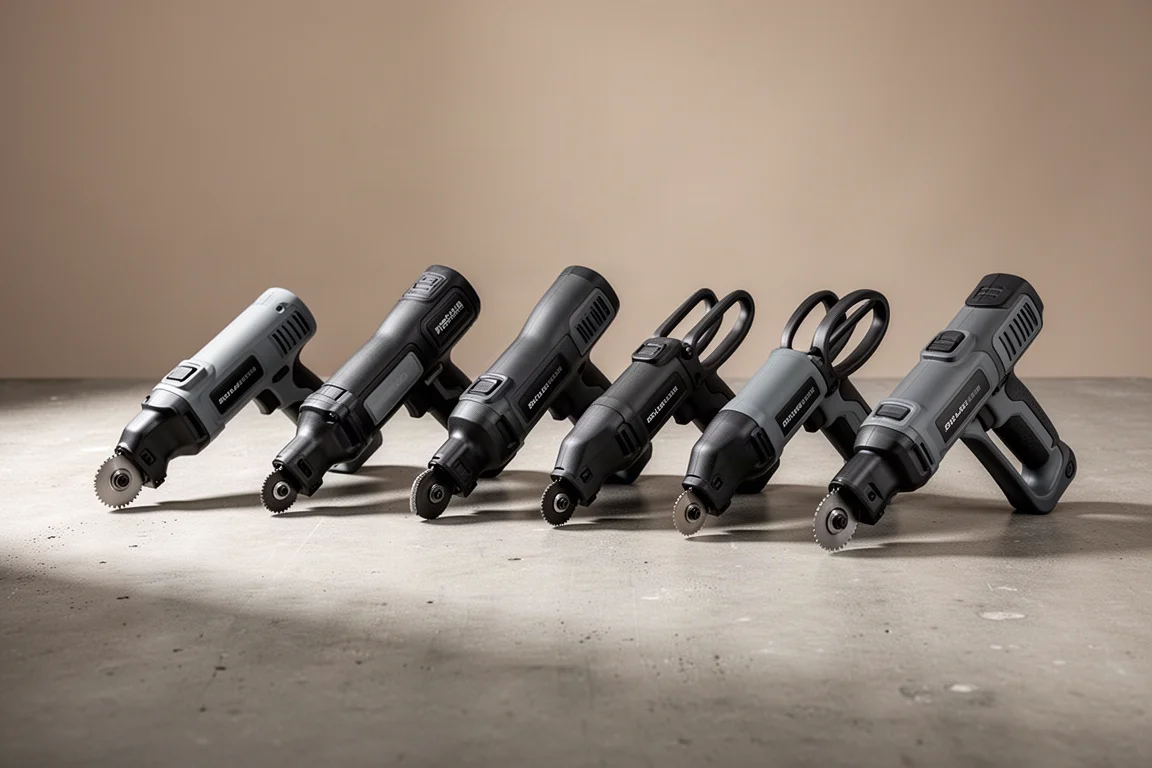
Introduction
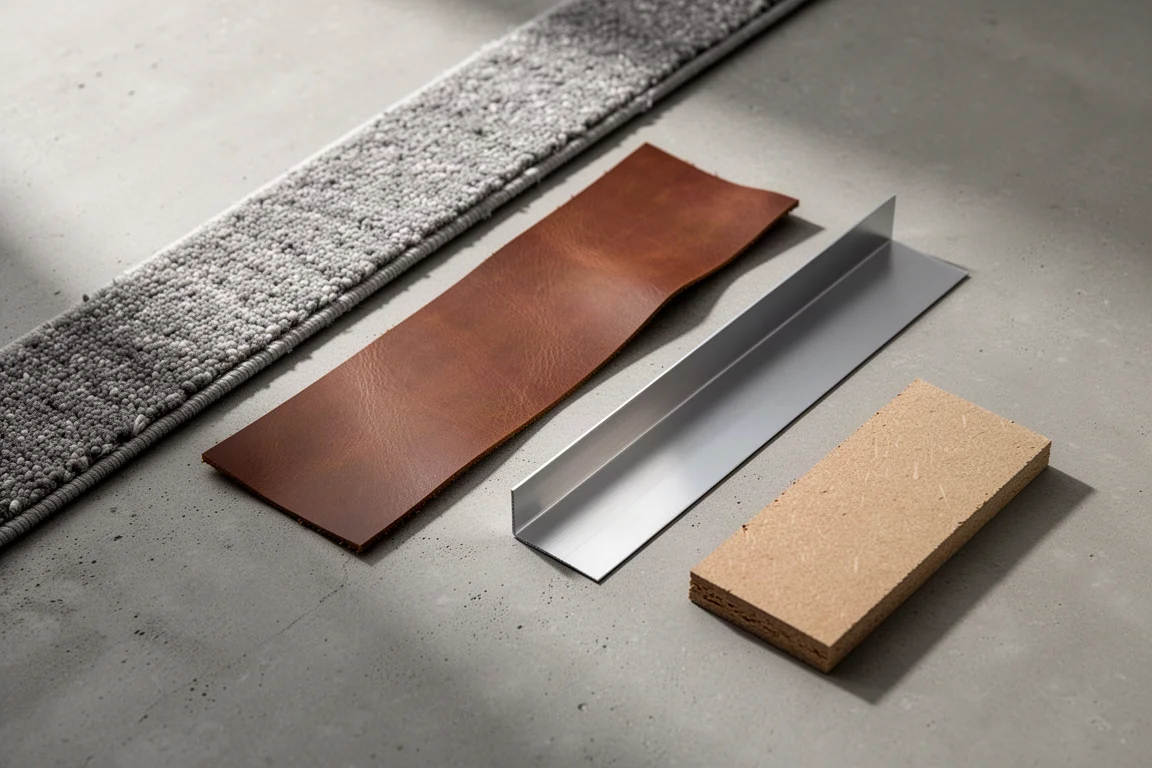
Utility knives get the job done, but they are slow, and it is remarkably easy to slip and cut yourself. Cordless power cutters promise to be faster and safer for everyday cutting tasks like cardboard, plastic packaging, carpet, and even thin metal. To find out which ones actually deliver, we tested a full lineup of popular models through a series of hands-on cutting trials: cardboard speed runs, plexiglass cuts, dense MDF passes, carpet, a rubber mat, and aluminum flashing.
Not every tool survived with its reputation intact. Blade guards snagged on some cutters, torque ran out on others, and a few quietly ran away with the top spots. After tallying every result, a handful of clear winners emerged, and this guide focuses on the models that earned their place.
How the Cutters Were Evaluated
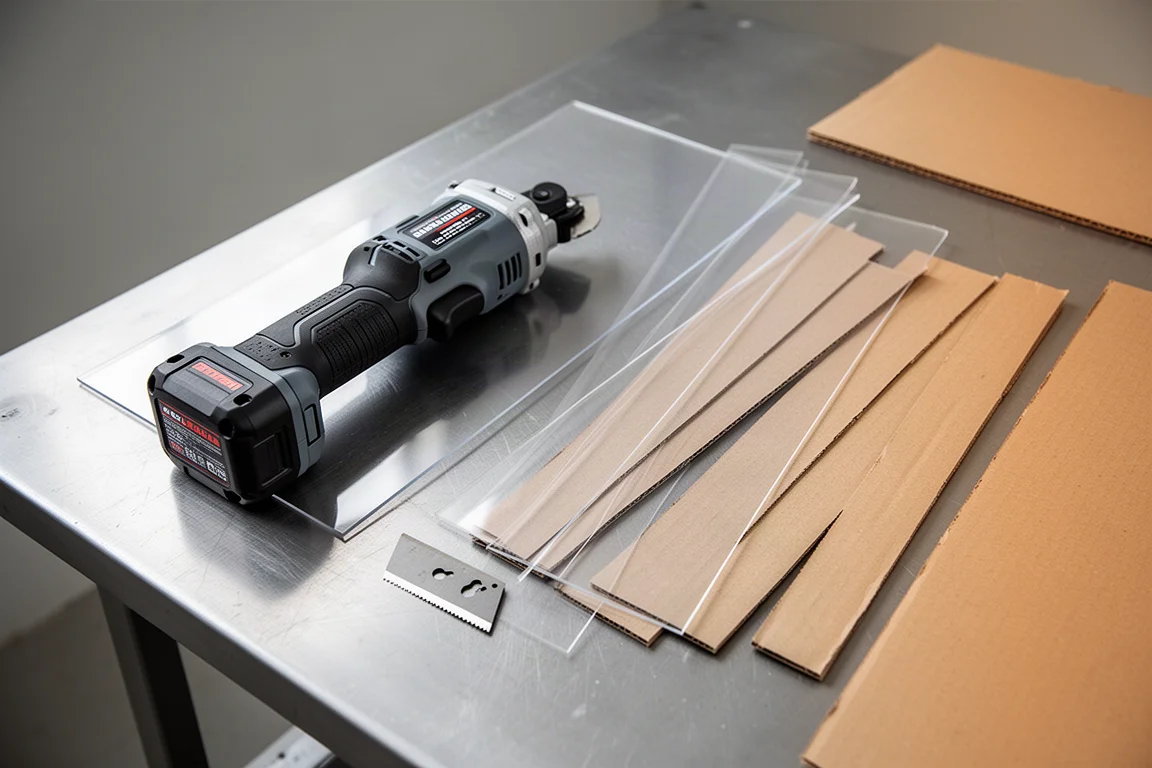
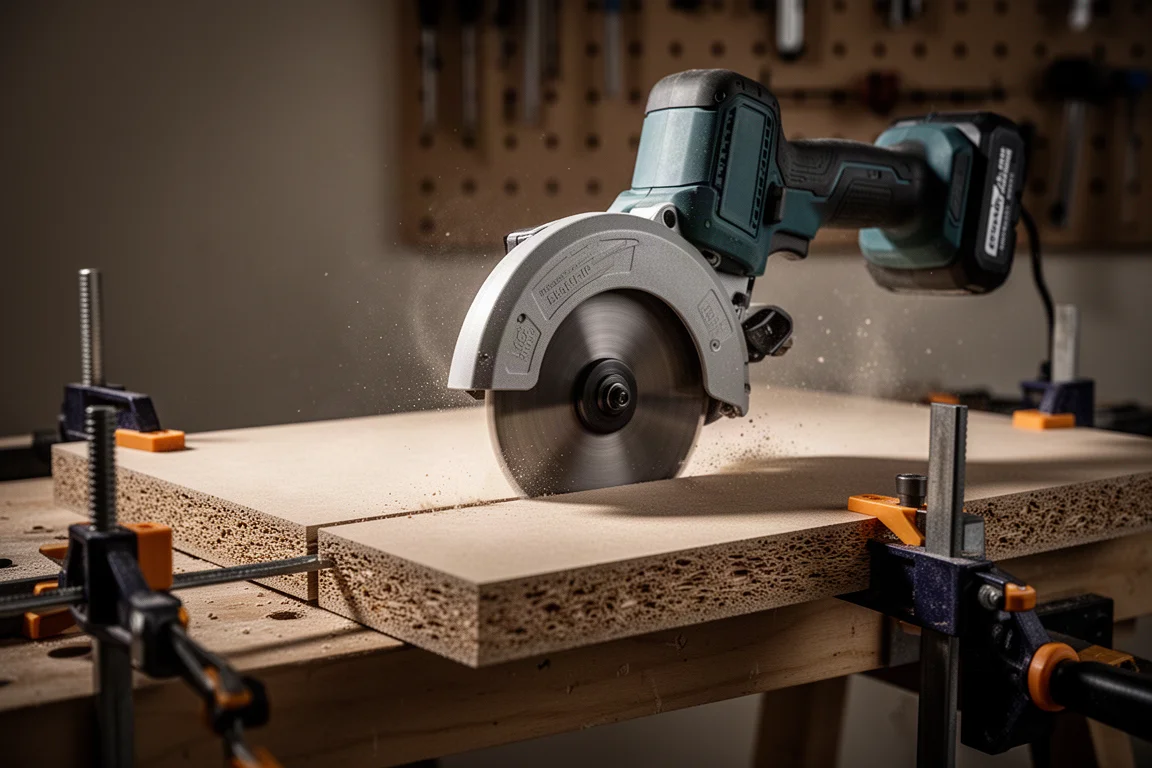
Every cutter faced the same tests with the same materials. Cardboard cuts measured raw straight-line speed across three passes. Plexiglass exposed blade guard design flaws, because a guard that catches on thin, dense material turns a fast motor into a rough, interrupted cut. MDF was the torture test: this dense board demands torque, and several compact cutters stalled or slowed dramatically under the load. Finally, carpet, a rubber mat, and aluminum flashing rounded out the picture for versatility.
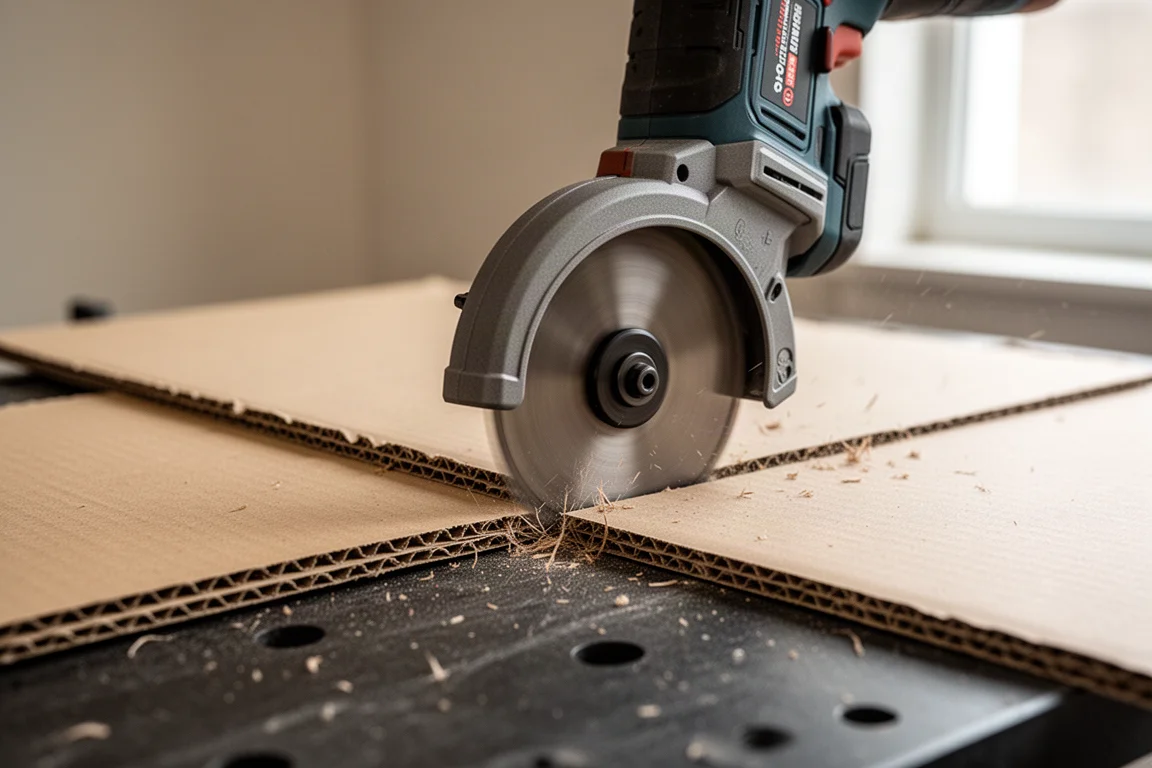
Measured details such as weight, noise level, and no-load RPM were recorded for each tool, alongside claimed specifications from each manufacturer. The results were converted into a first-through-sixteenth ranking across all tested brands, and the models below finished consistently at the top.
Best Overall Cardboard Cutter: Makita Multi-Cutter
At $139, the Makita was the most expensive multi-cutter tested, and it backed up that price with the best cardboard performance in the field. It recorded the highest no-load RPM of the group at 560 and posted the fastest average cardboard cut time at 1.19 seconds, making it the definitive cardboard cutter in the lineup. It weighs 725 g and ran at 74.2 dB, both reasonable figures for the performance. The kit includes the battery and charger, and the self-sharpening blade is designed to maintain maximum cutting efficiency.
The caveats: on plexiglass, its blade guard occasionally hung up, though less than most competitors, and its 1.29-second average was still quick. On MDF, however, it ran out of torque, stalling repeatedly and finishing in about 22 seconds. Choose the Makita if cardboard and packaging are your primary materials and you want the fastest, most refined cutting experience.
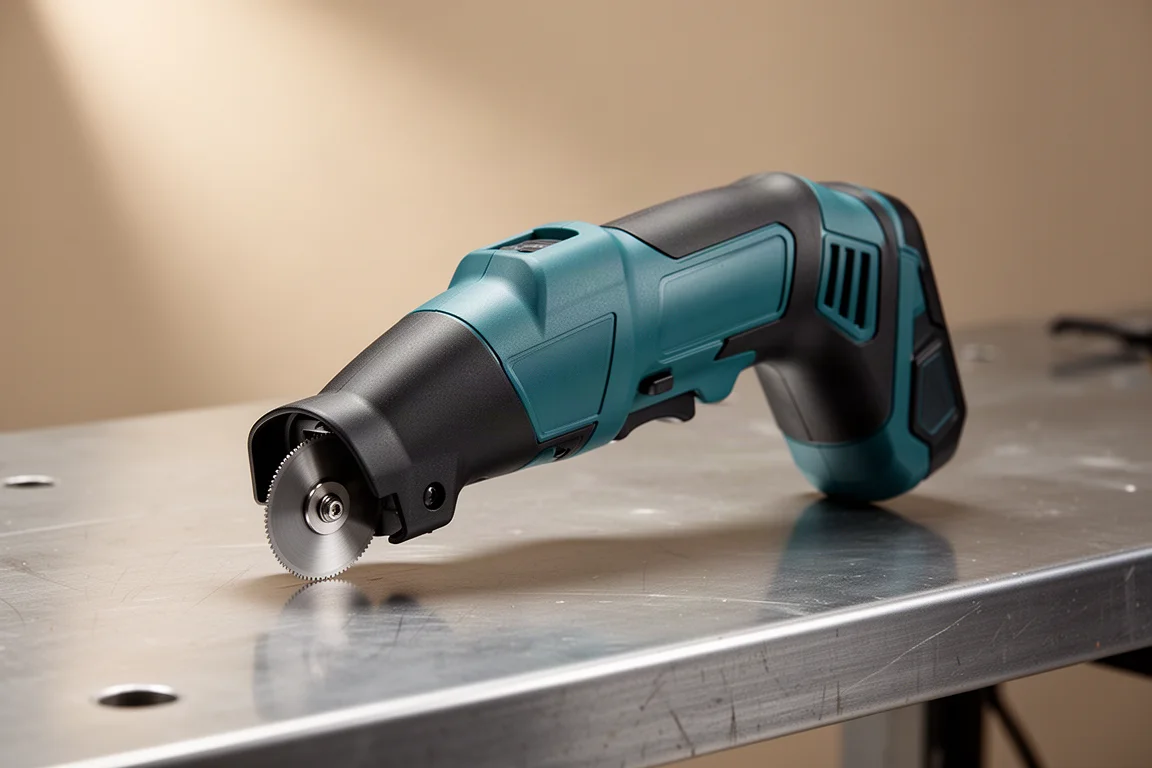
Best All-Around Performer: Skil Power Cutter
The Skil stood out immediately because it runs on a 12V system with a 2.0Ah battery and charger included, while most competitors use small 4V cells. That extra voltage translated directly into performance: 541 RPM, the second-highest measured speed, and the fastest cuts in nearly every trial. It averaged 1.38 seconds on cardboard, 0.95 seconds on plexiglass, and just 0.5 seconds on MDF, all fastest-in-test at the time. On aluminum flashing it topped the field at 0.3 seconds.
It weighs 792 g and measured 76.7 dB. The self-sharpening blade and the ability to handle cardboard, carpet, leather, and vinyl make it remarkably versatile. Its only recurring flaw was occasional blade guard interference on plexiglass. Across the full scorecard it averaged a second-place finish overall, and it was the standout choice of the entire lineup.
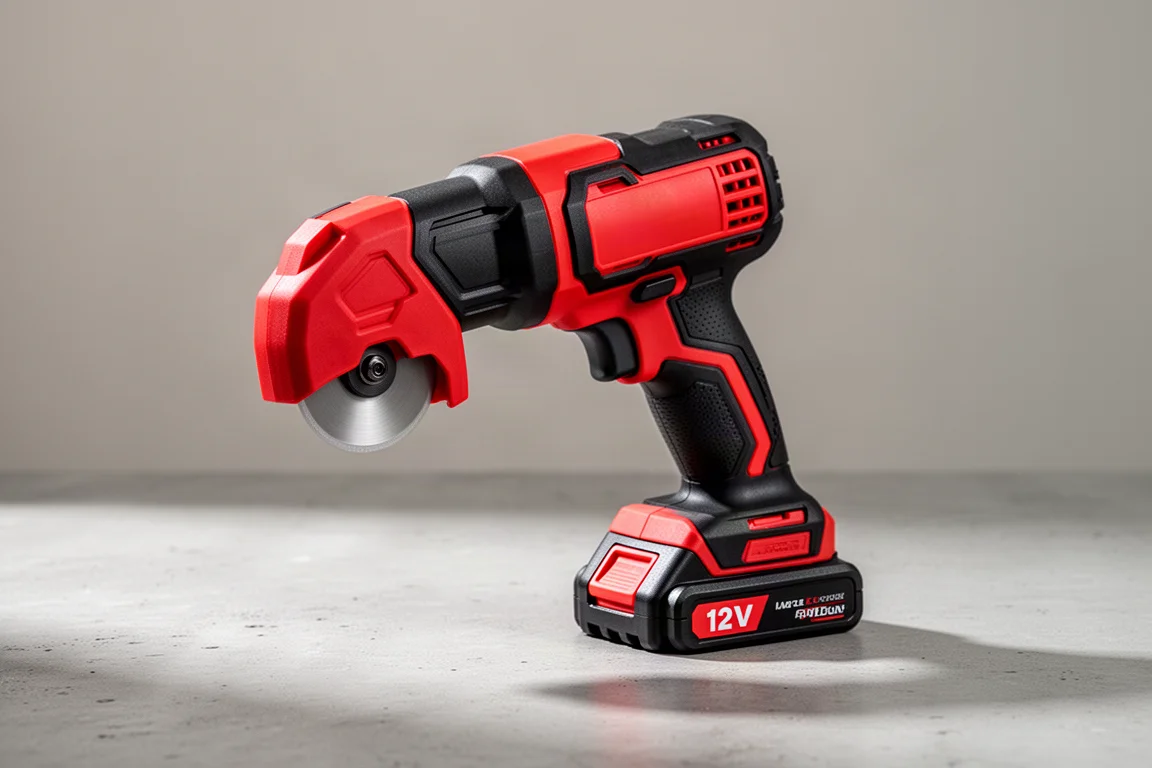
Best for Precision Snag-Free Cutting: Worx Zip Snip
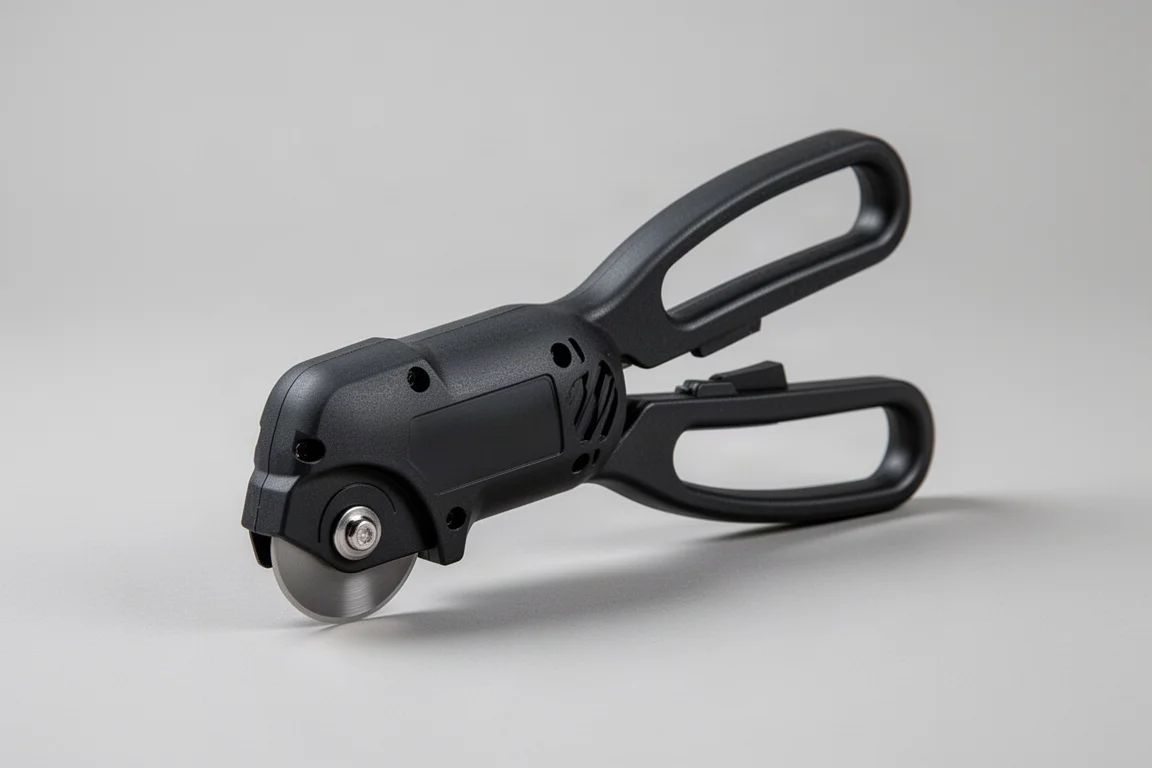
The Worx Zip Snip is a cordless electric scissor with a 4V motor, and at $44 it delivered some of the cleanest cutting behavior tested. Its blade guard design earned the best possible snag-free rating, meaning it rarely interfered with the cut, and it hit just one snag across the plexiglass trials. It measured 487 RPM, averaged 1.41 seconds on cardboard and 1.36 seconds on plexiglass, and weighs 413 g at 75.5 dB.
It does require a specialized charger, which is included in the kit. The clear limitation is heavy material: on MDF, the Zip Snip stalled several times and the second cut took nearly twice as long as the first, so it is simply not designed for dense board. For cardboard, plastic, fabric, and everyday packaging work, though, it is one of the smoothest and fastest tools available.
Best Budget Performer: Warrior Power Cutter
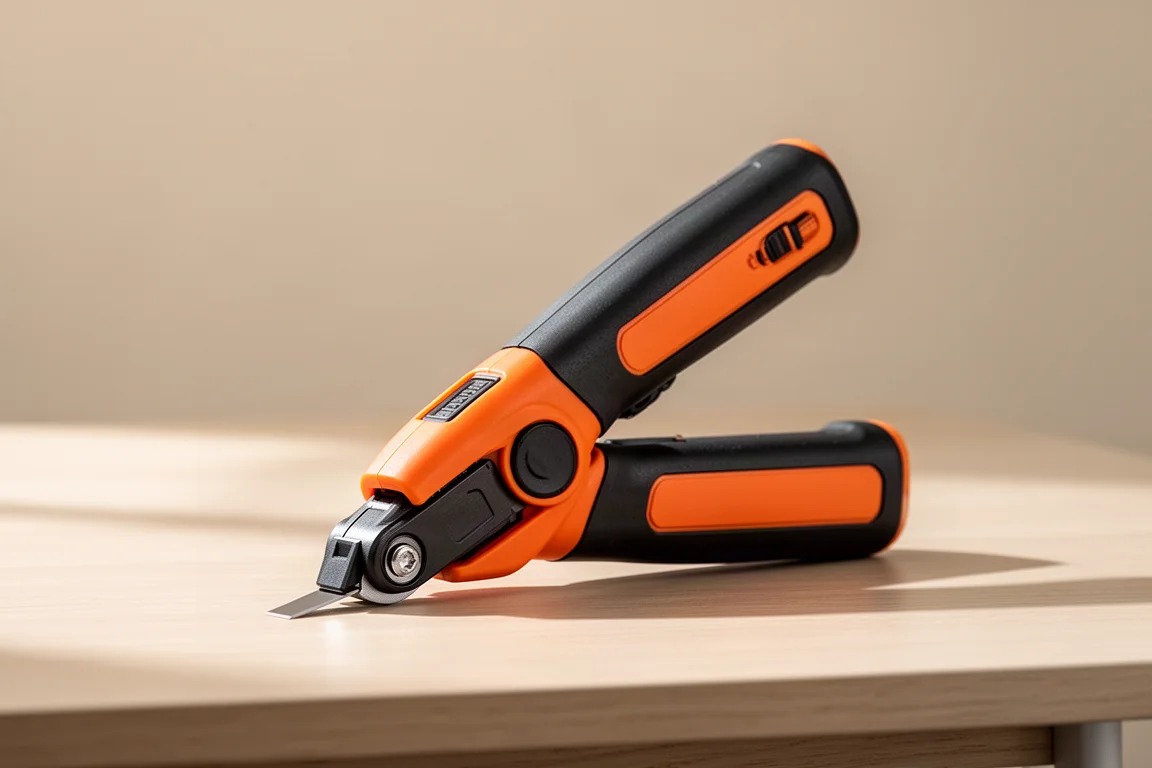
Sold at Harbor Freight for $40, the Warrior punches well above its price. It recorded 480 RPM, averaged 1.58 seconds on cardboard to take second place in that test, and matched the Z at 1.41 seconds on plexiglass with only a single snag. It weighs 475 g and measured 78.6 dB, on the louder side but nothing unusual.
On MDF it impressed with a best pass of 2.05 seconds, and it tied for second place on aluminum flashing at 0.5 seconds. Across the full scorecard it averaged a 3.6 finish, one of the strongest overall. It is many times better than a utility knife, and if you want maximum performance per dollar, this is an easy recommendation.
Best Value Speed: Workpro Power Cutter
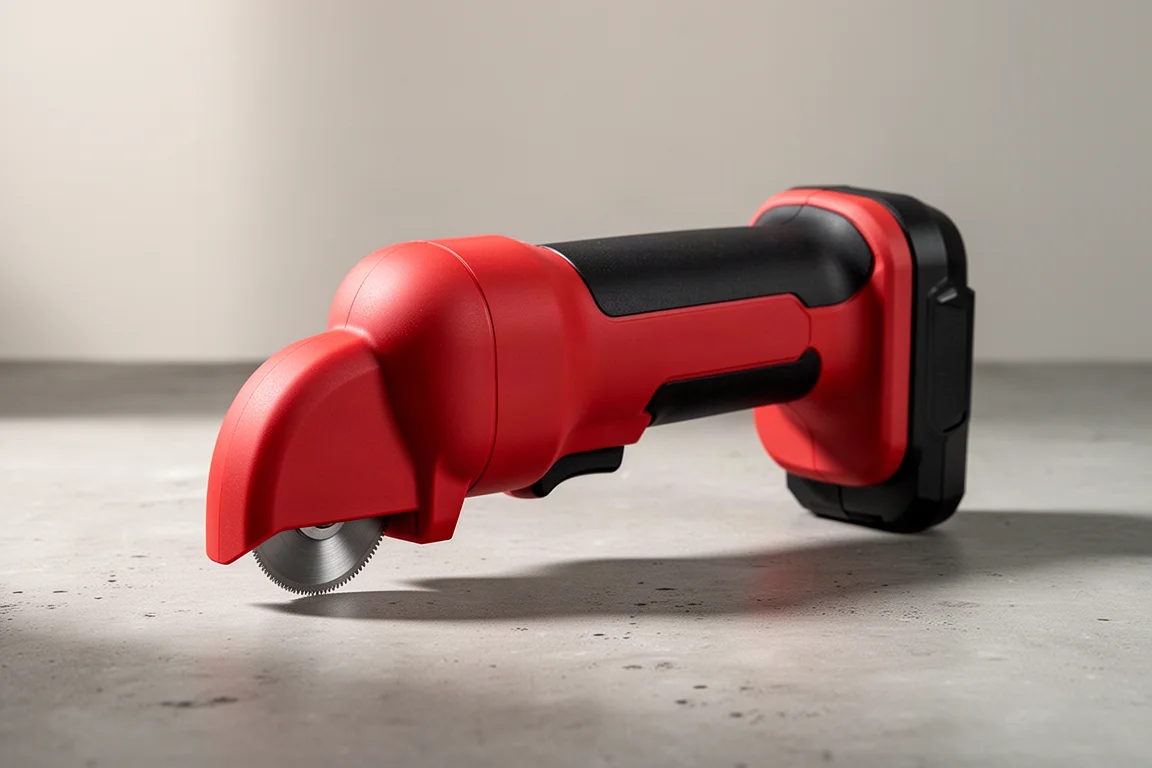
At just $30, the Workpro was one of the cheapest tools tested and one of the fastest on lighter materials. It uses a 4V system with a claimed 2,000mAh battery and a claimed 280 RPM blade speed, measured at 379 g and a quiet 68.6 dB. Its 1.53-second cardboard average was very hard to beat in the early rounds, and its cuts were notably smooth without snagging.
On plexiglass it delivered 1.17 seconds, good for second place in that trial, with the blade guard staying out of the way far better than most. The weakness appeared on MDF, where the dense board proved too much for it at 4.69 seconds. Its blade guard design also scored well for snag-free cutting. For packaging, fabric, and light-duty work at a budget price, it is exceptional value.
Best Torque for Dense Materials: Ryobi Power Cutter
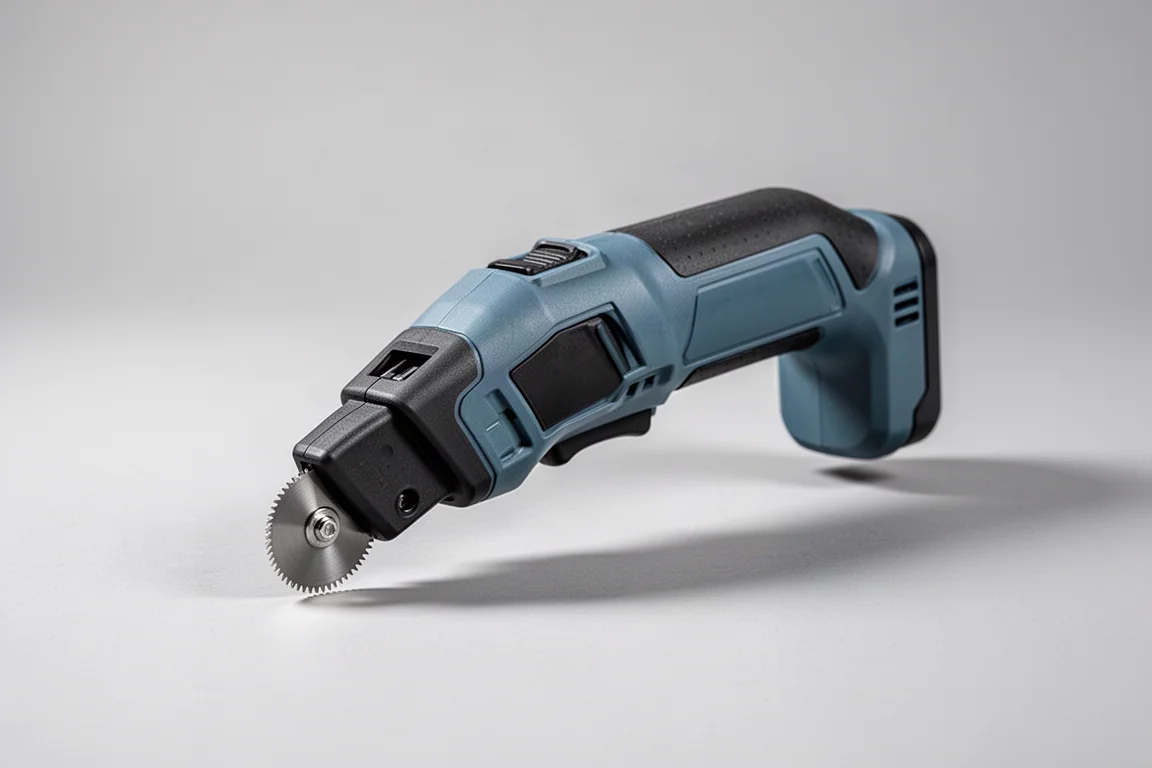
Priced at $70, the Ryobi differentiates itself with a removable USB lithium 2.0Ah battery that is compatible with other Ryobi products, a genuine convenience if you already own into that ecosystem. It measured 434 RPM and a quiet 69.6 dB at 474 g, with a claimed 270 RPM and a 6.4mm cutting capacity.
Where it truly shined was MDF: it powered through the dense board with a 0.79-second average, the best of any cutter in that test. On cardboard it managed a strong 1.88 seconds despite some blade guard interference, and its aluminum flashing performance was solid. The recurring theme is torque: this is the cutter to pick if your cutting list includes tougher, denser materials rather than just packaging.
A Strong All-Rounder: Z Tools Power Cutter
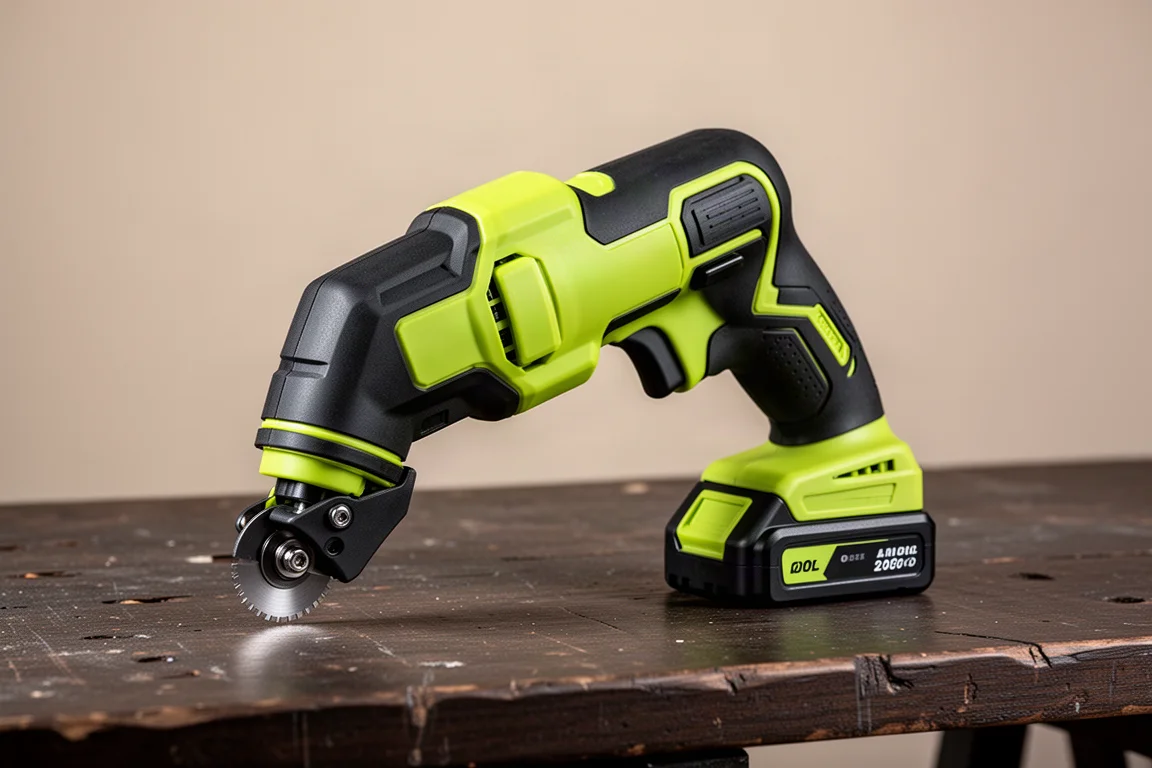
At $40, the Z Tools delivers a spec sheet that over-delivers: while it claims speeds up to 260 RPM, it measured a remarkable 509 RPM no-load, third-highest of all brands tested. It weighs 473 g at 76.9 dB, includes an extra blade, and claims compatibility with corrugated cardboard, flower stems, double-thick polar fleece, and denim.
Its measured results back that up. It averaged 2.41 seconds on cardboard, 1.2 seconds on plexiglass for third place in that trial with a much better blade guard design than similarly priced rivals, and its best MDF pass came in at 2.98 seconds. On aluminum flashing it tied for second at 0.5 seconds, and its snag-free rating of 1.5 was among the best. The Z looks almost identical to the Warrior and performs similarly across most categories; between the two, buy whichever is cheaper that day.
Buying Advice: How to Choose
Across the full testing program, a clear pattern emerged: higher blade speed wins on soft, thin materials like cardboard and carpet, while torque matters most on dense material like MDF. The 12V Skil ran circles around the 4V competition overall, which is why it finished second on average across all graded categories and earns the top recommendation here.
Match the tool to your materials. If you mostly break down boxes and cut packaging, the Makita, Workpro, and Worx Zip Snip are excellent, with the Workpro offering the best price-to-speed ratio. If you need genuine all-material versatility, the Skil is the safest bet. If dense board or tough stock is on your list, prioritize the Ryobi. And on the evidence of these tests, any of these cutters is considerably safer than a utility knife, both for speed and for keeping the blade away from your fingers.
Conclusion
The best power cutter depends on what you cut most often. The Makita is the ultimate cardboard cutter, the Skil is the best overall performer thanks to its 12V power, and the Workpro and Warrior deliver outstanding value at the budget end. Every tool tested here cut faster and more safely than a utility knife, so whichever model fits your budget and materials, you are making an upgrade.
Further reading
Related Reviews
Power Tools
Best 1-Inch Pistol Impact Wrenches: Three Heavy-Duty Options Compared
We compare three 1-inch pistol impact wrenches, from a budget-friendly Harbor Freight model to a premium Caterpillar unit, to help you choose the right one.
Power Tools
Best 3/4-Inch Impact Wrenches 2026: Five Contenders Compared
We compare five 3/4-inch impact wrenches across price and performance, from a budget Amazon option to Snap-on's most powerful model yet.
Power Tools
Best Budget Cordless Tools 2026: Walmart Finds That Punch Above Their Price
We tested five cordless tools from Walmart, including a high-torque impact wrench that trades blows with Milwaukee and a $35 duster that outperforms its price class.