Knife Sharpeners
Best Pocket Knife and Tool Sharpeners: Four Handy Options Compared
Four compact pull-through sharpeners and diamond files, from a 4-in-1 all-rounder to garden and premium options, with honest trade-offs.
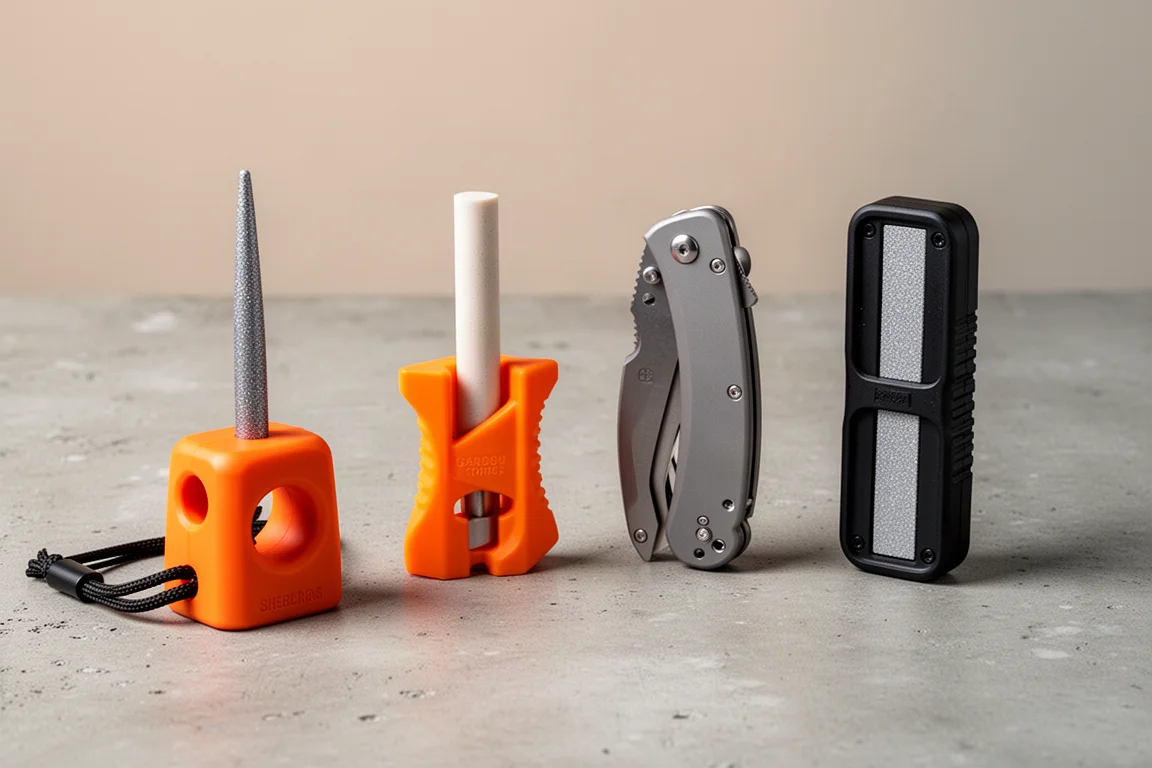
Introduction
Compact pull-through sharpeners divide opinion like almost nothing else in the knife world. Among people who sharpen seriously, they are pretty much universally disliked, and it is easy to see why: they remove metal aggressively and leave you little control over the angle. But they also have real appeal for a different kind of user, someone who wants a small, light tool that can bring a working blade back to life in the field without setting out stones and oil.
This roundup looks at four options that share the same basic idea: fixed carbide blades or ceramic rods that you draw a blade through, plus a diamond rod or file for serrations and larger tools. Some cost around 17 dollars, while one carries a premium brand price. Here is what each one offers and where it fits.
Quick Take: What These Sharpeners Actually Do
Most of these tools follow the same formula. You get a set of predetermined, non-adjustable sharpening teeth, typically carbide blades in coarse and fine grits plus ceramic rods for honing, and a tapered diamond rod for serrations and small touch-ups. Drawing a knife through them does a crude but somewhat effective job, and because sharpening means actually grinding metal off, a careless pass can mess up a blade if you do not know what you are doing.
The ceramic stage is the more forgiving part. It works fast and is often all a blade needs for routine honing, while the carbide stage is better saved for genuinely dull edges. Used that way, these tools can extend the working life of utility knives and razor blades and keep them cutting longer between proper sharpenings.
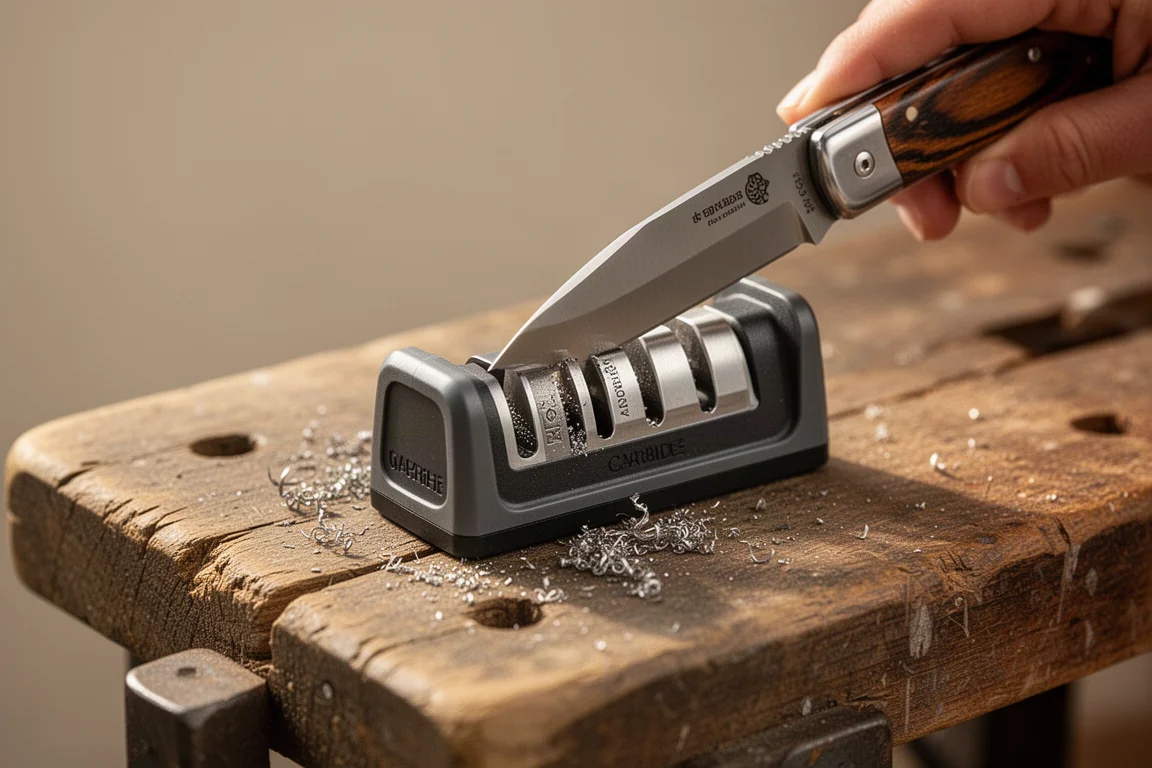
One design detail worth noting: nearly all of them have a big lanyard hole, which seems to be something the engineers put real thought into. That makes them easy to tether to a pack or hang in a shed.
AccuSharp 4-in-1 Knife and Tool Sharpener
The AccuSharp 4-in-1 Knife and Tool Sharpener is the featured pick here because it covers more ground than most. You get the standard coarse and fine carbide slots, a ceramic honing stage, and a tapered round diamond rod for serrations and other implements where you need to grind a little with a diamond file. The diamond rod pops out, giving you 360-degree access, which matters when working unusual edge shapes.
It also earns its 4-in-1 name with extras: a fire starter and a whistle built into the body. The orange color is a genuine advantage in a hunting kit, since it is easy to find when you need to touch up a broadhead or a working blade quickly in the field. One caution from the source: some people try these on archery broadheads, but the angle is wrong for that, so treat it as a knife and tool sharpener rather than a broadhead solution.
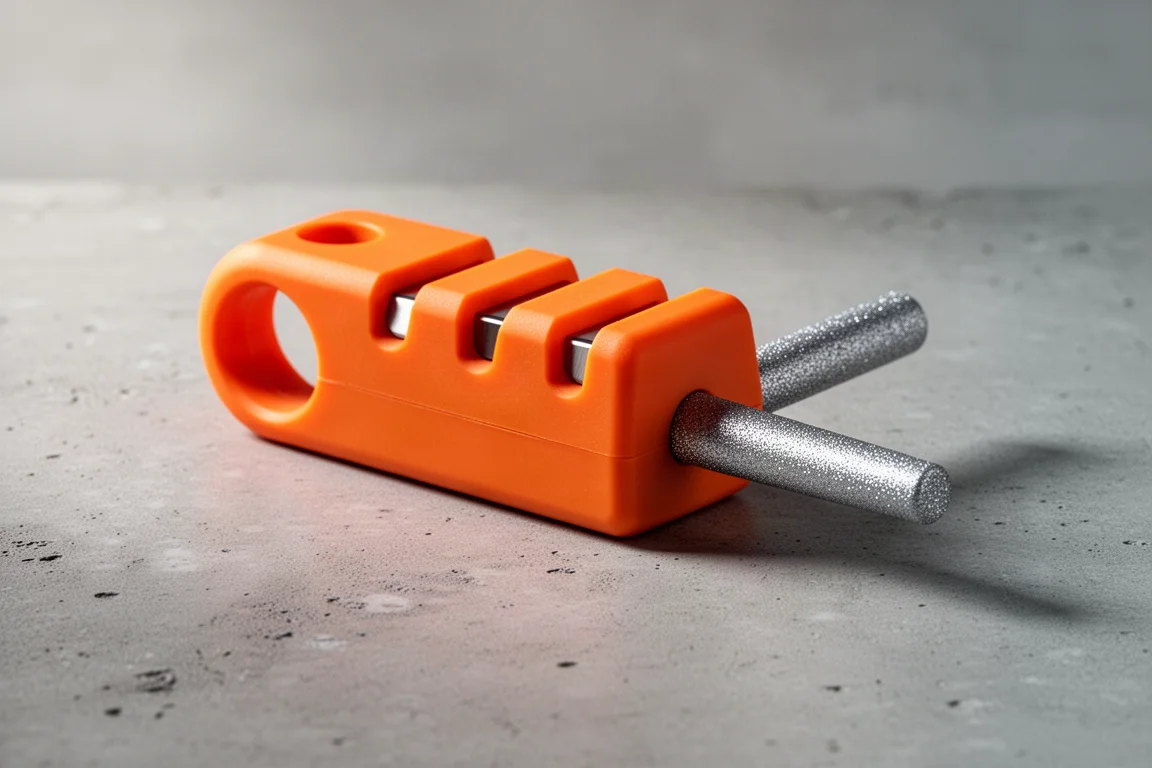
Fiskars Sharpener: For Garden Tools and Shears
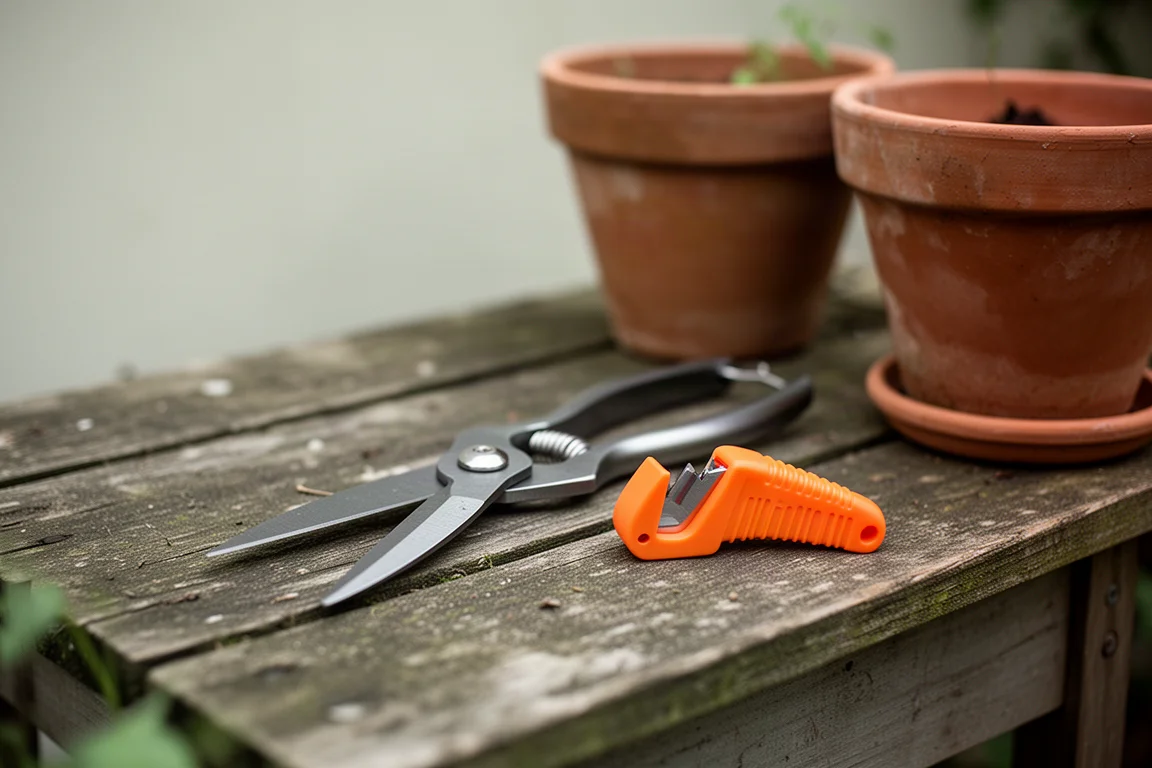
The Fiskars sharpener takes the same concept and aims it at the garden shed. It is designed more for garden tools, and the form factor reflects that: it handles scissors, small blades, and larger implements like shears where a standard knife sharpener would be awkward.
If your main sharpening needs involve pruning tools, shears, and other yard equipment rather than pocket knives, this is the version of the concept that makes the most sense. It keeps the same fast, low-fuss approach, just oriented toward tools you would otherwise replace or send out for sharpening.
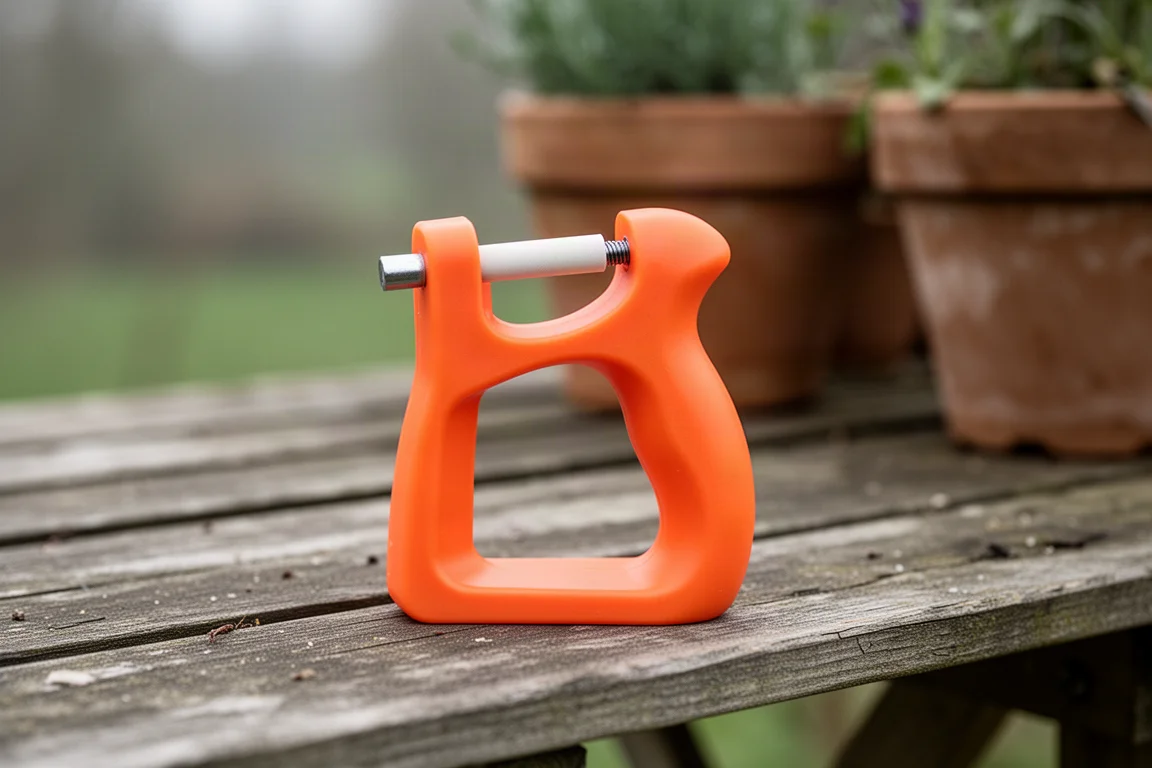
Fallkniven Sharpener: The Pocket-Size One With Diamond
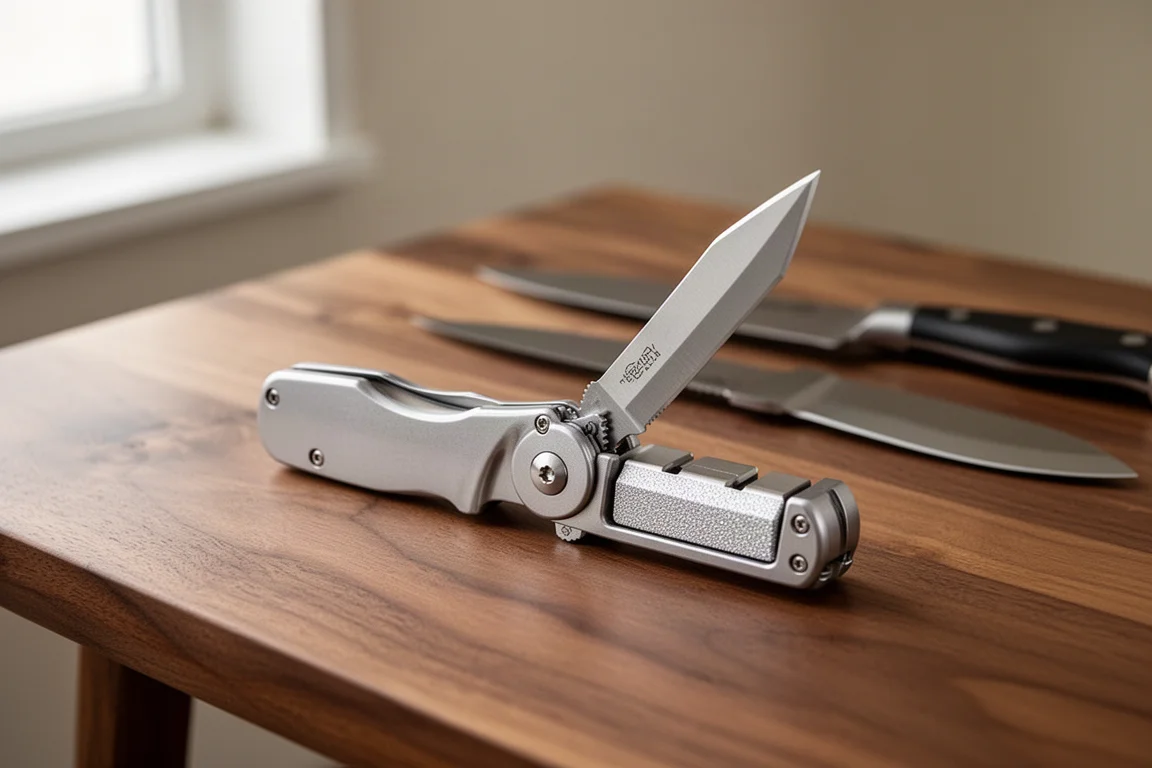
The Fallkniven sharpener is the fun one of the group. It has a switchblade-style form factor that flips open to reveal ceramic and diamond sharpening surfaces, making it a genuinely pocketable tool for a small, simple, light sharpener that works great on knives if you know what you are doing.
At about 17 dollars, it sits in line with similar options in this category, which is reasonable for a tool from a maker better known for serious fixed blades. The diamond surface is handy for quick field work on serrations and for shaping up an edge when you do not want to carry a full sharpening setup.
Snap-On Sharpener: Premium Take on the Same Idea
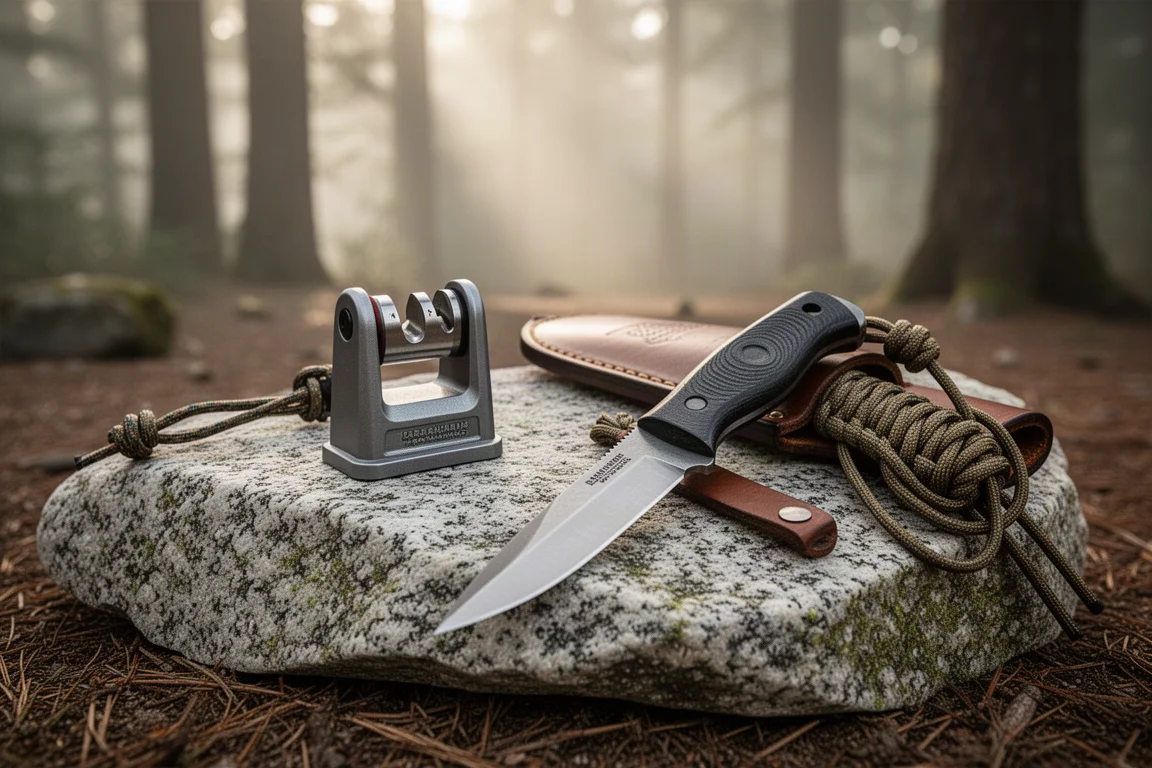
The Snap-On sharpener follows the familiar three-stage formula, but with one notable addition: a diamond file with both a coarse and a fine surface, two different grits on one tool. Diamond files like this are very handy, and if you can control the placement, you can do plenty of sharpening on larger blades.
Snap-On sits at a premium compared to the others in this group, so you are partly paying for the brand. What you get in return is a durable handheld sharpener with dual-grit diamond that also suits larger tools, and a fastener-tightening feature appears on some versions of this style, though on multi-tool designs those extra bits can get in the way depending on how you hold the sharpener.
Overall Buying Advice
Choosing between these comes down to what you sharpen and how you carry the tool. A few points to weigh before picking one:
- Honest expectations matter. These are sharpeners that grind metal off, which is exactly why sharpening enthusiasts dislike them. If you own heirloom knives you plan to pass down, a proper stone setup is the better path.
- Working knives are the sweet spot. For utility blades, everyday carry knives, and razor blades where the goal is squeezing more life out of a tool you will eventually replace anyway, these are genuinely handy.
- Field convenience is real. For a hunting kit or a pack, a small orange sharpener with a fire starter and whistle beats laying out stones and oil, especially when speed matters.
- Watch for feature creep. Some designs in this category pack in fish hook grooves, fastener tools, and extra angles. Extra bits can get in the way while you are holding the sharpener, so a dedicated, simpler tool is often more pleasant to use.
Which One Should You Buy
The AccuSharp 4-in-1 makes the strongest general-purpose case, combining the standard carbide and ceramic stages with a pop-out diamond rod, a fire starter, and a whistle in one orange field-ready body. Pick the Fiskars if your sharpening mostly involves garden tools and shears, the Fallkniven if you want the most pocketable and characterful option at around 17 dollars, and the Snap-On if you value dual-grit diamond surfaces and do not mind paying a brand premium.
Conclusion
None of these will replace a proper sharpening stone, and enthusiasts will keep disliking the category for good reason. But for keeping working blades sharp quickly, maintaining utility knives, handling serrations, and touching up tools in the field, a compact pull-through sharpener with a diamond rod is a practical addition to a kit. Match the tool to what you actually sharpen, respect the fact that they remove metal, and any of these four can earn its place in a pocket or pack.
Further reading
Related Reviews
Knife Sharpeners
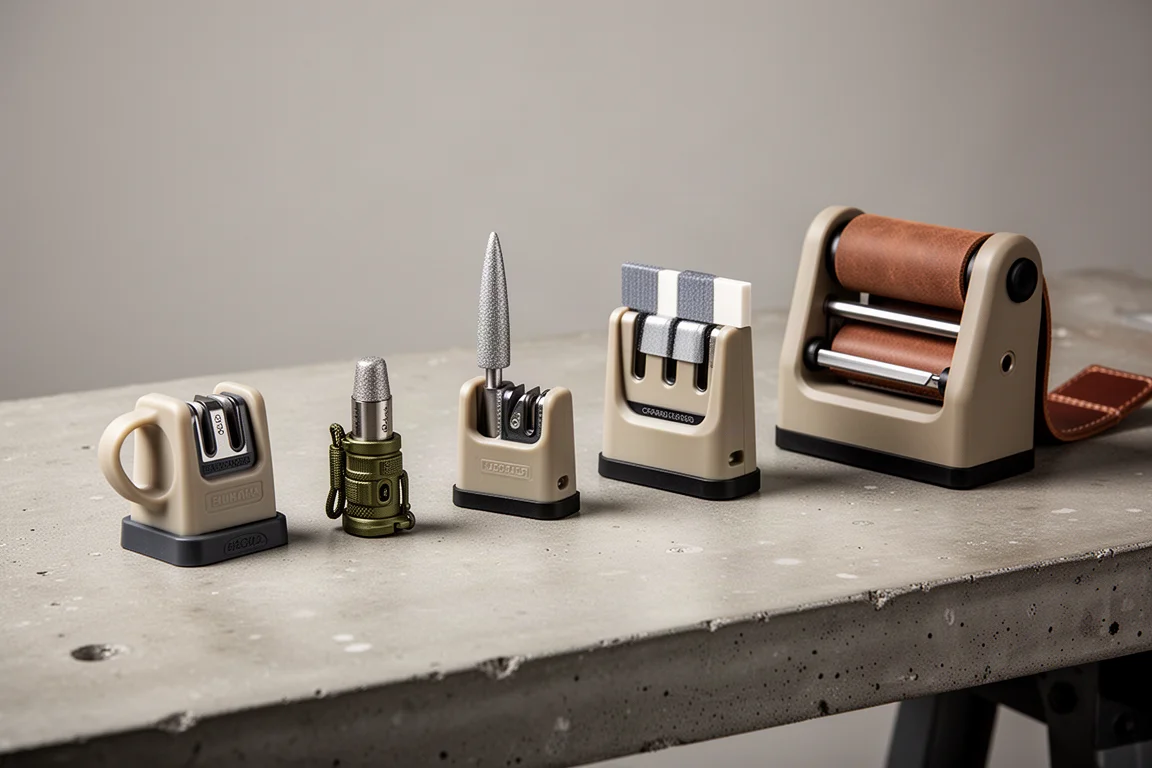
Best Compact Knife Sharpeners 2026: Five Pocket Options Compared
Five compact pull-through sharpeners with very different personalities, from a $12 Milwaukee basic to a strop-equipped Work Sharp design.
Knife Sharpeners
Cold Steel Stylus Sharpener: A Pocket Fix for Worn Serrated Blades
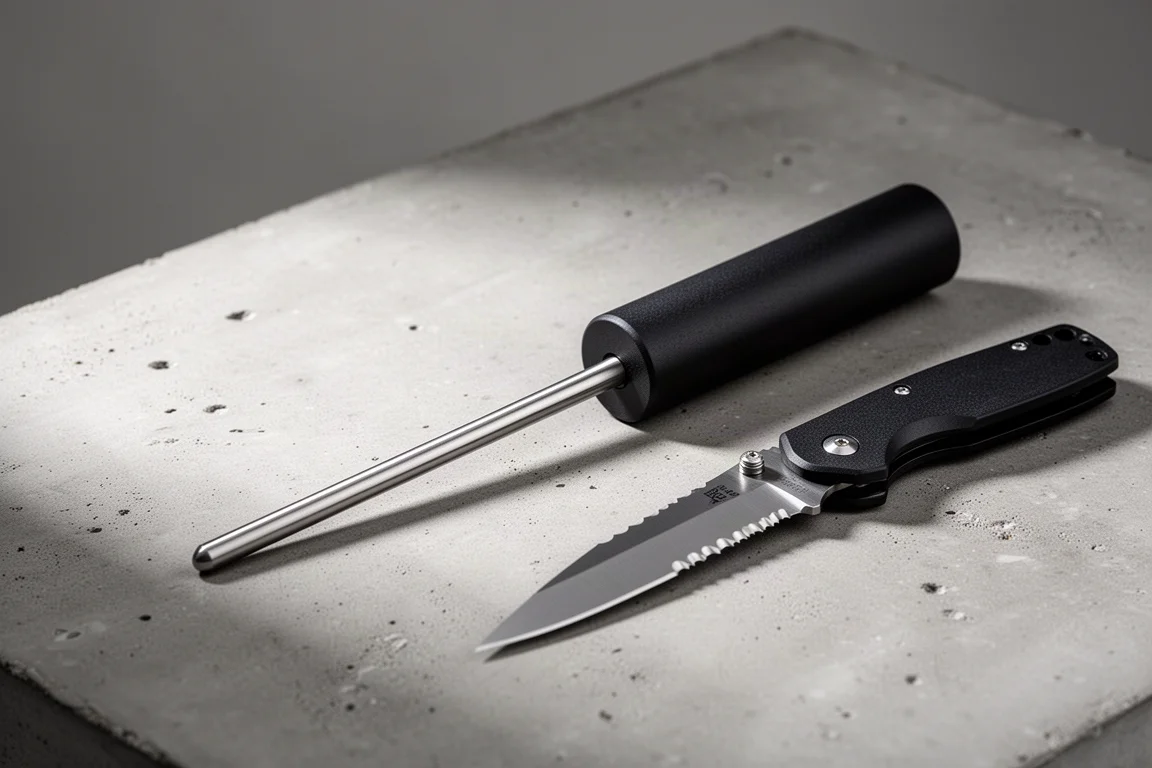
A tapered 600-grit diamond rod designed for Cold Steel serrations that also handles everything from coarse insulation knives to fine Spyderco edges for about $15.
Knife Sharpeners
Sharpal TransferRod Field Sharpener: A Versatile All-in-One Edge Tool
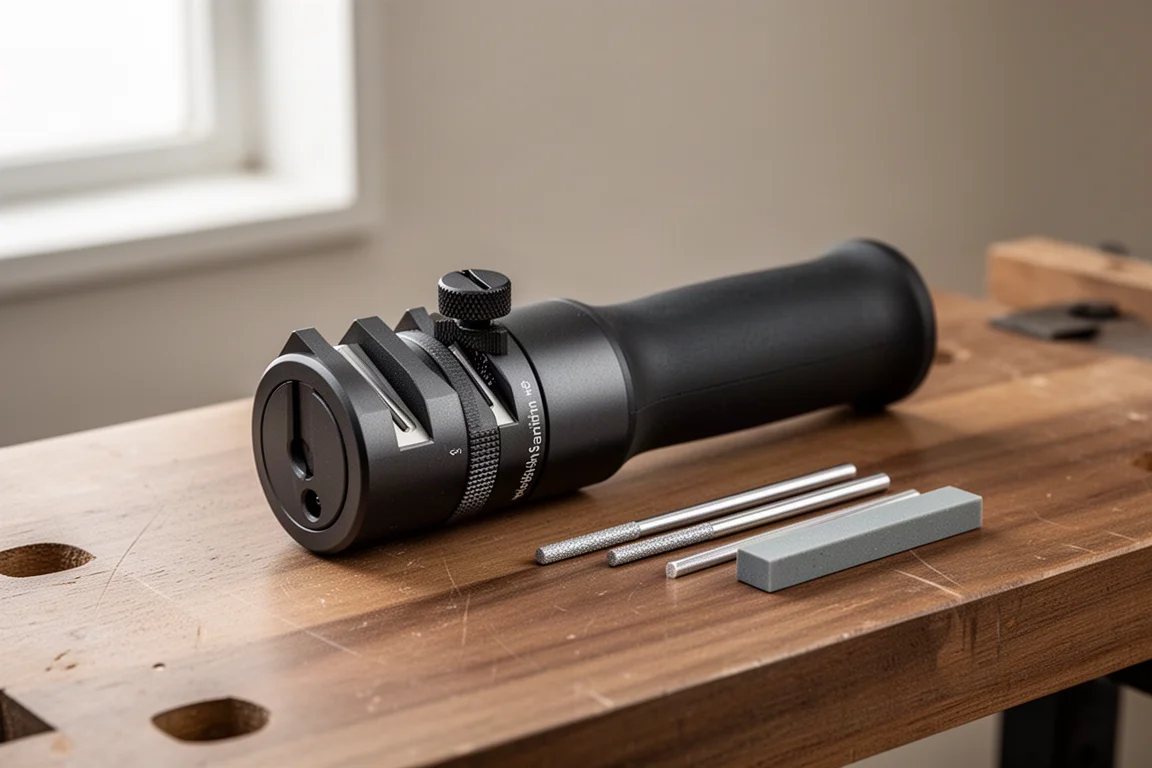
An adjustable-angle field sharpener packed with diamond plates, ceramic stones, strops, a serration tool, and a broadhead wrench, all stored in one handle.