Travel Backpacks
5 Best Travel Backpacks for Personal Item Carry
Five travel backpacks sized to squeeze under an airline seat as a personal item, tested against the common 18 x 14 x 8 inch limit, with notes on fabrics, carry comfort, and organization.
Introduction
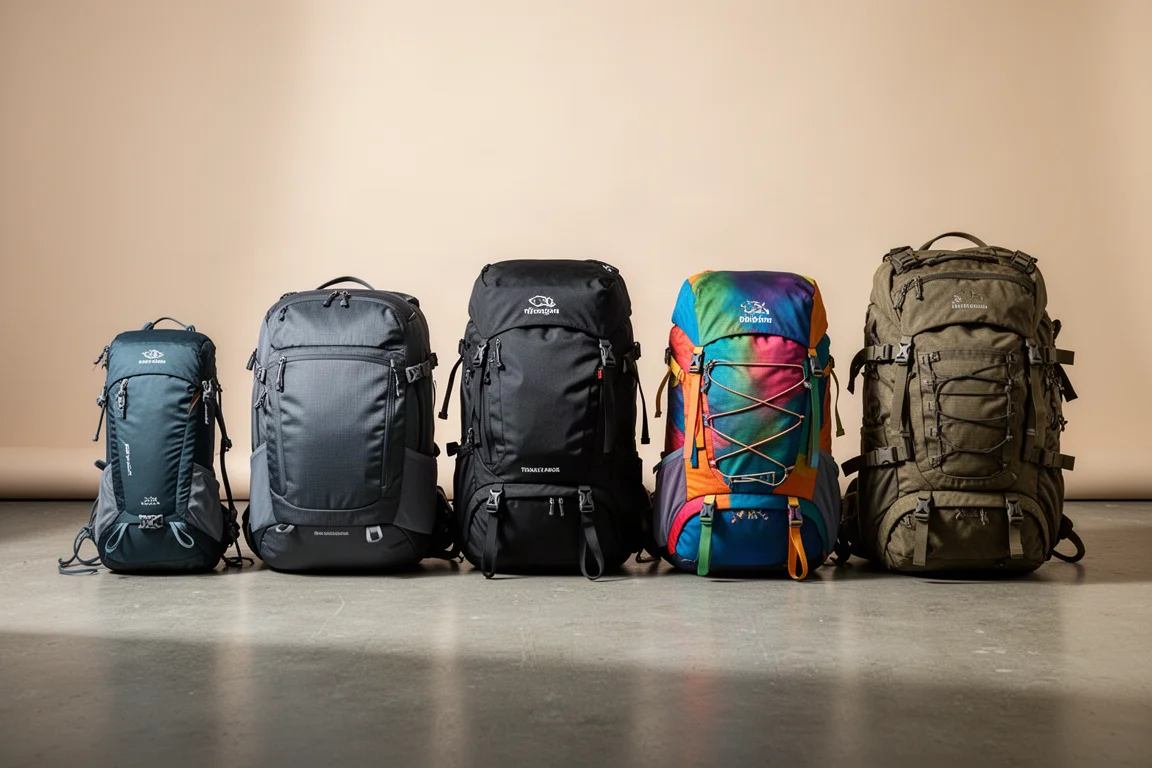
When you fly budget carriers, the bag that matters most is not your checked luggage. It is the pack that lives under the seat in front of you. This roundup looks at five travel backpacks designed to maximize space while still qualifying as a personal item on most airlines: the Aer Travel Pack 2 Small, the CabinZero Military 28, the Cotopaxi Allpa 28, the Patagonia Trace 25, and the Evergoods CPL 24.
All five sit between 24 and 28 liters, use quality materials, and open panel-style or clamshell so the main compartment is easy to pack and reach. Price spans roughly $70 for the CabinZero up to nearly $250 for the Evergoods CPL 24, so there is real variety in both features and budget here.
How These Packs Were Chosen
The criteria were straightforward. Each pack needed to be as large as possible while still fitting a common personal-item limit of 18 inches long by 14 by 8 inches wide, which applies to carriers such as Spirit, Frontier, and Southwest. Every pack was tested inside a wooden sizing box built to those dimensions.
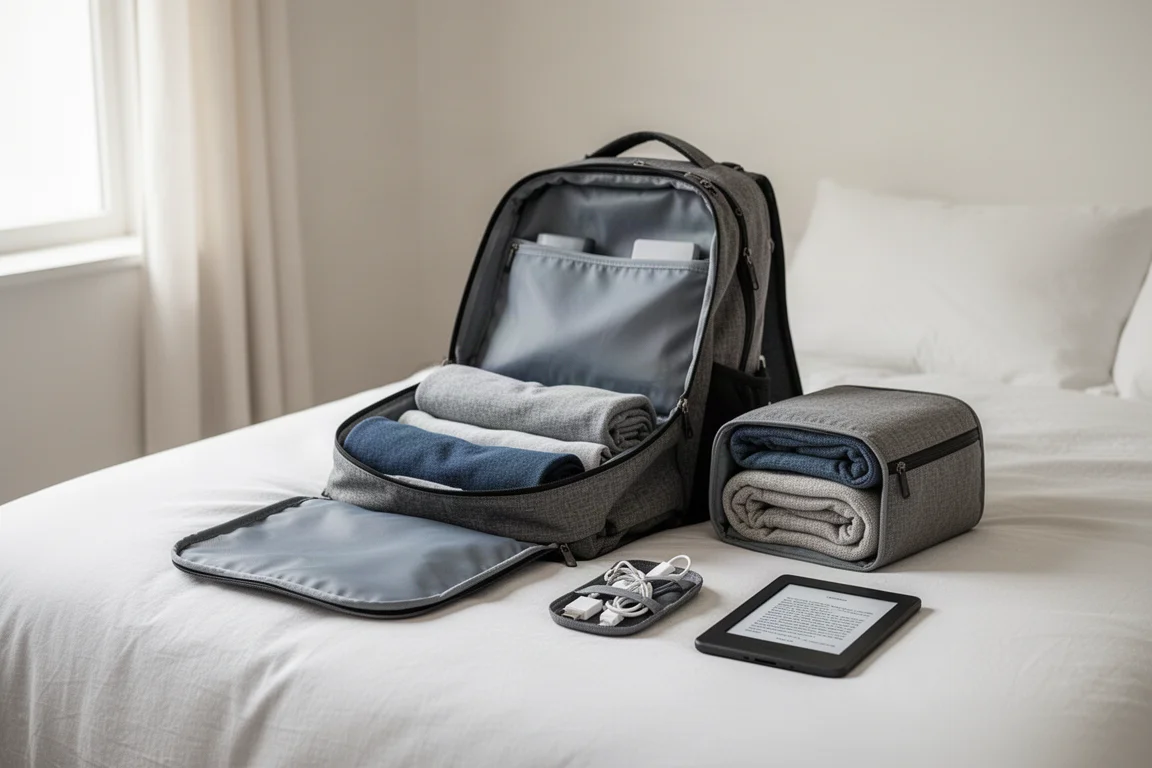
A few caveats are worth knowing before you buy. There is no universal personal-item standard, so dimensions vary by carrier and aircraft. More restrictive airlines such as Norwegian or Ryanair will be a stretch for most of these packs. The Cotopaxi Allpa, for example, is listed at 19 inches long, and because it is a soft bag it will fit the smaller box only if you avoid overpacking it.
All five are panel-opening designs except the Allpa, which is a clamshell. The Evergoods CPL 24 and Patagonia Trace 25 are the smallest at 24 and 25 liters respectively, while the Aer Travel Pack 2 Small, Cotopaxi Allpa, and CabinZero Military come in at 28 liters. In terms of weight, the CabinZero and Patagonia are the lightest at about 1.9 pounds, the CPL 24 is 2.9 pounds, and the Aer and Cotopaxi are the heaviest at roughly 3.3 pounds.
Fabrics, Zippers, and Hardware
Material quality is where these packs start to differentiate themselves. On the lower end, the CabinZero Military 28 uses a 1,000 denier nylon with a water resistant coating, while the Patagonia Trace 25 uses a slightly thinner but lighter 630 denier nylon, also with a water resistant finish.
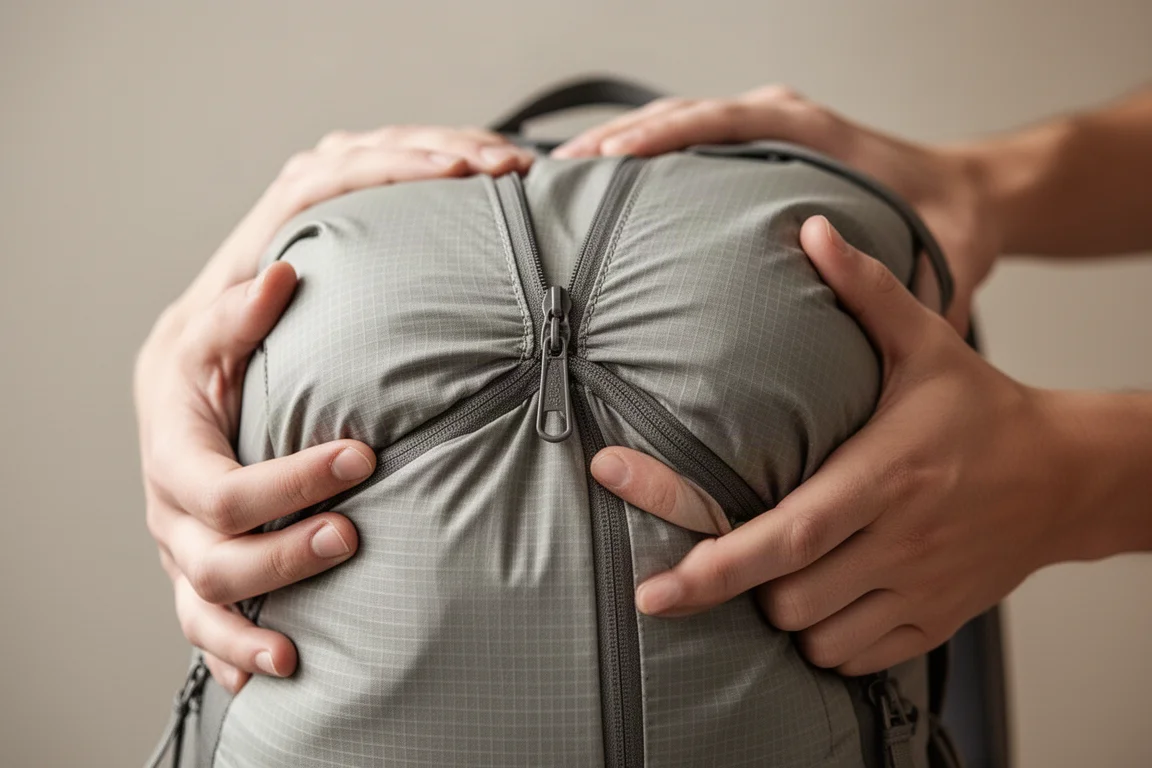
The Cotopaxi Allpa pairs 1,000 denier polyester with a TPU coating and 840 ballistic nylon on the bottom. The Aer Travel Pack 2 Small uses a thick 1680 Cordura ballistic nylon that is very strong, though not quite as abrasion resistant as some thinner fabrics. The standout fabric is on the Evergoods CPL 24: a 500 denier 66 air-textured nylon with a water repellent finish that has a thin weave and excellent abrasion resistance, with a slightly rougher hand feel than the rest.
Zippers and hardware are solid across the board. All five use YKK zippers and Duraflex buckles, with larger number 10 zippers on the main compartment of every pack except the Patagonia Trace, which uses a slightly smaller number 8. Only the Aer and CabinZero have locking zippers, while the Allpa includes security loops that help deter opportunistic theft. The Allpa and Trace use slightly smaller buckles, but quality is not a concern on any of these packs.
Exterior Organization and Pockets
This is where the five packs diverge the most. The CabinZero is the only one with external compression straps. Four packs have front pockets, and two have top pockets. The Aer and CabinZero are the only bags with water bottle pockets, while the Patagonia and Allpa are the only ones with stowable backpack straps.
Three of the bags, the Evergoods, CabinZero, and Patagonia, feature a briefcase-style front compartment that lets you swing the bag around while it is on your shoulder for easy access. The Trace and CabinZero front pockets are large but lack interior organization, while the CPL 24’s pocket is slightly smaller but includes several internal dividers and a small mesh pocket. The Aer uses its signature front slash pocket with a water resistant zipper: large, but with no interior subdividers.
The Cotopaxi Allpa skips the front pocket but compensates with an enormous top-access pocket close to a quarter of the pack’s total volume. It shares volume with the interior packing cubes, giving you flexibility over whether gear lives inside or outside the bag. The Aer and CPL 24 also have smaller top pockets for sunglasses and small gear, while the Patagonia and CabinZero have none.
On water bottle storage, the Aer’s zippered pocket keeps things flat and holds a slim liter bottle, though it is tight. The CabinZero’s pocket is remarkably small and realistically suited to a travel umbrella or tripod rather than a bottle.
Laptop Protection
All five packs have a laptop compartment, but the quality varies significantly. The best are on the Evergoods CPL 24, with side access, excellent padding, and a Velcro sleeve that keeps the laptop away from the sides and bottom, and the Aer, with top-side access, strong front and back padding, and a similar security sleeve.
The Allpa and Trace both have side pockets with decent padding but real limitations. The Allpa’s small sleeve is roughly 11.5 by 8.5 inches deep, which may fit a 13-inch laptop but is too small for a 15-inch machine, potentially forcing the laptop into the larger, less-secured section of the compartment. The Trace offers decent foam padding but no false bottom and nothing to stop the laptop sliding around.
The CabinZero is the weakest here: it has only a simple sleeve in the main compartment with padding on the back but none on the front. If you carry a laptop in this bag, a padded sleeve is a sensible addition.
Compression and Packability
Compression is another differentiator. The CabinZero is the only pack with them, two on each side, and they work well for squishing the bag down to fit the personal-item bin. The Allpa and Evergoods do not need them, thanks to sleek, compact designs with gusseted corners that help hold gear in place. The Travel Pack 2 Small is the one bag that arguably should have compression straps but does not: it is under 8 inches thick normally, but it is soft and easy to overpack. Notably, the larger 33-liter Travel Pack does include them.
Carry Comfort and Support
All five have backpack straps, but only the Allpa and Patagonia Trace have stowable straps, and the Allpa is the only pack that ships with a hip belt. The Aer offers an optional hip belt that attaches to loops and is available separately.
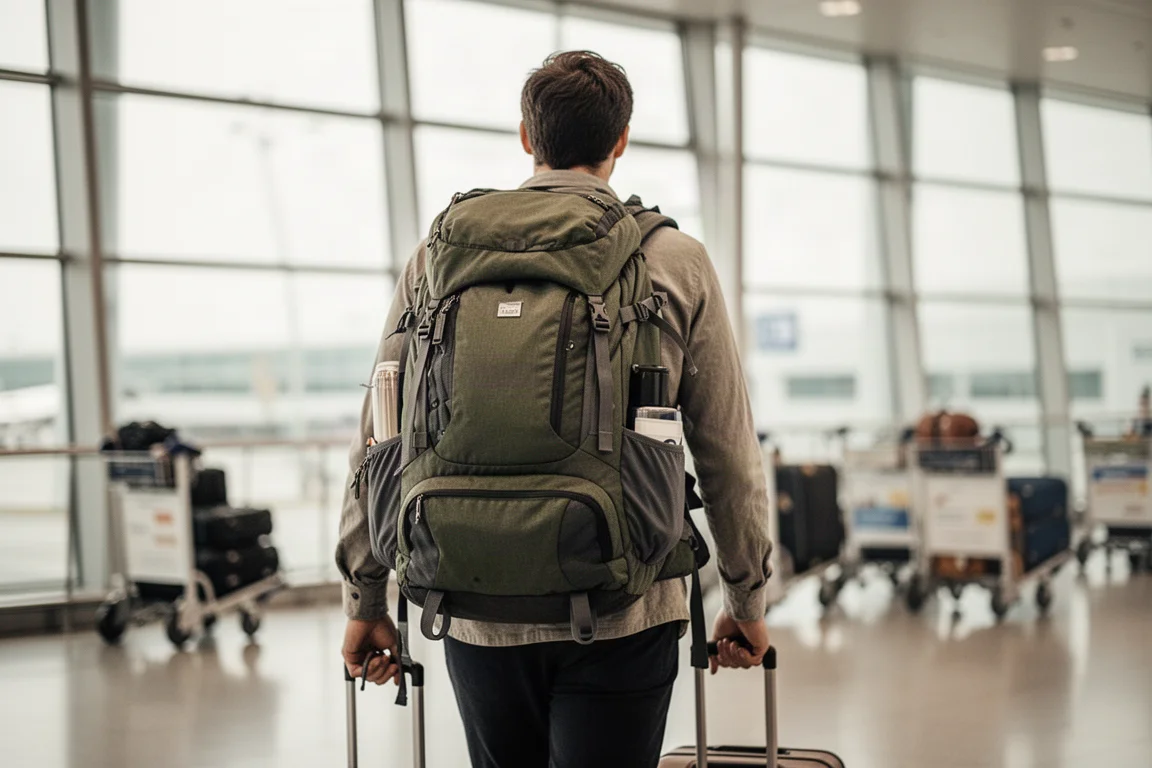
The best carry systems here belong to the CabinZero and the Aer. Both have wide, well-curved shoulder straps with thick padding and soft foam covered in mesh, thick and ventilated back padding, easy-to-adjust straps, and a sternum strap, with the CabinZero adding top load adjusters.
The CPL 24 and Allpa are next in line. The CPL 24’s straps are well padded with soft, squishy foam and fit very comfortably, though there is no mesh padding on the back of the bag or straps. The Allpa uses wider but thinner straps that are still comfortable and easy to adjust, though more padding on the back of the straps would be welcome. The Patagonia’s stowable straps have good adjustability but are noticeably thinner, stiffer, and less padded on both the straps and back panel.
Inside the Packs
All five bags have large main compartments that open like a suitcase, which is what makes them good travel packs in the first place. Four of them open from the top in a panel style: the Evergoods, Patagonia, and Aer lids fold down completely for full access to the main compartment, while the CabinZero’s zipper only runs about three quarters of the pack’s length.
The Cotopaxi Allpa is the exception. It lays flat but opens clamshell-style from the side into two equally sized compartments with zippered dividers, effectively giving you built-in packing cubes.
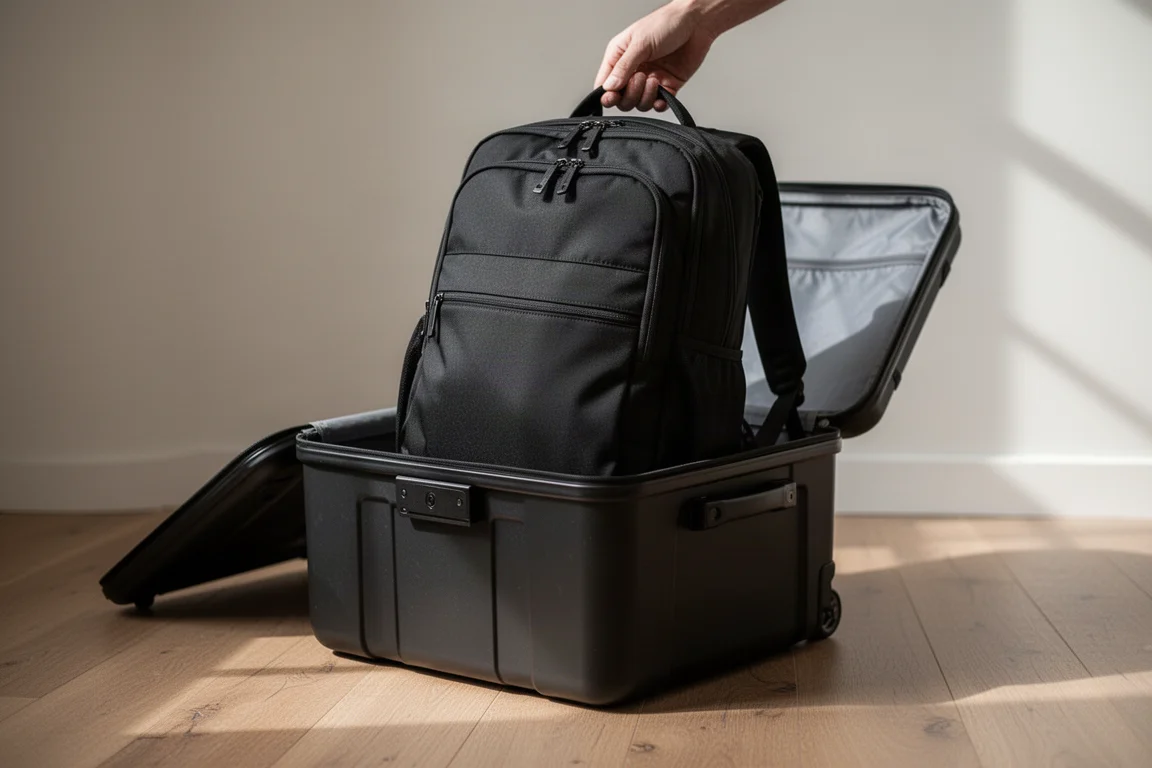
The top-opening packs share a similar internal layout, with a large compartment for clothes and gear plus a rear sleeve for a tablet, laptop, or notebook. Lid pockets differ in usefulness: the Patagonia’s two pockets are thin with no own volume, good for small items; the Aer’s are slightly larger with a bit of volume, big enough to use as packing cubes for socks and underwear; and the Evergoods’ top pockets are the best, with their own volume, including one large pocket that holds a surprising amount of bulky clothing and a smaller pocket for organization.
Which Pack Should You Buy
If you want a minimalist, lightweight bag without many bells and whistles, the Patagonia Trace 25 is a strong pick with a large main compartment, decent straps, and a friendly price. The CabinZero Military 28 offers high-quality materials and very comfortable straps, and its lack of a dedicated laptop compartment is a benefit if you do not need one.
The Aer Travel Pack 2 Small is a solid, minimalist choice with durable materials and hardware, a large interior, good organization, and excellent straps. The Cotopaxi Allpa 28 is a great all-rounder with excellent interior organization that swallows more gear than you would expect from the outside. The Evergoods CPL 24 is the premium option here: at only 24 liters it packs out remarkably well, and in terms of quality and hardware it is the closest thing to the flagship of this group, if you can justify the higher price.
Conclusion
All five of these packs make sense for personal-item travel, and all of them fit the common 18 x 14 x 8 inch limit as long as you do not overpack them. Choose the Patagonia or CabinZero for lightweight value, the Aer or Cotopaxi for a balanced everyday-travel workhorse, and the Evergoods CPL 24 if you want the most refined pack of the bunch and are willing to pay for it.
Product link
View more details for Aer Travel Pack 2 Small
This product is mentioned in the review. Check the specifications, options, and compatibility before buying.
View more details for Aer Travel Pack 2 SmallFurther reading
Related Reviews
Travel Backpacks
Outdoor Vitals Dakota UL Review: One 45L Pack for Travel and Backpacking
A practical look at the Outdoor Vitals Dakota UL, a 45 liter pack that opens like luggage, carries a laptop, and converts for trail use with a removable frame and detachable hip belt.
Travel Backpacks
Outdoor Vitals Koda UL Review: One Bag From Terminal to Trail
A hybrid travel and backpacking pack with a sleek carry-on shape and a frame tuned for all-day comfort under a real multi-day load.
Travel Backpacks
Outdoor Vitals Kota UL Review: One Pack for Flights, Cars, and Backcountry Camps
A close look at the Outdoor Vitals Kota UL, a travel-first backpack designed to stay comfortable under backpacking loads and still slide into an overhead bin.