Knives
Best Outdoor and EDC Knives: 8 Blades Worth Carrying
A practical lineup of eight fixed-blade and folding knives for hiking, backpacking, and everyday carry, with honest notes on what each one does best.
Introduction
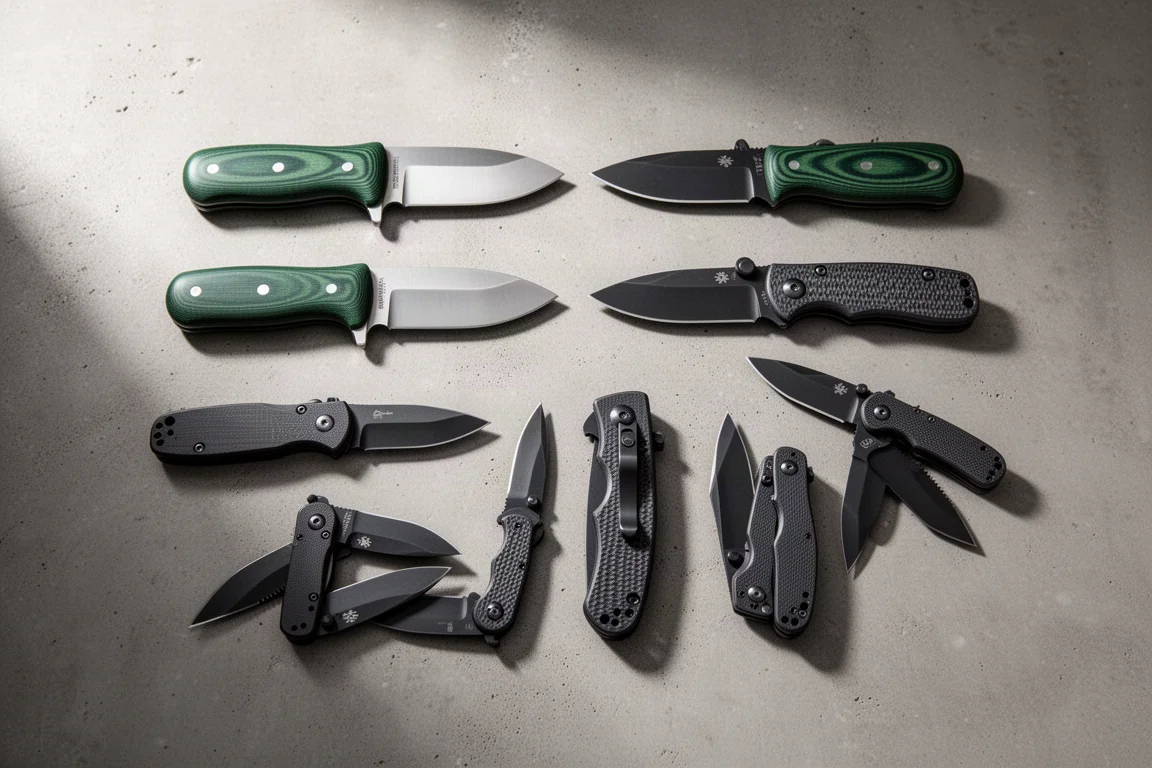
A good knife earns its place by being the one you actually reach for, whether that is opening a box at work, prepping food at camp, or processing wood for a fire. This lineup covers eight blades that see regular use on day hikes, backpacking trips, and everyday carry duty, from full-size fixed blades down to a tiny folder that disappears into a pocket.
The focus here is practical: how each knife feels in the hand, what tasks it handles well, and where it asks for a compromise. Blade steel and edge geometry matter, but in real use a knife priced somewhere between entry level and a few hundred dollars is a very capable tool. What separates these eight is how well their designs suit the way they are carried and used.
How These Knives Fit Different Jobs
The lineup splits into two clear families. Fixed blades bring a full handle, a longer cutting edge, and the rigidity to handle food preparation, feather sticks, and light batoning around camp. Folding knives trade some of that strength for a package that rides in a pocket all day and stays out of the way until it is needed.
That difference shapes everything else. A fixed blade usually lives in a pack or on a belt, so weight and sheath bulk matter less than grip comfort and blade length. A folder is judged on how it opens, how it locks, and how little it intrudes when carried. Matching the format to the job is the biggest single decision, and it comes before any question about steel.
Best Fixed Blade for Versatility: GiantMouse GM F2
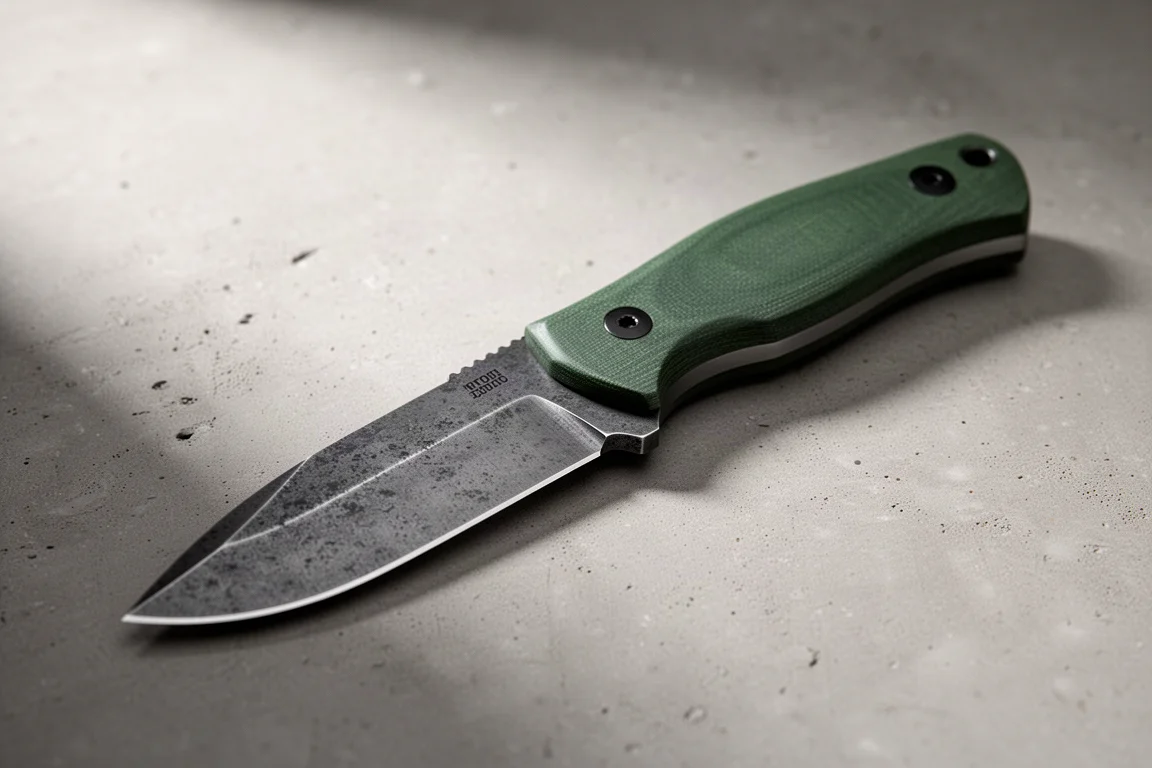
The GM F2 is a fixed blade that feels considered in the hand. The full tang runs through the entire knife, and the spine is rounded off rather than squared, which makes it comfortable to press down on during extended cutting. Green micarta scales give it a warm, secure grip, and the jimping near the top of the handle keeps a finger from sliding forward during wet or messy work.
That rounded spine is a deliberate trade-off: it removes the sharp corner some people use for striking a ferro rod, so fire lighting depends on a separate striker. In exchange, the knife handles food prep, feather sticks, and light batoning without hot spots. A lanyard hole at the back and additional jimping on the rear of the handle round out the design, and the overall ergonomics are what make it easy to keep using.
Best Hunting Fixed Blade: Benchmade Hidden Canyon Hunter
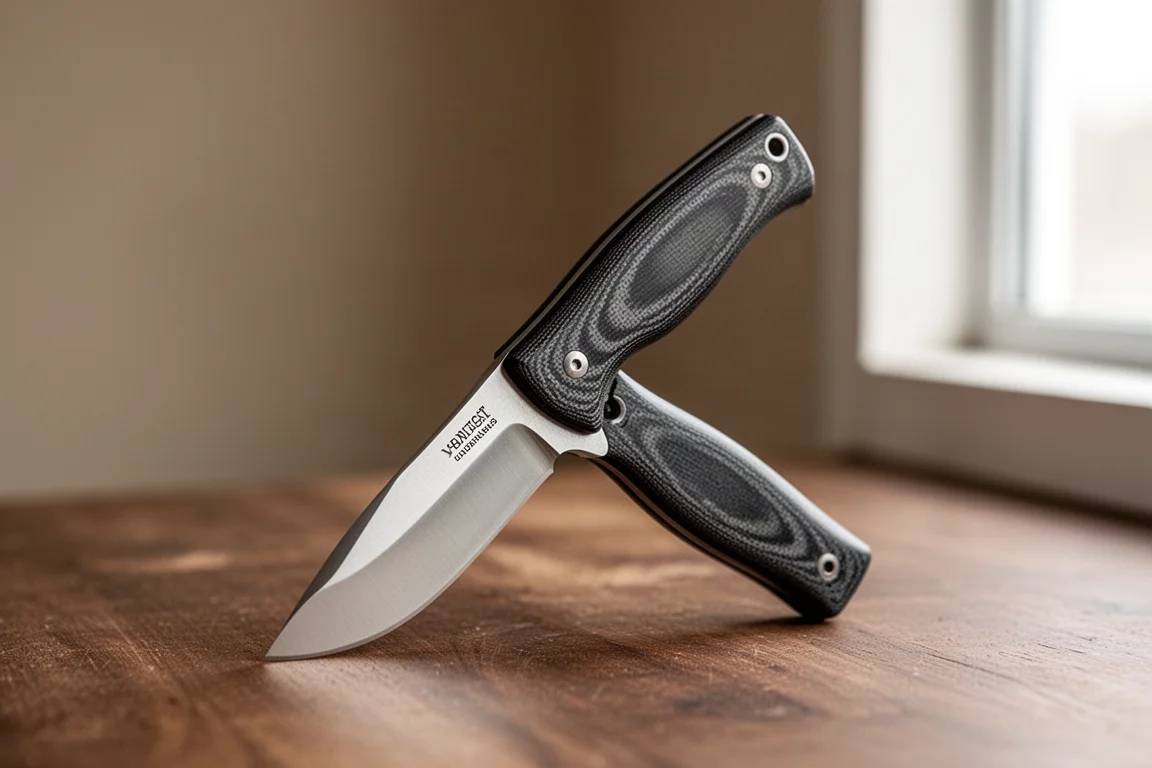
The Hidden Canyon Hunter is smaller and more task-specific. The cutting edge is shorter than the GM F2, but the blade carries more belly, which is exactly what a hunter wants when breaking down game after a successful trip. The S30V steel and the compact, contoured handle keep the knife controllable during precise work.
It is not limited to hunting. The same belly and short blade work well for general camp tasks such as prepping wood for a fire, where a smaller, more nimble blade is often easier to steer than a long one. Anyone who wants a compact fixed blade for a pack or a belt should put this one on the shortlist.
Best Everyday Carry Folder: GiantMouse Nimbus V2
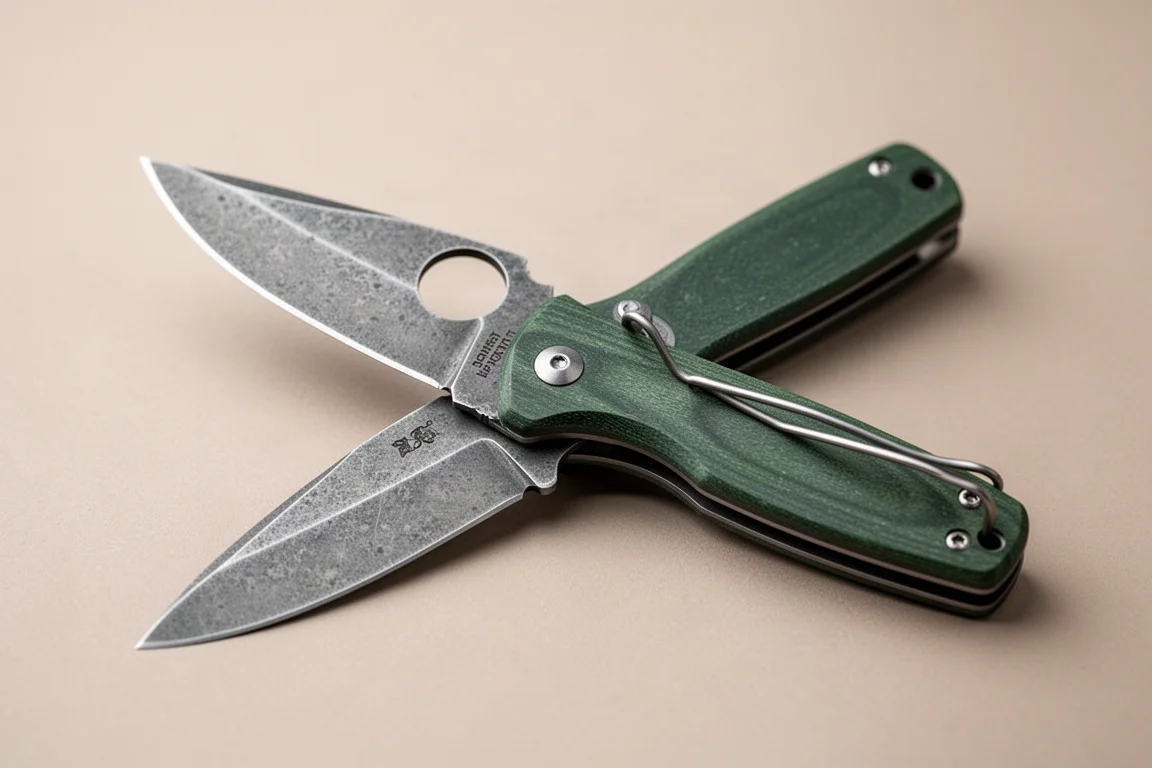
The Nimbus V2 is the second generation of a folder that has become a daily companion. Green micarta scales, a wire-style pocket clip, and a rounded spine give it the same comfortable character as the GM F2 in a folding format. The clip does not sit especially deep, but it carries low enough in a pocket that it stays out of the way.
Instead of thumb studs, the blade uses an opening hole, and the action is smooth and easy to operate without any showy flicking. The blade has a generous belly for slicing, and a finger choil near the pivot provides a spot to choke up on for detail work. That choil is not uniform across the handle, which is a small design quirk worth knowing about, but it doubles as the release point for the liner lock.
That combination of low weight and a comfortable grip is what makes it a strong all-rounder rather than a specialist. It is light enough to forget in a pocket on a long hike and substantial enough to handle real cutting once it is out.
Best Budget Everyday Carry Folder: Civivi Elementum
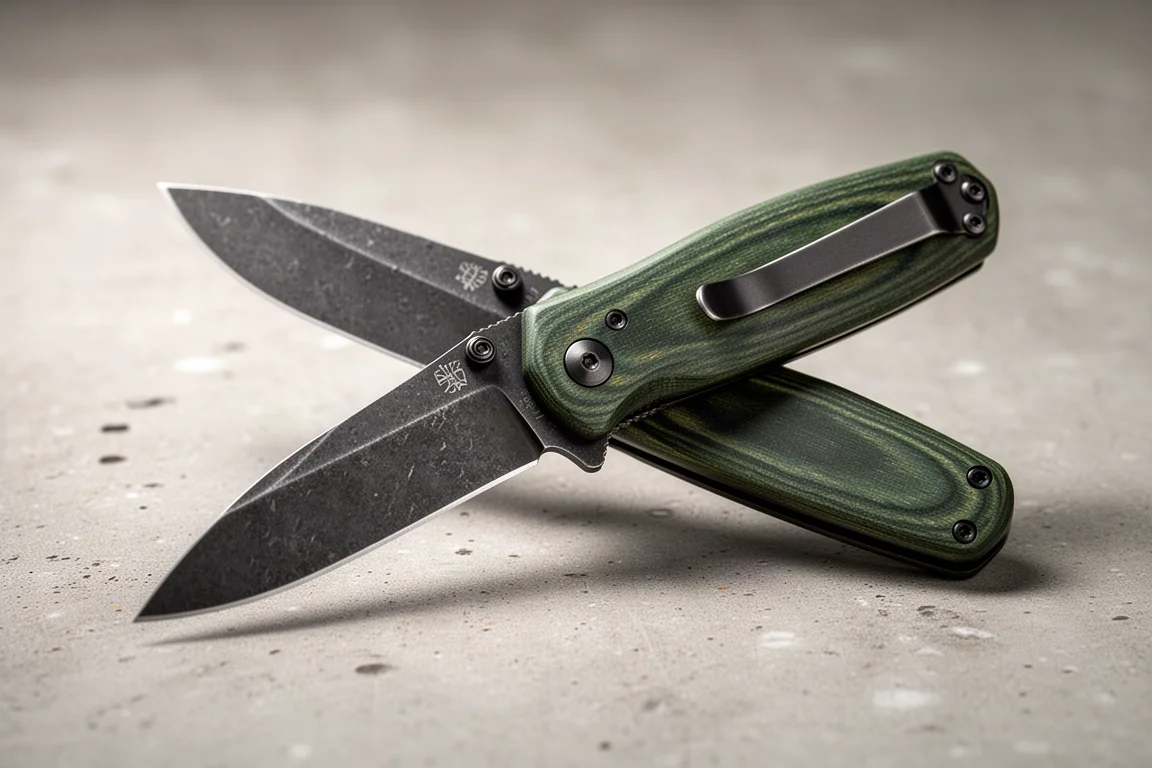
The Elementum is one of the most enjoyable everyday carry knives in this group, and the wear on it shows how often it gets picked up. The liner lock and flipper-style opening make it quick and simple to deploy, and the D2 steel holds up to regular use. Green micarta scales, a bit of jimping at the top of the handle, and a deep-carry pocket clip round out a package that feels far more expensive than it is.
It is equally at home on a backpacking trip. Cutting cheese and salami at a trail stop is what most outdoor knives actually do, and the Elementum handles that kind of food prep cleanly. It is also compact enough to carry to work every day, which is the highest compliment a budget folder can receive.
Best Lightweight Outdoor Folder: Benchmade Bugout
The Bugout is one of the best outdoor-focused folders available, and it earns that reputation through weight and blade shape rather than bulk. It is very light, which matters on long hikes, and the blade profile handles a wide range of cutting tasks: food prep, feather sticks and fire preparation, light batoning, and gutting fish.
The version shown here is a customized build with different handle scales and 20CV steel, an upgrade over the S30V steel used across much of the lineup. That said, the underlying design is what makes the knife work. It is simple, slim, and easy to live with, which is why it is a frequent recommendation for anyone building an everyday carry rotation around a single dependable folder.
Best Compact Lightweight Folder: Benchmade Mini Bugout
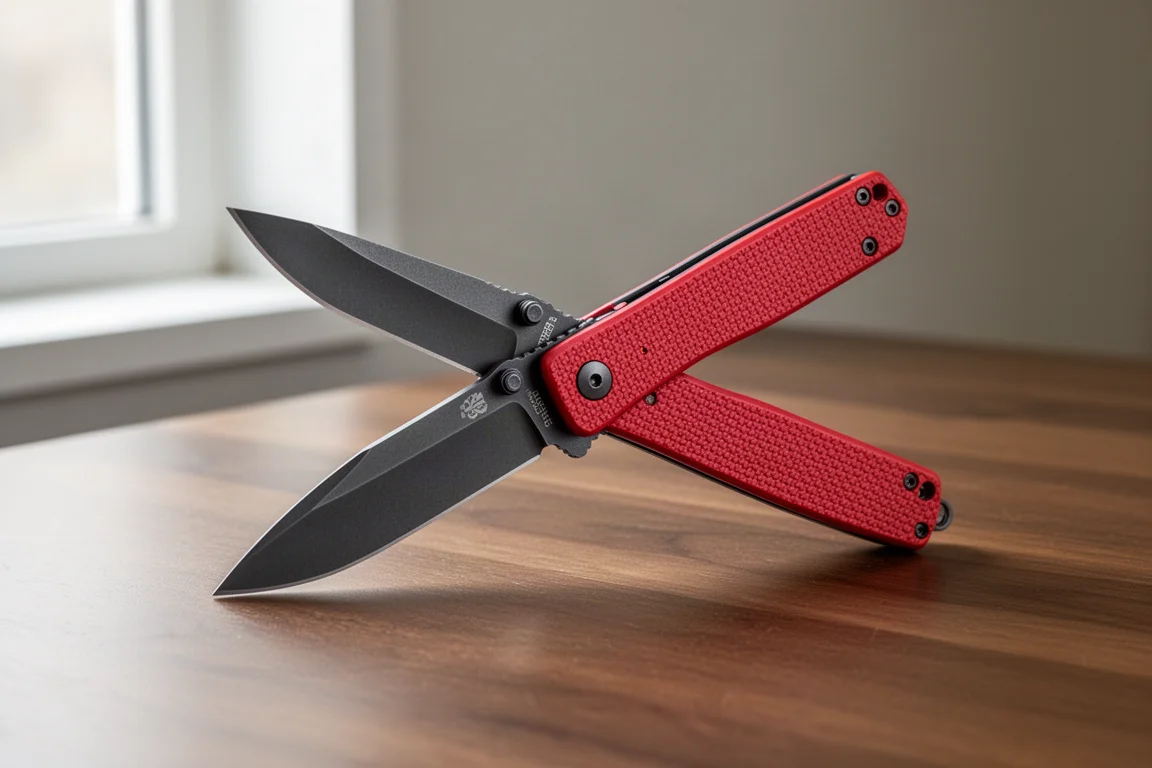
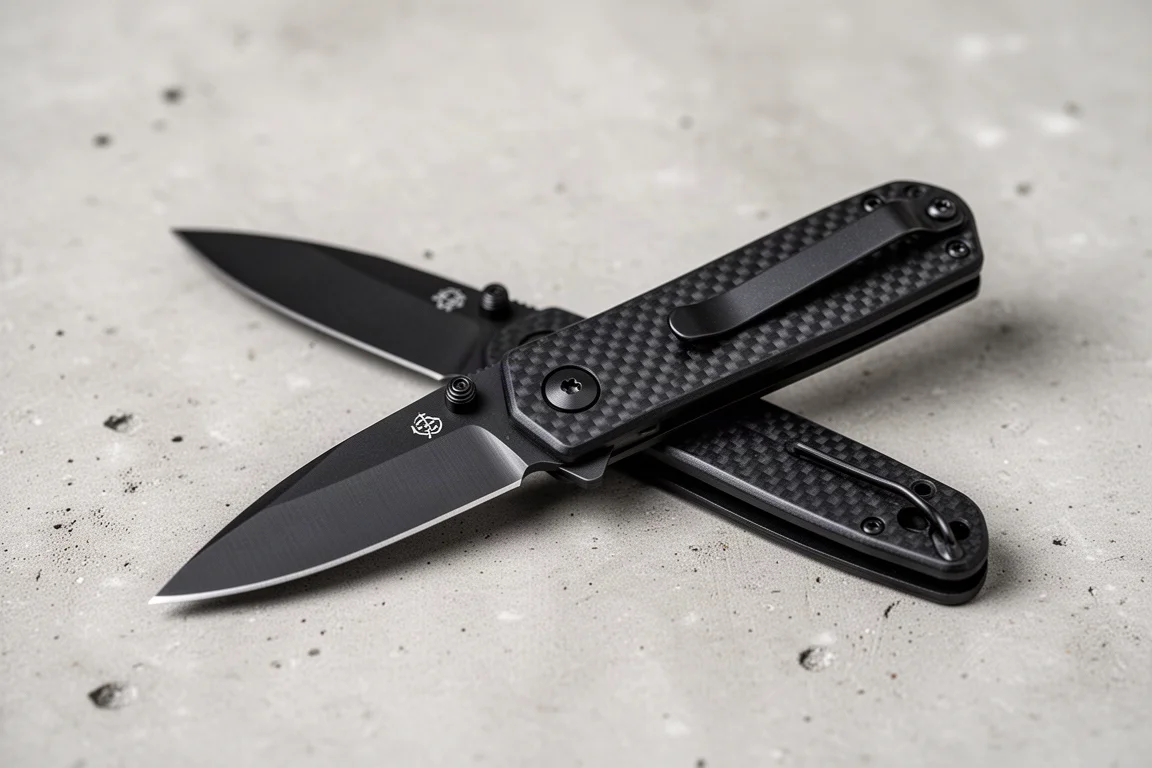
The Mini Bugout takes everything that works about the Bugout and shrinks it. The result is a knife that is exceptionally light and simple to drop into a pocket, with a deep-carry pocket clip and the smooth crossbar lock that Benchmade is known for. The smaller size makes it less obtrusive during the day and still capable of real work.
The example here is the CF Elite version, which happens to be a first production model, and it remains one of the most loved knives in the collection. Anyone who finds a full-size folder bulky, or who wants a second knife that disappears into light shorts or a running pack, will find the size genuinely useful rather than limiting.

Small folders are often dismissed as novelties, but the Mini Bugout shows how much capability survives when a design is scaled down carefully. It cuts, it locks up solidly, and it weighs almost nothing, which is exactly the point.
Best Classic All-Rounder: Benchmade Mini Griptilian
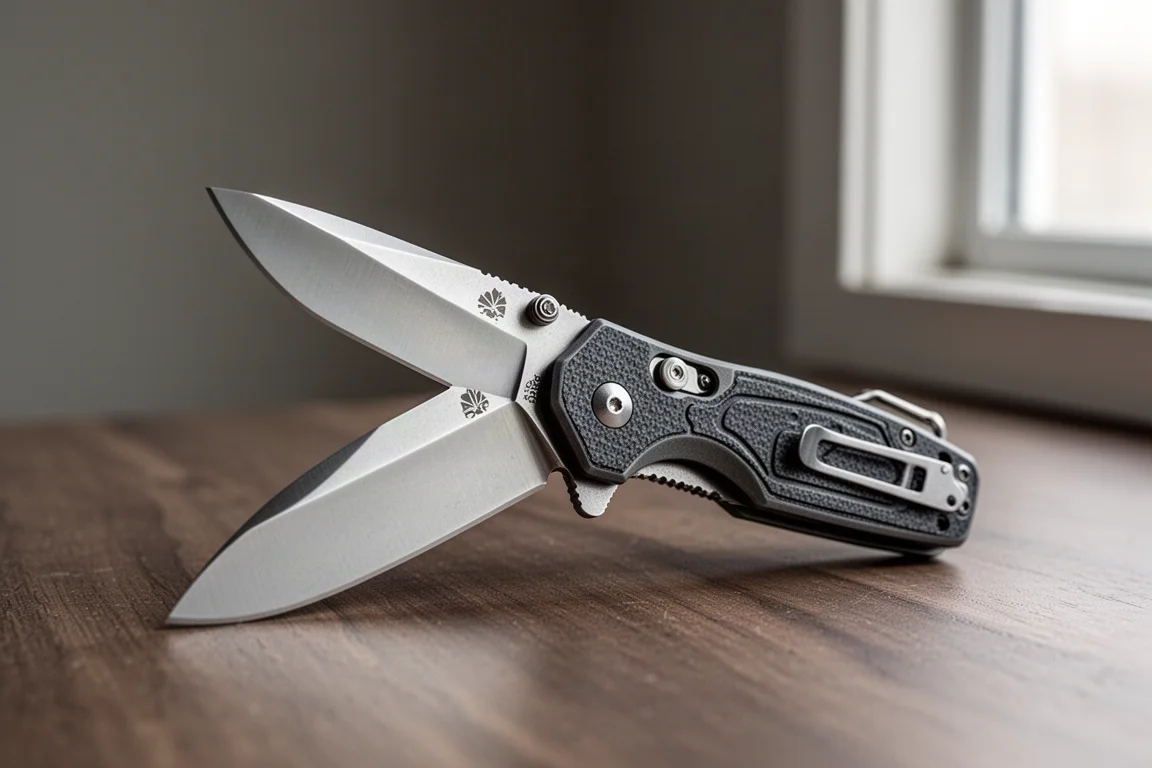
The Mini Griptilian makes the list because it is a classic. It was the first knife purchased as a genuine investment rather than a gift, and it has stayed in rotation since. Compared with the entry-level gift knives many people start out with, it offers better steel and a more refined overall design, and that gap is obvious the moment it is used.
Its mid-size format sits between the tiny folders and the full-size blades in this lineup. That middle ground makes it a sensible choice for someone who wants one knife that handles everyday tasks, camp chores, and hiking duty without leaning too far in any direction.
Best Tiny Utility Blade: Civivi Baby Banter
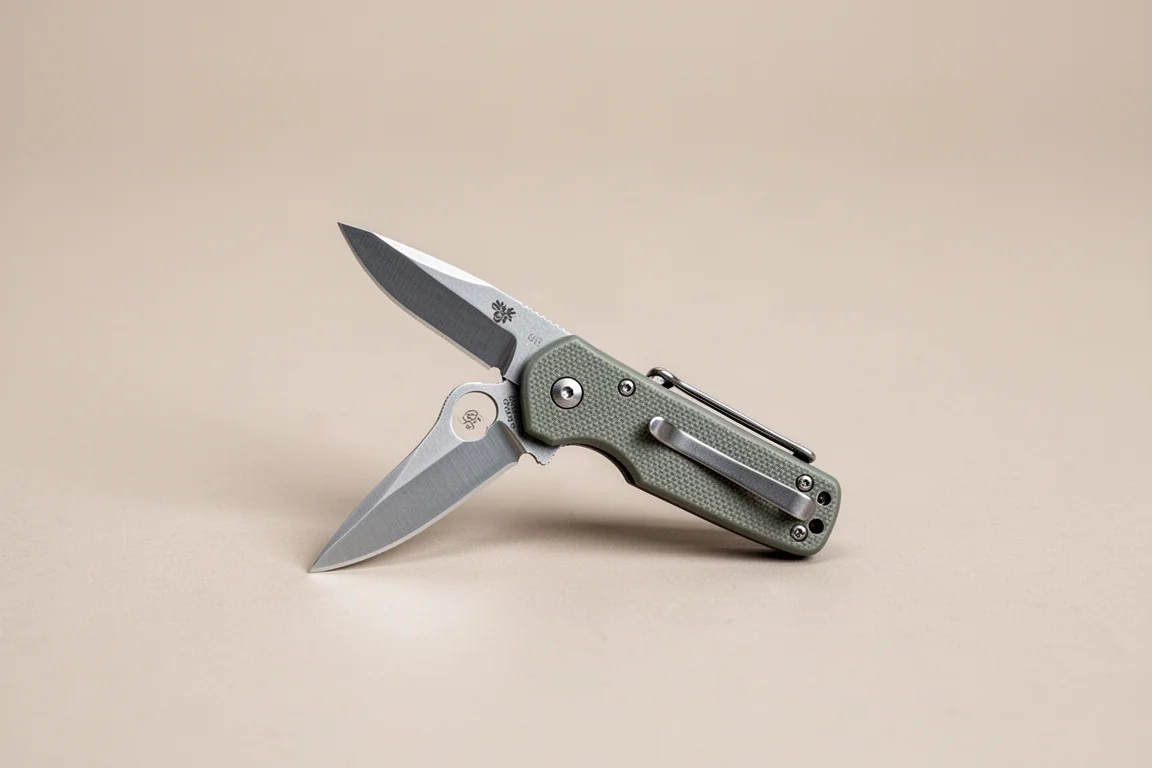
The Baby Banter is the smallest knife here, and it is smaller in person than most people expect. It is the compact member of the Banter family, a design that originated with WE Knives, the sister brand to Civivi, where Civivi serves as the more budget-minded option. The small choil near the blade lets the hand move closer to the cutting edge for more control on fine tasks.
For a modest price, it delivers a lightweight, utility-focused blade that is easy to justify carrying every day. It handles small cutting jobs well, disappears into a pocket, and makes a strong case as a first folding knife or a backup blade. The main thing to understand before buying is scale: this is a genuinely tiny tool, and that is either the appeal or the dealbreaker.
Buying Advice: Matching a Knife to How You Carry It
Start with the format. If most of the cutting happens around camp, at a fire pit, or during food prep, a fixed blade such as the GM F2 or the Hidden Canyon Hunter gives you a full grip and a longer edge with no lock to think about. If the knife lives in a pocket and gets used in short bursts throughout the day, a folder is the practical answer, and the Elementum and the Bugout family cover that ground at very different weights and sizes.
Then match the size to the carry. A knife that is comfortable in a pocket gets used far more often than one that is left in a bag, and a blade that is too small for the task at hand is just as frustrating as one that is too heavy to bring along. For most people, one lightweight folder for daily use plus one fixed blade for outdoor trips covers nearly everything, and the two can be chosen independently.
Also consider the small details that only show up in use. A rounded spine is comfortable for extended cutting but less useful for striking a fire steel. A deep-carry clip keeps a knife discreet but can make it slower to draw. A choil improves control on detailed work but changes how the handle feels in the hand. None of these are flaws on their own, but each one nudges a knife toward a particular kind of owner.
Conclusion
This group covers a wide range of real use, from full-tang fixed blades built for camp chores to folding knives light enough to forget in a pocket. The GiantMouse fixed blade and the Hidden Canyon Hunter handle the heavier outdoor work, the Elementum and Baby Banter deliver outstanding value, and the Bugout, Mini Bugout, and Mini Griptilian remain dependable everyday companions.
Choose based on how you carry rather than on specifications alone, and any of these eight will serve well for years of hiking, backpacking, and daily use.
Further reading
Related Reviews

Knives
Benchmade Mini Narrows Review: A Pocket Knife That Disappears in Your Pocket
The Benchmade Mini Narrows is a remarkably thin and light pocket knife with impressive engineering, but a high price and dull factory edge make it a tough recommendation for most buyers.
Knives
Best Knives Under $1,000: Premium Folders Worth the Investment
A look at premium folding knives around the $1,000 mark, from upgraded classics to purpose-built masterpieces, and what actually justifies the price.

Knives
Demko Knives AD 20.5 Shark Cub Review: A Smaller Blade, Not a Smaller Knife
The Demko Knives AD 20.5 Shark Cub offers a shorter blade in a handle that is nearly the same size as the full-size version. Here is what to consider before buying.