Kitchen Knives
Best Nakiri Knives Roundup: 8 Japanese Vegetable Knives Compared
A practical roundup of eight nakiri knives, from workhorse stainless options to delicate laser grinds, with guidance on which suits your kitchen experience.
Introduction
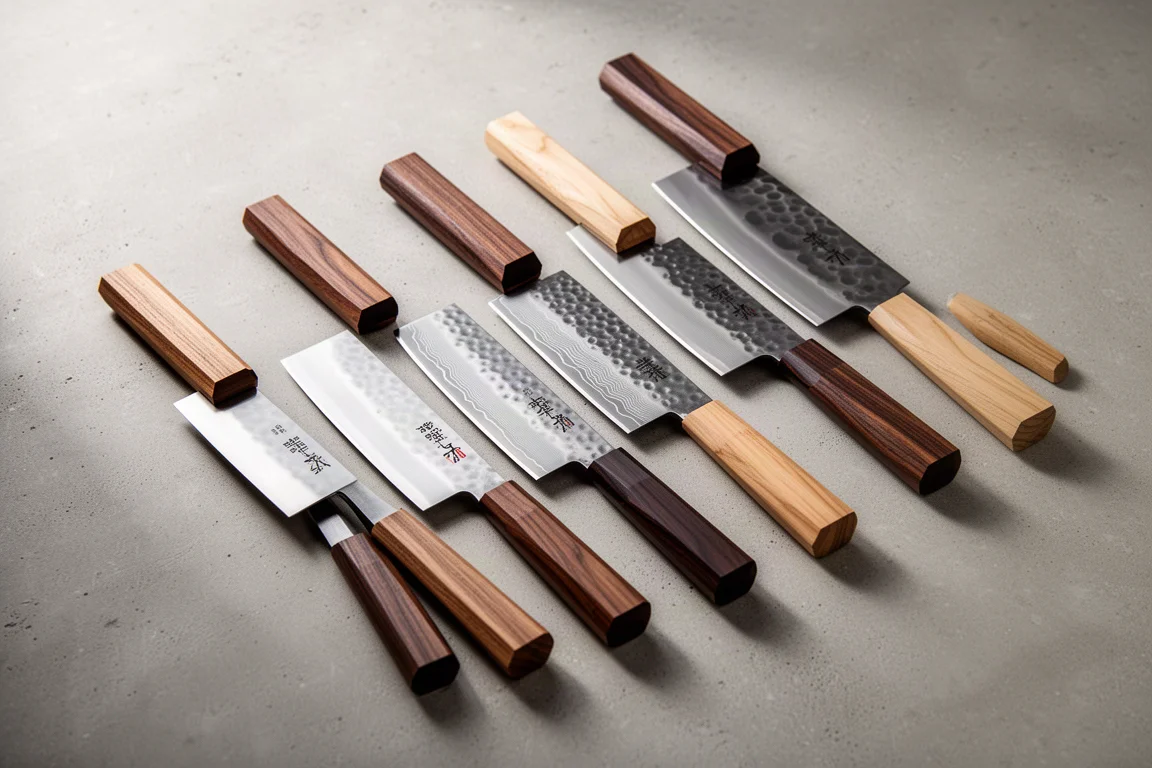
The nakiri is the Japanese vegetable knife: a tall, flat blade built for clean up-and-down chopping through greens, cabbage, and everything in between. It looks simple, but the differences between individual nakiri knives are bigger than most people expect.
This roundup walks through eight nakiri knives we consider worth a close look, covering steel type, handle style, grind, and overall character. Some are robust workhorses, some are thin, high-performance cutters, and a few sit comfortably in between.
Why the Nakiri Deserves a Spot in Your Kitchen
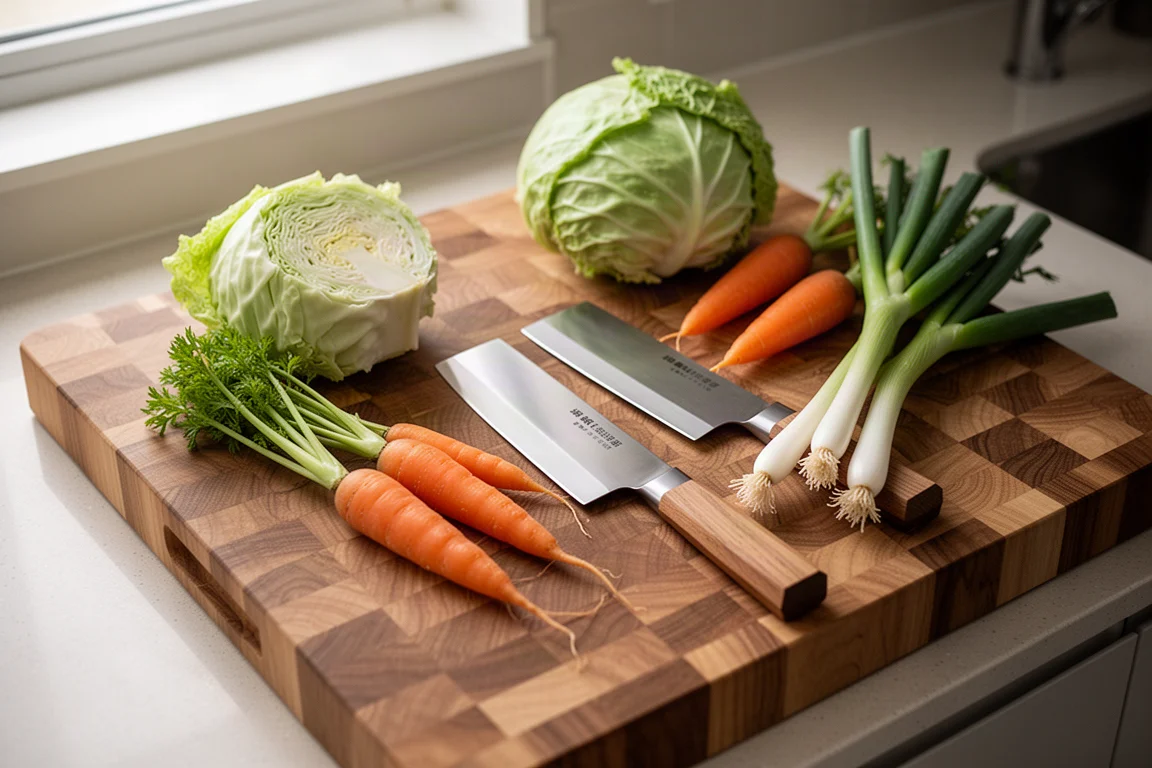
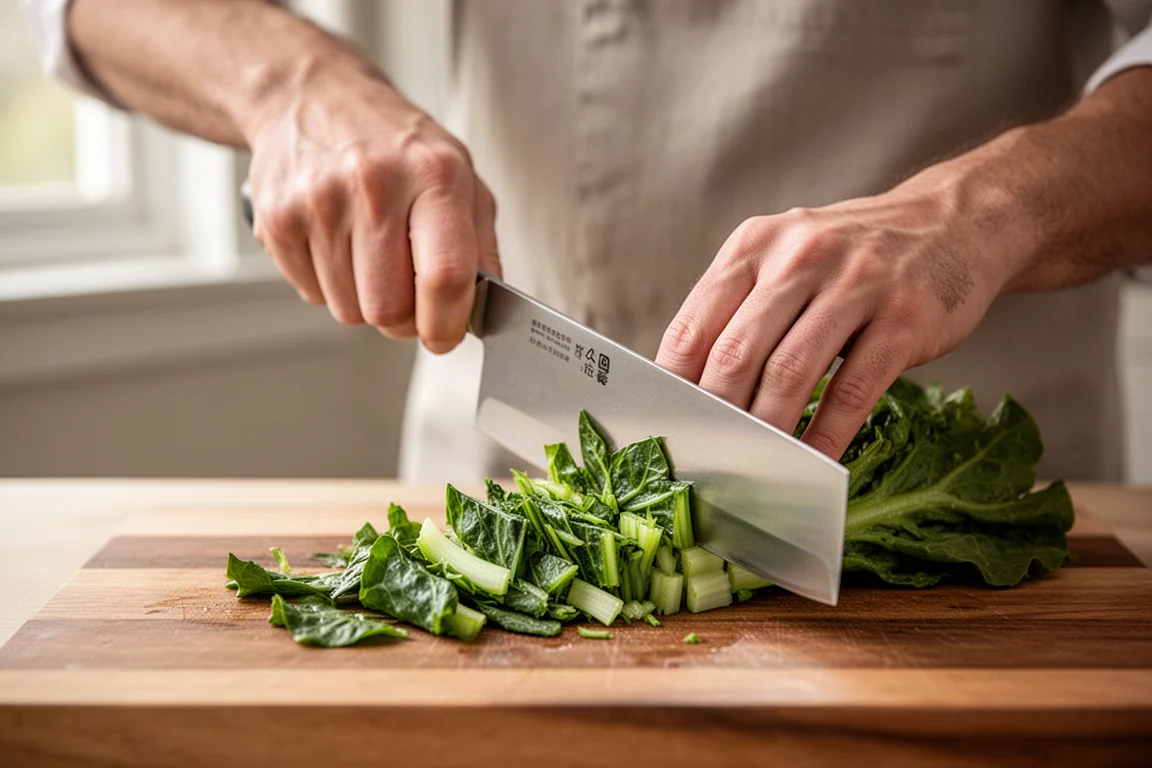
A good nakiri rewards technique. The flat profile lets you lift and drop the blade straight through a vegetable without the rock-and-slice motion of a chef’s knife, which makes quick work of herbs, greens, and dense produce. Because the blade is tall, your knuckles clear the board easily and the edge contact stays consistent from heel to tip.
One thing to keep in mind: a nakiri is not the tool for twisting cuts or heavy lateral force. Used properly, with forward, backward, and up-and-down motions, it performs beautifully and the edge lasts longer.
Masutani Nashiji Nakiri
The Masutani Nashiji is made from VG1 stainless steel and comes with an octagonal oak mono handle with no ferrule, suitable for both right- and left-handed users. It is not particularly thin right at the spine, but it is quite thin behind the edge, which makes it a little delicate. In exchange, the cutting feel is fantastic, and there is currently a strong deal on this one.
Sakon Ginga Nakiri
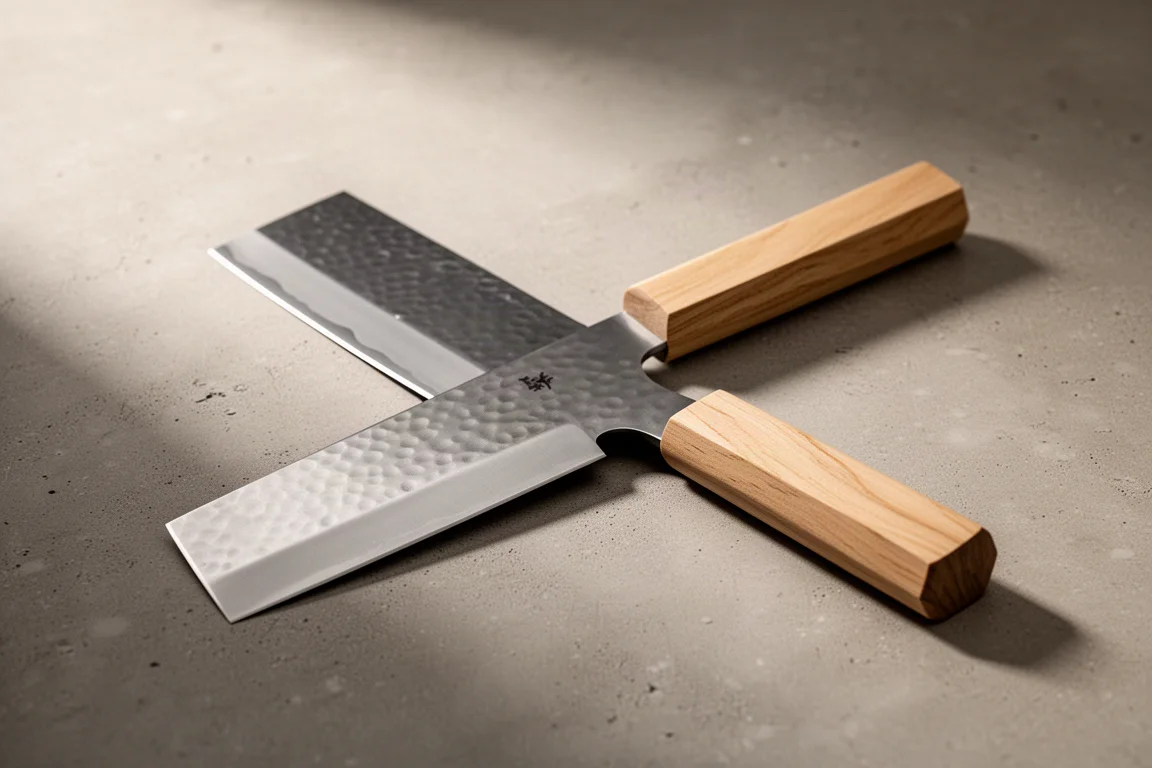
The Sakon Ginga nakiri comes in two versions with the same blade: one with a black pakkawood ferrule and welded bolster, the other with a brown pakkawood handle and no bolster. Both are stainless steel with a rough nashiji finish, similar weights, and genuinely good looks.
These are the most robust nakiri knives in this roundup. The cutting feel is still pleasant, but the emphasis here is durability. If you want something workhorsy that can take a beating, this is the one to shortlist.
Makoto Kurosaki VG-10 Tsuchime Damascus Nakiri
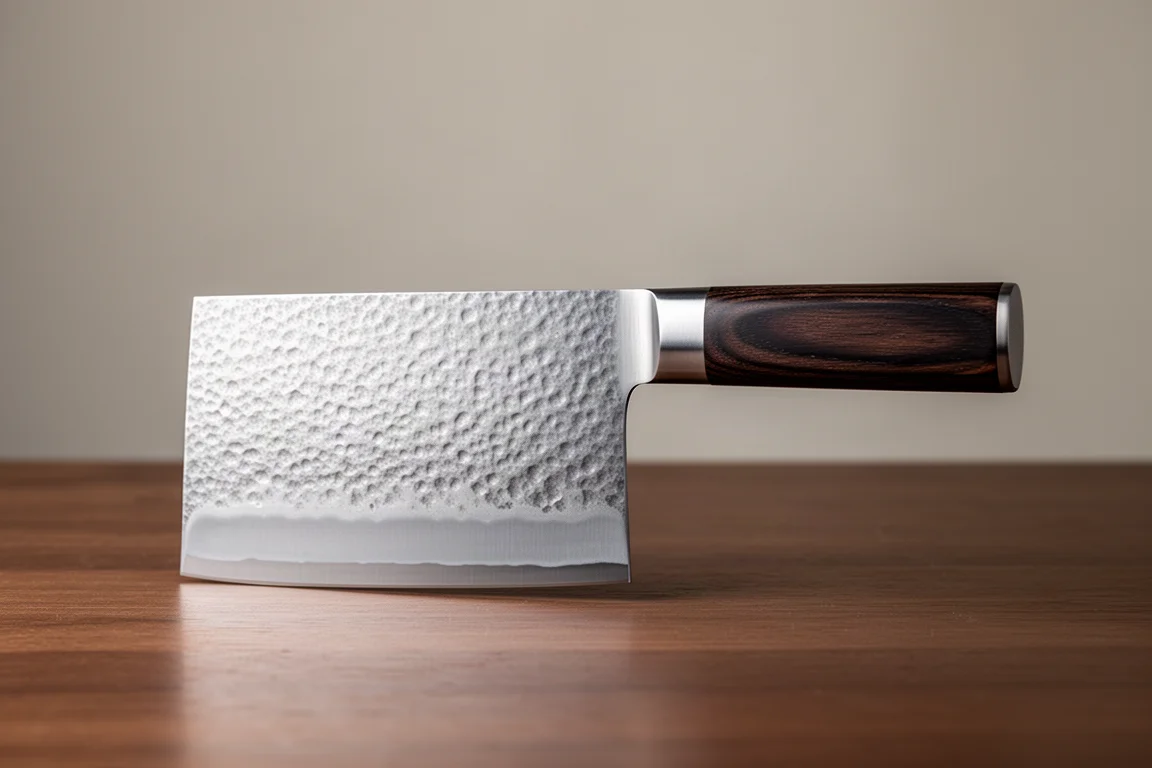
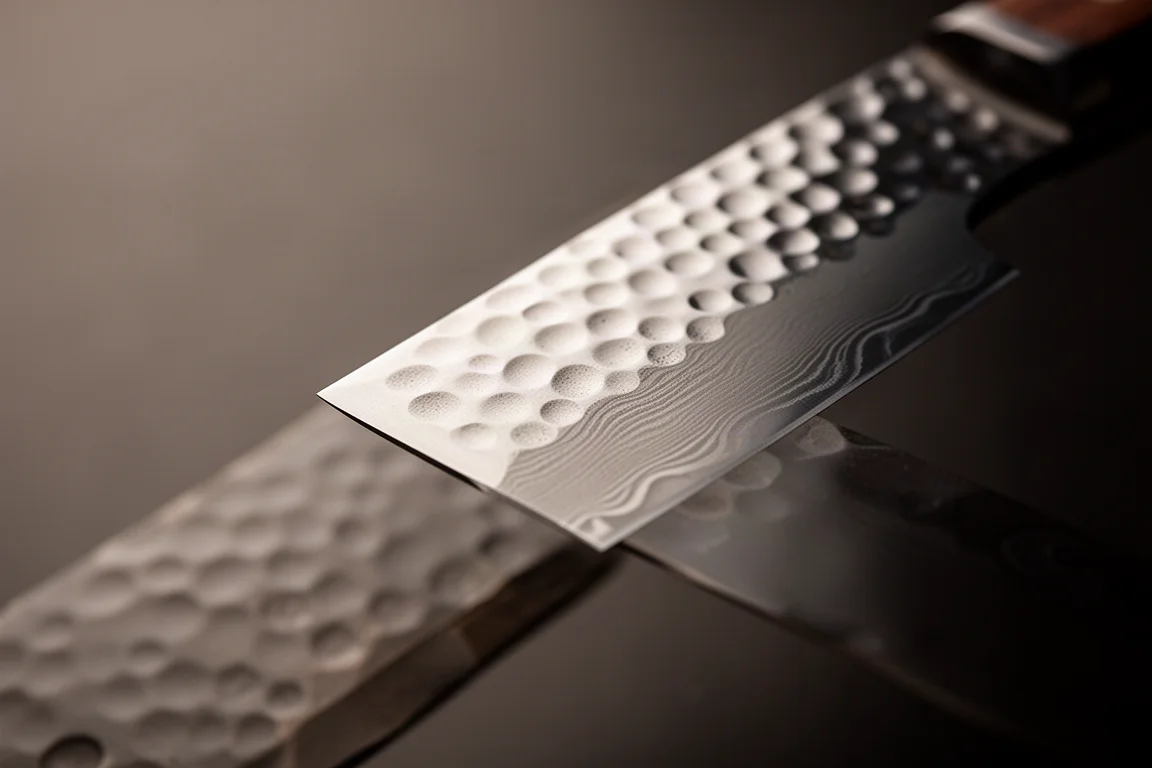
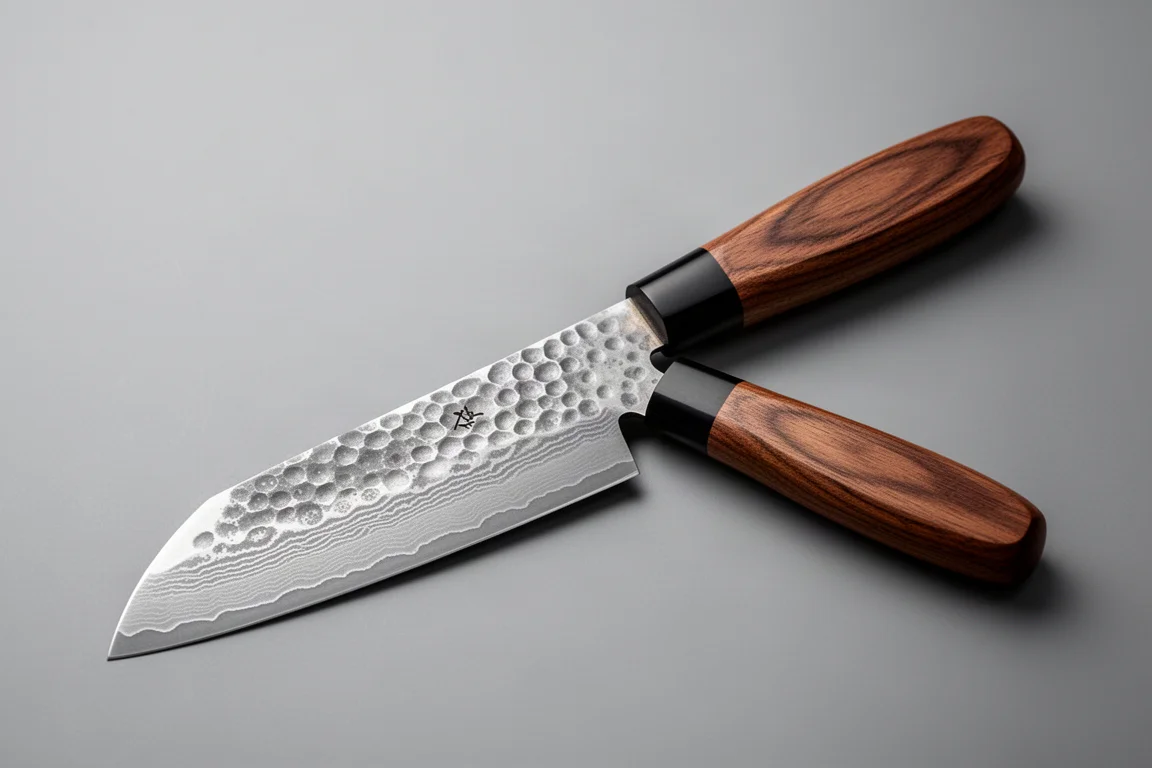
Makoto Kurosaki, the older brother of Yu Kurosaki, produces this VG-10 nakiri with a hand-hammered tsuchime and damascus finish. It has an oval rosewood handle with a black pakkawood ferrule, which is comfortable and a little chunkier, a good fit if you have larger hands.
The blade is relatively thin out of the tang and reasonably thin behind the edge without being delicate. It runs a bit heavier than some rivals and balances further forward, but the cutting feel is great and it is one of the more affordable nakiri options here. It genuinely punches above its weight class.
Yoshimi Kato R2 Tsuchime Nakiri
Yoshimi Kato’s R2 tsuchime nakiri features a walnut octagonal handle with a buffalo horn ferrule. The fit and finish are stellar, about as close to perfect as a knife gets. The blade is tall with a relatively flat profile and slight curvature, and the overall balance is light, similar to Makoto Kurosaki’s version.
It sits between the workhorse and laser categories: not super delicate, but not a brute either. R2 is an outstanding stainless steel that holds its edge beautifully, and that alone makes this a serious contender.
Yu Kurosaki HAP40 Gecko Nakiri
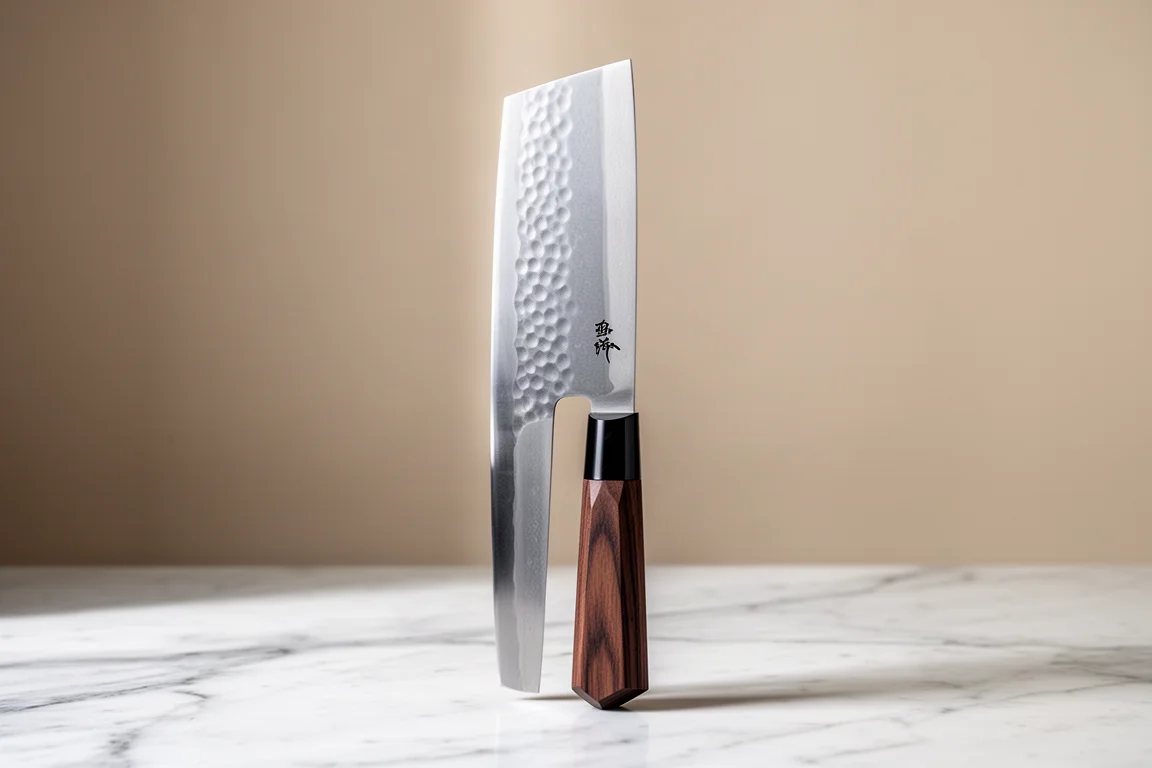
Yu Kurosaki’s HAP40 Gecko series is a standout for pure performance. The wenge mono-steel handle is one of the most comfortable handle styles going, and the grind is a little different from Kurosaki’s usual work: slightly more convex and a bit thicker behind the edge.
HAP40 is a semi-stainless powder steel, so it needs care: keep it dry, wipe it down, and be careful around acidic ingredients. In return you get spectacular edge retention and a genuinely workhorse-friendly grind. If you want performance without babying the knife, this is the pick.
Yu Kurosaki Senko Nakiri
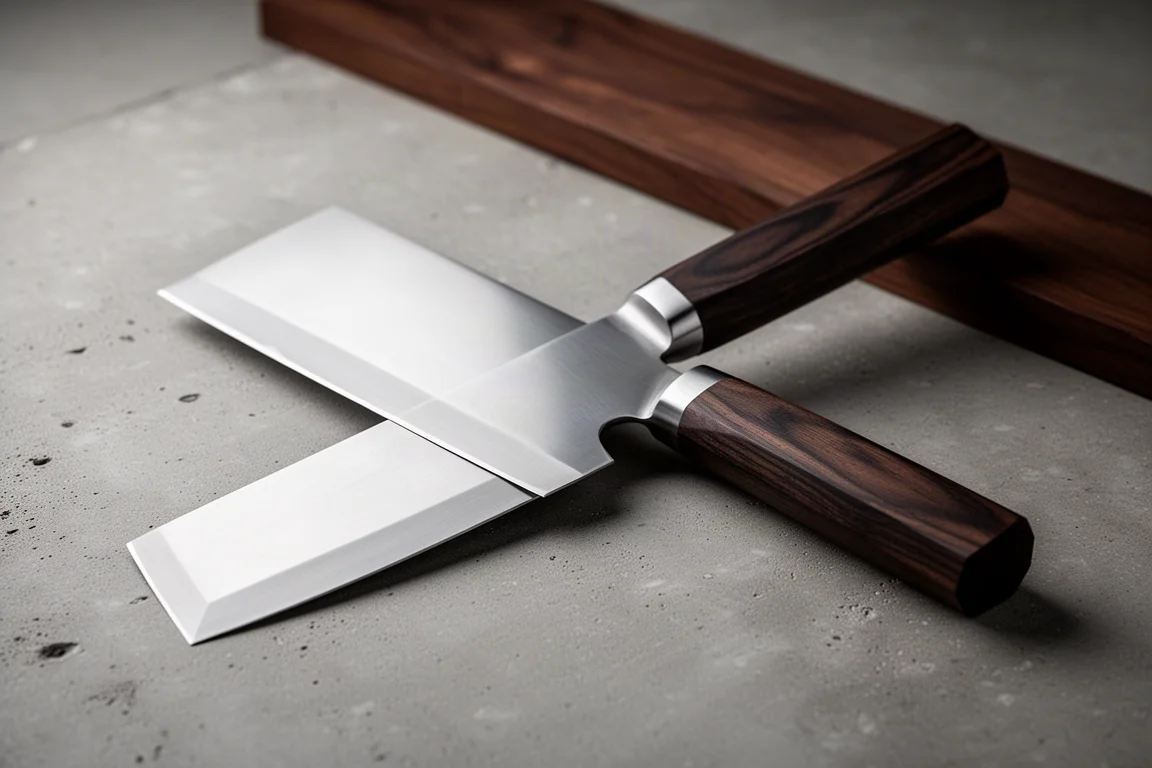
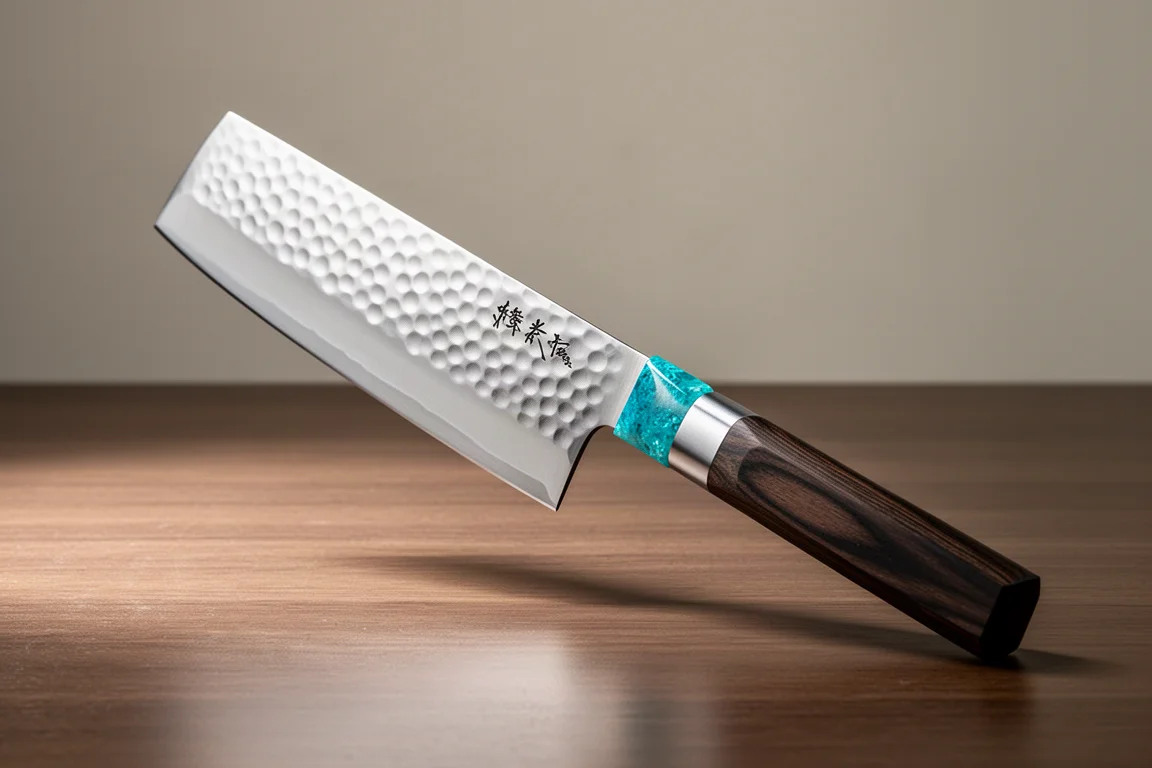
The Senko lineup features a striking hand-hammered star pattern in R2 steel, with an octagonal oak handle and purple heart ferrule that suits both right- and left-handed users. Compared to the Gecko, the Senko is thinner at the spine and behind the edge, lighter overall, and closer to a laser grind while staying a bit more forgiving.
It is also worth noting that the Senko is roll forged and stamped, though still sharpened by hand. That makes it one of the more accessible ways to own a Yu Kurosaki without giving up much in the way of fit, finish, or cutting performance.
Takeshi Saji Rainbow Damascus Nakiri
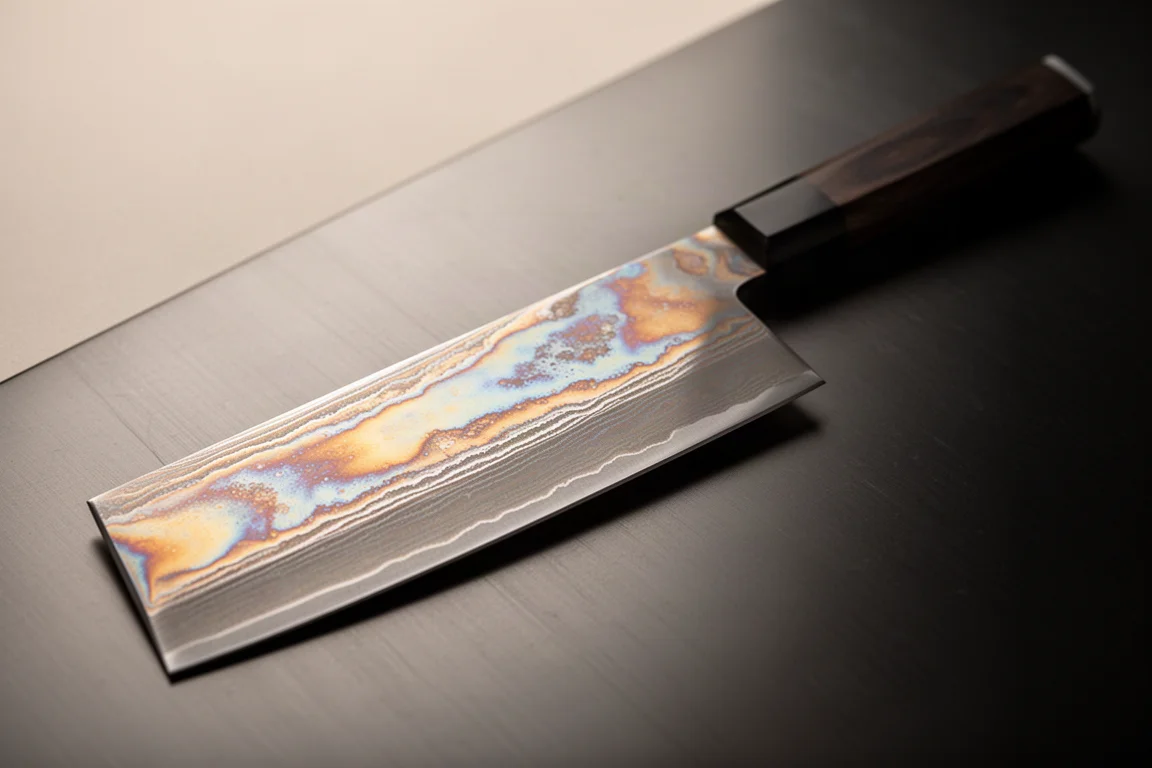
The Takeshi Saji Rainbow Damascus is easily the flashiest nakiri here. The VG-10 blade is relatively thick at the spine, and not super thin behind the edge, giving it more of a western-style feel, reinforced by the western handle in desert-toned quince wood. Fit and finish are spectacular, the rainbow damascus blades are gorgeous, and the knife feels comfortable in the hand despite the handle style being unusual for a nakiri.
Atetsu X-Hammer Nakiri
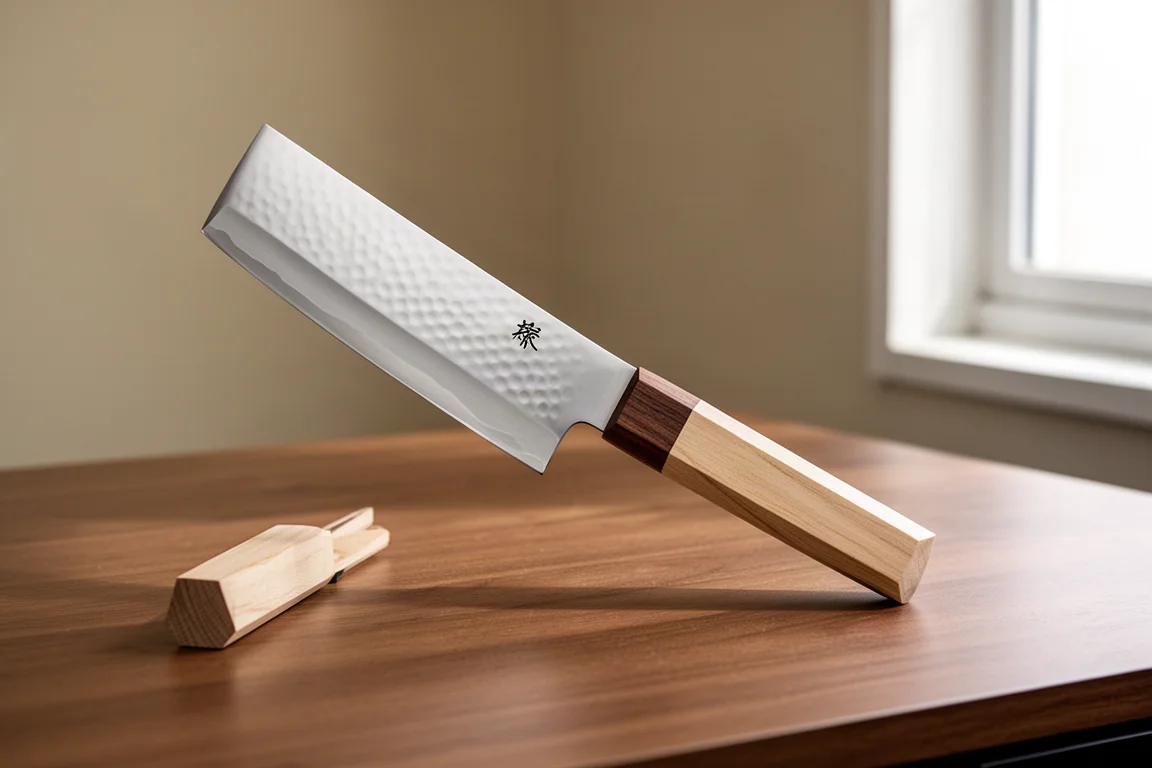
The Atetsu X-Hammer is made from SLD semi-stainless steel with a hardness of around 60 on the Rockwell scale, giving it strong edge retention and easy sharpening. It has a nice tall blade, an ash octagonal handle with quince ferrule suitable for both hands, and a tang that starts thick but tapers nicely toward the tip.
Very few of these come back with chips, so while it is not a workhorse, it is far from fragile. Combined with a friendly price, it makes a great gift and an excellent entry point into Japanese knives.
Other Notable Mentions
Several other nakiri knives deserve a quick mention. The Yu Kurosaki Fukakuryu uses ATS 314 stainless steel, behaves very similarly to R2 in sharpening and edge retention, and pairs a damascus finish with distinctive Canadian maple handles. The Rusyn Blazen, in R2 steel with a tapered walnut handle, is a definite laser: superbly high performing but a touch delicate. The Rusyn Tengen Ryu, with its tsuchime damascus finish and micarta handle, runs heavier and more western in feel. The Atetsu Nashiji is the only carbon steel option here, a shorter 155mm knife with a curvier profile suited to rocking cuts. Finally, the Atetsu Tsuchime is the most affordable option of the group and a sensible first Japanese knife.
Matching a Nakiri to Your Experience Level
The best way to choose is to match the knife to how you actually cook. Beginners, and professionals in high-volume kitchens where a knife might end up in the dishwasher without permission, should favor the more robust options: the Sakon Ginga in either handle, the Masutani Nashiji, the Makoto Kurosaki, and the Atetsu X-Hammer. Of these, the Masutani, Makoto Kurosaki, and X-Hammer are a bit thinner and more prone to chipping, so handle them with a little more care.
Discerning home cooks and professionals in lower-volume or fine-dining settings can safely reach for the thinner, higher-performance knives, including the Senko, the Gecko, and the Blazen. These demand proper technique and maintenance, with no twisting cuts, but reward you with noticeably better performance. Note that semi-stainless options such as the Gecko and the X-Hammer still need to be kept dry and clean, since they can develop rust more easily than standard stainless steel.
Conclusion
There is no single best nakiri, only the best nakiri for your kitchen. If durability and low fuss top your list, the Sakon Ginga or Atetsu X-Hammer make sense. If you want elite edge retention with a slightly forgiving grind, the Yu Kurosaki HAP40 Gecko is hard to beat. For a laser-like cutter with stunning looks, the Senko, Yoshimi Kato R2, or Takeshi Saji Rainbow Damascus deliver. Whichever you choose, treat it with the right cutting motions and a quick wipe after use, and any of these knives will serve you well for years.
Further reading
Related Reviews

Kitchen Knives
Best Chef's Knives 2026: 27 Popular Options Tested and Ranked
A comprehensive review of 27 chef's knives ranging from $18 to $380, with honest assessments of handle comfort, blade balance, and real-world performance.

Kitchen Knives
Best Chef's Knives Under $75: Two Tested Recommendations
Two practical 8-inch chef's knives that balance sharpness, comfort, and durability without premium pricing.

Kitchen Knives
Best Chef's Knives 2026: 27 Options Tested and Ranked
A comprehensive review of 27 chef's knives ranging from $18 to $380, with honest assessments of handle design, balance, blade profile, and real-world performance.