Kitchen Knives
Best Nakiri Knives 2026: Three Vegetable Knives Worth a Close Look
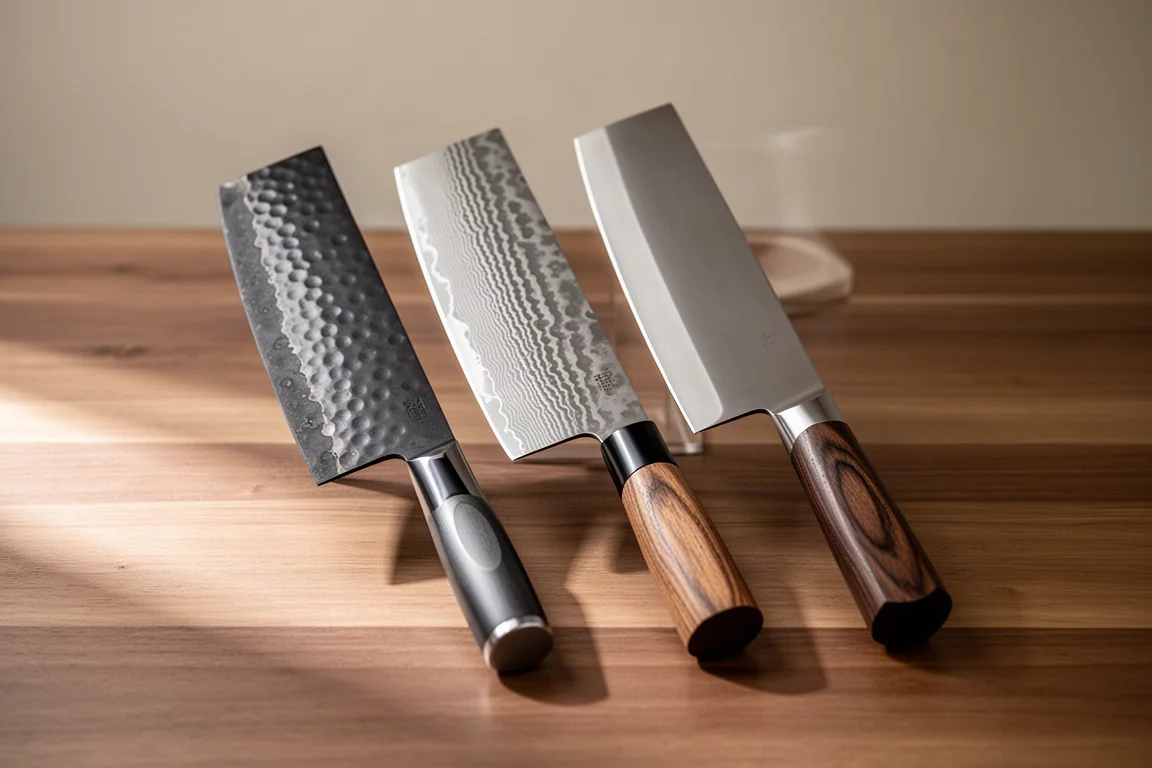
Three nakiri knives with very different handles, steels, and grinds, plus practical advice on how to choose the right vegetable knife for your cutting style.
Introduction
The nakiri is one of the most misunderstood knives in a Japanese knifeware lineup. Its tall, rectangular blade looks like a European cleaver, which leads many shoppers to assume it is built for meat and bones. In reality, a nakiri is a dedicated vegetable knife, and the name translates roughly to leaf cutter or leafy vegetable cutter. In this roundup we look at three very different nakiri knives and help you figure out which one fits your cutting style.
Why a Nakiri Belongs in Your Kitchen
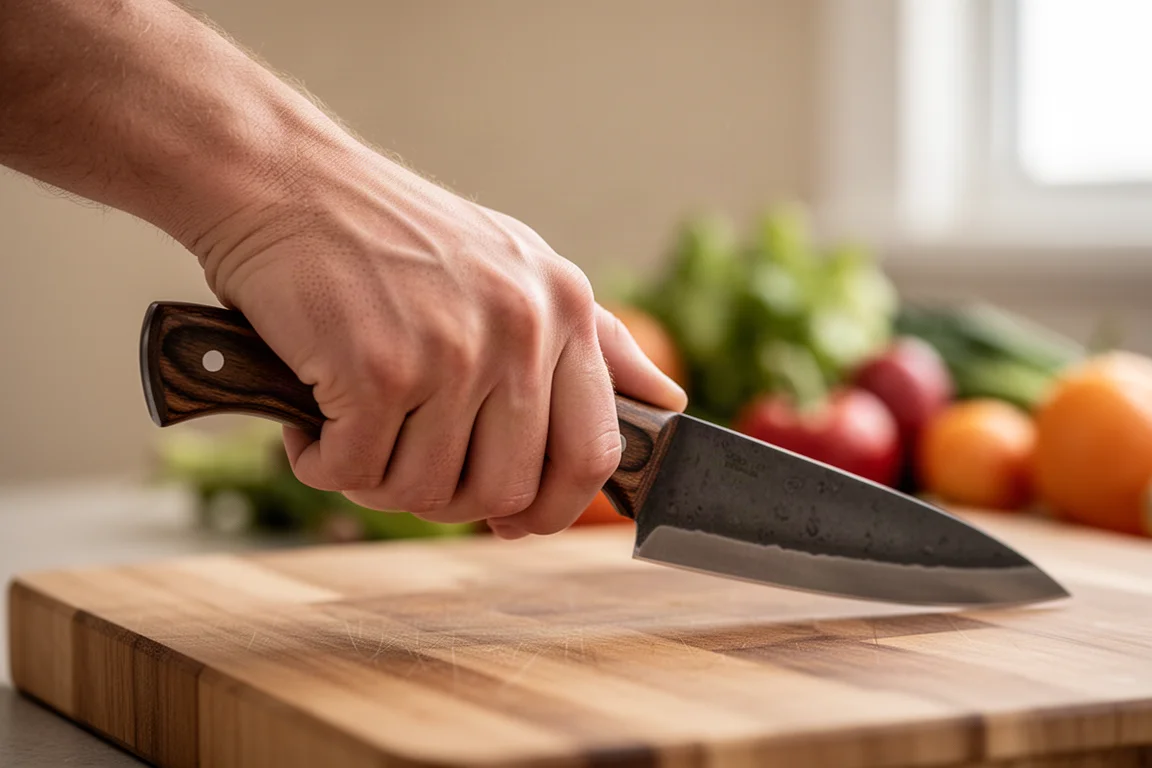
If you do a lot of vegetable prep, whether that is leafy greens, dense roots, or anything in between, a nakiri is worth serious consideration. The defining feature is the very flat edge. When the knife meets the cutting board, nearly the entire blade is in contact with the surface at once, which makes it a natural fit for the push-pull style of cutting, sometimes called a sliding cut. If you chop with a forward and back motion rather than a rocking motion, this is where a nakiri genuinely excels.
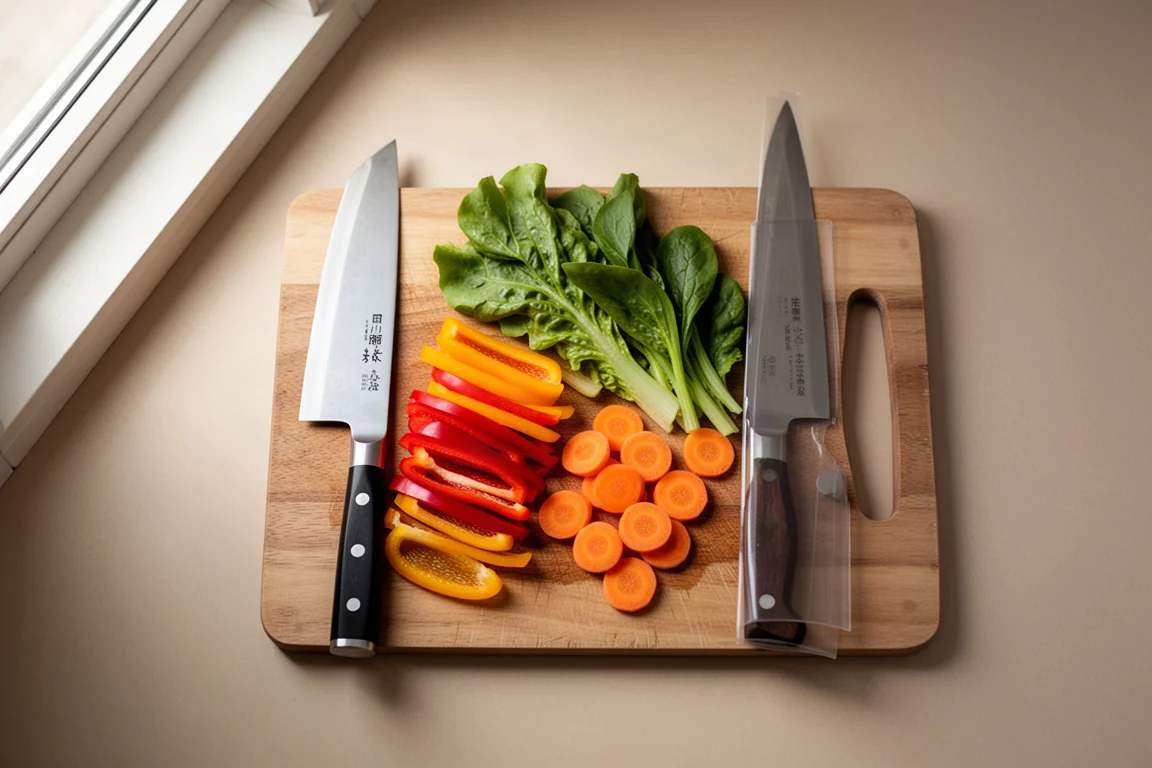
Most nakiris also have a taller blade than other knives of similar length. That extra height works like a small cleaver face: sliced carrots and other pieces crawl up the side of the blade and fall off with enough clearance that you can keep working without stopping to clear the edge. It is a small detail that adds up quickly during long prep sessions.
How a Nakiri Actually Works
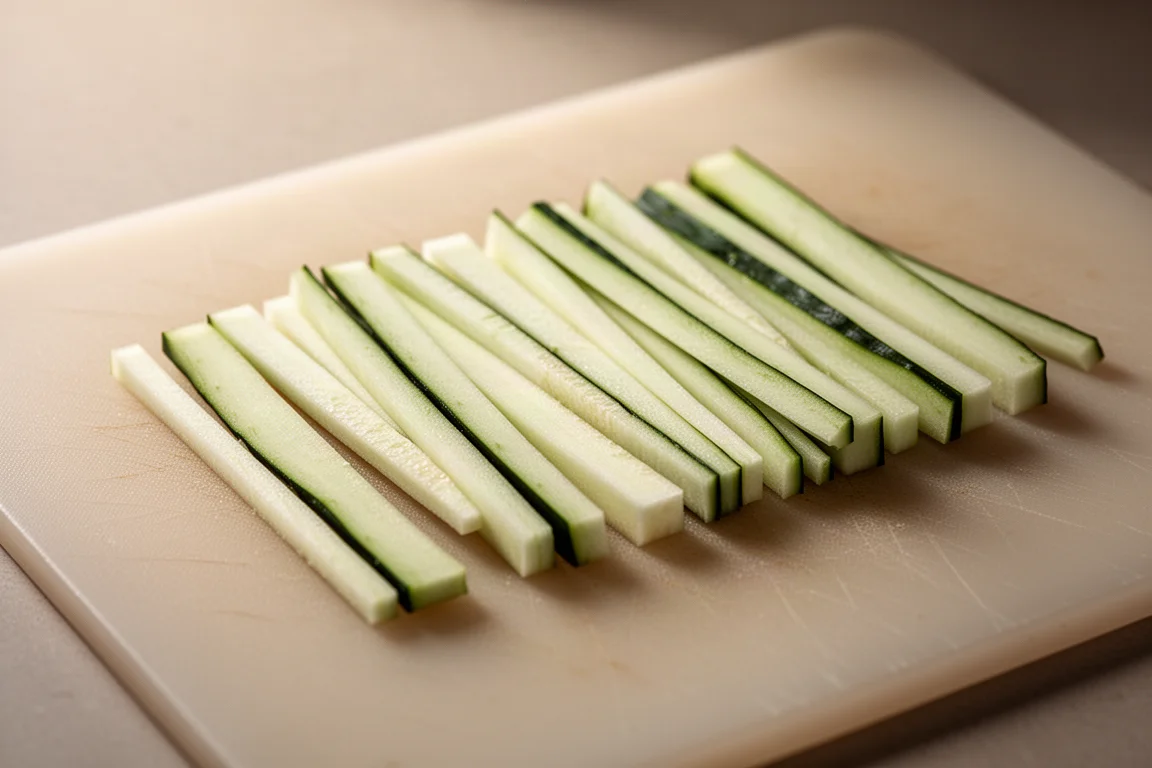
That flat profile has another benefit. When cutting larger vegetables like cabbage or a big sweet potato, a knife that rocks tends to leave slices attached at the bottom, producing what some cooks jokingly call accordion vegetables. Because a nakiri touches the board all at once, you get clean, separated cuts between strips, so your sliced peppers do not cling together.
If you prefer a rock chop, do not write the nakiri off. Some makers add a bit of curve to the profile to accommodate Western-style cutting, and a nakiri with a slightly rounded edge can be rocked fairly easily. For those who want the opposite extreme, certain makers produce exceptionally flat nakiris. Knowing your own cutting motion is the key to picking the right profile.
Who should own one? Weekend meal preppers, restaurant cooks who face mountains of vegetables all day, collectors looking to round out a set, and anyone who cooks primarily vegetarian food. If vegetables dominate your prep, a nakiri deserves a look over a gyuto or santoku.
Tojiro Sakai VG10 Nakiri
This nakiri from Tojiro Sakai runs with a VG10 steel core and comes in a bit longer and a bit taller than most nakiris. It has a hybrid Japanese-Western handle and an easygoing character that makes it a genuine pleasure to use. It is also a knife that will not give anyone a hard time: it is easy to care for, fun to work with, and genuinely good looking. That combination makes it a standout gift option for anyone getting into Japanese knives.
Masashi Yamamoto Kuroshu Nakiri
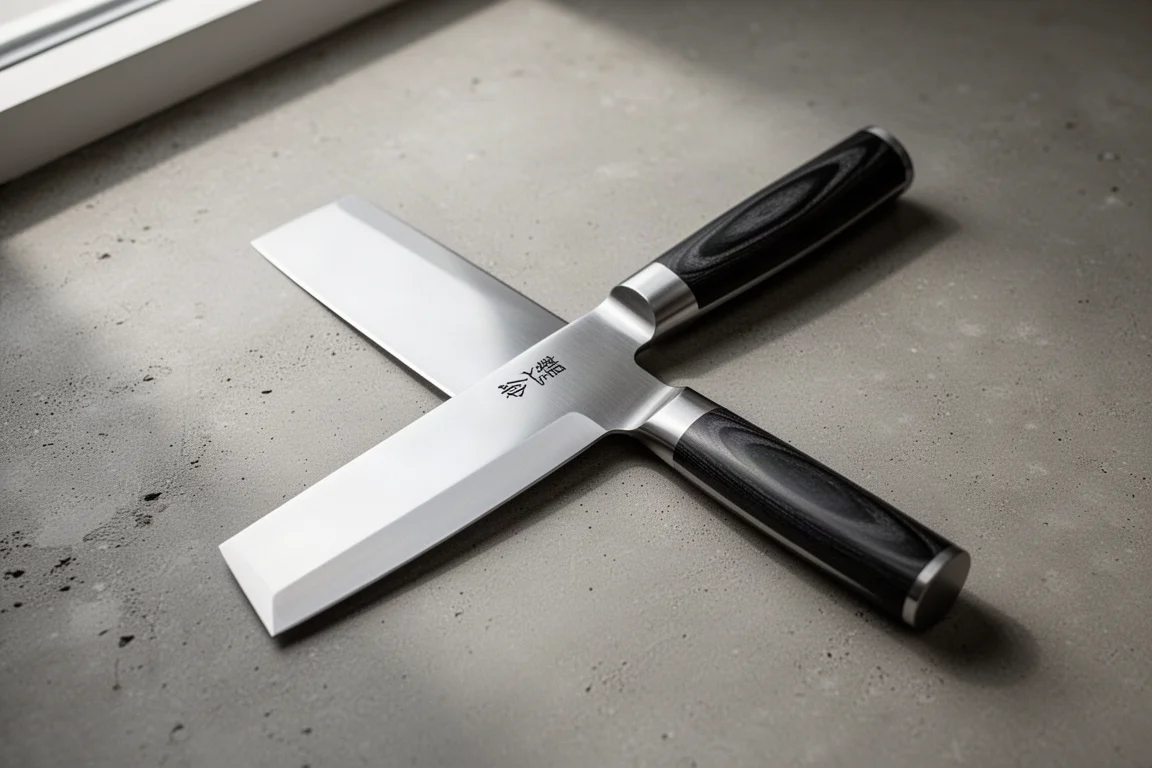
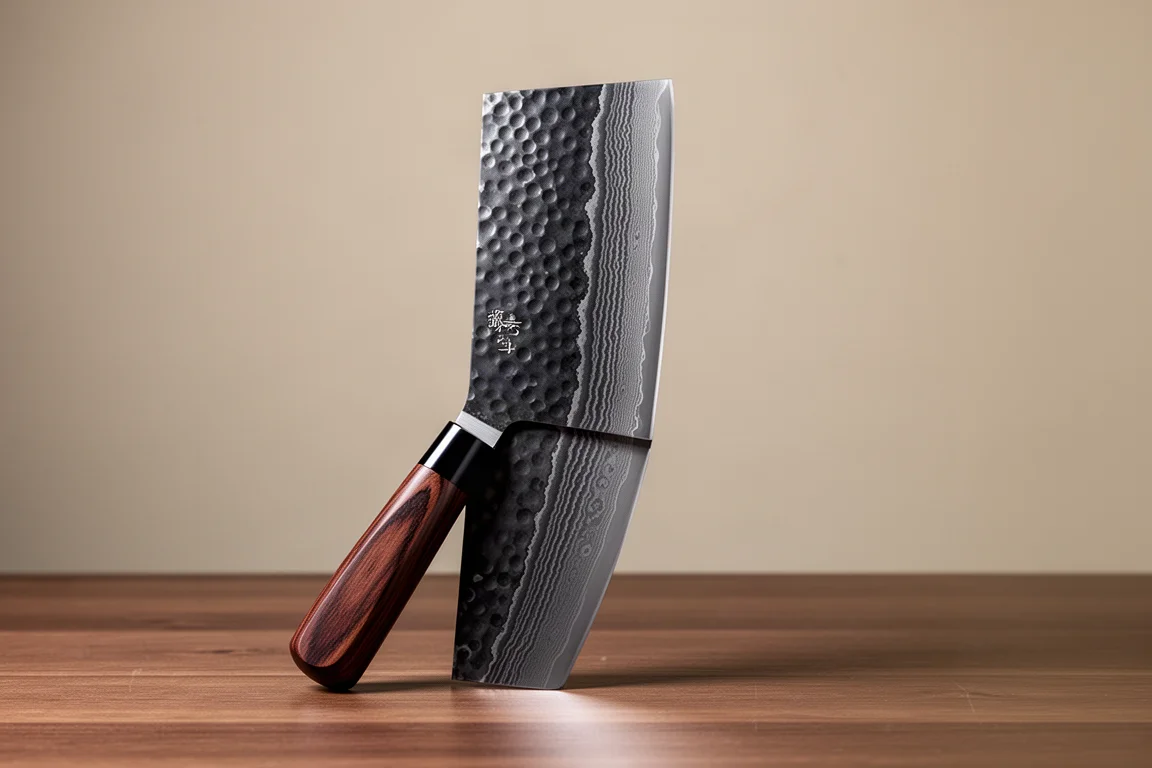
If you want something a little shinier and a little lighter, the Kuroshu line from Masashi Yamamoto is worth a long look. Where the previous knife uses a hybrid handle, this one features a very traditional wa handle. The blade is made from SLD steel, sometimes described as a semi-stainless steel, meaning it may develop a slight patina over time but remains easy to care for.
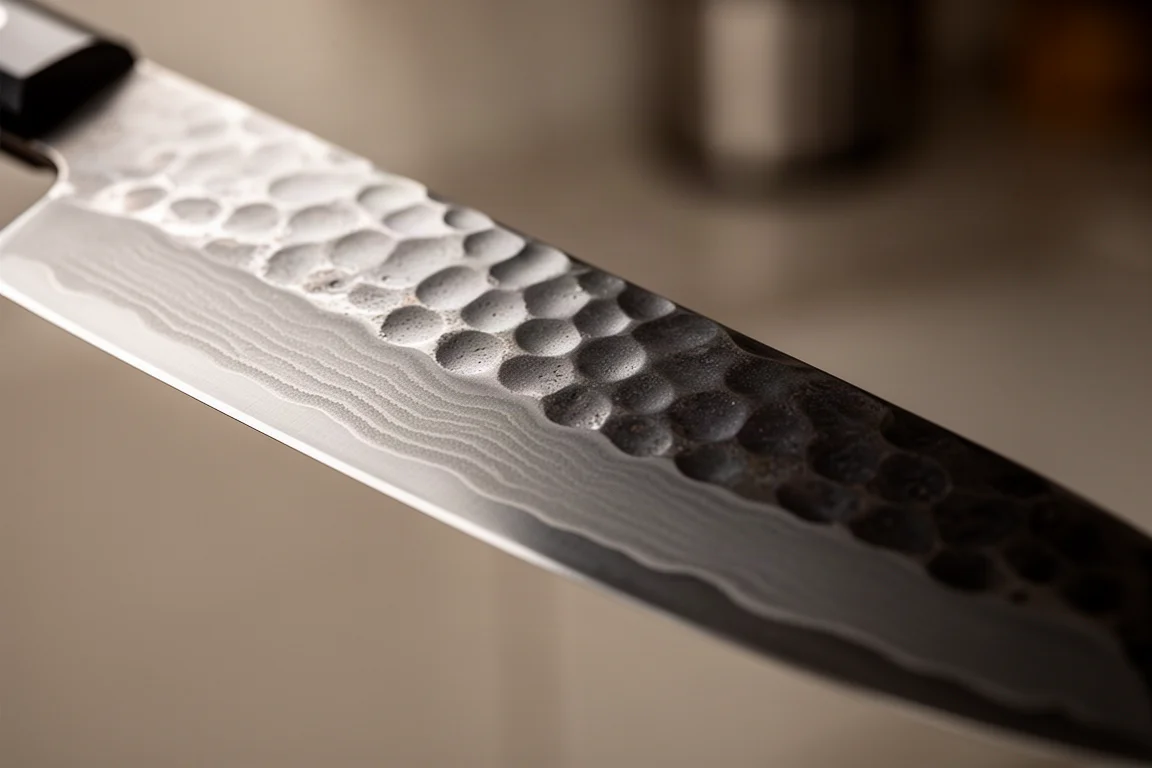
This knife carries noticeably more finishing effort, and it shows. The Damascus pattern is not just visual: you can actually feel the texture of it, and that hammered, textured surface helps food release from the blade instead of sticking. For cooks who are frustrated by slices clinging to the knife face, that texture does real work.
Masakage Zero Nakiri
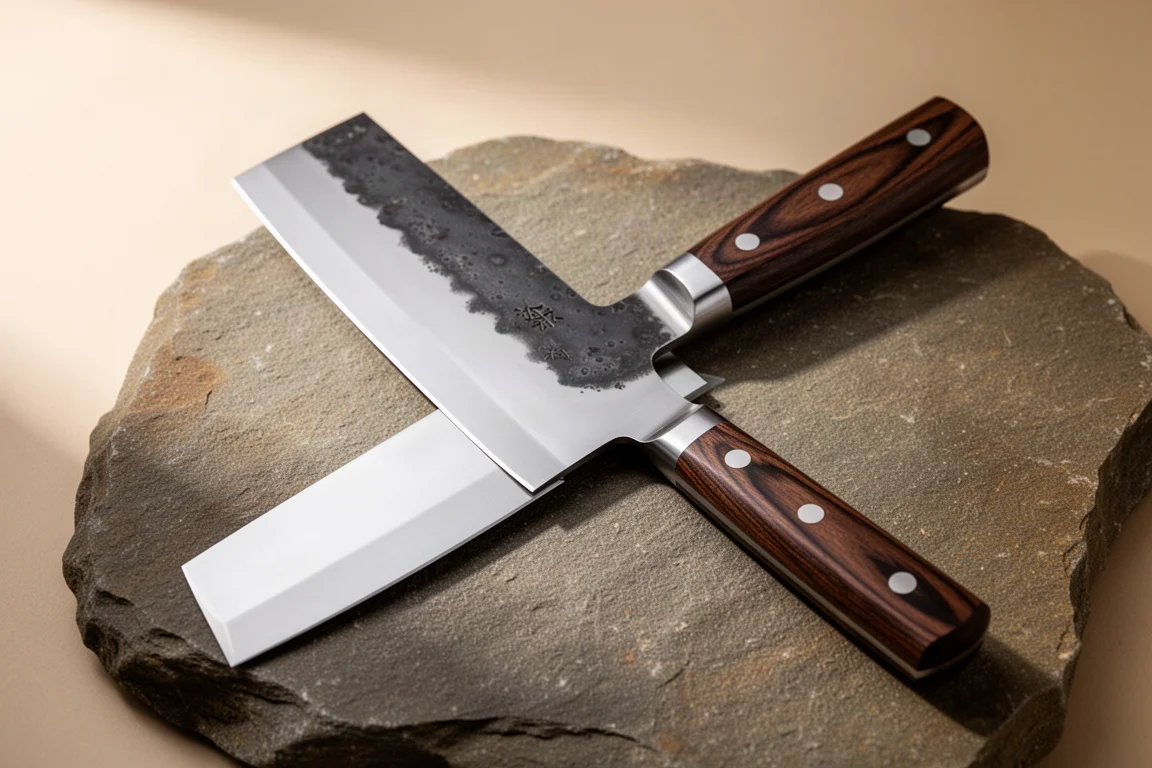
The Masakage Zero, made by Takeshi Saji in Fukui, is built from Aogami Super carbon steel clad in a stainless jacket. That makes it the only carbon steel knife in this lineup, and it is also the only one with a Western handle. For cooks with larger hands, especially anyone used to a more European-style knife, this is the natural fit. The dark ironwood handle feels substantial and comfortable in a big grip.
Masakage nakiris generally run taller than most other makers, and that extra blade height combined with the Western handle makes this a very confident knife to hold. If you love the cutting character of a nakiri but have never felt at home with a traditional Japanese handle, this one bridges that gap.
Overall Buying Advice
Start with how you cut. If you use a push-pull or sliding motion, any of these flat-profile nakiris will feel immediately natural. If you rock chop, look for a slightly curved profile like the Masakage Zero offers. Then consider handle preference: a traditional wa handle suits a lighter, pinch-grip style, while a Western handle suits bigger hands and European habits. Finally, think about maintenance. Stainless and semi-stainless options like the VG10 and SLD knives are the most forgiving, while the Aogami Super carbon core asks for a little more attention in exchange for its own character.
Conclusion
A nakiri will not replace your chef knife, but for anyone who spends serious time on vegetable prep, it is one of the most satisfying knives you can add. The Tojiro Sakai VG10 is the easygoing all-rounder and gift pick, the Masashi Yamamoto Kuroshu brings premium finish and food-release texture, and the Masakage Zero serves big hands and carbon steel fans with a taller, Western-handled build. Pick the one that matches your hands and your habits, and your veggie prep will feel noticeably smoother.
Further reading
Related Reviews

Kitchen Knives
Best Chef's Knives 2026: 27 Popular Options Tested and Ranked
A comprehensive review of 27 chef's knives ranging from $18 to $380, with honest assessments of handle comfort, blade balance, and real-world performance.

Kitchen Knives
Best Chef's Knives Under $75: Two Tested Recommendations
Two practical 8-inch chef's knives that balance sharpness, comfort, and durability without premium pricing.

Kitchen Knives
Best Chef's Knives 2026: 27 Options Tested and Ranked
A comprehensive review of 27 chef's knives ranging from $18 to $380, with honest assessments of handle design, balance, blade profile, and real-world performance.