Mountain Bike Gear
Best Mountain Bike Kit: Five Standout Picks for Trail and Downhill Riders
Five mountain bike products that earned long-term places in the kit bag, from clipless pedals and an all-round trail tire to a downhill fork, a hard-wearing bike computer and a versatile pair of gravel and trail shoes.
Introduction
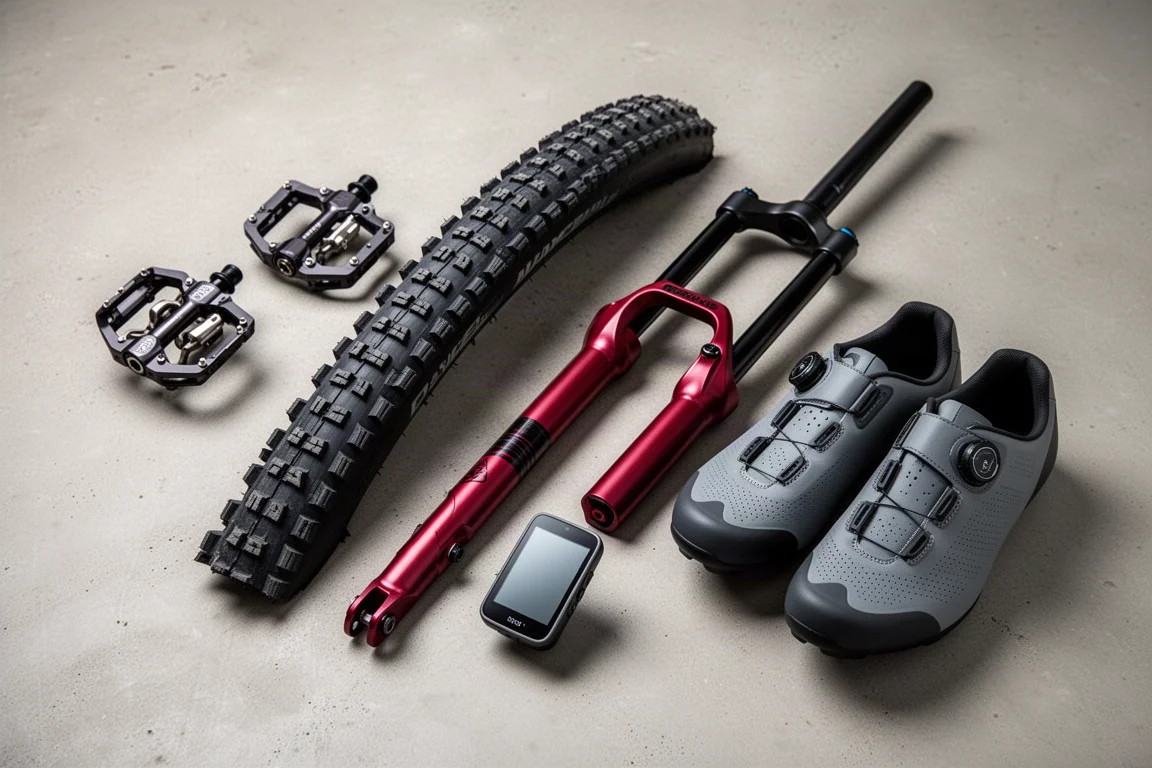
Some gear proves itself on the spec sheet. The rest proves itself over seasons of riding, through bad weather and long days, until it becomes the thing you reach for without thinking. This roundup covers five products that earned that kind of loyalty: a set of clipless mountain bike pedals, an all-round trail tire, a downhill fork, a bike computer that has logged thousands of kilometres, and a pair of shoes that handles gravel and trail duty alike.
Each pick solved a specific problem, and each comes with a trade-off worth understanding before you spend.
What These Picks Have in Common
The thread running through these five products is usefulness rather than novelty. Every one of them is built to be ridden hard, in real conditions, and to keep working afterwards.
Durability carried a lot of weight in the selection. A product that performs well on a dry summer day but struggles in rain, mud or freezing temperatures is only half a product. The gear here has been used in soaking rain, deep mud, scorching sun and sideways snow, and it kept doing its job.
Versatility mattered too. Kit that can move between disciplines, whether that means a tire that handles hardpack and soft loam or a shoe that works for gravel and trail riding, tends to deliver more value per dollar than something that only shines in one narrow scenario.
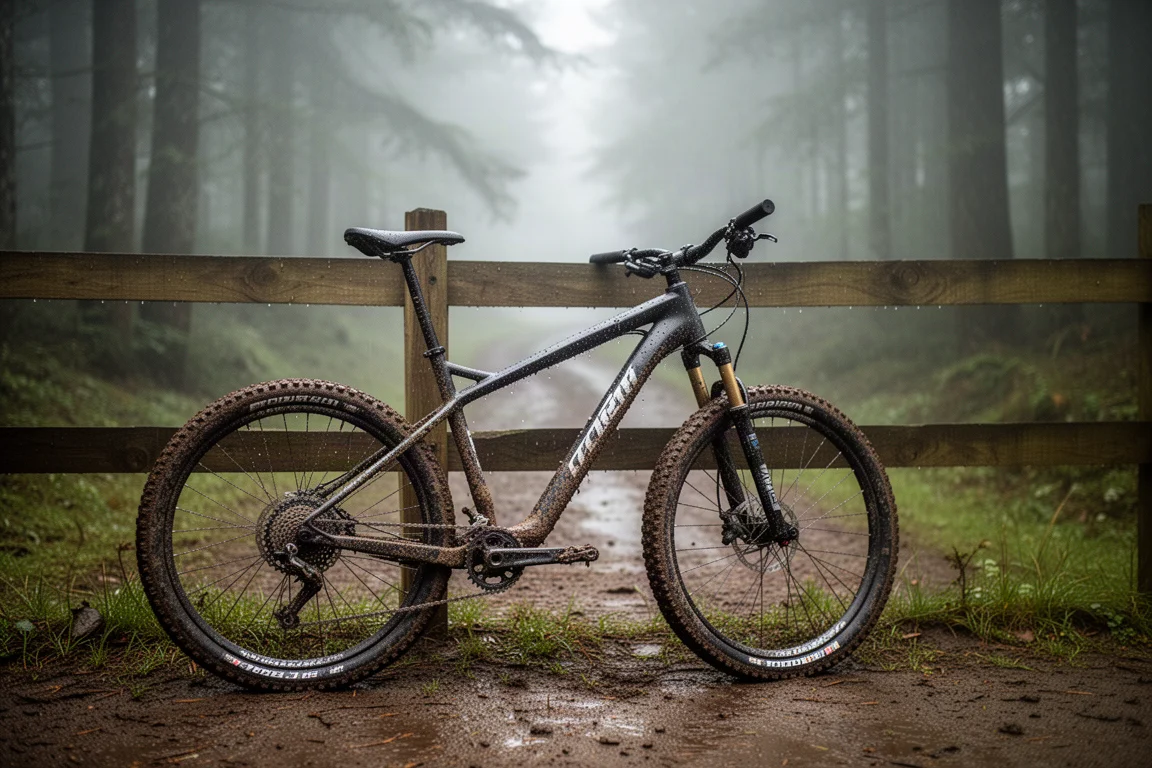
Then there is the question of whether the product actually changes the ride for the better. A fork that turns a near miss into a laugh, a pedal that releases when you need it to, or a tire that finds grip where a faster tread would slide: these are the details that separate a good purchase from a regretted one.
It is also worth noting that the most expensive option is not automatically the right one. Two of the picks below sit at a higher price point and justify it for the right rider, while others deliver their value in a more accessible bracket.
Crankbrothers Mallet Pedals
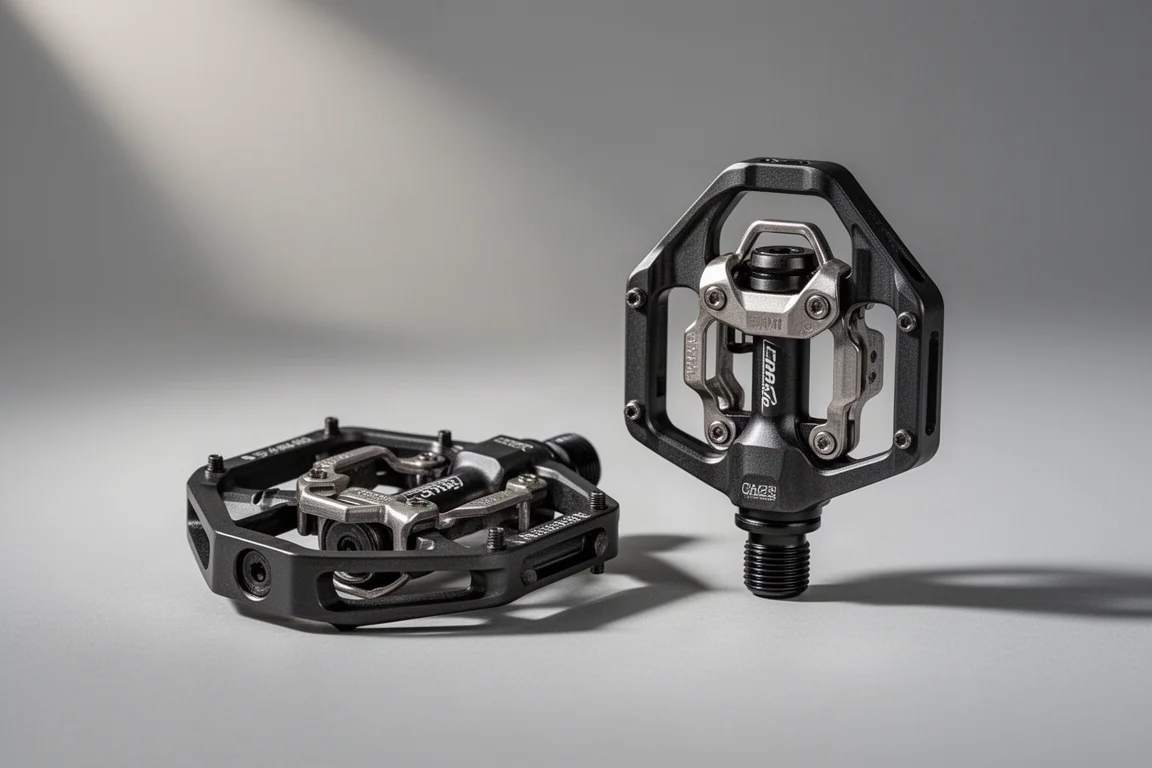
Crankbrothers Mallet pedals come in downhill and trail versions, and both have a habit of winning over riders who arrive with strong opinions about other brands. The release mechanism is the key difference. With the stock cleats, riders with limited or weak ankle movement can struggle to generate enough rotation to unclip. The optional easy-release cleats solve that problem, and once fitted, the pedals become genuinely easy to live with.
That mirrors the experience of a long-time Shimano clip-in user who spent years on Japanese pedals before trying Crankbrothers again. The stock cleats were a struggle with a twisted, weak right ankle. After switching to the easier-release option, the pedals became a favourite, and the Mallet Trail version earned the same verdict.
The trade-off is price. These pedals cost more than the comparable Shimano options, and that premium buys the release feel and the option of easy-release cleats rather than a lighter or tougher package.
Maxxis Forekaster
A shallow-tread cross-country tire is fast, but it has a limit. When the ground turns soft, whether that means mud, loam or loose dust, a low-profile tread cannot dig in deeply enough to generate meaningful grip.
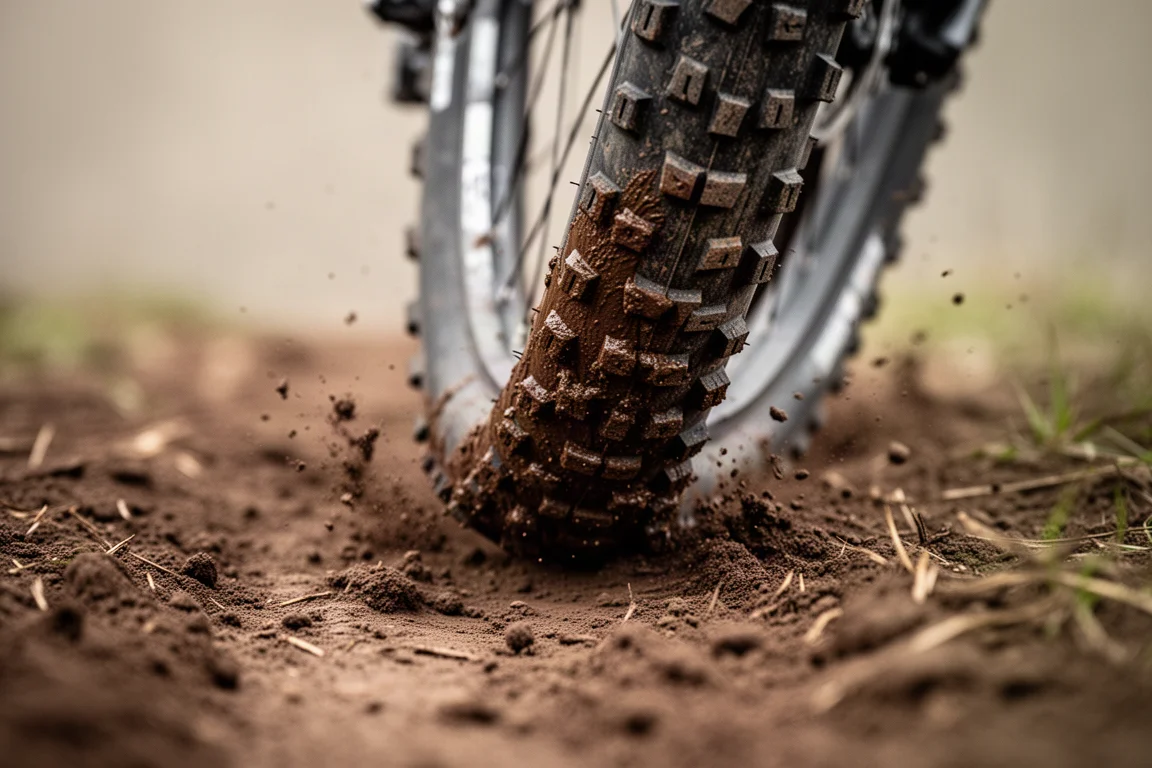
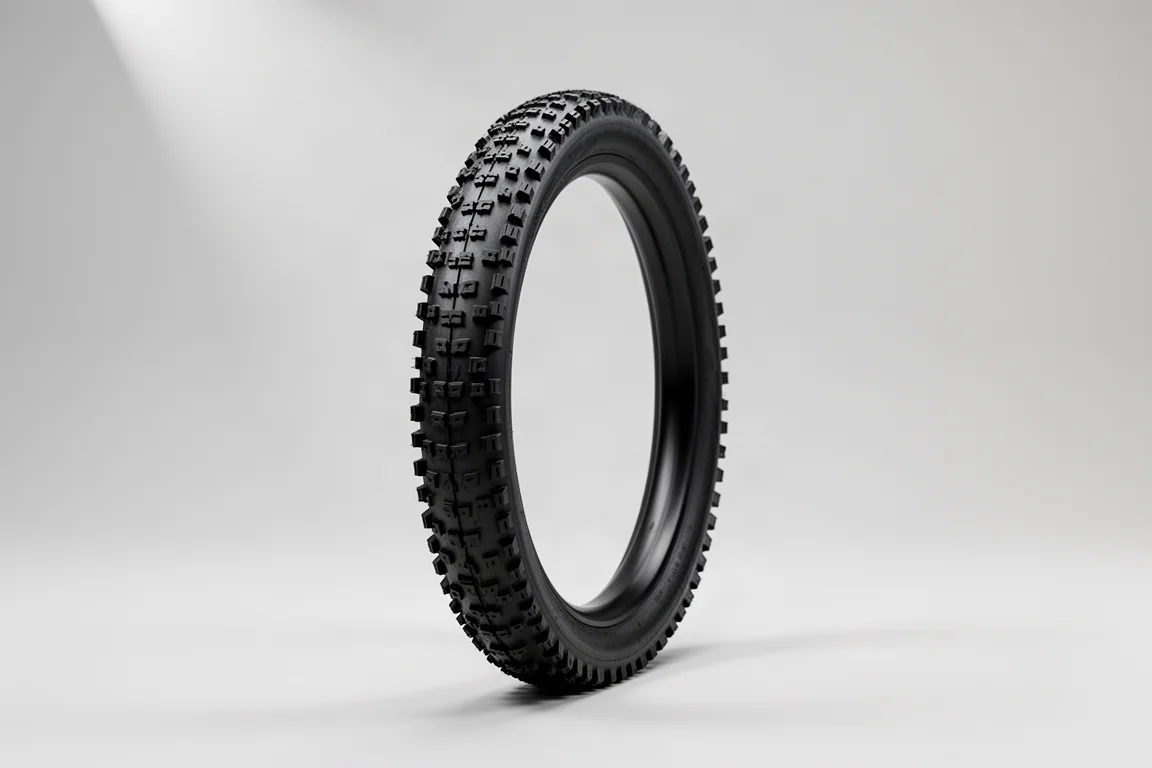
The Maxxis Forekaster was designed to fill that gap. Maxxis positions it between fast-rolling cross-country tires with shallow treads and the taller, more aggressive treads found on trail and enduro offerings.
The compromise is straightforward. Compared with a super-fast cross-country tire, the Forekaster feels a little more labored on tarmac and on hardpacked trail sections. Once the surface softens, that penalty disappears and the tire comes into its own. It also sheds mud relatively quickly when conditions get thick, and rolling speed overall is not bad for the tread depth on offer.
For riders who would rather carry a little extra rolling resistance than lose the front end on the next corner, that is a trade worth making.
RockShox Boxxer
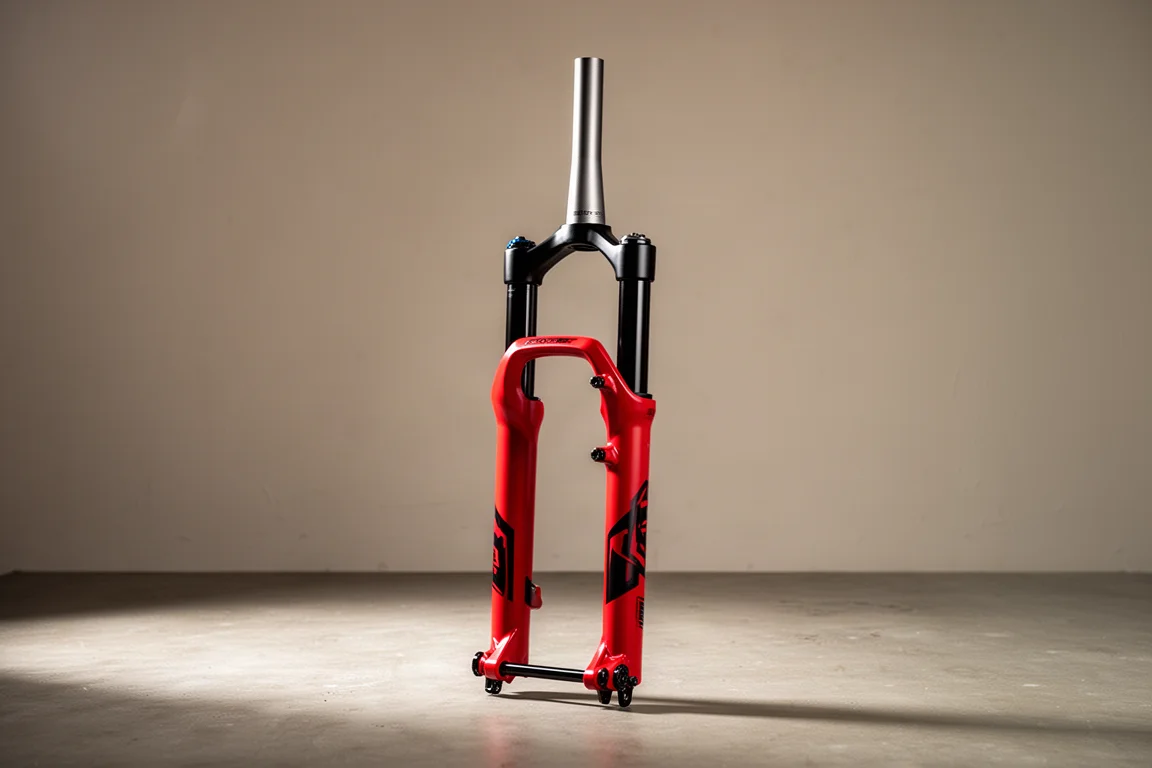
The Boxxer has a long history, and the latest version earns its place on merit as well as nostalgia. The red lowers remain one of the most recognisable sights in downhill, but the performance is what keeps it on the bike.
Support and comfort are the standout qualities. The burly new chassis gives it the composure to sit comfortably among its downhill peers, and the result is a fork that turns sketchy, near-crash moments into something closer to a laugh. That quality showed up over extended riding time at Whistler, where the fork absorbed repeated hard hits without ever feeling unsettled.
It is not the only high-end downhill fork on the market, and there are options out there that have not been tested here. What can be said is that the Boxxer packs a punch and performs at a level that justifies its reputation.
Garmin Edge 830
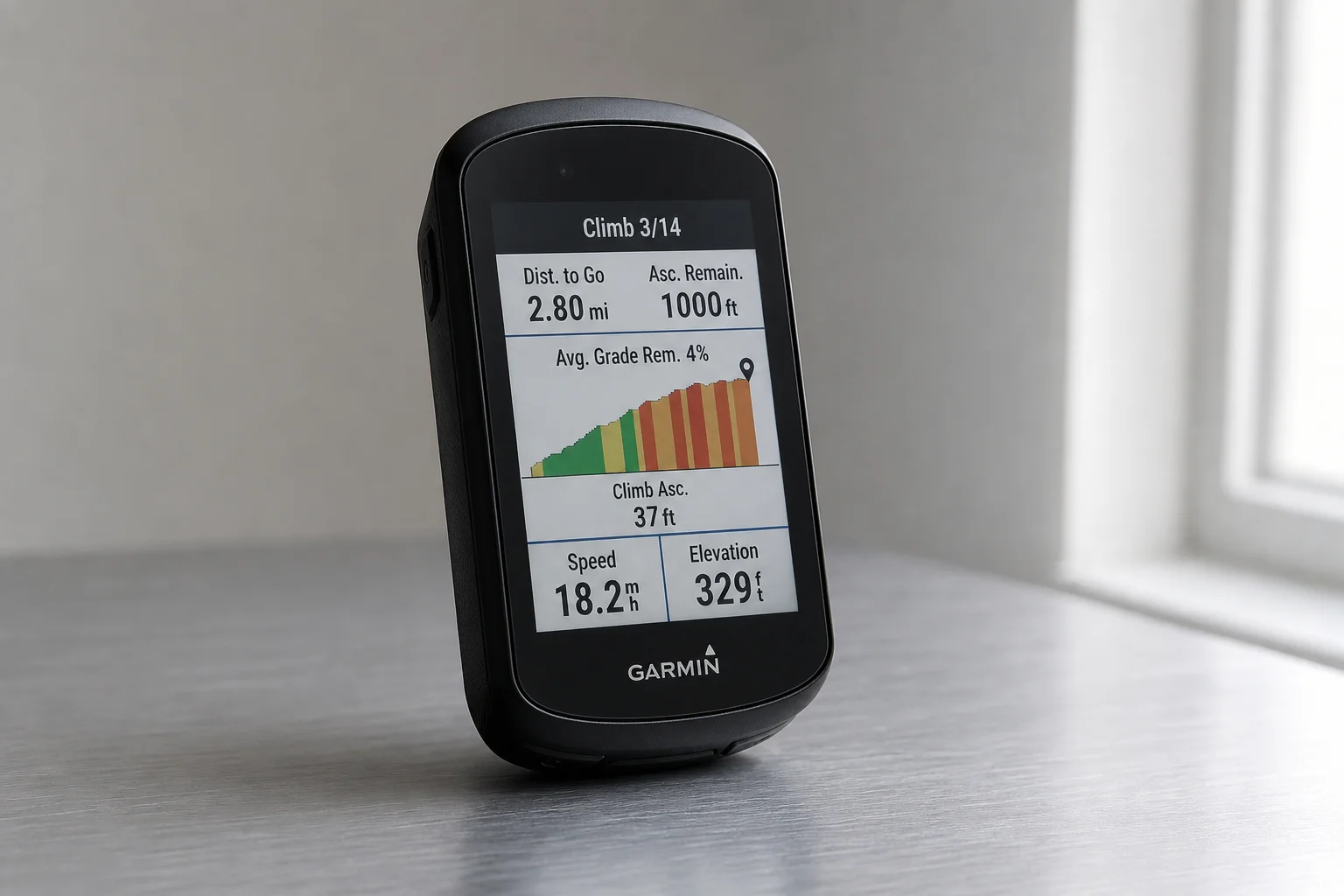
The Edge 830 has a 2.6 inch colour display and a deep set of ride metrics. Heart rate, power, cadence, elevation and speed are all recorded and shown during the ride, then presented afterwards in a format that makes post-ride analysis genuinely enjoyable.
The computer pairs with Garmin smartwatches, and that pairing unlocks additional metrics such as training status and Body Battery. For riders who already own a compatible watch, the Edge 830 becomes part of a broader picture of training load and recovery.
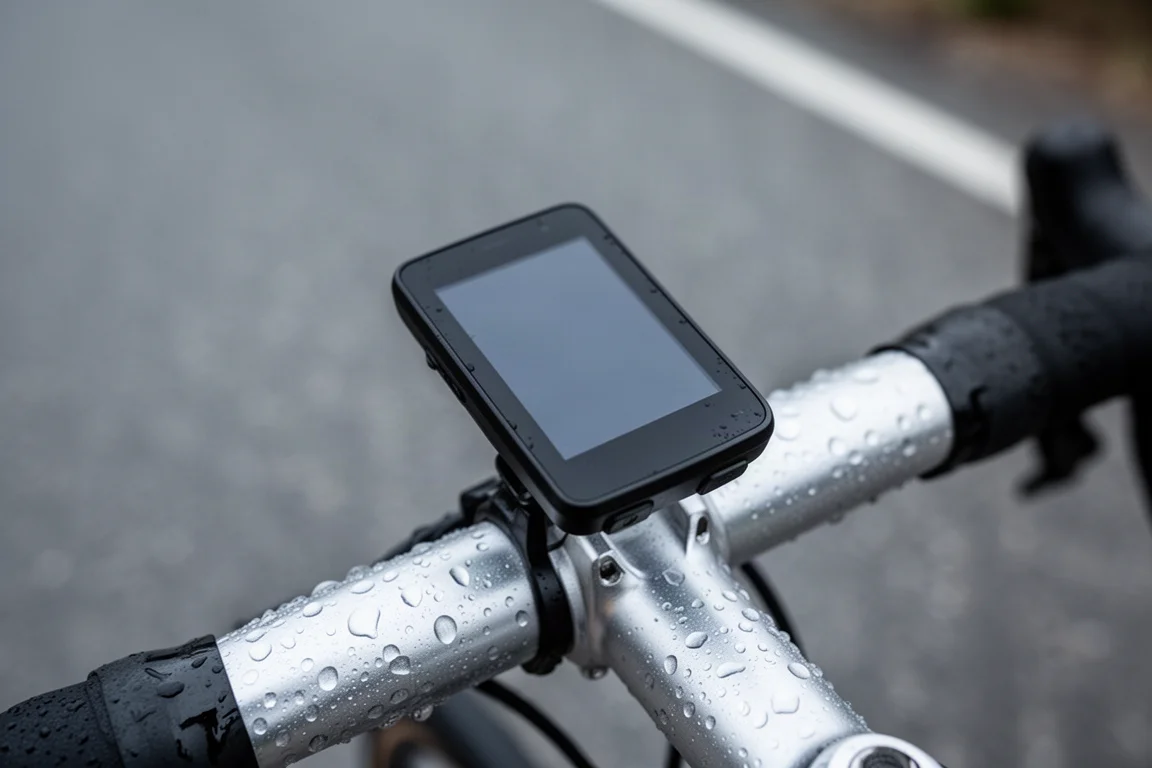
Durability is the other half of the story. This unit has been used in scorching sun, soaking rain, freezing cold and sideways snow, and it has not missed a beat across thousands of kilometres. It now looks well used, with a mud-stained body and a scratched screen, but performance is unchanged from the day it was first mounted to a bike. Few products in cycling earn that kind of long-term trust.
Sidi Dust MTB
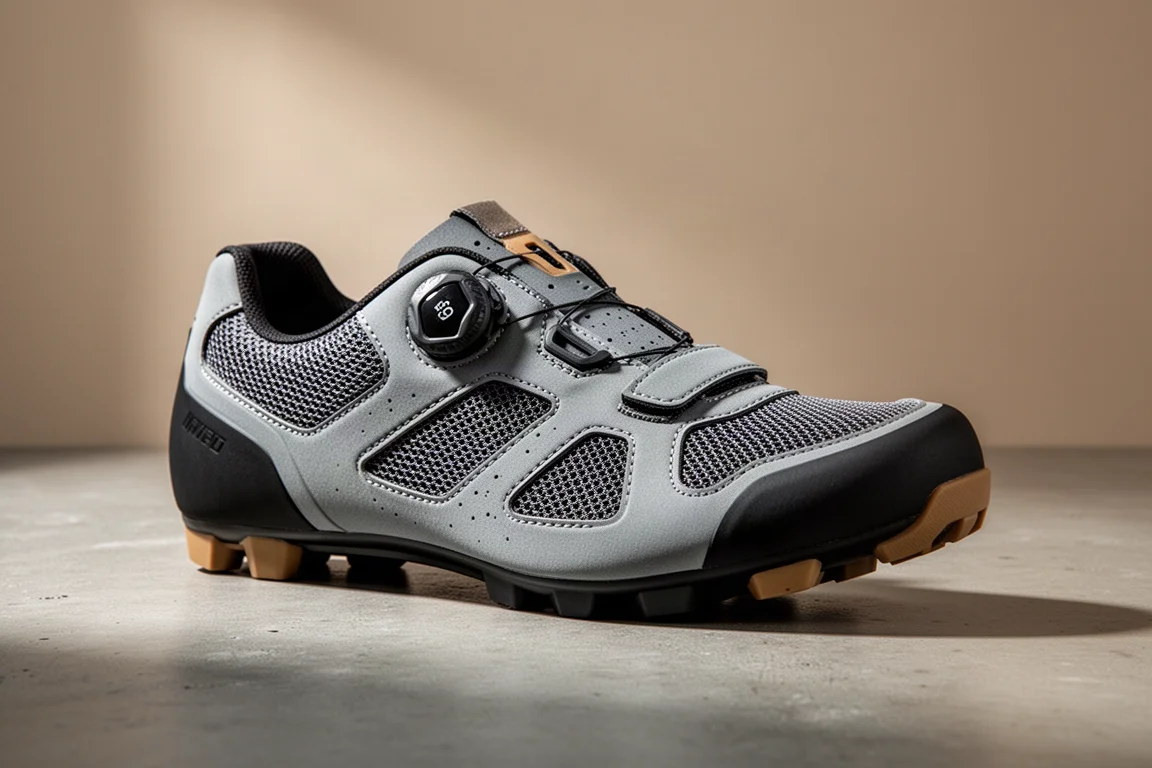
The Sidi Dust MTB is a gravel and mountain bike shoe, and the most interesting thing about it is the sole. Rather than carbon, Sidi used a nylon sole, with the claim that it represents the best balance of pedalling stiffness and flexion for walking.
In practice, the shoe performs well across disciplines and ride lengths. The fit is comfortable, the toe box is roomy, and ventilation is excellent, which matters on long days and in warm conditions.
There are two clear drawbacks. The first is price: at around 260, these are a serious investment. The second is the closure. A single dial closes the whole shoe, and a second dial would improve fit by distributing load more evenly across the foot. It would also provide a backup if one dial failed out on a ride. The heel cup, meanwhile, could be a touch tighter, though no slippage has been reported in use.
Despite those points, this is a shoe worth coming back to, particularly for long-distance rides where comfort and consistency matter more than saving grams.
Buying Advice: Matching Kit to the Riding You Do
Start with the problem you actually have. Riders with weak or limited ankle mobility should look closely at pedal release options before anything else, because no amount of grip or efficiency makes up for a pedal you cannot exit confidently.
If your riding happens on soft, loose or wet ground for much of the year, a tire with more tread depth than a cross-country race casing will pay for itself in confidence. Accept the small rolling penalty on hardpack and enjoy the grip everywhere else.
For suspension, the question is discipline. A downhill fork like the Boxxer belongs on a long-travel bike and is built for the kind of terrain where support and composure matter most. Buying downhill hardware for trail riding rarely makes sense.
Bike computers reward riders who care about data. If you want heart rate, power, cadence, elevation and speed recorded consistently, ride after ride, a unit that survives every weather condition is worth more than one with a slightly larger screen.
Shoes come down to fit and use case. A roomy toe box and strong ventilation suit long rides, while a nylon sole balances pedalling stiffness with enough flex to walk comfortably. Pay attention to the closure system, because a single dial has to do more work than a two-dial design.
Across all five categories, the same principle applies: the best purchase is the one that matches the conditions you actually ride in, not the one with the most impressive numbers.
Conclusion
These five products share a common trait. They were not chosen for novelty or for a headline specification, but because they kept delivering over months and years of real riding. The Crankbrothers Mallet pedals solve a genuine release problem for riders with limited ankle mobility. The Maxxis Forekaster trades a little rolling speed for grip that shows up whenever the ground softens. The RockShox Boxxer combines heritage with a chassis and support that stand up to modern downhill demands. The Garmin Edge 830 has proven its durability across thousands of kilometres. The Sidi Dust MTB brings comfort and versatility to gravel and trail riders, with a closure system that could still be improved.
If you are shopping in any of these categories, the short version is simple: buy for the terrain and conditions you ride most, and the gear will earn its keep.
Further reading
Related Reviews
Mountain Bike Gear
Best Budget MTB Upgrades: 11 Affordable Mountain Bike Products Worth Buying
Eleven low-cost mountain bike upgrades that sharpen comfort, grip, traction, and trailside repairs without stretching the budget.
Mountain Bike Gear
Best Mountain Bike Gear and Accessories 2026: Six Practical Picks
A cross-country race bike, a car-ready transport sleeve, affordable trail sunglasses and three small 3D printed upgrades for SRAM AXS controls.
Mountain Bike Gear
Best Mountain Bike Gloves 2026: Five Practical Options for Trail Riders
Five mountain bike gloves with different protection levels, ventilation, and grip features to match various riding styles and conditions.