Travel Accessories
Best Mini Travel Pouches 2026: Externally Anchored Pouches That Cut Daily Friction
Four mini pouches that clip to the outside of your bag, each with different strengths, plus practical lessons on anchor points and security.
Introduction
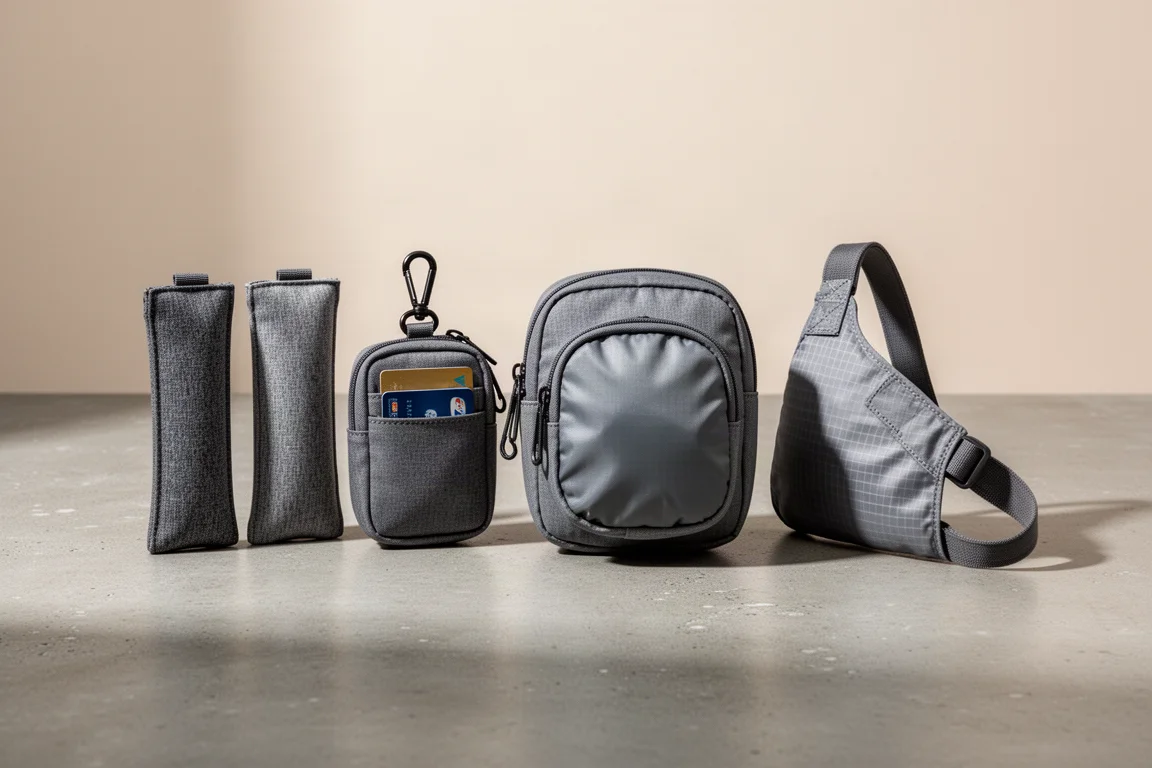
After more than a decade of near-constant flying, one of the simplest and cheapest changes to a travel setup has turned out to be one of the most impactful: tiny pouches clipped to the outside of your bags. The idea sounds trivial, but the way it removes small daily frictions compounds over months and years abroad.
The premise is simple. When you travel often, your bag becomes a mobile version of your life, and you carry more categories of things that suddenly matter: transit cards, earbuds, soap sheets, breath mints. Anchoring a mini pouch to whichever bag you happen to be using that day means those items are always reachable without digging through a main compartment.
The biggest takeaway before the picks: anchor security is non-negotiable, bag compatibility matters, and this system is genuinely not for everyone. If you are perfectly happy rummaging through your bag for a few seconds, you probably do not need any of this.
Bellroy Light Pocket Trio
The Bellroy Light Pocket Trio comes in a pack of three, and it is the most thoughtfully engineered of the group. Each pouch has two anchor loops, which initially feels redundant but actually adds flexibility depending on orientation, mounting position, and whether you are left or right-handed.
The set also includes a thin carabiner, which is more useful than it sounds because it lets you attach the pouch to many zipper pulls, not just dedicated anchor points. That matters because not every bag in a rotation has a proper external anchor.
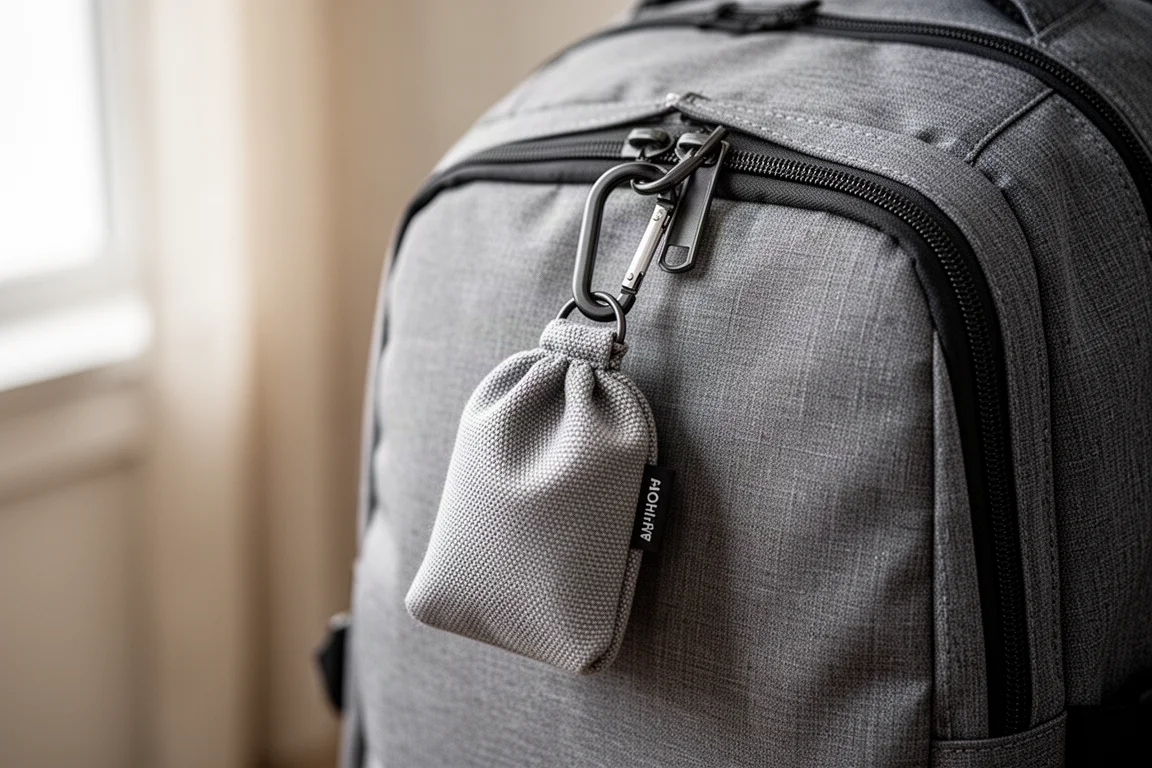
For anyone running multiple bags and wanting a clean, flexible attachment system out of the box, this trio is the most complete solution here.
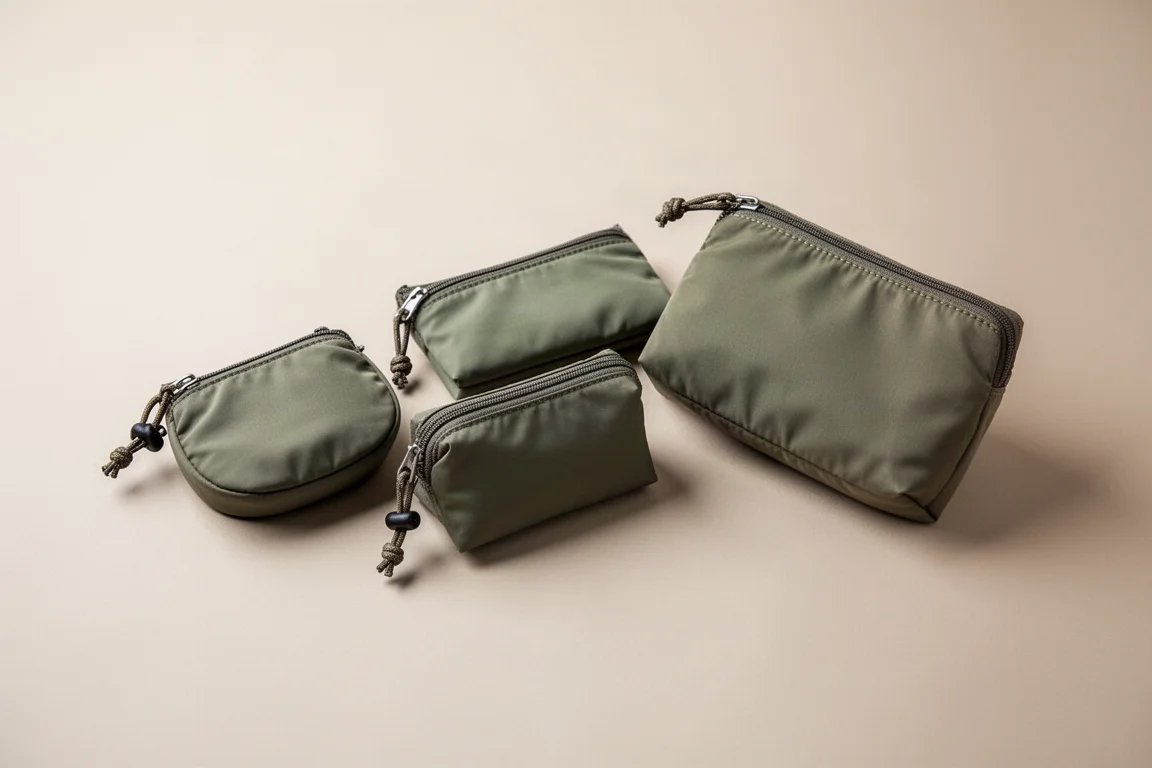
Agility Japan Pouch
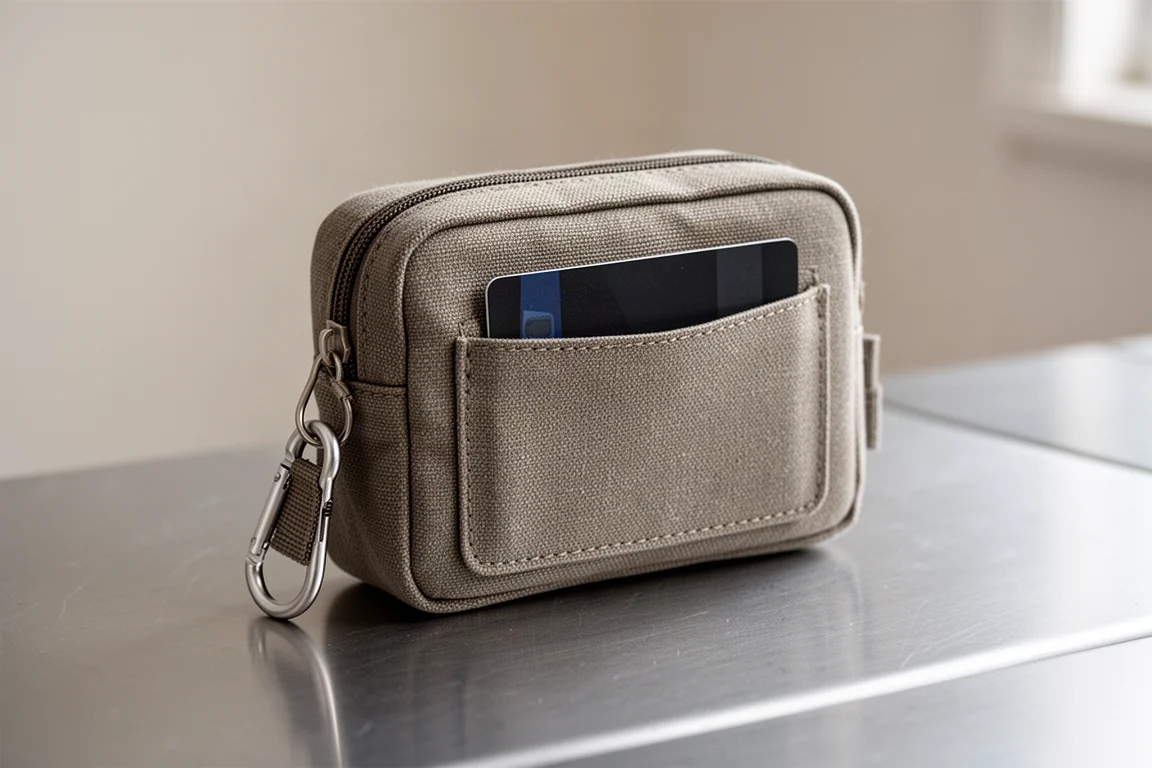
The Agility Japan pouch came out of a Tokyo everyday-carry challenge, and it has excelled in public transit-heavy cities. The key feature is the external sleeve: it allows instant access to transit cards like Suica or Pasmo in Tokyo, the EasyCard in Taipei, or Flazz in Jakarta without ever opening the main compartment. Slide it out, tap, slide it back in.
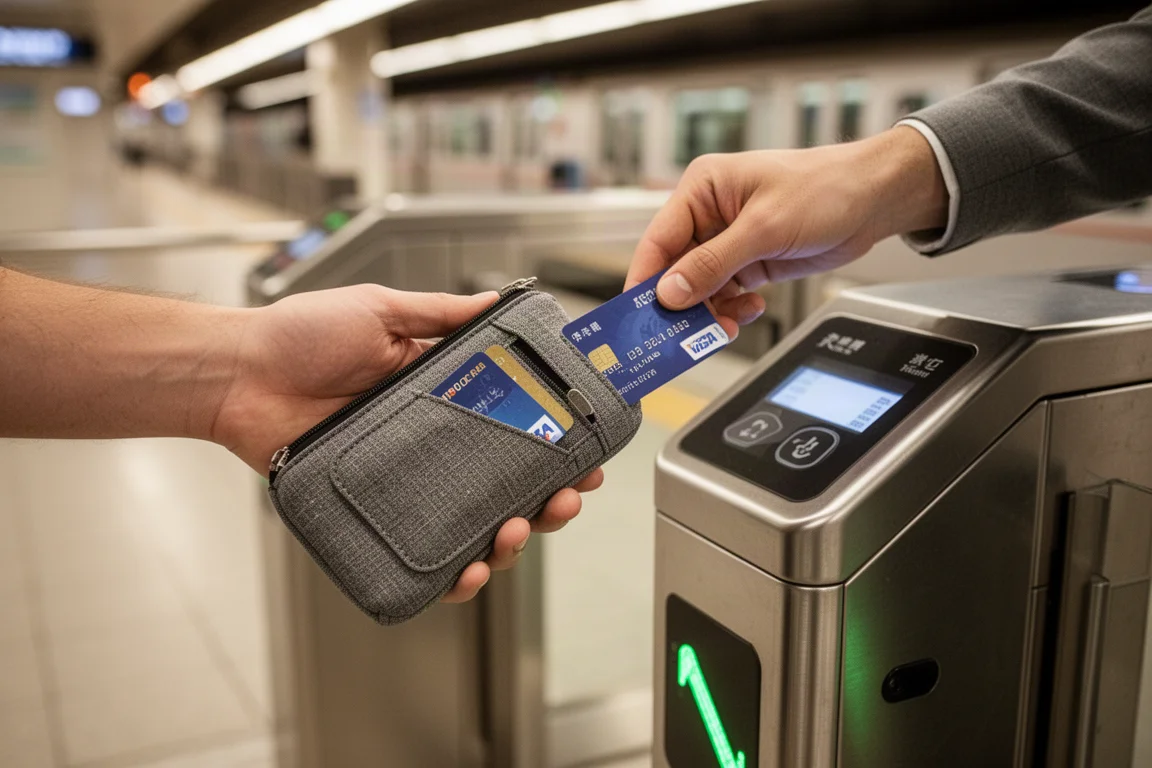
There is one important warning learned the hard way. The built-in carabiner is not as secure as it appears, and in testing it detached twice in a single day. The fix is simple: anchor an S-biner number two with slide locks to the fixed built-in key loop instead, which permanently resolves the issue.
Bitplay Pouch
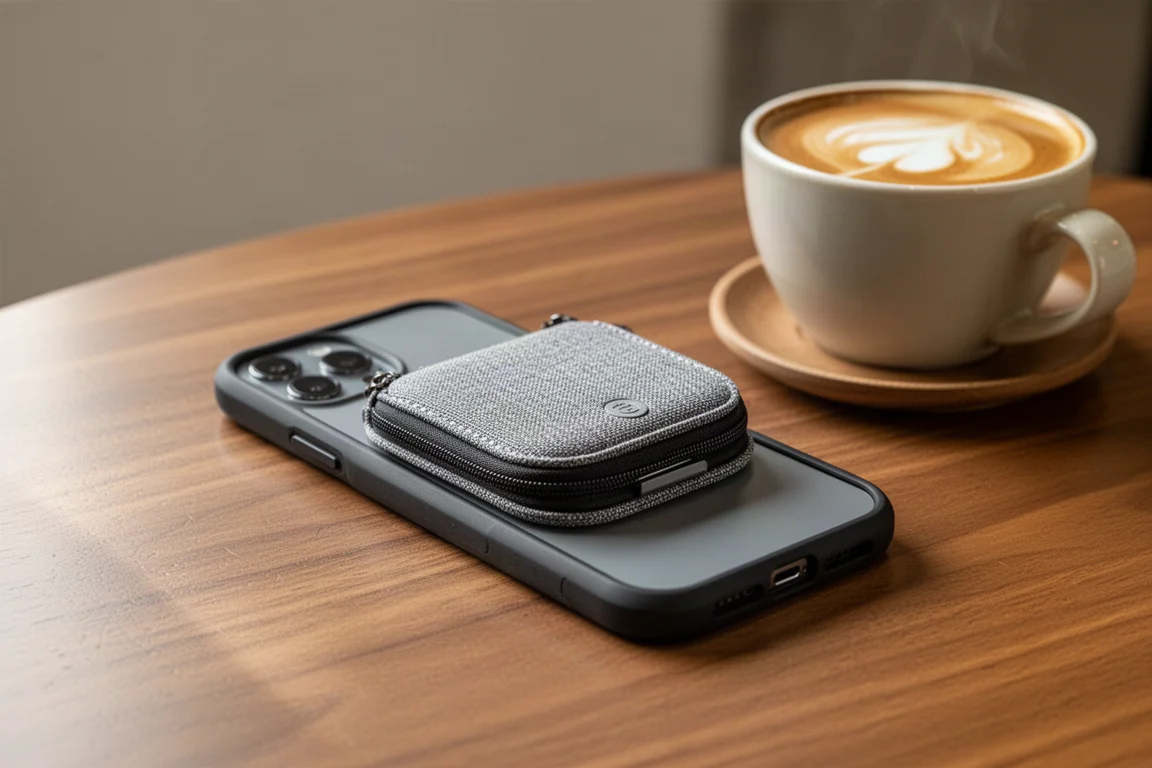
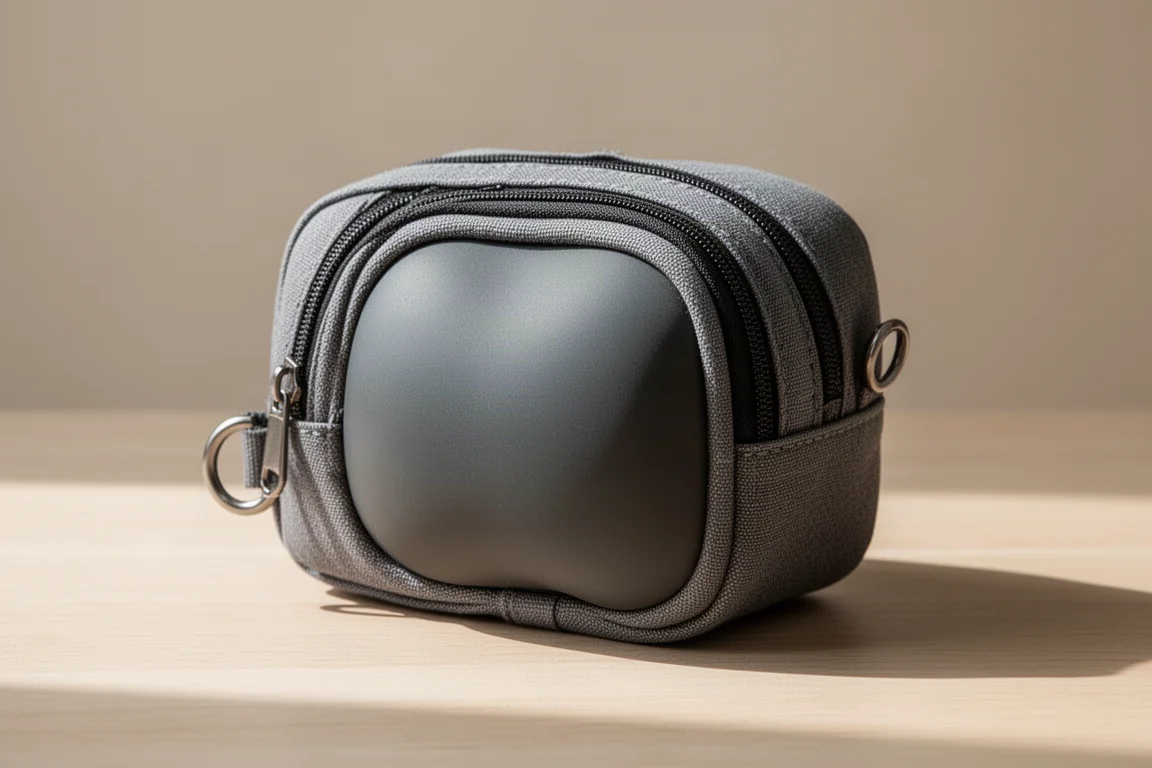
The Bitplay pouch, picked up during a 24-hour Taipei everyday-carry challenge, brings layered internal organization and a balloon-style front compartment that is deceptively storage-capable. Its L-shaped opening helps prevent items from falling out during use, which is especially useful for coins in cash-heavy cities.
Unlike the Agility pouch, it uses a closed-loop D-ring anchor, so there are no accidental drops from a loose carabiner. It is also MagSafe compatible: if you do not want to bring a bag at all on a given outing, it attaches securely to an iPhone, even with a thick case.
A Note on Budget Options
These tested pouches sit near the high end of pricing, but the concept does not have to be expensive. A Muji pouch with an integrated carabiner, found on sale in Taipei for 99 Taiwan dollars, roughly three US dollars, proved that even a very cheap option can work if the anchor is solid. The principle is not the pouch itself, it is the removal of decision overhead.
The Anchor Bag: Tom Bihn T33
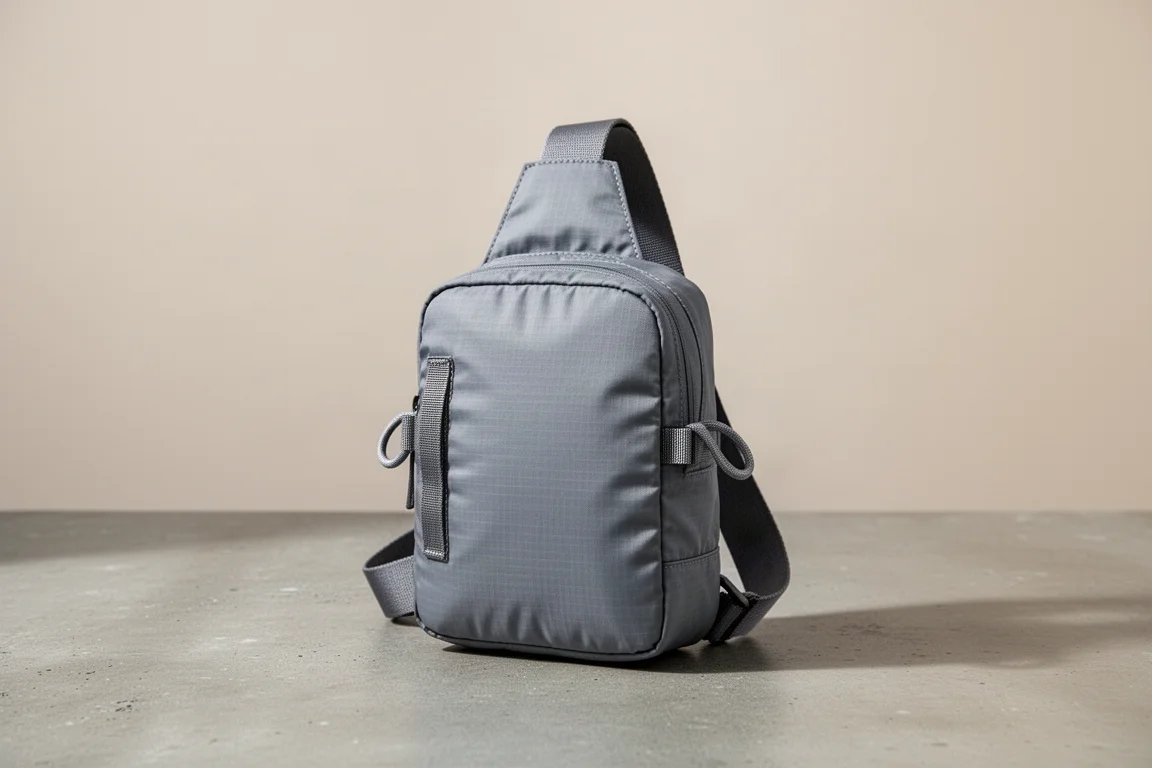
The pouches only work if the bag they attach to plays along. The Tom Bihn T33, a 3.5-liter sling in gray that has been used for years with no temptation to change, is the leisure and evening bag in this rotation, and it solves the attachment problem cleanly with two reinforced external anchor points on either side.
It also has a recessed rear zipper pocket that sits directly against your body, ideal for a passport, emergency cash, and other items you do not want exposed or accidentally accessed. Build quality is a standout: water-resistant ripstop exterior, YKK zippers, reinforced stitching, and bar tacks at stress points, all competing with slings that cost far more. The design is minimal without being sterile, with no loud branding, which is exactly what you want when traveling. Multiple colors and two smaller sizes are also available.
General Warnings Before You Buy
A few lessons from months of experimenting with this system. First, anchor security is non-negotiable. If the attachment is not solid, the whole system fails, because you do not want to be worrying about it in the back of your mind all day. An affordable S-biner number two with slide locks is a favorite fix. Second, bag compatibility: not all bags have dedicated anchor points, and not all zipper pulls are created equal, so test your core gear before committing. Third, daily habits matter. Valet everything in the same place when you step inside, so the next time you leave, you never accidentally leave something behind, like a transit card still on the work bag at the hotel.
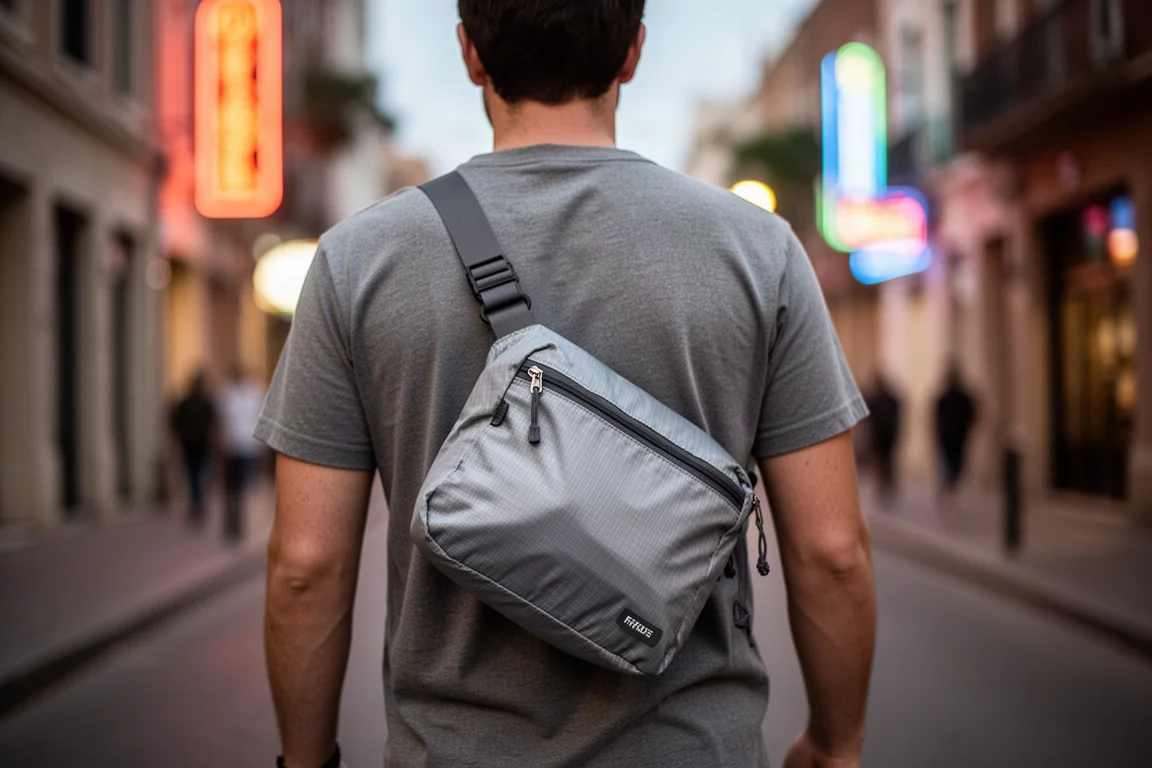
And the most important warning: most people do not need this. These micro-annoyances are not universal, and few things are worse than spending money and brain cells solving a problem you do not have. But if constant digging genuinely bothers you, externally anchored mini pouches are worth exploring, and arguably even more impactful at home.
Conclusion
Mini pouches anchored to the outside of your bag will not change how you pack, but they quietly remove hundreds of tiny frictions across a trip. The Bellroy trio offers the most flexible attachment system, the Agility Japan pouch wins for transit-heavy cities, the Bitplay pouch is the most organized and bag-free friendly, and the Tom Bihn T33 shows how much a bag with proper anchor points matters. Match the pouch to your actual pain points, secure the anchor properly, and let the compounding benefit do the rest.
Further reading
Related Reviews
Travel Accessories
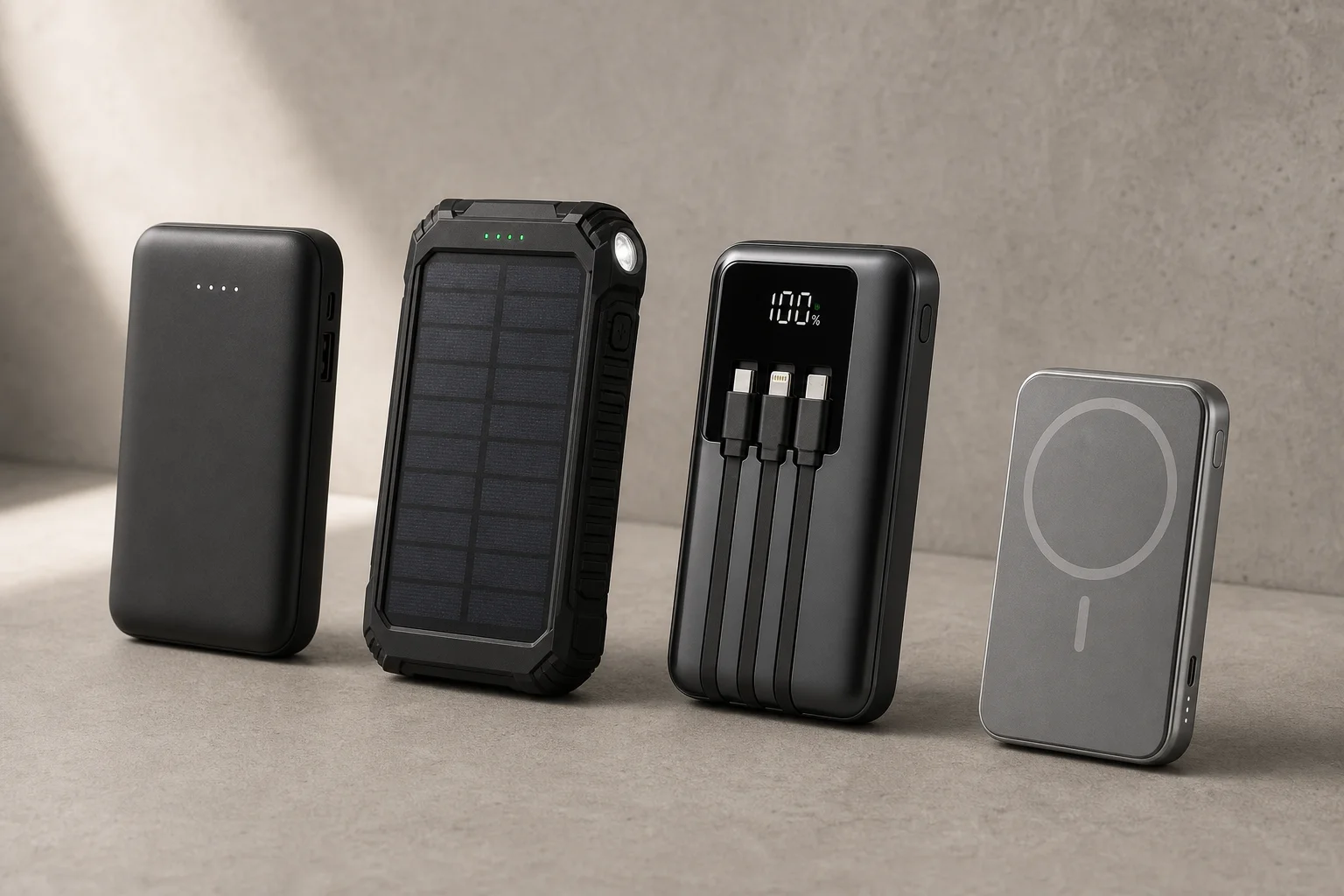
Best Power Banks for Traveling: Four Options for Different Needs
A practical comparison of four power banks for travel, from magnetic convenience to rugged survival features.
Travel Accessories
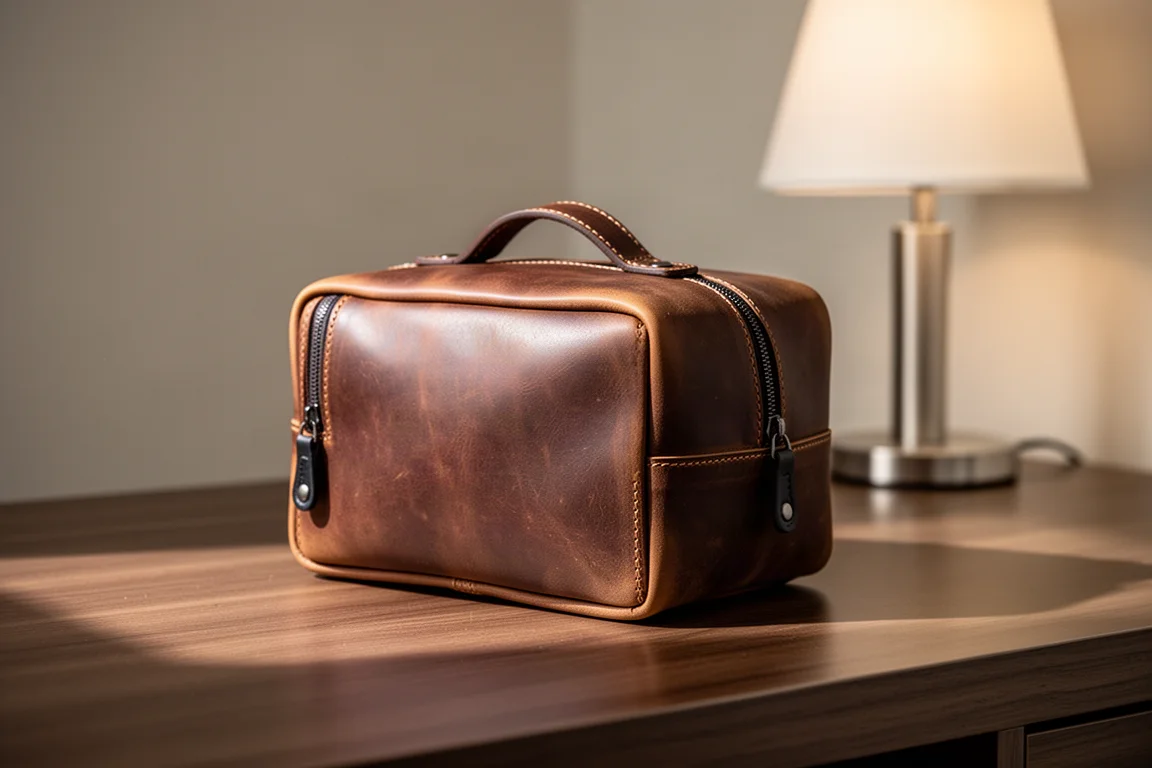
Andar Oxford Review: A Full Grain Leather Toiletry Bag Built for Real Travel
After months of use and a proper hotel-room test, the Andar Oxford proves itself as a compact but surprisingly roomy leather toiletry bag for frequent travelers.
Travel Accessories
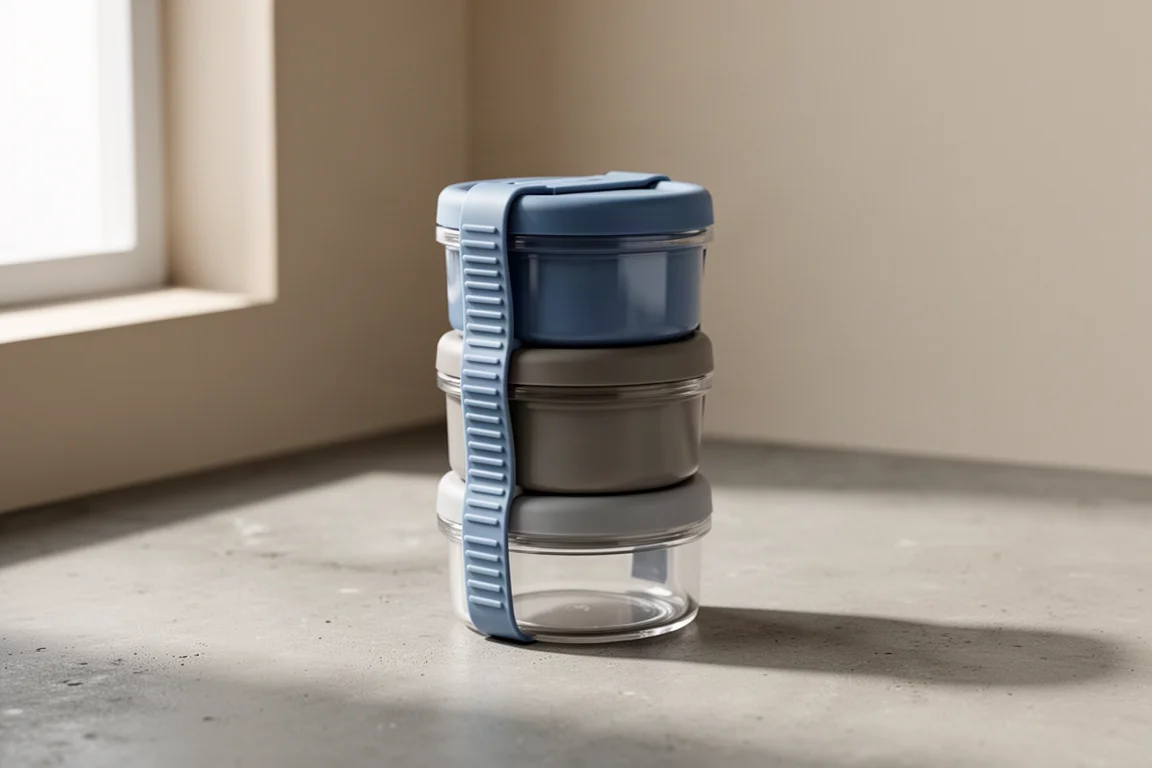
Humangear Stack Travel Containers (Small Set): A Neat Fix for Travel Liquids
Tiny, twist-together, leak-proof travel containers that make toiletry kits lighter and far more organized.