Hand Tools
Magnetic Nut Drivers Compared: Malco MSHC2 vs DeWalt DW2228IR
Two reversible magnetic nut drivers tackle the same problem, metal debris stuck around the magnet, with very different results.
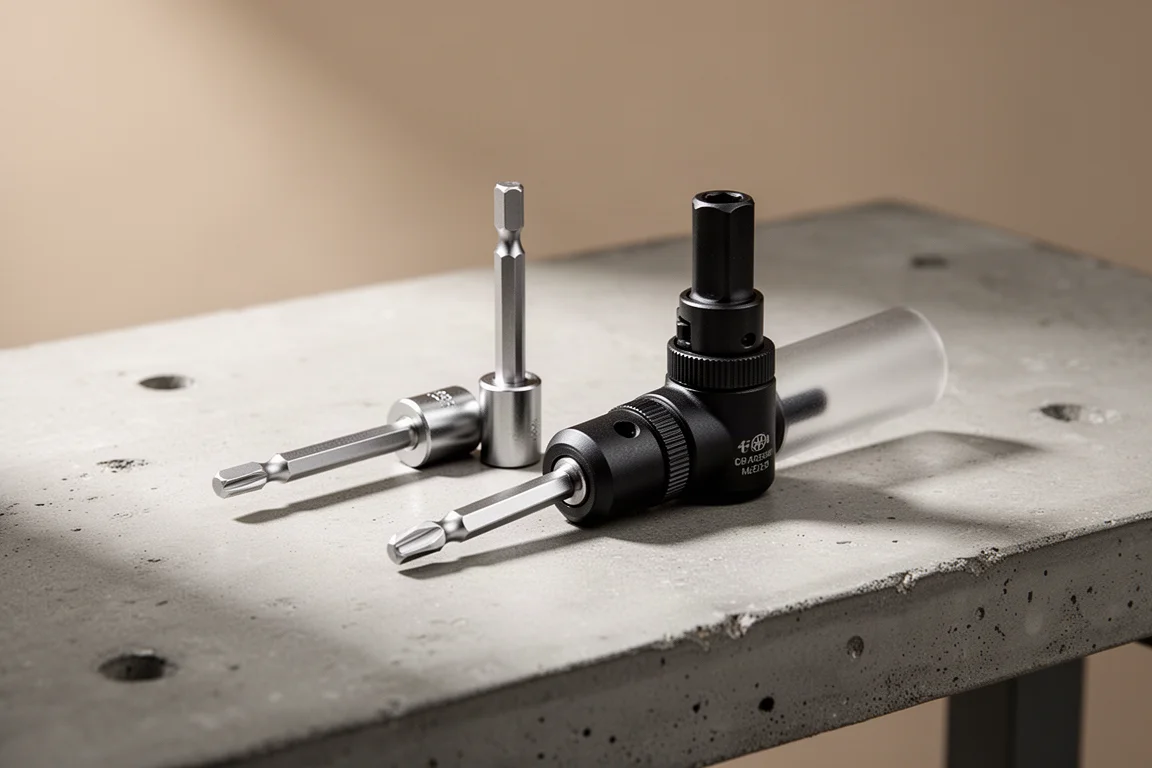
Introduction
Magnetic nut drivers are a small upgrade that pays off fast, especially when you drive a lot of sheet metal screws with a power tool. The magnet holds the fastener in place, which is a huge help overhead or in awkward positions. The catch is that the same magnet happily collects metal filings, broken fastener material, and pocket debris. Once that junk packs in around the magnet, it can be nearly impossible to remove.
These two drivers both promise a way to deal with that problem. One takes a simple, removable-tip approach, and the other uses a sliding mechanism. After working with both, one clearly has the more practical design.
Why Magnetic Nut Drivers Get Gunked Up
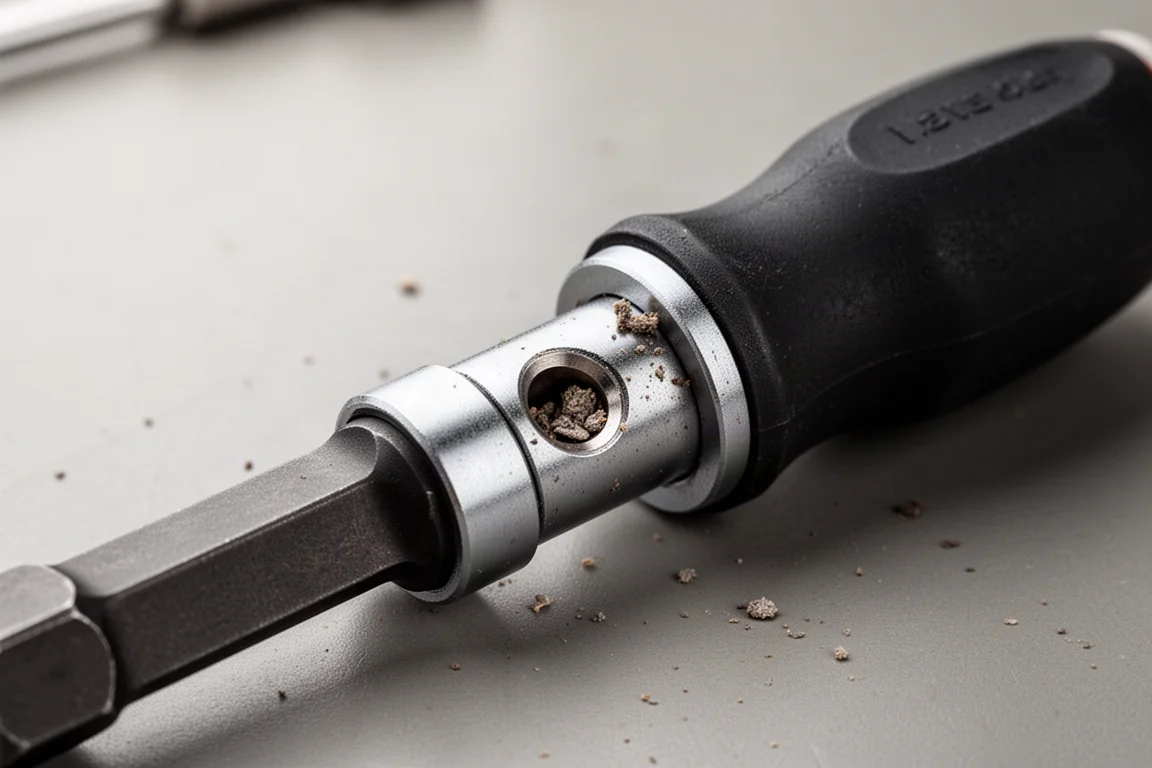
Anytime you use a magnetic bit driver on a drill or other power tool, you risk grinding off the edges of softer fasteners. This happens often with appliance work, and over time with jobs like putting up metal roofing. That ground-off material ends up inside the socket, packed right against the magnet, and it can be very hard or even impossible to get out.
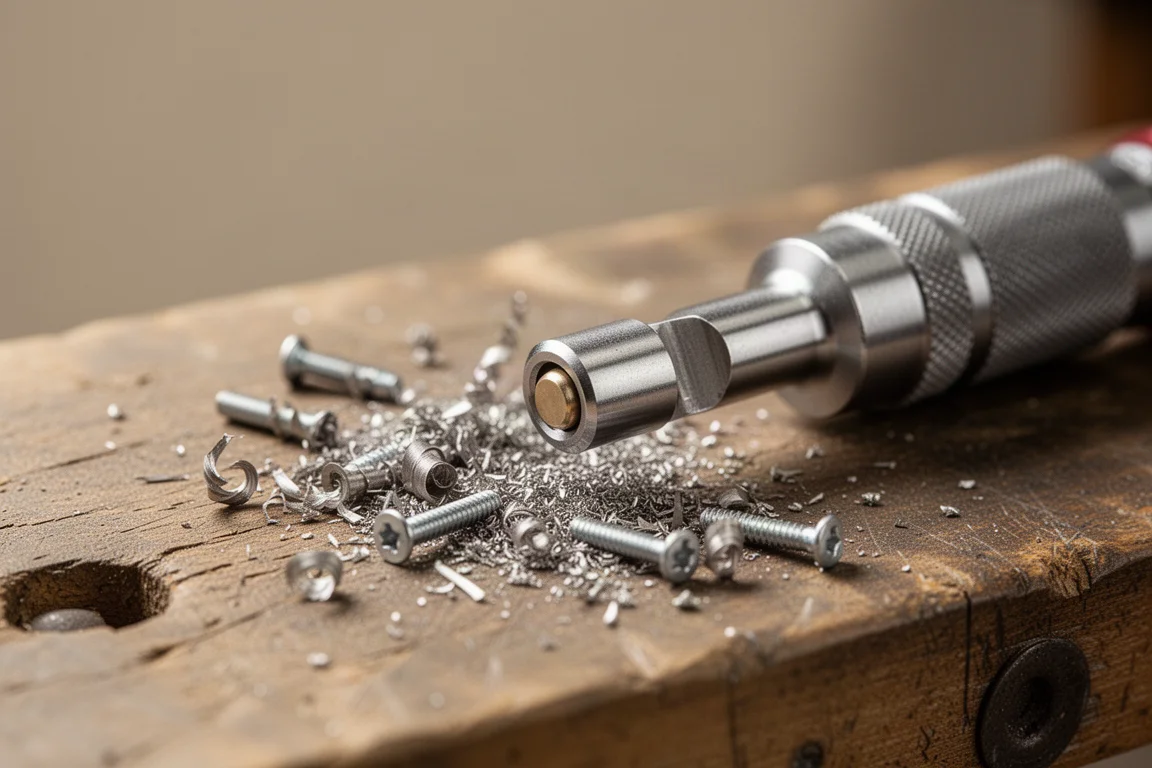
Debris also collects just from carrying the driver in a tool bag, where little particles work their way in around the tip. Once they are in there, cleaning becomes the whole challenge, and that is exactly where these two designs differ.
Malco MSHC2 5/16” Reversible Nut Driver
The Malco looks like a traditional nut driver at first glance, but the tip is reversible and removable. Inside sits the magnet, and the tip pops off to expose it fully for cleaning. The tip is held on by a ball detent, and it is a strong one; you may need a small tool to pop it out rather than pulling it by hand, or it might go flying across the room.
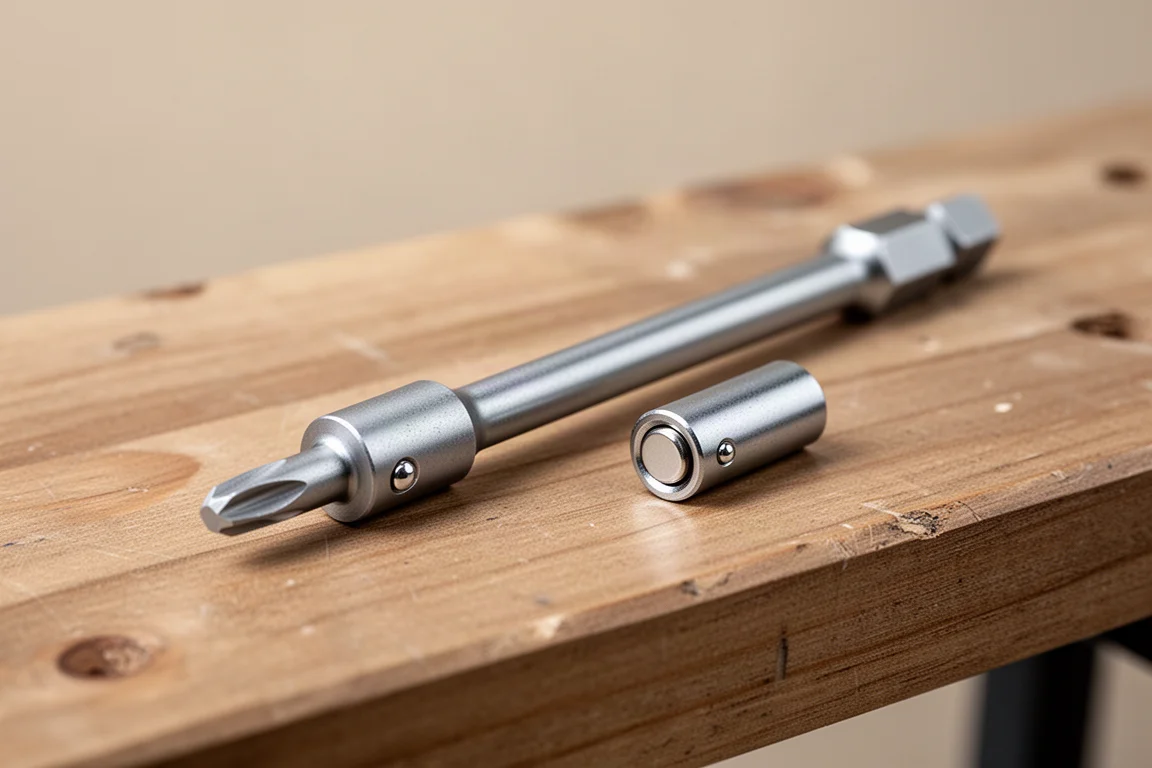
That strong detent is the trade-off for excellent access: once the tip is off, the magnetic surface is completely exposed and easy to wipe clean. Some stubborn particles can still cling after a few cleanings, and a stronger magnet can help pull the last bits out, but the design itself is simple and effective.
The reversibility is the second trick. The tip carries two common sizes, so you can pop it off, flip it, and get back to work without carrying a second driver.
DeWalt DW2228IR 7/16” Nut Driver
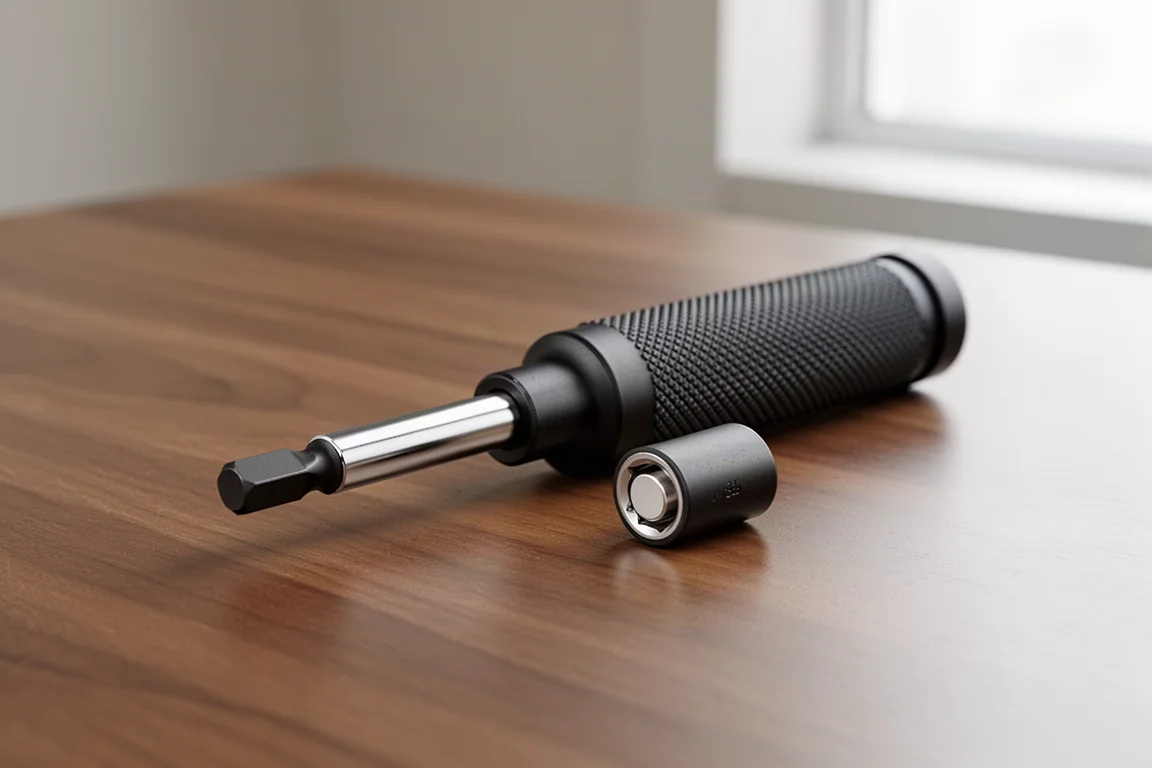
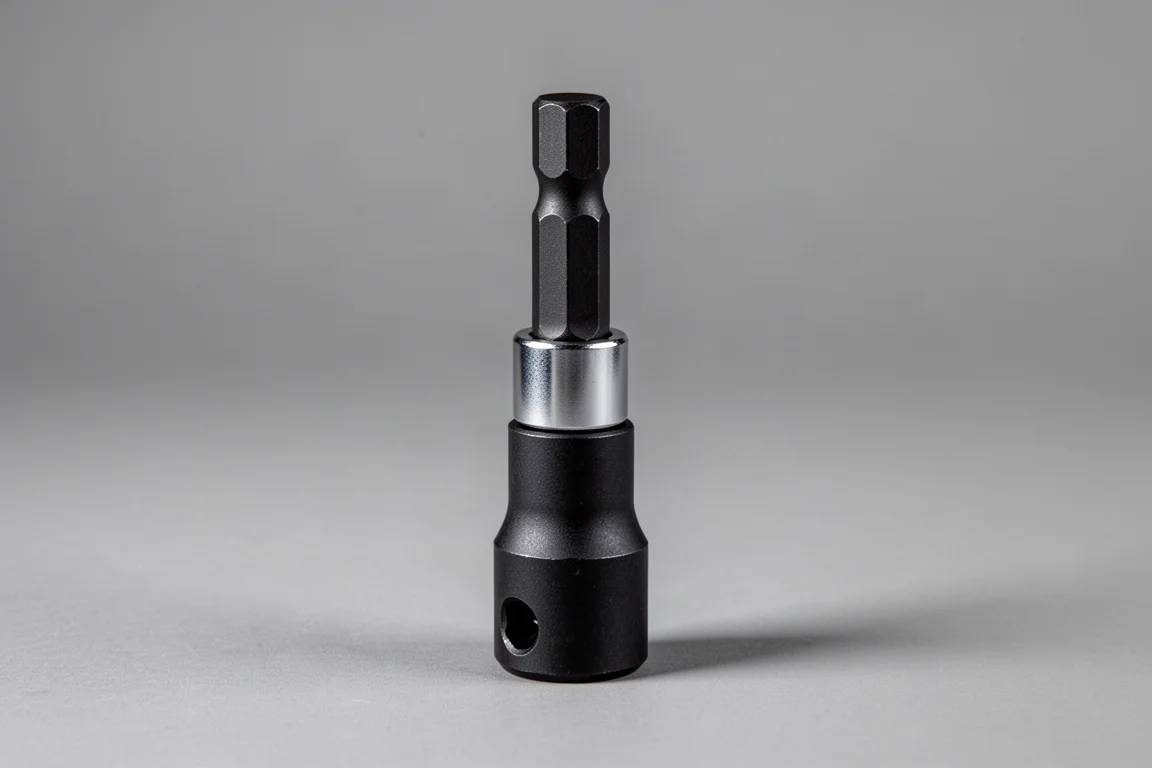
The DeWalt uses a more complex sliding arrangement. You force the magnet upward to expose a surface you can clean, which sounds good in principle but works less smoothly in practice.
The exposed surface is not flush. There is a lip around it, so cleaning is tougher than it should be, and the column area around the sliding mechanism is itself magnetized, which means it attracts and holds particles of its own. In use, debris stuck in that column area can make the sliding action rough and difficult to move.
It is a bigger, more complex tool, and it may be impact rated, which is worth considering if you drive fasteners with an impact driver. But as a self-cleaning magnetic driver, there is simply too much going on.
Price and Value
There is a clear price gap between these two. The DeWalt sells for roughly $15 to $16, twice the price of the Malco at around $7. The DeWalt is bigger and more complex; the Malco is cheaper, simpler, and, based on real use, the design that works better.
Buying Advice
If you regularly drive fasteners with a drill or impact tool and fight debris buildup, the cleaning mechanism is the feature that matters most. A fully exposed magnet, like the Malco’s removable tip provides, is far easier to clean than a magnet recessed behind a sliding lip.
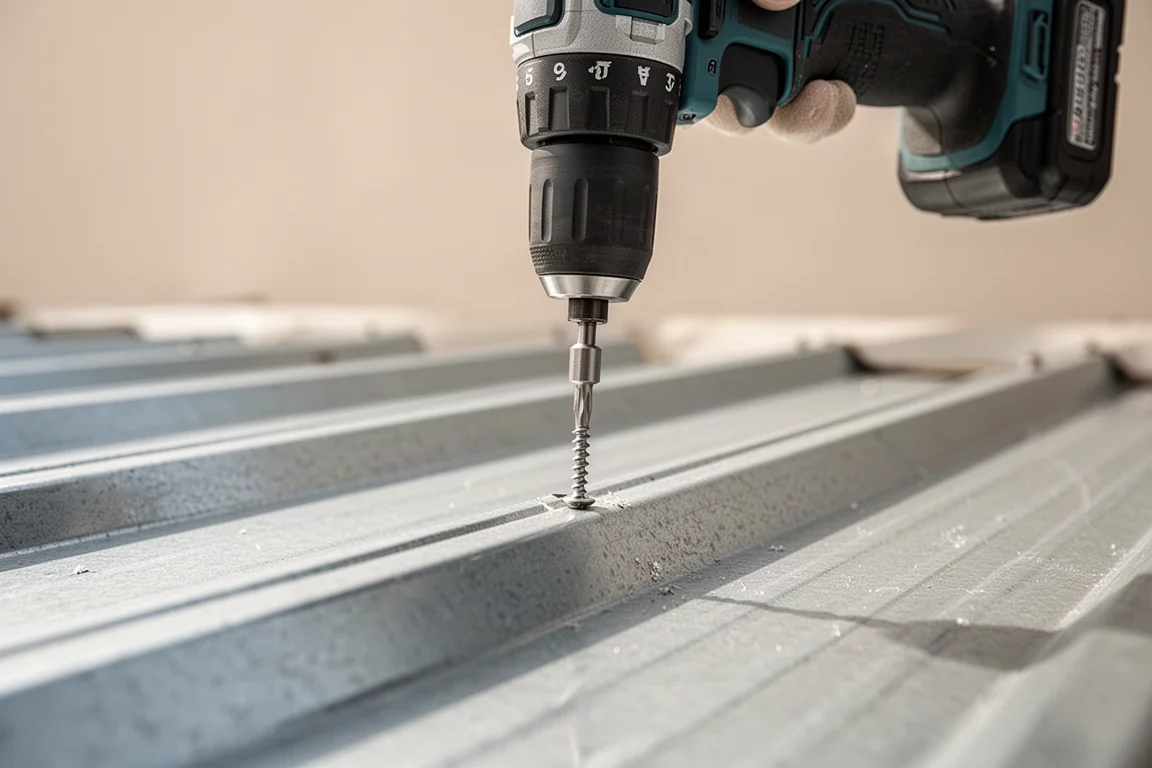
For most people doing appliance repair or metal roofing work, the simpler reversible design covers two common sizes in one driver, cleans up more easily, and costs about half as much. The DeWalt only makes sense if you specifically need the larger 7/16” size or want a driver that may hold up to impact use.
Conclusion
Both drivers attempt to solve the same annoyance, but the results are not close. The Malco MSHC2 is the solid, simple solution: a strong detent, a fully exposed magnet for cleaning, and two sizes in one reversible tip. The DeWalt DW2228IR has a cleverer mechanism on paper, but the recessed, lip-flanked magnet and debris-trapping column make it harder to clean and harder to use. Unless you need the larger size, the less expensive Malco is the better pick.
Further reading
Related Reviews
Hand Tools
Best Diagonal Cutters 2026: 16 Pliers Tested for Cutting Power and Durability
We put 16 diagonal cutters through nail, screw, drill bit, and hex key tests to find the best value picks for your toolbox.
Hand Tools
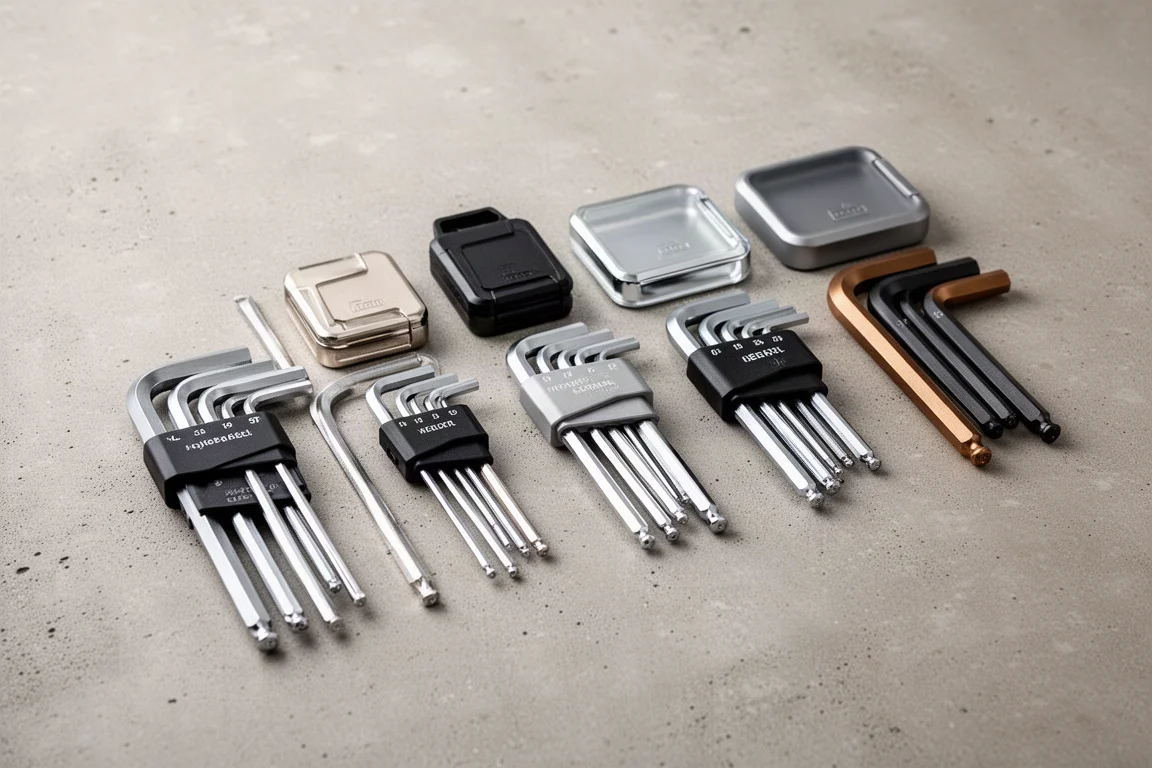
Best Hex L Key Sets 2026: Nine Sets Tested for Real-World Torque
Nine hex L key sets from budget to premium, tested for torque, fit, and durability. See which sets deliver real performance and which ones to skip.
Hand Tools
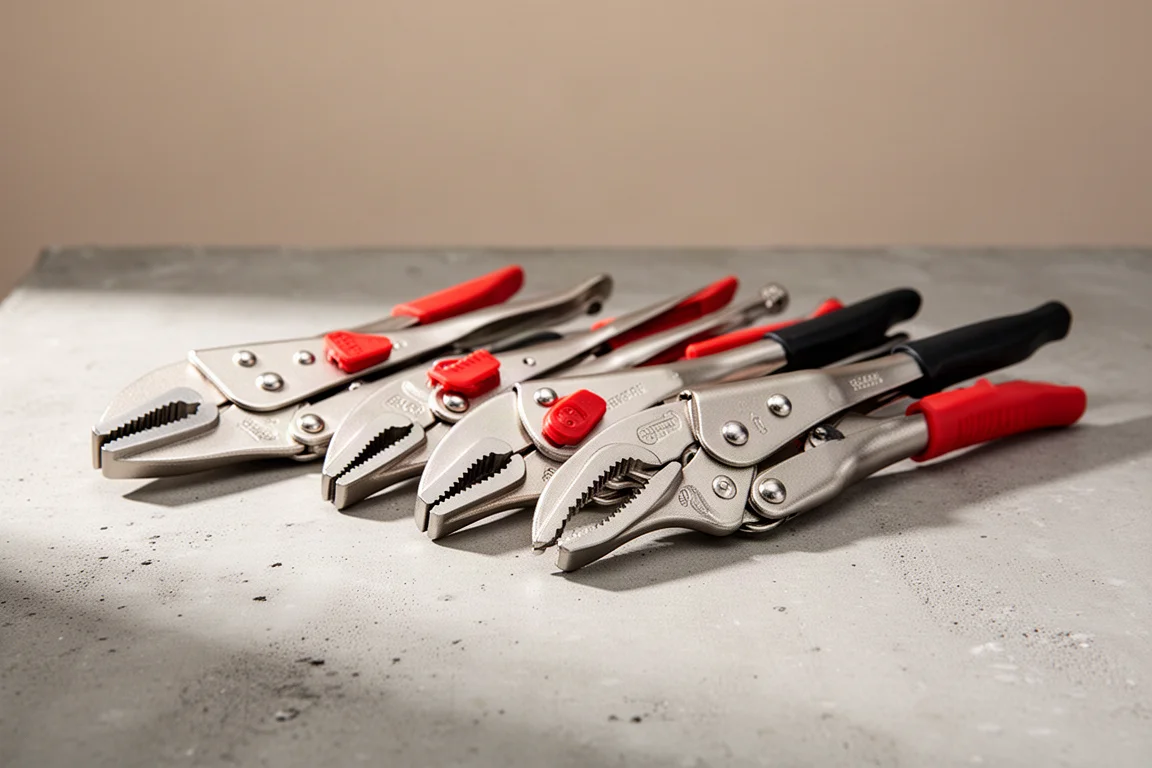
Best Locking Pliers 2026: Top Picks Tested for Grip and Durability
We tested 18 brands of 10-inch locking pliers for grip strength, jaw bite, build quality, and ease of release to find the best options for tough jobs.