Travel Backpacks
Best Lightweight Travel Backpacks: 5 Carry-On-Friendly Picks Compared
Five mid-sized travel backpacks under about two pounds, each large enough for international carry-on travel, compared on materials, organization, and carry comfort.
Introduction
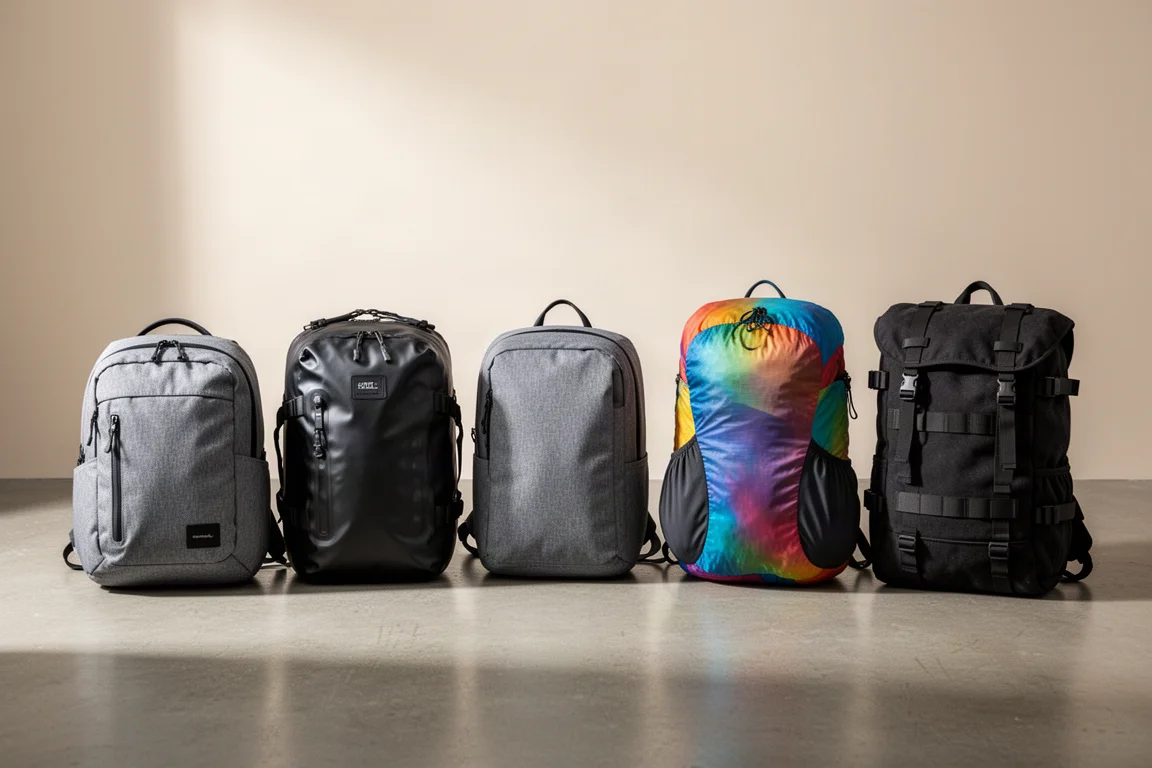
There are plenty of excellent travel backpacks that are heavy, and plenty of ultralight packs that are too small to be practical. This comparison focuses on a middle ground: mid-sized packs that are large enough for international travel while staying extremely light.
The criteria were simple. Weight under about two pounds, small enough to work as a carry-on but large enough for several weeks of travel, modest pricing from around $90 to around $200, and travel-friendly features like comfortable carry systems, easy-access main compartments, and external water bottle pockets. All five fall within carry-on dimensions for most airlines, and a few can even work as personal items.
The Five Packs at a Glance
Starting from the smallest listed capacity, the Osprey Daylight Expandable runs 26 liters but includes an expansion zipper that pops it up to 32. The Cabin Zero Military 28 and the REI Ruck Pack 28 sit at 28 liters each. The ULA Dragonfly is listed at 30 liters, though that figure includes the large stretchy external pockets; the main compartment alone is around 22 liters, yet the bag still looks close in size to the 28-liter Ruck Pack side by side. The Patagonia Black Hole 32 is the largest of the group at 32 liters.
Worth noting: most of these packs also come in larger versions if you need more space. The Ruck Pack comes in a 40, the Cabin Zero Military in 36 and 44, the Daylight in a 44, and the ULA has an Atlas version at 40 liters.
Materials and Build Quality
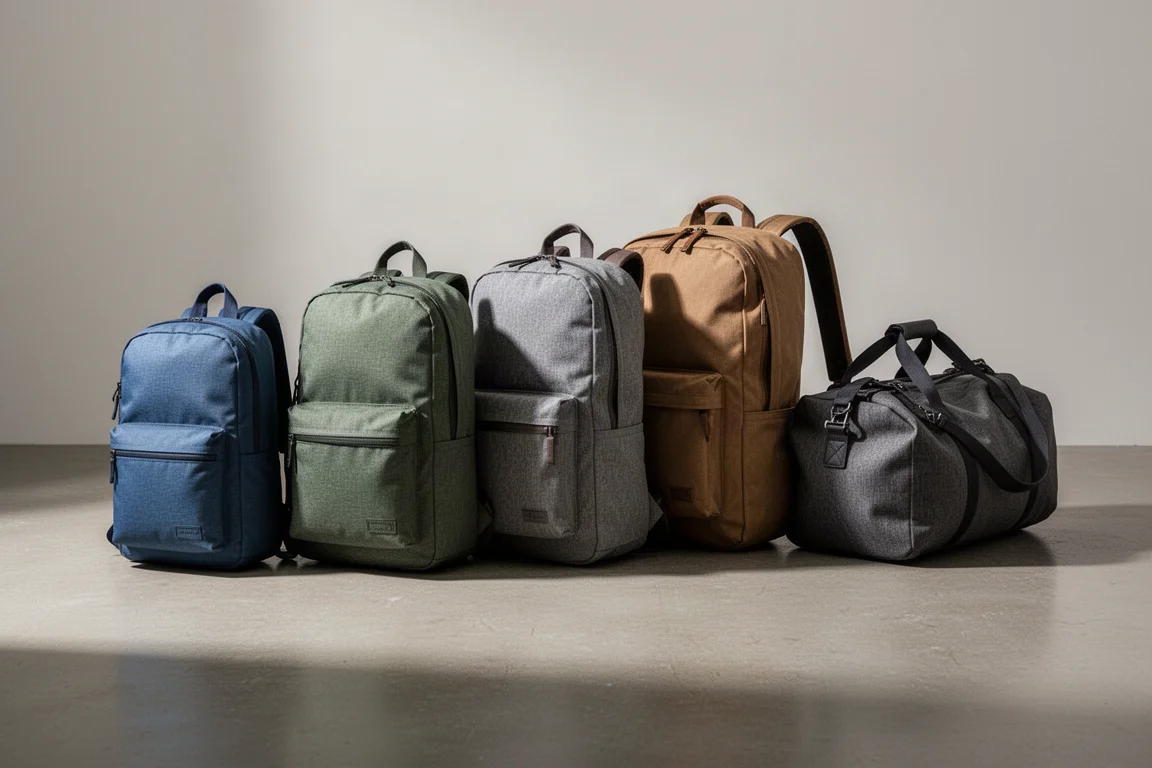
Ranked from lower to higher build quality, the REI Ruck Pack uses the thinnest fabric of the group at 210 denier ripstop, along with some smaller hardware. It is not a poorly made bag, but it sits a step below the others here.
The Osprey Daylight and Patagonia Black Hole are similar in quality, both using 300 denier polyester. The Daylight adds a thicker 600 denier bottom, while the Patagonia has a sturdy TPU laminate that keeps the fabric fairly waterproof. Both use good hardware and zippers.
The Cabin Zero Military is a very simple bag, but at this price it is impressively built with a thick 1000 denier nylon and very good hardware. The ULA Dragonfly sits at the top with by far the best fabric options: regular ripstop nylon, several styles of X-Pac, and newer Ultra fabric. This configuration uses a waterproof laminate fabric, though that option may have been replaced by Ultra on the current lineup.
Exterior Features and Organization
Three of these bags have a top lid pocket: the Ruck Pack, the Black Hole, and the Dragonfly. Three have a front slash pocket: the Military 28, the Black Hole, and again the Dragonfly. The Daylight Expandable is the only one with a more traditional front organizational compartment. All five have side water bottle pockets, three have compression straps, only two have a dedicated laptop compartment, and only the Osprey has stowable backpack straps.
On the front pockets, Cabin Zero has the largest side-access zipper taking up the full front panel, followed closely by the Patagonia. Both pockets are quite thin with no internal organization. The ULA’s is slightly smaller with a top-open zipper and is a large stretchy mesh pocket, again with no further organization. The Ruck Pack instead has a side-opening organizational pocket containing a small fabric sleeve, a divided bungee strap, and a further zipper housing the rain cover. The Daylight has a more traditional front organizational pocket with a top zipper that only goes about halfway down the pack, so you don’t lose gear at the bottom, plus mesh dividers, a keyring, and a non-zippered front gear pocket for bulky items you don’t need secured.
Water Bottle Pockets
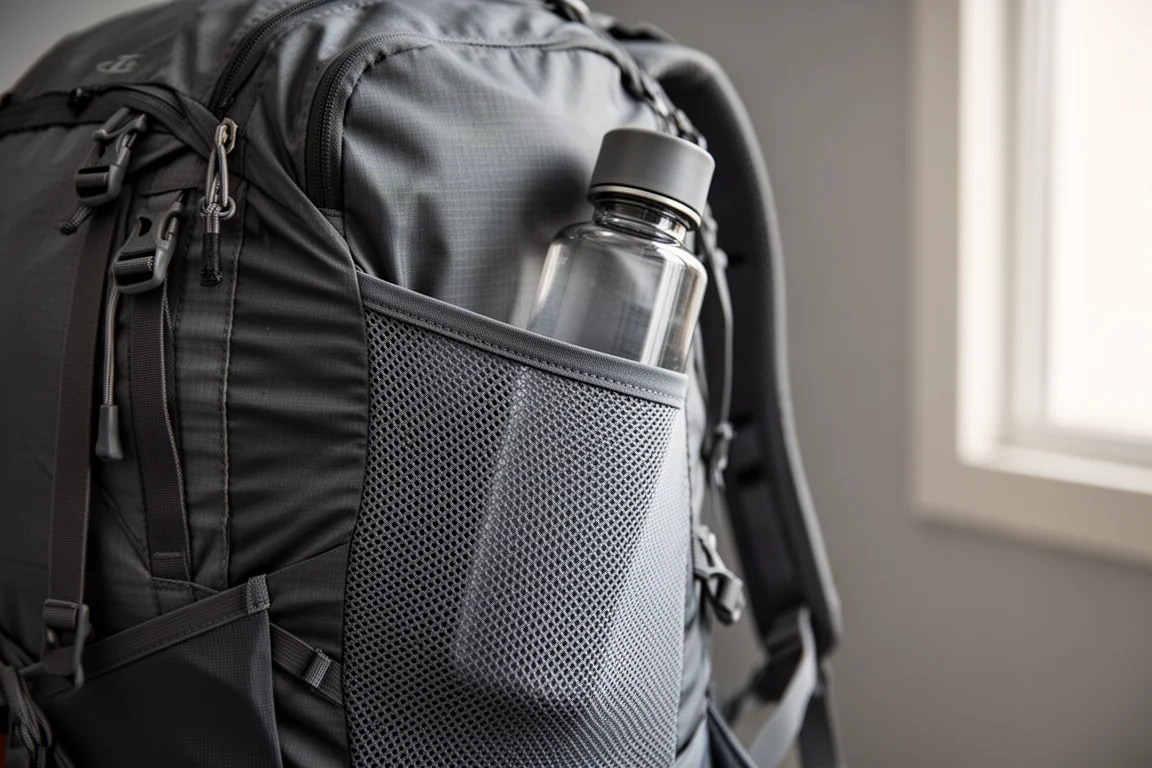
All five packs have external water bottle pockets, but they perform very differently. The ULA Dragonfly’s are by far the best: huge stretchy mesh pockets that expand widely, can hold basically anything, and are backed by side straps for securing longer items. The Ruck Pack is second best with two large stretchy pockets that are almost as big, though not quite as deep, plus clips at the top for taller gear.
The Patagonia Black Hole also has decent, large stretch mesh that fits almost any bottle, but it lacks top straps for securing taller items. The Osprey and Cabin Zero have the smallest pockets. Both can squeeze in a one-liter bottle, but it is a tight fit that stretches the pocket; a smaller, slimmer bottle is a better match. The Cabin Zero pocket is especially small, barely fitting a hand and struggling to accept anything but a very slim bottle, making it better suited to thin gear or a travel umbrella.
Compression Straps
Compression straps are not essential, but they help cinch a bag down for smaller carry-on spaces. Only the Cabin Zero, the Ruck Pack, and the Dragonfly have them. The Dragonfly and Ruck Pack share a similar single top strap, with an adjuster on the Dragonfly and an actual buckle on the Ruck Pack. These cinch down maybe the top quarter of the bag, but work well for securing gear sticking out of the side pockets.
The Military 28 has genuine compression straps: two large strap buckles on each side that do an excellent job of really compressing the pack down into a smaller carry-on compartment.
Laptop Storage
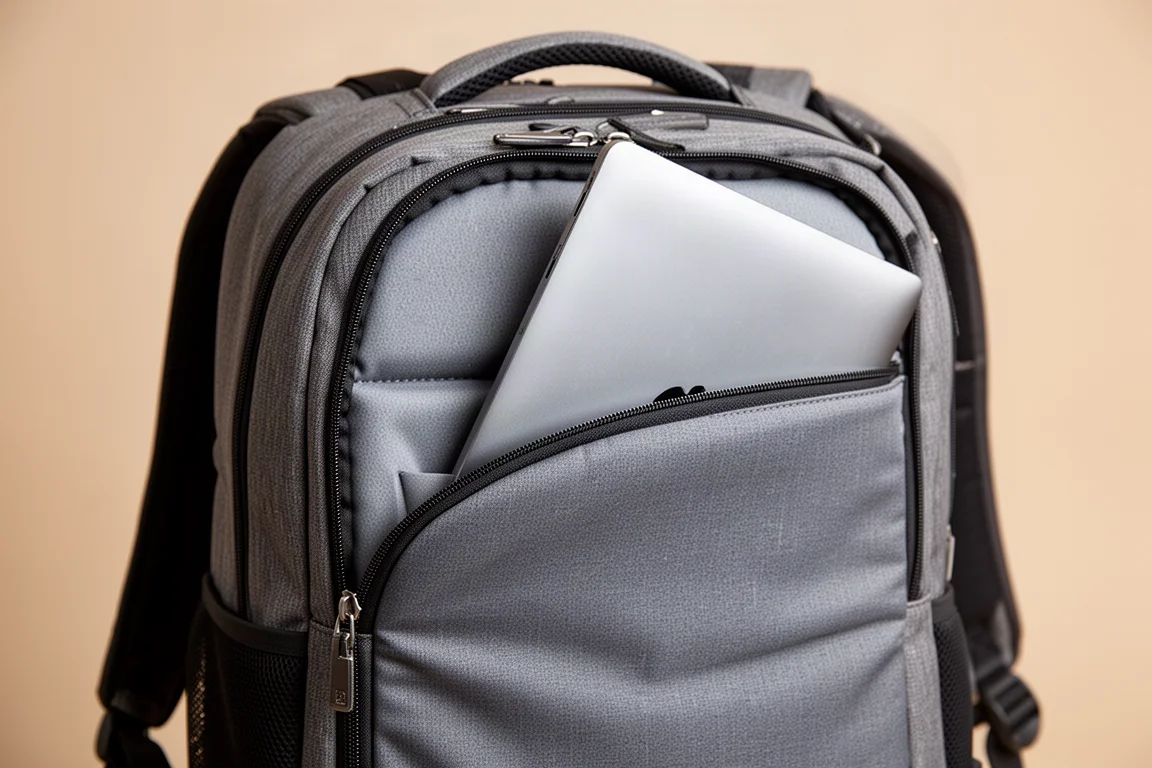
All five can hold a laptop, but only the ULA Dragonfly and Patagonia Black Hole have dedicated external laptop compartments. The Black Hole’s is on the back behind the straps, accessed through a full-panel zipper, with a padded sleeve, about an inch of false bottom, padding on both sides, and an additional tablet sleeve. The Dragonfly uses a simpler top-zip back pocket large enough for a 15-inch laptop, modestly padded, with a short false bottom.
The other three have laptop sleeves built into the main compartment. The Daylight’s sleeve is modestly padded with a short false bottom, but usefully it has a second external access zipper so you can reach the laptop without opening the main bag. The Ruck Pack’s sleeve is unpadded on one side, really more of a hydration bladder sleeve that can do double duty, though the wide two-inch false bottom and front-reaching zipper make it easy to access. The Military 28’s sleeve sits at the bottom of the main compartment with no padding and no false bottom, and with no external access, it is very inconvenient to reach when the bag is full.
Carry Comfort
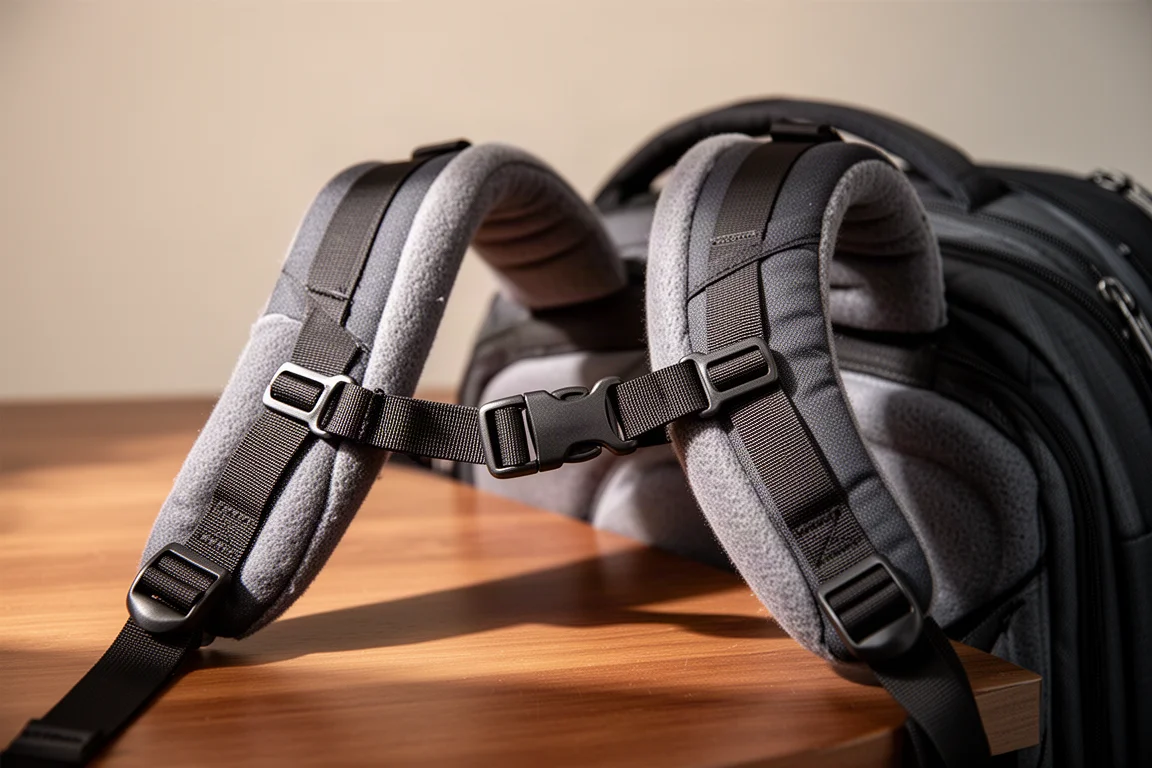
All five bags have decently comfortable shoulder straps and all include sternum straps. The Ruck Pack is the only one with a hip belt, the Military 28 the only one with load lifters, and the Osprey the only one with quasi-stowable backpack straps. That back pocket is really designed as a luggage pass-through sleeve, but you can disconnect the straps and tuck the ends to stow them, with the caveat that there is no buckle, so you have to run the webbing back through the adjuster.
At the lower end of comfort, the Black Hole and Daylight have the thinnest shoulder straps in the group, narrower and less thickly padded. The Patagonia’s back padding is also quite thin without real ventilation, while the Osprey’s ridged foam offers good airflow though it is flat. The Military 28 and Ruck Pack have the thickest, most padded straps; the Dragonfly’s are slightly thinner but very wide with a nice curve that fits shoulders well. The Ruck Pack’s thin hip belt doesn’t do much but can shift a little weight to the hips, and the Cabin Zero’s load lifters help bring the weight closer to your back. All five have good back padding, with the Ruck Pack and Cabin Zero the thickest and well-ventilated, and the Dragonfly thinner but well shaped with good airflow.
Interior Layout and Packing
The Ruck Pack and Black Hole use top-access zippers that only go partway down, which can make packing a bit harder. The Patagonia’s zipper reaches about a third of the way down with one interior mesh zipper pocket; the Ruck Pack’s goes a little less far, making it more of a true top-loader, with a similarly large interior mesh zipper pocket.
The Military 28 and Dragonfly both open as panel-style top loaders with a lid that folds down from the top. The Military 28 has a huge interior main compartment, though the zipper doesn’t reach the bottom so the lid doesn’t open fully, which can make packing the bottom a bit tricky; the lid has two pockets, one fabric and one mesh. The Dragonfly uses stiff fabric that holds the bag open, giving a gigantic duffel-style main compartment with two luggage tie-down straps and several mesh zippered pockets on the lid. Despite the listed 22-liter main compartment, it doesn’t look significantly smaller than the 28-liter Military, nor two-thirds the size of the 32-liter Black Hole.
The Daylight is the most traditional, with a suitcase-style clamshell opening and two compartments: a larger main side with a luggage tie-down strap, and a side with a large mesh zipper pocket. A thinner compartment behind the zipper is where the expansion zipper lives, so expanding the bag adds about six liters to that top compartment, popping it out a couple of inches to nearly match the main side in size.
Which One Should You Buy
The Osprey Daylight Expandable is a smaller pack but very versatile, with the expansion zipper, a traditional clamshell opening, and great small-gear organization. The Ruck Pack and Black Hole are two of the lightest here with plenty of gear pockets and comfortable carry systems, though the top-load designs can be a bit tricky to pack and unpack. The Cabin Zero Military is the simplest and least expensive of the lineup while still being extremely well made with one of the best carry systems. And if you want to splurge, the ULA Dragonfly is extremely lightweight with a surprisingly large main compartment and great features, with one caveat: the listed volume includes the external pockets, so you may need to rely on them for gear storage, which is not ideal for security.
Conclusion
All five of these packs prove you don’t need to choose between light weight and travel-readiness. Match the pack to your priorities: expandability and organization with the Osprey, maximum capacity with the Patagonia, budget durability with the Cabin Zero, or premium ultralight build with the ULA.
Product link
View more details for Osprey Daylight Expandable 26+6
This product is mentioned in the review. Check the specifications, options, and compatibility before buying.
View more details for Osprey Daylight Expandable 26+6Further reading
Related Reviews
Travel Backpacks
Outdoor Vitals Dakota UL Review: One 45L Pack for Travel and Backpacking
A practical look at the Outdoor Vitals Dakota UL, a 45 liter pack that opens like luggage, carries a laptop, and converts for trail use with a removable frame and detachable hip belt.
Travel Backpacks
Outdoor Vitals Koda UL Review: One Bag From Terminal to Trail
A hybrid travel and backpacking pack with a sleek carry-on shape and a frame tuned for all-day comfort under a real multi-day load.
Travel Backpacks
Outdoor Vitals Kota UL Review: One Pack for Flights, Cars, and Backcountry Camps
A close look at the Outdoor Vitals Kota UL, a travel-first backpack designed to stay comfortable under backpacking loads and still slide into an overhead bin.