Kitchen Knives
Three Knives, One Guanciale: Which Blade Slices Best?
A 210mm Sabatier, a 240mm Takamura gyuto, and a 270mm Isamitsu sujihiki go head to head on the same dense, fatty ingredient.
Introduction
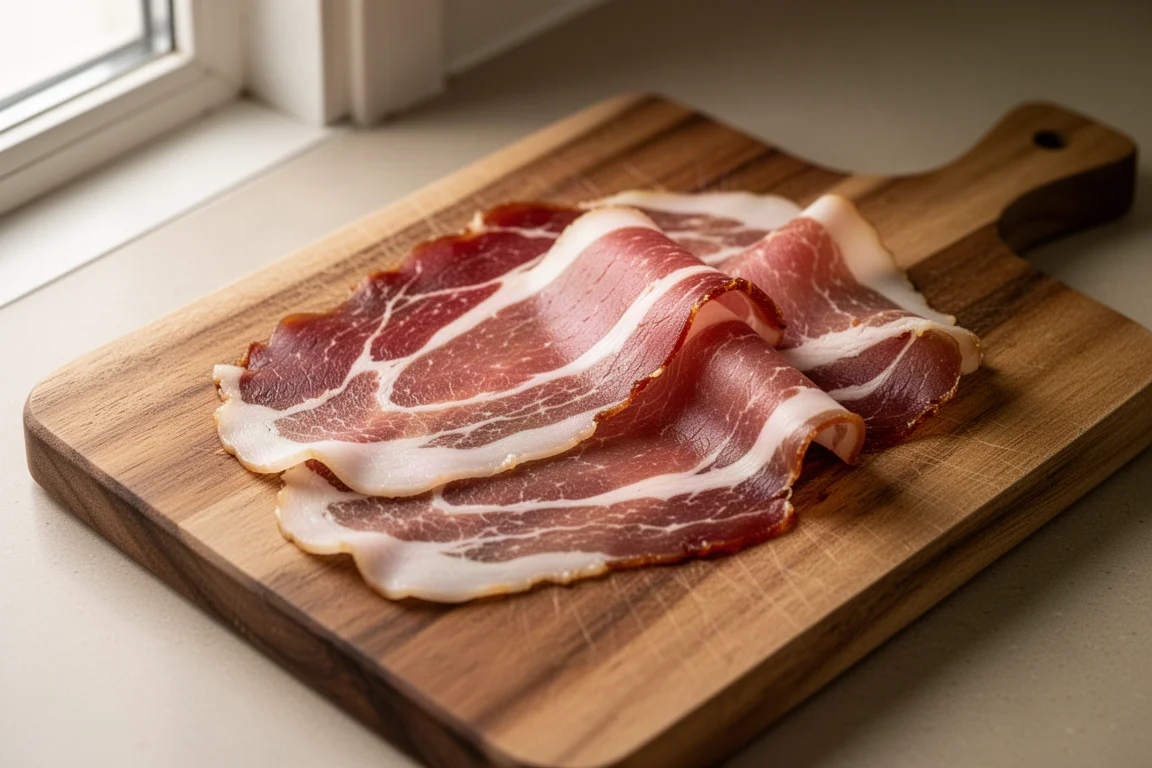
Dense, fatty cured pork is one of the toughest real-world tests for a kitchen knife. Guanciale is mostly fat, and fat has a habit of clinging to the blade and pulling back together as you cut. That makes it a genuinely useful benchmark: three very different knives, one demanding ingredient, and a clear look at which blade geometry actually makes the job easier.
The Contenders
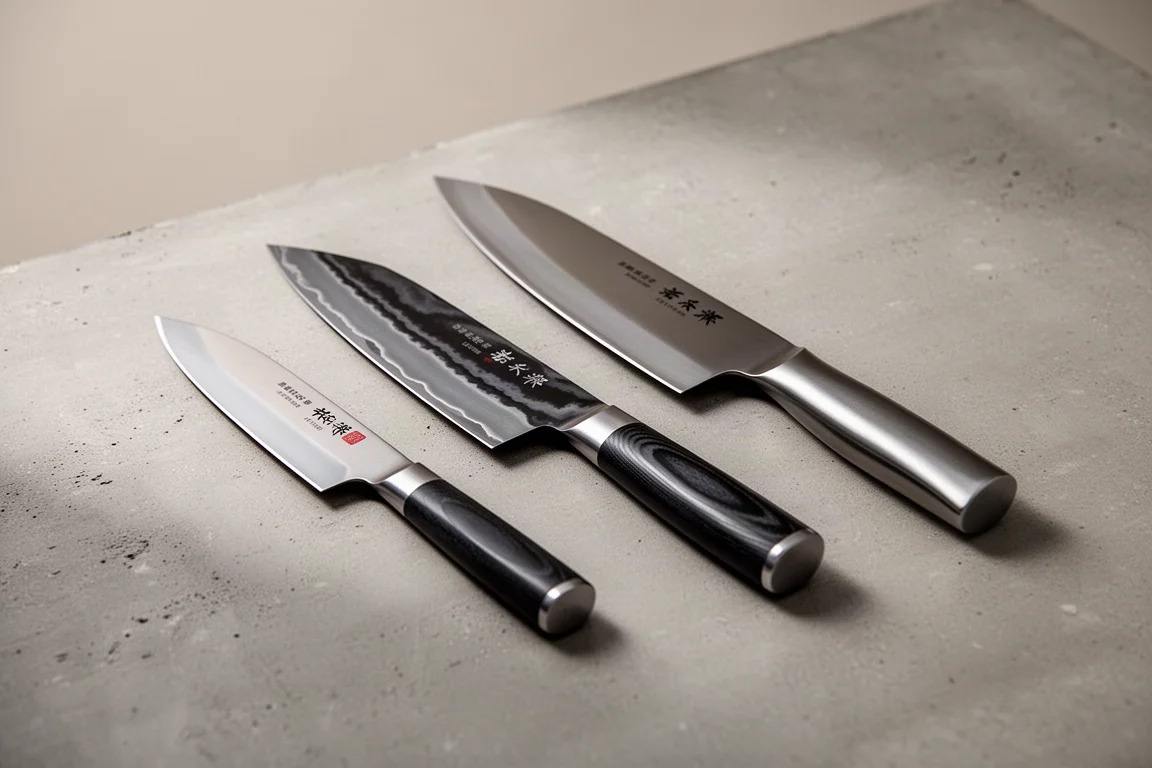
Three knives went into this comparison, chosen from shortest to longest blade length. Each brings a different steel, spine thickness, and edge profile, which is exactly what makes a head-to-head like this interesting. The ingredient was identical throughout, so the differences came down to how each blade interacts with the food.
One note before the results: comparisons like this are inherently subjective. How a knife feels in hand matters as much as any measurement, and the right pick for one cook may not be the right pick for another.
Takamura Uchigumo no Hana 240mm R2 Gyuto
On paper, the Takamura 240mm gyuto looked like the obvious favourite. It is the thinnest of the three blades and sits right in the middle of the length range, and its R2, also known as SG2, core steel holds a very fine edge.
That is not how it played out. Guanciale is extremely dense and mostly fat, and as you slice through it, the cut tends to close back up behind the blade like a magnet. With a very thin blade making very thin slices, that creates more friction and a less pleasant cutting feel. Despite being exceptionally sharp, the Takamura was not the winner here.
Tinker Sabatier 210mm Ogami Super Gold Steel
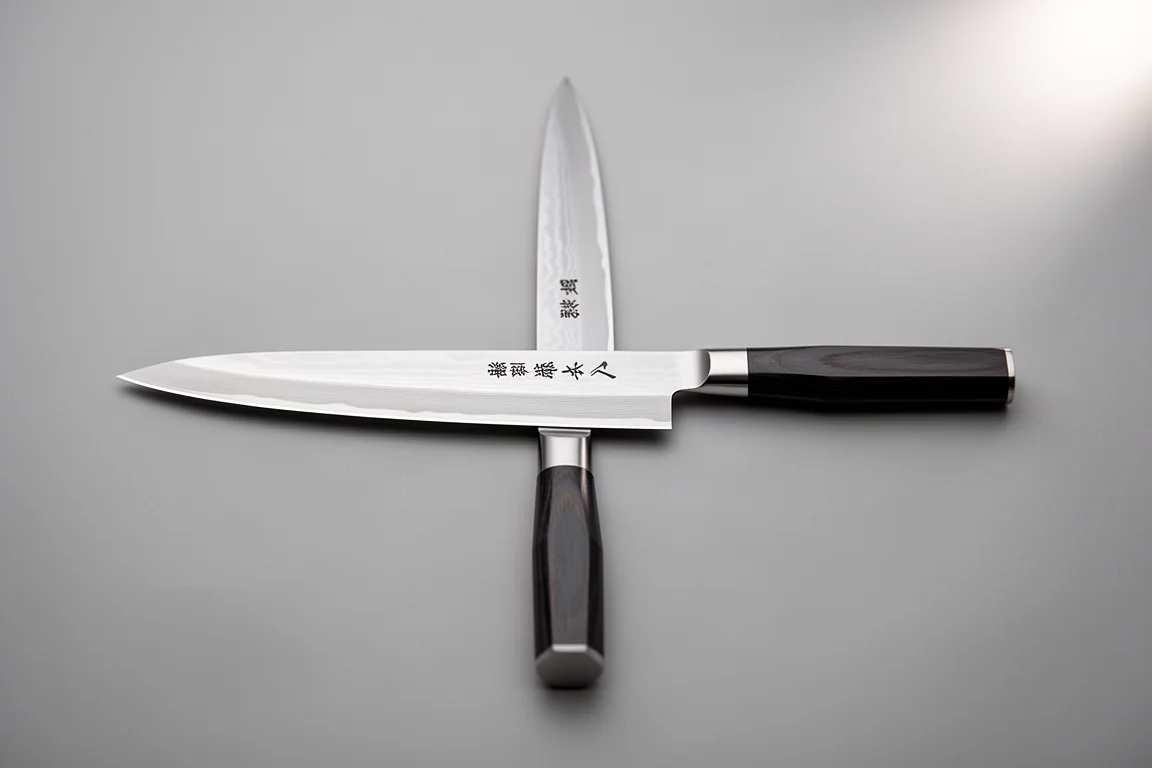
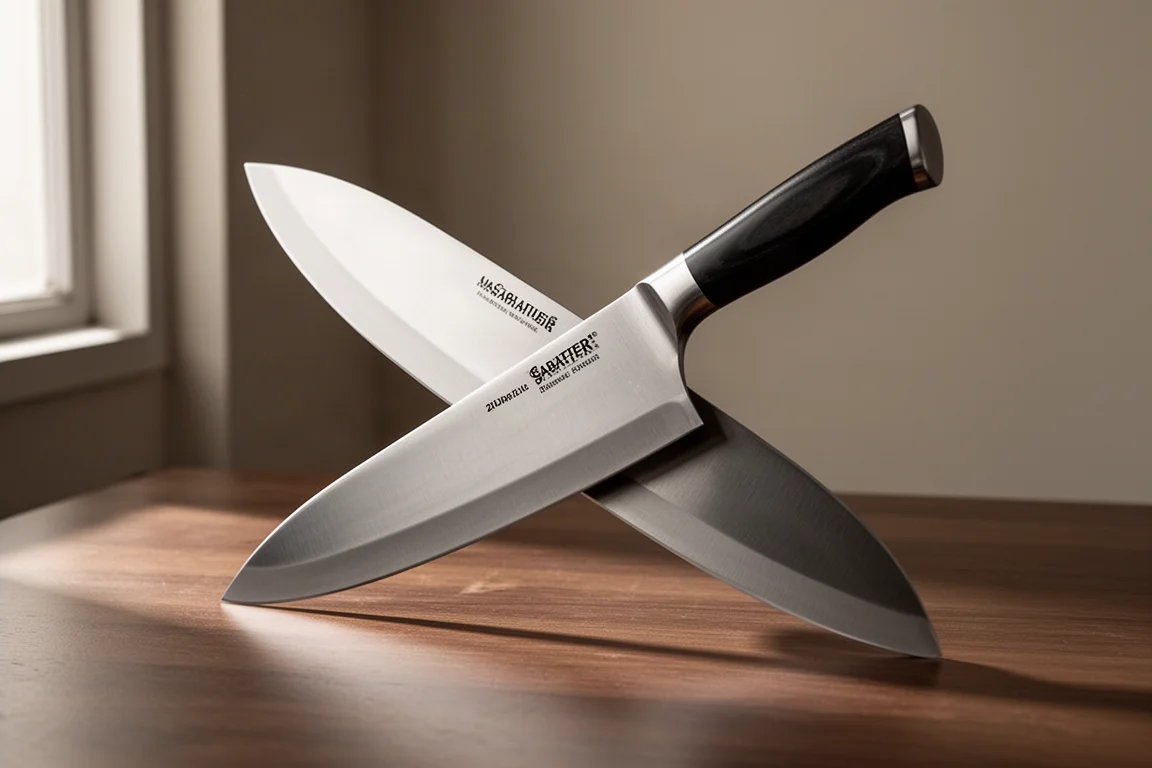
The Sabatier came in with high expectations, since it had served as a dedicated protein knife. It is front-heavy with a fairly thick spine, and its steel is known for a lot of bite. That spine thickness and edge geometry turned out to be well suited to guanciale, and it performed well, just not quite well enough to take the top spot.
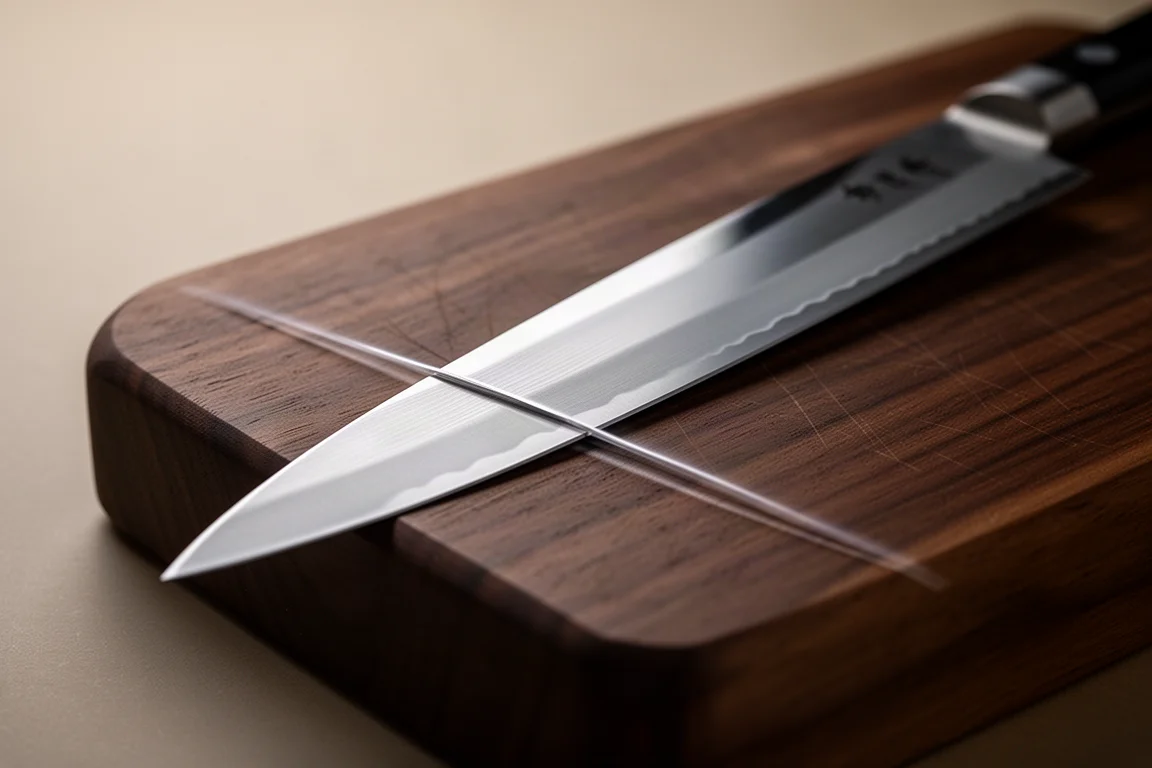
Its drawbacks in this test were length and curvature: at 210mm it is the shortest of the three, and the cutting edge has quite a bit of curve, which is not ideal for long, flat slices of dense cured pork.
Isamitsu 270mm Sakimaru Sujihiki Shirogami 1
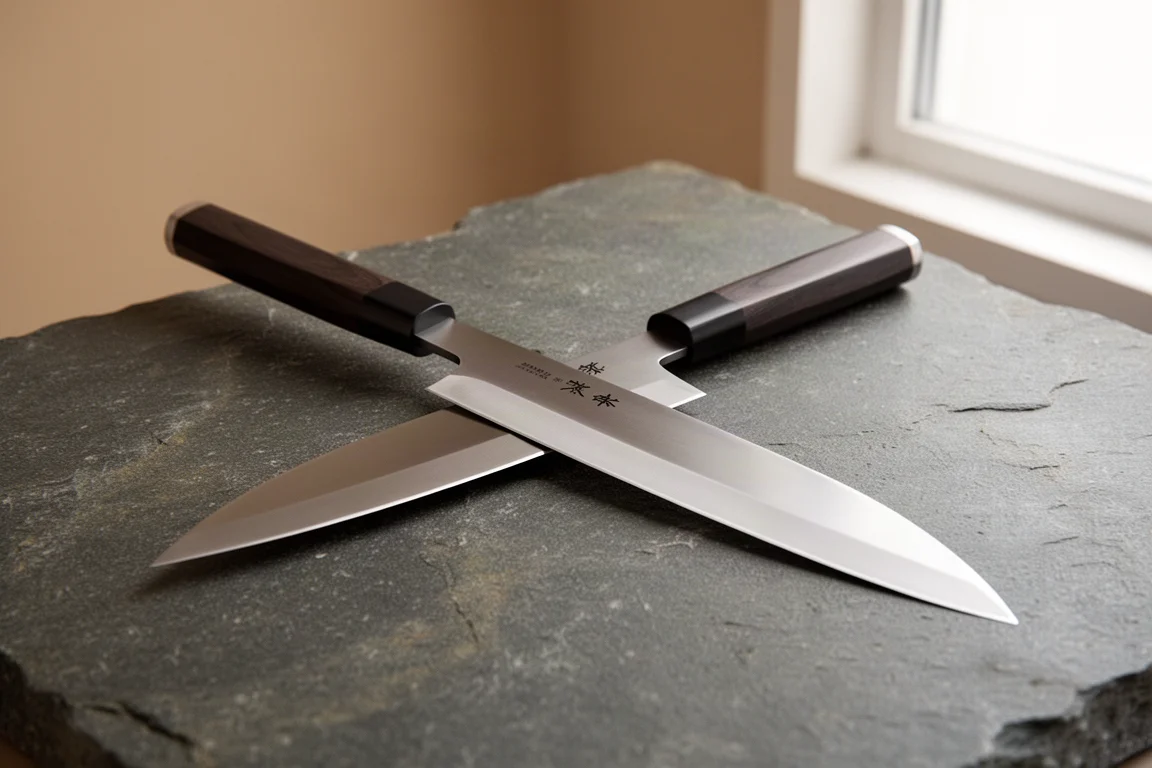
The Isamitsu was arguably the odd one out going in, a dedicated meat-slicing sujihiki with a Shirogami 1 core steel. In practice, it simply glided through the guanciale better than anything else. The cuts felt effortless, the blade moved cleanly through the fat, and the whole experience was the most pleasant of the three.
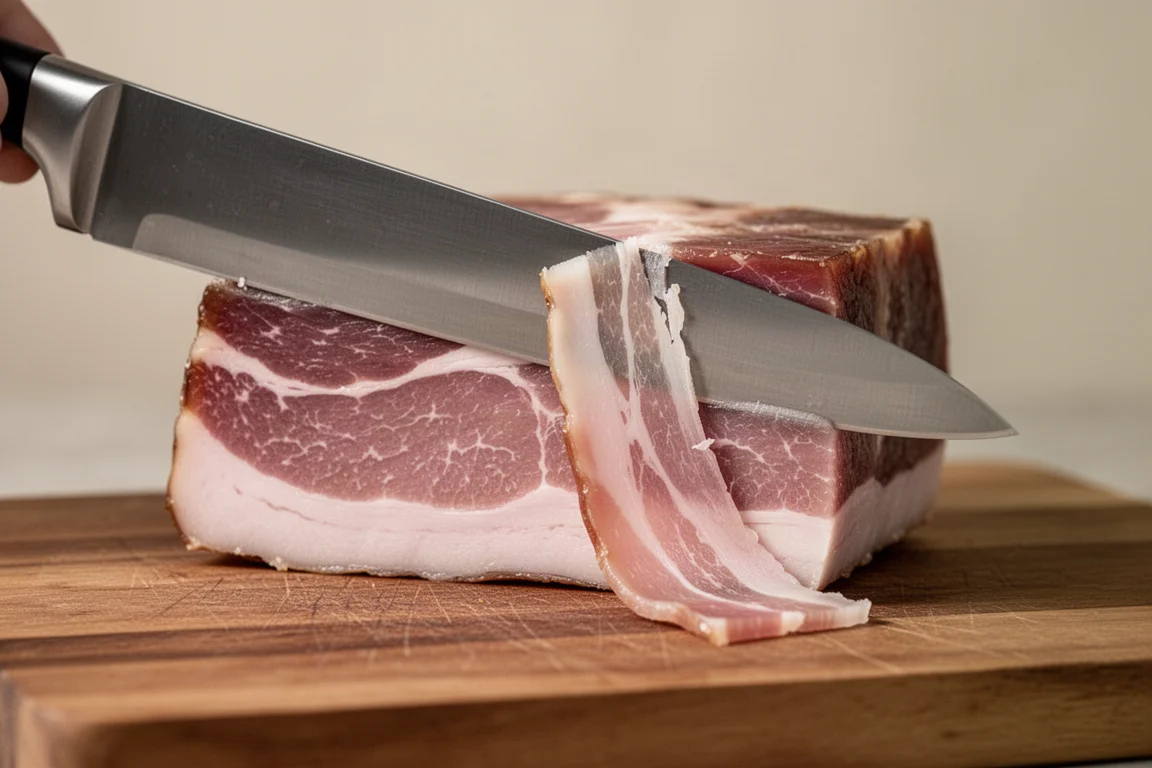
That effortlessness is the whole point of a sujihiki. If slicing dense, fatty proteins is a regular part of your cooking, the combination of length, grind, and steel here makes a strong case.
What the Results Really Say
The lesson from this three-way test is that sharpness alone does not decide a slicing contest. Blade thickness, weight distribution, spine height, and edge curvature all shape how a knife behaves in dense, fatty food. A thin, light blade can be outperformed by a thicker, more substantial one purely because of how the cut closes behind the edge.
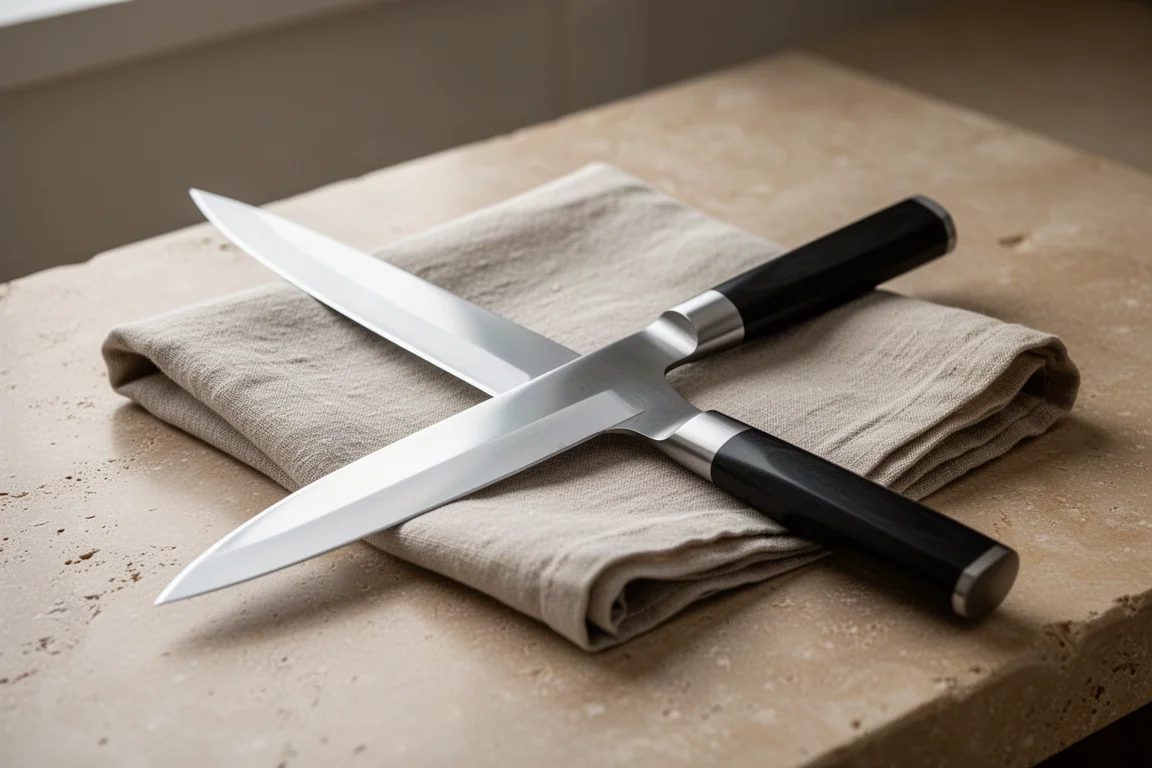
It is also a reminder to match the knife to the job. A gyuto excels at general prep, a front-heavy chef knife handles protein work with authority, and a long sujihiki is purpose-built for clean, effortless slices.
Buying Advice
If your priority is an all-round knife with a premium steel edge, the Takamura gyuto remains a beautiful tool, and its thinner blade will shine on vegetables and lean proteins. If you want one substantial knife that can take on dense proteins with confidence, the Sabatier offers real bite and a convincing feel in hand. And if clean, effortless slicing of cured meats and roasts is the goal, the Isamitsu sujihiki is the specialist worth choosing.
Conclusion
On guanciale, the Isamitsu 270mm Sakimaru Sujihiki earned the win, gliding through dense fat more effortlessly than either competitor. The Sabatier was a strong second thanks to its spine thickness and bite, while the Takamura, despite its exceptional sharpness, lost ground to friction because of its very thin blade. Match the knife to the ingredient, and the right choice becomes obvious.
Further reading
Related Reviews

Kitchen Knives
Best Chef's Knives 2026: 27 Popular Options Tested and Ranked
A comprehensive review of 27 chef's knives ranging from $18 to $380, with honest assessments of handle comfort, blade balance, and real-world performance.

Kitchen Knives
Best Chef's Knives Under $75: Two Tested Recommendations
Two practical 8-inch chef's knives that balance sharpness, comfort, and durability without premium pricing.

Kitchen Knives
Best Chef's Knives 2026: 27 Options Tested and Ranked
A comprehensive review of 27 chef's knives ranging from $18 to $380, with honest assessments of handle design, balance, blade profile, and real-world performance.