Kitchen Knives
Best Kitchen Knife Sets Worth Buying: Four Smart Options for Home Cooks
Most knife sets are full of knives you will never use. Here are four sets and knives that actually make sense, from full starter sets to a budget bread knife.
Introduction
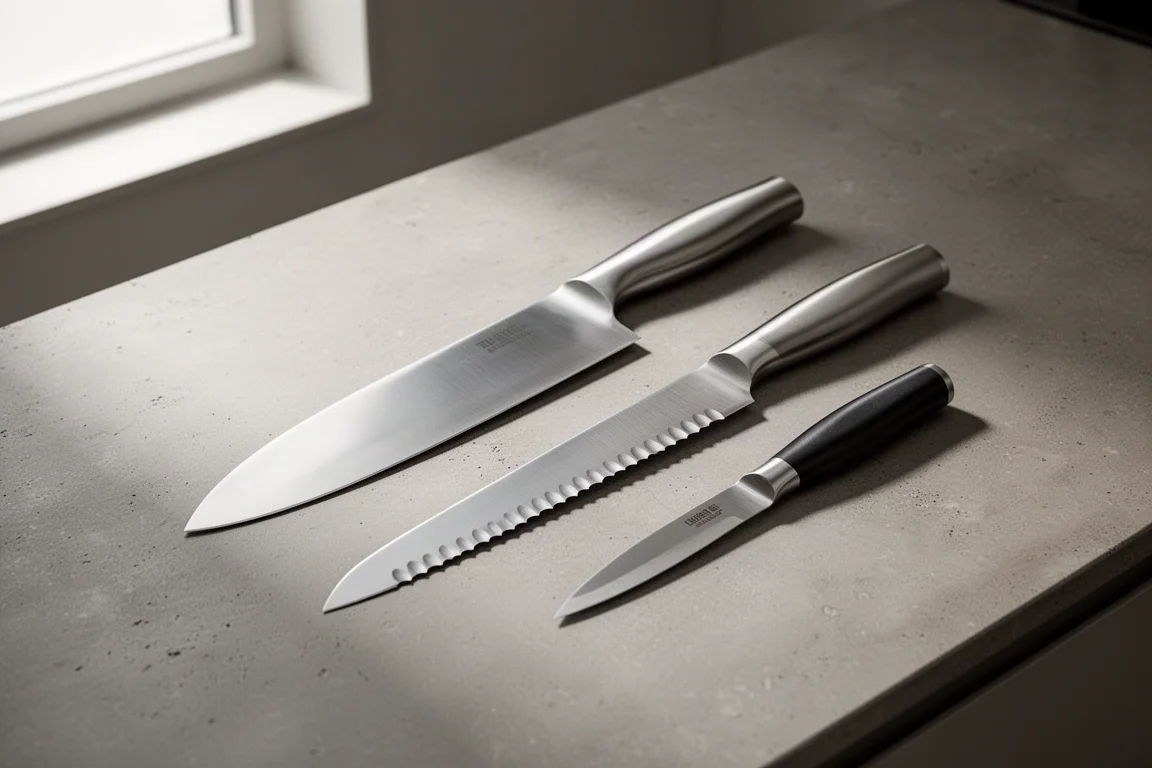
Most kitchen knife sets are a waste of money because they come loaded with knives you will never reach for. The truth is that a well-equipped home kitchen needs surprisingly little: one genuinely versatile chef’s knife and a good serrated bread knife will cover the vast majority of everyday tasks. Everything else is a nice-to-have that you can add gradually as your cooking evolves.
That said, sets are not always a bad deal. If a set contains exactly the knives you want with no filler pieces, it can cost less than buying each knife individually. In this guide, we cover the essential knives first, then the optional upgrades worth considering, and finally four specific products that represent genuinely smart purchases, from full sets to a single budget bread knife.
The Two Knives You Actually Need
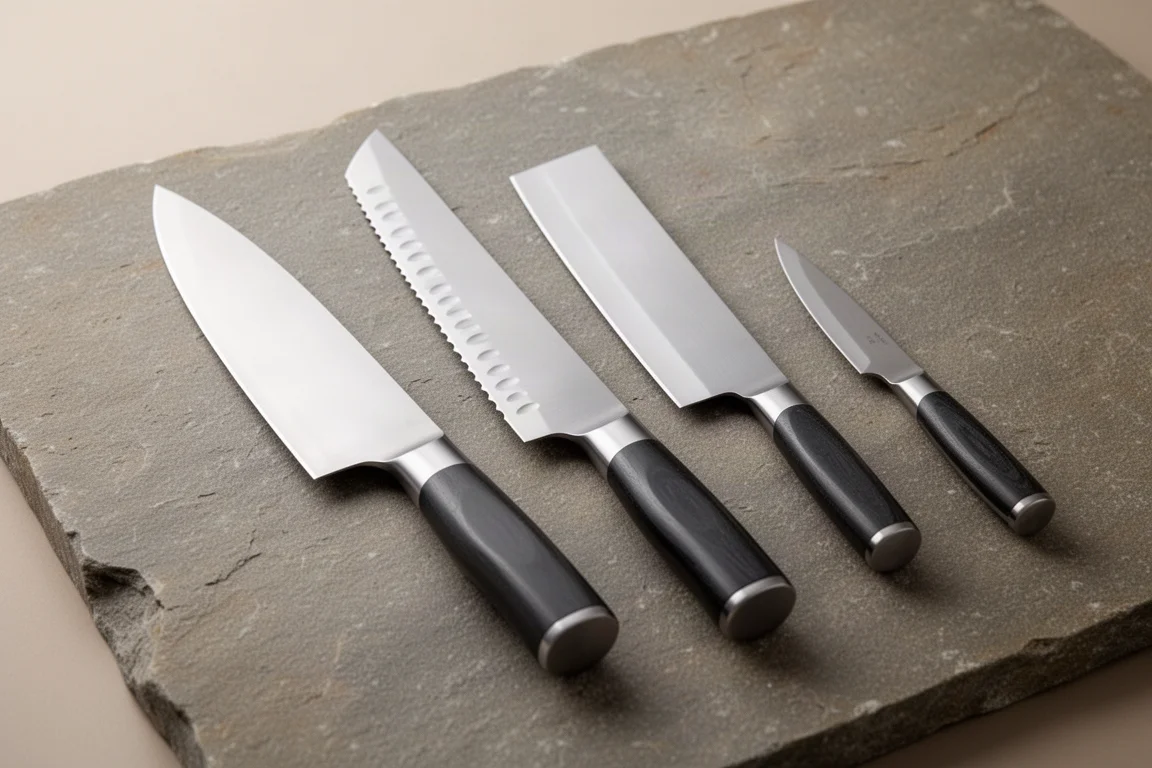
The first knife every home cook should own is a chef’s knife. With its wide, curved blade, it is the ultimate all-purpose tool. If you are on a tight budget or want the most minimal kitchen setup possible, you could genuinely get by with just a chef’s knife. It is that versatile.
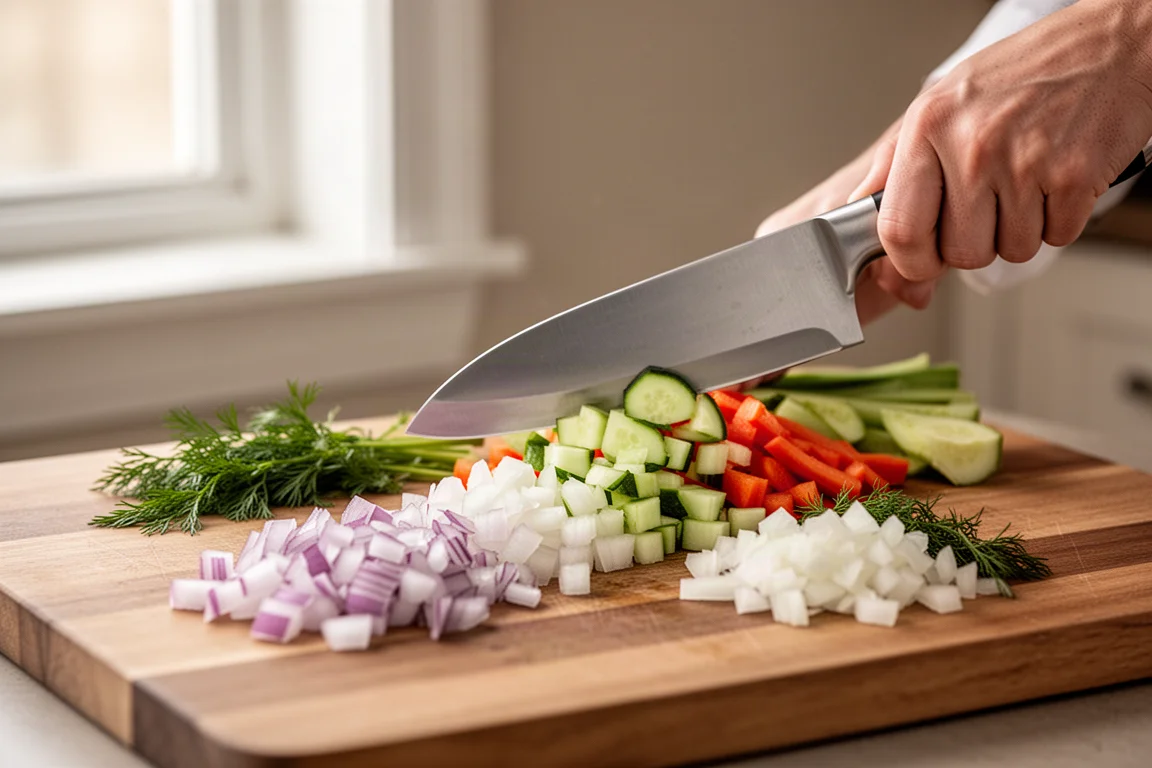
An 8-inch blade is the most versatile size. It is big enough to cut watermelon, pineapple, lettuce heads, large cuts of meat, and butternut squash, yet still nimble enough for dicing onions, mincing herbs, and peeling fruit. Most chef’s knives weigh between 7 and 10 ounces with a wide blade profile of around 1.5 to 2 inches, which lets you scoop chopped ingredients off the board or crush garlic cloves with the side of the blade.
There are two main styles to choose from. Western-style chef’s knives have a more curved edge and thicker, heavier blades made of softer steel. They are more durable and resistant to chipping, but the softer steel means more frequent sharpening. Japanese-style knives have a straighter edge and thinner, lighter blades in harder steel that hold an edge longer, though they are more prone to chipping around bones and frozen food. Go Western if you cook a lot of dense foods like meat and root vegetables; go Japanese if your cooking leans toward fruits, vegetables, and fish that demand precision.
The Essential Bread Knife
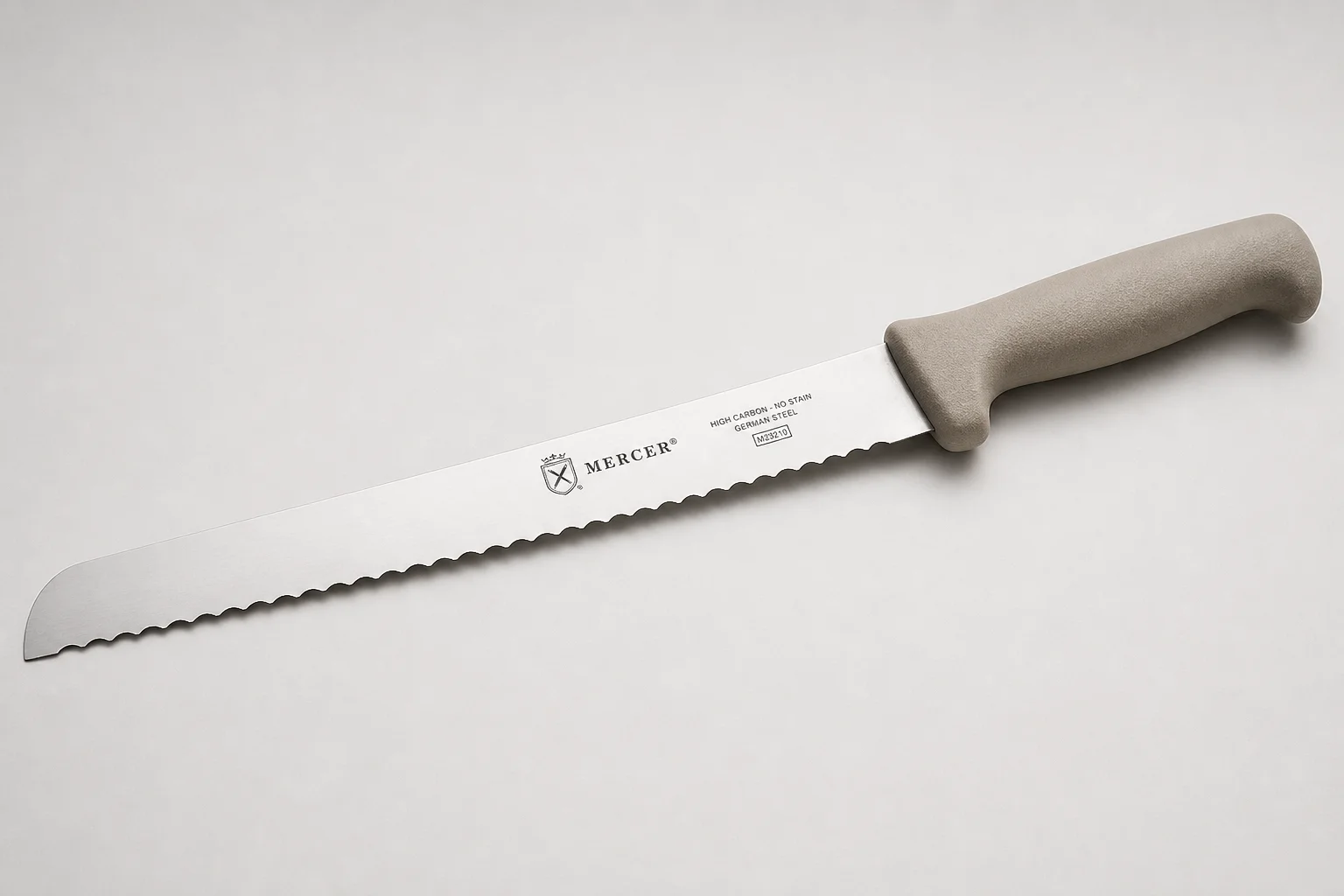
Besides a chef’s knife, the only other knife you truly need is an 8- or 9-inch serrated bread knife. The serrated edge works like a saw, breaking through a crusty exterior without tearing the soft interior. You can slice bread with a chef’s knife, but the plain edge requires more pressure, which can flatten the loaf.
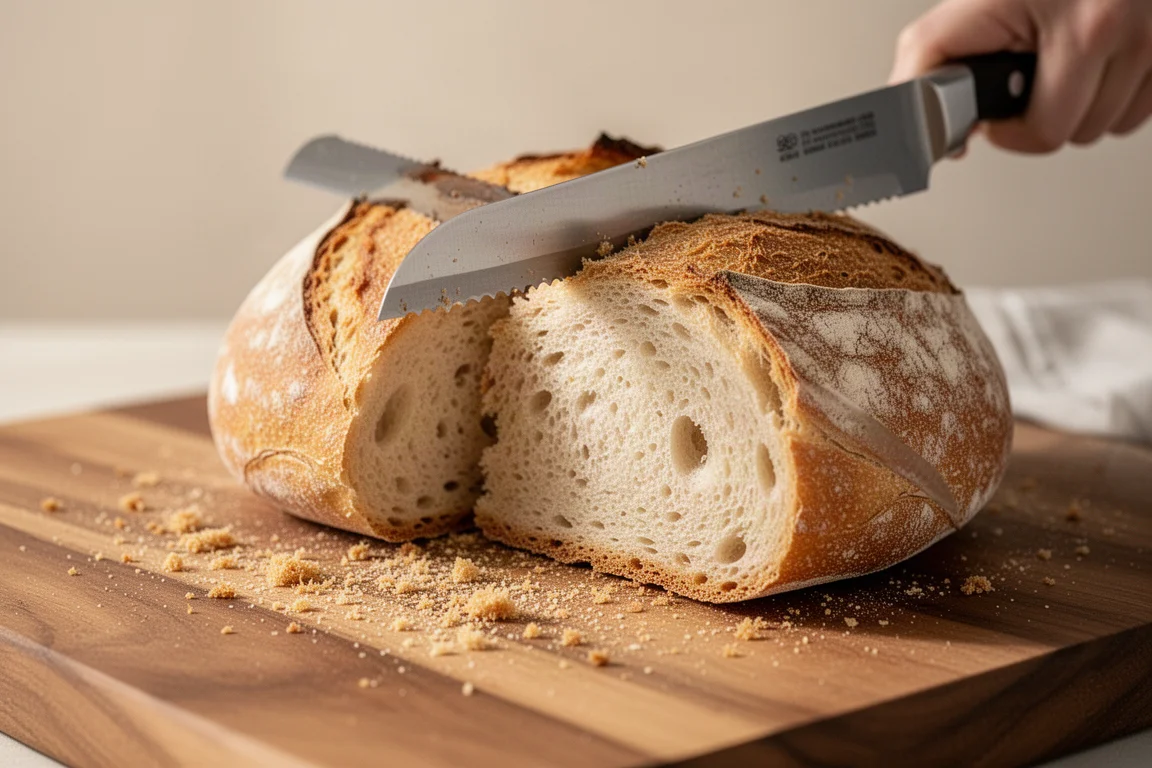
A bread knife is also excellent for delicate foods like overripe tomatoes, slicing through the skin cleanly without turning the flesh to mush. It handles cakes, sandwiches, muffins, bagels, and anything else that is crusty or waxy outside and soft inside. Another practical benefit: serrated knives rarely need sharpening, because the recessed part of the edge only touches food, not the cutting board, so the teeth stay effective for years.
Because you will not use a bread knife nearly as often as a chef’s knife, there is no reason to spend much here. An affordable brand with a comfortable handle is all you need.
Nice to Have: The Paring Knife
Most knife guides insist you need three knives: chef’s, bread, and paring. The paring knife, with its short 3 to 4-inch blade, offers fine control for peeling apples, coring tomatoes, removing potato eyes, deveining shrimp, and slicing strawberries. For professional cooks who do constant precise work, it is genuinely useful.
For most home cooks, however, a chef’s knife plus an inexpensive peeler covers the same ground. Using a peeler is easier, safer, and wastes less fruit than the one-handed apple-rotating technique that paring knife tutorials showcase. Unless you regularly hull strawberries, core tomatoes, or make intricate garnishes, the paring knife is nice to have but not essential.
Nice to Have: The Utility Knife
A 4 to 7-inch utility knife is a hybrid between a chef’s knife and a paring knife. Compared to an 8-inch chef’s knife, it gives you better control when slicing small fruits, trimming crusts, removing melon rinds, and peeling oranges, while its extra length lets you handle larger foods than a paring knife can.
It is light, easy to maneuver, and one of the most frequently used knives in a well-stocked kitchen. It is especially handy for families, making quick work of cutting fruit and cheese or chopping food into bite-size pieces for kids. If you add anything after your chef’s knife and bread knife, this is the one to pick.
Nice to Have: The Nakiri
The Nakiri is a Japanese-style knife designed specifically for chopping vegetables. It has a thin, straight edge with a subtle curve toward the end, a squared-off tip, a completely straight spine, and a rectangular blade profile, typically 5 to 7 inches long.
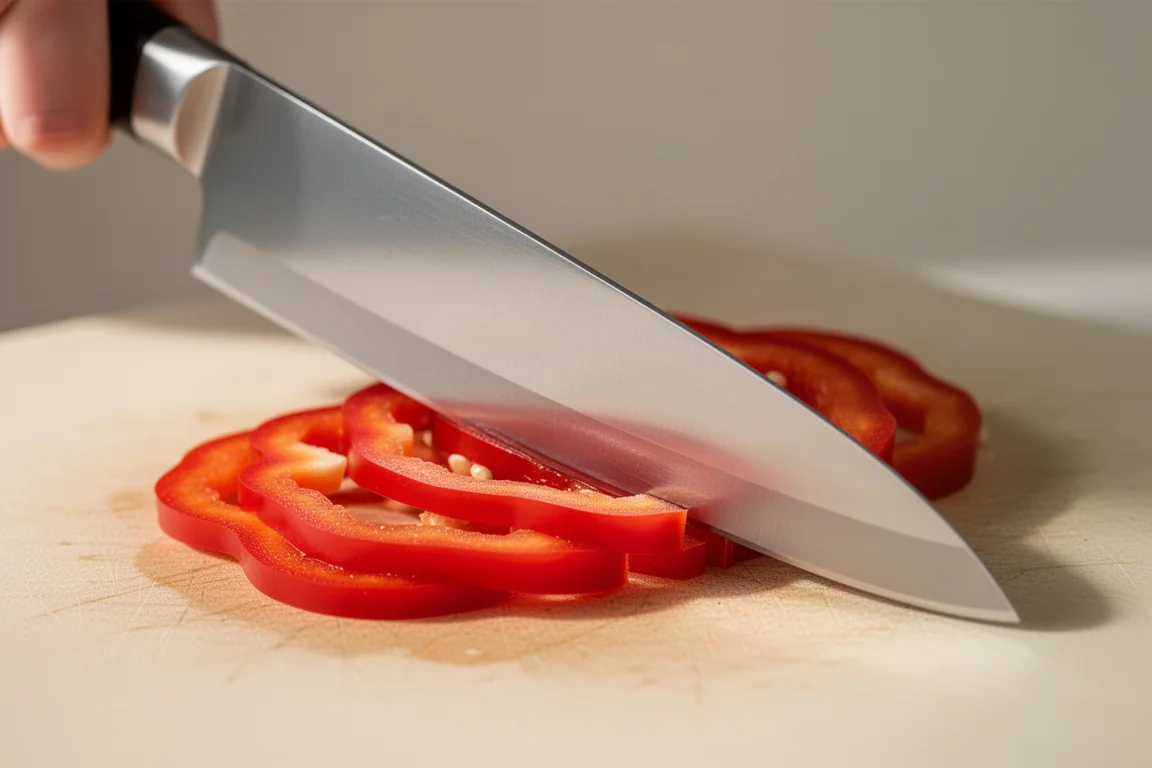
Because almost the entire edge contacts the board with each cut, you can make straight, uniform slices in a single stroke without rocking the blade. Slices of bell pepper, for example, will not stick together from an incomplete cut through the skin. Since the blade is the same width from heel to tip, the weight is evenly distributed, which makes fast up-and-down chopping feel effortless. The Nakiri resembles a Chinese cleaver but is narrower and lighter, so it is more agile. If vegetables are a big part of your diet, it is a worthwhile addition.
Nice to Have: The Santoku
The Santoku is a Japanese-style all-purpose knife with a wide blade between 5 and 8 inches. It resembles a chef’s knife, but the edge is less curved and the spine runs straight from handle to tip before angling down steeply. Like the Nakiri, it excels at up-and-down chopping, though its slight curve still allows a rocking motion.
Its limitation is that there is nothing it can do that a chef’s knife cannot. The straighter edge is a minor advantage for vegetables but not a game changer, and the less-pointy tip makes it a poor choice for piercing tasks like breaking down a whole chicken or turkey. It is a pleasant second all-purpose knife, but buying a second chef’s knife instead can be even more practical: one for raw protein, one for vegetables, and easier cleanup at the end.
Smart Ways to Save: When Sets Make Sense
The general rule that most knife sets waste money holds, but there is a clear exception. If a set includes exactly the knives you want with no unnecessary extras, it usually costs less than buying each knife individually.
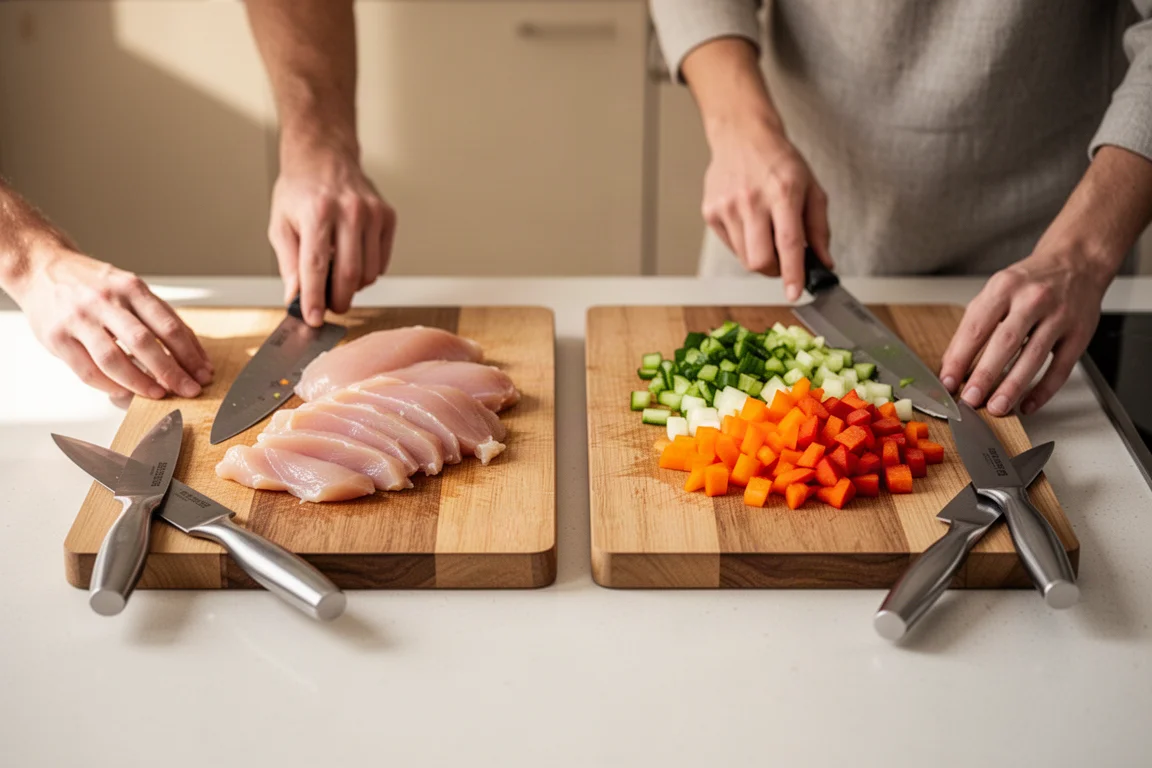
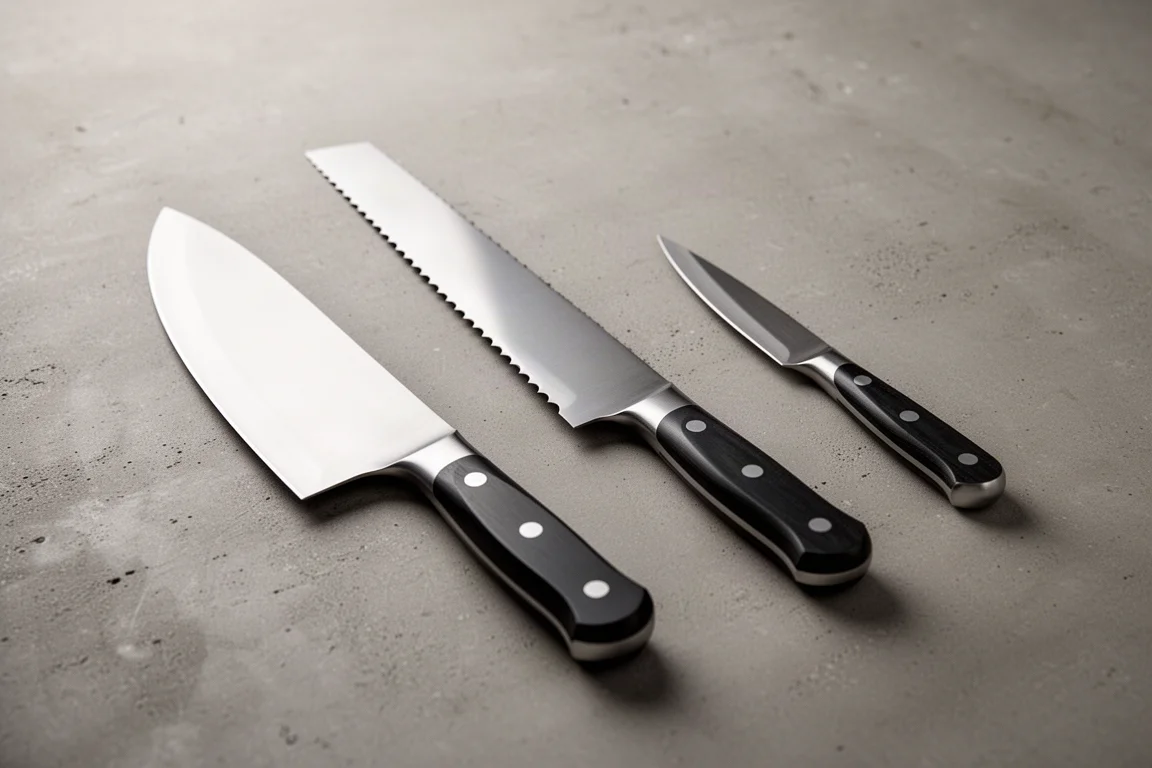
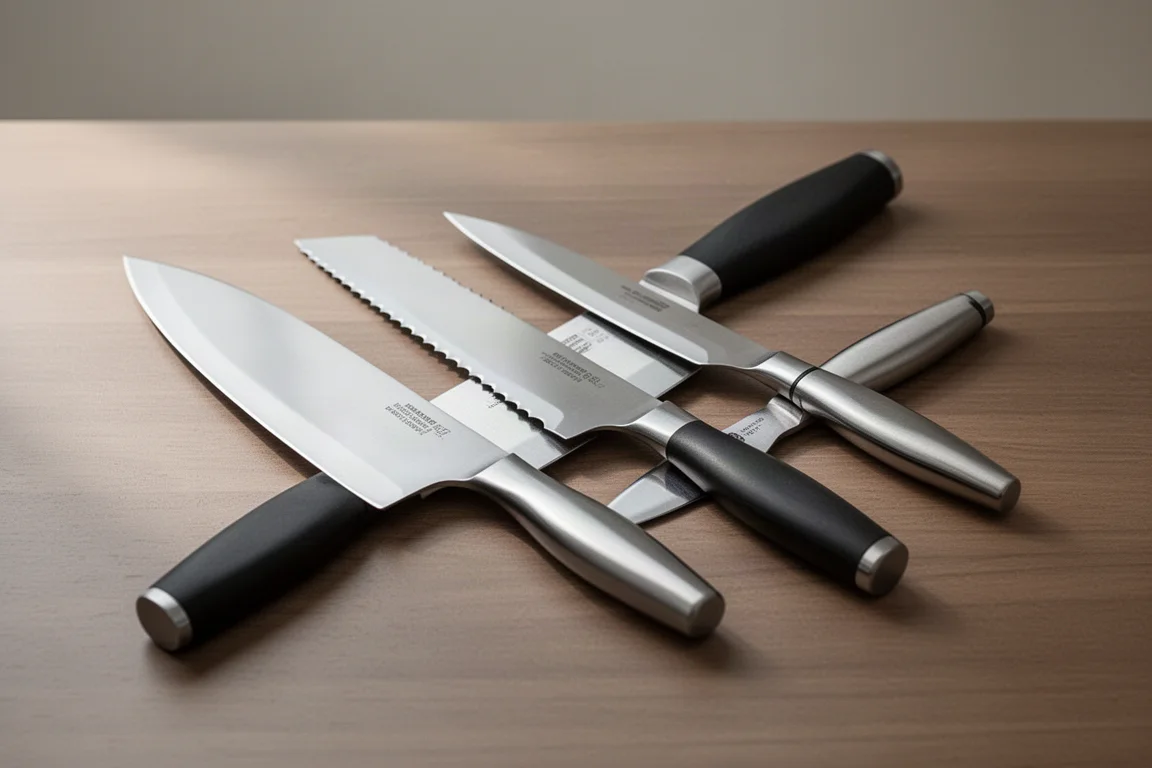
Three sets illustrate this well. The Wusthof Classic set includes a paring knife, bread knife, and chef’s knife for $295 on Wusthof.com, versus roughly $400 if bought separately. The Zwilling Pro set includes a paring knife, a serrated utility knife, and a chef’s knife for $249 on Zwilling.com, versus about $320 individually. And the Made In set includes a chef’s knife, bread knife, Nakiri, and paring knife for $349 on MadeInCookware, against $406 bought piece by piece.
The strategy is simple: take advantage of set pricing when the contents match your needs, but buy individually when they do not. Buying separately also lets you spend less on the knives you will rarely use, like pairing a premium chef’s knife with a budget bread knife.
Buying Advice
If you are starting completely from scratch, put most of your budget into an 8-inch chef’s knife from a brand you will love, since you will use it multiple times a day. For Western style, Wusthof, Zwilling, Made In, and Victorinox are strong choices; for Japanese style, look at Shun, MAC, and Oishya. Add an inexpensive serrated bread knife, then build from there with a utility knife or Nakiri as your cooking habits demand.
If a curated set matches what you would buy anyway, the math favors the set. If it does not, buy individually and skip the filler.
Conclusion
A great kitchen knife collection is smaller than most people think. A quality chef’s knife and a serrated bread knife cover nearly everything, and the paring knife, utility knife, Nakiri, and Santoku are worthwhile only when they match tasks you actually do. When the contents align with your needs, a set from Wusthof, Zwilling, or Made In can save real money; otherwise, buy exactly what you will use and nothing more.
Further reading
Related Reviews

Kitchen Knives
Best Chef's Knives 2026: 27 Popular Options Tested and Ranked
A comprehensive review of 27 chef's knives ranging from $18 to $380, with honest assessments of handle comfort, blade balance, and real-world performance.

Kitchen Knives
Best Chef's Knives Under $75: Two Tested Recommendations
Two practical 8-inch chef's knives that balance sharpness, comfort, and durability without premium pricing.

Kitchen Knives
Best Chef's Knives 2026: 27 Options Tested and Ranked
A comprehensive review of 27 chef's knives ranging from $18 to $380, with honest assessments of handle design, balance, blade profile, and real-world performance.