Kitchen Knives
Best Kitchen Knife Brands Not Made in China: Where Quality Cutlery Is Actually Made
A practical guide to kitchen knife brands made in Germany, Japan, France, Switzerland, and the USA, with what makes each one worth buying.
Introduction
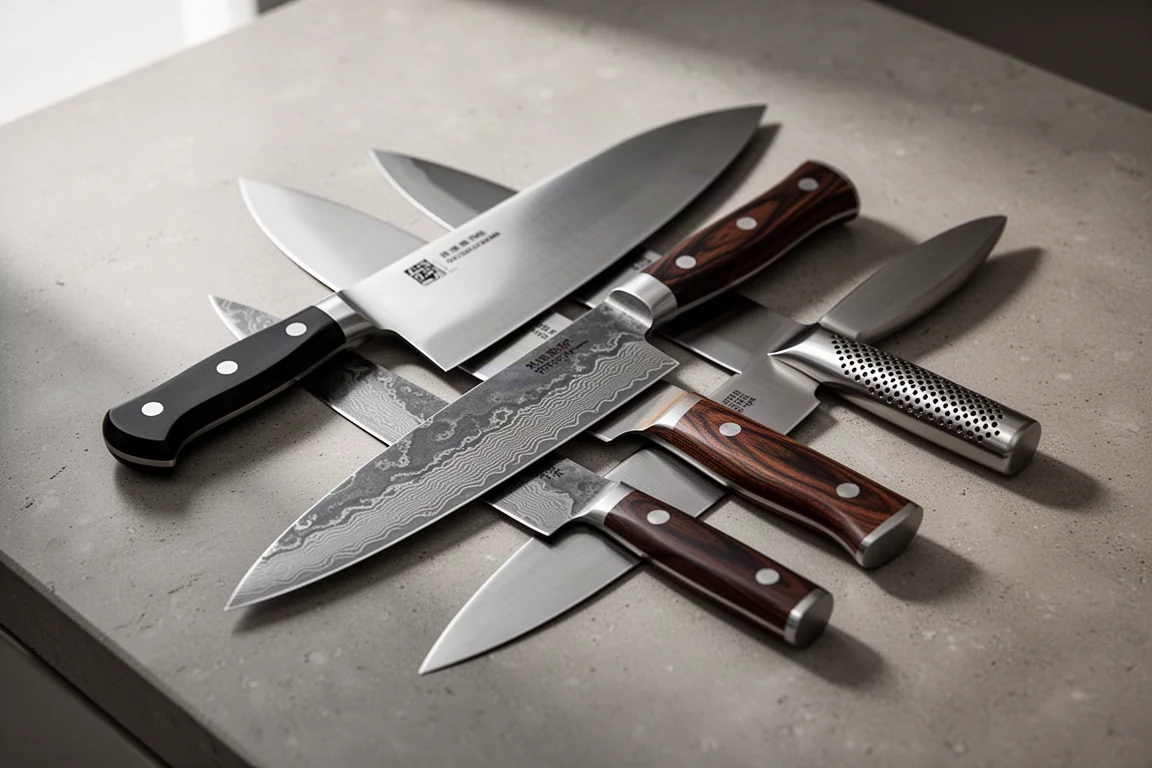
If provenance matters to you when buying a kitchen knife, this guide narrows the field. Every brand covered here manufactures its knives outside China, in Germany, Japan, France, Switzerland, or the United States, and each brings a distinct philosophy to blade construction, steel, and handle design.
Some of these names have been forging blades for centuries. Others are newer companies that partner with legendary cutlery regions. All of them offer something you can confidently put on your kitchen counter for years.
How We Evaluate These Brands
The focus here is on where each knife is actually made, what steel and construction method the brand uses, and how that translates into real-world performance: sharpness, edge retention, durability, balance, and comfort. Handle design, warranty support, and price positioning round out the picture, so you can match a brand to how you actually cook.
Wusthof Classic and Wusthof Ikon
Wusthof is a German company that has been family owned since its founding in 1814. Its knives are manufactured in Solingen, Germany, known as the “City of Blades” thanks to the region’s rich knife-making legacy. Most collections use forged German stainless steel tempered to 58 on the Rockwell scale, which means the blades are durable and resist chipping. The full tang, the part of the blade that extends through the butt end of the handle, adds heft and balance.
Wusthof offers several collections with different designs, some with black synthetic handles and others with natural wood. The Classic and Ikon are the two most popular, and both deliver the classic German formula: thick forged blades and comfortable handles.
Zwilling Pro and Zwilling Professional “S”
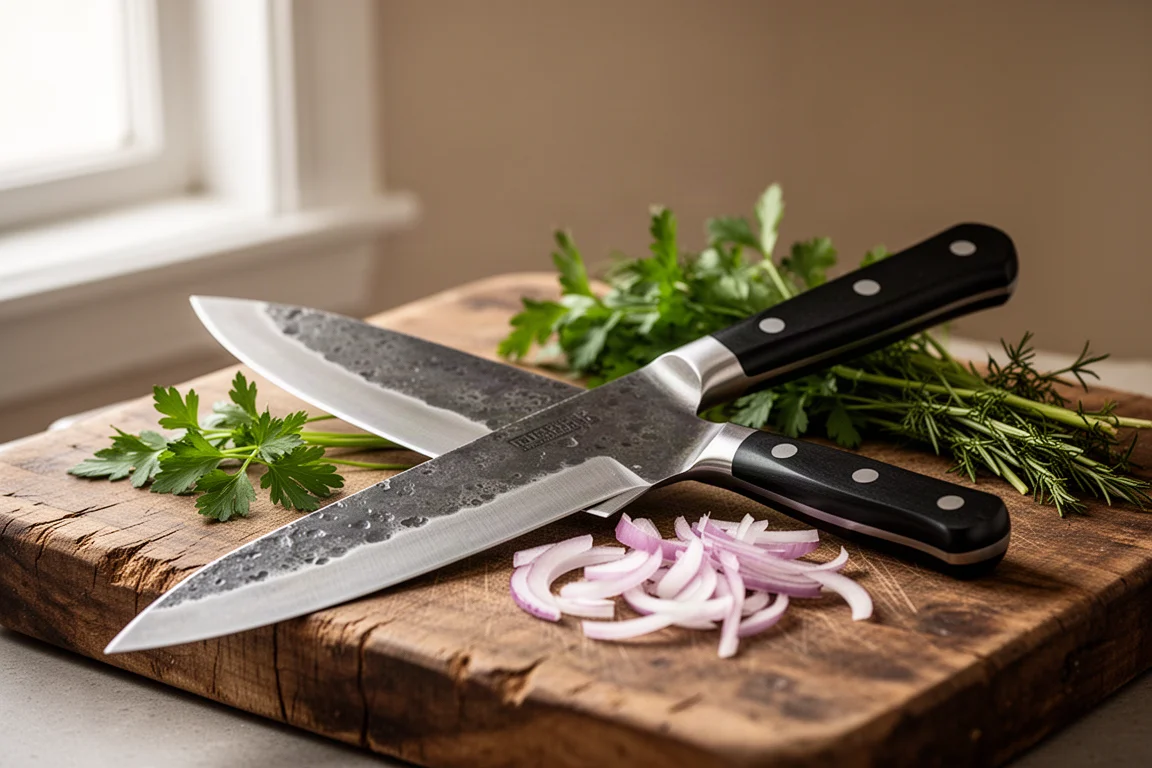
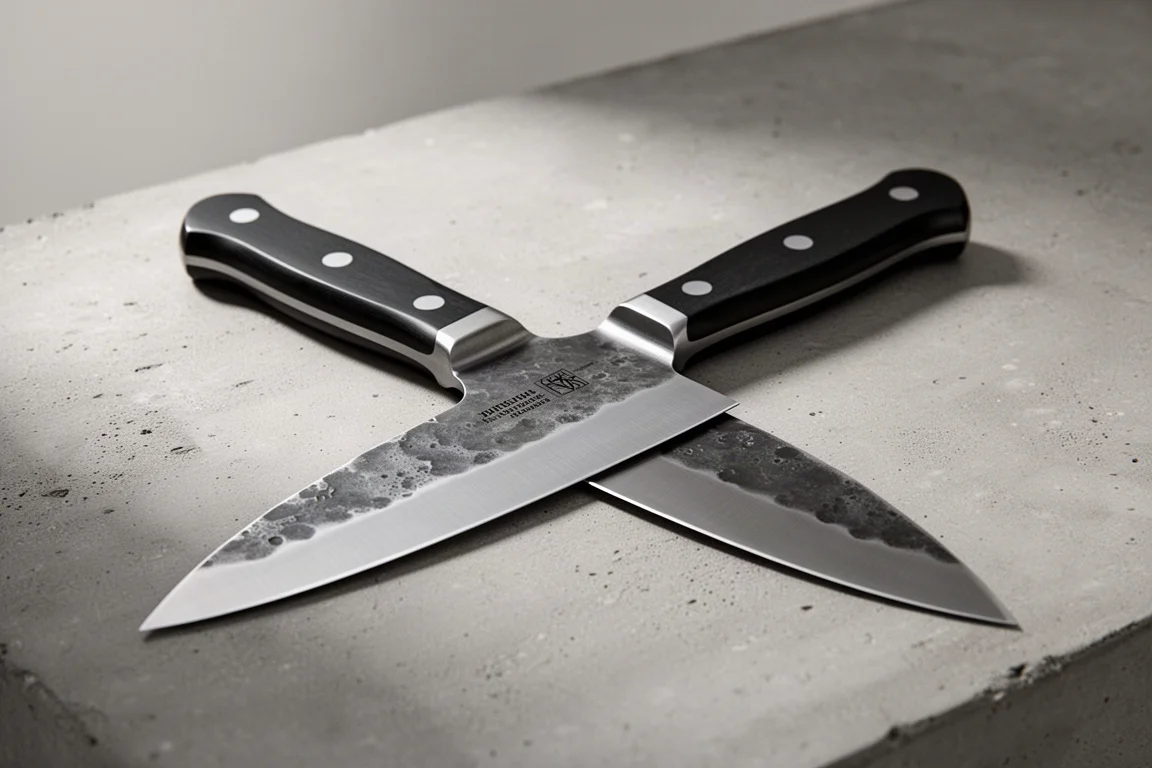
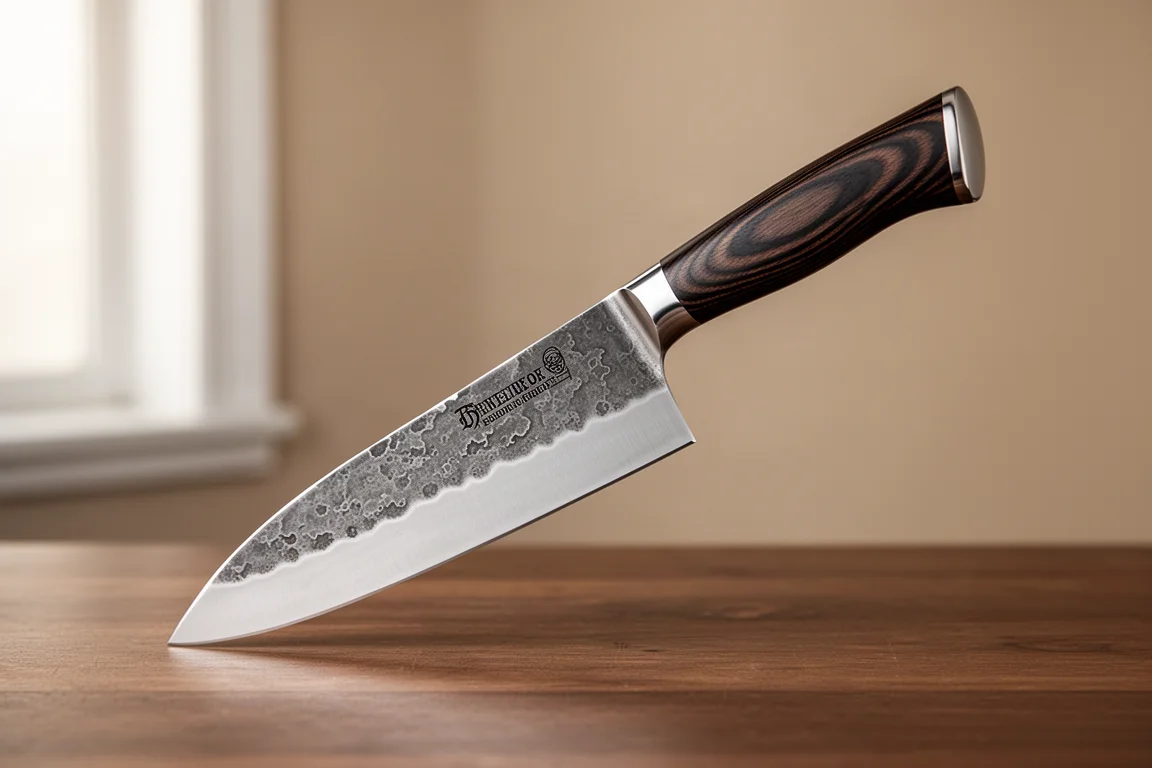
Zwilling also makes its knives in Solingen, and the company has been around since 1731, making it one of the oldest businesses in the world still operating. Its blades undergo an ice-hardening process called FRIODUR, which cools the hot metal in sub-zero temperatures after forging. The result is a sharper, more corrosion-resistant blade with better edge retention.
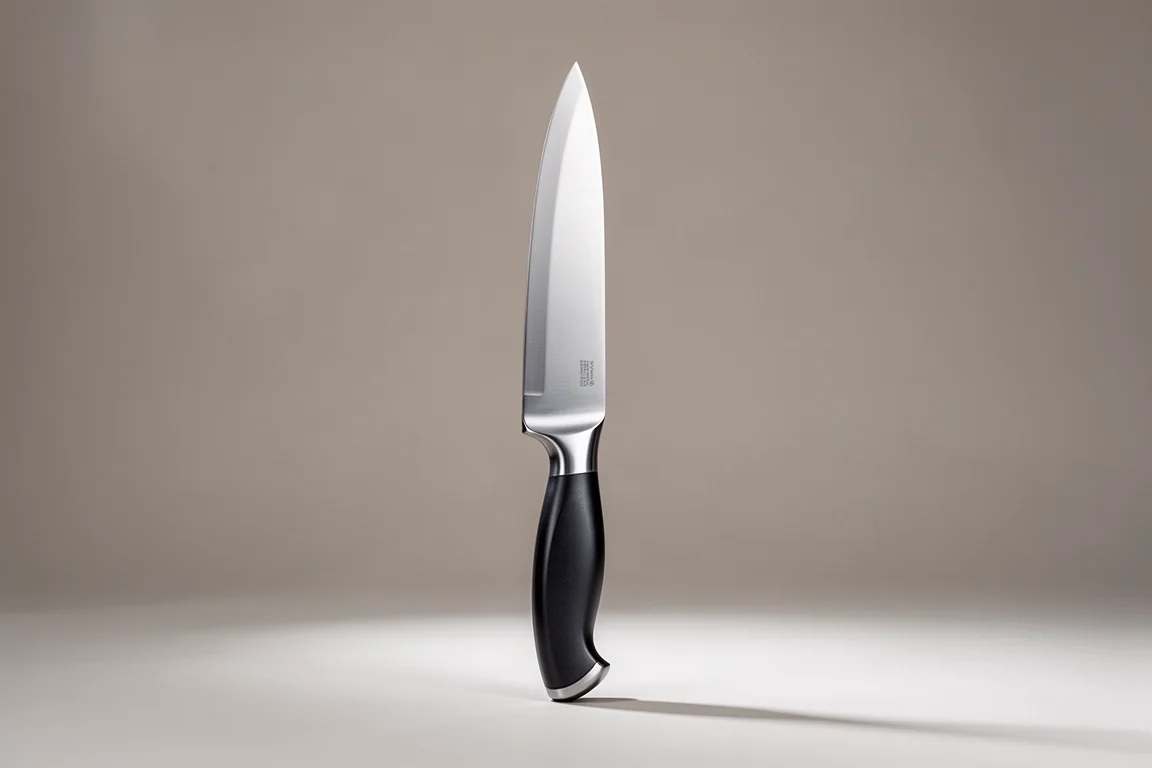
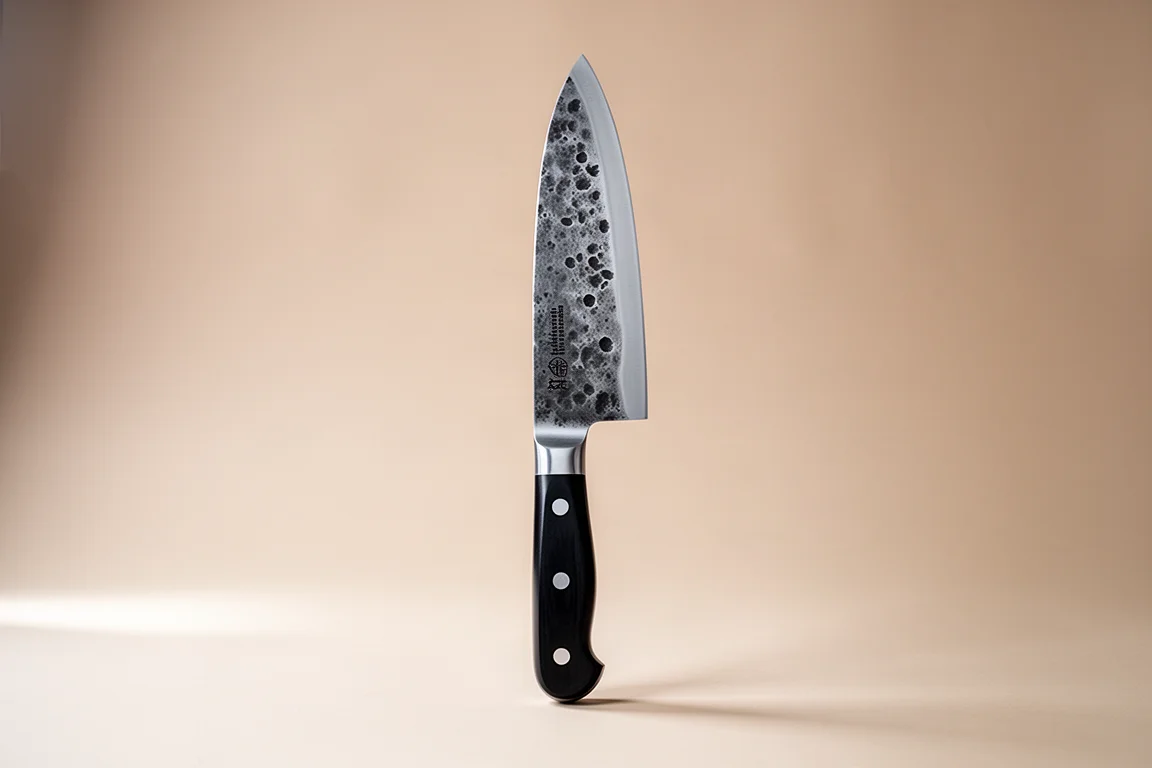
Zwilling offers more than a dozen collections, but Pro and Professional “S” are the two most popular. Both feature a classic Western style with a high-carbon steel blade, a curved edge for rocking cuts, and a contoured triple-riveted black handle. The key difference is that Professional “S” knives have a full bolster running from the spine to the edge, which adds weight and balance to the middle of the knife but prevents you from sharpening the entire edge because the heel is too thick.
Messermeister
Founded in 1981 by Bernd Dressler and his wife Debra, Messermeister is an American company based in California that makes its knives in Solingen, Germany. Debra and her daughters now run the company, making it both family-owned and women-owned.
While many brands have moved toward automation, Messermeister blades are still made by hand using a hot-drop hammer-forged process. The blades are incredibly thick, much wider than a Wusthof Classic blade, which makes the knives heavier and sturdier but slightly less nimble. Like Wusthof and Zwilling, they are sharp, balanced, durable, and feature the classic German design with black riveted handles.
Shun
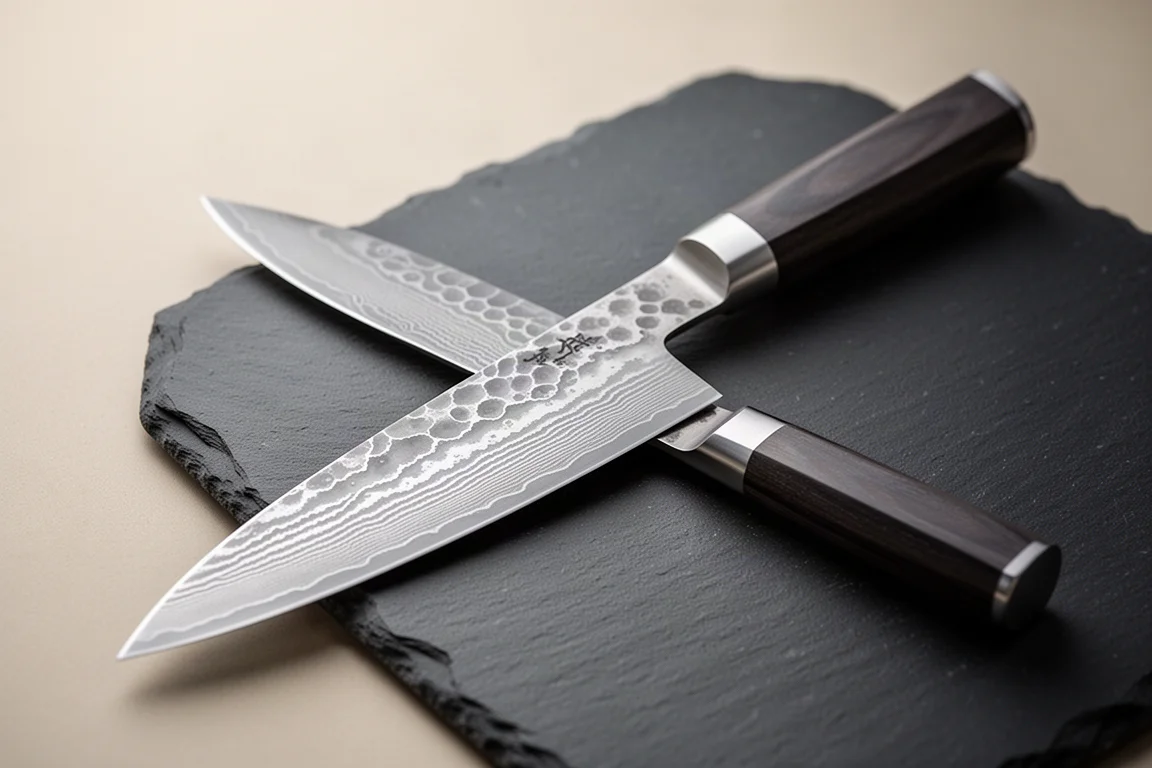
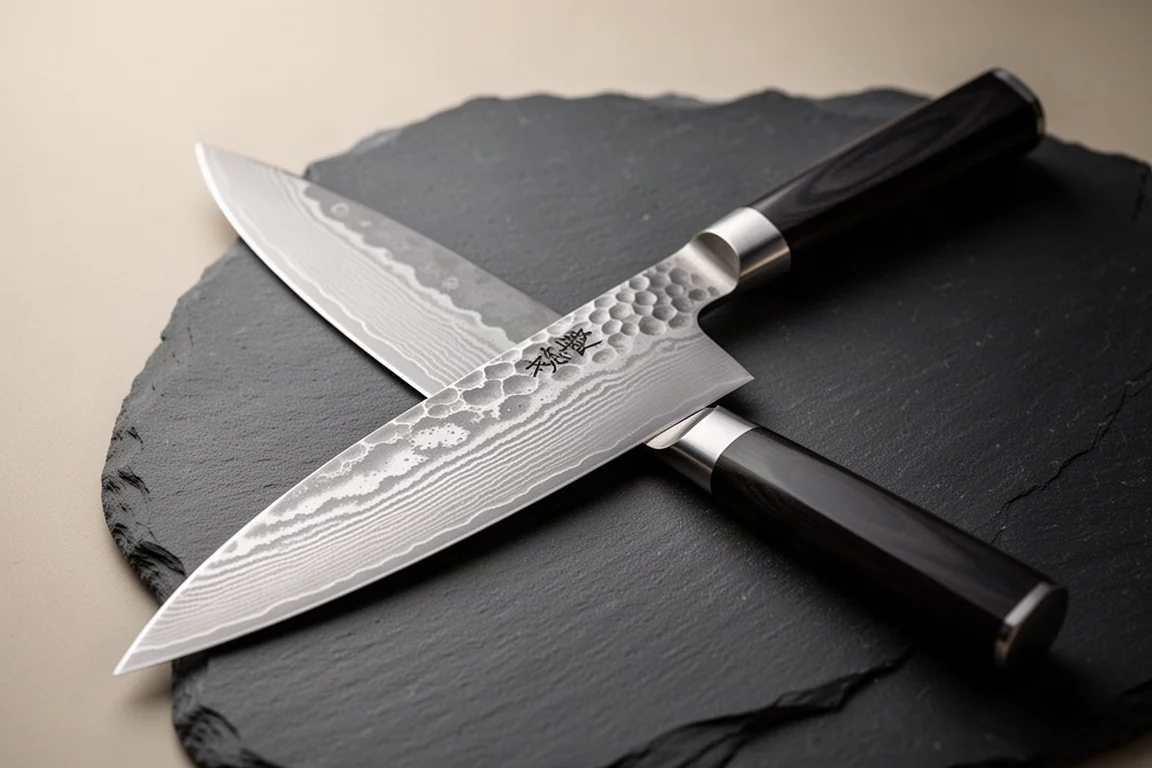
Shun is an award-winning cutlery brand owned by the KAI Group, a blade manufacturer in business since 1908. Every Shun knife is handcrafted in Seki City, Japan, a region that has been home to top Japanese blade makers for over 800 years.
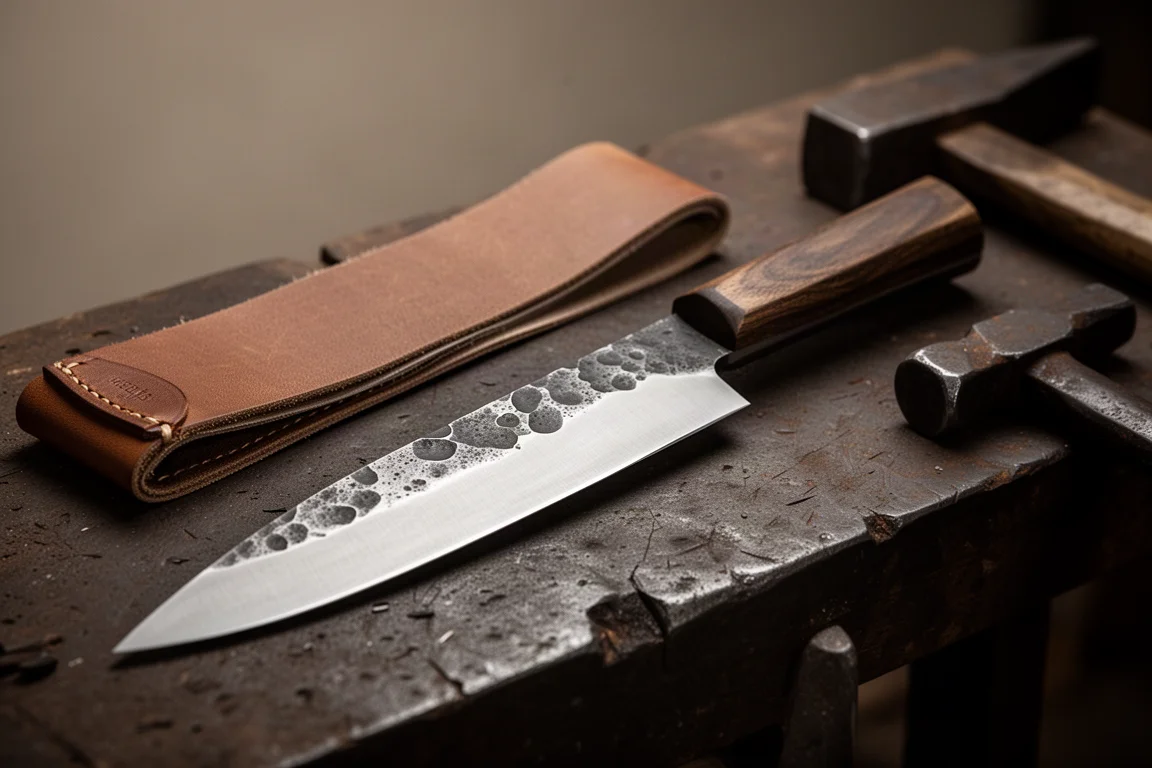
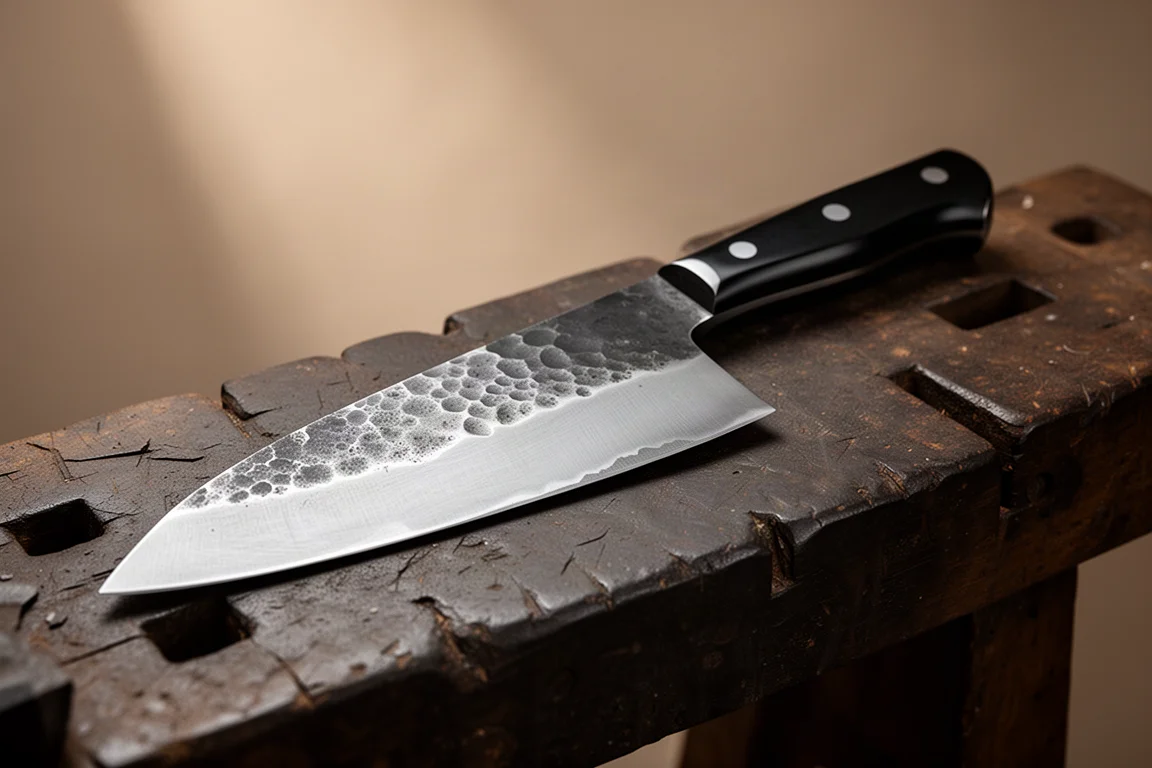
Two things set Shun apart: blade materials and design. The brand uses highly refined “super steels,” high-carbon steels that deliver superior sharpness, edge retention, and stain resistance. The handcrafted blades also feature distinct Damascus and hammered patterns that look striking and create pockets of air that help food slide off the blade. If you want a lighter, more nimble Japanese-style knife rather than a Western workhorse, Shun is one of the best options on the market.
MAC MTH-80
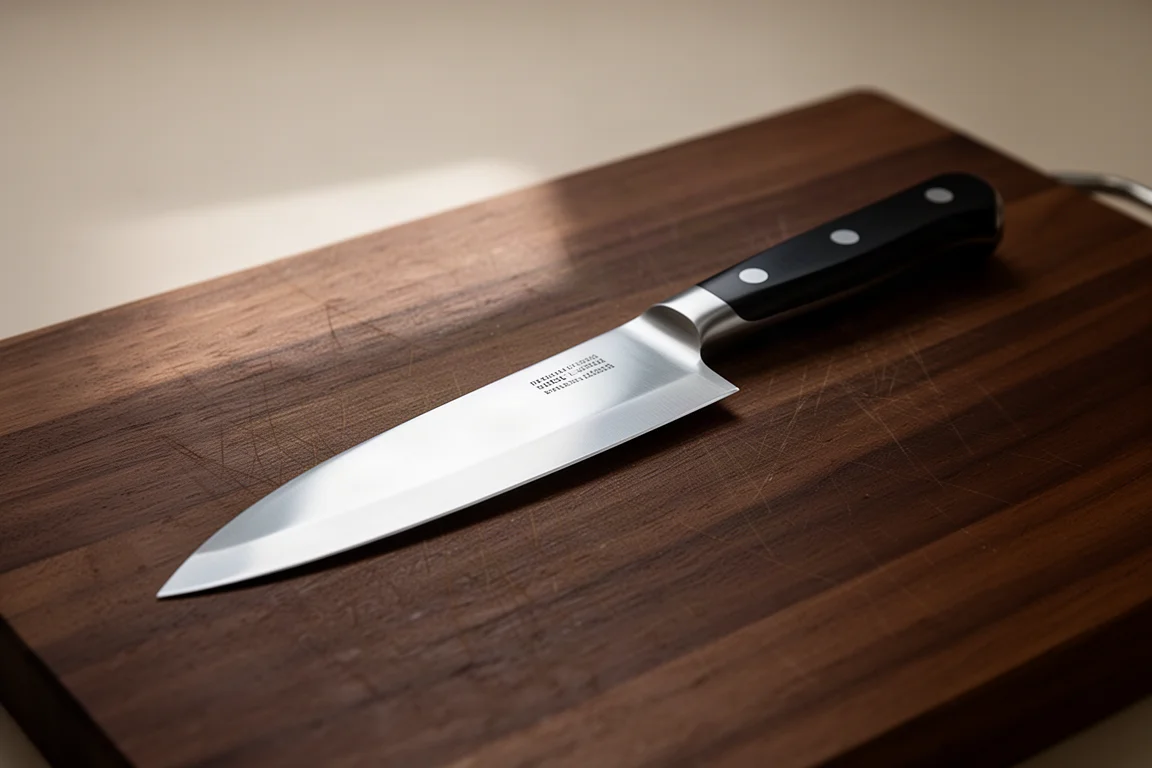
MAC may not have the brand recognition of Shun, Wusthof, or Zwilling, but the company has been making knives since 1964 and has sold over 25 million of them, all handcrafted in Seki City, Japan. MAC blades use a high-carbon alloy with less chromium than stainless steel, so the blade is more prone to rust and staining. In exchange, the knives stay sharper for much longer and perform better than typical blades. It is a deliberate choice of performance over appearance.
The MAC MTH-80 chef’s knife has earned high praise from publications like Good Housekeeping and Food & Wine Magazine, and was named the best chef’s knife by The New York Times Wirecutter. In hands-on use it comes across as lightweight, balanced, incredibly sharp, and it retains its edge longer than almost any comparable brand.
Global
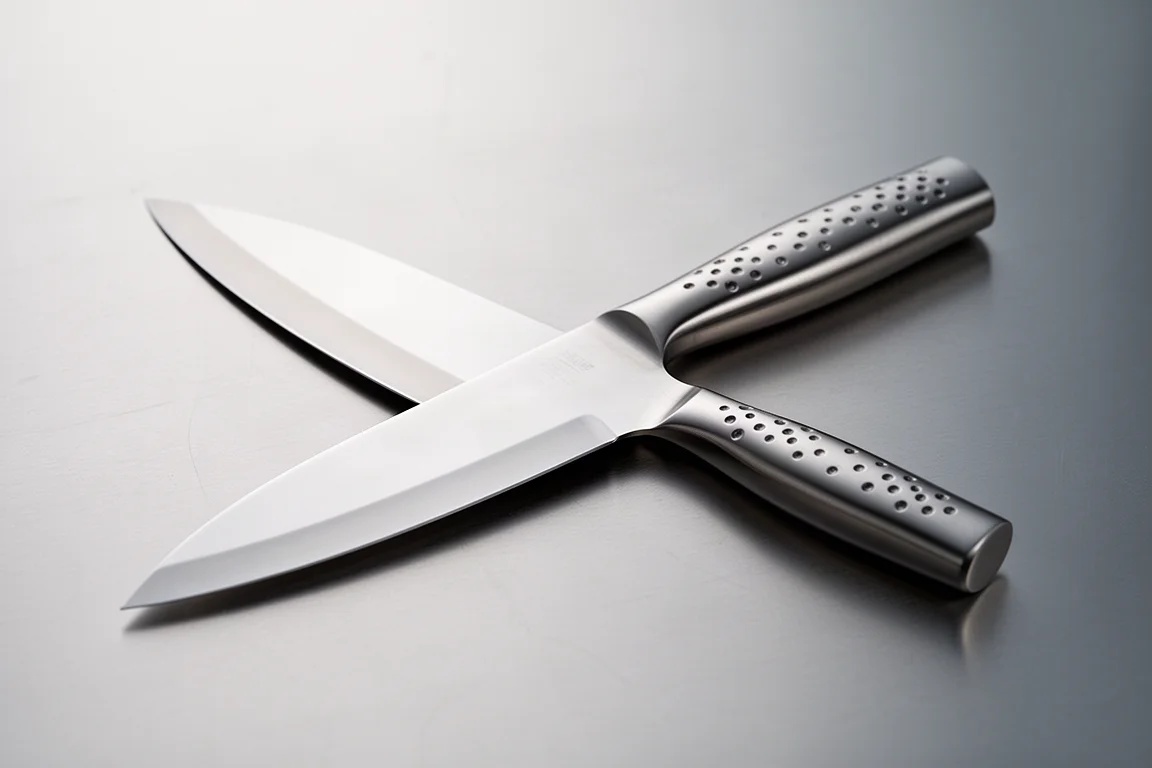
Founded in 1985 by Mino Tsuchida and industrial designer Komin Yamada, Global knives are made on the west coast of Japan and have a look that instantly stands out. Instead of a synthetic or wood handle bolted on with steel rivets, Global knives are stainless steel from the tip of the blade to the butt of the handle.
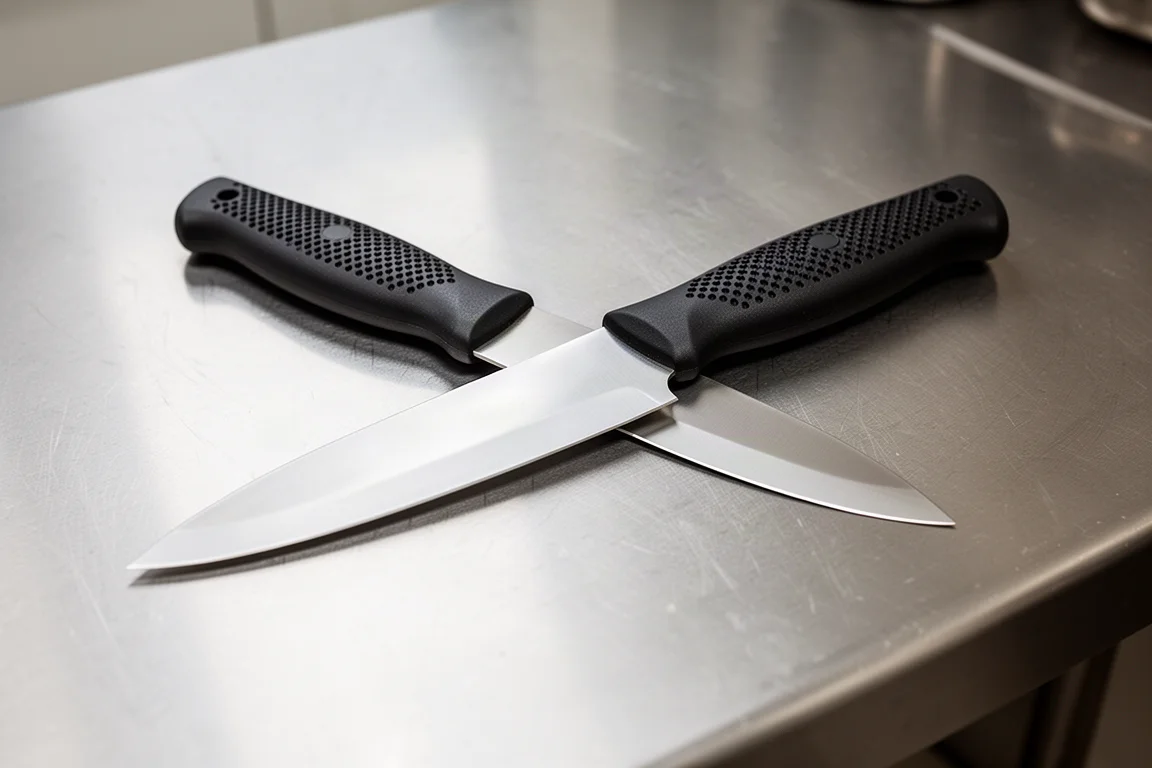
Although they appear to be a single piece of steel, the knives are made of three parts. The handle is two pieces welded together, the blade is cut from a sheet and welded to the handle, and sand is added inside the hollow handle to give the knife heft and balance. The recessed black dots on the grip are an iconic brand feature that improves hold and adds visual contrast. Some people love the look, others prefer something more traditional, but either way these knives are memorable.
Made In
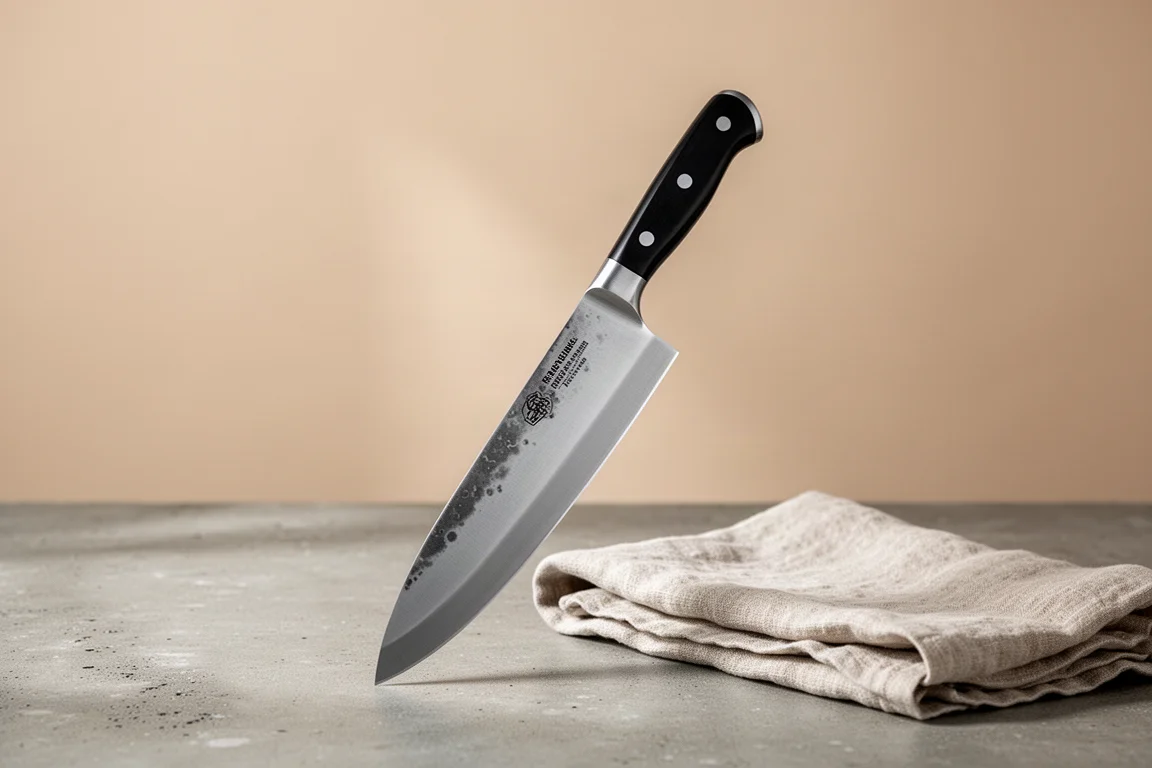
Made In partners with a family-owned French knife factory in Thiers, France, a region known as the Capital of Cutlery where companies have produced fully forged knives for over 700 years. Today Thiers is home to around 100 knife makers, a cutlery museum, and generations of accumulated expertise.
Made In forges its blades from the same German steel used by Wusthof and Zwilling, and each blade receives a nitrogen hardening treatment that increases hardness and durability while improving edge retention. In testing, these knives perform as well as or better than those established German brands, but they cost less because Made In sells exclusively online and avoids retail markups. The company also manufactures cookware, bakeware, serving ware, and kitchen accessories.
Cutco
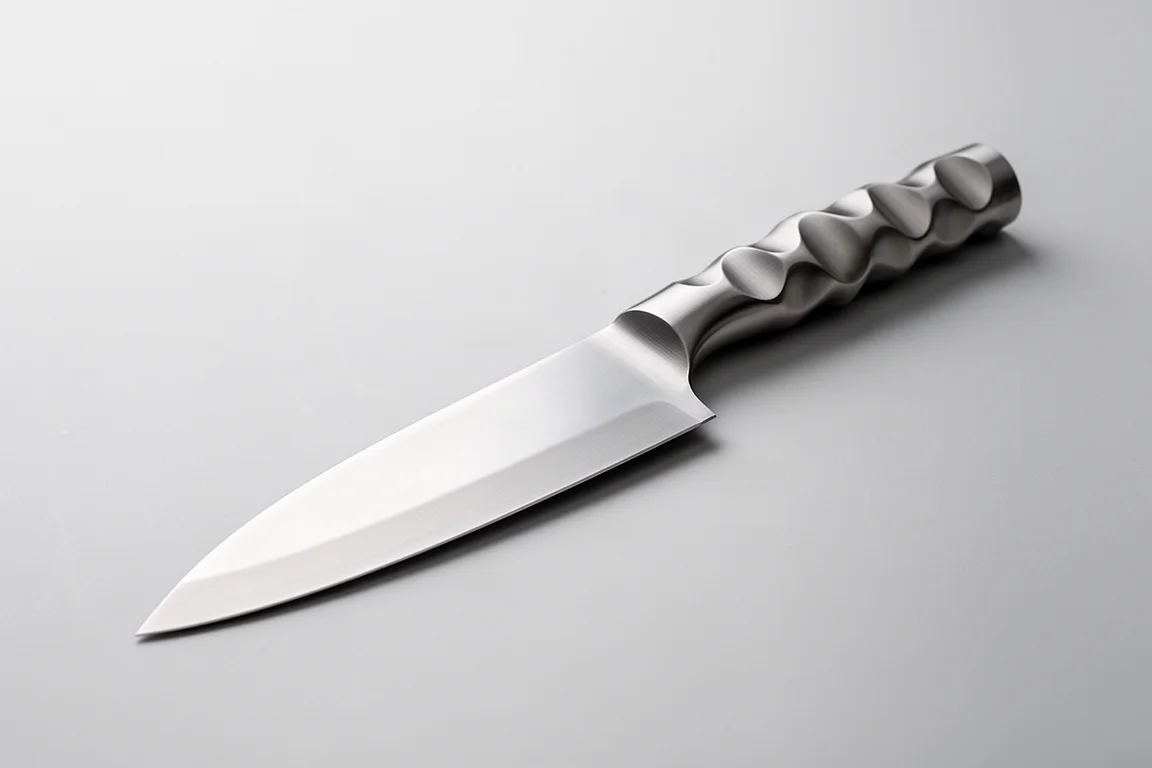
Founded in 1949 in New York, Cutco is the largest kitchen cutlery manufacturer in North America and has produced knives at its factory in Olean, New York, for over 70 years. The knives are well built and ultra sharp, and their most distinctive feature is the Wedge-Lock handle, which contours in and out rather than sitting smooth, creating an ideal shape for gripping.
The bigger story is Cutco’s Forever Guarantee: if at any time you are not satisfied with the performance of your product, the company will correct the problem or replace it. Cutco also provides free sharpening for life, you only pay a small shipping fee. One practical note: you will not find Cutco in retail stores. You can buy online or schedule an in-home demonstration through Vector Marketing, the main distributor.
Kramer
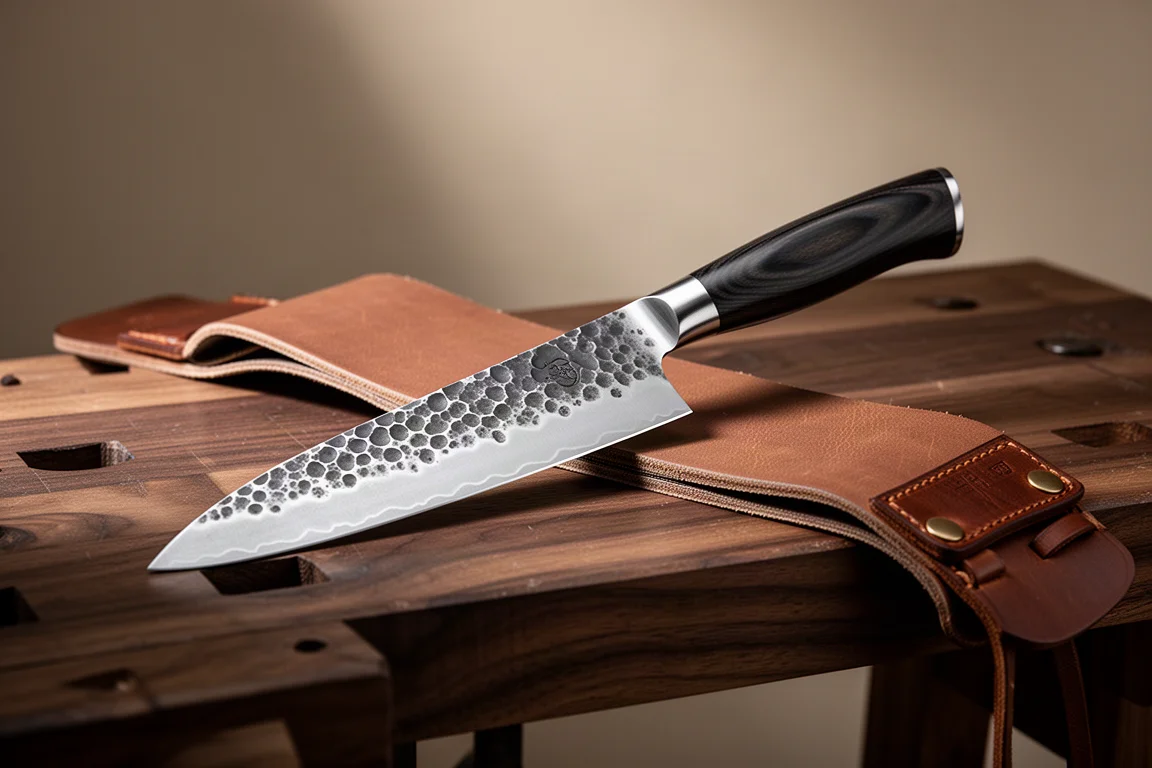
Kramer knives are made in Bellingham, Washington by Bob Kramer, one of the few Master Bladesmiths in the United States, a title held by only around 120 other people. Each knife is handcrafted by Kramer himself and is genuinely a work of art.
There are two ways to buy one. The first is through the auctions on Kramer’s website, where knives start at $250 with bid increments of $250. The second is the very limited fixed-price selection available on his site. For most people these knives are too expensive to be practical, but if you want to own the work of one of America’s few master bladesmiths, joining the email list and bidding at the next auction is the route. Kramer has also licensed several designs to Zwilling, which sells them at a much lower price; those versions are made in Zwilling’s factories in Japan.
Lamson
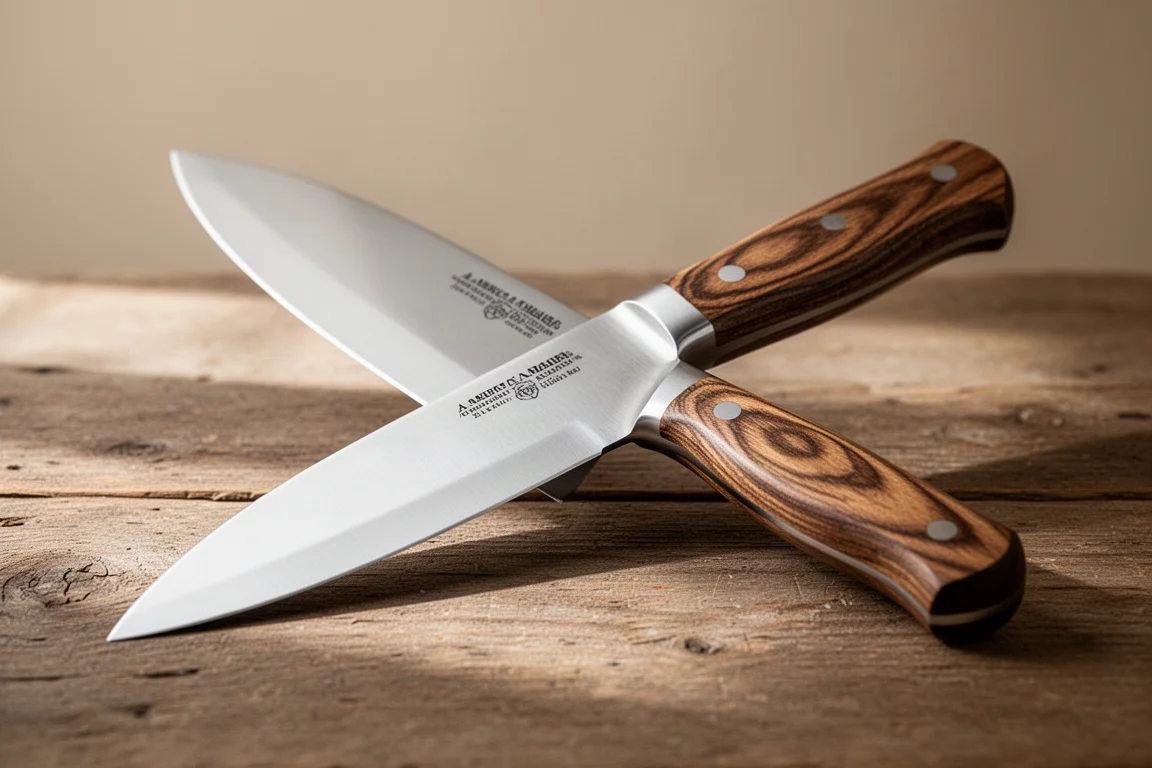
Lamson is one of the oldest cutlery manufacturers in the United States. Silas Lamson and Abel Goodnow started making knives in Shelburne Falls, Massachusetts in 1837 under the name Lamson & Goodnow. Today the knives are manufactured in Westfield, Massachusetts.
The blades are made from either high-carbon stainless steel sourced from Solingen, Germany, or Lamson’s proprietary alloy, and the knives feature beautifully crafted wood or acrylic handles. If you want American-made cutlery with genuine heritage, Lamson deserves a look.
Victorinox Fibrox
Victorinox was founded in 1884 in Switzerland and is best known for creating the iconic Swiss Army Knife. Today this family-owned company produces several knife collections, watches, travel gear, and fragrances. Fibrox is one of its most popular knife collections, designed with input from professional chefs and made in Victorinox’s factory in Switzerland.
Each Fibrox knife has a comfortable synthetic handle with a grippy texture and a razor-sharp blade. These are not the most elegant-looking knives, but that is not why people buy them. They are comfortable, safe, sharp, lightweight, and inexpensive, which makes the collection one of the most popular in restaurant kitchens around the world.
Buying Advice
If you want a hefty, durable German-style knife that will last for decades, Wusthof, Zwilling, and Messermeister are the safest bets, with Messermeister offering the most hand-crafted character and Zwilling offering the longest corporate pedigree. If you prefer lighter, sharper Japanese-style blades, look at Shun for craftsmanship and beauty, MAC for pure cutting performance, and Global for a distinctive all-steel design.
On a budget, the Victorinox Fibrox delivers professional-kitchen credibility at a fraction of the price. Made In undercuts the German brands on price while matching them on performance, and Cutco’s Forever Guarantee is unmatched if long-term support matters to you. At the top end, a Bob Kramer knife is less a tool purchase than an heirloom. Pick the brand whose steel, weight, and handle style match your cutting habits, and any of these will serve you well.
Conclusion
There is no single best knife brand, only the best one for how you cook. Whether it is a hand-forged blade from Solingen, a super-steel blade from Seki City, or a no-nonsense Fibrox from Switzerland, each of these brands earns its reputation where it is made. Choose the style that fits your hands and your kitchen, and you will have a knife worth keeping sharp for years.
Further reading
Related Reviews

Kitchen Knives
Best Chef's Knives 2026: 27 Popular Options Tested and Ranked
A comprehensive review of 27 chef's knives ranging from $18 to $380, with honest assessments of handle comfort, blade balance, and real-world performance.

Kitchen Knives
Best Chef's Knives Under $75: Two Tested Recommendations
Two practical 8-inch chef's knives that balance sharpness, comfort, and durability without premium pricing.

Kitchen Knives
Best Chef's Knives 2026: 27 Options Tested and Ranked
A comprehensive review of 27 chef's knives ranging from $18 to $380, with honest assessments of handle design, balance, blade profile, and real-world performance.