Kitchen Gear
Three Kitchen Upgrades Tested the Fun Way: Smash Burgers
A knife bag built for commuting, a forged carbon steel pan with cast-iron attitude, and a Canadian burger press that smashes like a tank.
Introduction
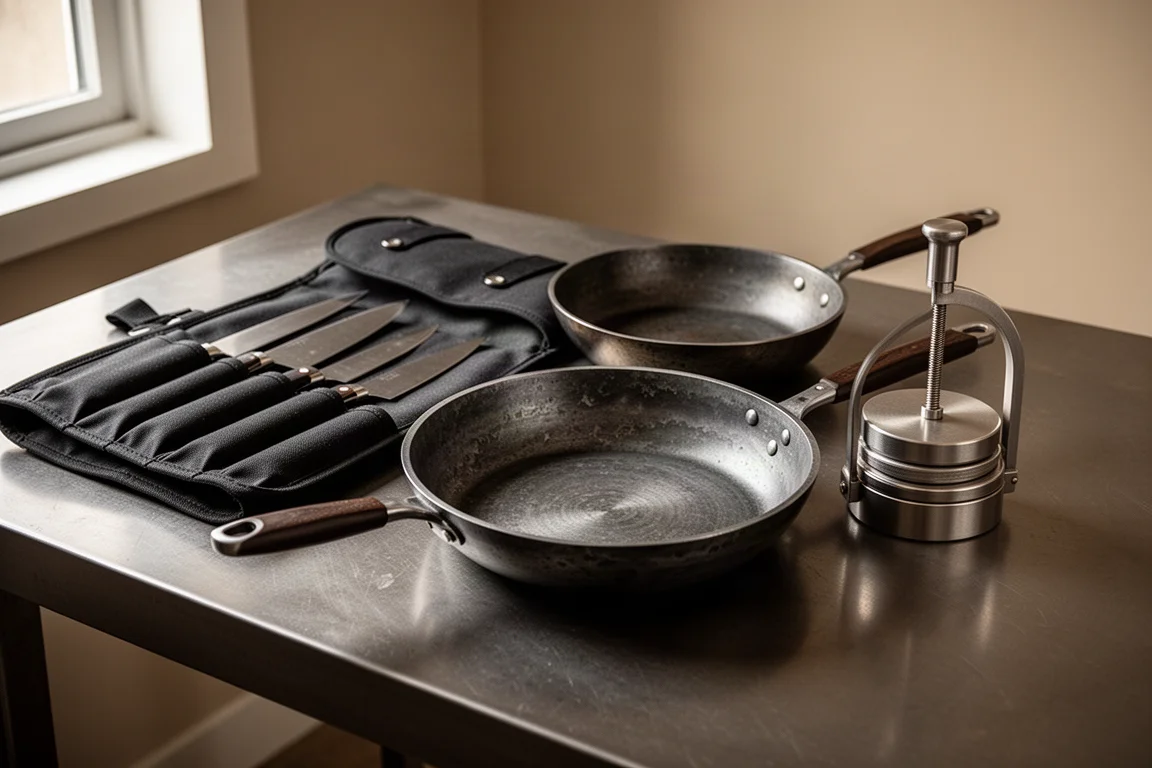
Three new kitchen products, one very good excuse to test them: a batch of smash burgers cooked for the team. The lineup covers three very different jobs: carrying knives safely, searing patties on serious steel, and pressing them flat with real force. After extended use plus a full outdoor cooking session, here is how each one stacks up.
Crumpler Chef Hugh Allen Knife Bag
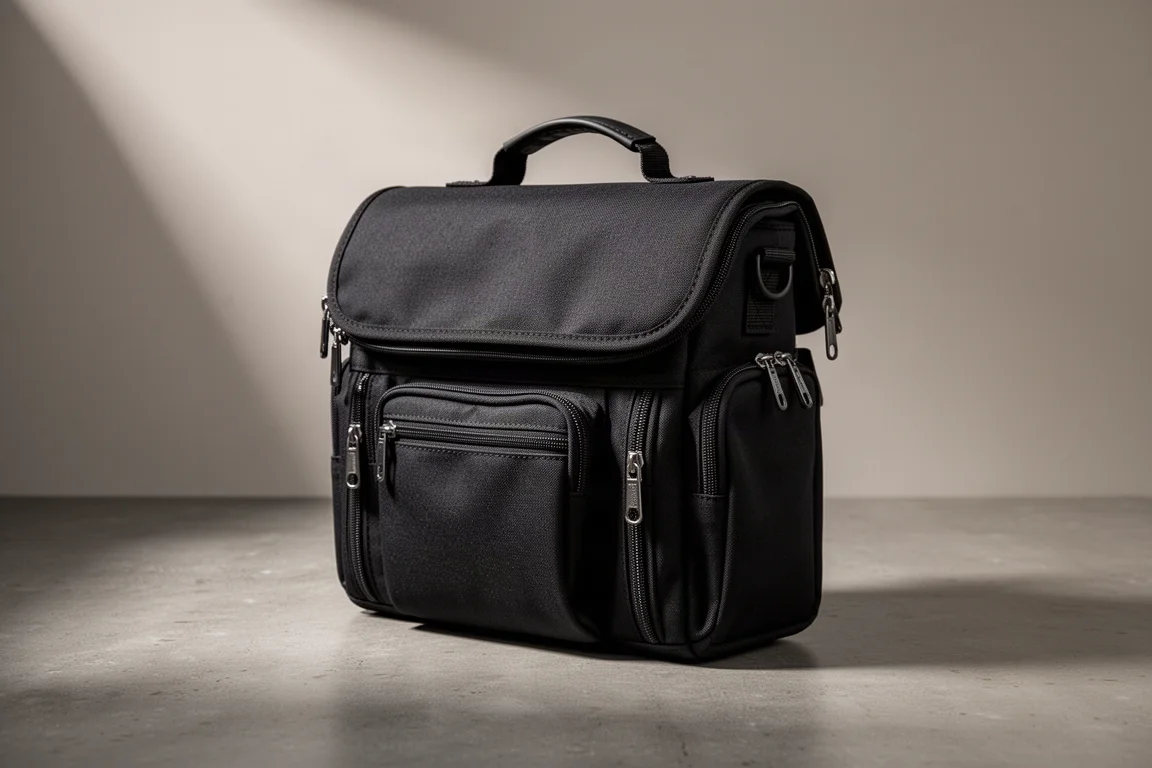
Crumpler, from Australia, makes this knife bag from a durable, waterproof fabric that sets it apart from the leather and canvas knife bags most cooks know. Those traditional materials look great but are harder to clean; this fabric wipes down easily and handles daily abuse better.
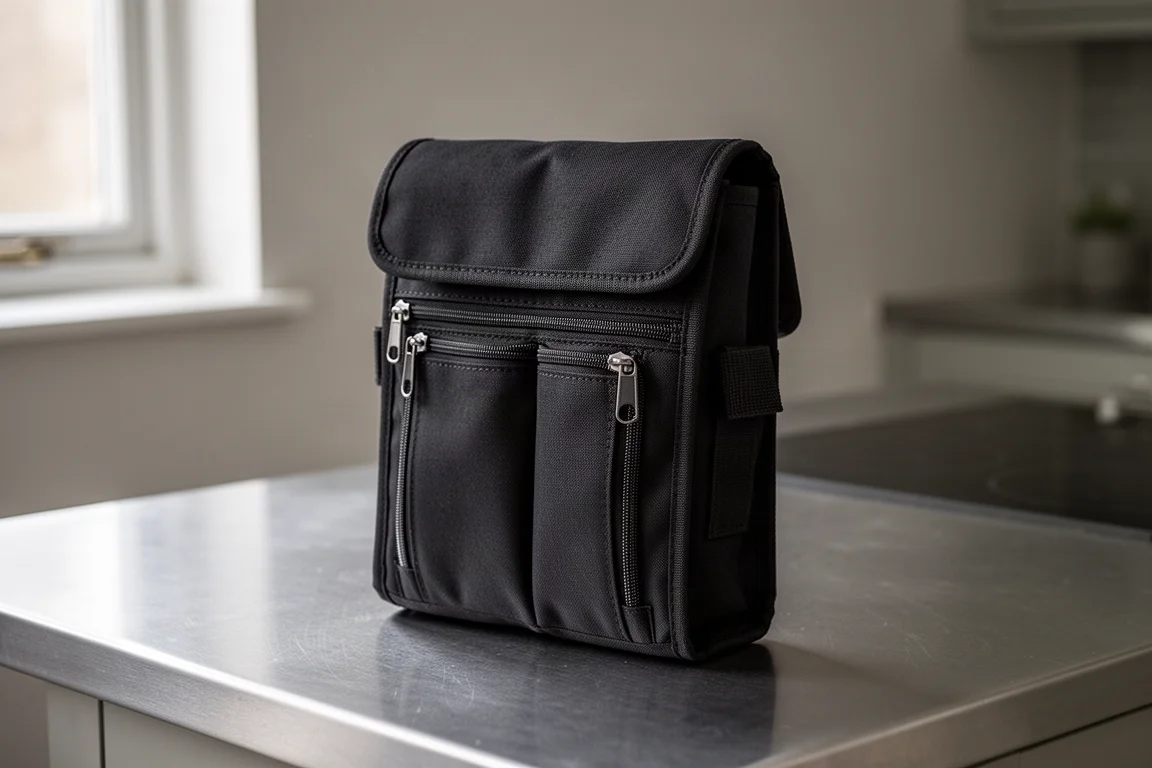
It is also the better pick for commuting. If you take the train, the bus, or ride a bike with knives on your back, this is the bag built for that. Storage is well thought out: a couple of zip-up pockets hold loose tools, a notebook, and markers, while a second zippered pocket on the other side fits bulkier items like a kitchen scale or a thick cookbook. The classic fold-over flap is secured with zippers on both sides for extra security, so knives stay put in transit.
Inside, the layout is handle-first with elastic retention to keep everything contained. It fits up to nine knives, or a mix of knives and tools, and there is a clever first-aid pouch at the top for bandages, complete with a set included. A collaboration with chef Hugh Allen, it looks striking and backs it up with substance.
Turk Forged Carbon Steel Frying Pan
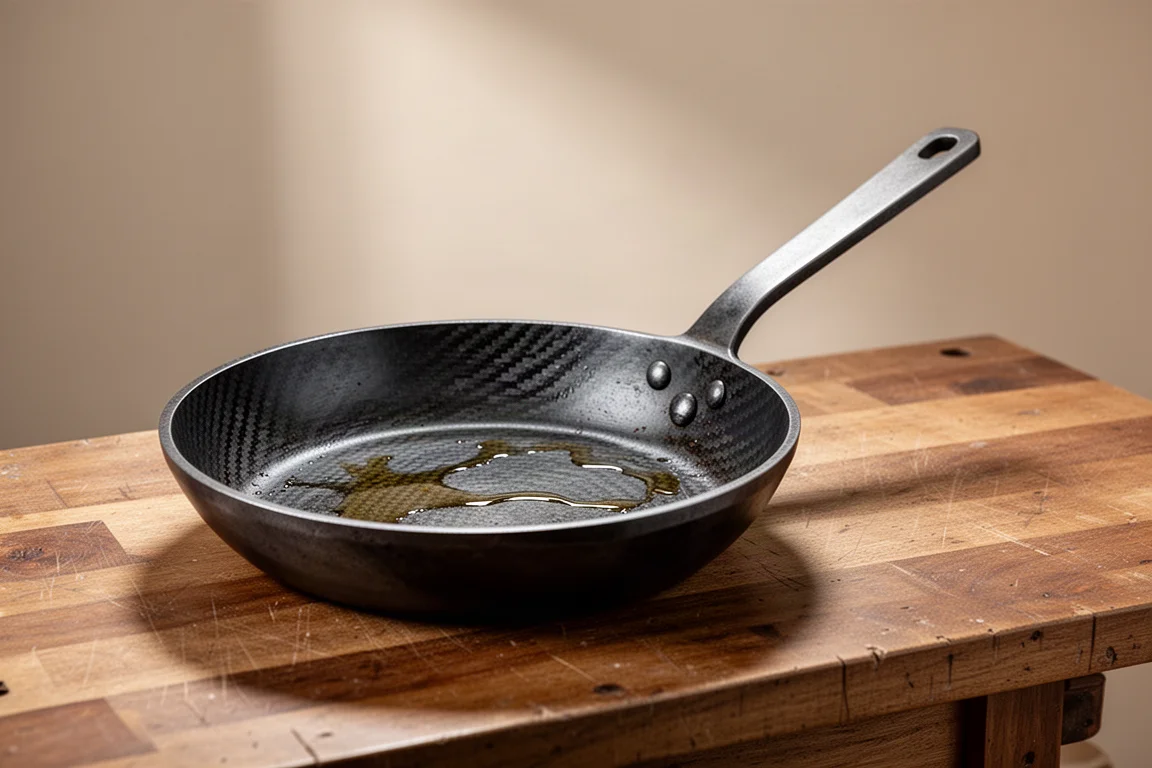
Turk has been forging carbon steel pans in Germany since 1857, and the method has barely changed in nearly 170 years. These pans are different from the thin black carbon steel pans familiar from French kitchens: they are forged from substantially thicker steel, sitting between carbon steel and cast iron.
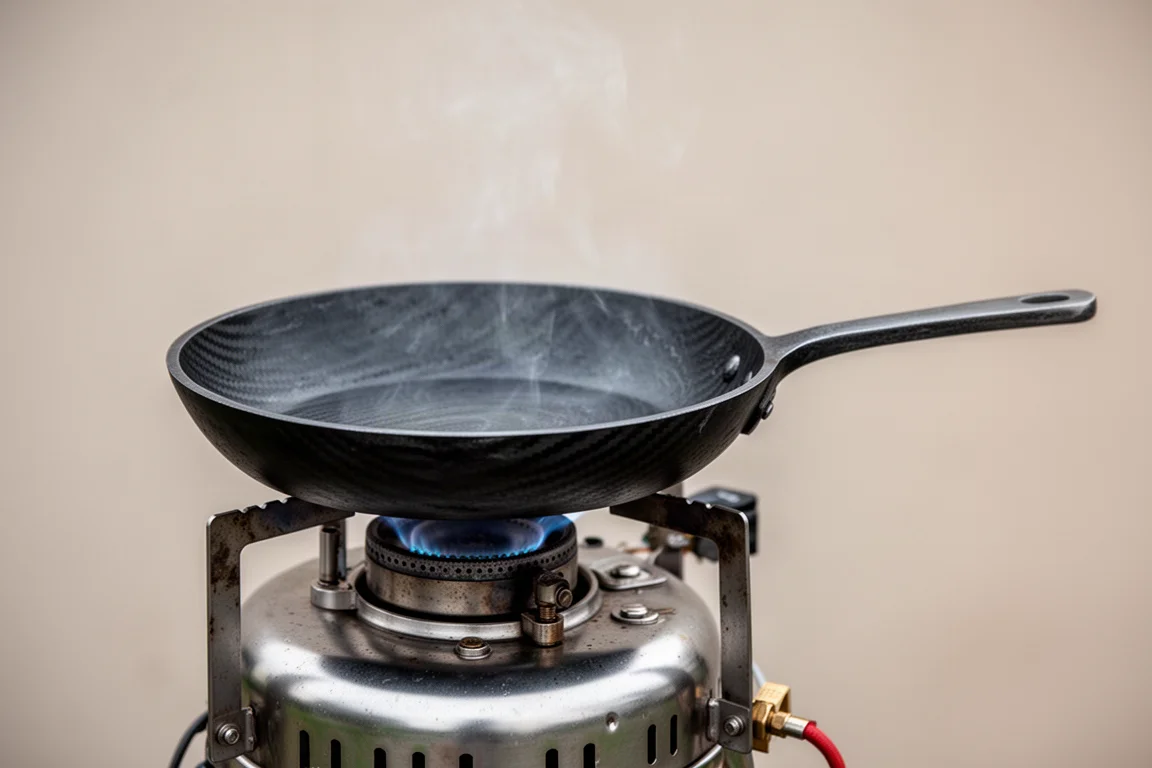
In practice that means they heat quickly and consistently like carbon steel, but retain heat closer to cast iron thanks to the added thickness. That makes them excellent for searing steaks and burgers, and they handle everything from eggs to pancakes. They are heavier than typical carbon steel, and on a glass-top stove you should heat them more slowly to let the thickness distribute heat evenly. Once seasoned, they look great on the stove and can simply live there.
The range covers five sizes: 24, 26, 30, 36, and a beefy 45 cm. Thickness runs about 3 to 4 mm, with smaller pans slightly thinner and larger ones thicker. The 45 cm is not really an indoor pan. Its long handle keeps it out of most ovens, and on a glass top it only heats about two-thirds of its surface. This is a pan for a large propane burner or a fire pit, big enough to cook for several people, and the long handle stays cool enough to move the pan around.
Atlas Steel Burger Press
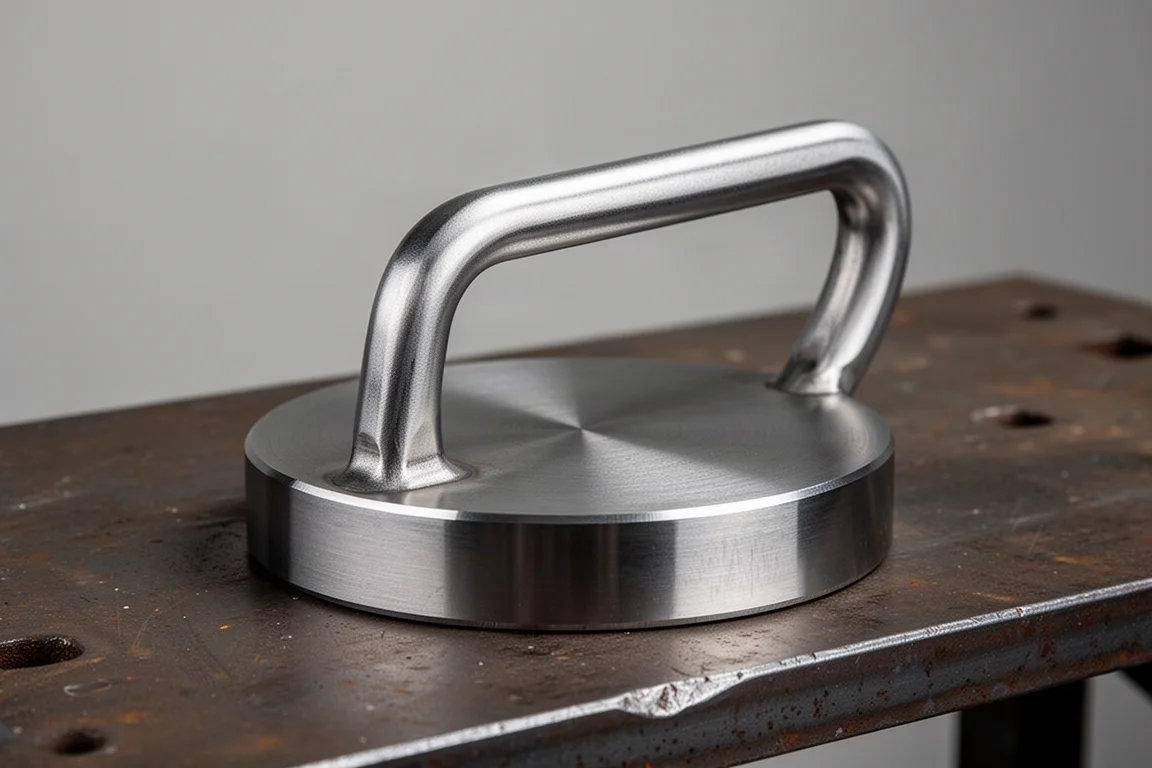
Atlas Steel is a young company from Manitoba, Canada, run by husband and wife Mike and Nicole Friesen, who still do all the manufacturing themselves. Their burger press is built like industrial equipment: the base is half an inch thick and the whole thing weighs 5 lb 2 oz.
That weight is the whole point. Pressing burgers with it feels nearly effortless, and there is no comparison with lighter plastic or thin steel smasher tools. The burger stamp releases cleanly from the meat even with minimal seasoning, and it feels like working a diner flat top.
Cooking With Them: Smash Burgers Outdoors
The test session took place over a large propane burner, the right environment for the big Turk pan. The routine followed standard carbon steel practice: season the pan, oil it, and preheat slowly and patiently so the thick steel warms evenly and does not warp. Carbon steel still preheats faster and more consistently than cast iron, which takes noticeably longer.
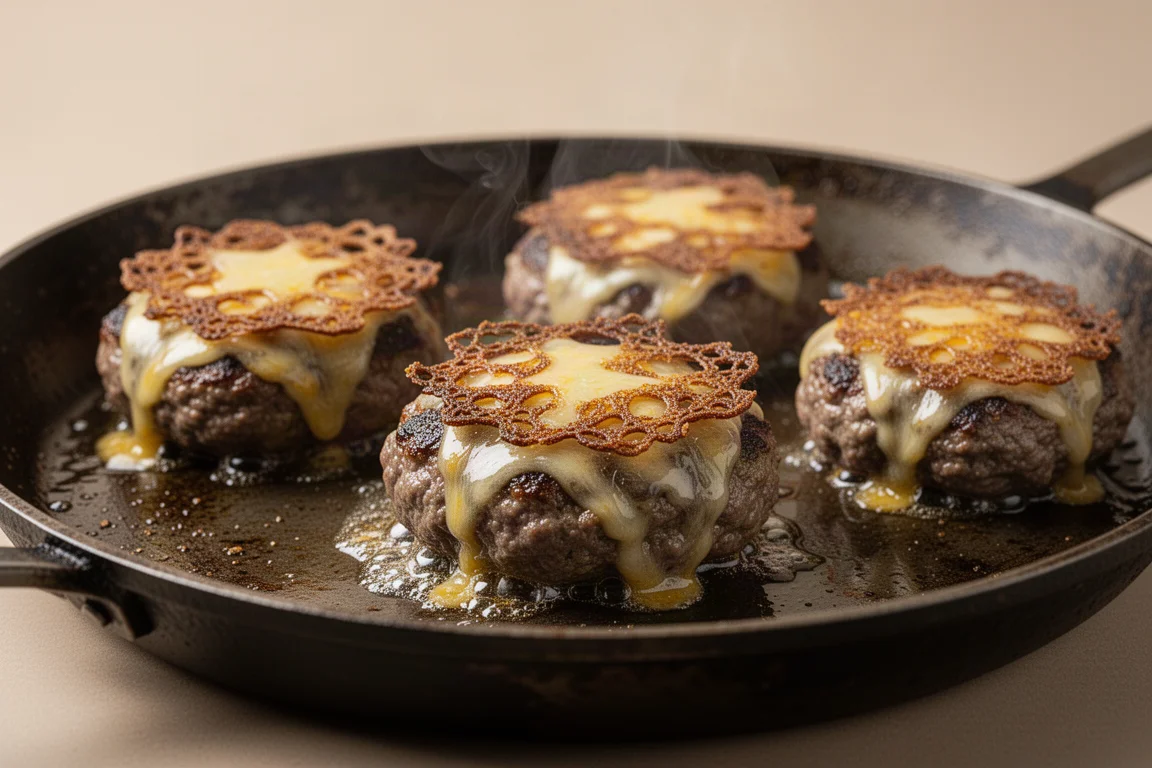
Each burger got about 100 g of medium ground beef, a piece of parchment, and the Atlas press. The result was exactly what smash burgers should be: crisp edges, even searing, and no sticking at all despite fairly light seasoning.
How They Performed
The Turk pan impressed most in heat behavior. The surface is smooth, it retains heat beautifully, and once properly preheated it holds temperature even when loaded with multiple burgers. No sticking, even with mediocre seasoning. It is the kind of pan that earns a permanent spot on the stove.
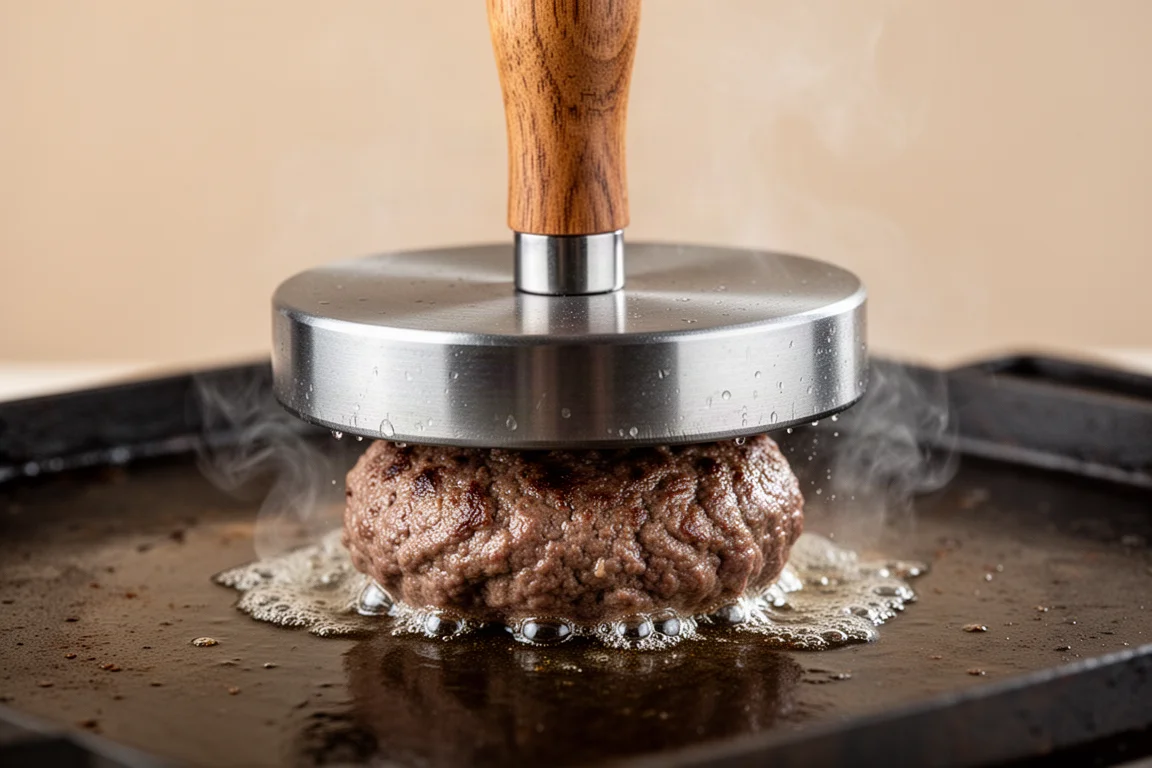
The Atlas press is equally convincing. At around $65, it would be reasonable to expect either a higher price or lower quality; instead it is a tank that makes the entire smashing process effortless. Together, the pan and press make a strong pairing not just for smash burgers but for general high-heat cooking.
Conclusion
All three products earn their place for different reasons. The Crumpler bag is the clear choice for cooks who transport knives regularly and want something waterproof and easy to clean. The Turk pan bridges carbon steel responsiveness and cast-iron heat retention, with the 45 cm version shining over open flame. And the Atlas Steel burger press delivers professional-level smashing at a price that feels like a bargain. Pick based on which job in your kitchen needs reinforcement first.
Further reading
Related Reviews

Kitchen Gear
Best and Worst Kitchen Gear for 2026: Stand Mixers, Pressure Cookers, and More
A practical guide to kitchen appliances worth buying and models to avoid, based on hands-on testing of stand mixers, pressure cookers, citrus juicers, dish racks, and espresso machines.

Kitchen Gear
Best Budget Kitchen Gear: Eight Value Picks That Punch Above Their Price
Eight kitchen tools that delivered excellent performance at a reasonable price, plus the trade-offs to weigh before you buy.
Kitchen Gear
Best Kitchen Gear Gifts: Seven Tested Picks From Budget to Splurge
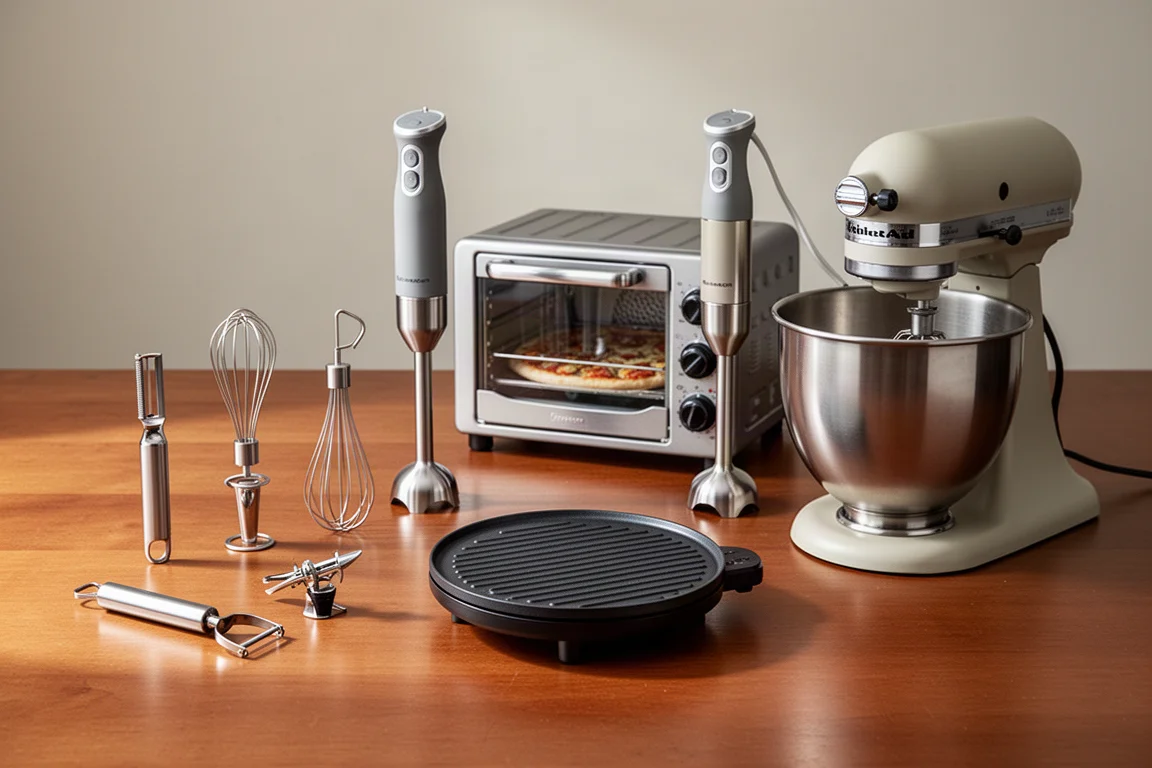
Seven kitchen tools that earned their place, from a $15 vegetable peeler to a $1,000 indoor pizza oven.