Kitchen Knives
Best New Japanese Kitchen Knives This Season: Six Standout Restocks
From a rustic carbon Gyuto to a 300mm Yanagiba, six Japanese knives worth a closer look, plus a quick rundown of the rest of the latest arrivals.
Introduction
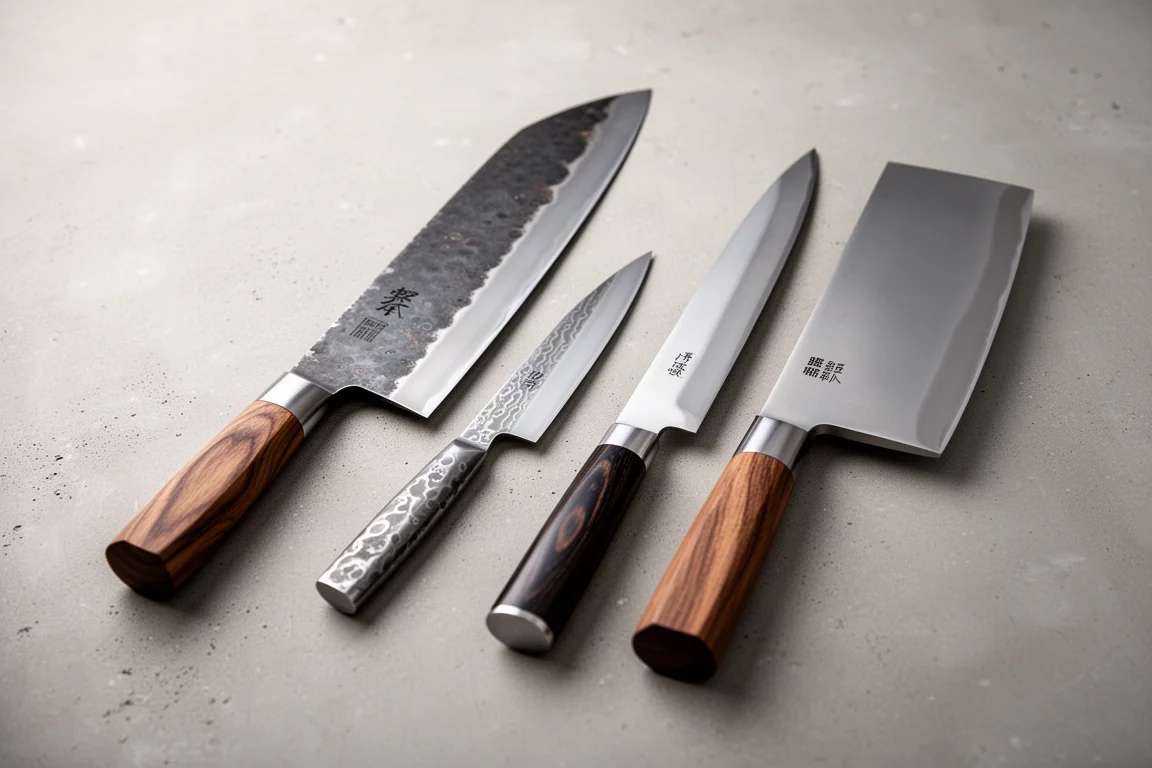
Restock season is one of the best windows to buy a Japanese knife. Selection is at its widest, and this latest batch covers a huge range: rustic carbon steel workhorses, thin laser style Gyutos, a rare single bevel Yanagiba, and some of the most requested tall Nakiris we have seen in a while. Below are six knives that stand out from the group, followed by a quick note on the rest of the arrivals.
Matsubara 210mm Gyuto Aogami #2
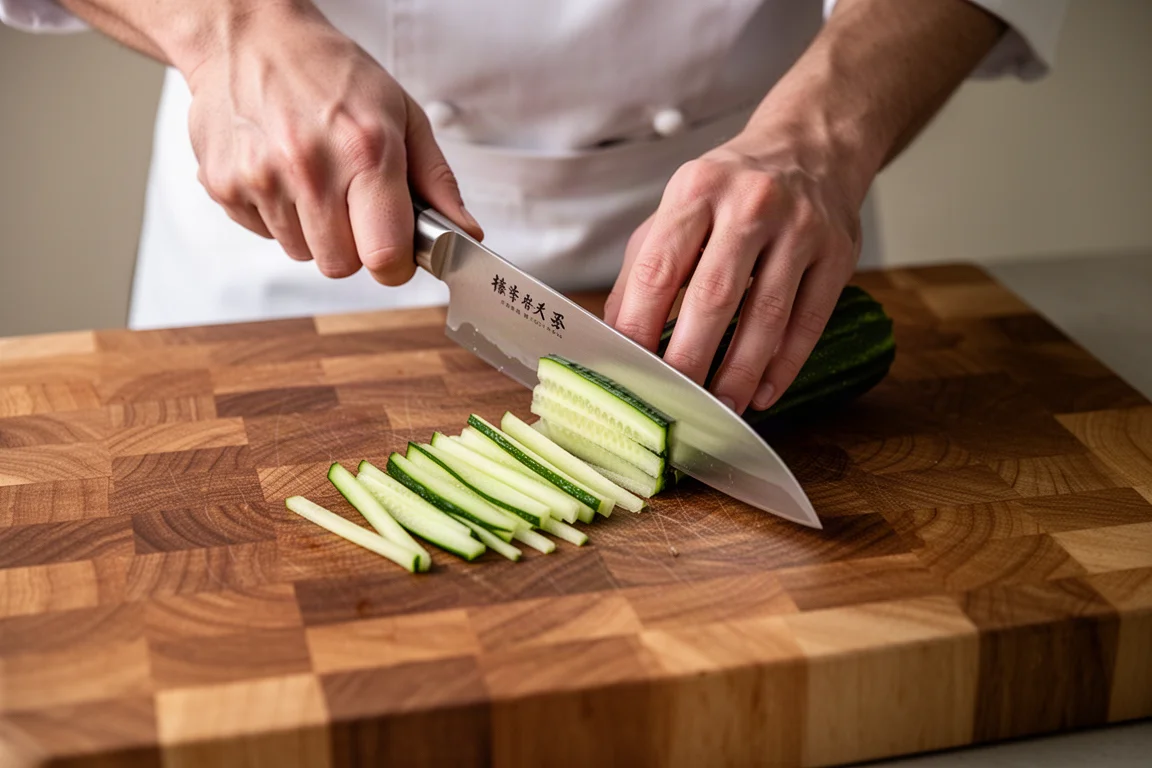
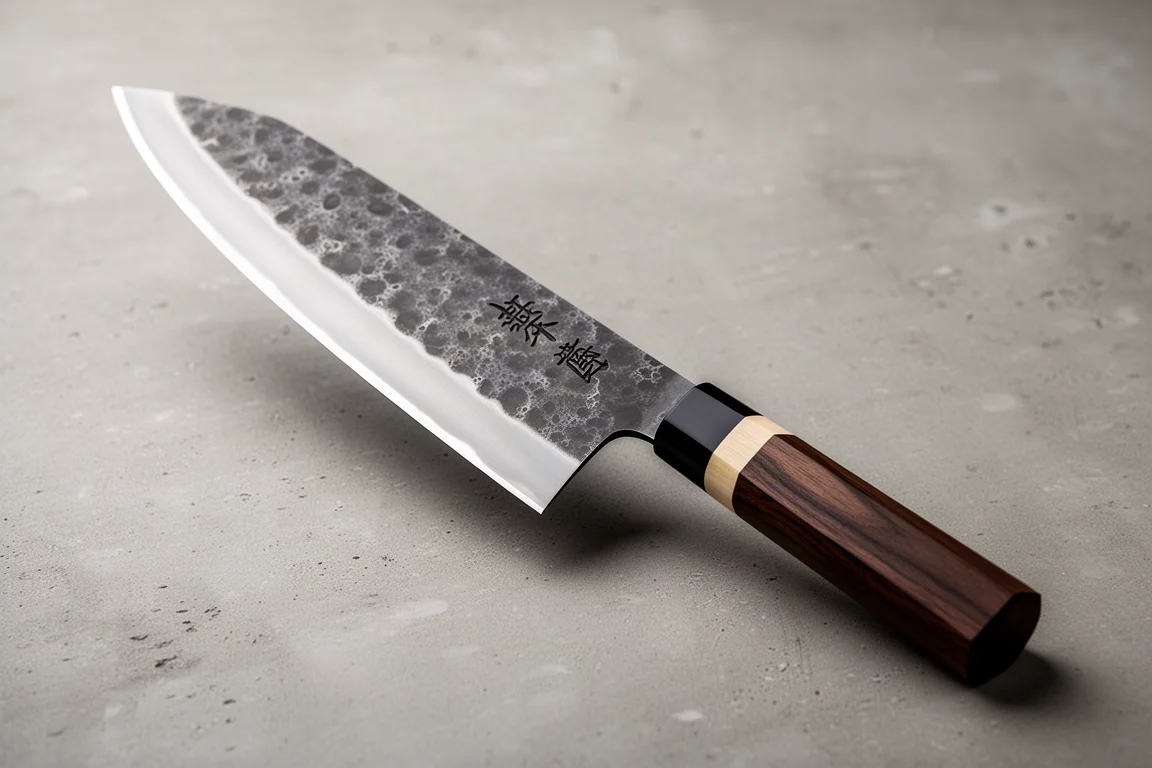
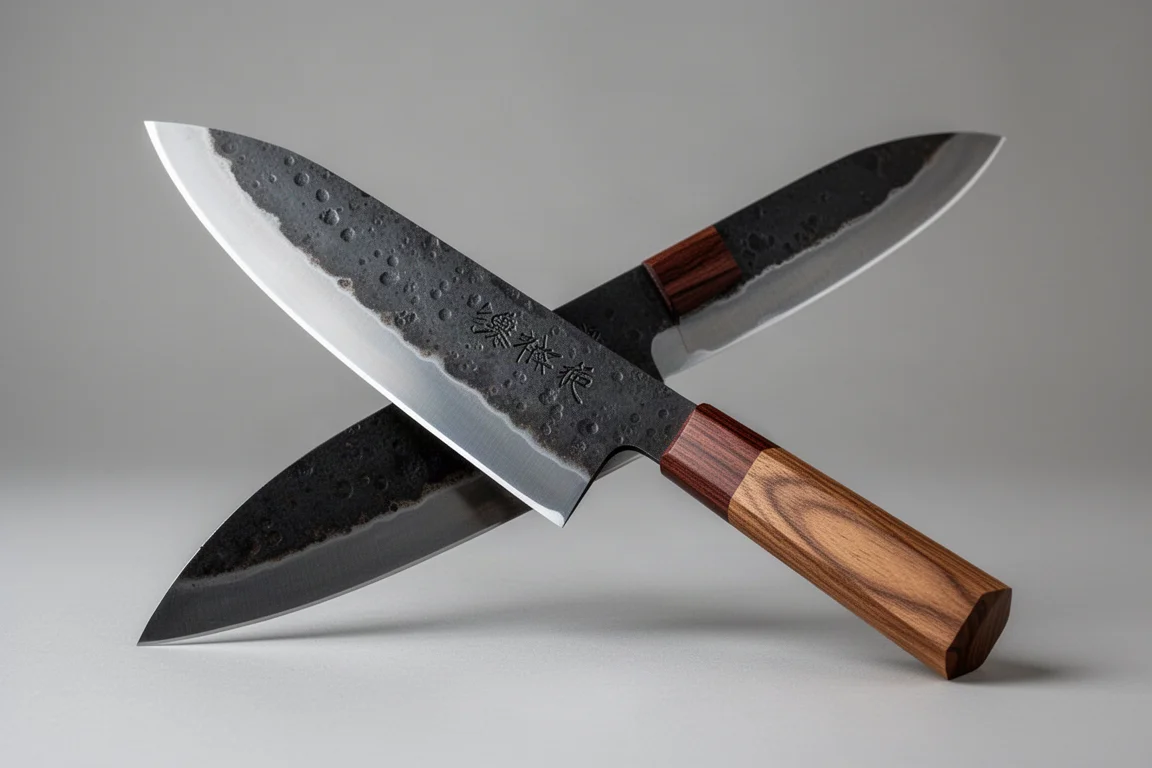
This was the favorite of the batch. It is a 210mm Gyuto in Aogami #2 carbon steel with stainless cladding, a rustic Nashiji finish, and hand engraved kanji on the blade. The walnut handle with an ebony ferrule and maple spacer completes a very traditional look.
The blade is super tall, over 60mm in height, which is genuinely hard to find. The choil is nicely sanded and the spine is rounded, so it feels great in the hand, and the balance point sits forward with a blade heavy bias. The profile has a nice flat spot for push cutting and up and down chopping, but it sweeps toward the tip enough to handle a rock chop too. Super sharp out of the box with plenty of exposed core steel, it really does tick every box for a 210mm Gyuto.
Makoto Kurosaki Sakura 240mm Gyuto
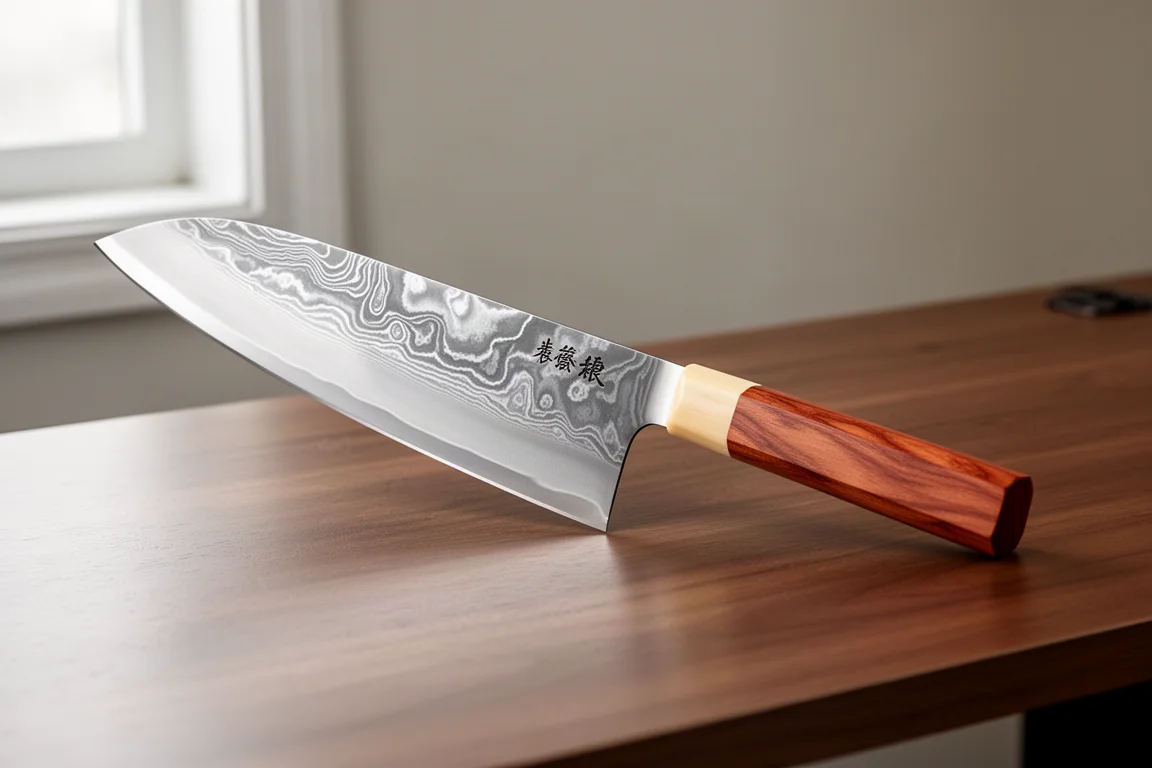
Makoto Kurosaki is a fantastic sharpener, and it shows. This 240mm Gyuto sits firmly in the laser category: very thin at the spine for its length and super thin behind the edge. It uses R2 stainless steel with a Suminagashi style finish and a cherry handle with a blonde pakkawood ferrule.
The balance point is remarkably far forward, and the profile is quite sweepy with little flat spot. In past testing it still handled an up and down chop well and proved surprisingly good at the rock chop. If you want a long, nimble cutter rather than a workhorse, this is a compelling pick. The same restock also brought back the VG7 Suchi Damascus line, including a light and nimble Petty with Damascus bevels and walnut mono handles.
Kajib Kaj Gyuto 210mm White #2
The Kajib Kaj restock covers a Gyuto 210, Nakiri 165, and Santoku 165, all in White #2 carbon steel with iron cladding and a Kurouchi finish, paired with walnut and rosewood ferrule handles. These sit firmly in the workhorse category: still a pleasant cutting feel, but a little thicker behind the edge for anyone who wants something more robust.
The Gyuto feels chunky and solid in the hand with a great tang, though the choil and spine are not super rounded out of the box, which is easy to fix up yourself. The Santokus run a bit thinner at the spine with a balance point slightly further back, and the Nakiri’s balance is well forward. Because these are hand forged, they vary from knife to knife, which is part of the appeal. There is also a Blue #2 iron clad Santoku 165 with Damascus bevels in the same handle style if you want a more decorative take.
Yoshihiro 300mm Yanagiba Blue #2 Damascus
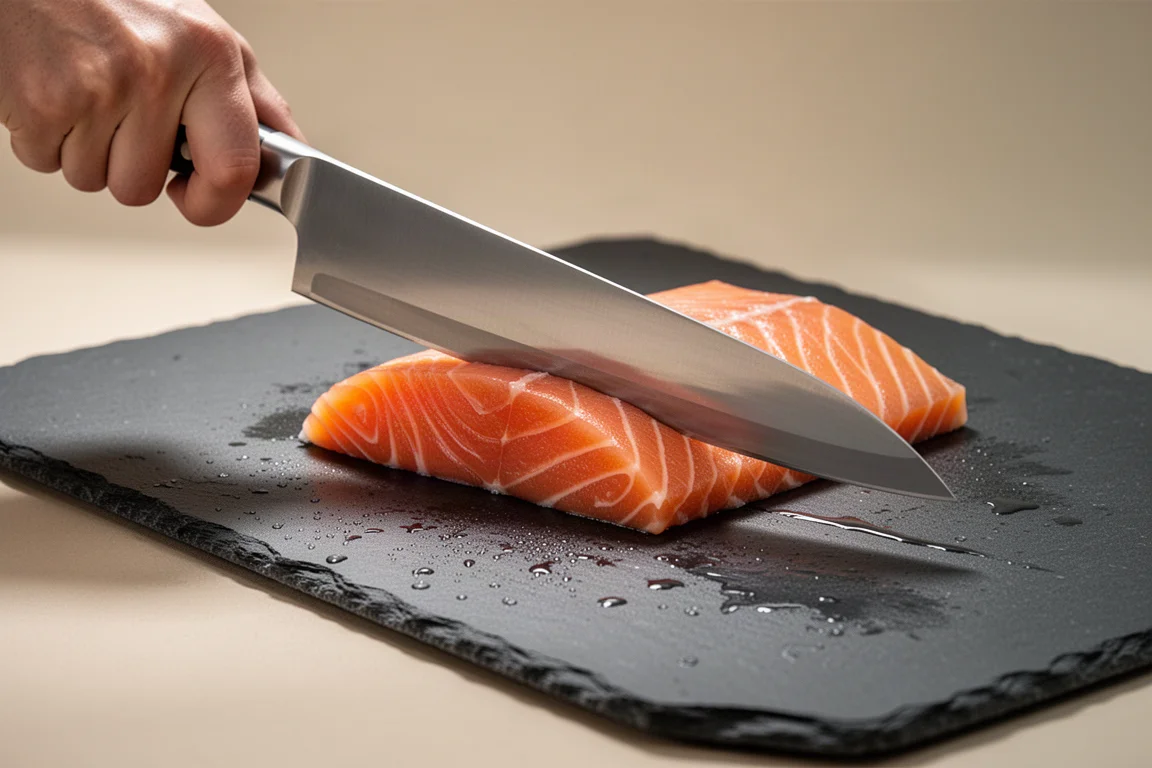
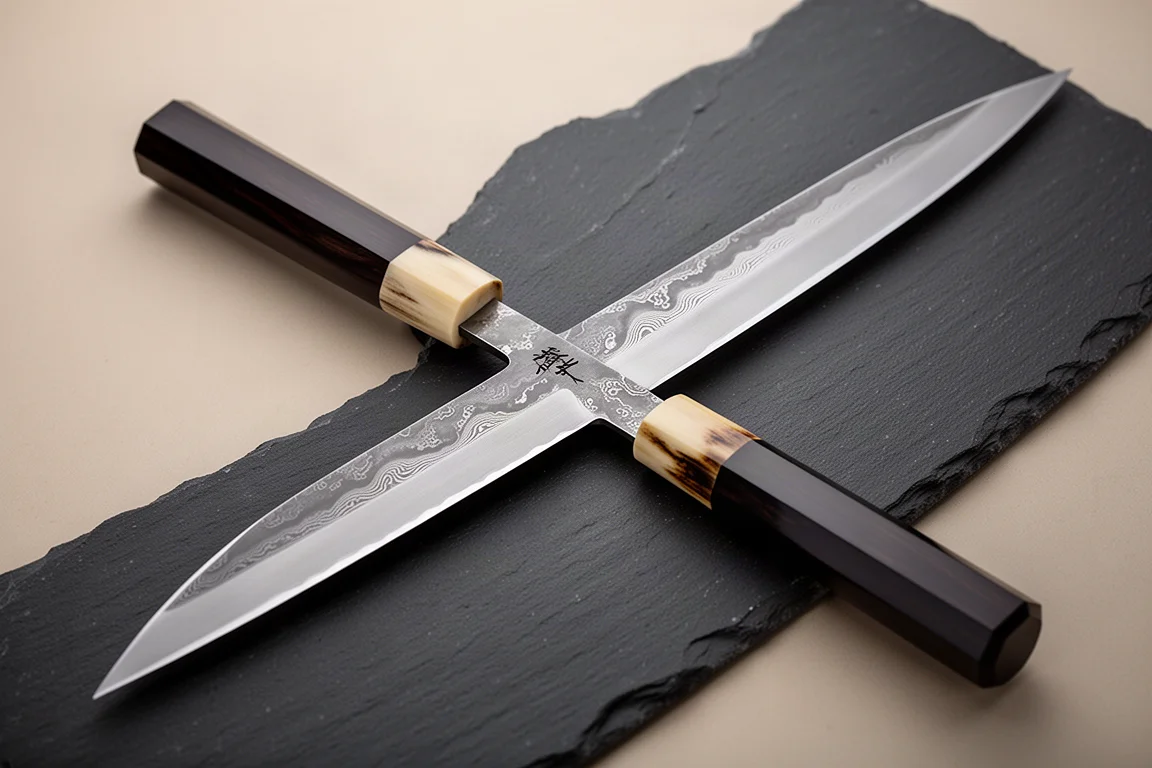
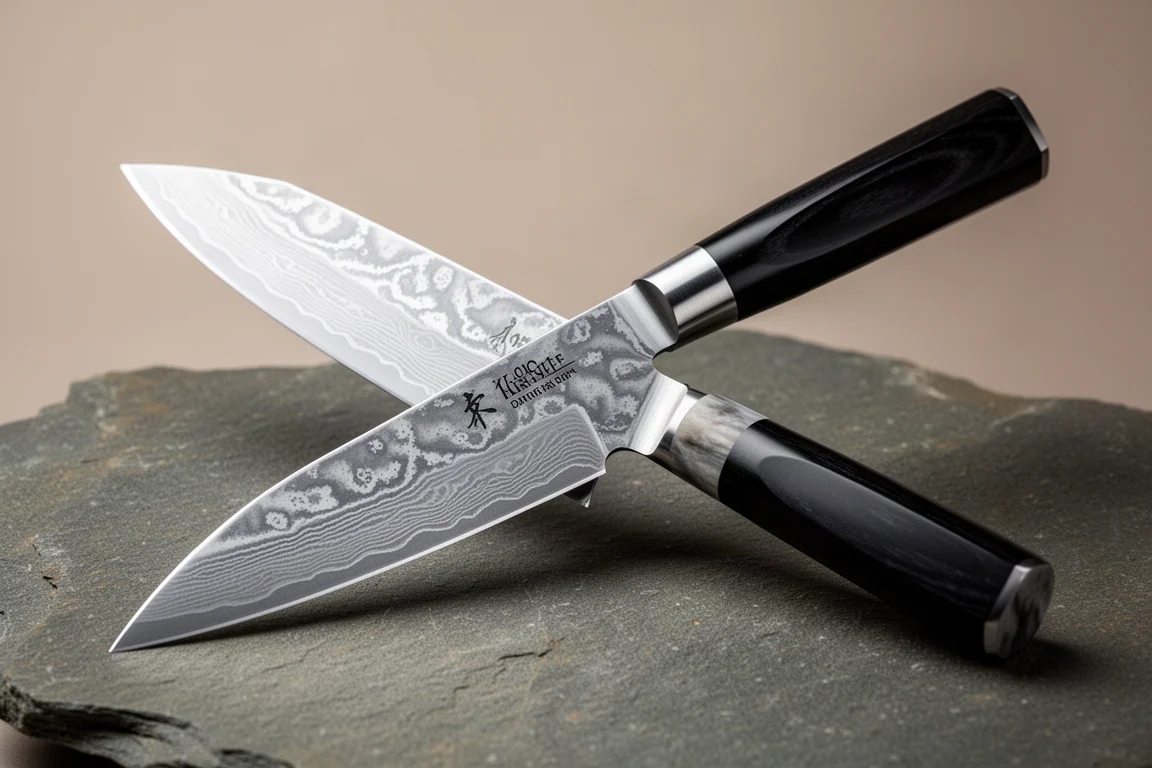
Single bevel knives are hard to source consistently, which is what makes this 300mm Yanagiba from Yoshihiro special. It is made from Blue #2 carbon steel with Damascus iron cladding, an ebony handle, and a buffalo horn ferrule, and it is simply gorgeous.
The ura, or back face, is exceptionally well done, with a very consistent roughly 2mm of contact running along the whole perimeter. Better still, it is crazy sharp out of the box, which is not always the case with single bevel knives. It feels fantastic in the hand and looks beautiful. For anyone ready to take on sushi at home, this is the kind of knife that makes the project tempting.
Shiro Kamo Tall Nakiri Aogami Super
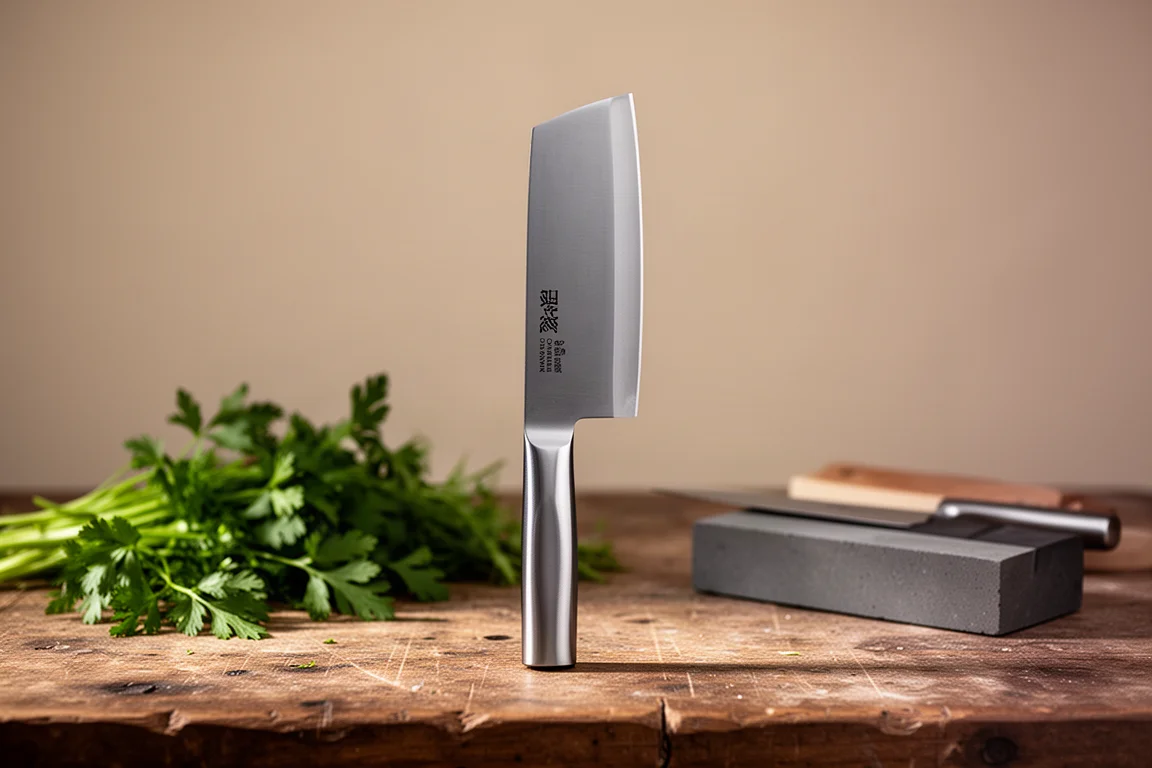
This is probably one of the most requested knives the shop has ever stocked. The Shiro Kamo tall Nakiri uses Aogami Super carbon steel with stainless cladding, a hand forged blade around 60mm tall, and a balance point set noticeably forward.
The newly restocked version comes with a walnut handle and what looks like a Wang ferrule, while the existing stock carries a different handle, so you can choose between the two. There is a nice bit of exposed core steel on the blade. Anyone who has used one raves about it, and if you have been hunting for a super tall Aogami Super Nakiri, this is the one to watch.
Hatano Stricks Kiritsuke Gyuto 210mm
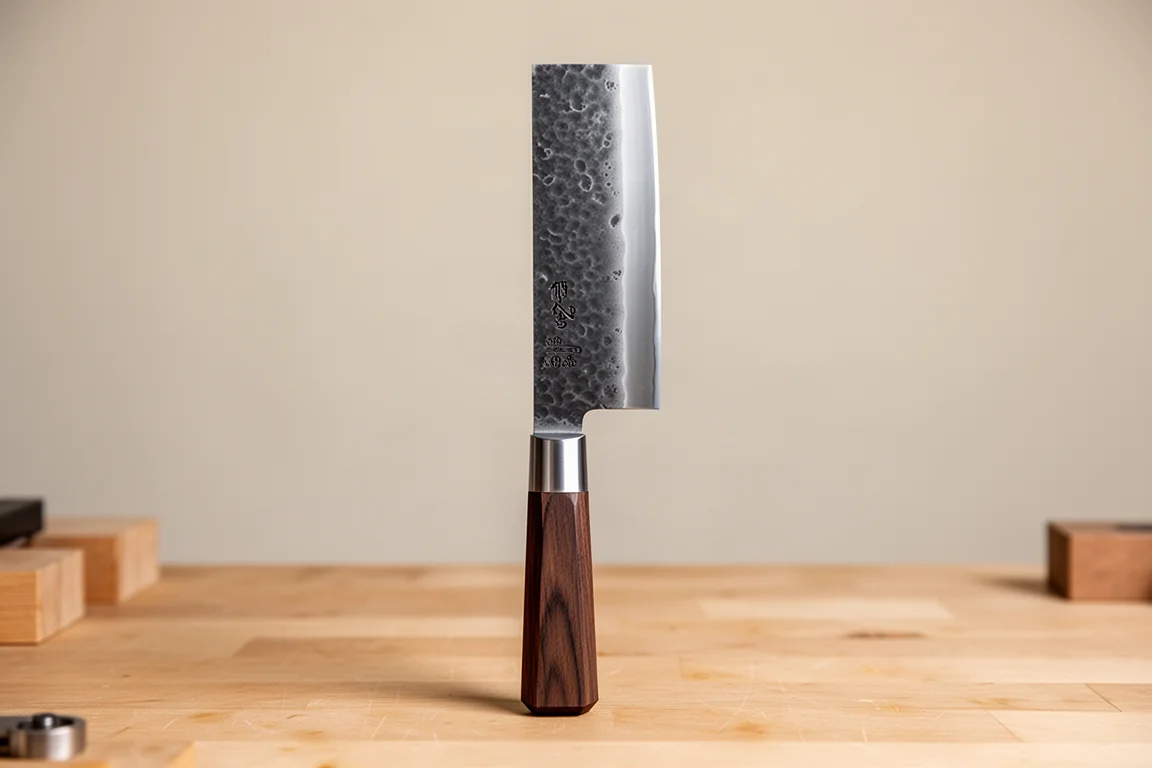
Hatano’s Stricks series brings back the Kiritsuke Gyuto 210mm and a tall Nakiri at 180mm with over 60mm of blade height. Both are stainless Damascus with ebony handles and buffalo horn ferrules, and both are finished very cleanly, with nicely sanded spine and choil.
The Kiritsuke’s balance point sits a little further back than expected, but it still feels fantastic in the hand. The profile is neither super flat nor super curvy, so it works well for both rock chopping and push cutting. The Kiritsuke style itself is a favorite for sheer looks. The tall Nakiri, by contrast, balances much further forward and feels a touch heavy because of it, with a super flat profile and a lovely tall blade. It is the kind of knife that disappears from stock quickly.
The Rest of the Restock
A few more arrivals round out the batch. The Motokuchi line returned with a 210mm Gyuto, 180mm Bunka, and 210mm Kiritsuke, all in Blue #2 carbon steel with a Nashiji finish, iron cladding, and walnut and rosewood handles. They are thick at the spine but taper nicely, with geometry reminiscent of the Shindo S grind and exceptional food release, all at a relatively friendly price for hand forged carbon steel. Tetsu Toft’s 210mm Gyuto and 130mm Petty in VG10 stainless also came back, a great first Japanese knife that is easy to care for, robust, and hard to get wrong, with a brown or black pakkawood ferrule handle and a solid flat spot for push cutting and rock chopping.
Buying Advice
If you want the most versatile all rounder of this batch, the Matsubara Gyuto is the safest bet. Choose the Sakura 240 if you prioritize a thin, laser like cutter, or the Kajib Kaj if you want a sturdier workhorse in carbon steel. The Yoshihiro Yanagiba is a specialist tool for sushi and sashimi, while the Shiro Kamo Nakiri and Hatano Stricks pair well for vegetable heavy cooking, especially if you love a tall blade. Selection tends to be at its best right now, so it is a good moment to pick up something you have been eyeing.
Conclusion
This restock covers nearly every style of Japanese knife, from rustic carbon workhorses to a razor sharp single bevel Yanagiba. Match the knife to how you actually cut, and any of these six standouts will serve you well for years.
Further reading
Related Reviews

Kitchen Knives
Best Chef's Knives 2026: 27 Popular Options Tested and Ranked
A comprehensive review of 27 chef's knives ranging from $18 to $380, with honest assessments of handle comfort, blade balance, and real-world performance.

Kitchen Knives
Best Chef's Knives Under $75: Two Tested Recommendations
Two practical 8-inch chef's knives that balance sharpness, comfort, and durability without premium pricing.

Kitchen Knives
Best Chef's Knives 2026: 27 Options Tested and Ranked
A comprehensive review of 27 chef's knives ranging from $18 to $380, with honest assessments of handle design, balance, blade profile, and real-world performance.