Kitchen Knives
Best New Japanese Kitchen Knives: 8 Affordable Arrivals Worth a Look
A roundup of new and restocked Japanese kitchen knives, from nimble santokus to workhorse gyutos, all picked with value and performance in mind.
Introduction
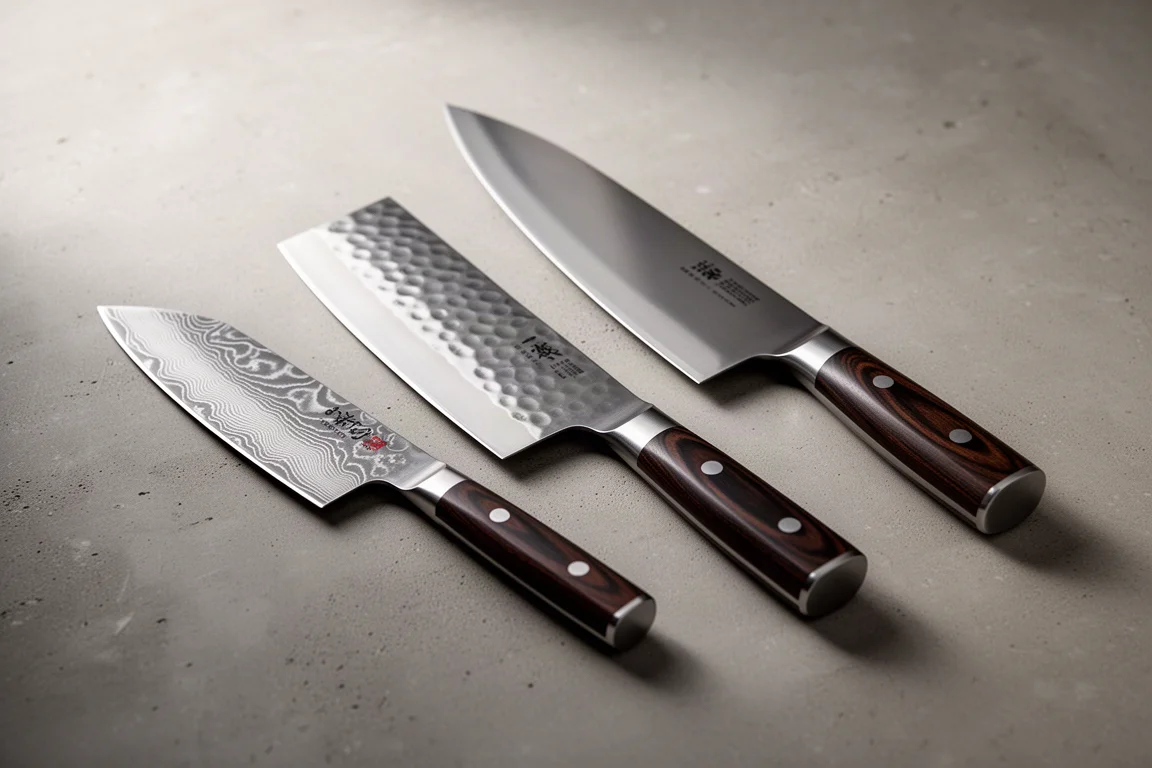
This batch of new arrivals leans toward the affordable side, aimed at home cooks and professionals picking up their first really good Japanese knife. That does not mean cutting corners: every knife here shows careful finishing, sensible steel choices, and edge geometry that cuts well above its price bracket. Here is how the lineup breaks down.
Andreyu 165mm Damascus Santoku VG10
The Andreyu santoku pairs a beautiful Damascus pattern with VG10 stainless steel, which typically lands around 61-63 on the Rockwell scale for solid edge retention. The finishing is genuinely impressive for the price: the spine is nicely sanded, the handle is cleanly polished with no bumps or gaps, and the blade is thin behind the edge with a slight distal taper toward the tip. Balance sits right where you want it for a pinch grip, maybe a touch handle-biased, but it still feels nimble in the hand. If you want a short, easy-to-maintain santoku, this one is an easy recommendation, especially for home cooks.
Kamo Bunka VG10
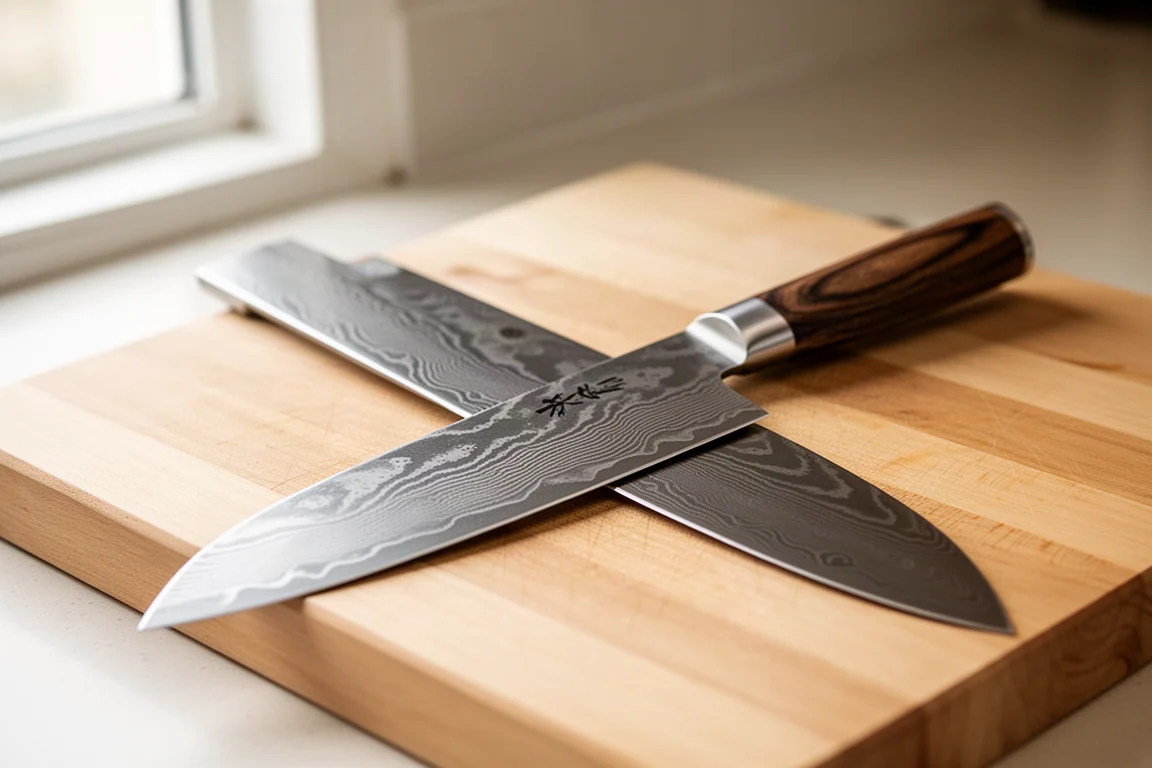
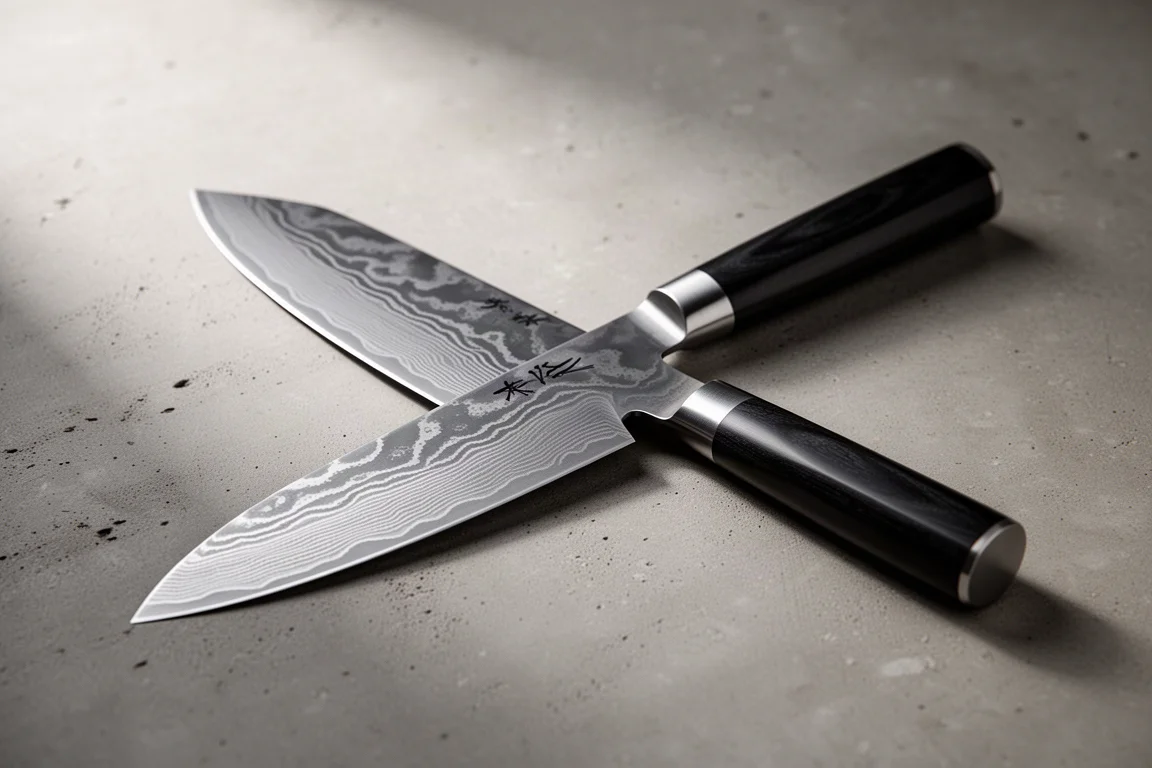
This bunka comes from the Kamo workshop in the Tsuchikifu knife village (not to be confused with Shiro Kamo). It features an integral handle with a welded bolster and a hidden tang, finished in maple with a striking Damascus pattern on the bevel. The reverse tanto, or k-tip, is the standout detail: it adds a little extra height right where your guide finger sits near the tip, which is genuinely handy for intricate work. It is light, well balanced slightly toward the handle, and the spine and choil are both nicely finished. A very cool-looking knife that earns its place in the collection.
Masutani 130mm Petty
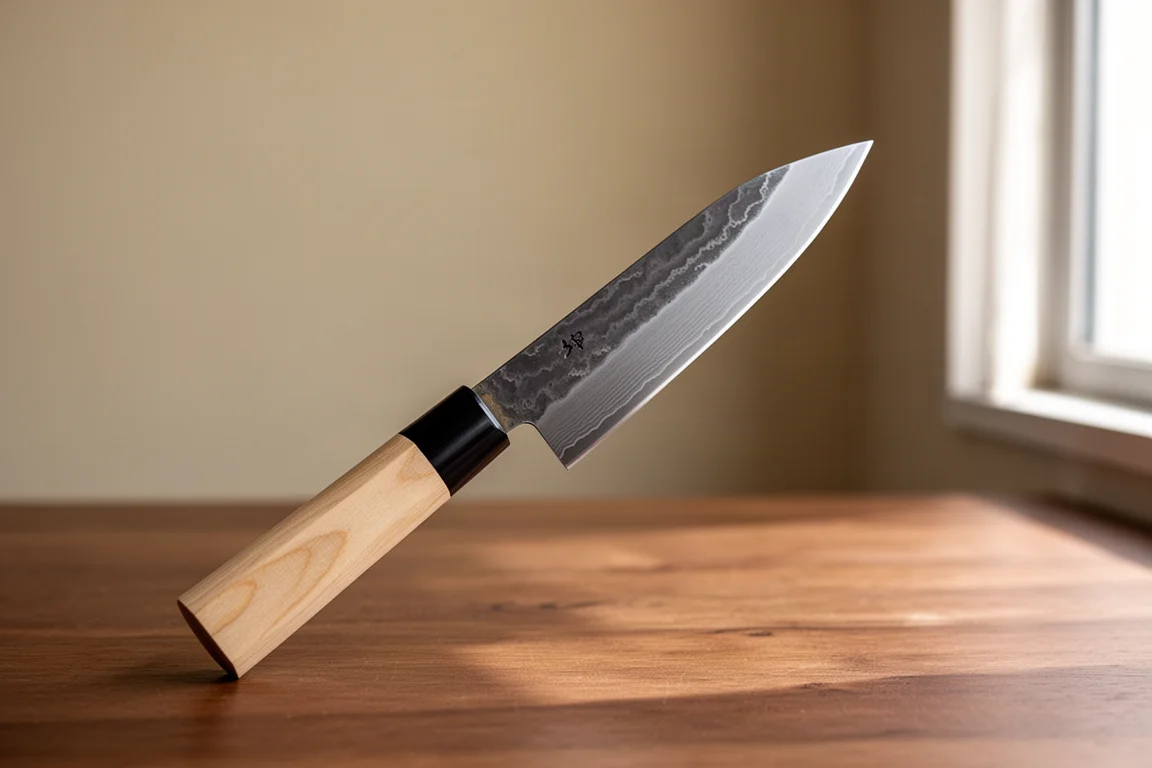
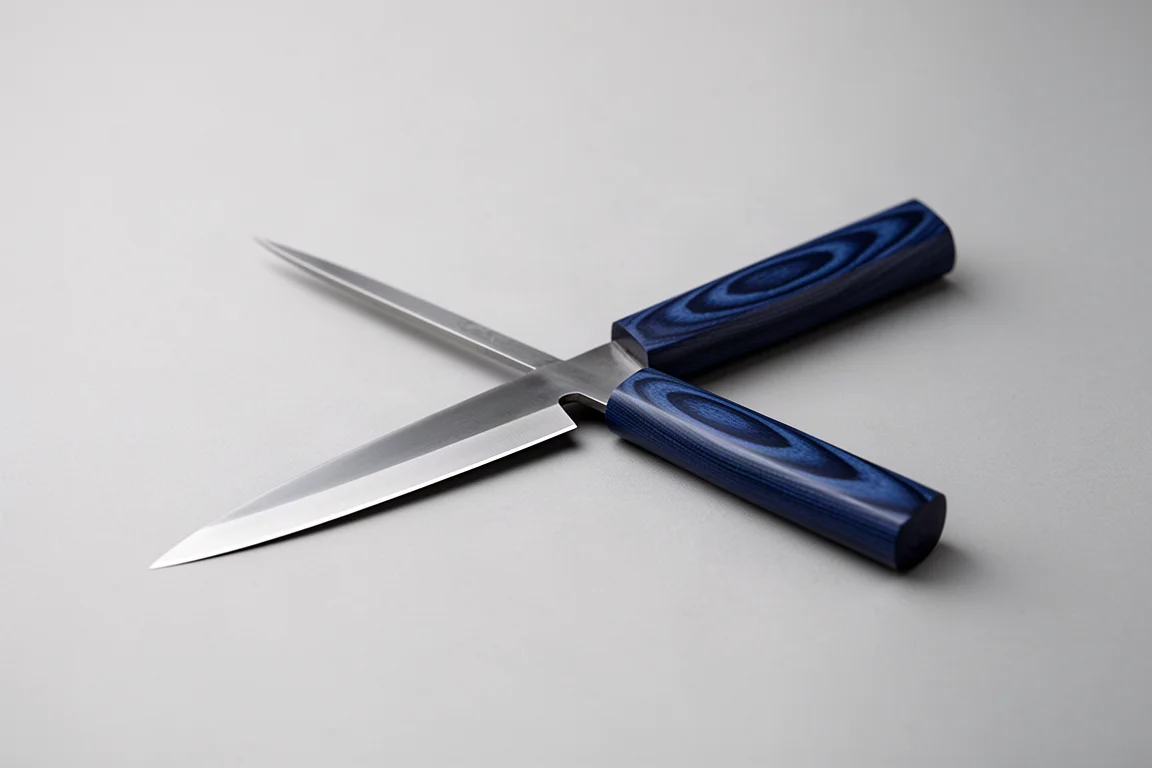
Masutani knives are among the most popular in the shop, and for good reason: they strike an excellent balance between affordability and high performance. These are made from VG1 steel, which sits around 59-60 on the Rockwell scale, so it is not the hardest steel around, but what they lack in hardness they more than make up for in sharpness. The factory edge is insanely sharp out of the box, especially at this price point. The blue pakkawood handles give them a distinctive western look, and they are available individually or as part of a combination deal.
Masutani 165mm Nakiri VG1
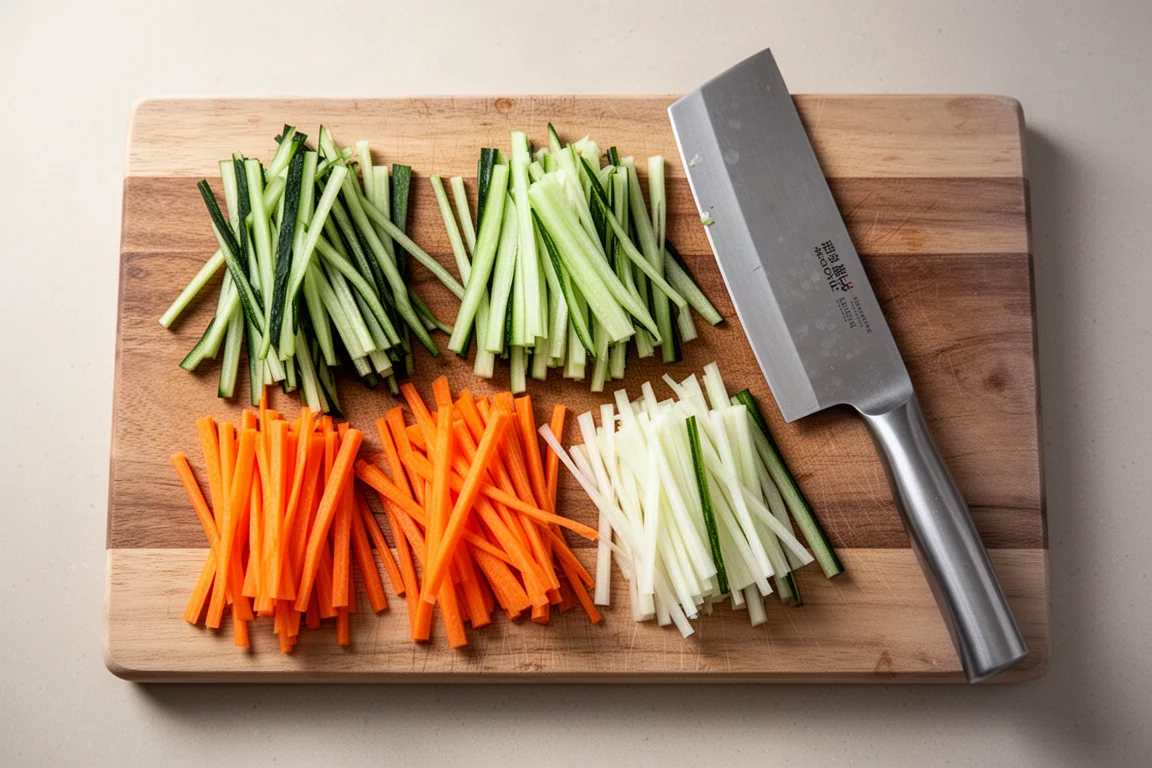
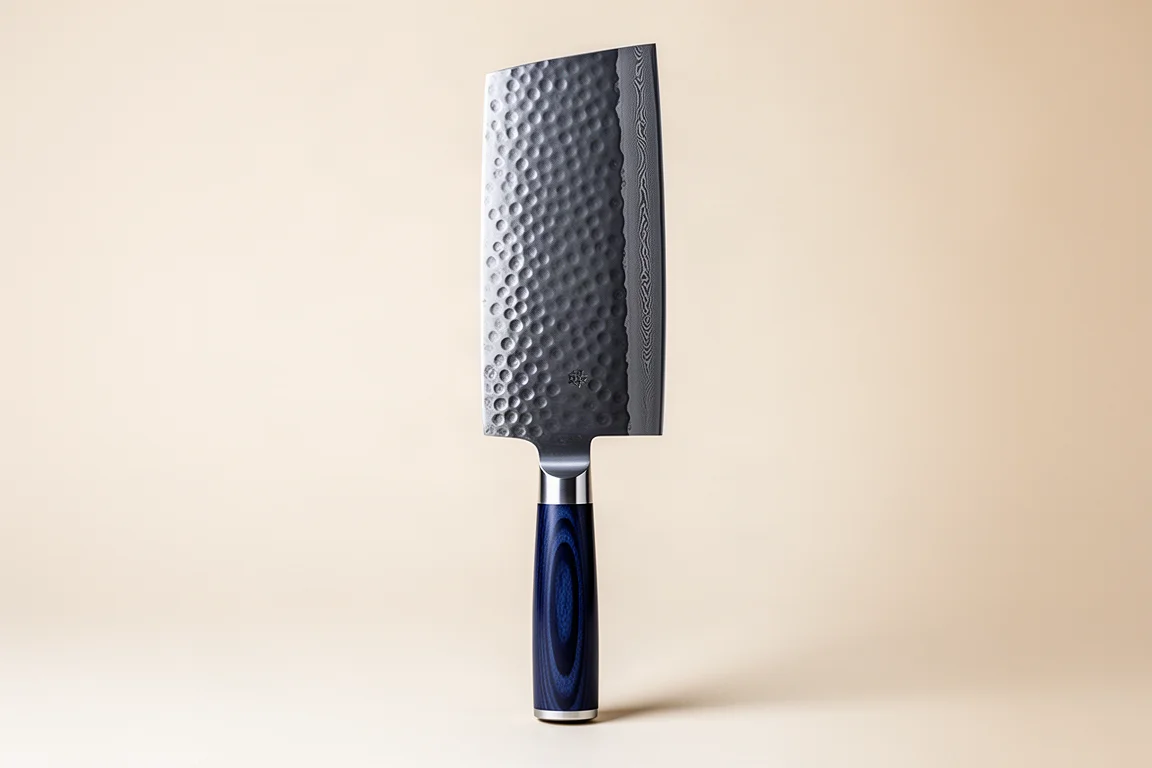
The matching nakiri shares the same blue pakkawood handle, welded steel bolster, and VG1 construction, with a really nice tall blade, tsuchime finish, and a Damascus pattern on the bevel. The balance point sits just slightly forward of a pinch grip, exactly where you would want it. Nakiri are designed for up-and-down chopping, so this is the knife for flying through julienne work; it is the one to reach for on stir-fry nights.
Tosaichi Octagrip Santoku Gin3
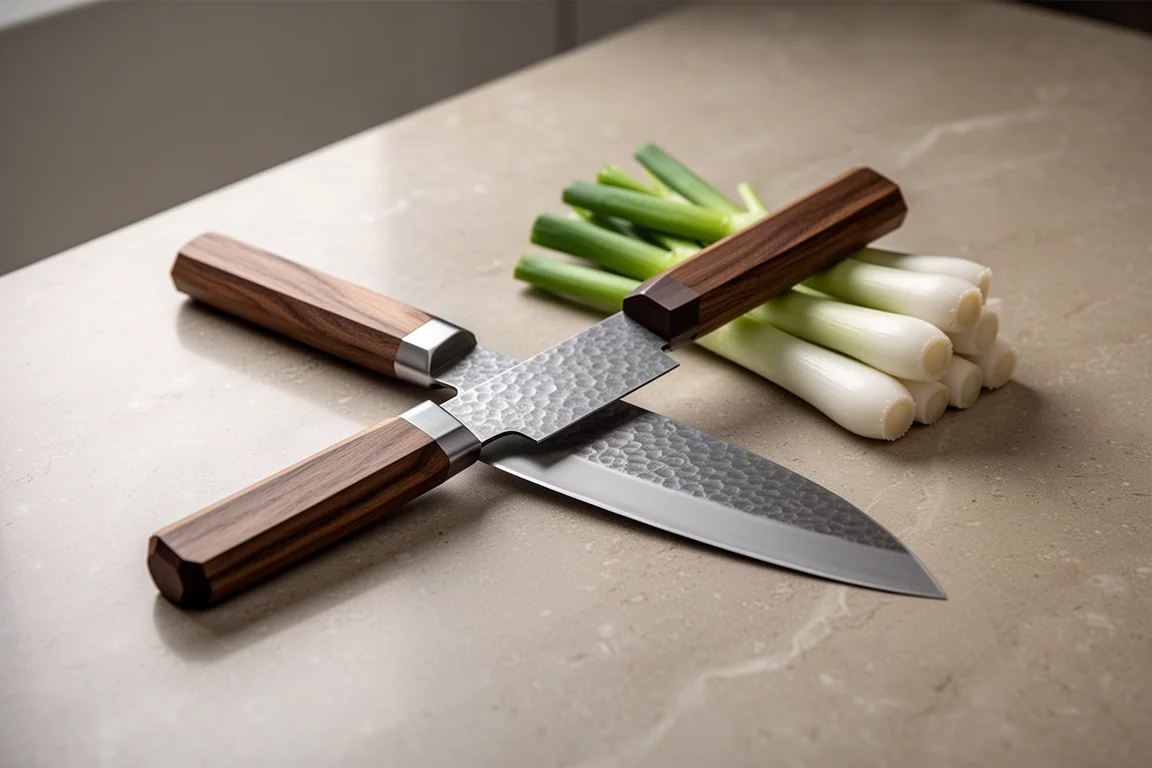
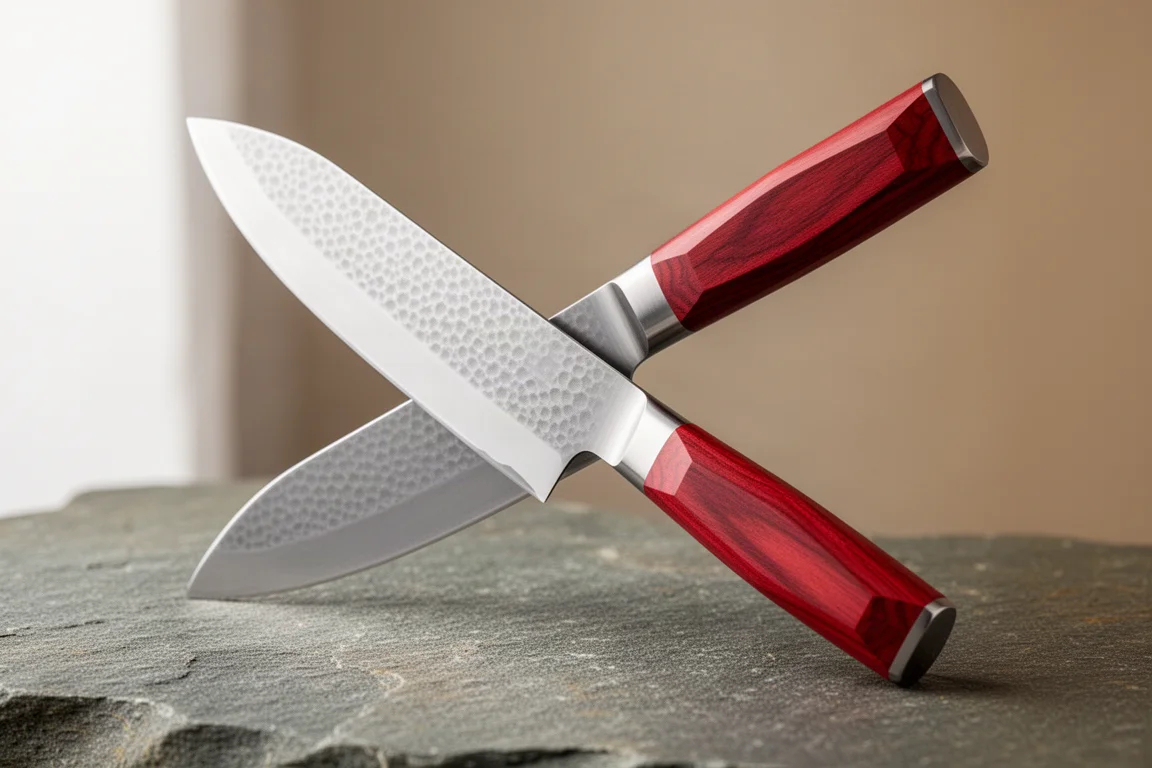
A shop favorite gets a new flavor: a red pakkawood handle joins the original brown pakkawood version. Both carry a nashiji finish and are made from Gin3 stainless steel, sometimes called Silver-3, which is said to resemble carbon steel more than any other stainless in terms of sharpenability. In practice, that means it takes a keen edge with less effort than most stainless steels. These santokus are not overly chippy or brittle, striking a good balance between a thin, pleasant cutting feel and real durability, all at an affordable price. Great for home cooks or professionals after their first solid knife.
Sunahisa Damascus ZA18 Line
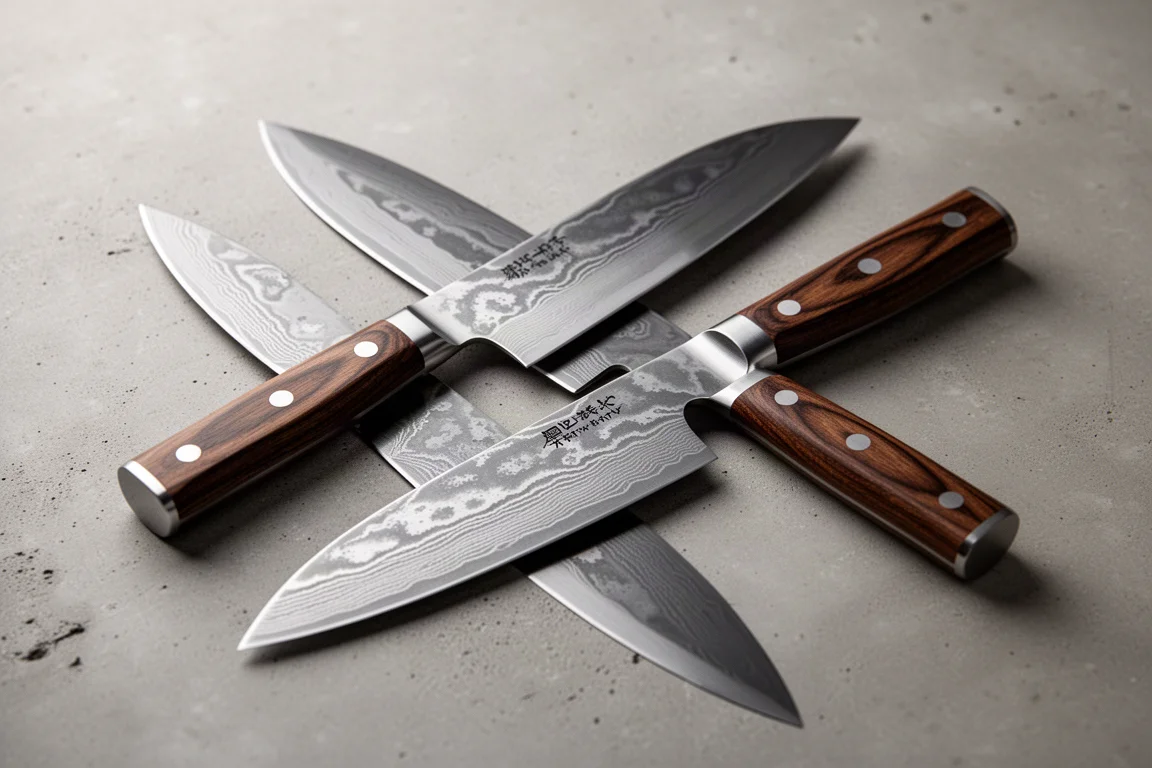
Sunahisa is a brand that works with a range of knife makers across Japan to produce knives under its own name. These are factory made, which is worth taking seriously rather than dismissing: factory production delivers excellent consistency and strong value for money. The Damascus line uses ZA18 steel, said to be very similar to VG10 with a slightly richer element mix, performing at the same level or better. The lineup includes a 135mm petty, 165mm santoku, 165mm nakiri, and 210mm and 240mm gyutos, all with brown pakkawood handles, triple rivets, and a full tang. Balance points sit slightly handle-biased, in line with the western-style grip. Combo deals are available, from two-knife pairings up to three-knife sets and even a five-knife set with a leather magnetic stand at a hefty discount.
Sunahisa Damascus Petty 135mm AUS10
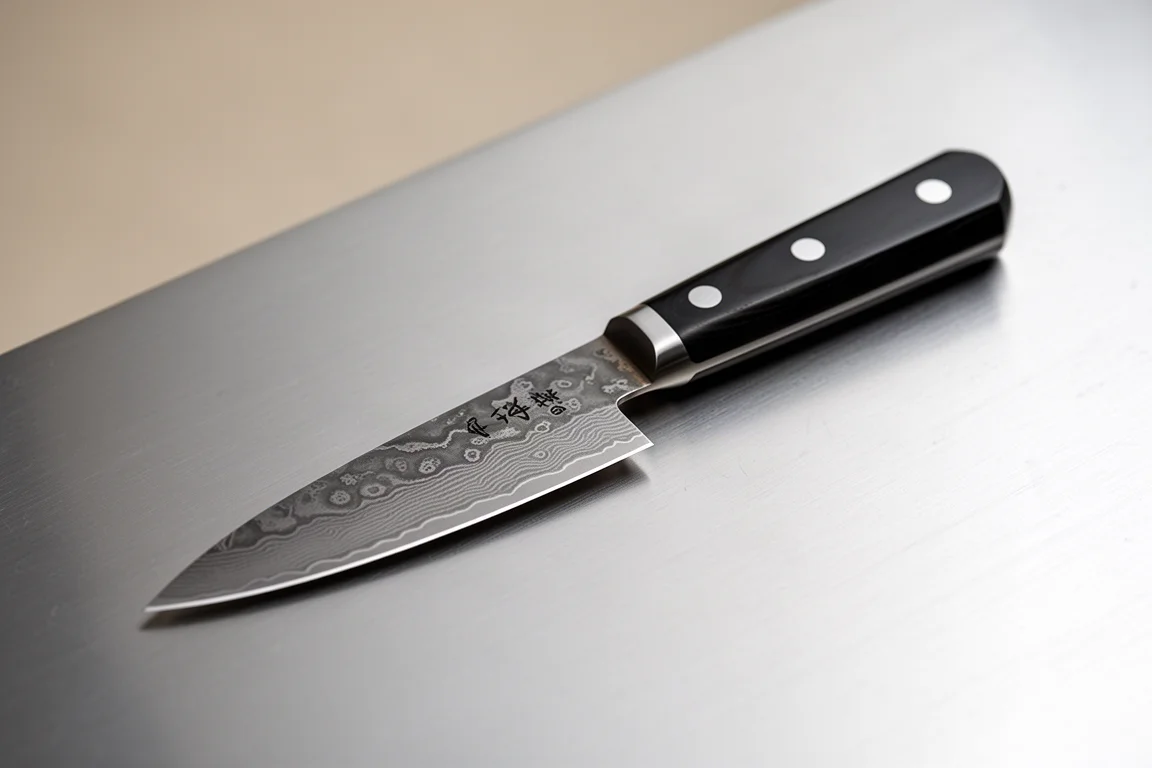
This line pairs the same western-style black handles with AUS10 steel, a stainless steel also used in razor production. The 135mm petty and its 210mm gyuto companion are not cheap, but they are not three- or four-hundred-dollar knives either, and both are available together in a combo deal. For anyone dipping a toe into Japanese knives, a sharp petty and gyuto are genuinely all you need to build a starting knife kit.
Sunahisa Gyuto 210mm AUS8
The most affordable entry in the Sunahisa lineup is this 210mm gyuto in AUS8 steel. It will not hold an edge quite as long as the AUS10, which in turn trails the ZA18, but it is still a really solid knife: a clean polished finish, brown pakkawood handle with a western-style balance point, nicely sanded spine, good edge geometry, and sharpness out of the box. Easy to maintain and genuinely strong value, this is the pick if you want something on the more affordable end.
Buying Advice
If you want the easiest possible entry point, the Masutani knives and Tosaichi santokus deliver the most performance per dollar. If you prefer Japanese aesthetics with a western handle feel, the Sunahisa lines are the natural fit, and the combo deals make building a small kit noticeably cheaper. For a single versatile blade, the Andreyu santoku and Kamo bunka are the style picks with finishing that punches well above their price.
Conclusion
This batch of arrivals makes one thing clear: you no longer need a big budget to get a genuinely well-made Japanese knife. From a razor-sharp nakiri for stir-fry nights to a full Damascus gyuto set, there is something here for every stage of a knife collection, and most of these blades would have cost considerably more just a few years ago.
Further reading
Related Reviews

Kitchen Knives
Best Chef's Knives 2026: 27 Popular Options Tested and Ranked
A comprehensive review of 27 chef's knives ranging from $18 to $380, with honest assessments of handle comfort, blade balance, and real-world performance.

Kitchen Knives
Best Chef's Knives Under $75: Two Tested Recommendations
Two practical 8-inch chef's knives that balance sharpness, comfort, and durability without premium pricing.

Kitchen Knives
Best Chef's Knives 2026: 27 Options Tested and Ranked
A comprehensive review of 27 chef's knives ranging from $18 to $380, with honest assessments of handle design, balance, blade profile, and real-world performance.