Kitchen Knives
Best Japanese Kitchen Knives: Our Top Gyuto, Nakiri, and Santoku Picks
Eight standout Japanese knives across three classic styles, with clear strengths, trade-offs, and buying advice for every budget.
Introduction
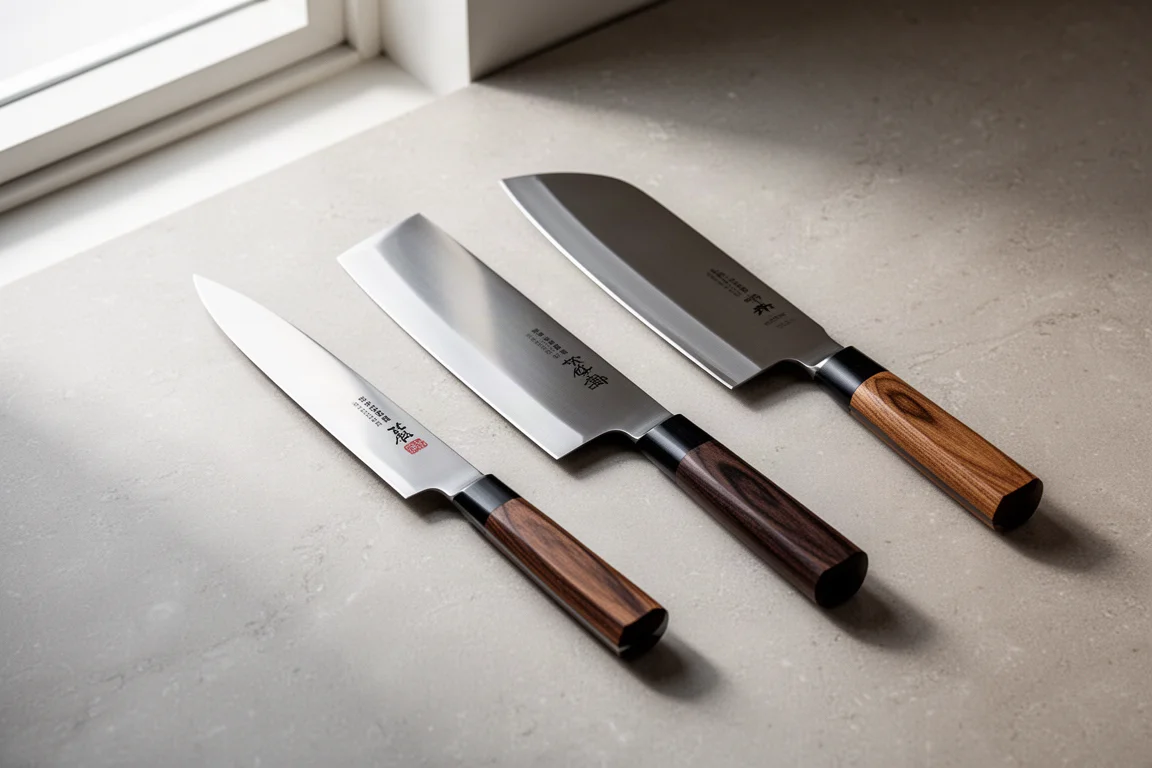
Japanese kitchen knives have been rising rapidly in popularity, and for good reason. Styles like the Gyuto, Nakiri, and Santoku are prized for their precision, their lightweight feel, and their beautiful ergonomic designs. After getting hands-on with a wide range of models, we came away impressed across the board: the knives were sharp, comfortable, and genuinely a joy to work with.
If you are in the market for a new kitchen knife, a Japanese knife deserves a serious look. The pieces you cut come out remarkably even and clean, and the narrower blades slice rather than wedge their way through food, which makes prep feel noticeably easier.
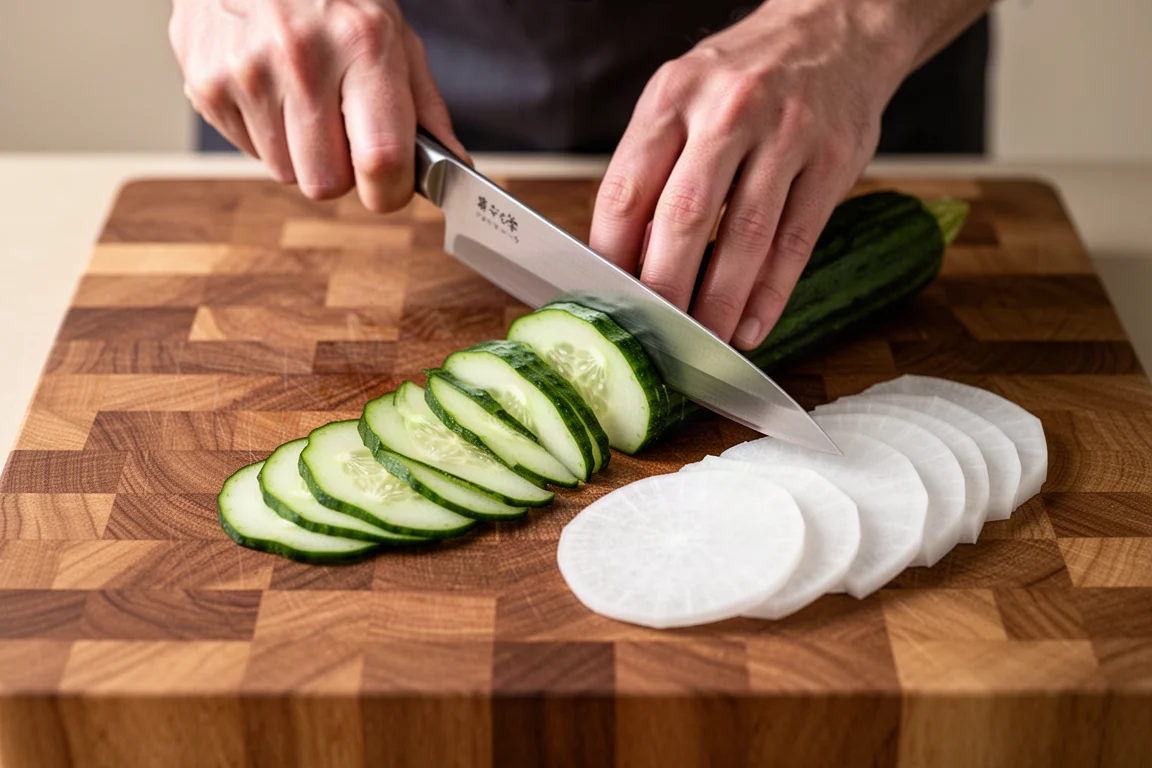
In this guide we break down the top picks in each of the three main styles, explain what makes Japanese knives different, and help you decide which one belongs in your kitchen.
Understanding Japanese Knife Styles
The Gyuto was developed in 1870s Japan, at the end of 250 years of isolation, as Western influence began to permeate Japanese food culture. It is a Western-influenced Japanese knife and is probably the closest thing to an all-purpose chef’s knife. Compared with Western chef’s knives, Gyuto are very lightweight, typically weighing three to five ounces. The blades are narrower from spine to edge, less tall, and less curved, and they lack the bolster found on many Western knives. The narrower spine makes the blade less of a wedge, so it slides into food more gracefully instead of pressing it apart. The lack of a bolster also makes the blade lighter and easier to sharpen evenly along its full length.
Blade material matters too. Japanese knives generally use harder steel than Western knives, which lets makers grind them extremely thin, though that also makes them more brittle. You should not chop into a pumpkin or squash, and frozen foods are off limits. These are knives for push-pull cuts, slicing boneless meats and vegetables, and delicate, precise work. Edge angles can be much narrower than the 22 degrees typical of German-style knives, sometimes down to 10 degrees, and some knives use an asymmetrical bevel described in ratios like 80:20 or 70:30. If you buy an asymmetrical knife, you will need to learn to sharpen it on a whetstone or find someone who can maintain it for you.
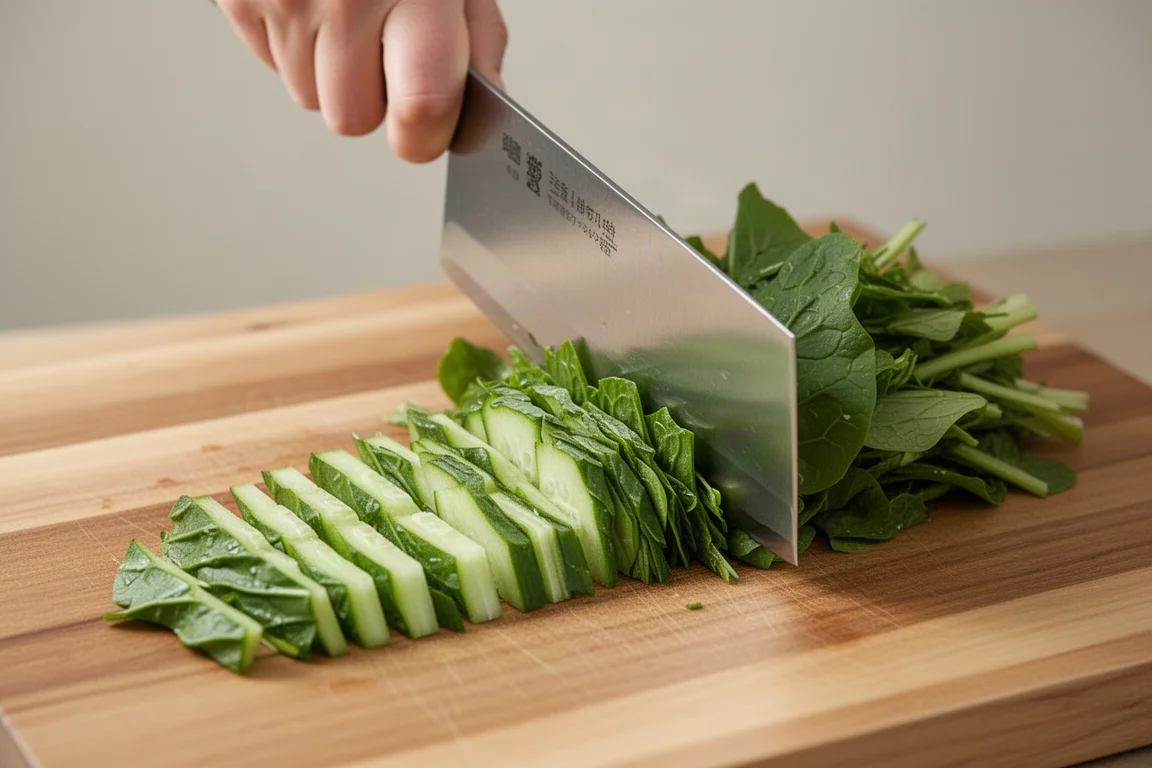
The Nakiri is a traditional Japanese vegetable knife with a rectangular blade, a double-beveled, fairly straight cutting edge, and a blunt tip. It is meant to be used parallel to the cutting board in an up-and-down motion rather than a rocking motion. The tall blade helps keep large vegetables like cabbage in line as you cut, and it is great for scooping up food afterward. One important warning: despite the shape, a Nakiri is not a cleaver. Never drag the blade or hack through bones or frozen food, as the thin, hard steel will chip.
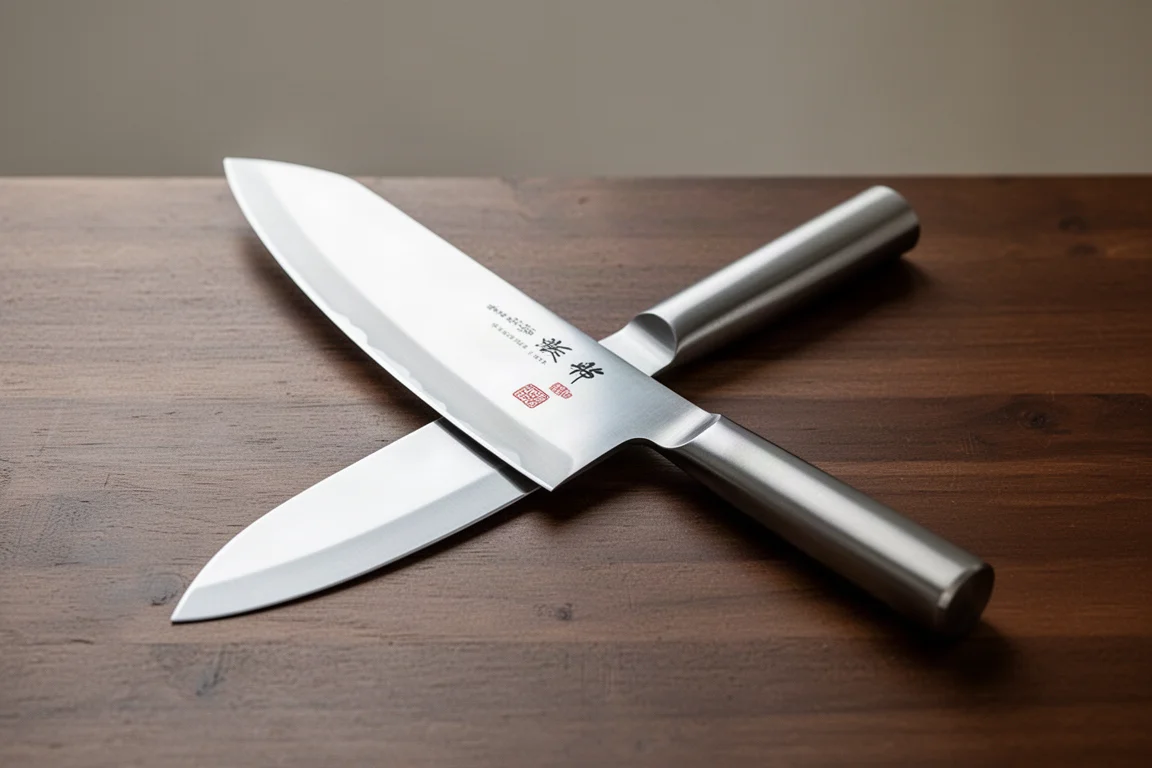
The Santoku was developed in post-war Japan as an all-purpose cooking knife for home cooks and quickly became Japan’s most popular kitchen knife. It has a fairly tall blade, a fairly straight edge, and a rounded tip. Many modern Santoku add a slight curve toward the tip, which makes them good for a rocking motion, useful for mincing herbs and familiar if you are used to a Western chef’s knife.
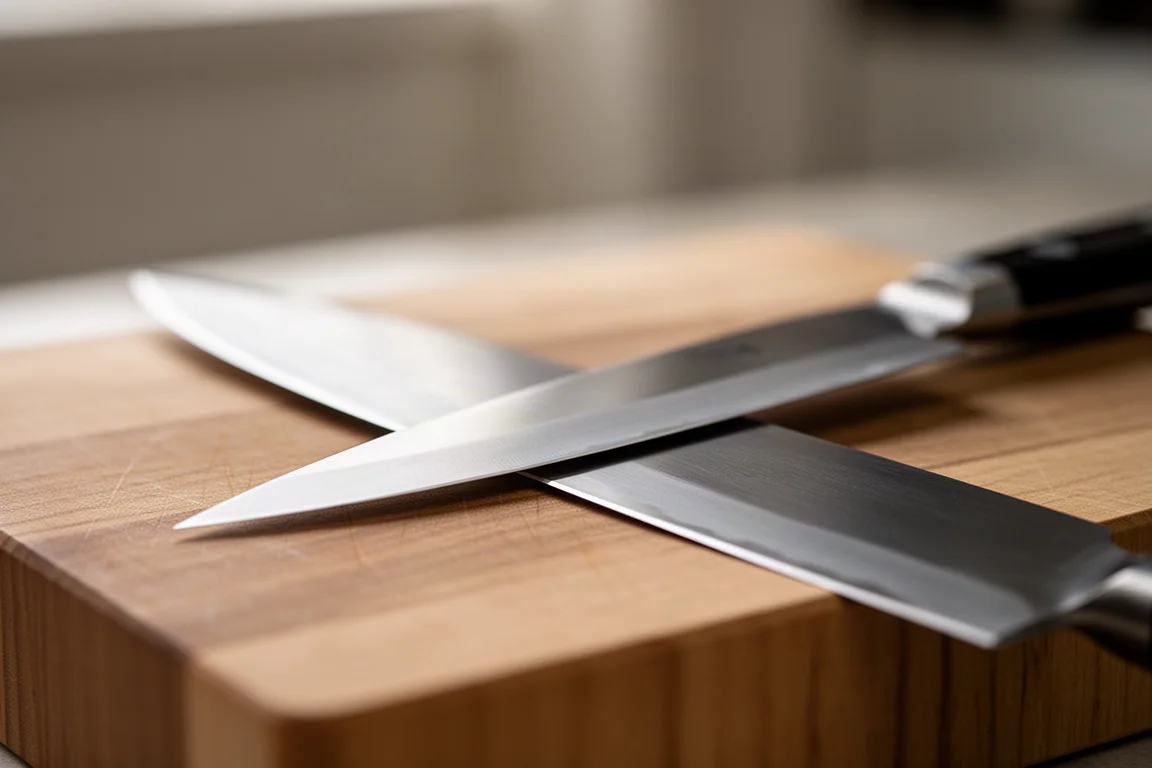
Across all three styles, you will also choose between carbon steel and stainless steel. Stainless steel will not rust or change appearance and needs no special drying habits. Carbon steel develops a patina many people love, but you need to wipe it dry and clean so it does not rust.
Best Gyuto: The All-Purpose Chef’s Knife
We focused on Gyuto around 210 millimeters, about 8.2 inches, which is close to the eight-inch all-purpose chef’s knife most cooks prefer. There were no duds in the lineup; it came down to distinctions in performance, sharpness, and comfort. Handle style is a real decision point here. Japanese-style handles are set farther back from the blade and tend to feel light and surprisingly comfortable, while Western-style handles are smoother, a bit heavier, and sit closer to the blade. It is worth picking up both styles before you decide.
Hitohira Gyuto
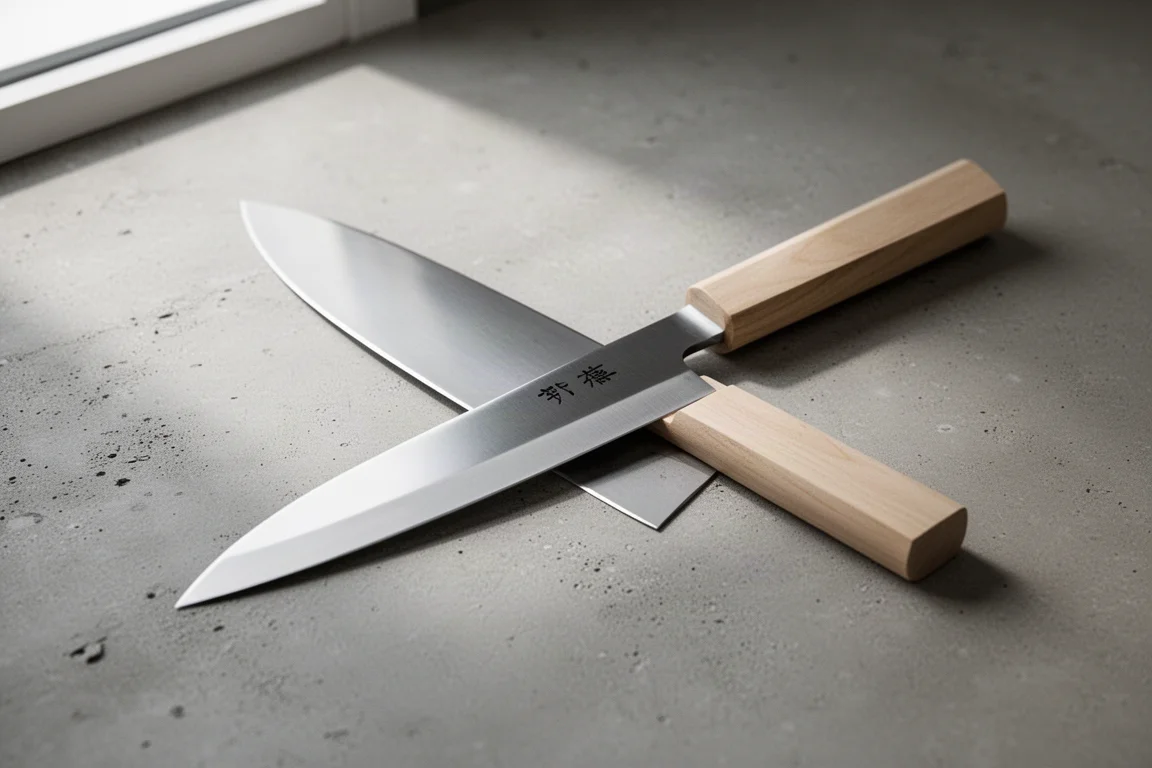
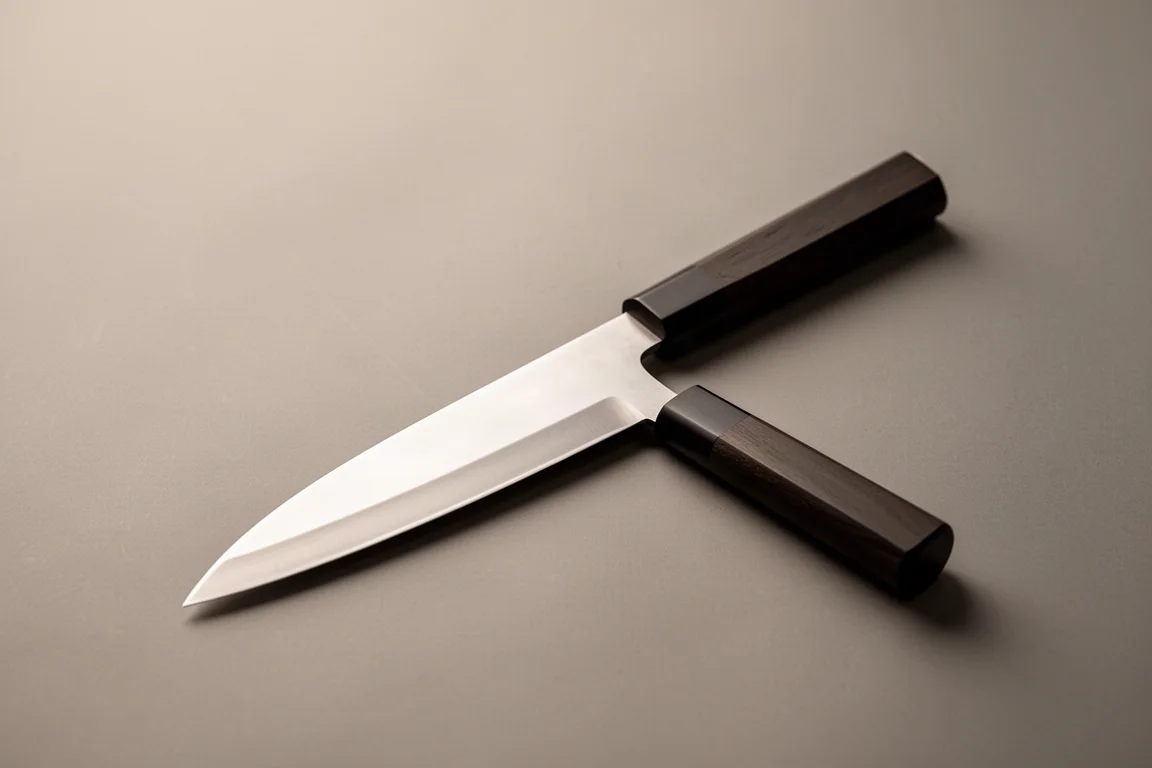
The Hitohira, with a Japanese-style handle, is a co-winner and a genuinely fantastic knife. It is extremely lightweight, very sharp, and easy to use. Everyone who tried it fell in love with it.
Masamoto Gyuto
The other co-winner, from Masamoto, uses a Western-style handle and feels a little heavier than the Hitohira. That extra weight gives some people a feeling of power and control they prefer, though it is still lighter than many Western chef’s knives. It is very, very sharp and glides through food. Both co-winners are beautiful knives, but they run about $200 each.
Kanetsugu Gyuto
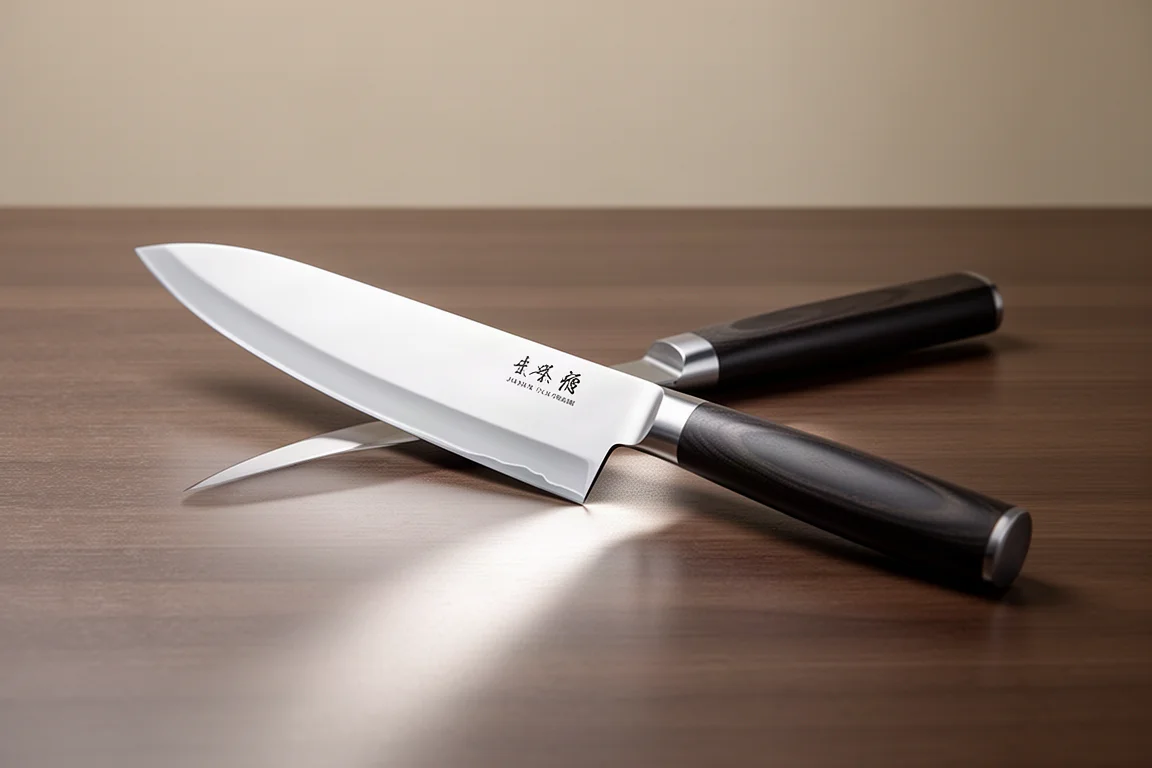
If $200 is more than you want to spend, the Kanetsugu is an excellent best buy at about $50. It is a great little knife, just slightly less sharp than the co-winners, and the handle finish is a bit more rough. Even with those trade-offs, it earned its spot.
Best Nakiri: For Vegetable-Focused Cooking
The best Nakiri we tested were about six and a half inches long and two inches tall, weighing roughly five to six ounces with thin blades. Blades that were too long or too thick felt imprecise and clunky, and heavier models started to feel like the cleavers they are not, tiring testers’ arms. The top picks had textured materials that stayed easy to grip even when wet, which matters when you are washing vegetables and your hands constantly. Tang length is worth noting as well: a longer tang adds weight.
Masamoto Sohonten Nakiri
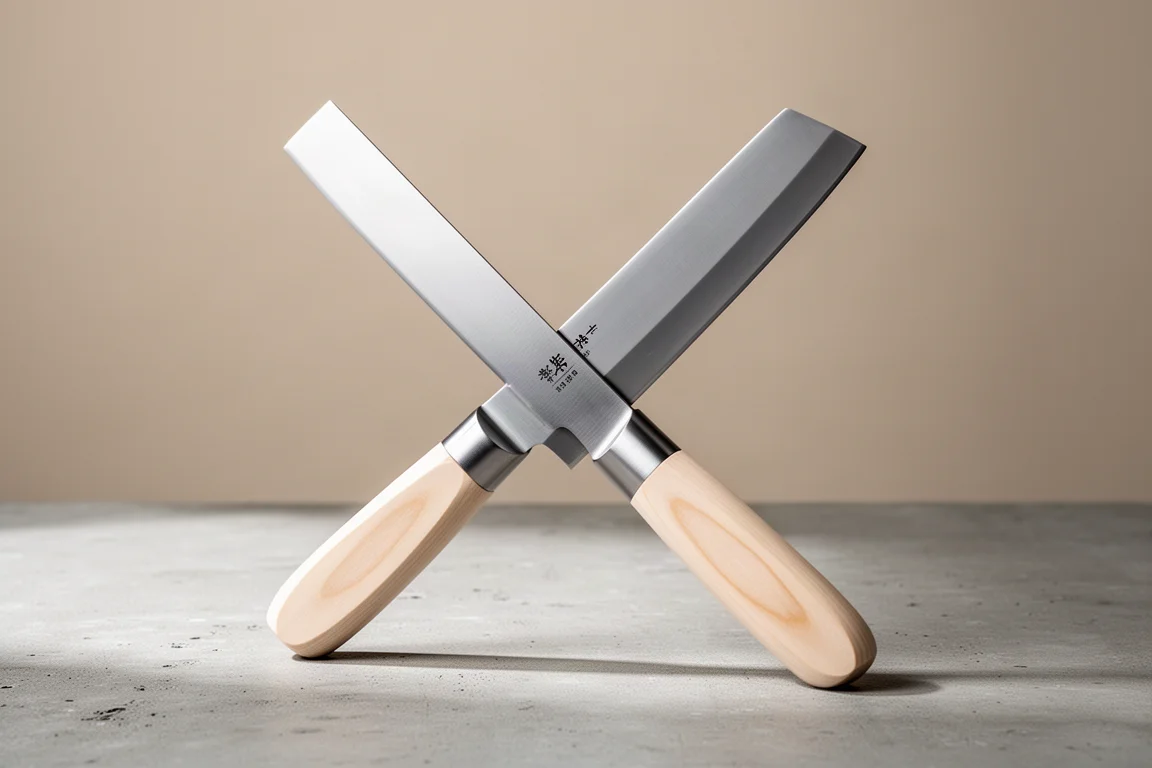
Our stainless steel favorite impressed with its tall blade and flat cutting surface, which makes full contact with the board easy. The oval Japanese-style handle is made from Magnolia wood and was super comfortable for testers to grip in a variety of positions, with really good traction when wet. Expect to pay upwards of $200.
Sakai Kikumori Nakiri
The carbon steel favorite has the tallest and thinnest blade of anything we tested. Although the core is carbon steel, much of the blade is clad in stainless steel, so daily maintenance is easier than you might expect from a carbon knife. The octagonal Japanese-style handle is grippy, comfortable, and genuinely beautiful.
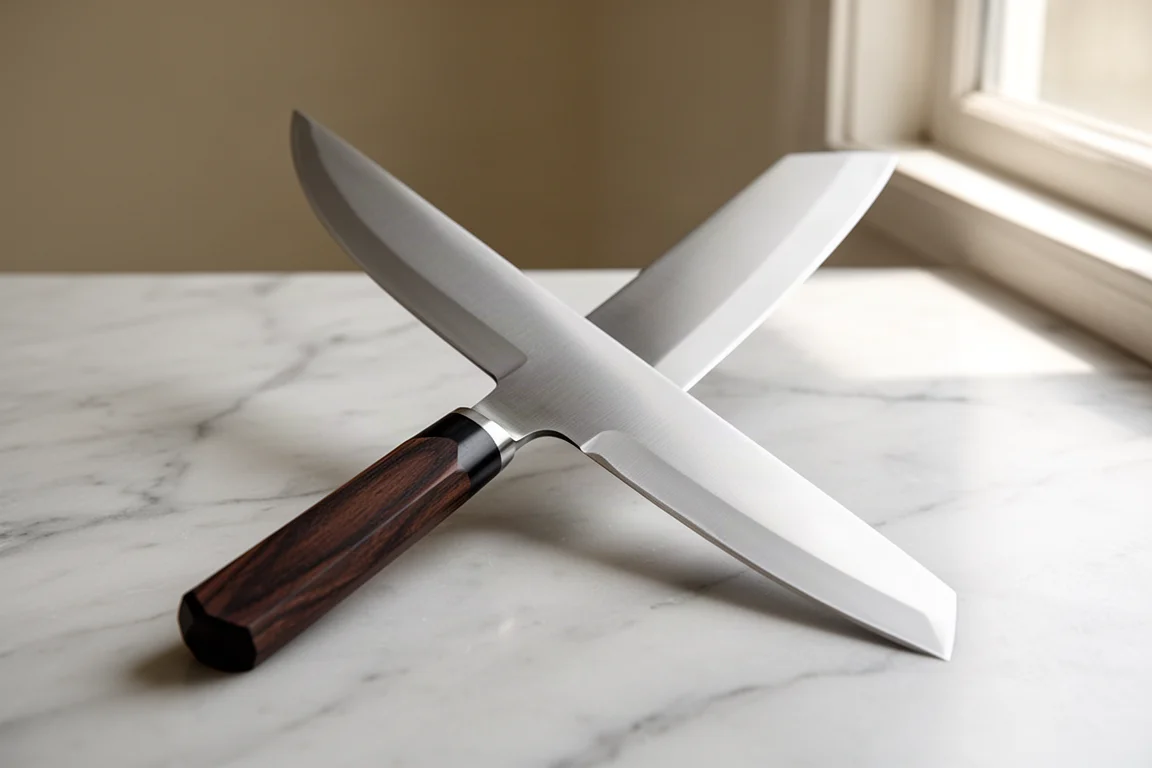
Masutani Nakiri
At about $70, the Masutani is the best buy while the two favorites cost upwards of $200. It is not quite as good as them in some areas, but it offers excellent craftsmanship for considerably less money. It is narrower from top to bottom, so you have a little less command when chopping very tall vegetables, but it is still a really great Nakiri.
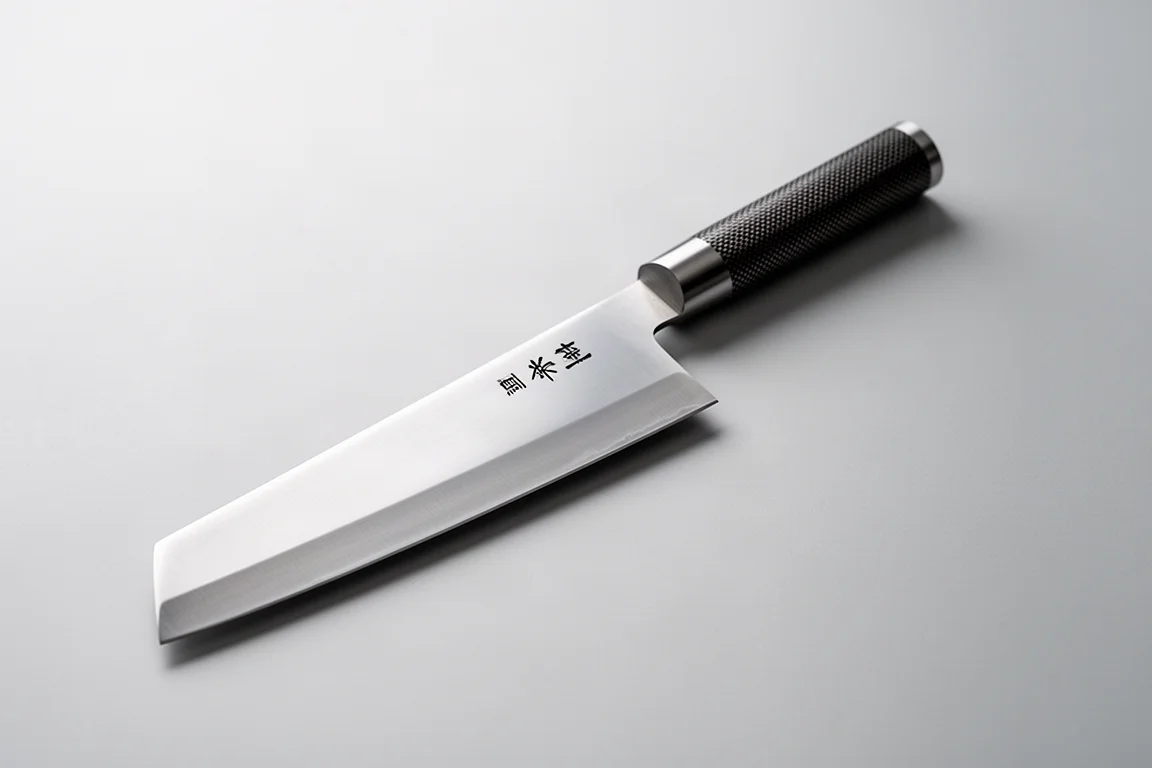
Best Santoku: The Versatile All-Rounder
A good Santoku starts with a slim, sharp cutting edge. Most models we tested had the typical Japanese blade angle of 15 degrees, though some were as small as 10 degrees. Testers preferred a slightly less rounded tip than the traditional sheep’s foot shape because it was easier to maneuver, and our favorites had a spine thickness of about two millimeters. Look for a handle with moderate length and width and a smooth top; a piece of metal sticking up above the handle will dig into the underside of your hand when you use a pinch grip. As for Granton edges, those little hollows carved into the blade that supposedly keep food from sticking, we found they made no real difference. Perfectly smooth blades performed just as well.
A Santoku is a great all-purpose option for just about any kitchen, and many cooks happily keep both a Santoku and a Western chef’s knife, choosing between them based on mood and the task at hand.
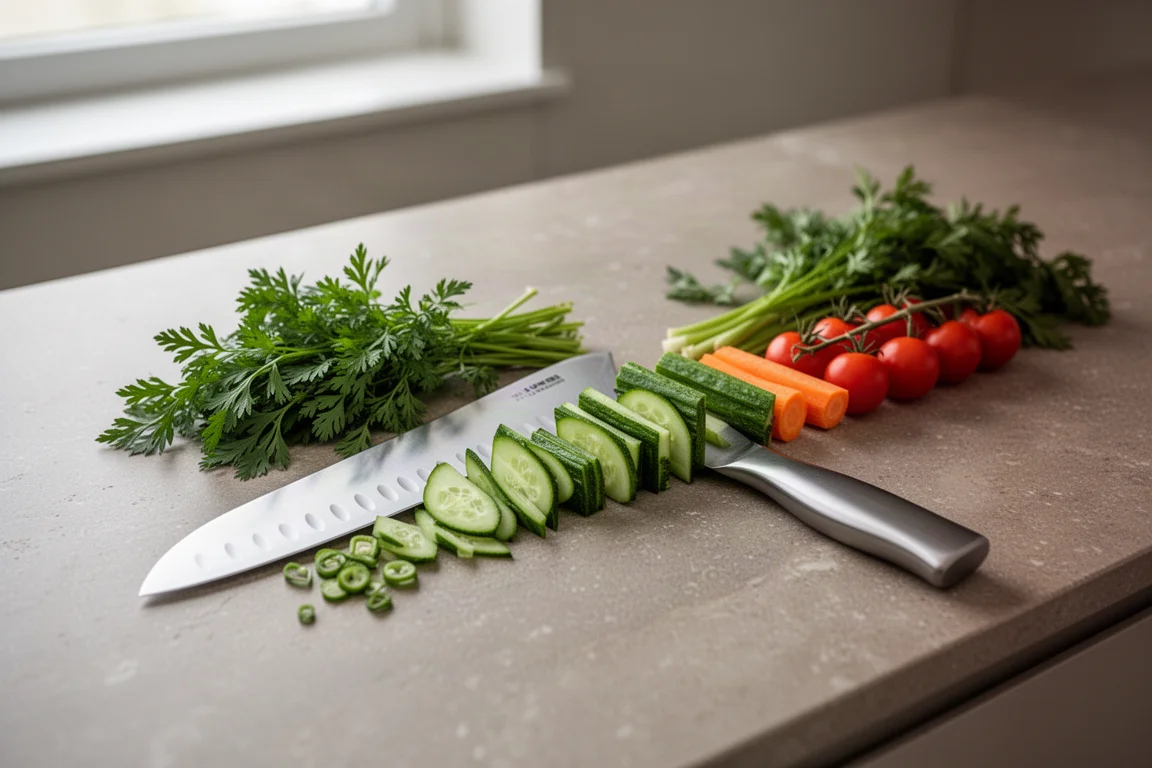
Misono Santoku
Our winner impressed both experienced Santoku users and complete newcomers. It is sharp, agile, and very well balanced, a genuinely excellent all-purpose knife. It features an asymmetrical blade sharpened at a 70:30 bevel, which the company hand-sharpens for either right-handed or left-handed users.
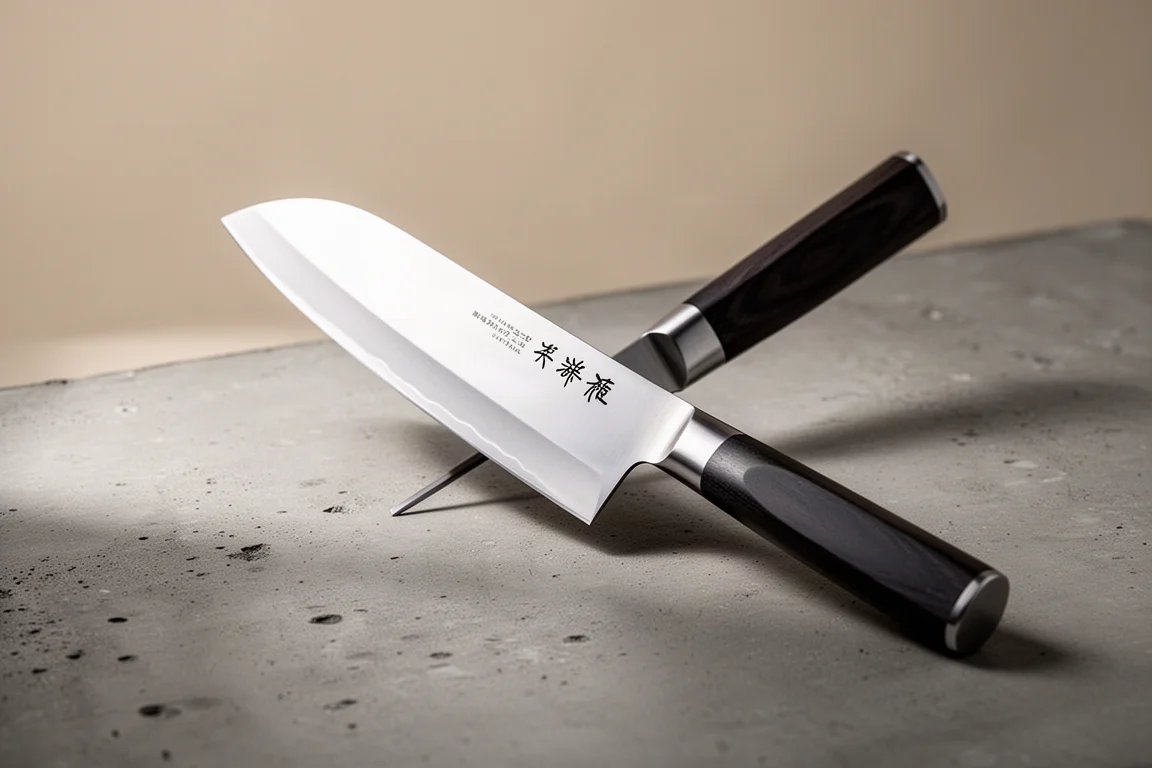
Mac Santoku
The best buy from Mac is still a really great Santoku, with two caveats: the handle is a little bulky, especially for testers with smaller hands, and the overall knife length is a little short at 11 and a quarter inches.
Buying Advice
Start with the style that matches your cooking. If you want one do-it-all knife, a Gyuto or Santoku is the natural pick. If vegetables dominate your prep, a Nakiri is a revelation, slicing through things like bell peppers cleanly without catching on the skin.
Decide honestly how much maintenance you want. Stainless steel is worry-free, while carbon steel rewards care with a developing patina but requires keeping the blade dry. If you choose a knife with an asymmetrical bevel, budget time or money for whetstone sharpening, since any knife that is not sharpened periodically is really worthless.
Finally, if you can, handle both Japanese-style and Western-style grips before buying. The light, set-back Japanese handle surprised many testers with how comfortable it was, while others preferred the weightier Western feel. Both are valid; the right answer is the one that feels natural in your hand.
Conclusion
We loved the majority of the Japanese knives we tested. Whether you splurge on a co-winning Gyuto from Hitohira or Masamoto, pick up the budget-friendly Kanetsugu, go all-in on a premium Nakiri, or grab the versatile Misono Santoku, you are getting a knife built for precision and presentation. Match the style to your cooking, respect the limits of hard, thin steel, and any of these picks will make your time at the cutting board noticeably better.
Further reading
Related Reviews

Kitchen Knives
Best Chef's Knives 2026: 27 Popular Options Tested and Ranked
A comprehensive review of 27 chef's knives ranging from $18 to $380, with honest assessments of handle comfort, blade balance, and real-world performance.

Kitchen Knives
Best Chef's Knives Under $75: Two Tested Recommendations
Two practical 8-inch chef's knives that balance sharpness, comfort, and durability without premium pricing.

Kitchen Knives
Best Chef's Knives 2026: 27 Options Tested and Ranked
A comprehensive review of 27 chef's knives ranging from $18 to $380, with honest assessments of handle design, balance, blade profile, and real-world performance.