Kitchen Knives
Best Japanese Kitchen Knives From the Fall Garage Sale: Four Picks Worth Your Money
Four standout Japanese kitchen knives, from a value-packed santoku to a flashy hammered Damascus workhorse, each cut-tested on everyday ingredients.
Introduction
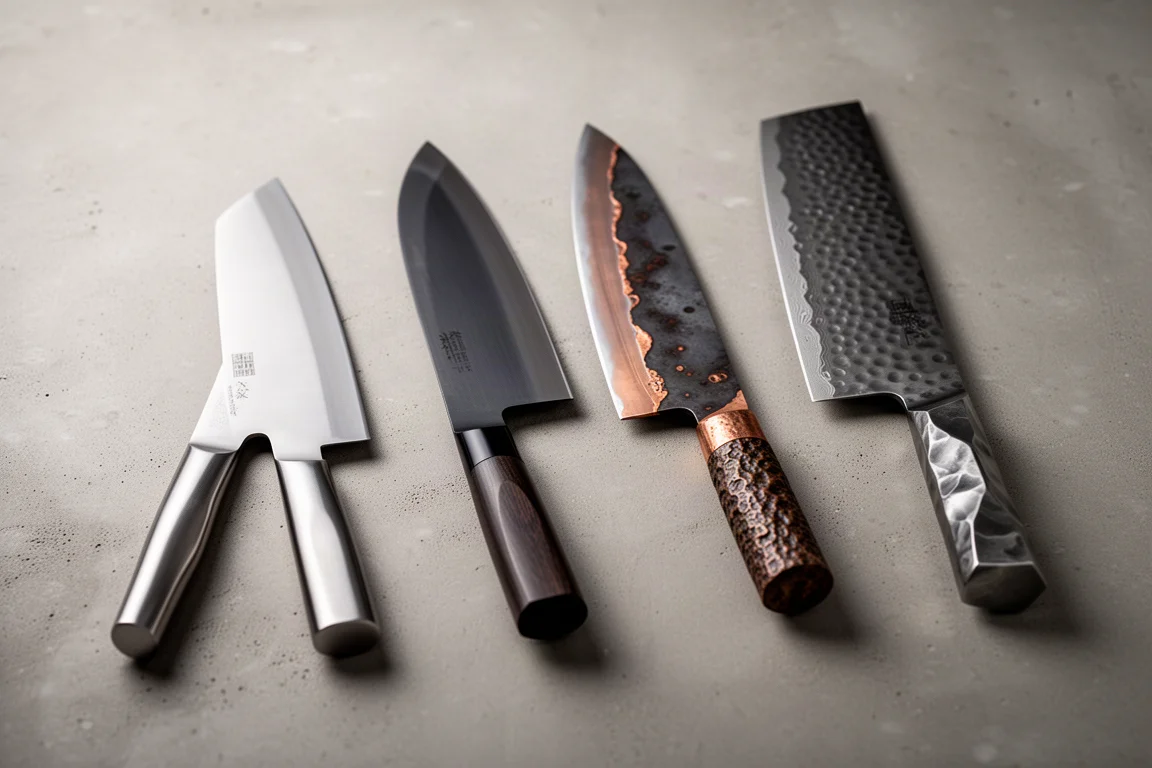
If you have been hunting for a Japanese kitchen knife that actually earns a spot on your counter, this is a good moment. A fall garage sale has brought in a wave of new arrivals from Japan, roughly doubling the usual selection for a limited window, and four knives in particular stood out after hands-on cutting with vegetables, peppers, and more. These are not just pretty blades to admire; each one was put to work on dense carrots, slippery pepper skins, and green onions to see how it really performs.
Sunhisa 440C Santoku: The Value Pick
The Sunhisa 440C Santoku is a Western-style santoku that does not chase looks. It is unassuming, but it is designed to cut anything you throw at it: meat, fish, and vegetables for day-to-day cooking. Its European-style appearance can throw people off, but the performance is pure Japanese: a very thin blade that glides cleanly and effortlessly through dense foods like carrots.
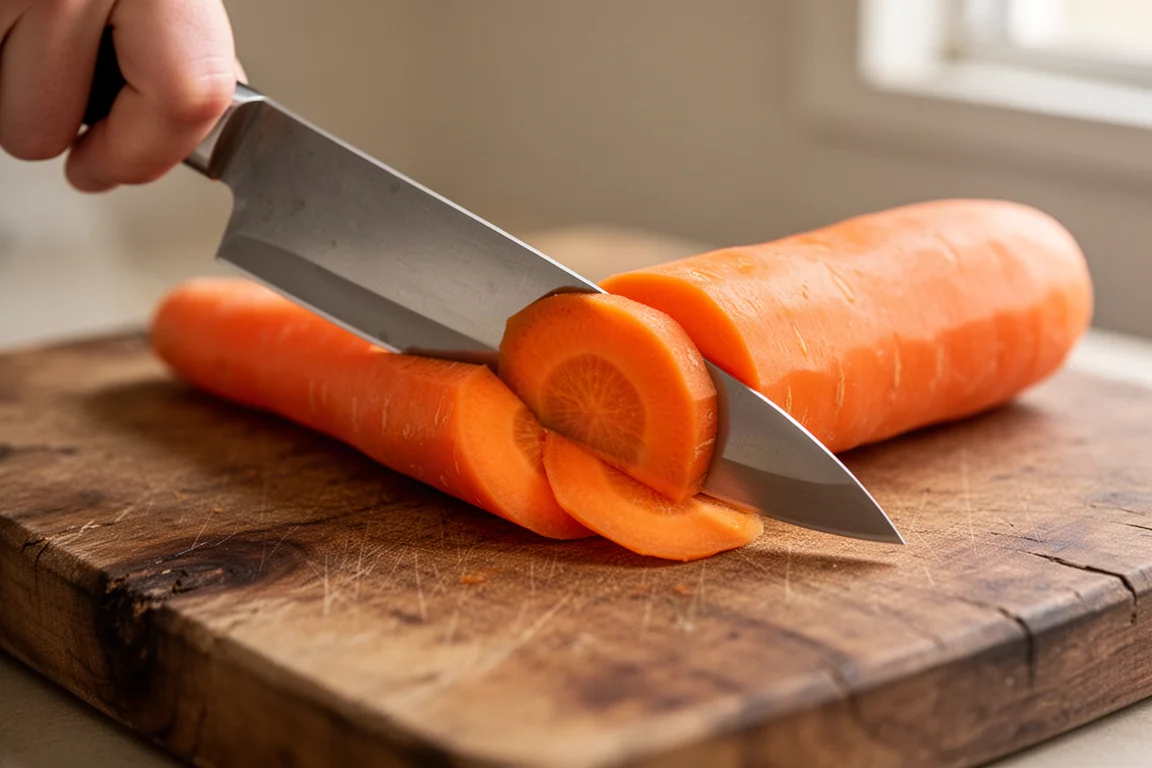
That thin, smooth edge is usually what shocks people when they move from a typical Western knife to something like this. Pricing makes it even more attractive. Normally just over 200 Canadian dollars, the sale discount brings it to around 170, which puts it firmly in gift-knife territory for someone you actually like.
Sakai Takayuki Grand Chef Seha: Built for Production Work
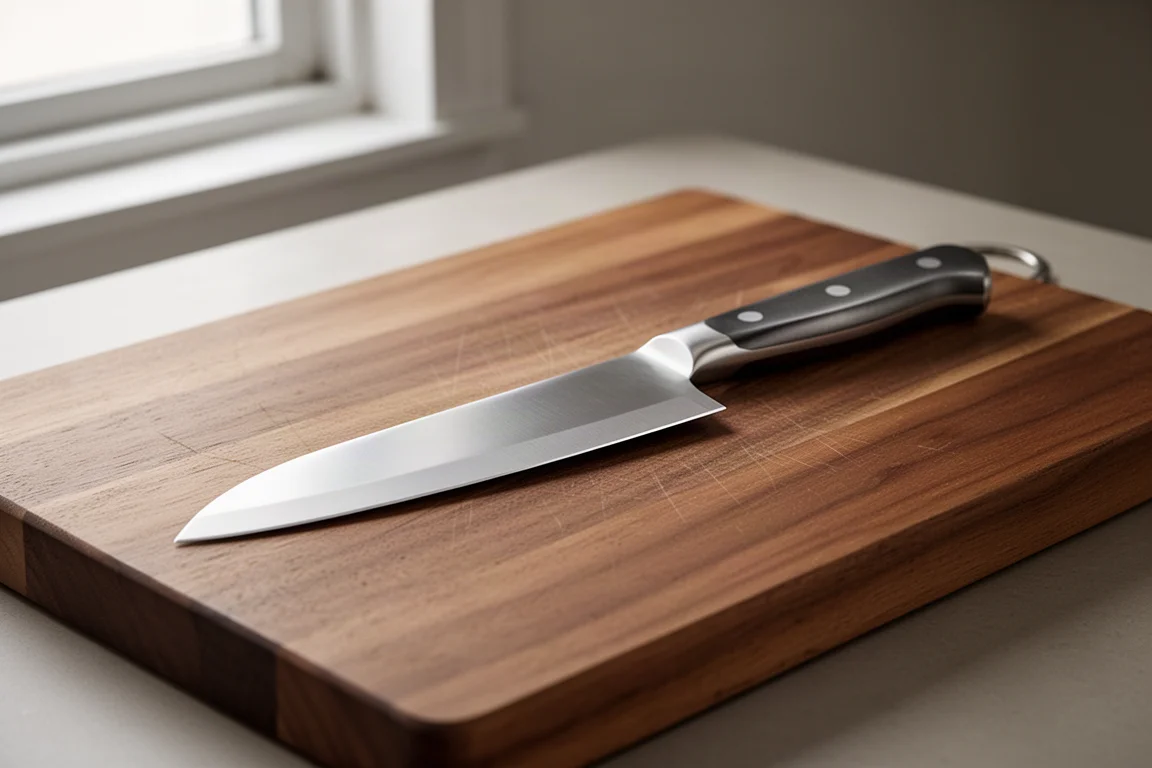
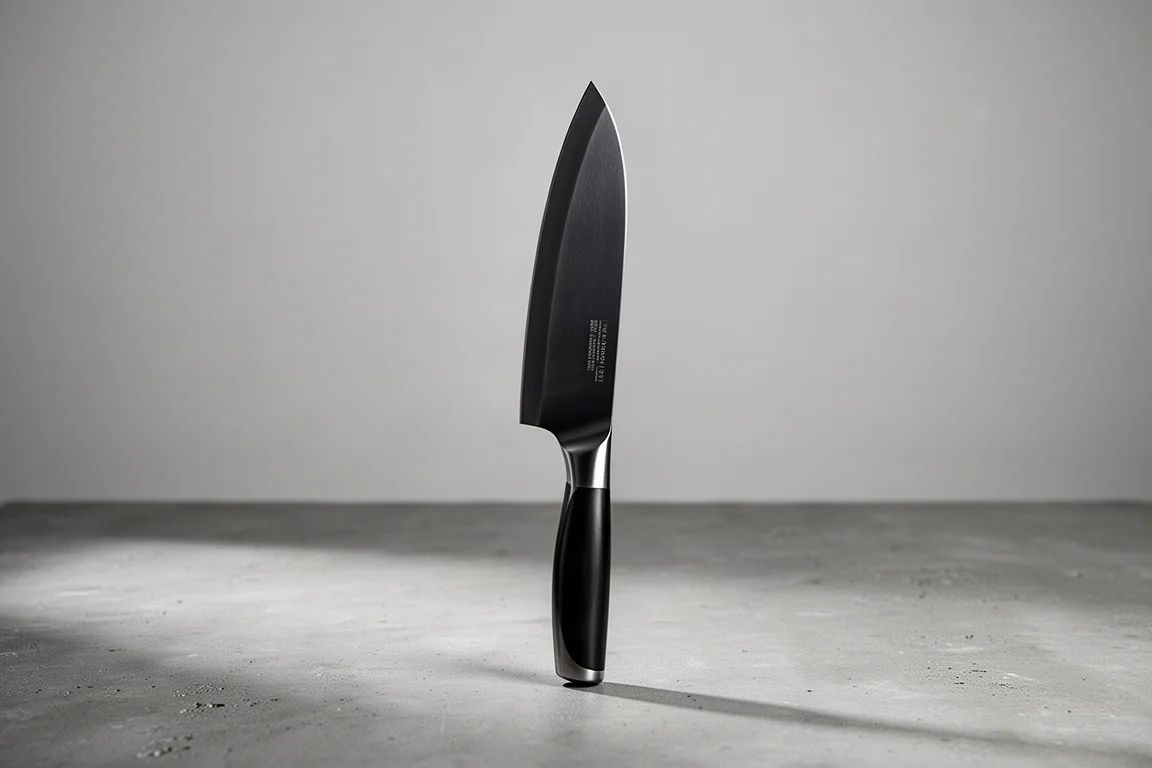
The Sakai Takayuki Grand Chef Seha is a new line in the brand’s signature Grand Chef series, designed for professional use and built around Swedish steel made by a steelmaker in Sweden. It has very good edge retention and a super thin blade, and while it looks slightly hefty, it avoids the bulkiness some chef-style knives carry. It is not super light, but it does not feel heavy either.
The standout feature is the gentle curve of the blade, which makes rocking cuts easy. For cooks who do a lot of production work and rock the knife constantly, that profile is ideal. Even without exaggerating the rocking motion, cuts came out clean with no half-connected bits left behind.
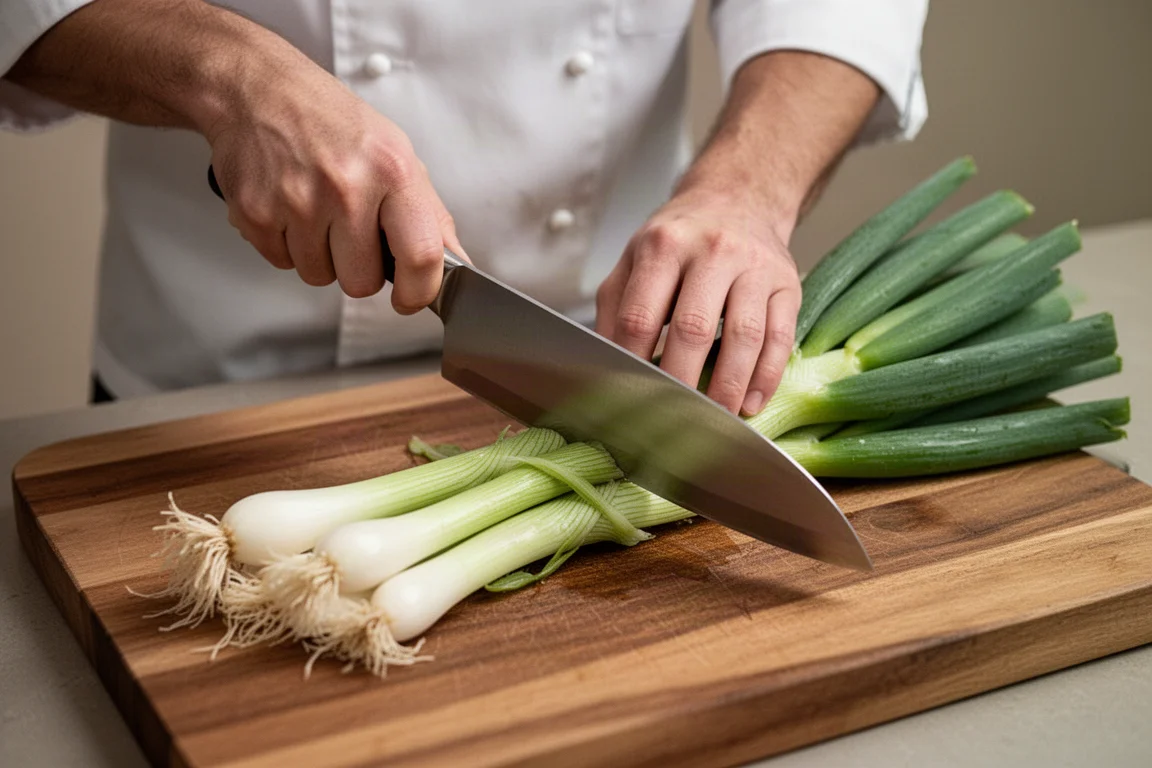
One nuance worth knowing: compared to hard high-speed powder steels, this steel will not hold its edge quite as long, but it has a slightly bitey edge that bites into foods like pepper skin instead of glancing off. Some cooks find that feels sharper in real use, and it also makes the knife easier to maintain.
Ichigo Icha Copper and SLD: The Personal Favorite
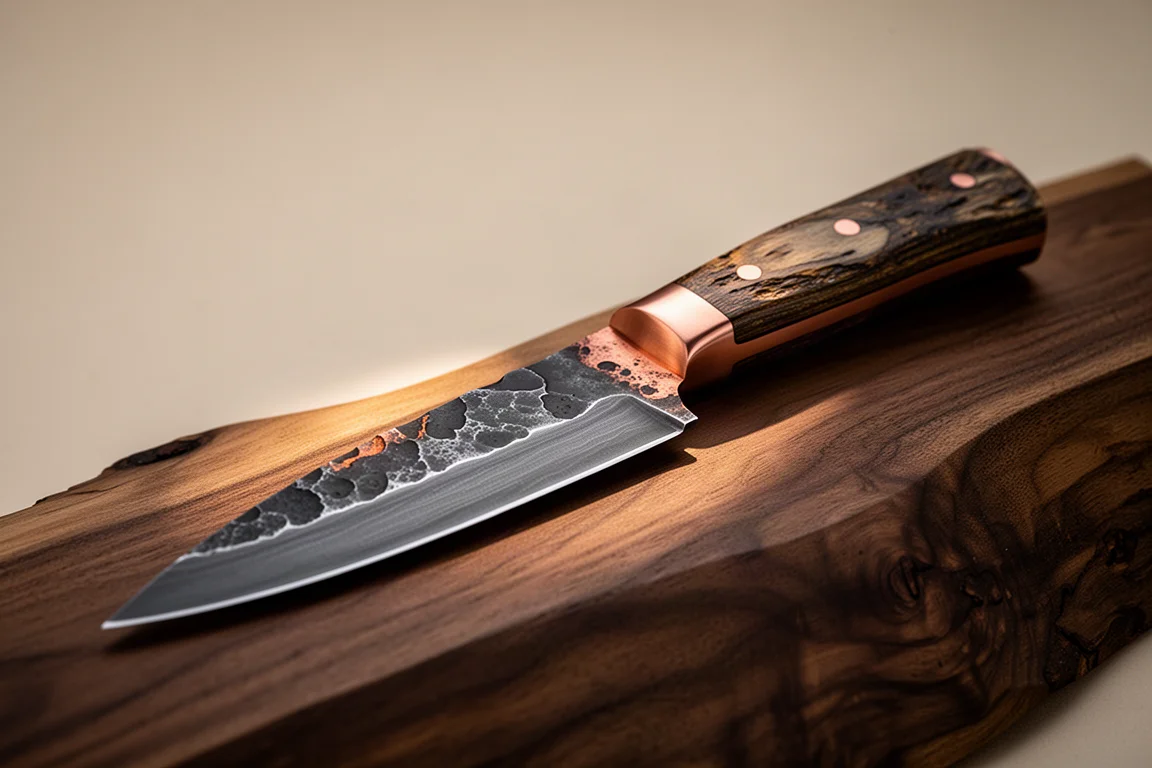
The Ichigo Icha series copper and SLD knife was the instant favorite of this roundup. The handle won hearts first, followed by the flash of copper folded into the blade. Beyond looks, the blade is well made with a beautiful taper toward the edge, and the copper texture gives it real character.
Part of a new Ichigo Icha series, these knives are limited-run pieces from makers who may not produce them again, so availability is genuinely uncertain. The blade is very thin behind the edge with good convexity, meaning the bevel is ground just slightly convex rather than flat. That subtle shape helps food peel away from the blade, which matters far more than surface texture for food release.
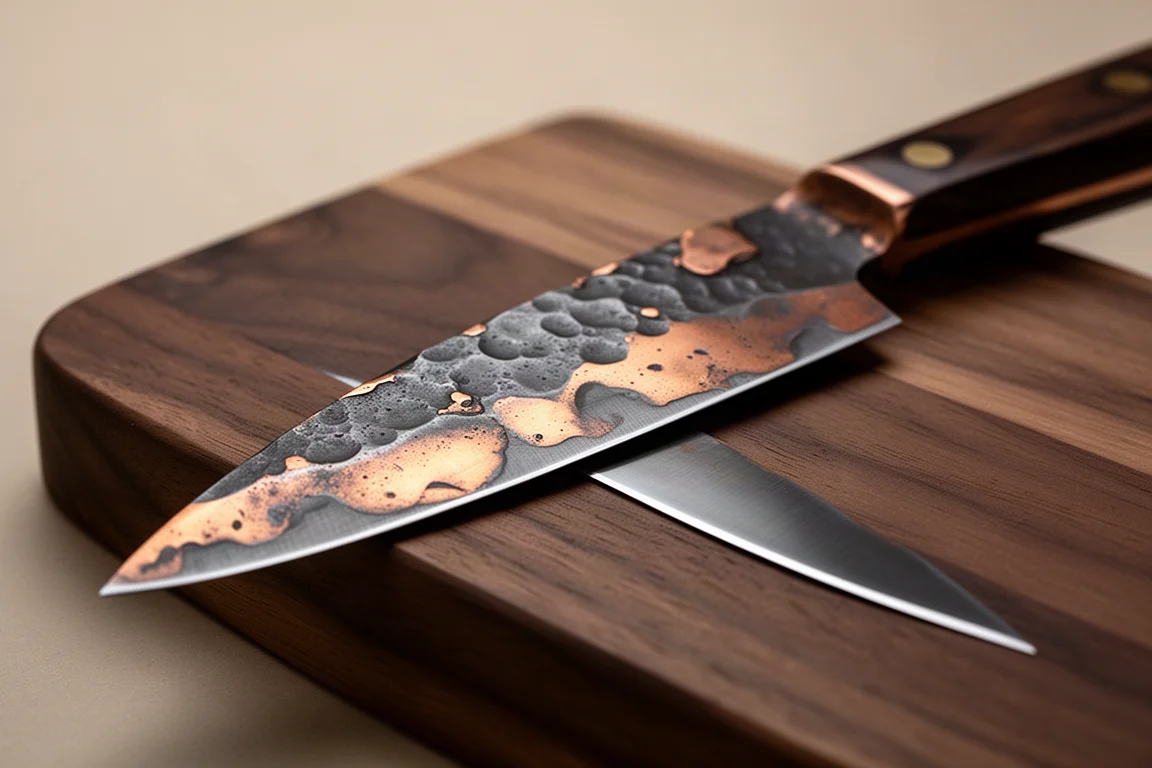
It is quite thick up top but thin at the edge, a combination that suits cooks who like a bit of weight in the blade without any thickness where the cutting happens. Expect a patina over time: the copper will darken to a brown tone, and SLD is considered semi-stainless, so the core steel may develop slight patina as well. It cuts smooth, looks stunning, and is viewed as a genuine workhorse that backs up its beauty.
Ono Knife Suzuk SG2: The Big, Bold Workhorse
Ono Knife is a maker from Seki City, a place famous for knife making, and has long produced high-end knives for a well-known company in North America. The Suzuk line is one of the first the maker has released under its own name, made with SG2 stainless steel.
This is the big-hand knife of the group. It is taller, slightly heavier than the Grand Chef Seha, and fitted with a chunky angular handle with texture you can really grip. It is aimed squarely at people with larger hands who find standard Japanese handles too small, yet it still feels good in an average hand.
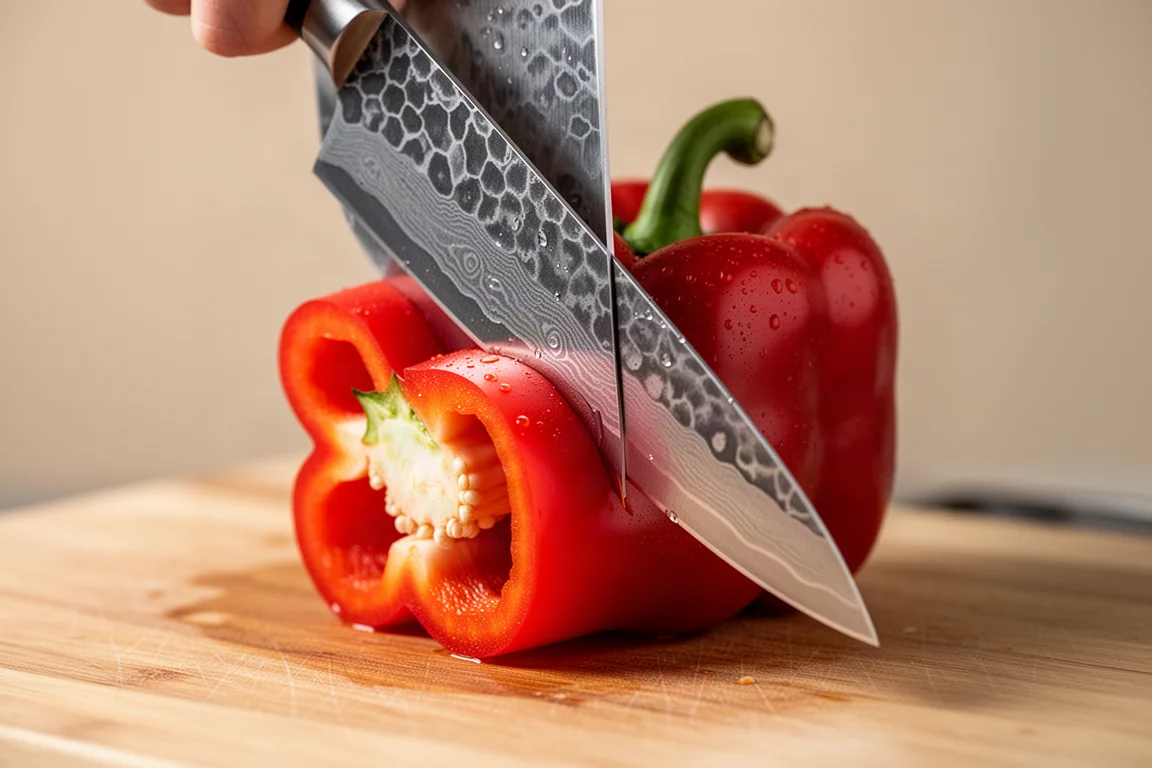
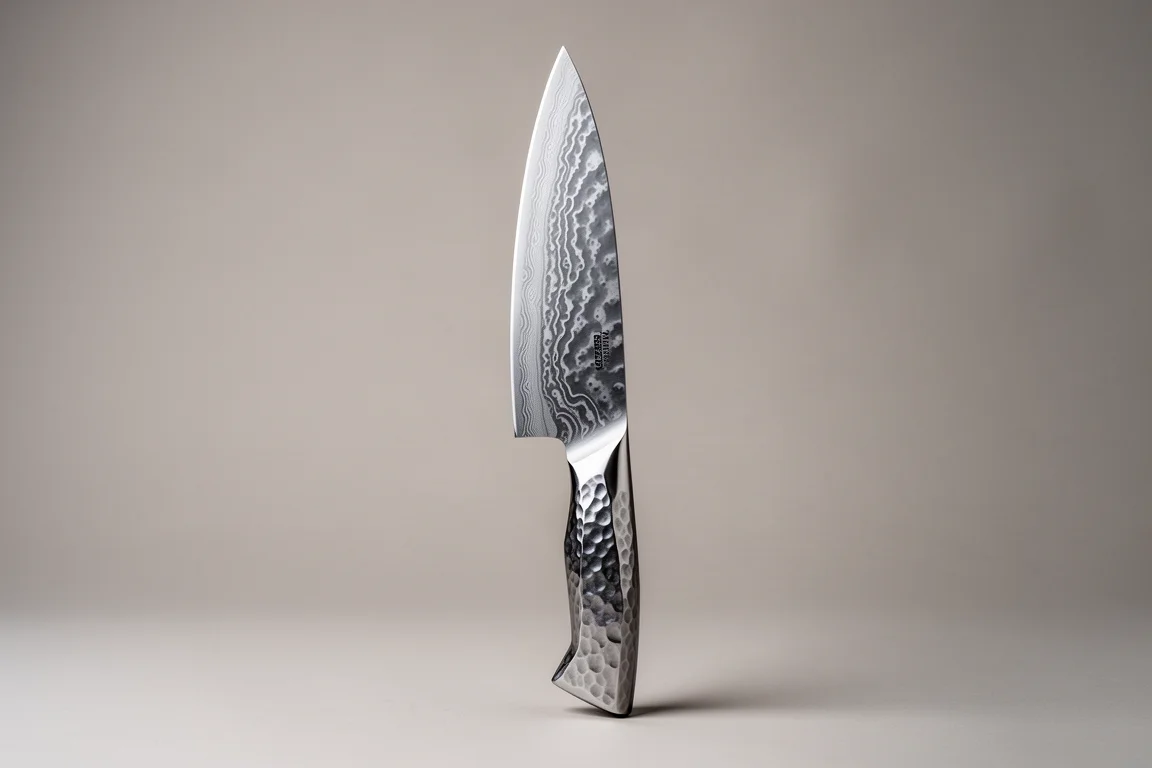
Despite the beefy look, it is deceptive: the blade is really thin behind the edge, and that combination of heft up top and a thin edge means it cuts effortlessly with almost no pressure applied. The pepper skin test, the real benchmark for a knife like this, passed cleanly. It is also unapologetically flashy, with a hammered texture, a full Damascus pattern, and a fancy handle. It comes in gyuto, nakiri, santoku, and petty shapes, so you can build out a full set.
Honorable Mentions
Two more knives earned a mention without a cutting demo. The first is a rough, goofy-looking knife built for a single purpose: cutting katsuobushi (bonito) in production settings. Its handle is a chunky piece of unfinished oak with grippy, non-slip character and deliberately carved low spots for finger placement. It is purely functional design, and it does its job extremely well.
The second is a plain-looking Sakai series knife forged by Ibuchi-san in Sakai and sharpened by Masayuki Shimizu, a highly regarded sharpener trained under Yamaki Hamono. His signature is attention to detail: the bevel on this knife is very true, without low spots, which makes it noticeably easy to sharpen on a stone after purchase, a real advantage over single bevels that were not ground well by the maker.
Buying Advice
The copper Ichigo Icha is the personal pick of the bunch, but both the Grand Chef Seha and the Ono Knife Suzuk were pleasant surprises: expected to be hefty and cumbersome, they turned out to be a blast to work with. All three would suit a working restaurant cook, and all of them make strong gifts. If budget leads the way, the discounted Sunhisa santoku is the easiest entry into a genuinely thin, smooth-cutting Japanese blade.
Conclusion
Whether you want quiet value, professional production comfort, a limited hand-forged beauty, or a bold hammered showpiece with a big handle, there is a clear pick here for each kind of cook. Match the knife to your hands and your cutting style, and any of these four would be a satisfying upgrade.
Further reading
Related Reviews

Kitchen Knives
Best Chef's Knives 2026: 27 Popular Options Tested and Ranked
A comprehensive review of 27 chef's knives ranging from $18 to $380, with honest assessments of handle comfort, blade balance, and real-world performance.

Kitchen Knives
Best Chef's Knives Under $75: Two Tested Recommendations
Two practical 8-inch chef's knives that balance sharpness, comfort, and durability without premium pricing.

Kitchen Knives
Best Chef's Knives 2026: 27 Options Tested and Ranked
A comprehensive review of 27 chef's knives ranging from $18 to $380, with honest assessments of handle design, balance, blade profile, and real-world performance.