Hand & Power Tools
Best Impact Extension Sets 2026: Goliath, GearWrench, SunX and More Compared
Thicker shafts mean more delivered torque on an impact wrench. Six extension sets tested, from Astro Goliath to Torque Saver universal sockets.
Introduction
Impact wrenches have gotten dramatically more powerful over the last couple of decades, but the extensions you bolt onto them have not changed much. That mismatch costs real torque: a long, thin extension can cut delivered fastener torque roughly in half on a modern high-torque tool.
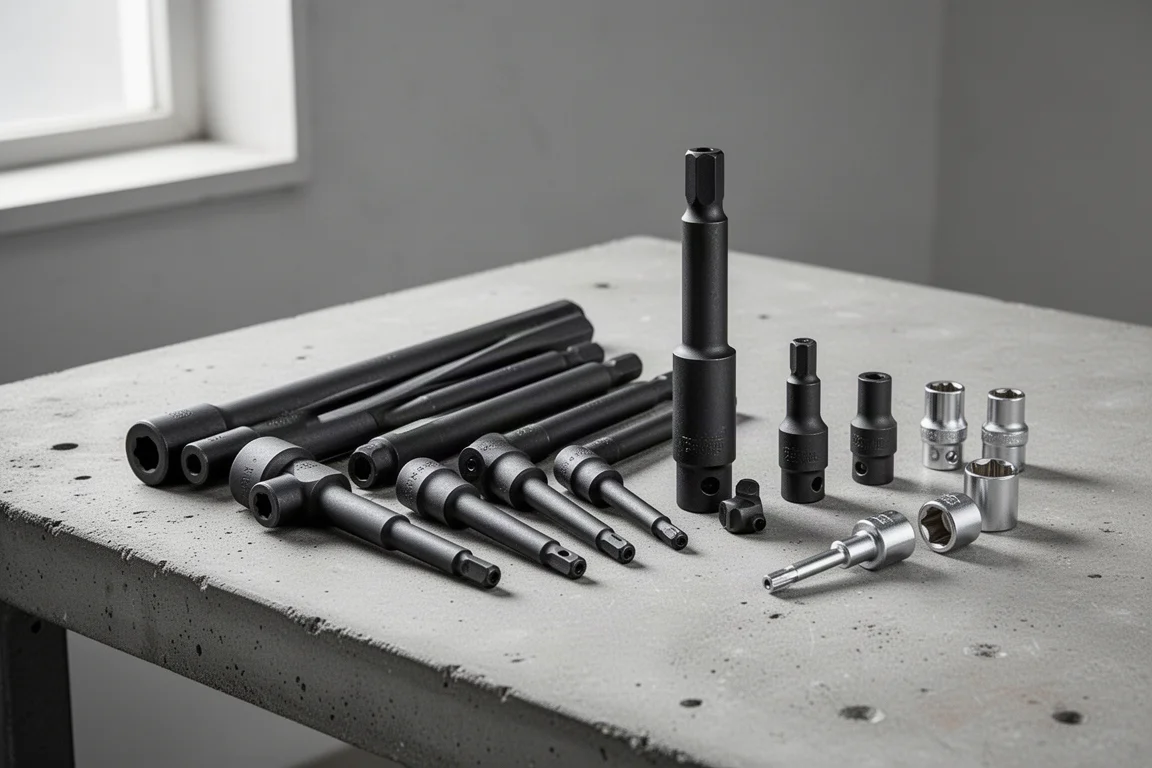
This guide covers six extension sets and singles that address that problem, including thick-shaft designs built specifically for modern impacts, well-priced traditional sets, and a universal swivel option that loses less torque at an angle.
Why Extension Diameter Matters on an Impact Wrench
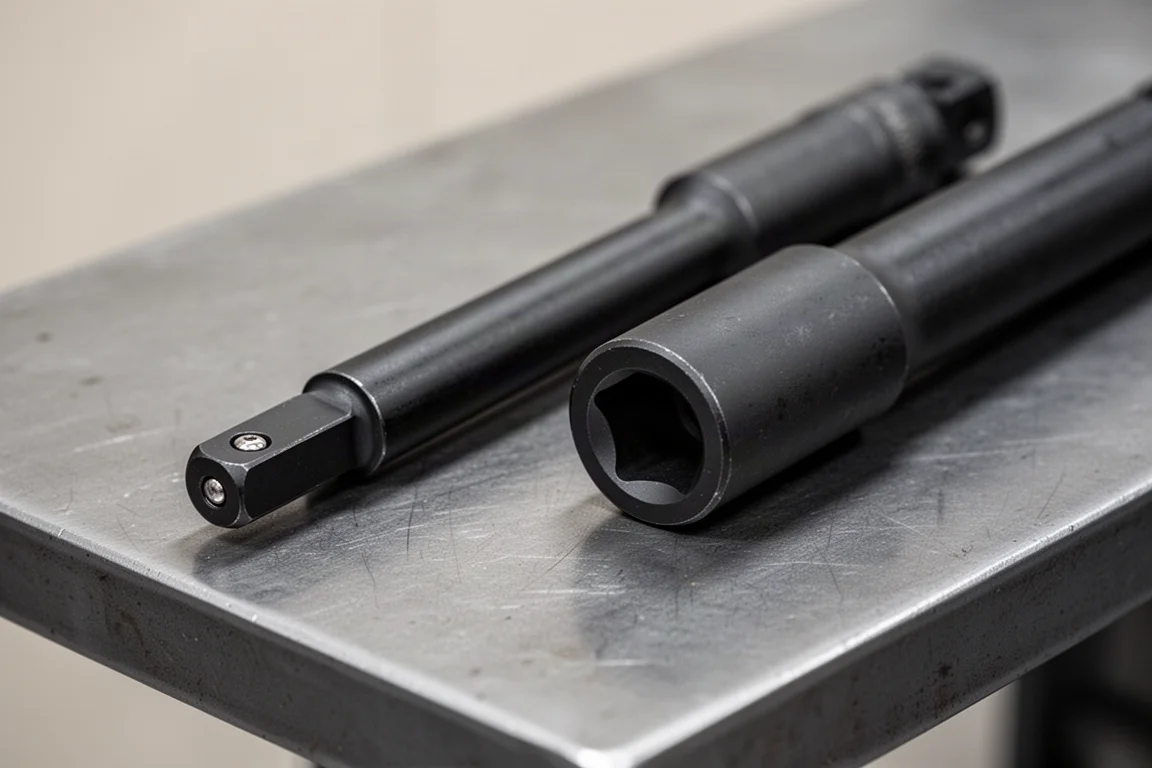
Traditional chrome extensions have hovered around 15 to 17 mm of shank diameter for decades, sized for hand ratchets. With a ratchet, extension flex is just wasted effort, not lost torque. With an impact wrench, it is different: each hammering pulse has to transmit through the shaft, and a flexible shaft soaks up that energy. Testing shows a modern high-torque impact that delivers around 844 ft-lb directly can drop to roughly 431 ft-lb through a standard 10-inch extension, and even lower through a thinner one.
The fix is not exotic metallurgy. Both a standard and a thick-shaft extension can be made of the same 4140 chromoly steel. What matters is outside diameter: a larger shaft is a stiffer, more rigid body that translates sudden on-off impulses more efficiently, the same principle torque-limiting extensions use, just in reverse. Traditional extensions are effectively accidental torque-limiting sticks fighting a battle they were not designed to win.
Two important notes before the picks. First, none of this applies to hand tools: with a torque wrench or ratchet turning smoothly in one direction, extension size makes effectively no difference to the torque delivered. Second, thicker shafts do lose torque too, just far less. They are designed to lose less, not to multiply.
Astro Goliath 3/8 Impact Extension Set
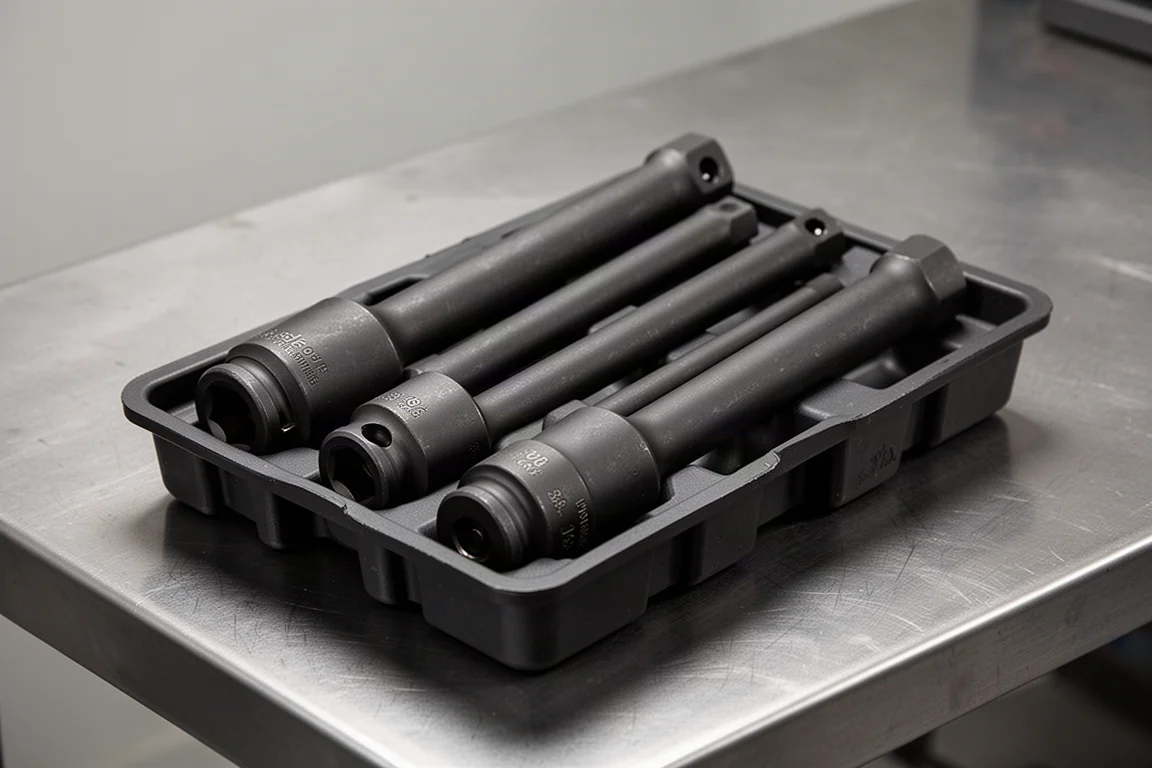
The Astro Goliath 3/8 set comes in a tray with 2.5, 5, 10, and 15-inch lengths, all with a chunky 16.4 mm shank. Compare that to the Nico 3/8 impact extension set, which measures 12.1 to 12.3 mm, essentially matching modern chrome hand-tool extensions, and the difference is immediately visible.
On a smaller 3/8 impact making 362 ft-lb in a calibrated 10-second test, a standard Nico 5-inch extension dropped output to 233 ft-lb. The Goliath 5-inch got back up to 336 ft-lb, nearly where the tool started. On 10-inch lengths the gap was narrower on that small tool, 215 versus 242 ft-lb, and stepping up to a mid-torque 3/8 impact is where the difference widens. With 3/8 impacts now rated as high as 500 to 600 ft-lb, a stiffer shaft makes increasing sense in this drive size.
Nico 3/8 Impact Extension Set
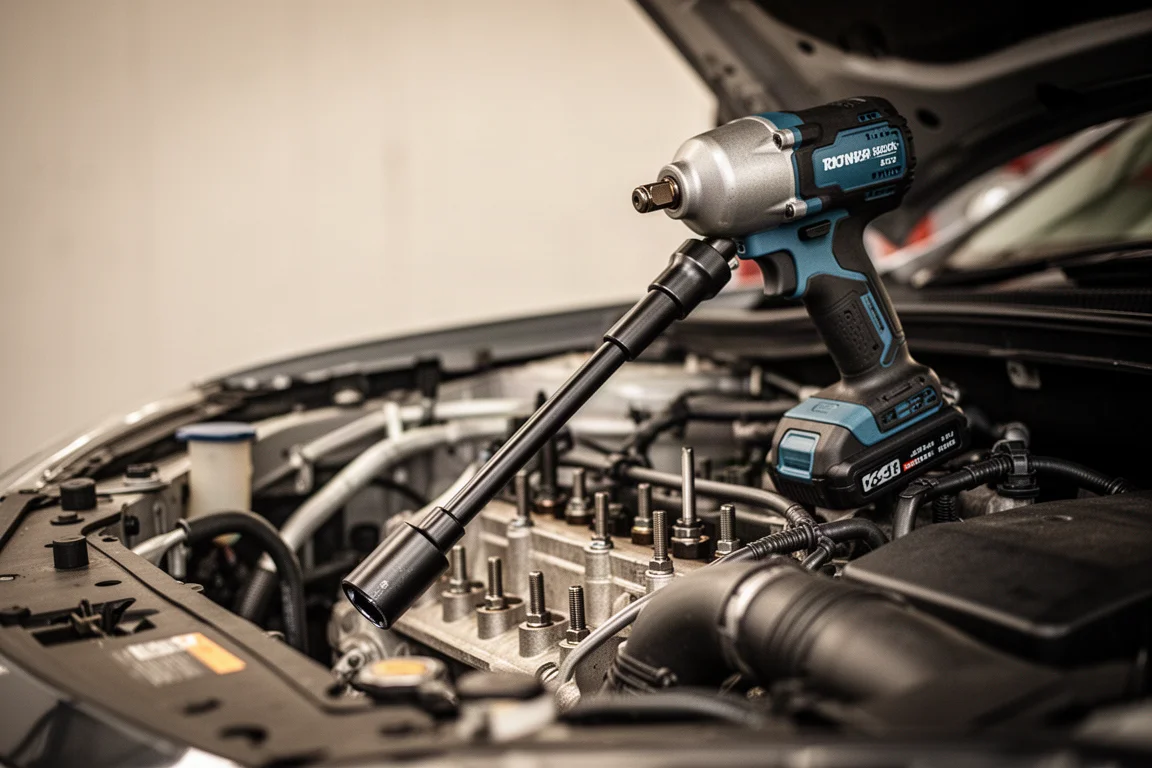
The Nico set is the useful contrast case here. Its 12.1 to 12.3 mm shank is the traditional diameter you already own, and it behaves like every standard extension: significant torque loss on impacting, stalling out and flatlining on stuck bolts as the shaft absorbs the pulses.
It is not useless. On smaller, less powerful 3/8 impacts the loss gap versus a thick-shaft alternative is modest, and Nico remains a conventional-profile option if you want extensions that look and fit like your existing chrome set. Just go in knowing that on a stuck fastener, the tool will feel like it runs out of steam much sooner than the bare-tool numbers suggest.
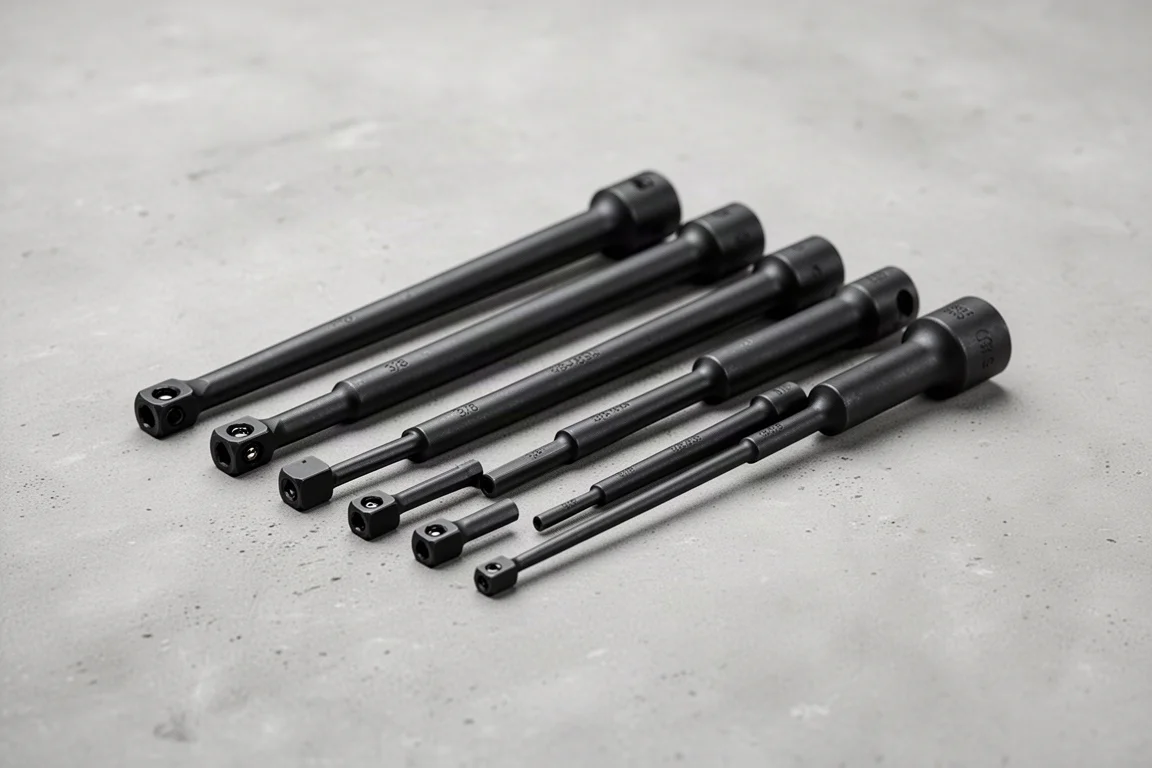
Astro Goliath 1/2 Impact Extension Set
The 1/2-inch Goliath extensions are genuinely chunky. They measure 22 mm of shank diameter against the roughly 16 mm that nearly every brand has used for the last century, and they push close to 3/4-inch drive extension territory, which sits around 26 mm. They add a little weight out front and about 2 to 3 mm of extra clearance needed on each side, so if something interferes, you can always fall back on traditional extensions.
The numbers back the bulk. On a high-torque 1/2-inch impact making 844 ft-lb bare, a 10-inch GearWrench or 20-some-year-old Mac Tools extension delivered around 431 to 433 ft-lb. The 10-inch Goliath delivered 592 ft-lb. On air, a 5-inch Goliath hit 656 ft-lb against 512 to 609 ft-lb for vintage and modern name-brand alternatives. The 1/2 set runs around 45 to 55 dollars, made in Taiwan, with lengths closely matching the GearWrench set below.
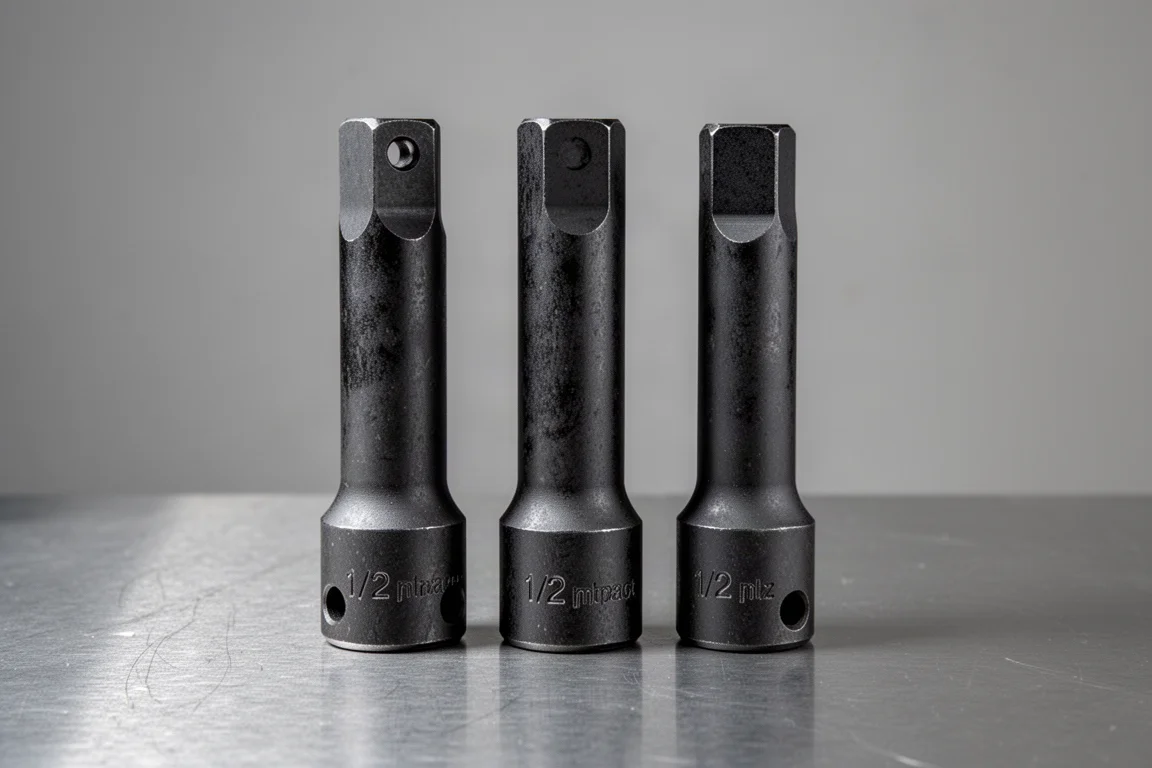
GearWrench 84950N 1/2 Impact Extension Set
The GearWrench 84950N set was bought for 50 dollars and compares closely with the 1/2-inch Goliath set on price, lengths, and Taiwanese manufacture. What it does not share is the shank diameter: its extensions measure around 16.4 mm, exactly where you would expect from essentially every brand over the last hundred years.
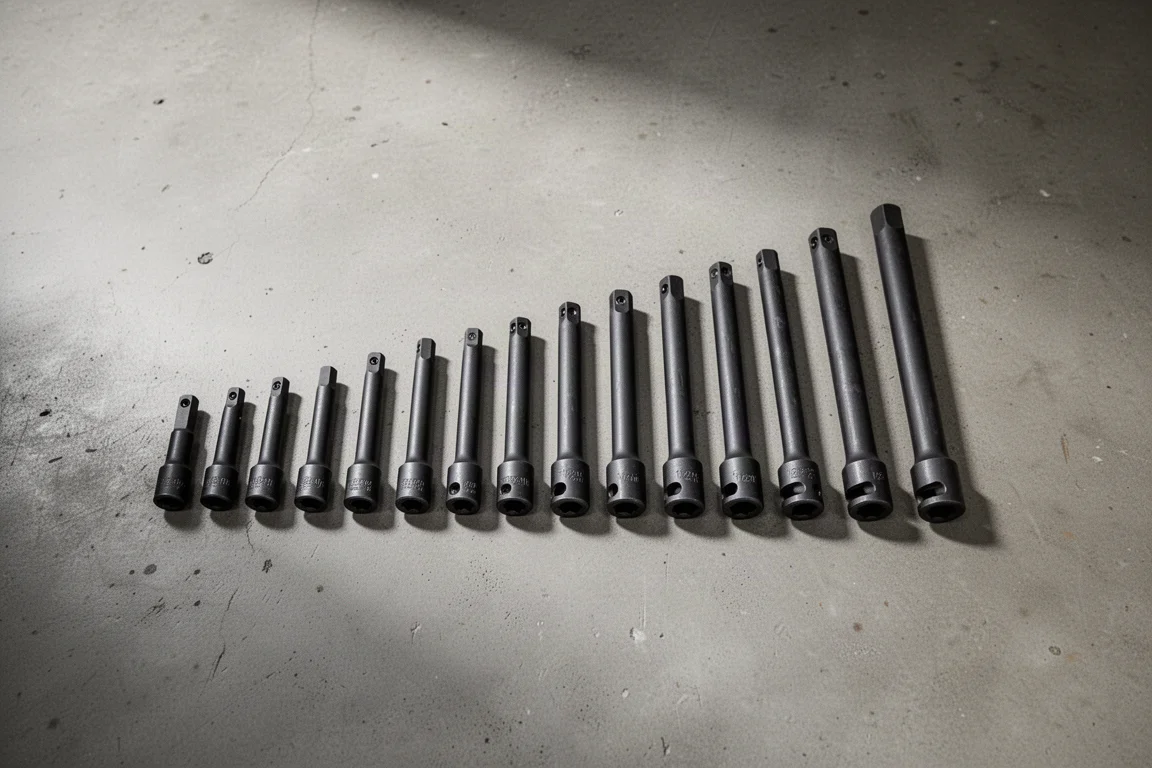
In testing, its 10-inch extension made 433 ft-lb against 431 for an older Mac Tools equivalent, so it performs as well as any traditional design. It is a sensible, well-priced buy for daily-driver use. If you want maximum delivered torque from a modern high-torque impact on stuck hardware, though, the thicker Goliath shaft is the one that closes the gap to bare-tool output.
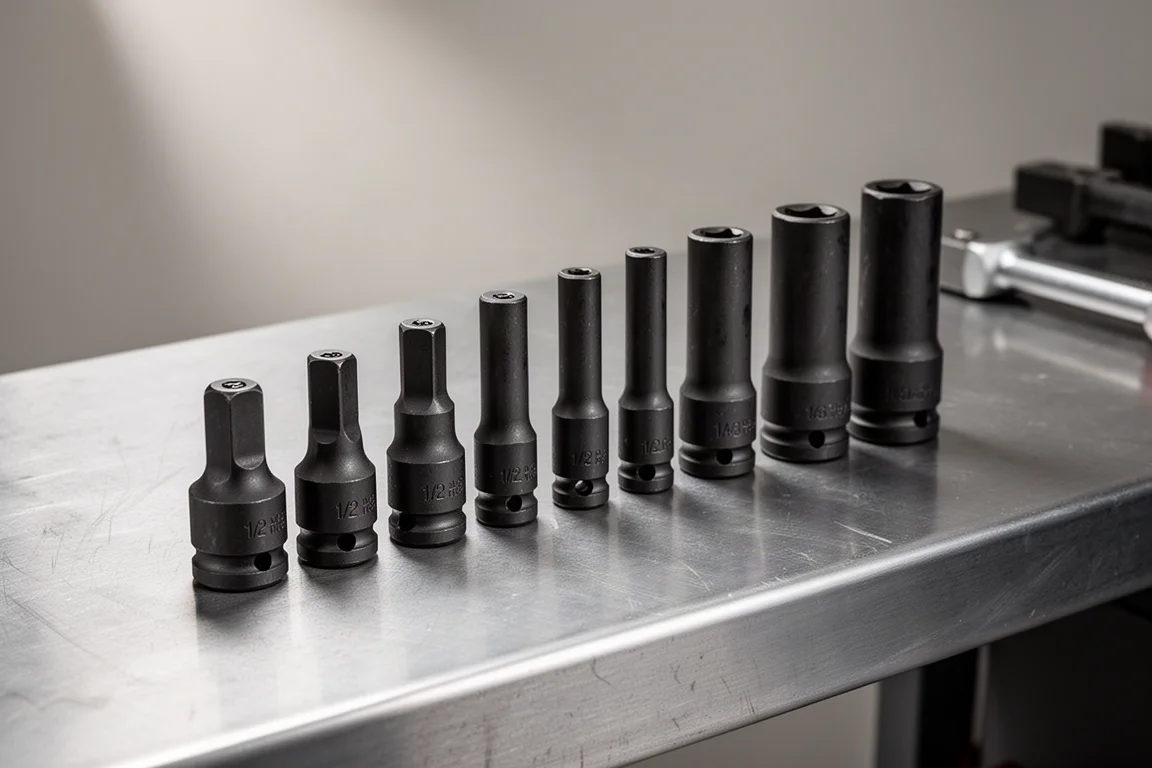
SunX 24in 1/2 Drive Extension
Long extensions exist for a reason, such as bell housing bolts where you cannot tilt the engine far enough to fit shorter tools. But they bleed torque badly. A 24-inch SunX 1/2-inch extension, 16.5 mm shank, made in Taiwan and bought for 45 dollars, dropped a tool making 844 ft-lb bare down to 430 ft-lb with a 10-inch extension, then to just 275 ft-lb at 24 inches.
This is the scenario where the thick-shaft design shines hardest. A 24-inch Goliath extension, selling for around the high 30s in dollars, delivered 445 ft-lb at the same length, more than a traditional 10-inch extension manages. That is more than a 60 percent gain on the longest reach, which is exactly where losses hurt most. If the fastener still will not break free, a long ratchet on the same extension can add hand-driven grunt with no impact losses.
Torque Saver Universal Socket Extension
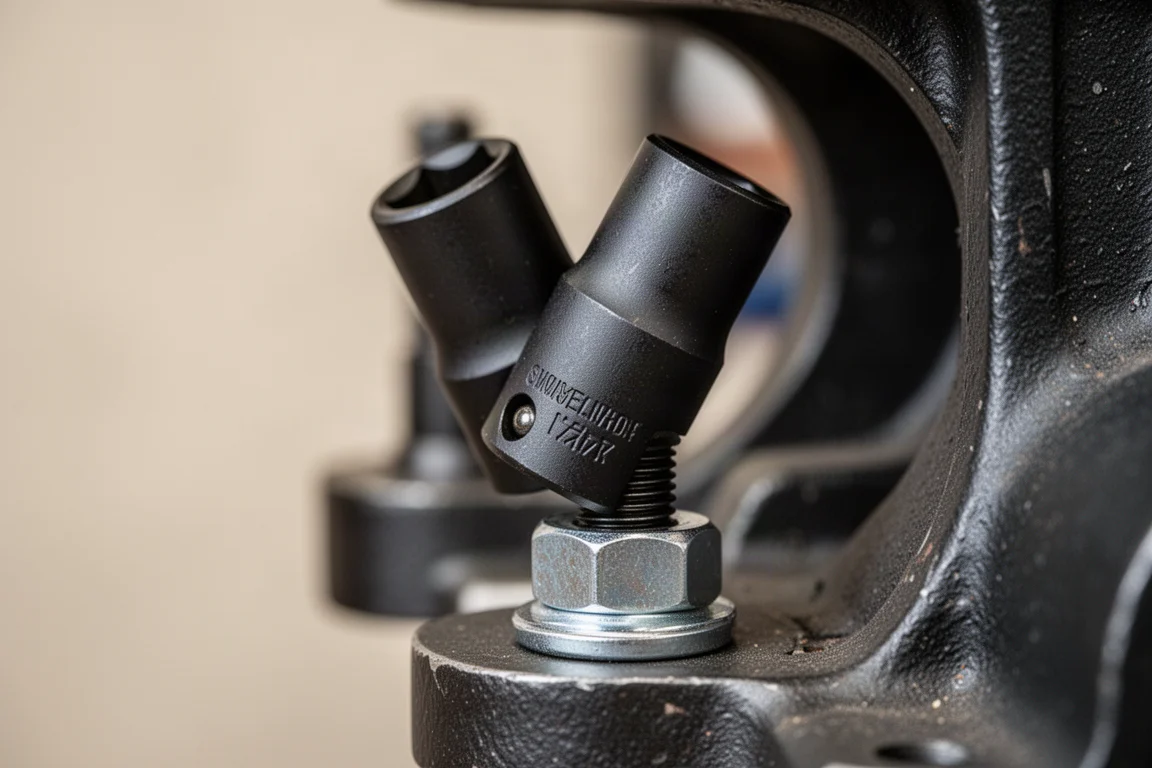
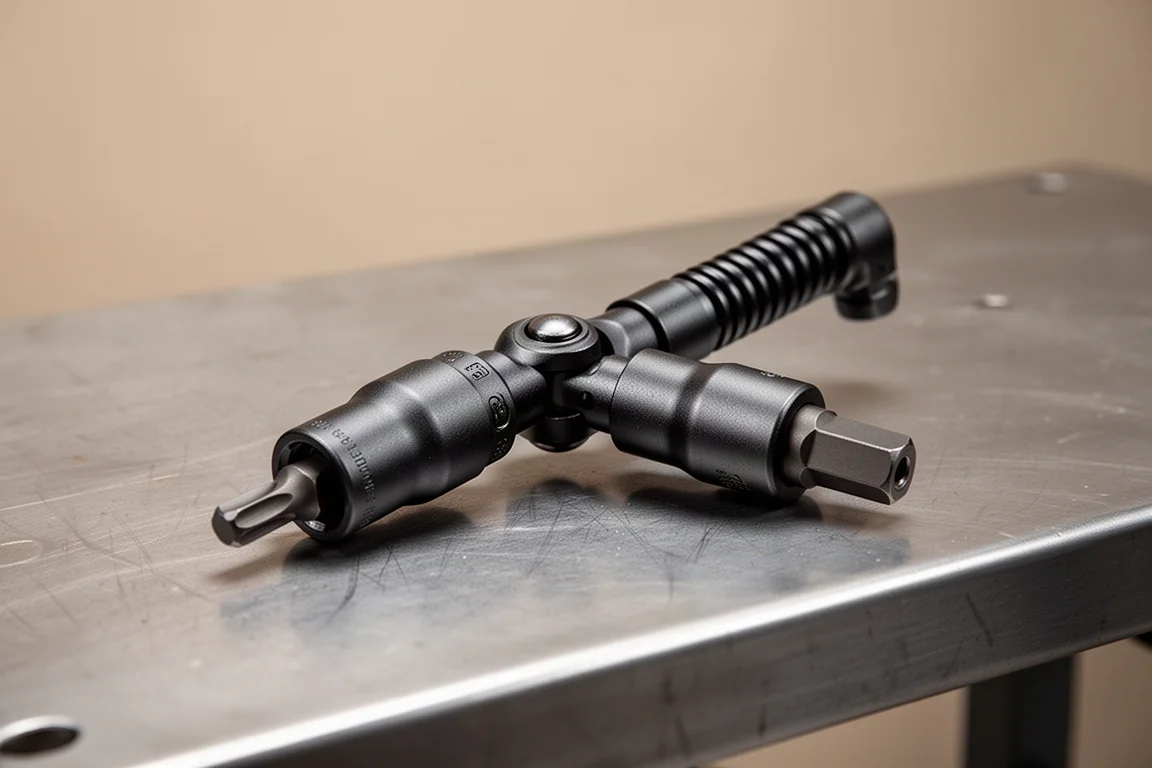
Universal swivel extensions are the thinnest of the bunch and lose the most torque, since the swivel joint has to transmit the pulses too. A Mac Tools 1/2-inch universal extension flatlined almost immediately when used at an angle, delivering 329 ft-lb from a tool that usually makes around 740, less than half.
The Torque Saver universal socket extension was bought fresh as a single 19 mm unit. It also flatlines like most universals, but much later and at much higher output, reaching 440 ft-lb. The design pairs the socket and shaft together rather than beefing up only the shaft, which is why the set is not offered with a 22 mm shaft, a set would weigh a great deal. Past roughly the 5 to 6 second mark, release the trigger, reposition, and try again rather than holding on.
Buying Advice
If you mostly use extensions with ratchets and torque wrenches, buy whatever well-made traditional set fits your drive sizes, and the GearWrench 84950N is a strong value pick. If you regularly reach for stuck bolts with a modern impact wrench, a thick-shaft set like the Astro Goliath in 3/8 or 1/2 drive recovers a meaningful share of the torque your tool paid for, especially at longer lengths. For angled access where a swivel is unavoidable, the Torque Saver design loses noticeably less than conventional universal extensions.
A practical strategy is to keep traditional extensions as your daily drivers and add a thick-shaft set for the jobs where an impact stalls out. Worst case, if the fatter shaft does not fit a tight spot, the traditional set is still in the drawer.
Conclusion
Extension design has quietly lagged decades behind impact wrench power. Stiffer, larger-diameter shafts and better-paired universal joints are simple, inexpensive changes that recover 20, 30 percent or more of delivered torque in real use. Whether you need them for every job or just the stubborn ones, the numbers here make the case for matching your extensions to the tool actually driving them.
Further reading
Related Reviews
Hand & Power Tools
Best Universal Impact Sockets: Torque Loss and Durability Compared Across 11 Brands
Universal impact sockets cost you real torque with every blow. We compared 11 brands from $5 to $1,026 a set to see which designs transfer the most power and survive the longest.
Hand & Power Tools
Klein Impact Driver Socket Adapters: Two Sets Worth a Look
Klein's new socket adapter sets plug square drive sockets into quick-lock impact drivers, and the swivel version might be the most practical of the bunch.
Hand & Power Tools
Olsa Tools 1454 6-Inch Locking Impact Extension Review: A Budget-Friendly Workhorse
A close look at the Olsa Tools 1454 3/8 drive six-inch locking impact extension, covering its locking mechanism, build quality, and whether it earns a spot in your tool drawer.