Power Tools
9 Impact Drivers Compared: Finding the Right One for Your Toolbox
Nine flagship impact drivers from AEG, Bosch, DeWalt, HiKOKI, Makita, Milwaukee, Panasonic, and Ryobi lined up on weight, speed, torque, modes, and real driving performance.
Introduction
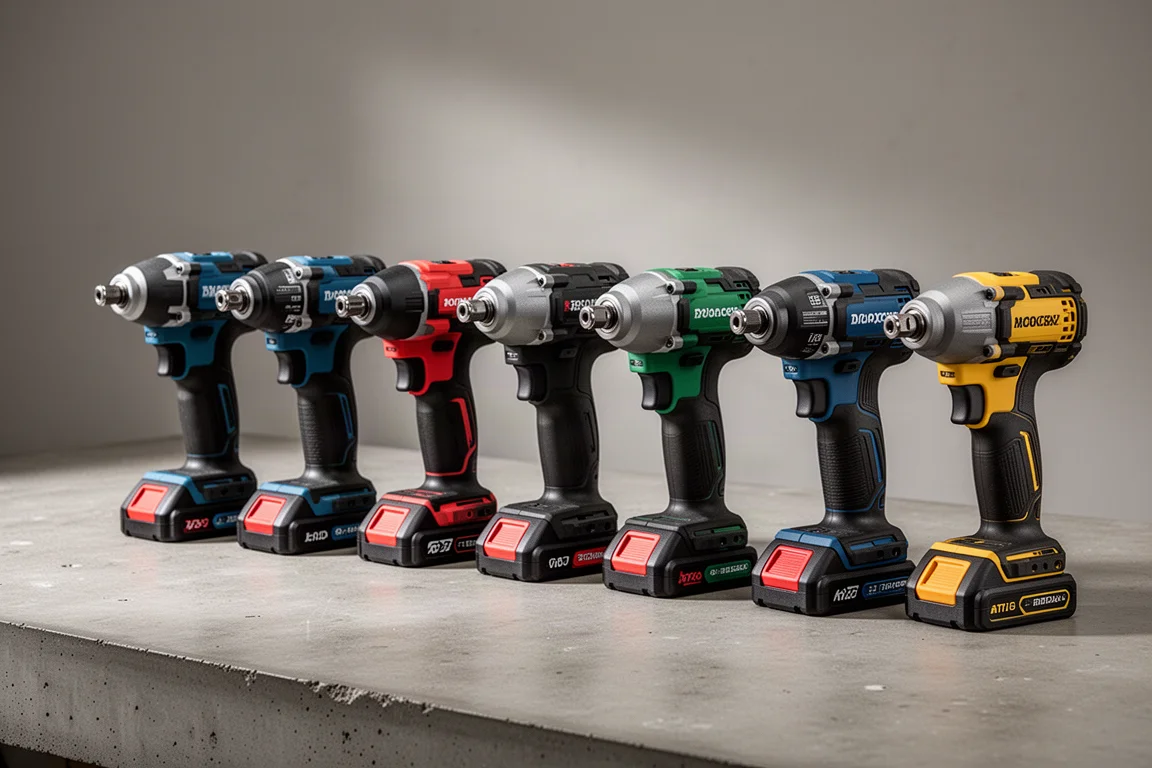
Impact drivers are one of the most common tools in any toolbox, which is exactly why every major brand keeps refreshing them. This comparison lines up the current top impact driver from nine brands: AEG/Ridgid, Bosch, DeWalt, HiKOKI/Metabo HPT, Makita 18V, Makita 40V, Milwaukee Gen 4, Panasonic, and Ryobi.
A quick note on how this was tested. Each tool ran on a comparable 5Ah-class battery (the HiKOKI and Makita 40V use their higher-voltage packs with the same cell count), all freshly charged, with drivers on their top speed setting unless stated otherwise. Also worth knowing: impact drivers produce more torque in their higher settings, the opposite of drills, and they impact radially rather than hammering back and forth.
Size and Weight: Where Each Driver Lands
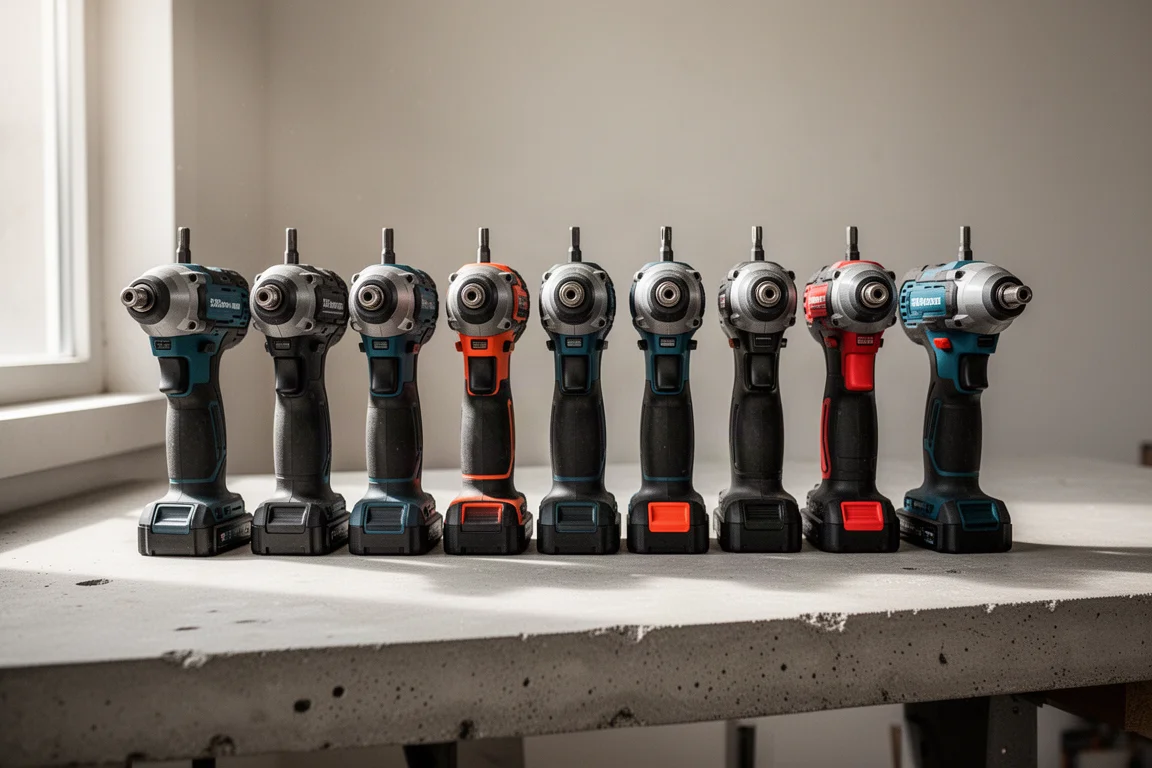
Weight varies more than you might expect. The Bosch is the heaviest of the group at 1,155g, while the Panasonic is the lightest at just 810g, a difference of 345g. That matters for overhead work and long sessions on the tools.
Height differences are minor across the board. The Makita 18V is the shortest of the group, with the Ryobi close behind, while the DeWalt and Bosch sit tallest. Length is where the spread is dramatic: the Panasonic measures just 98mm, under four inches, while the Bosch reaches 147mm, making the Bosch almost two inches longer.
If compact size is your priority, the Panasonic has a clear edge on paper. If you are shopping purely by feel in the hand, height will barely factor in.
Speed: RPM and Impacts Per Minute
On RPM, the Panasonic is again at the slow end at 2,700, followed by the Ryobi at 2,900. The AEG and Bosch both hit 3,400, the Makita 18V reaches 3,600, the HiKOKI and Makita 40V both 3,700, and the DeWalt and Milwaukee take the top spots at 3,800 and 3,900 respectively.
Impacts per minute tell a slightly different story. The Makita 18V has the fewest at 3,800, the Ryobi manages 4,000, the Bosch, Panasonic, and HiKOKI each deliver 4,100, the AEG and Milwaukee 4,400, and the leaders are the DeWalt at 4,500 and the Makita 40V TD002G at 4,600.
Modes and Settings
Mode counts vary widely. The DeWalt offers three modes, four drivers sit at four modes (the Ryobi effectively 4+ because settings can be tweaked via Bluetooth with a compatible battery, and the AEG counts as roughly five for the same reason), the Makita 18V jumps to eight modes, and the Makita 40V TD002G leads everything with ten modes.
If you want a driver that covers everything, loosening nuts and bolts, multiple speed steps, precision screw work, the Makita 40V has the most settings accessible directly on the tool, without needing to pull out your phone.
Claimed Torque Ratings
Manufacturers’ torque figures, taken at face value, rank like this: the Panasonic claims 155 Nm, the Makita 18V claims 180 Nm, the Bosch claims 200 Nm, the Makita 40V claims 210 Nm, the Milwaukee Gen 4 claims 220 Nm, the AEG claims 260 Nm, the DeWalt claims 282 Nm, and the Ryobi claims 300 Nm.
It is worth being sceptical of the higher numbers here. In practice, these figures do not always line up with real driving results, and the Ryobi’s class-leading claim in particular should be treated with caution. The combination of torque, RPM, and impacts per minute is what determines real-world power, and spec sheets do not always tell that story.
How They Perform in Real Use
In a hole-drilling test with 35mm holes at top speed, every driver got through the work, though the Panasonic was clearly pushing itself hard, and the field split into faster and slower groups.
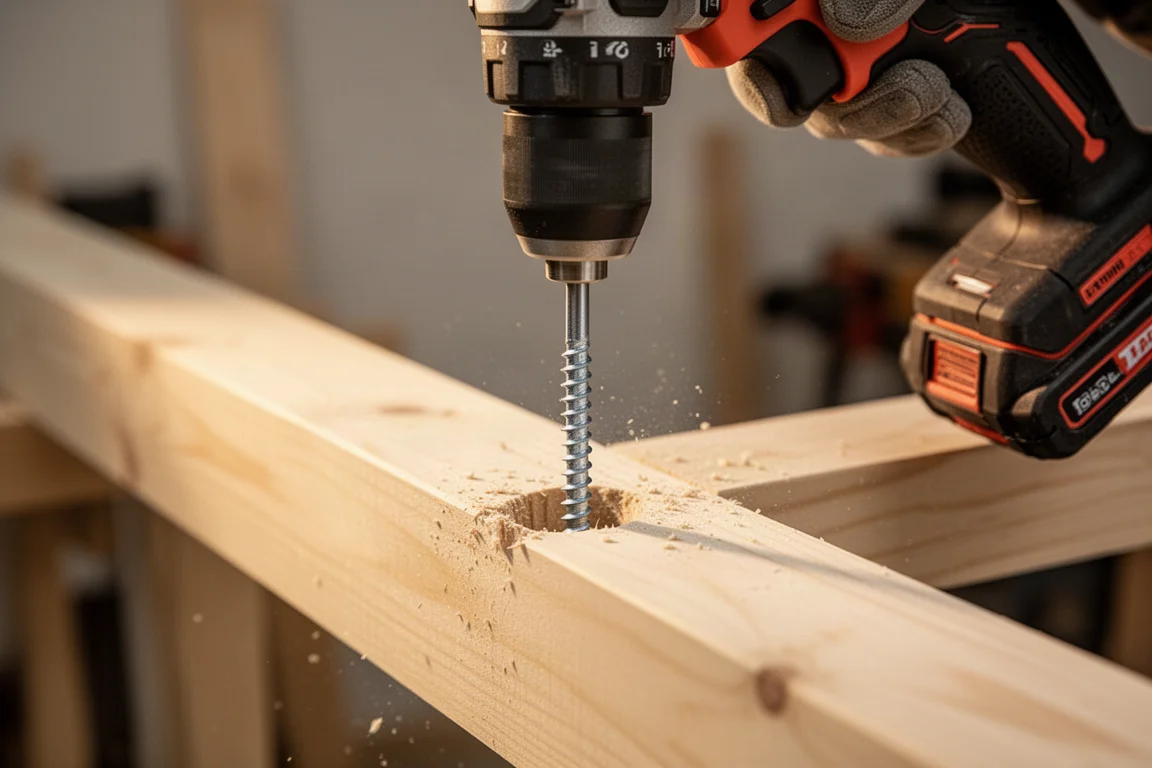
In a screw-driving test driving fasteners 125mm into treated pine, the results were more interesting. The Milwaukee Gen 4 seemed slightly sluggish with these screws, sitting mid-pack behind the AEG and DeWalt, which was unexpected given how dominant it is with larger fasteners. With big screws and heavy bolts, a Milwaukee typically pulls away from the field, so the lesson is that the right driver depends on the fasteners you actually use.
The Bosch was disappointing under load: it sounds quick until it has to do real work, and like other Bosch impact drivers, it struggled to handle anything with meaningful torque despite respectable spec numbers. Among the three brands with the boldest claimed torque figures, the Ryobi, AEG, and Milwaukee, real results tend to run the other way, and the Ryobi does not deliver the torque its rating implies.
Chucks and Everyday Handling
Chuck design separates these tools more than any spec sheet will. The AEG and Ryobi are fully one-handed: push the bit in and the collet stays back, pull forward and it ejects the bit. The Panasonic is similarly easy, single-handed insert and release, with a notably tight, solid chuck and minimal play.
The Bosch is the hardest to live with: no one-handed insert, a stiff release ring, and fiddly bit changes. In fairness, its unusual head also accepts sockets, making it both a high-torque driver and a low-torque impact wrench in one. The DeWalt is easy to use with a bit ejection feature, though it has noticeable chuck play. The HiKOKI and Milwaukee Gen 4 both need a second hand to release the collet, though the Milwaukee’s chuck is a genuine improvement over its predecessor, which dropped bits under pressure.
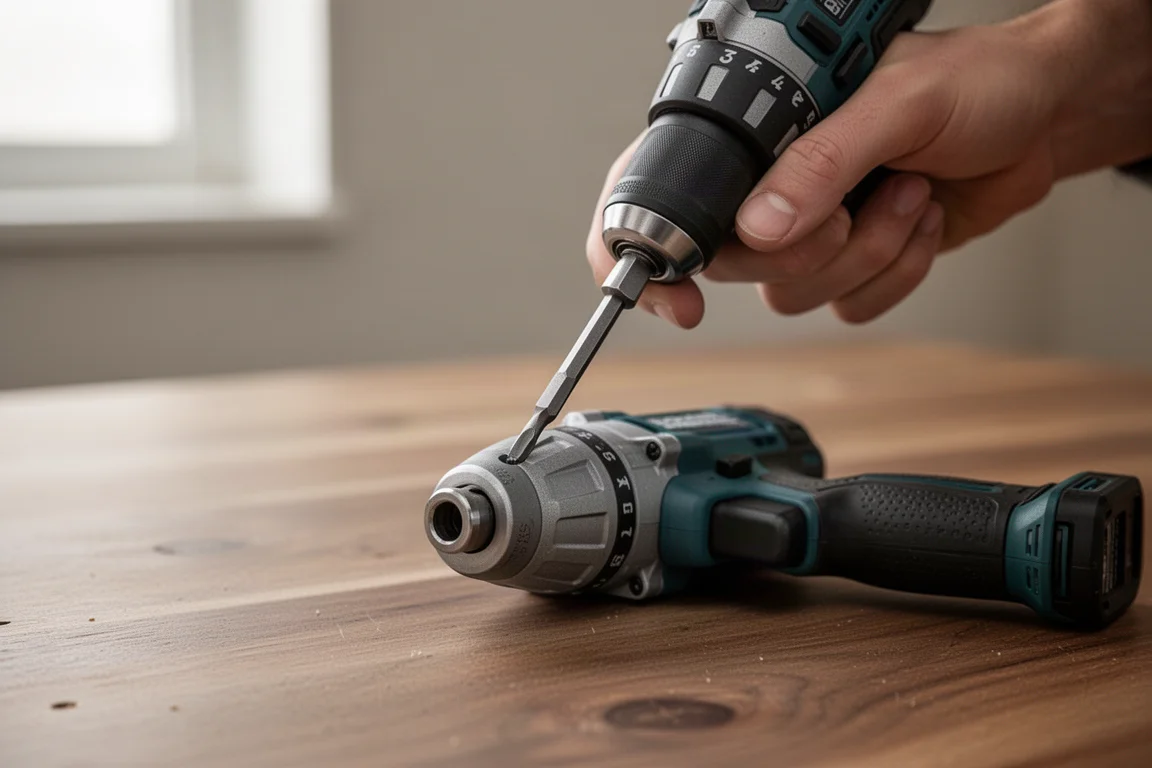
The Makita 18V is probably the easiest of all to get a bit into, going in smoothly one-handed, though it does not self-eject. The Makita 40V goes in easily too, perhaps too easily: an earlier version of this chuck released bits under pressure, though the design has since been reverted.
Lighting, Controls, and Extras
Work lights range from almost useless to genuinely helpful. The weakest are the Panasonic and Bosch, which light up little more than a dim patch. The Ryobi fires light up from the base, and the AEG is similar with a warmer tone. The Milwaukee has a very orange light in the right spot, and the Makita 40V is much brighter than those. The DeWalt’s light is bright and focused, offers three settings, and stays on for 20 minutes. The standouts are the HiKOKI and especially the Makita 18V, whose ring light is the superior layout for an impact driver: it lights the whole work area evenly, can be switched on without running the tool, and holds for about an hour, effectively doubling as a torch.
Control panel placement matters in daily use. Only the AEG and Makita 18V put their controls on the back of the body, which is far easier to read while gripping the tool naturally; other brands place numbers front-on or, like the DeWalt, upside down. Three tools, the Bosch, the Makita 40V TD002G, and the HiKOKI, support Bluetooth batteries with app-based setting adjustments. It is powerful flexibility, but if you would rather push a button than take off gloves and reach for your phone, the Makitas have the most on-tool settings.
The Panasonic Oddball: Multi-Function Versatility
The Panasonic plays a different game entirely. It is a multi-function driver with a range of attachments, including offset attachments, drill attachments, cable cutters, and crimpers. It does not match the others on raw power, and it is the slowest on RPM, but no other driver here offers this level of versatility in a single body.
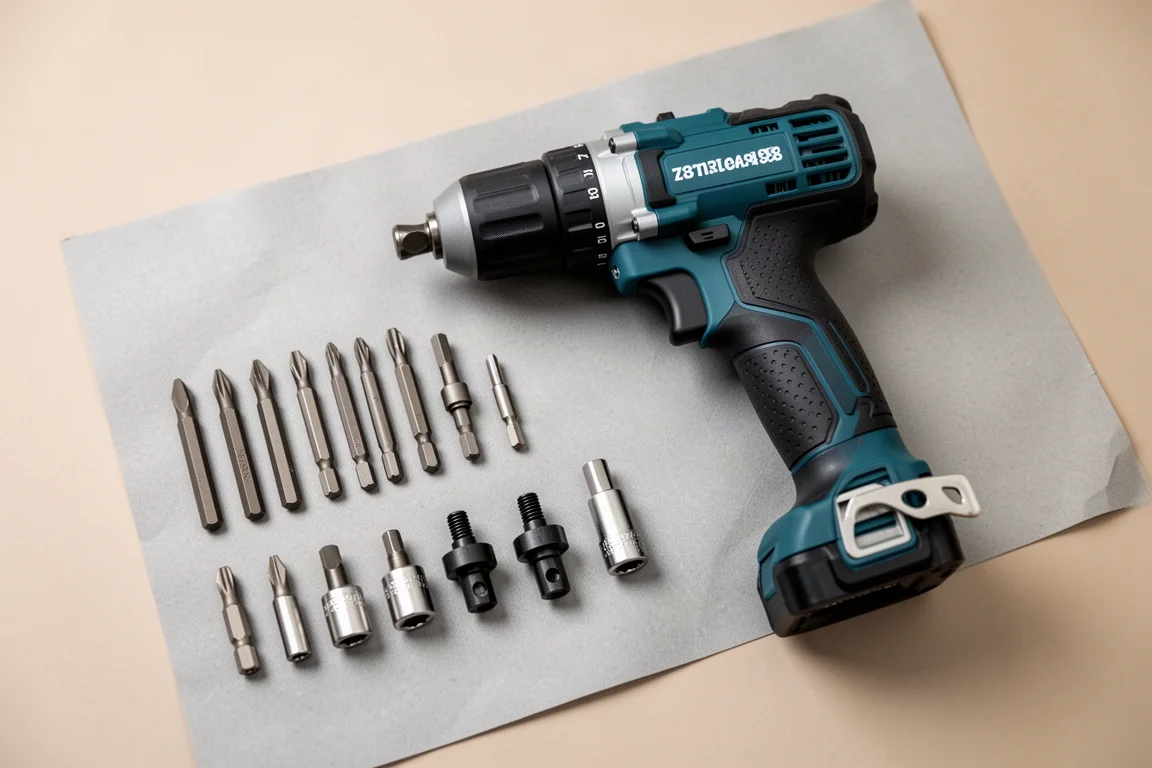
If your work involves electrical tasks, tight spaces, or anything beyond driving screws, the Panasonic earns its place in the lineup for reasons the torque chart cannot capture.
Buying Advice: Picking the Right Impact Driver
A few patterns emerged from this comparison. If you want maximum on-tool control and the broadest mode range, the Makita 40V TD002G is the most complete package. If you want the best work light and easy bit changes, the Makita 18V is hard to beat. If you drive big fasteners regularly, the Milwaukee remains the benchmark. If raw speed with smaller screws matters, the AEG impressed well beyond its spec sheet. If you want the most versatile single tool, the Panasonic stands alone.
Also worth noting on manufacturing: most of these drivers are made in China, the Bosch is made in Malaysia, and the Makita 18V and 40V units shown here are made in Japan, though domestic versions in other markets may be produced in China.
Conclusion
There is no single winner across nine very capable impact drivers. Match the tool to your work: power-hungry users should look at Milwaukee and DeWalt, control-focused buyers at the Makitas, versatility seekers at the Panasonic, and value-driven buyers will find the Ryobi and AEG do far more than their price suggests. Whichever you choose, every driver in this lineup represents its brand’s current best.
Further reading
Related Reviews

Power Tools
Best 1-Inch Pistol Impact Wrenches: Three Heavy-Duty Options Compared
We compare three 1-inch pistol impact wrenches, from a budget-friendly Harbor Freight model to a premium Caterpillar unit, to help you choose the right one.

Power Tools
Best 3/4-Inch Impact Wrenches 2026: Five Contenders Compared
We compare five 3/4-inch impact wrenches across price and performance, from a budget Amazon option to Snap-on's most powerful model yet.

Power Tools
Best Budget Cordless Tools 2026: Walmart Finds That Punch Above Their Price
We tested five cordless tools from Walmart, including a high-torque impact wrench that trades blows with Milwaukee and a $35 duster that outperforms its price class.