Hiking Footwear
Best Hiking Boots and Trail Runners 2026: Seven Pairs Compared
Seven hiking boots and trail runners compared by terrain, weather and load, with the real strengths and trade-offs of each pair.
Introduction
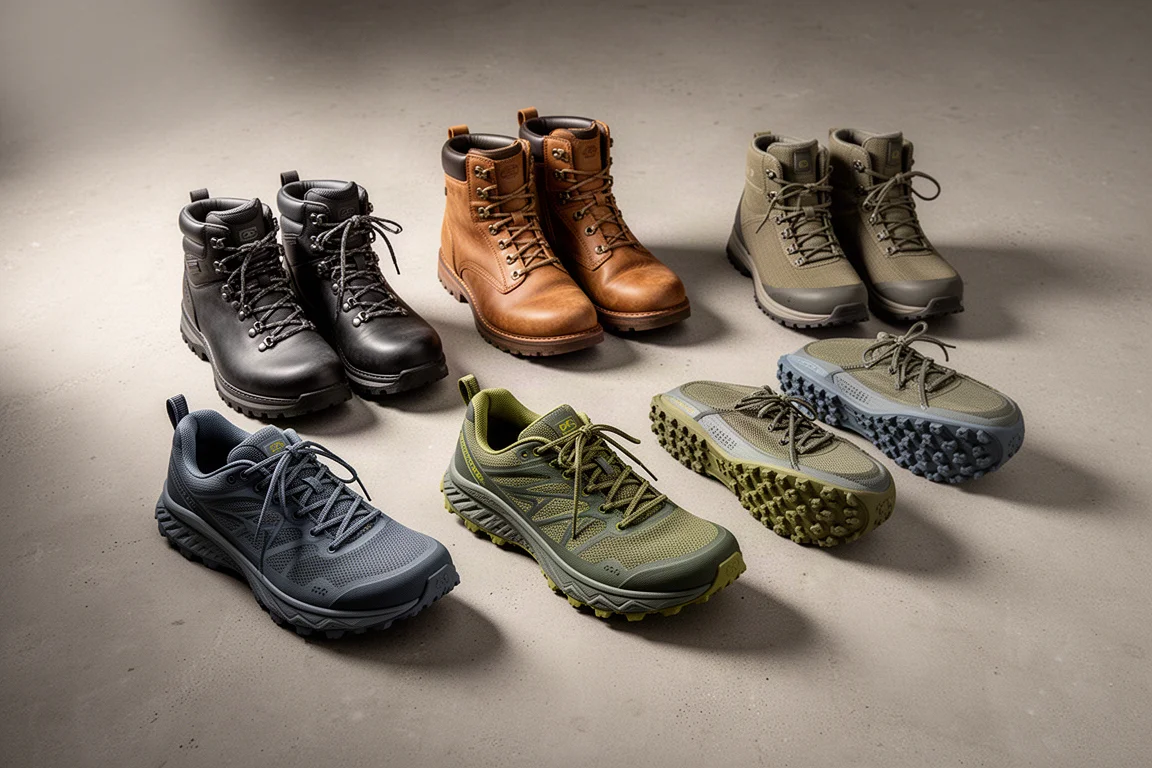
Hiking footwear is one of the few purchases where the correct answer depends almost entirely on where you walk, how much you carry and what the weather decides to do. This roundup covers seven pairs that span the full spectrum: mid-height waterproof hiking boots, lightweight boots that sit close to trail runner territory, and low-cut shoes built for speed on soft ground. Prices range from genuine bargains to premium options, and the feature sets differ just as widely.
The most useful lesson from living with all of them is that there is no single do-it-all shoe. Different footwear genuinely suits different people, different terrain and different conditions. A pair that feels perfect on a dry summer trail can be the wrong choice on technical ground with a heavy pack, and the reverse is just as true.
How to Match Footwear to Terrain and Conditions
There is still a clear place for a full-height boot. In genuinely bad conditions, on technical terrain, or when carrying weight, the stability and protection of a taller boot is difficult to argue with. That combination of a stiffer platform, a higher collar and more material around the foot does real work when the ground is loose and the pack is heavy.
Equally, on a warm dry day over a less technical route, a full-height hiking boot is massive overkill. A trail runner will handle that kind of day brilliantly and feel far lighter on the feet.
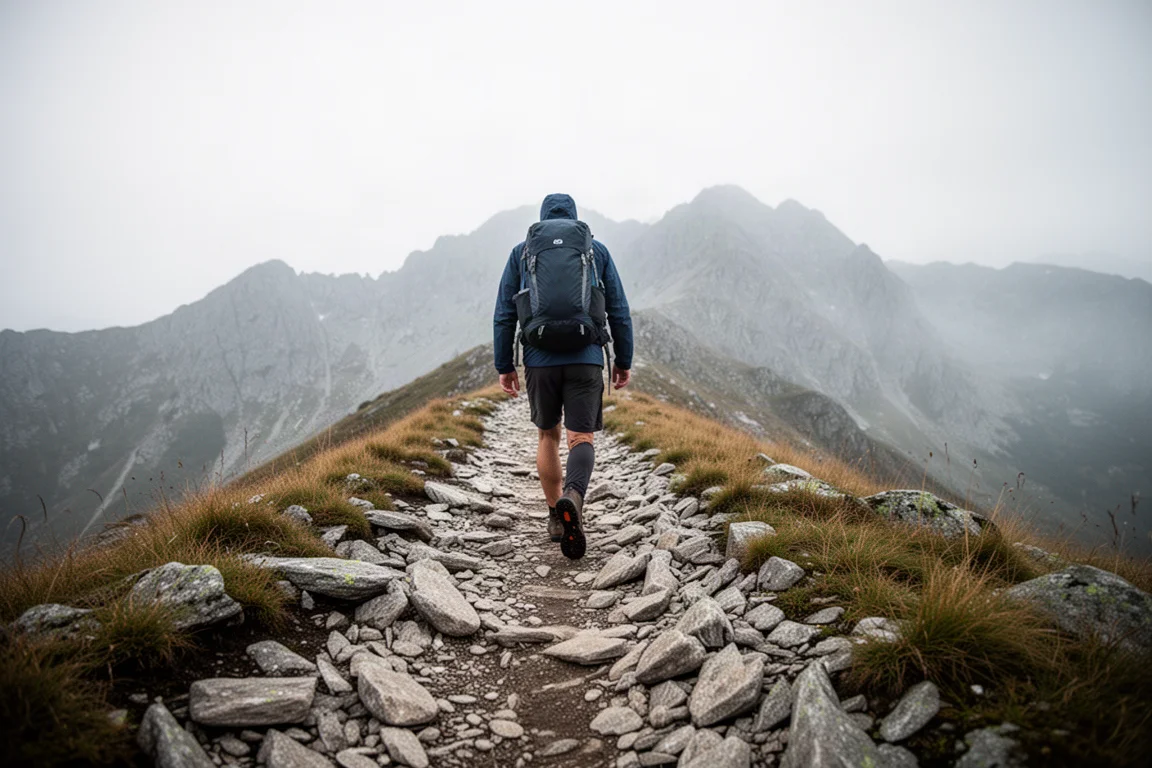
The sensible approach sits somewhere in the middle: make your own assessment of the route, the forecast and the load you are carrying, then match the shoe to it. A little common sense about conditions goes a long way, and it is perfectly reasonable to make the final call once you see what the weather is actually doing.
Salomon X Ultra 360 Mid Hiking Boots
The X Ultra 360 Mid sits just below the X Ultra 4 in the Salomon range, but it keeps a generous feature set for the price point. There is a gusseted tongue, a Gore-Tex lining, a Contour Grip outsole and a mid-height cut that gives useful ankle coverage. The OrthoLite insole is exceptionally comfortable, and as a general rule these are simply a pleasure to wear.
Two practical notes are worth keeping in mind. On particularly rocky and stony terrain over long distances, going up half a size makes a real difference. Grip sits at a medium level rather than an aggressive one, which makes these a well-rounded generalist rather than a specialist for steep wet ground.
Columbia Konos TRS Trail Runner
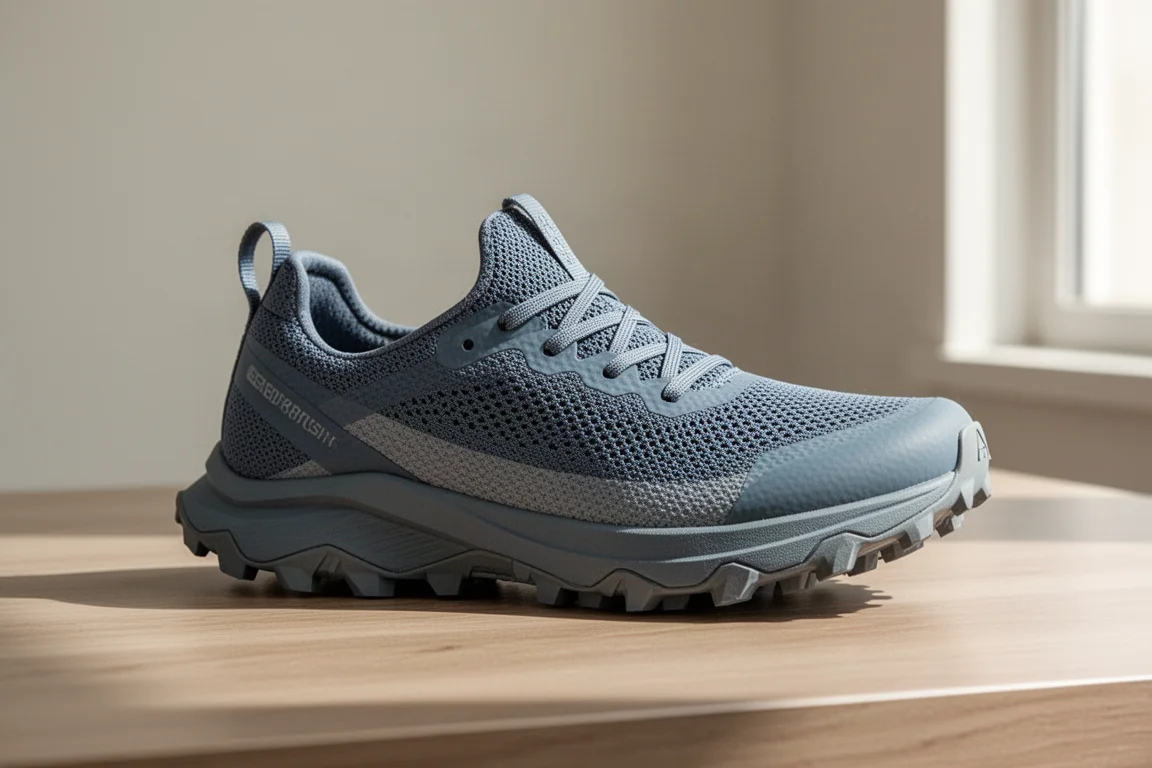
The Konos TRS is a trail-runner-style shoe at around £90, and it is honest about what it is. The upper is mesh with no membrane, so it is not waterproof, and protection is minimal apart from a small amount over the front. At roughly 290g it stays light, and an OrthoLite insole makes it very comfortable to wear, essentially a highly grippy running shoe for the trail.
The wet grip is genuinely excellent, including on wet rock. The trade-off is familiar: the softest rubber compounds deliver the best wet grip and wear out fastest, and the tread on these has worn noticeably. Treat them as a dry-day summer shoe for lighter loads and they are lovely to wear.
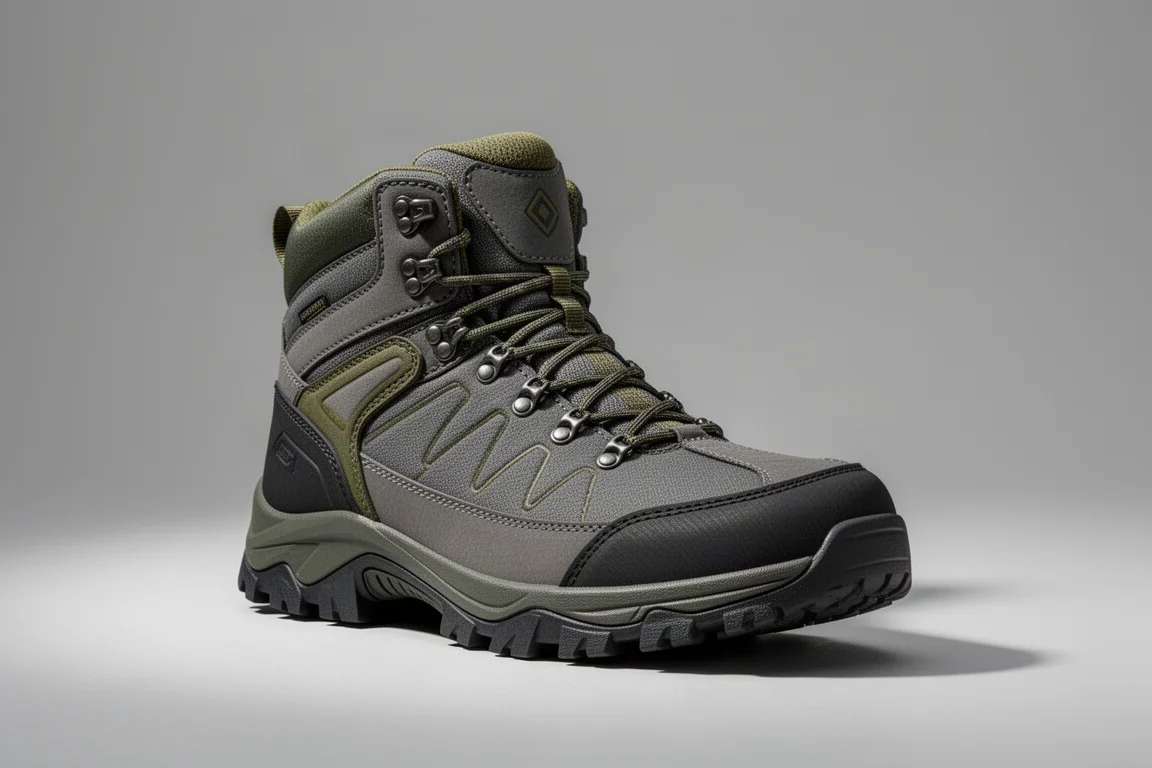
Decathlon Quechua MH500 Mid Hiking Boots
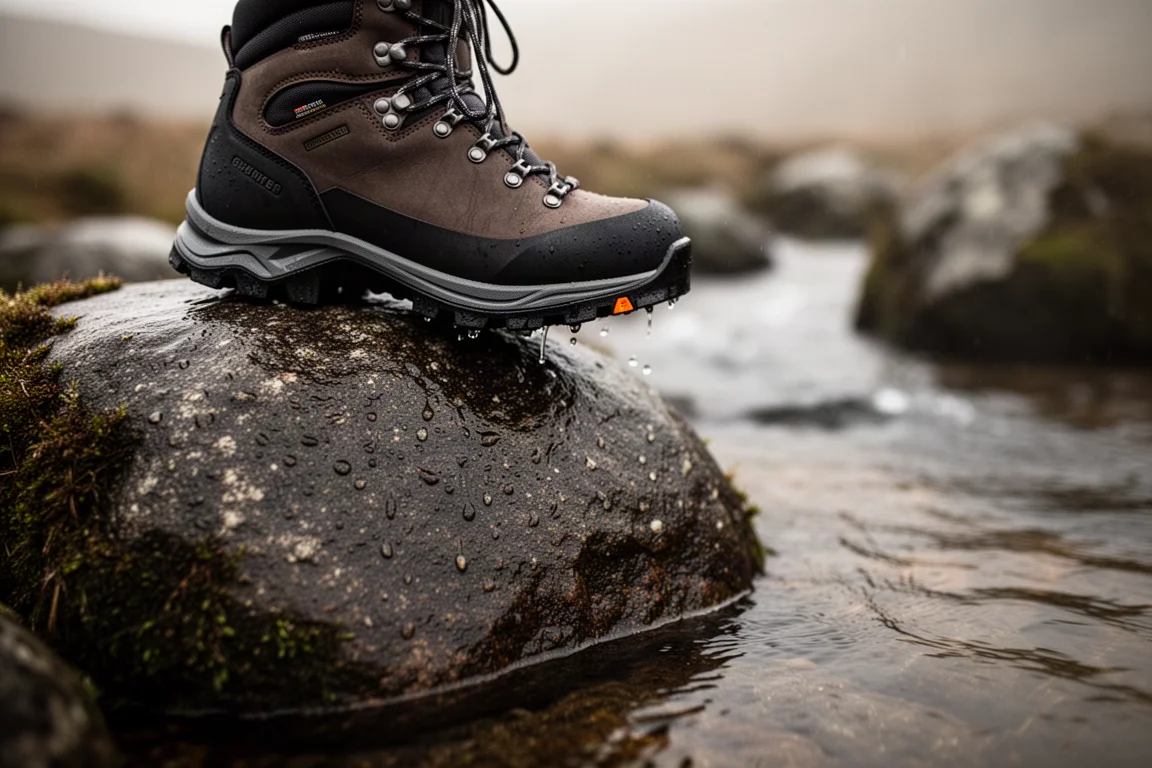
The MH500 Mid is a waterproof mid-height boot with plenty of protection at both the front and the rear, a substantial amount of leather in the upper and a gusseted tongue. On paper it looks like a heavy, utilitarian option, and the comfort level comes as a genuine surprise.
That comfort holds up even though the tongue has almost no padding, and it stays comfortable on steep descents where the weight of the foot pushes hard against the laces. Grip is good across mixed dry and wet conditions, including on wet rock. The one thing standing between these and a perfect score is a little more padding on the tongue, but as with most Decathlon gear these are thoroughly tried and tested, and they are a real bargain.
For anyone who wants proper waterproof protection and solid all-round grip without spending much, this is one of the easiest recommendations in this group.
Inov-8 345 GTX V2 Lightweight Hiking Boots
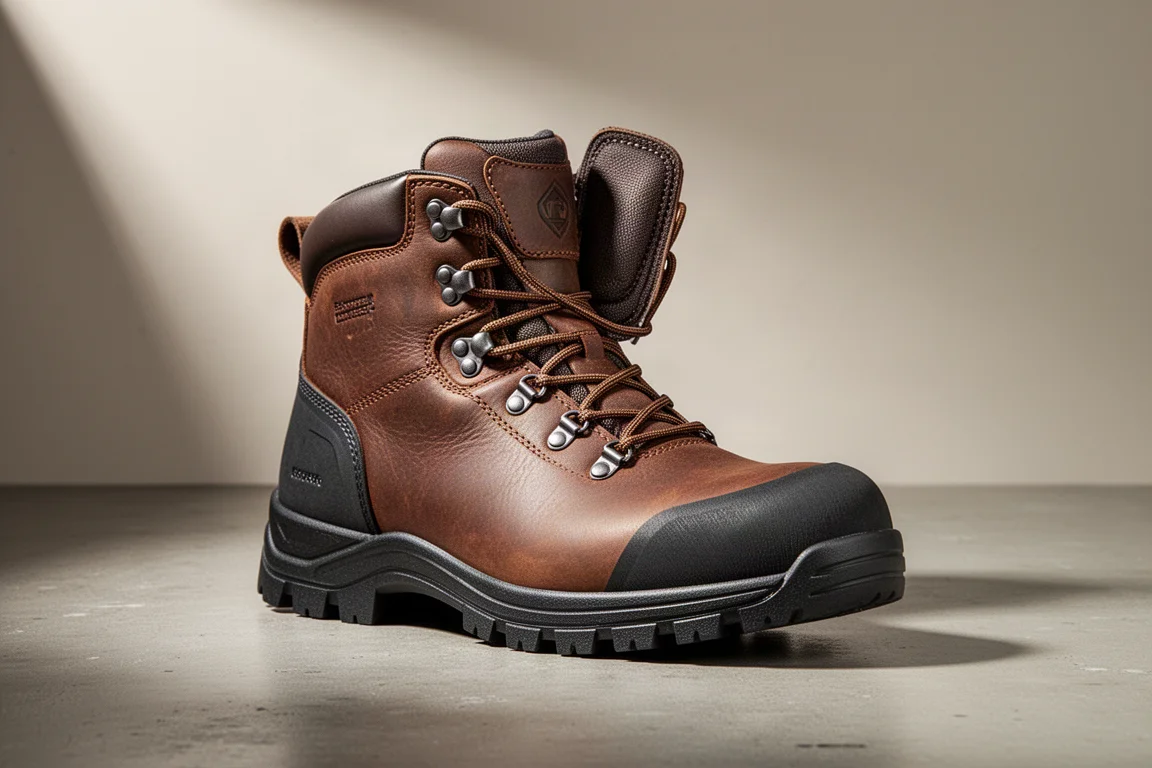
The 345 GTX V2 is closer to a trail runner with a taller collar than a traditional hiking boot. The headline feature is the graphene outsole, which resists wear to a remarkable degree. The V2 revision made a meaningful difference to comfort levels, and with a Gore-Tex liner inside, these are a genuinely nice lightweight boot to walk in.
The trade-off is protection. There is noticeably less of it than on a full hiking boot, and the graphene rubber is not particularly strong on wet rock. If long-term outsole durability and low weight matter more to you than maximum armour, these make a lot of sense.
Salomon Speedcross 6 Trail Running Shoes
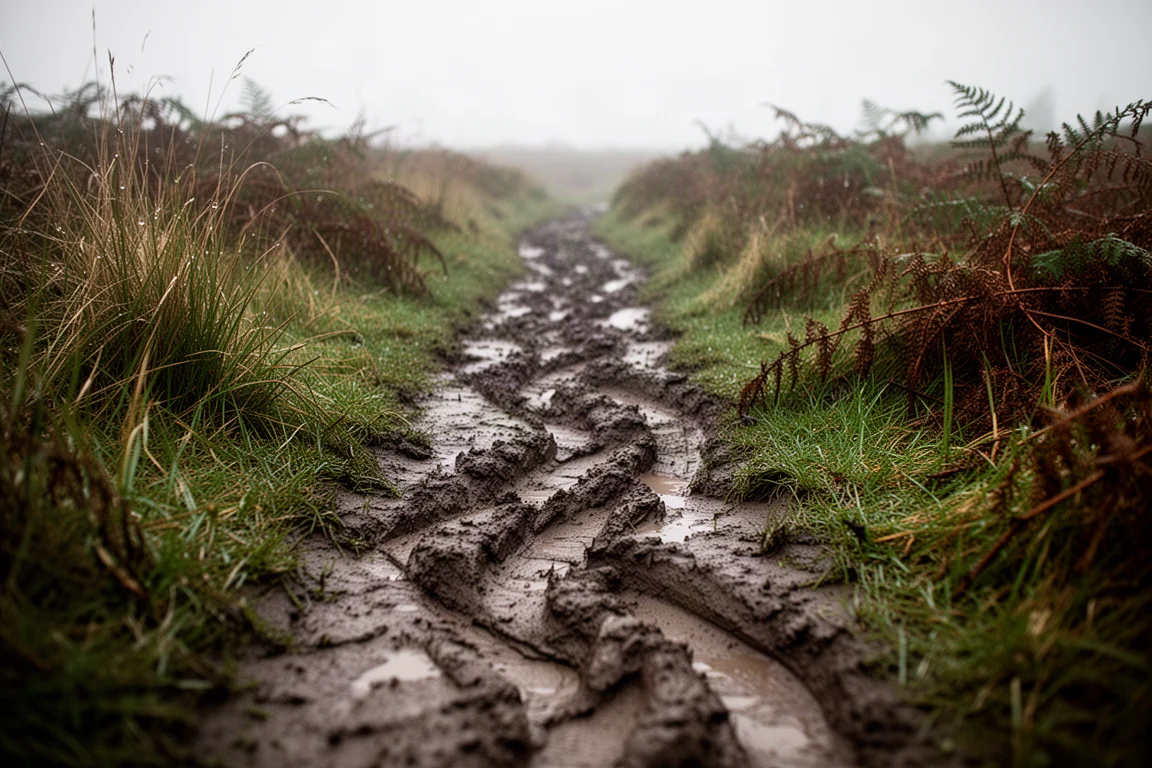
The Speedcross 6 weighs around 328g per shoe and pairs a waterproof Gore-Tex liner with the most aggressive grip in this group. The lugs are deep and widely spaced so mud does not cling to the bottom, which makes them exceptional in mud and really wet grass. Comfort is outstanding, helped by a quick-release lacing system, and they have proven themselves on long, punishing efforts.
Sizing up half a size is worth considering, and the tongue is not fully gusseted, relying instead on a piece that comes over the top to keep feet dry. The usual waterproof caveat applies: if you submerge your foot, a lined shoe takes far longer to dry out, so be prepared for damp feet for the rest of the day. Runners who prefer a taller stack height may find these a touch low, but the comfort and grip are superb.
For wet, grassy and muddy ground, nothing else here comes close.
Inov-8 Parkclaw G 280 Summer Trail Shoe
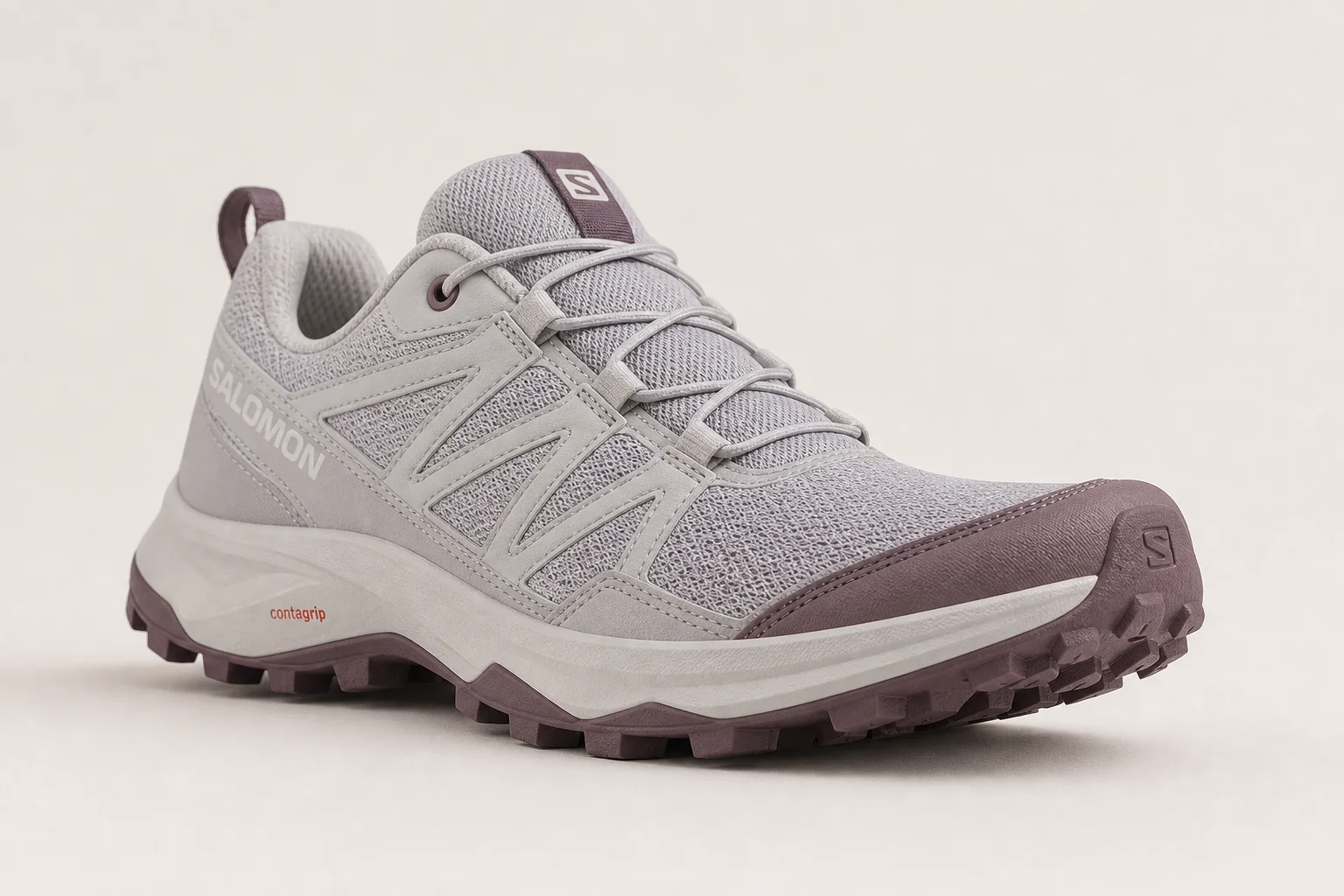
At roughly £60 and just 280g, the Parkclaw G 280 is a fully breathable summer shoe with very little to it. It has an almost minimalist, gravel-runner feel with small lugs underfoot, and it is super light and comfortable. On trail runs the weight difference is immediately noticeable.
The limitations are specific and worth knowing before you buy. It is not good on wet rock, and on greasy tarmac or roads it offers essentially no grip at all, which rules it out as a winter pavement runner. Where it does shine is off-road on softer ground, and the graphene rubber means the outsole holds up over time.
Altra Olympus 5 GTX Waterproof Hiking Shoes
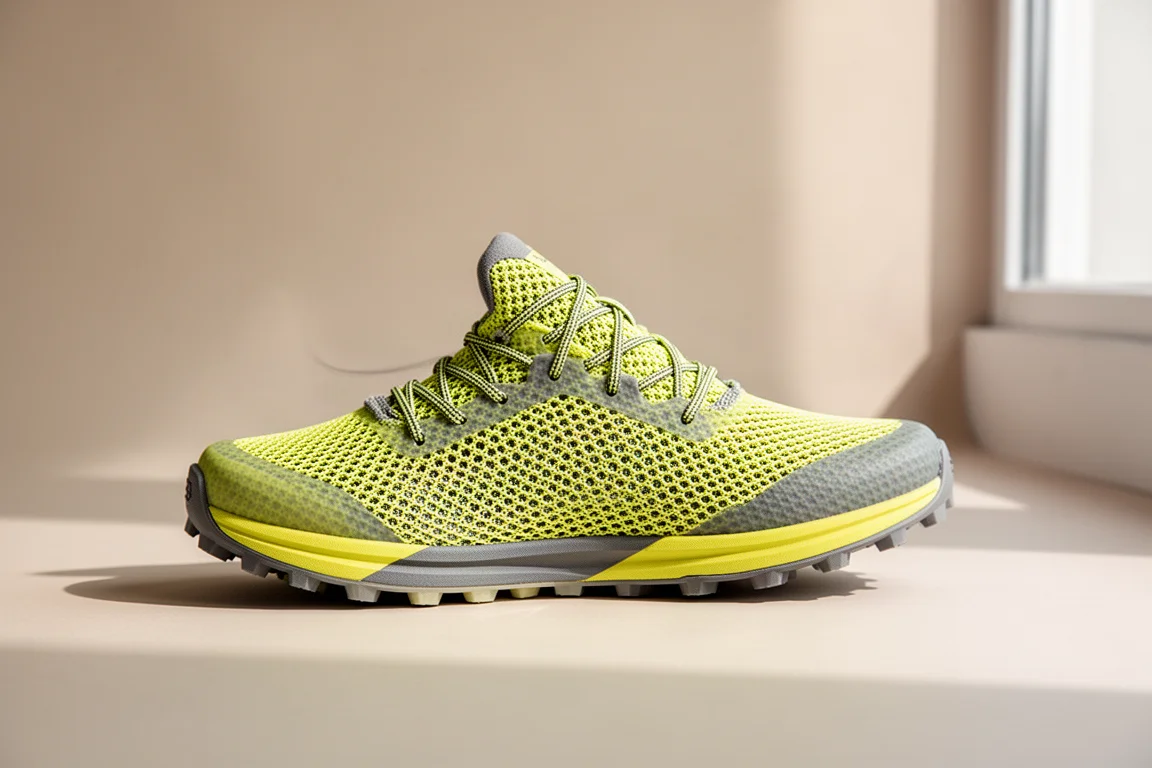
The Olympus 5 GTX is the most substantial shoe in this group at around £175 and roughly 382g. Despite Altra’s association with trail runners, this is unmistakably a hiking shoe: stable, fully waterproof, with a lot of leather, a gusseted tongue and plenty of protection front and rear. The standout feature is the Vibram outsole, which is extremely wide and delivers huge amounts of grip in the mid-to-high range that Vibram is known for.
It is also quite rigid, and it takes time to adjust to the ride. The reason to persist is the generous foot box. On long-distance rocky and stony trails, where feet swell after days of 20 to 30 miles, that extra room helps prevent the kind of pressure that leads to blisters. It is a very different shoe from the rest of this group and it will not suit everyone.
Buying Advice
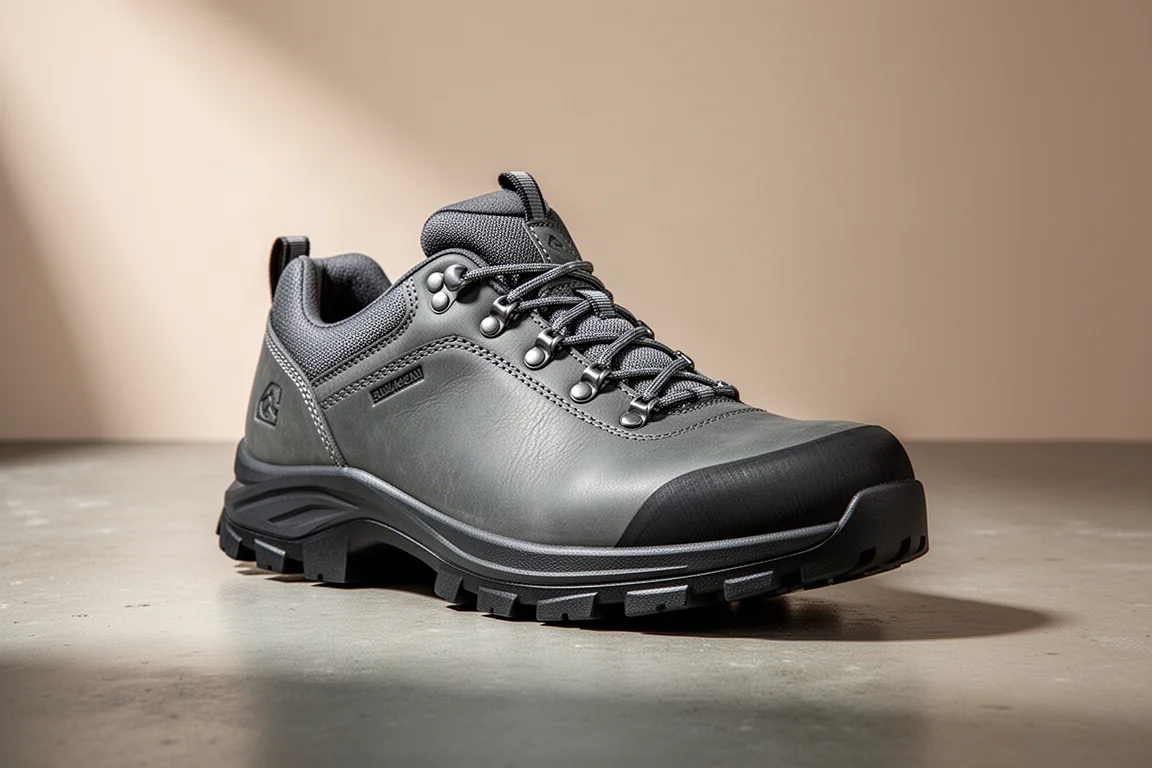
Start with the conditions rather than the spec sheet. If you are carrying weight, walking technical ground or heading out in bad weather, the stability and protection of a full-height boot like the Quechua MH500 Mid or the Altra Olympus 5 GTX is worth the extra grams. If you are travelling light on a warm, dry route, a trail runner such as the Columbia Konos TRS or the Inov-8 Parkclaw G 280 will feel far more natural underfoot.
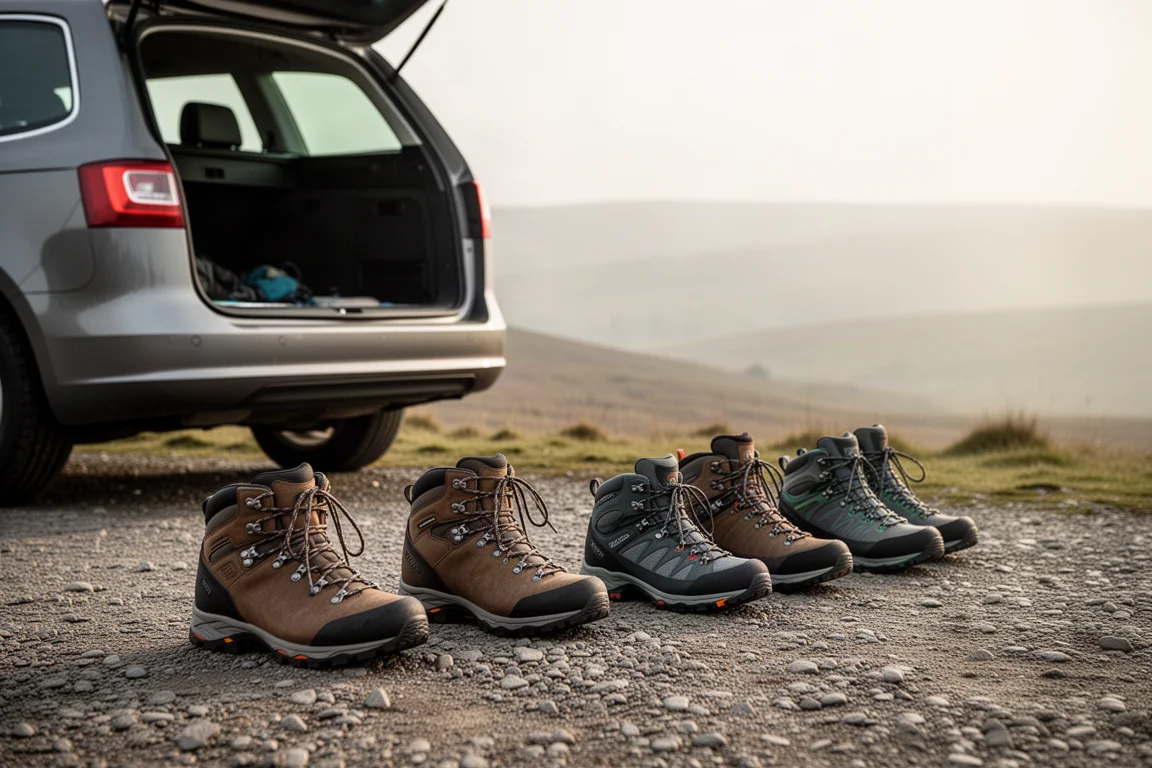
It also makes sense to think about owning more than one pair. Plenty of experienced hikers keep two or three options and decide at the trailhead based on the weather and the forecast. That approach lets you take the supportive boot when you need it and the light, fast shoe when you do not, rather than forcing one compromise to cover every trip.
Conclusion
There is no universal winner here, and that is the point. The Salomon X Ultra 360 Mid and the Quechua MH500 Mid cover general hiking well, the Inov-8 345 GTX V2 trades protection for weight and durability, the Salomon Speedcross 6 owns mud and wet grass, the Columbia Konos TRS and Inov-8 Parkclaw G 280 are dry-ground speed options, and the Altra Olympus 5 GTX is the wide, stable choice for long-distance trails. Match the shoe to the terrain, the weather and the load, and any of these seven will serve you well.
Further reading
Related Reviews
Hiking Footwear
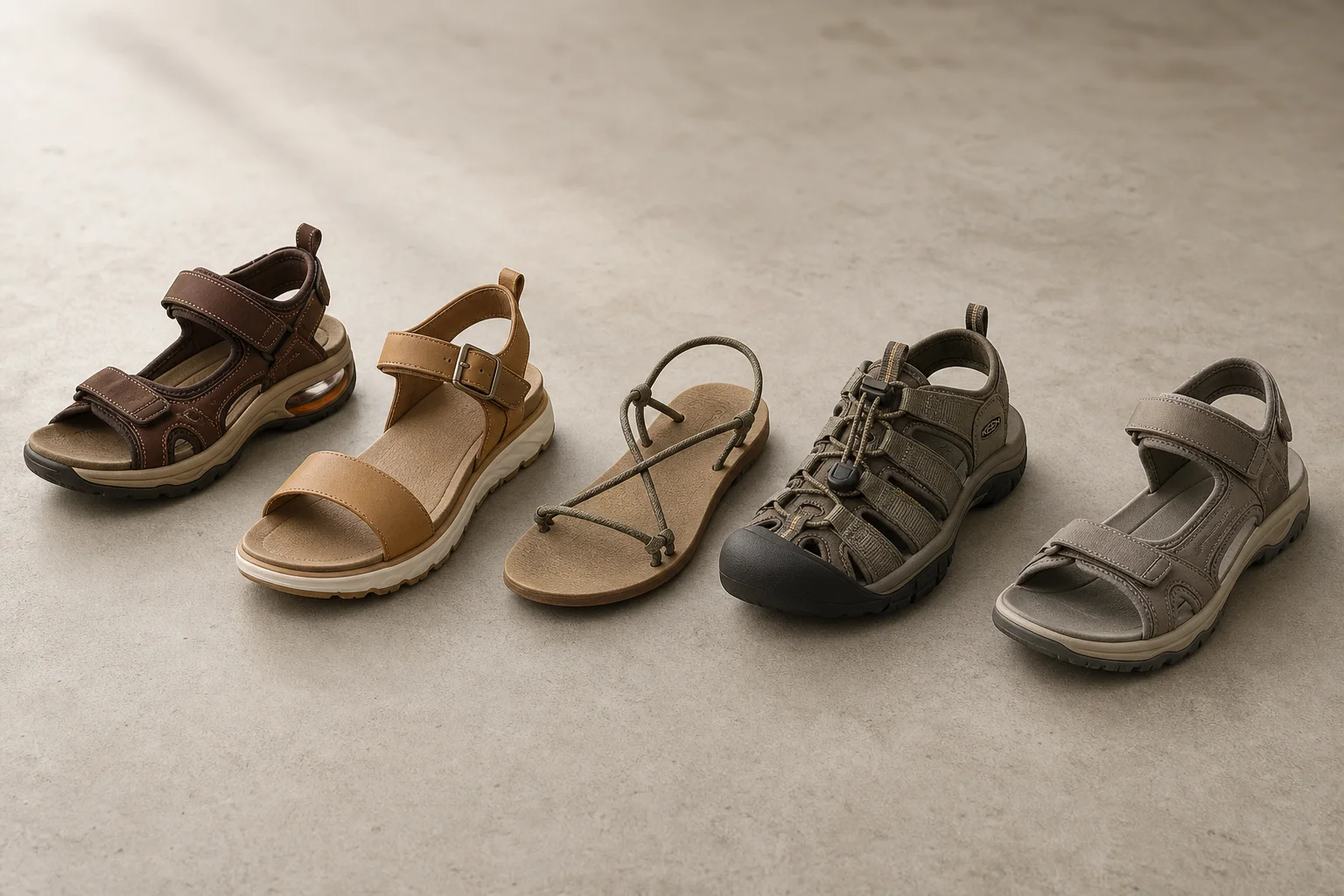
Best Hiking Sandals 2026: Five Options for Different Trail Needs
Five hiking sandals tested for comfort, protection, and versatility. Find the right pair for your hiking style, from minimalist designs to heavy-duty closed-toe options.
Hiking Footwear
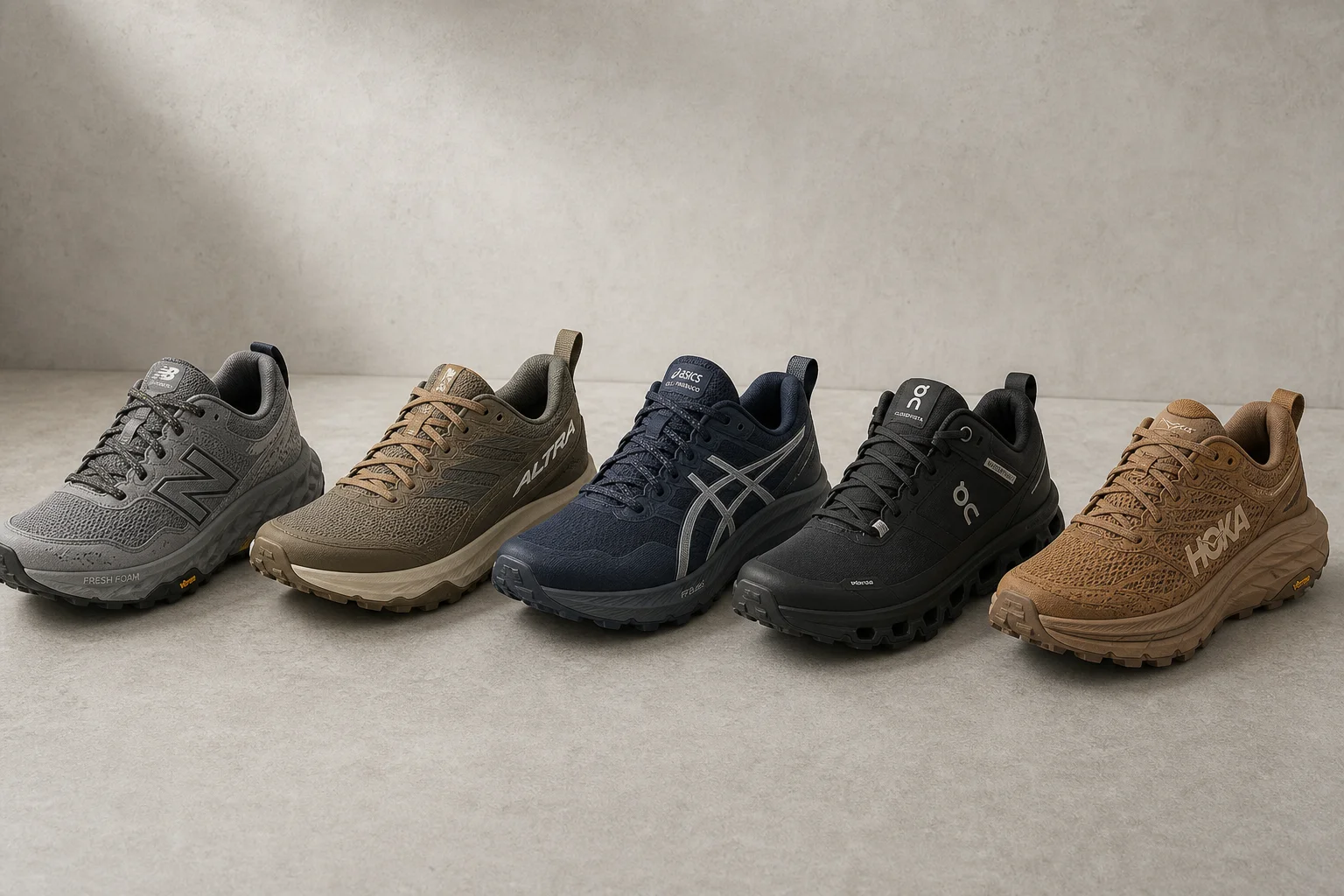
Best Hiking Shoes 2026: Five Options for Different Terrain and Support Needs
A practical guide to five hiking shoes covering max cushioning, zero-drop design, all-around versatility, waterproof protection, and balanced comfort for long-distance trails.
Hiking Footwear
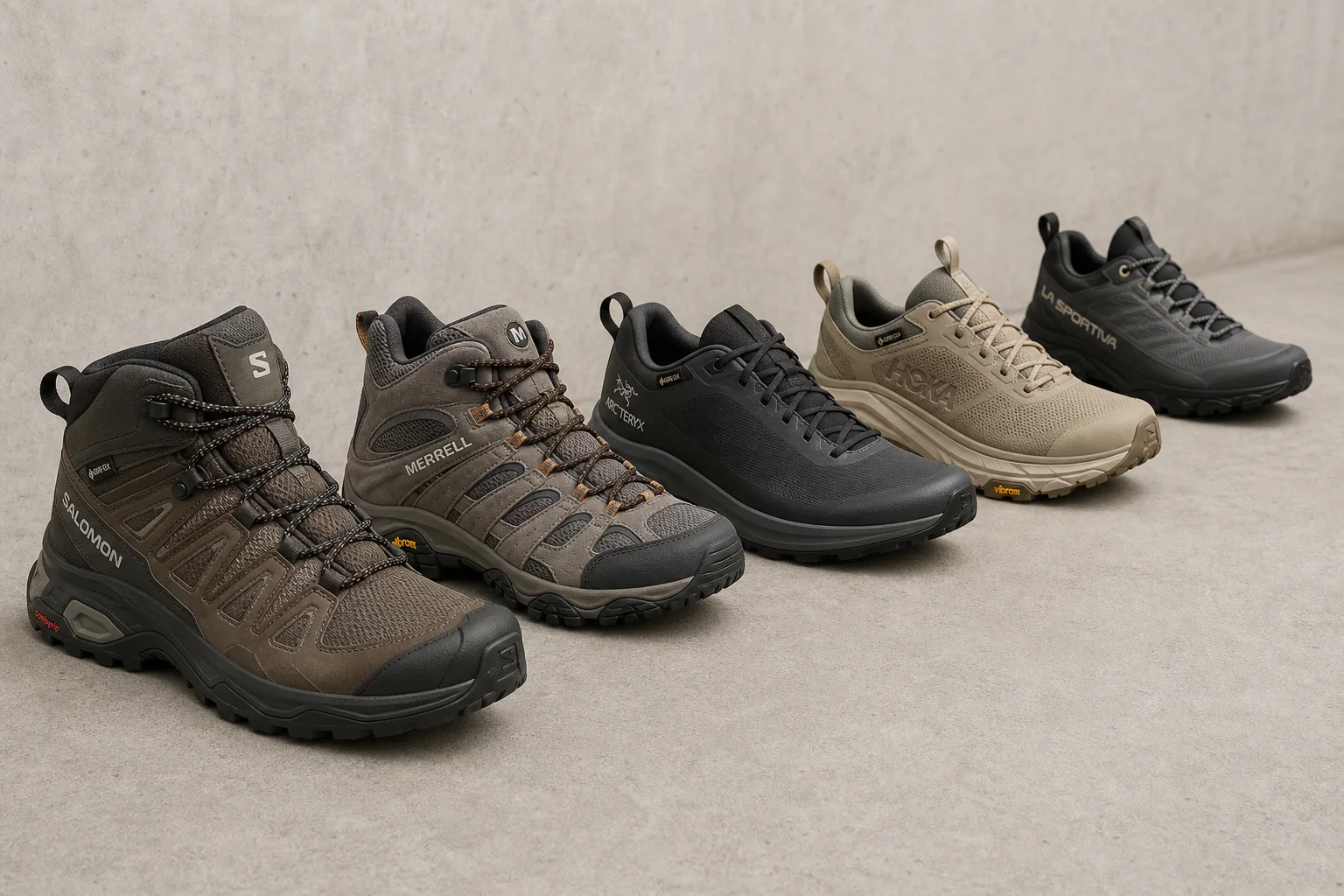
Best Hiking Shoes for Men: Five Tested Options Ranked
A detailed ranking of five hiking shoes tested for comfort, traction, and durability across varied terrain and conditions.