Hiking Footwear
Best Hiking Boots for Different Terrain: A Practical Guide to Four Options
A practical look at four hiking boots for different terrain, from lightweight synthetic trail boots to stiff leather mountain footwear, plus fit, waterproofing and care advice.
Introduction
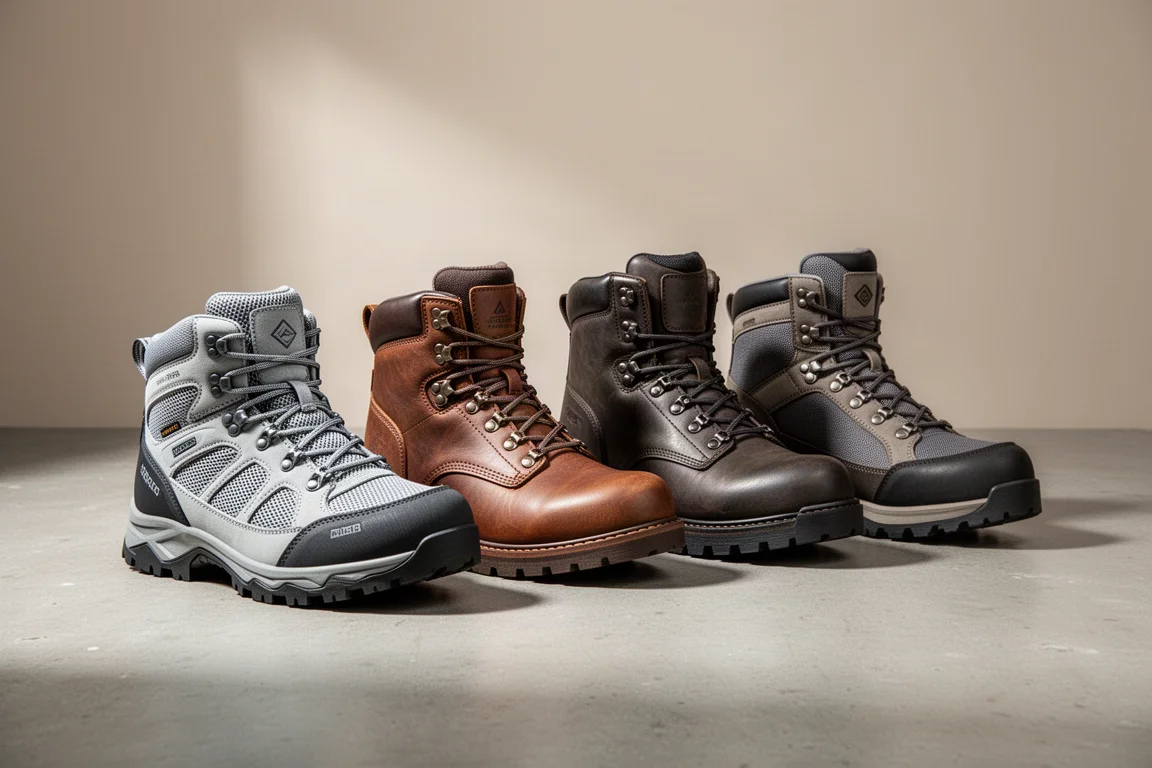
Hiking footwear is less a single product category than a scale. At one end sit light synthetic boots built for established trails, and at the other, stiff leather boots made for rough, trackless ground. Choosing well is mostly about matching the boot to the terrain you actually walk on rather than buying the most rugged option available.
This guide looks at four boots that sit at different points on that scale, explains what each one is designed for, and closes with practical advice on fit, waterproofing and long-term care.
What to Look For in Hiking Footwear
The clearest difference between hiking footwear and everyday shoes is stability. A casual runner can be twisted and wrung out almost like a cloth. A hiking boot or shoe still has some give, but it resists twisting far more, so when your foot lands on a rock the ankle is less likely to roll over. That stability is available in a shoe as well as a boot, so a boot is not automatically the right answer.
Sole stiffness matters just as much. A light trail boot flexes under moderate force and twists a little. A heavy mountain boot barely moves at all. Stiffer soles hold their shape on uneven ground, which is a genuine advantage on broken terrain and a genuine drawback on long, repetitive surfaces.
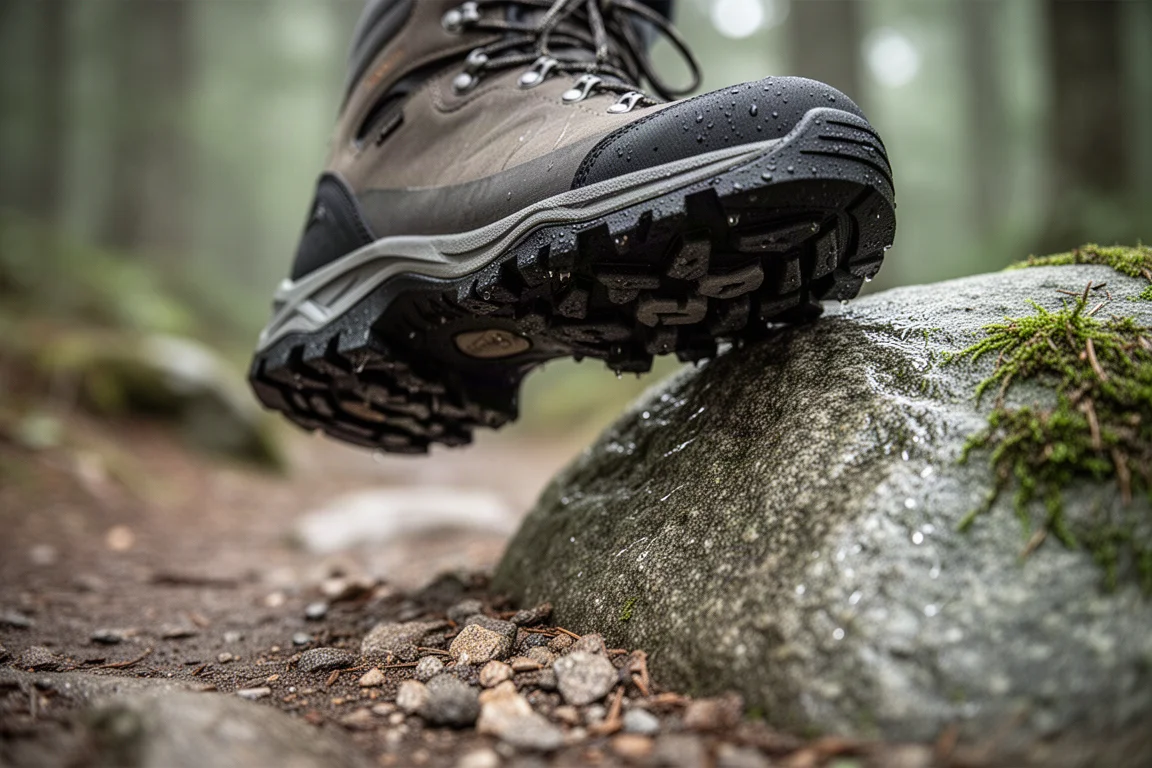
Waterproofing is the other headline feature. A waterproof membrane is essentially a sock shaped to the boot and stitched onto its interior lining, usually only one or two layers deep. It keeps water out, but it also makes a boot warmer than a non-waterproof equivalent, and it does not make a sweaty foot disappear. Higher-cut boots add protection because water has further to travel before it reaches the opening at the top. A membrane can also be cut through if a foot repeatedly slams into the front of the boot, which is one more reason fit matters.
Merrell Speed: Lightweight Synthetic Trail Boot
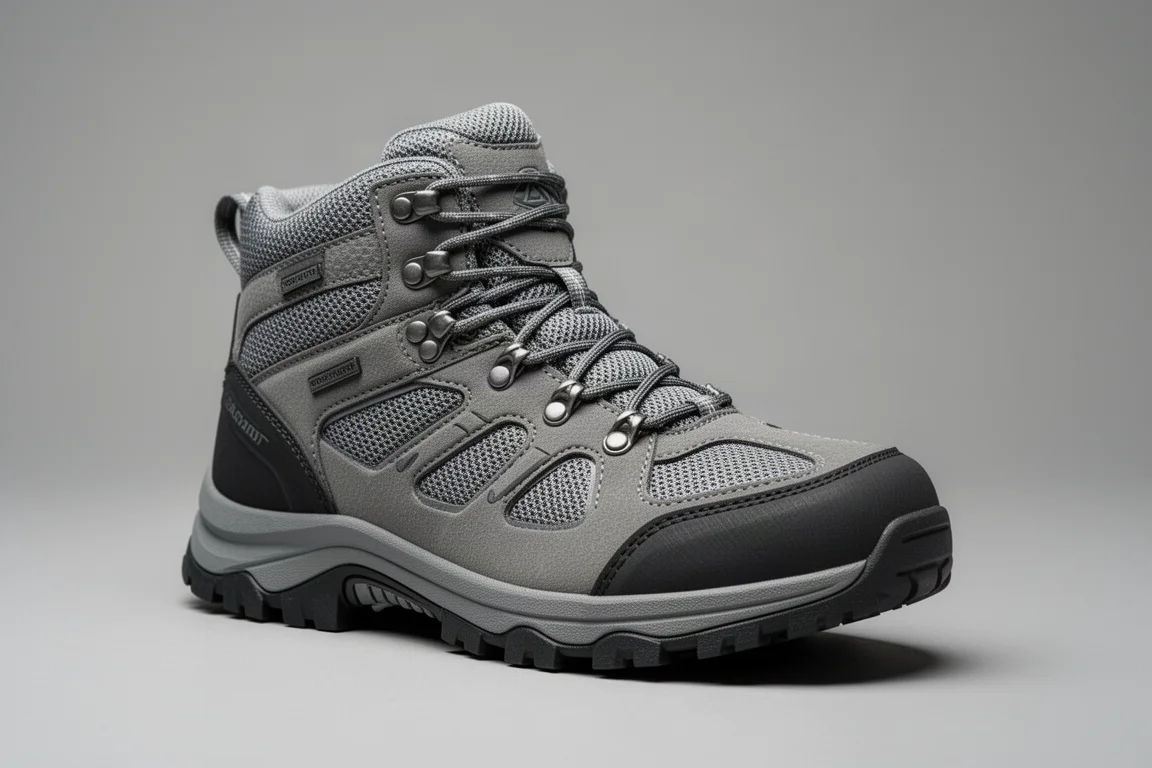
Merrell Speed is a lightweight hiking boot with a fully synthetic upper and a waterproof membrane, so it stays dry while remaining light on the foot. The sole takes a moderate amount of force to flex and twists slightly, placing it at the flexible end of the hiking range while still being far more stable than a street shoe.
The cushioning is generous. The sole feels thick and spongy underfoot, which is comfortable over a long day and gives the boot a distinctive soft ride. That combination of low weight and cushioning makes it a natural choice for established trails: looped walks, forest paths and forestry access roads. It is a day-hike boot rather than a mountain boot.
Meindl Mendel: The Leather All-Rounder
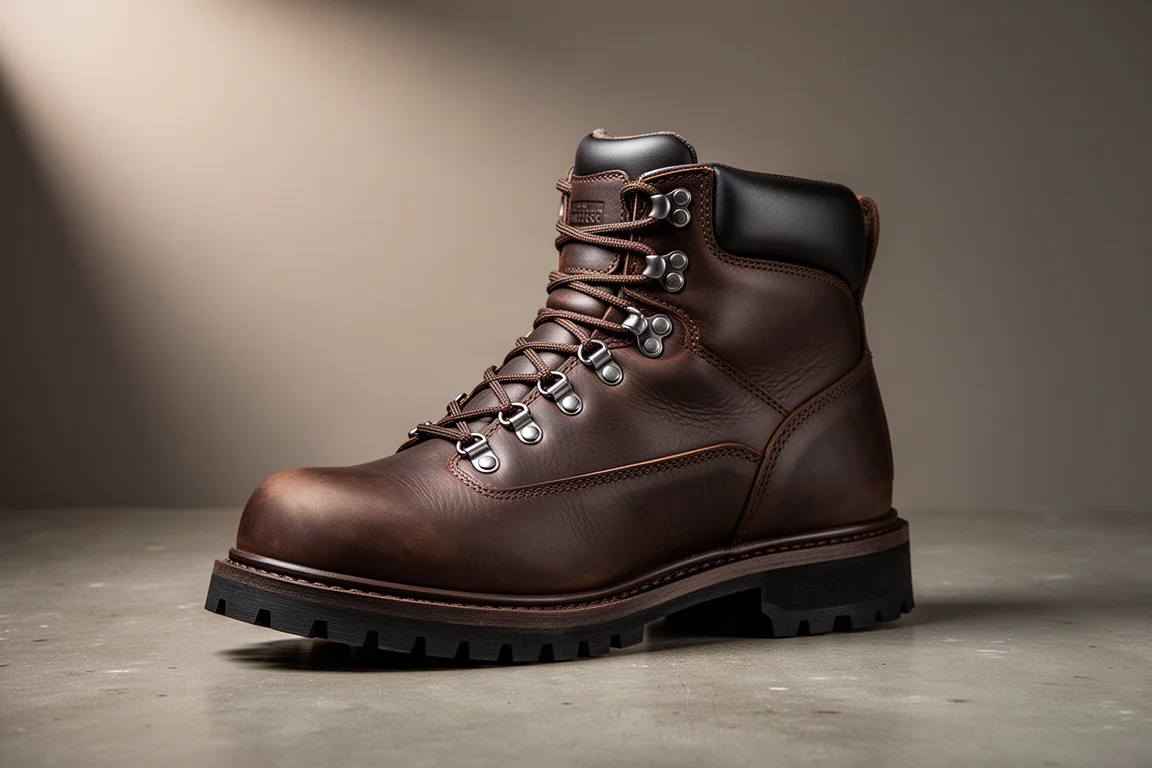
Meindl Mendel is a leather boot from a German brand, with a waterproof lining and noticeably more structure than a synthetic boot. The sole is more rigid than the Merrell Speed and resists twisting further, but it still moves enough to stay comfortable across a full day on the hill.
That balance is what makes it usable all year round and across a mix of ground, from tracks and trails to small sheep paths and open mountain terrain. The trade-off is care. Leather rewards regular waxing and conditioning and it punishes neglect: left to dry out, it will crack and begin to break down. A leather boot bought for longevity is a commitment for its whole service life, and boots that are looked after properly can keep going for years.
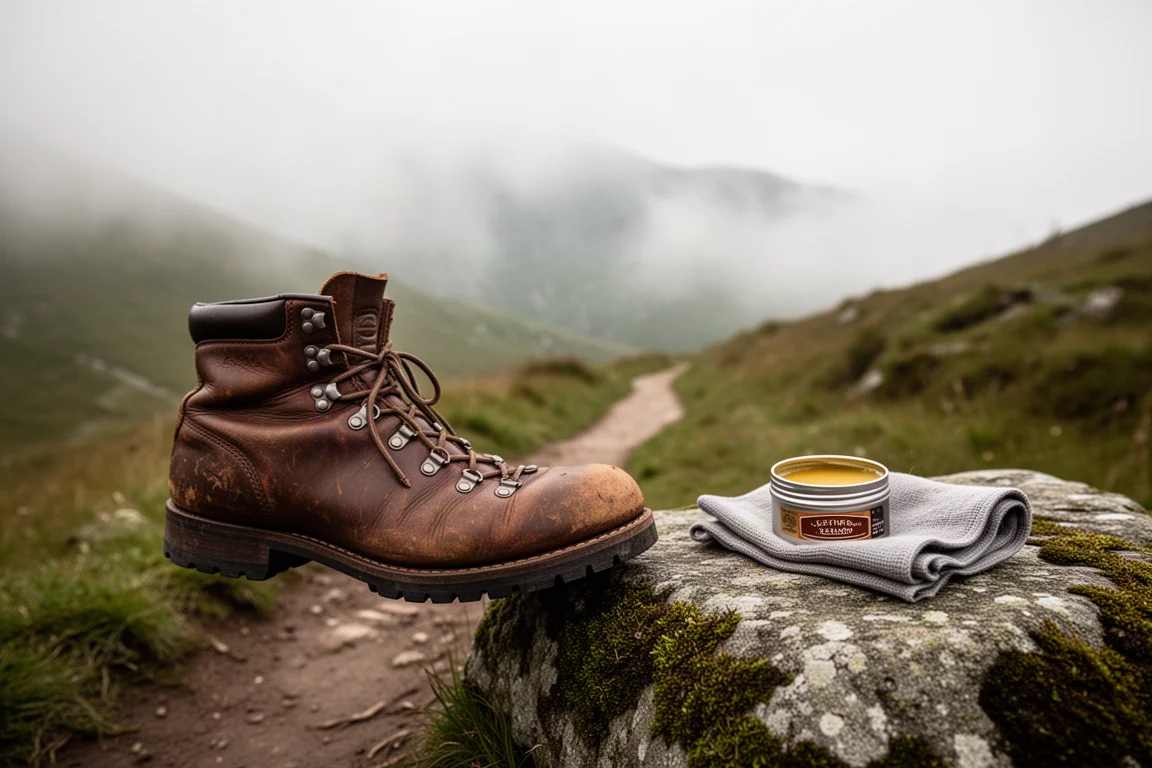
For anyone weighing leather against synthetic, the practical differences come down to weight and maintenance. Synthetic uppers tend to be lighter, while leather tends to be more durable when it is maintained. This boot also sits at the upper end of what many walkers would choose for long-distance hiking or backpacking, which is worth keeping in mind if that is the goal.
Scarpa Ranger: Heavy-Duty Mountain Boot
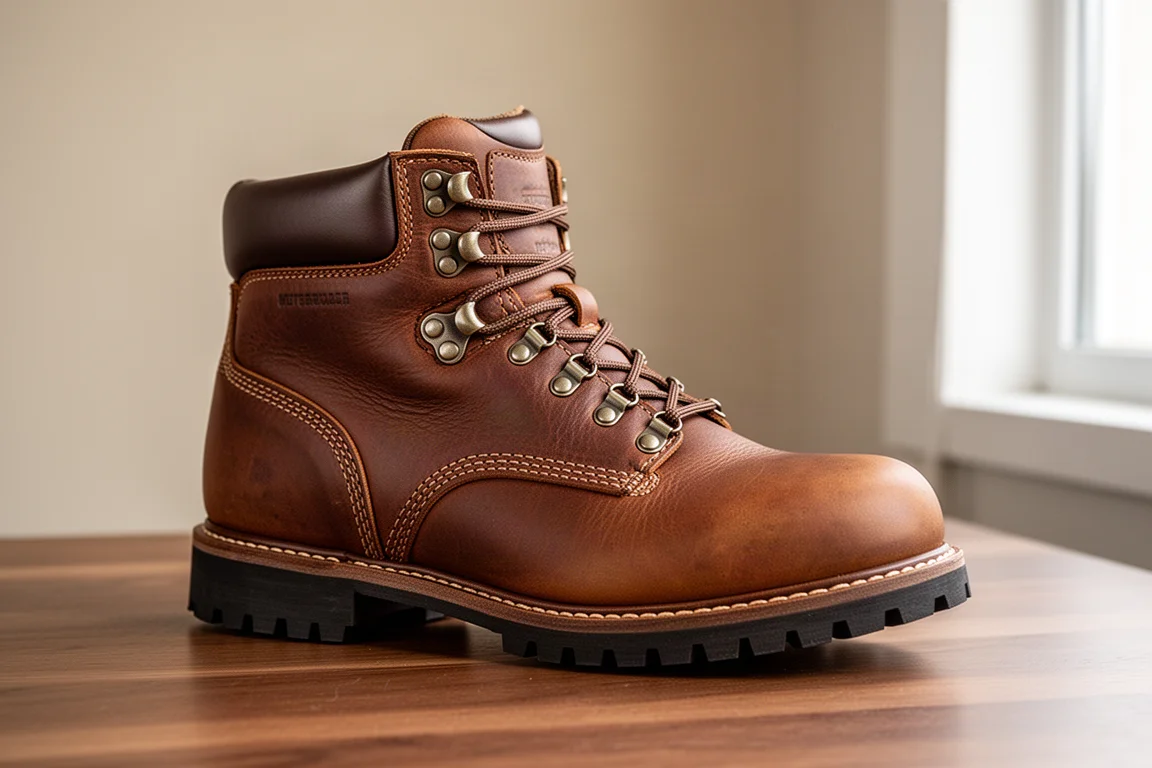
Scarpa Ranger is a heavy-duty leather boot with a stiff sole, fewer seams and a waterproof lining. The wrap-around leather construction and reduced seam count are the traditional route to keeping water out, and the interior is well cushioned despite the stiffness.
That stiffness is the point. On genuinely uneven ground the sole holds its shape, so the boot stays planted no matter what sits underneath it. If the plan is to head straight up the side of a mountain with no trail and no sheep track, this is the kind of footwear that makes rough ground feel less hostile.
It is also unforgiving in the other direction. A sole that will not give to a rock will not give to a tired foot either. On long repetitive sections such as a forestry fire road, the relentless pounding can bruise the soles of the feet, and that effect is compounded by the weight of a backpack. This boot suits off-trail day hikes where no trail is expected from start to finish, rather than long-distance backpacking.
One long-term advantage comes from the same rigidity. Because the boot is built around a stiff board that holds its shape, the sole can be replaced when it wears out, so a well-maintained pair can stay in service for many years. The balance is timing: replace the sole before the upper is damaged, because once the upper loses its structural integrity the boot can no longer be repaired.
Salomon Comet: A Leather and Synthetic Mix
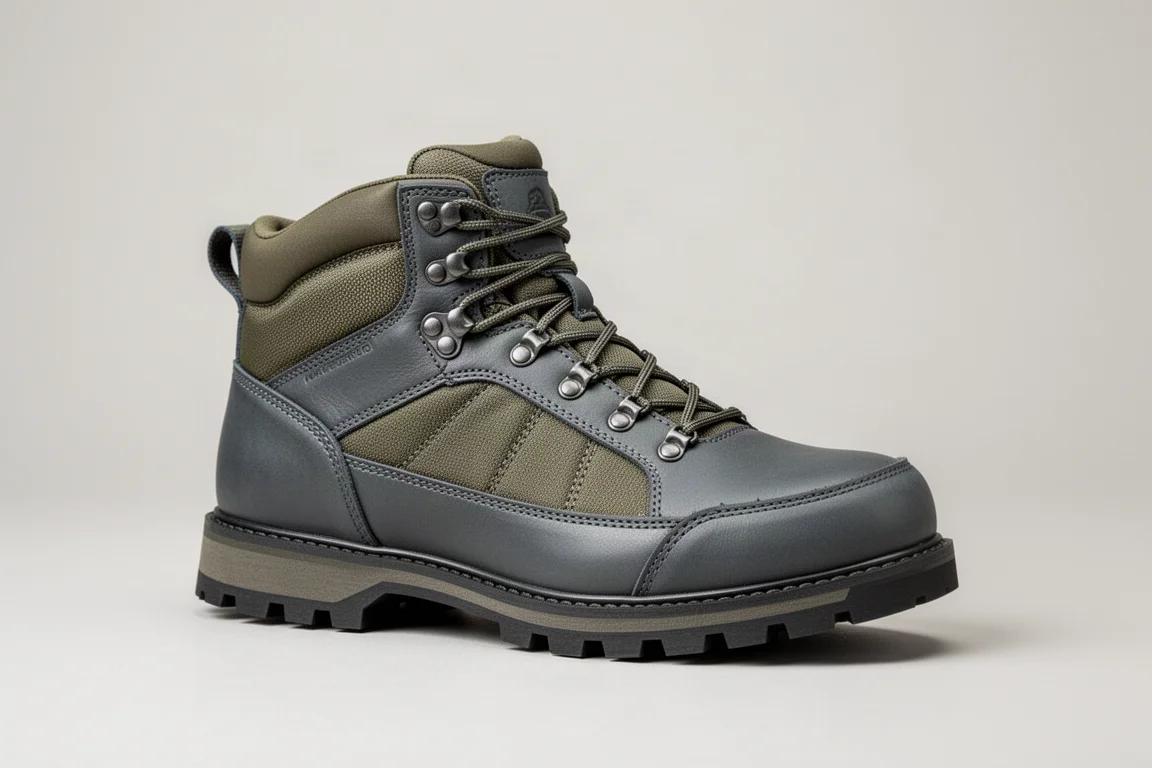
Salomon Comet combines leather and synthetic materials in a single boot, which is a useful middle path: the lighter weight of synthetic construction with some of the structure of leather. It is one of those boots that simply works, and it shows why the material debate matters less than how a boot feels on the foot.
Fit varies considerably between brands, and even between models from the same brand. A maker that produces a boot which fits one walker well may build runners that are too narrow for the same person. That is normal, and it is the reason a recommendation should never outweigh what happens when the boot goes on.
For most walkers the sensible approach is to try several brands and let the fit decide, rather than committing to a name in advance. A boot that matches the shape of your foot will be more comfortable, more stable and far kinder to the waterproof membrane inside it.
Buying Advice: Fit, Care, and Longevity
Fit is the single most important factor, and it is straightforward to check. Take the insole out of the boot, stand your foot on top of it, and confirm there is at least a thumb’s width of space in front of your toes. That gap gives the foot room to move without striking the front of the boot on descents, and room to expand when feet swell.
Across the widest part of the foot the boot should not pinch or feel tight. Through the midfoot it should hold the foot snugly so it does not slide around, and the heel should feel secure. Where possible, test a new pair on a ramp: walk up and down repeatedly to confirm the toes are not hitting the front and the heel is not lifting or rubbing at the back.
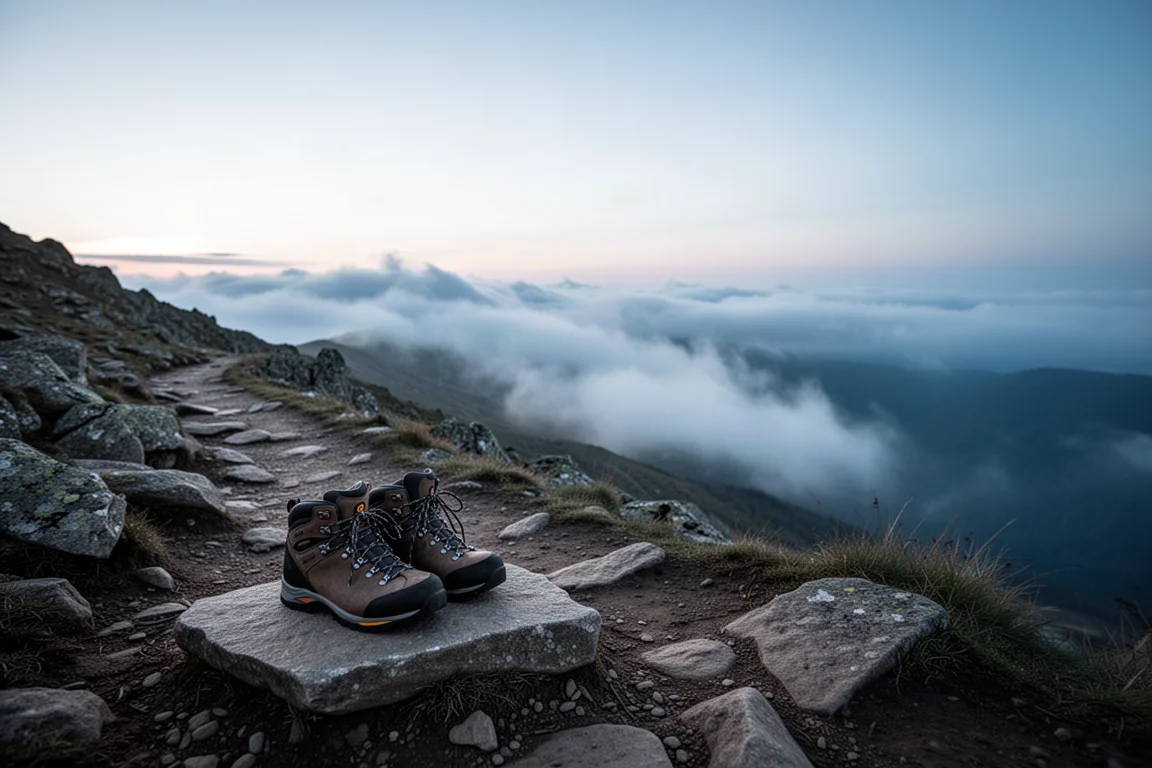
That fit check protects the boot as well as the foot. The waterproof membrane inside is thin, and a foot that repeatedly bangs against the toe box will eventually cut through it, at which point the boot stops being waterproof. Regular waxing and conditioning keeps leather uppers supple and slows that decline.
Footwear does wear out. Around 500 kilometres is a reasonable expectation for a pair of shoes or boots, though some last well beyond that and others reach their limit sooner. Lighter footwear is often the more comfortable choice for long-distance hiking, particularly for walkers who wear through soles quickly and prefer to replace rather than resole. The most useful rule is to ignore brand loyalty when it conflicts with fit: every brand fits differently, and the boot that suits your feet will always outperform the boot that suits someone else’s recommendation.
Conclusion
Bigger and heavier is not automatically better, but there are situations where it is necessary. A light synthetic boot such as Merrell Speed is the comfortable choice for established trails and day hikes. Meindl Mendel covers tracks, trails and a little off-trail ground as an all-year leather all-rounder. Scarpa Ranger is built for stiff, stable progress on trackless mountain terrain. Salomon Comet shows that a leather and synthetic mix can be a genuinely practical middle ground. Start with the terrain you walk and the fit of the boot, and the right choice becomes much easier.
Further reading
Related Reviews
Hiking Footwear
Best Hiking Sandals 2026: Five Options for Different Trail Needs
Five hiking sandals tested for comfort, protection, and versatility. Find the right pair for your hiking style, from minimalist designs to heavy-duty closed-toe options.
Hiking Footwear
Best Hiking Shoes 2026: Five Options for Different Terrain and Support Needs
A practical guide to five hiking shoes covering max cushioning, zero-drop design, all-around versatility, waterproof protection, and balanced comfort for long-distance trails.
Hiking Footwear
Best Hiking Shoes for Men: Five Tested Options Ranked
A detailed ranking of five hiking shoes tested for comfort, traction, and durability across varied terrain and conditions.