Flashlights
Best High-Power EDC Flashlights: 6 Pocket Lights Tested Against Their Claims
Six high-output EDC flashlights from budget to premium, checked for real lumen output, runtime, drop durability, and charging.
Introduction
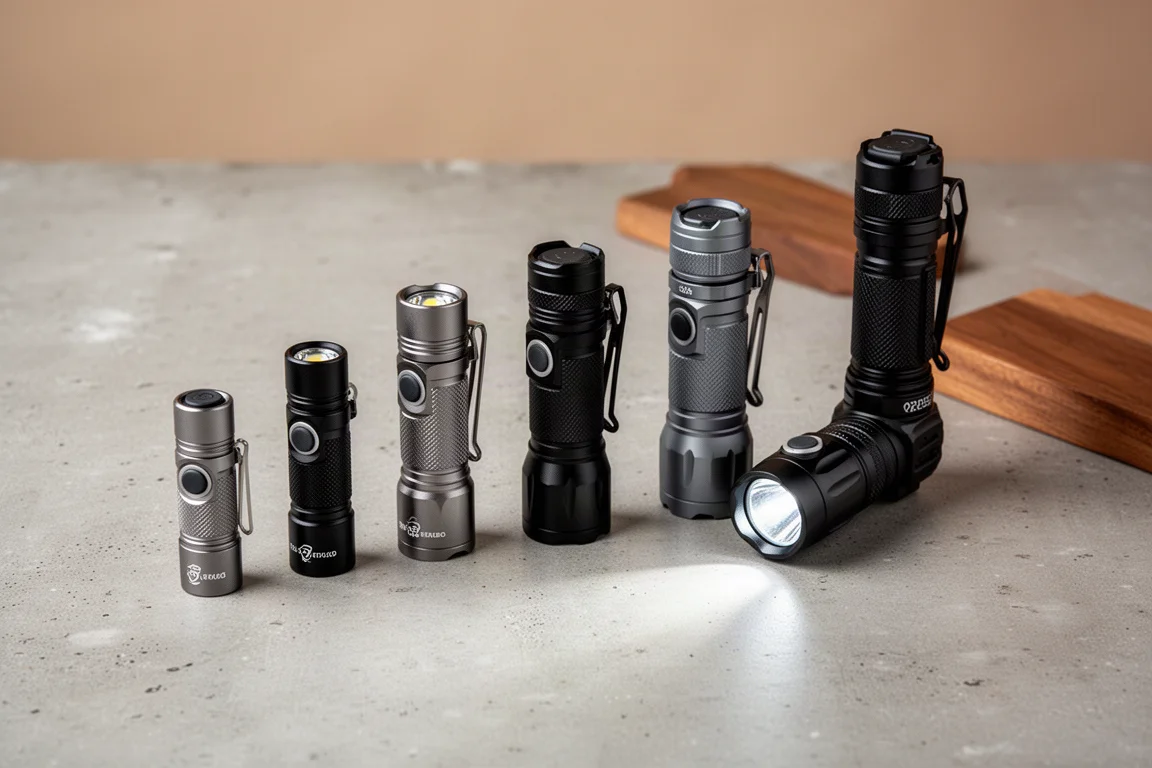
High-output EDC flashlights promise around 2,000 lumens from something that fits in a pocket, and the market is crowded with big claims. This comparison covers six lights spanning roughly $27 to $250, all measured the same way: real lumen output against advertised figures, output over time, actual battery capacity, charge times, and drop durability from increasing heights.
How These Lights Were Evaluated
Every light was run at max output for 30 seconds per the ANSI FL1 standard, then measured for real lumen output. Each was also tracked for sustained output over runtime, actual battery size, charging speed, and survival across repeated drops at hip, waist, six-foot, ten-foot, and higher heights. Color temperature and beam focus were noted as practical differences, since a warmer, softer beam can matter as much as raw lumens in an engine bay or wheel well.
Wurkkos FC11: The Warm, Budget-Friendly Option
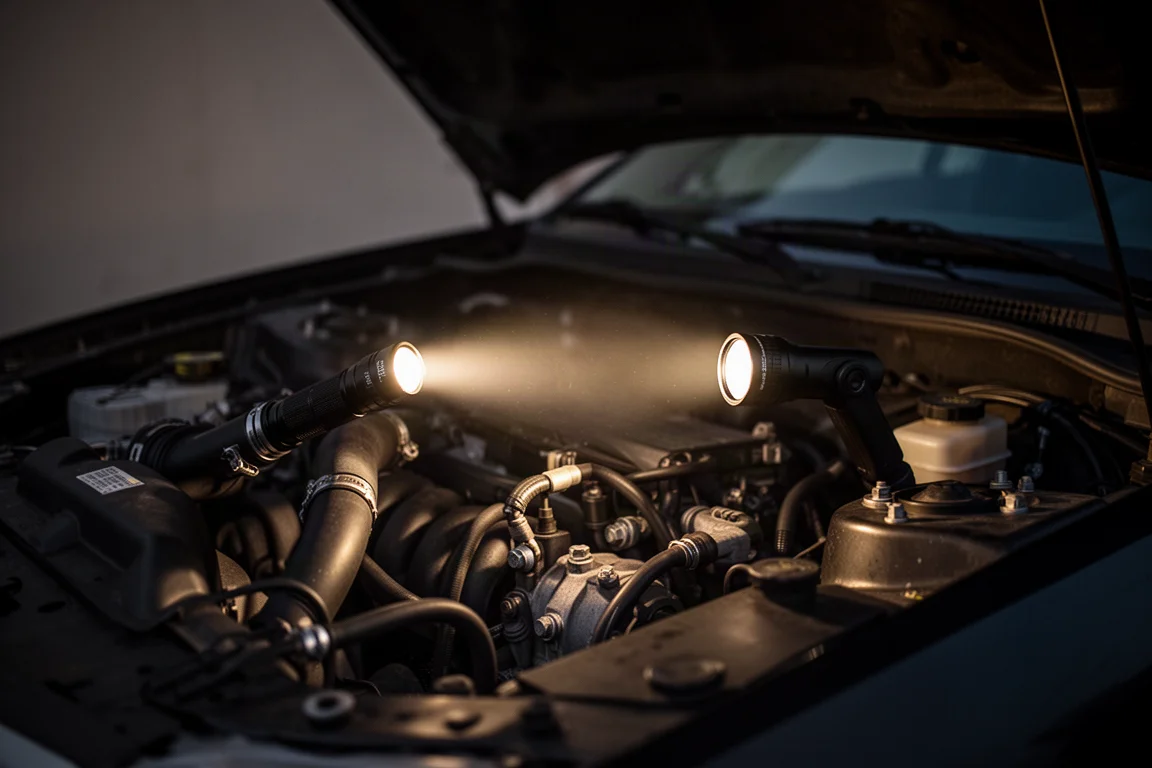
At $27, the Wurkkos FC11 is the cheapest light here and advertises 1,300 lumens. What sets it apart is the option of a 4,000K color temperature, which is easier on the eyes after long use and offers better color identification, backed by a color rendering index of 90 out of 100 where most tested lights sit between 72 and 84. It is a little spot focused and does not shock the corneas with brightness, but as an engine bay light it works well.
Measured output came in around 990 lumens, about 76 percent of the claimed figure. It holds that output steadily, but the 4,000K version likely pays an efficiency cost for the warmer hue, so the blanket 1,300-lumen rating is a bit optimistic.
Sofirn SC31T: Best Value Pick
The Sofirn SC31T costs $33, advertises 2,000 lumens, and is a sort of sister brand to Wurkkos, though the two are quite different in practice. It uses a tail switch, runs much cooler in color temperature, and appears noticeably brighter in person. Both share the same 18650 battery format, a 3,000mAh cell, USB-C charging, and a spot-focused throw that can wash out detail up close on high.
Here the numbers deliver: measured output of roughly 2,075 lumens puts it right at 104 percent of the claim. It also survived six-foot drops without issue, only failing at ten feet, earning a six out of ten in durability. For $33 it is an easy value recommendation.
Imalent LD70: 4,000 Claimed Lumens in a Pocket Size
The Imalent LD70 uses a small 18350 battery instead of a removable 18650, yet advertises a lofty 4,000 lumens, using the same Cree XHP 70.2 LED found in much larger lights. It has a plastic shroud around the body that keeps heat away from your hand and protects against scuffs, and it charges via a magnetic cord that snaps on, which is easier than fumbling with cables. The tail switch and compact size make it a natural fist-style hold for inspection work, and its 900-lumen high setting reveals plenty of detail on small parts. As a hiking light it would be a poor choice, but for automotive use it is a genuinely handy little package.
Measured output was about 3,360 lumens, or 84 percent of the claim, spiking toward 4,000 for a fraction of a second before trailing off. It was also the first light to die in runtime testing at 45 minutes, exactly where advertised. Durability scored five out of ten, with the front retaining ring popping off at six feet and failure after two drops at ten feet.
ThruNite TT20: Big Battery, Big Output
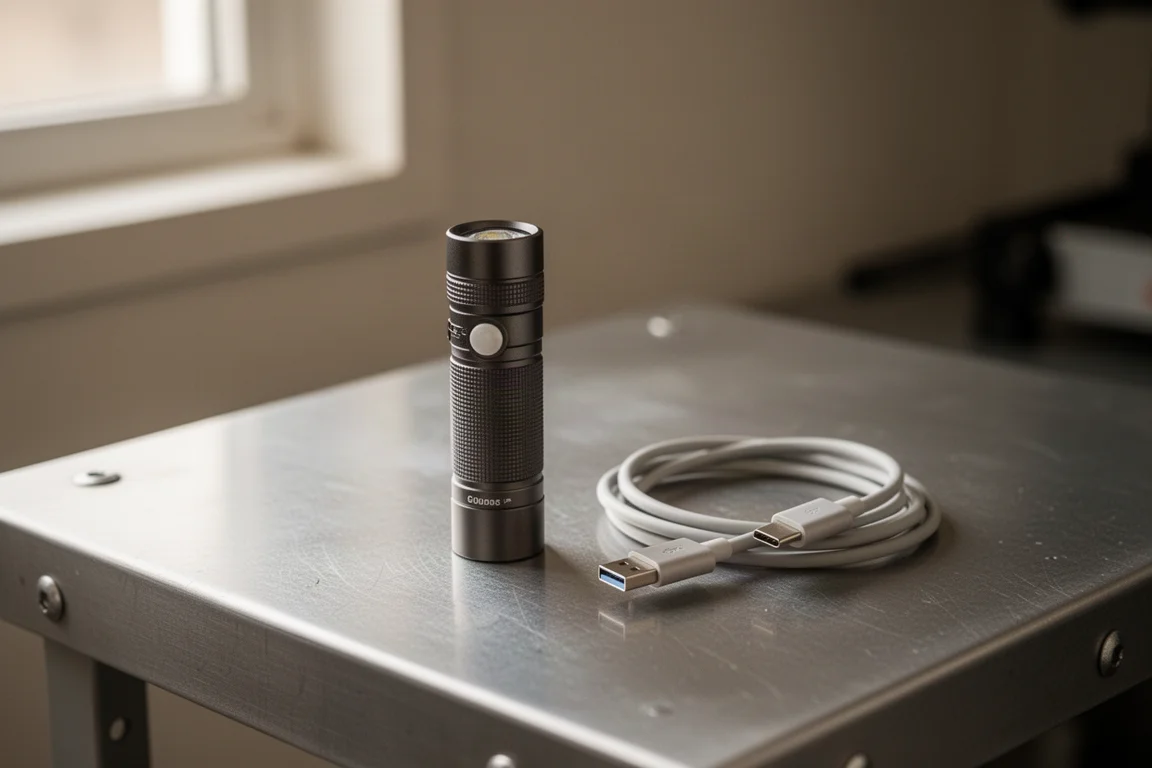
The ThruNite TT20 costs $70 and advertises 2,526 lumens, with a 21700 cell that makes it slightly larger but should sustain higher output for longer. It also offers an Infinity high setting, and it delivers on output: around 2,570 lumens measured, essentially 100 percent of the claim. Charging is USB-C, though the 21700 cell has both poles on one end, so it is not a universal design.
In runtime testing it held a 700-lumen baseline longer than the others and posted the best total lumen-minutes of the group, which makes sense given the larger battery. It survived drops up to ten feet but died after its first twelve-foot drop, scoring seven out of ten.
Olight Warrior Mini 2: The Overall Winner
At $90, the Olight Warrior Mini 2 advertises 1,750 lumens and simply feels the most expensive of the bunch, with smoother, more refined threads, a thicker O-ring, and magnetic charging that is easy to toss back into a toolbox. Measured output came in around 1,885 lumens, 108 percent of the claim, and it held steadily. Its early runtime curve was the standout, staying near 1,000 lumens after the first test mark, which matters most for the first 20 minutes of handheld use.
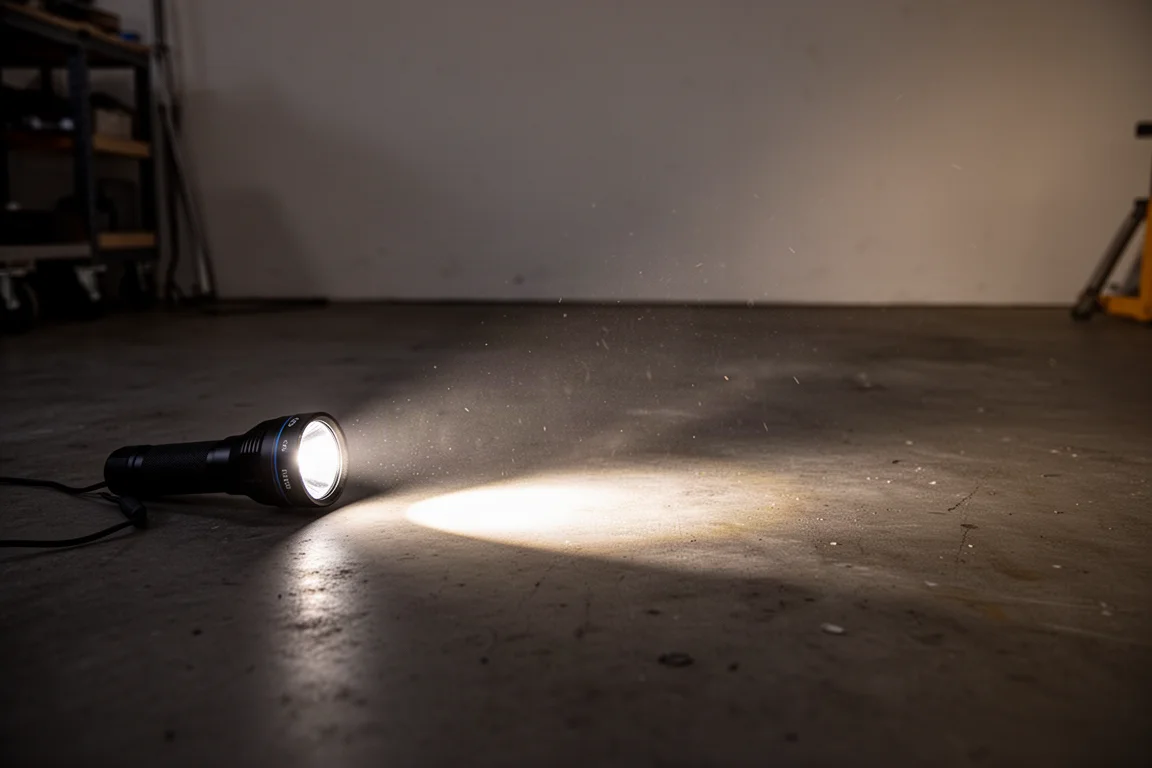
It is the most spot-focused light here, so up close it can look like a ring of fire, and charging on this unit ran at 1.3 to 1.5 amps rather than the usual 2. But its build quality and durability are exceptional: it survived drops at 16 and 20 feet and had to be deliberately spiked on the ground to be killed, earning a well-earned ten out of ten. It is the one light here that can be called objectively the best overall.
SureFire Fury: Tactical Reputation, Mixed Execution
The SureFire Fury costs about $250, is made in the US, and advertises 1,500 lumens. On lumens it delivers exactly: measured around 1,500 on the dot. It is a tail-switch light with a simple mode set and a proximity sensor that is not overly sensitive, though the sensor leaves a bite out of the beam pattern.
The execution is where it stumbles. It uses micro USB instead of USB-C, charges through the battery only, the port is loose, and it charged at the slowest rate of the group at about 0.4 amps, taking nine hours in testing. The bare, non-hardcoat anodized threads feel gritty and pitted next to competitors, and the claimed three-and-a-half-hour high runtime came in at two and a half hours. It is heavy, bright, and spot-focused, but it placed last overall when size, weight, build, and charging are all considered. Durability scored seven out of ten, matching the ThruNite, with intermittent strobing after a twelve-foot drop.

Drop Test Results: Who Survives a Fall?
The Wurkkos handled standard three-to-four-foot drops but quit after two drops at six feet, scoring four out of ten. The Sofirn managed six feet comfortably and died at ten, for a six out of ten. The Imalent suffered early shroud damage and failed at ten feet. The ThruNite and SureFire both scored seven out of ten, surviving everything up to about twelve feet before faltering. The Olight was in a class of its own, shrugging off 20-foot drops and requiring deliberate spiking to fail, a ten out of ten result rarely seen outside work lights.
Which One Should You Buy?
For most people, the Olight Warrior Mini 2 is the strongest overall pick: accurate output, excellent sustained performance, premium build, and unmatched durability, though $90 is not cheap for an EDC light. If budget comes first, the Sofirn SC31T at $33 delivered 104 percent of its claimed lumens and is the best value here. The ThruNite TT20 suits anyone who wants the longest sustained output thanks to its 21700 battery. The Wurkkos FC11 is worth it only if the warm 4,000K tint and high CRI matter to you, the Imalent LD70 is a fun pocket rocket for inspection work despite the numbers, and the SureFire Fury is hard to recommend at its price given the outdated charging and lower runtime.
Conclusion
Advertised lumen figures turned out remarkably honest on several of these lights, with the Sofirn, ThruNite, Olight, and SureFire all landing on or above their claims, while the Wurkkos and Imalent fell short in percentage terms. Durability, though, is where the real separation happened, and the Olight Warrior Mini 2 stands alone at the top.
Product link
View more details for Wurkkos FC11
This product is mentioned in the review. Check the specifications, options, and compatibility before buying.
View more details for Wurkkos FC11Further reading
Related Reviews
Flashlights
Best Flashlights 2026: Brightness, Battery, and Value Compared
We tested 18 flashlights across a wide price range to find the best performers in brightness, battery life, and durability.
Flashlights
Nitecore LA10 Review: A Tiny 2-in-1 Lantern That Nails the Basics
The Nitecore LA10 pairs a pocket-sized lantern with a single AA battery, a magnetic tail cap and a five-year warranty. Here is where it shines and where it struggles.
Flashlights
Wuben G5 Review: A Compact Everyday Carry Flashlight
The Wuben G5 is a small, rechargeable flashlight with a pivoting head, magnetic base, and color modes. Here is how it performs as an everyday carry light.