Kitchen Knives
Best Gyuto Knives Under $300: Four Standout Picks Worth a Close Look
Four Japanese gyutos under $300 covering stainless, stainless clad, iron clad, and semi-stainless options, with clear strengths and maintenance trade-offs for each.
Introduction
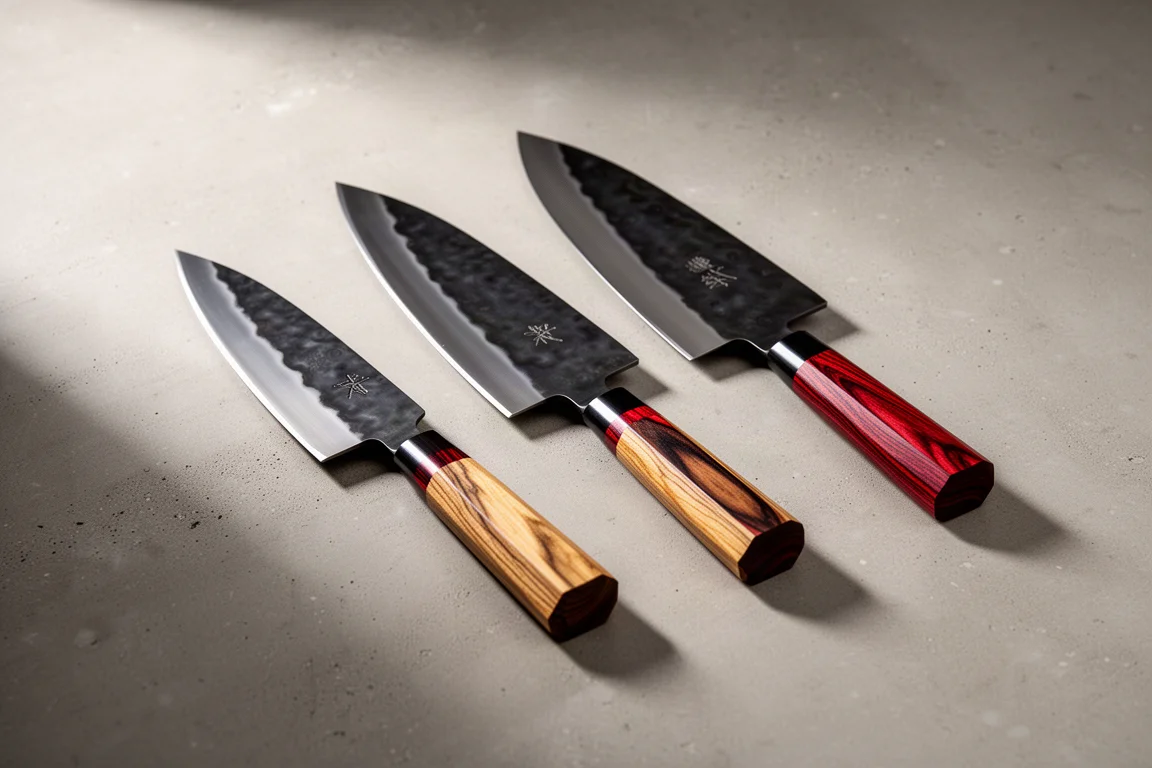
Finding a genuinely good gyuto under $300 is easier than it used to be, but the trade-offs still matter. This list covers four knives that approach the same job from different angles: a pure stainless steel budget pick, a stainless clad carbon option, an iron clad carbon option, and a semi-stainless honorable mention. All four slice through tomatoes, carrots, and onions with a laser-like character, and the differences come down to length, steel type, maintenance tolerance, and fit and finish.
Every knife here suits both right-handed and left-handed users, and each was tested on everyday prep work: tomatoes, carrots, bell peppers, and onions.
Best Budget Pick: Masutani VG-1 Gold 180mm Gyuto
The Masutani 180mm gyuto is a crowd favorite for good reason. It is insanely sharp right out of the box, easy to maintain, affordable, and consistently one of the most popular knives of its kind, especially around the holidays as a gift. The steel is VG-1 Gold, a stainless steel that is not considered elite on paper, but the grind and blade geometry more than make up for it. The maker is a master sharpener, and it shows: the edge glides through tomatoes like butter and powers through dense carrots with almost no resistance.
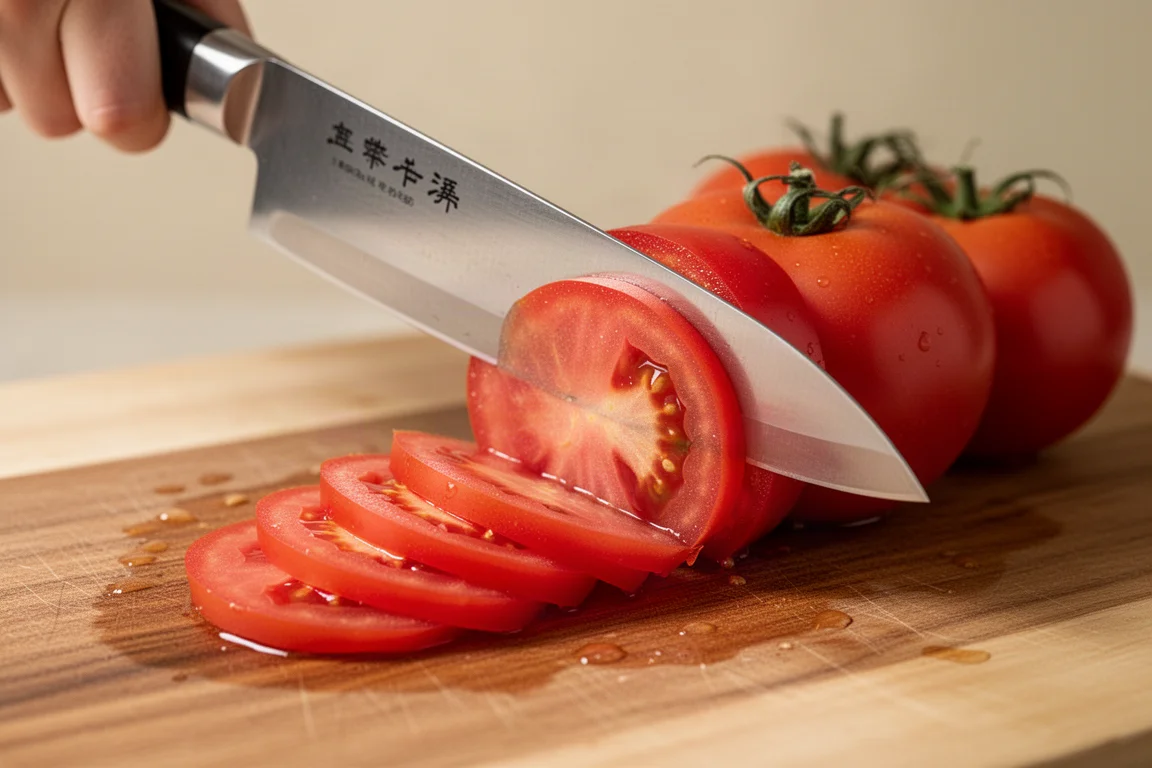
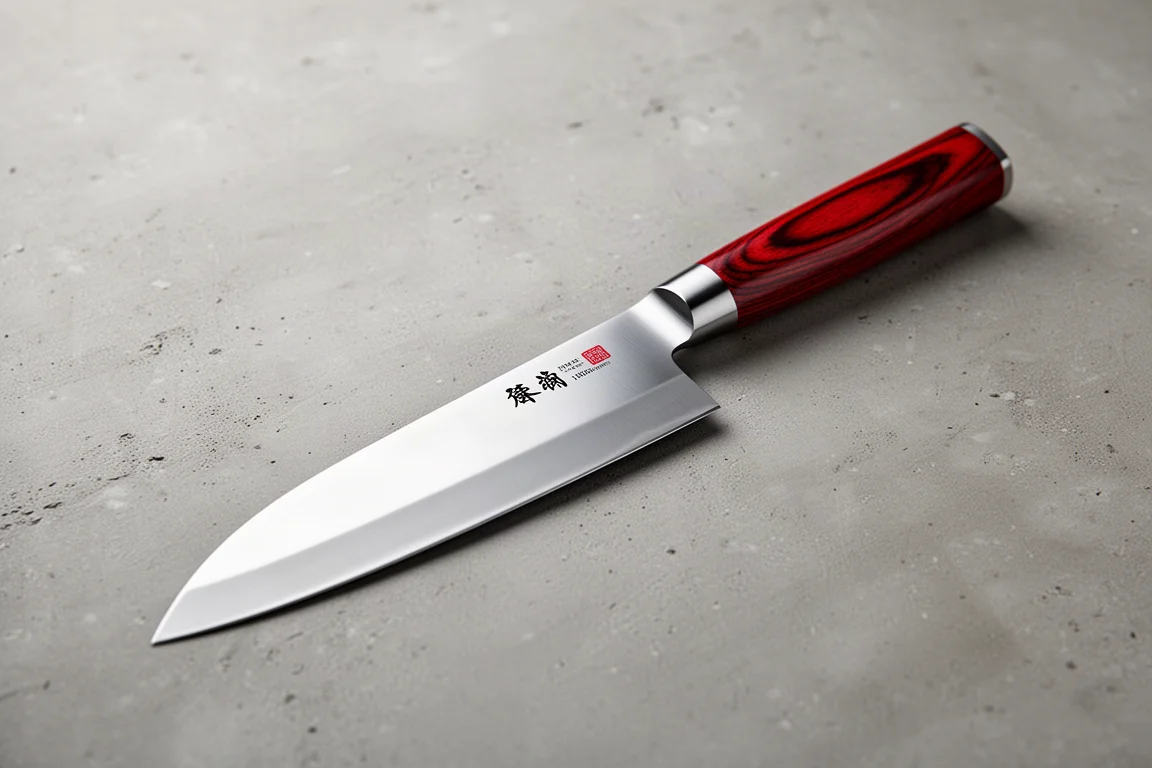
The blade is super thin at the spine and behind the edge, with a nice flat spot and enough sweep to handle rock chopping, push cutting, and pull cutting. It is also remarkably easy to sharpen and comes back to life on a honing rod very quickly. The sweet red pakkawood handle looks great, though the balance point sits a bit far forward for a western-style handle. Some trade-offs to know about: the spine and choil are not well rounded, spines and choils can be improved yourself with a quick and easy fix, the knife is light and slightly delicate, and at 180mm the length is a bit limited for very large ingredients like big ribeyes or watermelons compared with the longer knives below. Performance-wise, though, it punches well above its price.
Best Overall Value: Hatsukokoro Kaijin Aogami #2 210mm Gyuto
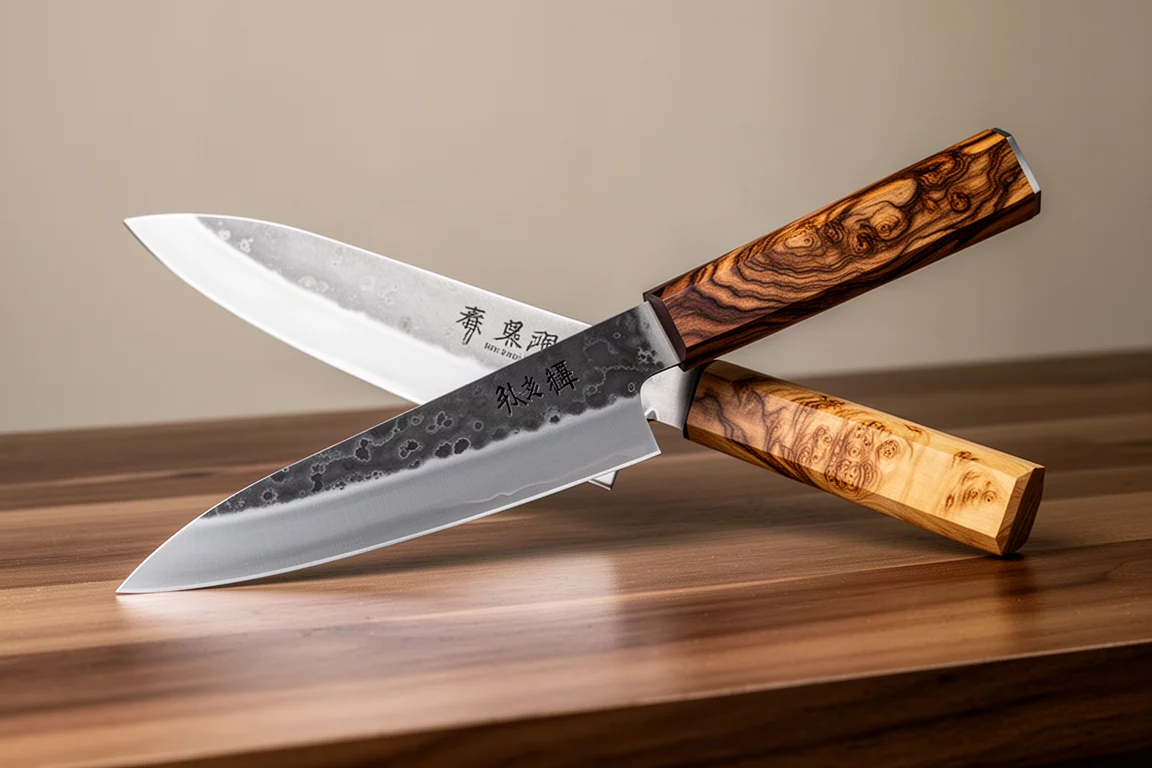
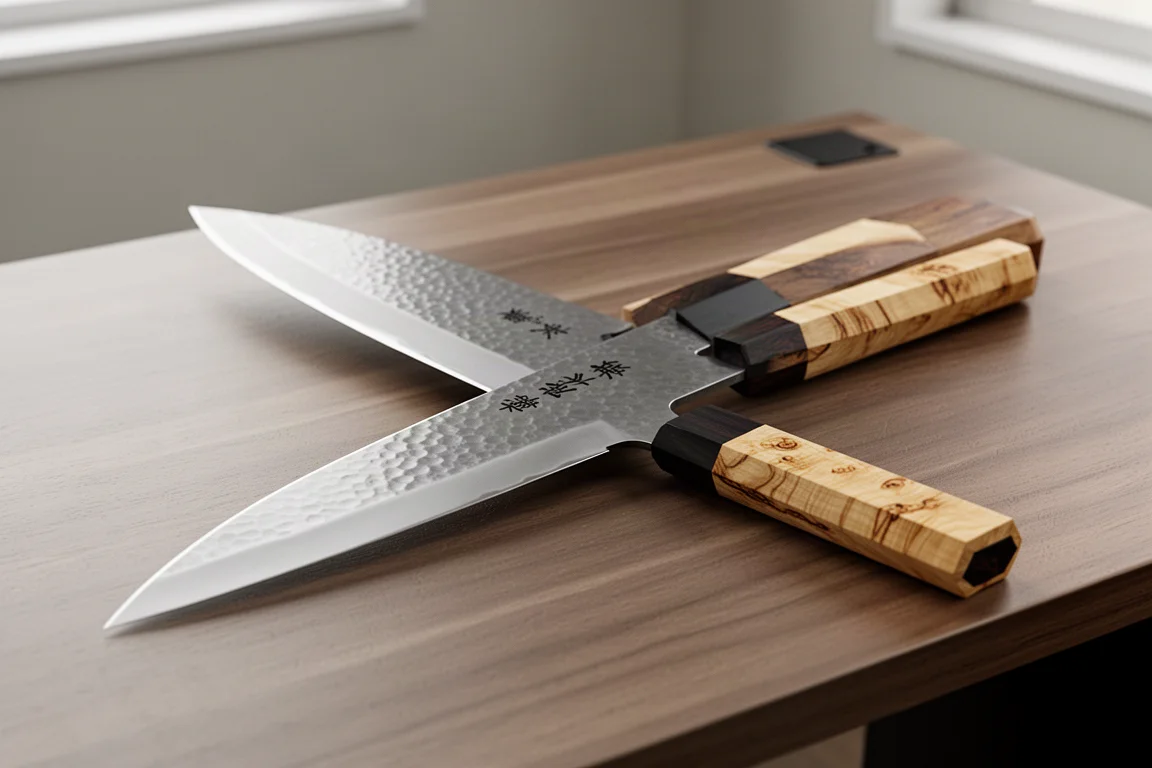
The Hatsukokoro Kaijin is a stainless clad gyuto with an Aogami #2 core, a k-tip style profile, and a stabilized birch octagonal handle. It comes beautifully sharp out of the box, is super thin at the spine and behind the edge, and delivers excellent cutting performance. Aogami #2 brings great edge retention and easy sharpening, springing back to life on stones and the rod even more readily than the Masutani. It also sits comfortably under the $300 limit, which makes the value proposition hard to argue with.
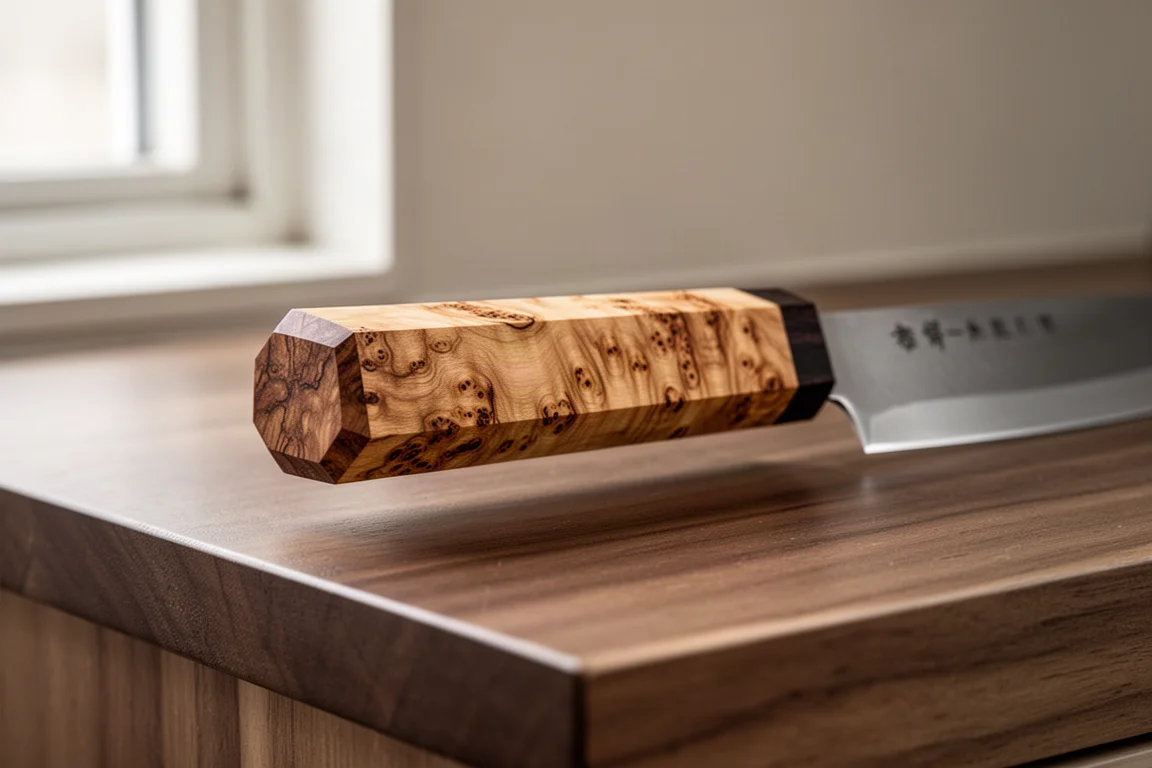
The stabilized birch handle is a real conversation piece, and the fit and finish is excellent, with a nicely sanded spine and a well-executed handle install. The choil could be a little better, and the balance point sits slightly further back than ideal, but not problematically so. The main caveat is maintenance: as a carbon core knife, it patinas quickly and needs diligent wiping and drying. On the plus side, there is plenty of exposed core steel to sharpen through before you reach the cladding, and the gradual geometry means it should need minimal thinning over years of use. In use it is an onion destroyer, rock choppable, and a genuine laser beam.
Best Iron Clad Option: Hatsukokoro Aogami #2 Kurouchi 210mm Gyuto
This Hatsukokoro uses the same stabilized birch octagonal handle as the Kaijin, but pairs an Aogami #2 core with an iron clad kurouchi finish. Sharp right out of the box, very thin at the spine and behind the edge, and a strong performer across every test ingredient, it sits in the middle of the pack on price between the Masutani and the Kaijin. Fit and finish is excellent on the handle side, with no bumps or gaps where blade meets handle, though the spine and choil are not super well rounded. As with the Masutani, that is easy to fix yourself, though professionals using the knife for hours at a time may notice it more.
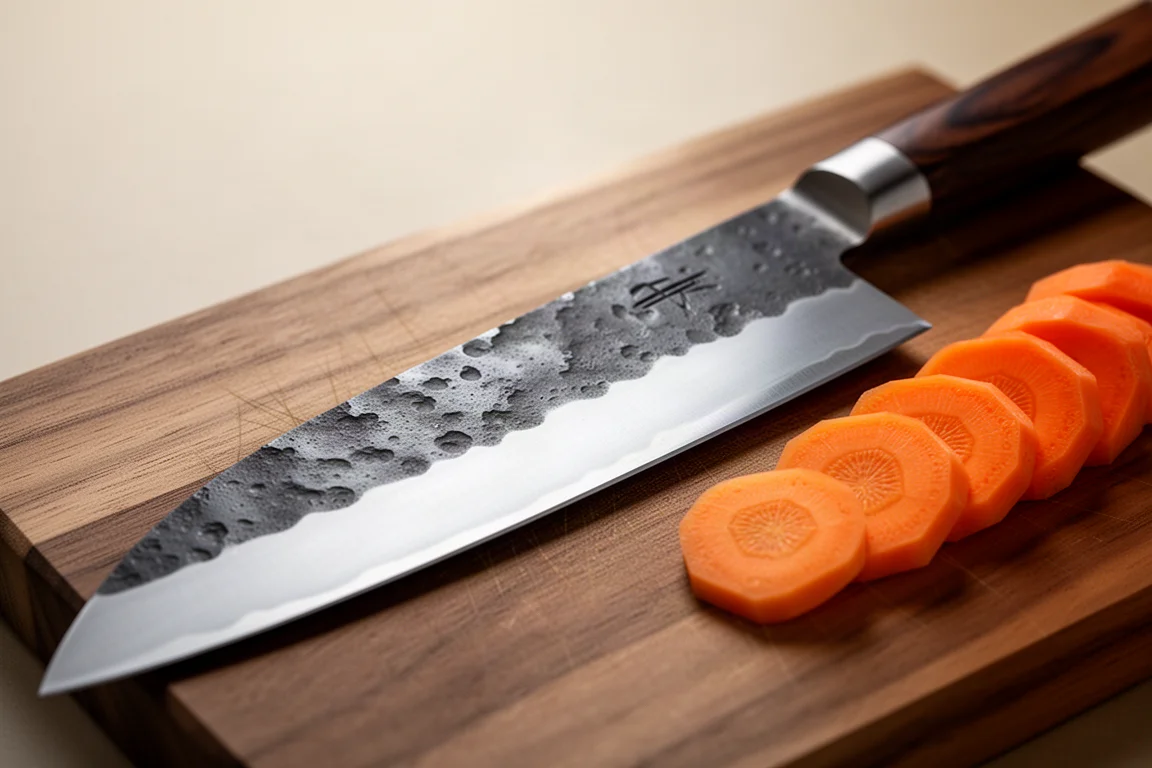
The kurouchi finish does add a slightly more frictiony feeling when cutting through dense produce, but it is still very enjoyable to use. The blade takes a bit more flat spot than the Kaijin, making it great for rock chopping, and the balance point matches the Kaijin closely. Maintenance is the big consideration: as an iron clad carbon knife, it will rust if you are not diligent about wiping it down, though any rust that forms is fairly easy to remove. If you are comfortable with that routine, this is a superb bang-for-buck knife.
Honorable Mention: Hatsukokoro Ginrei Ginsan 210mm Kiritsuke Gyuto
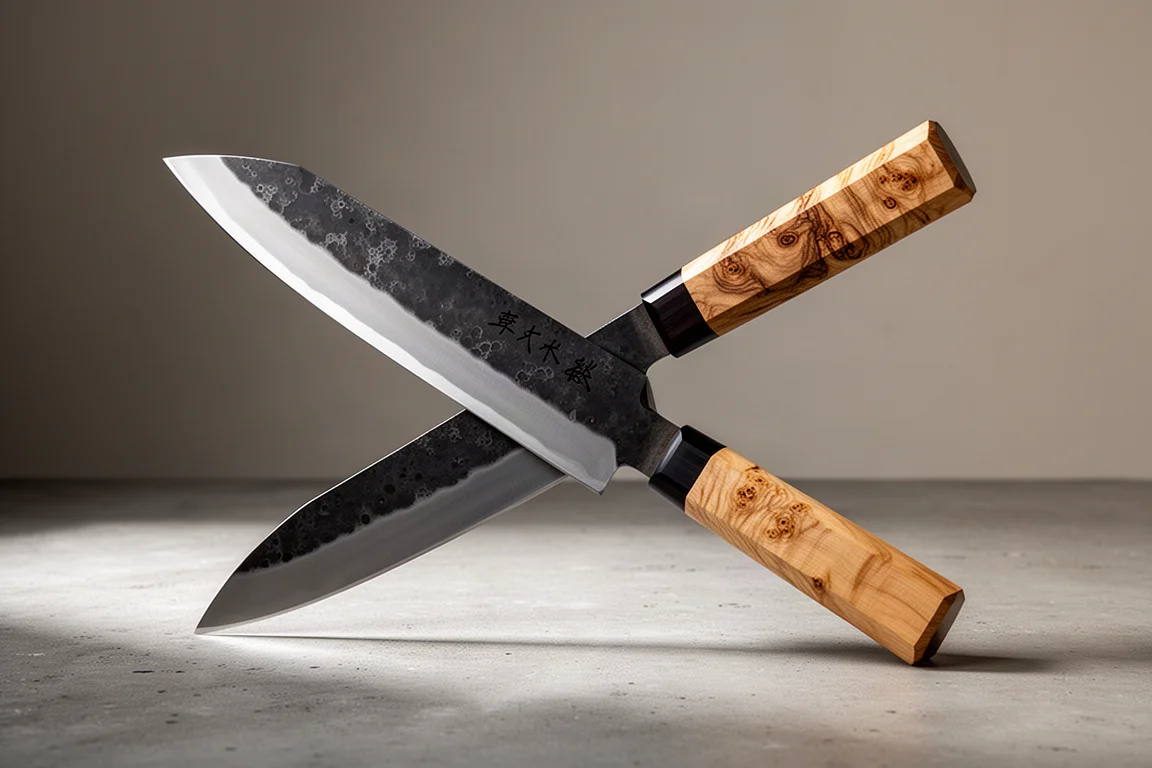
For anyone who finds stainless clad or iron clad maintenance intimidating, the Hatsukokoro Ginrei offers a semi-stainless middle ground. The core steel is Ginsan, wrapped in stainless cladding, and Ginsan is said to be the easiest of all stainless and semi-stainless steels to sharpen. It behaves essentially like a stainless knife, though the core will still develop a slight patina, so keeping it dry and clean is still wise. The construction is san mai, the traditional three-layer style, with the kirituke-style tip and a tall blade in a nashiji finish, topped with the same stabilized birch octagonal handle.
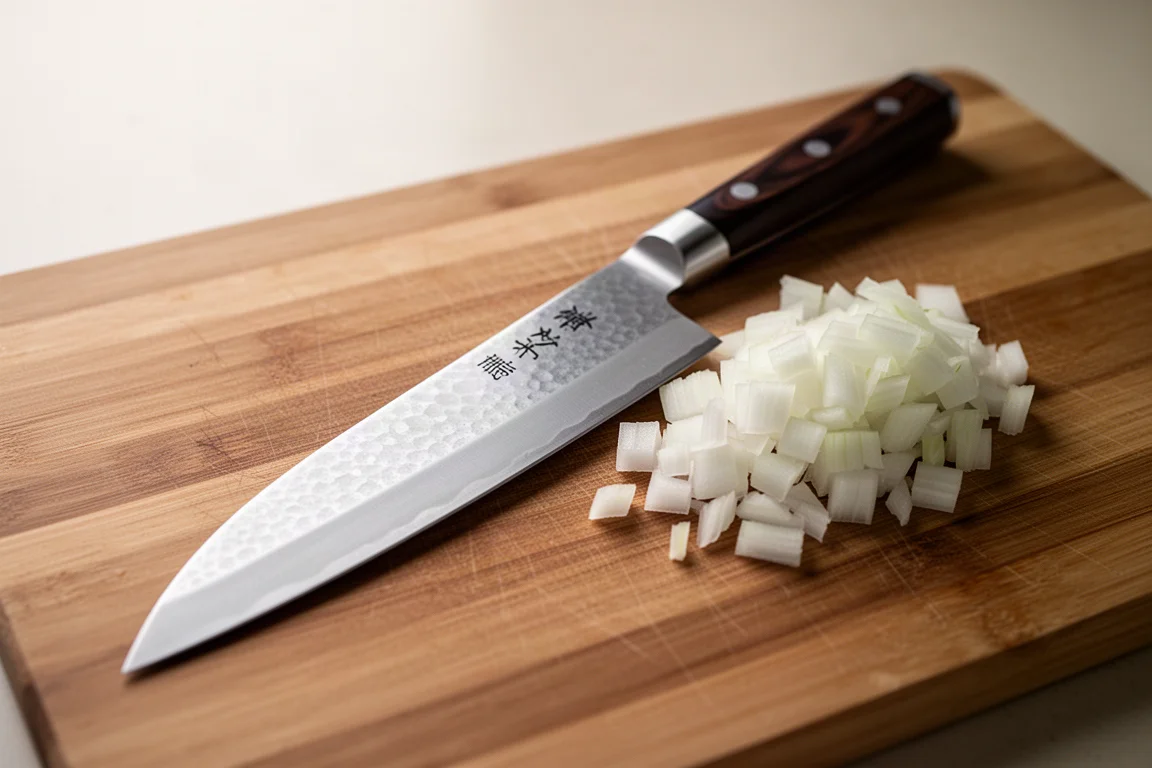
Why is it the honorable mention rather than a main pick? The blade is quite thin but not as thin as the other knives here, so cutting performance sits just a notch below them. That may actually be a plus if you want something a little more robust and less fragile, or if chipping worries you. The knife is very thin behind the edge, so if you have the stones and the skills, you can easily thin it further and make it your own. The balance point lands right where you want it, it rock chops well, and while there is not much of a flat spot, it remains fully serviceable for everyday prep.
Overall Buying Advice
Choosing between these four really comes down to two questions: what length do you want, and how much maintenance are you willing to take on? Performance across all four is remarkably close, essentially neck and neck, so no single knife dramatically outcuts the others. The Kaijin is arguably the sweet spot of the group but also the most expensive. The Masutani is the most affordable and the easiest to live with. The Kurouchi sits in the middle on both price and maintenance demands. And the Ginrei is the smart choice if you want near-stainless convenience with a more robust feel.
A quick primer on the construction terms helps here. Stainless knives have stainless outer layers and a stainless core. Stainless clad knives have stainless outside and carbon steel in the middle. Iron clad knives have iron outside and carbon in the middle. Carbon steels sharpen more easily and take a very sharp edge with less effort, while stainless needs a bit more work on the stones, which is exactly the trade the Ginrei splits so nicely.
Conclusion
Any of these four gyutos would be a genuinely excellent knife under $300. Pick the Masutani for nimble, budget-friendly stainless performance, the Kaijin for the best overall blend of sharpness, fit, finish, and steel, the Kurouchi for a middle-priced iron clad workhorse, and the Ginrei if lower maintenance and a touch more robustness appeal to you.
Further reading
Related Reviews

Kitchen Knives
Best Chef's Knives 2026: 27 Popular Options Tested and Ranked
A comprehensive review of 27 chef's knives ranging from $18 to $380, with honest assessments of handle comfort, blade balance, and real-world performance.

Kitchen Knives
Best Chef's Knives Under $75: Two Tested Recommendations
Two practical 8-inch chef's knives that balance sharpness, comfort, and durability without premium pricing.

Kitchen Knives
Best Chef's Knives 2026: 27 Options Tested and Ranked
A comprehensive review of 27 chef's knives ranging from $18 to $380, with honest assessments of handle design, balance, blade profile, and real-world performance.