Kitchen Knives
5 Gyuto Grinds Tested for Food Release: Which Knife Sticks Least to Potatoes
Five Japanese gyuto knives with convex, S grind, Scandi, and hollow ground profiles are compared for food release on starchy potatoes.
Introduction
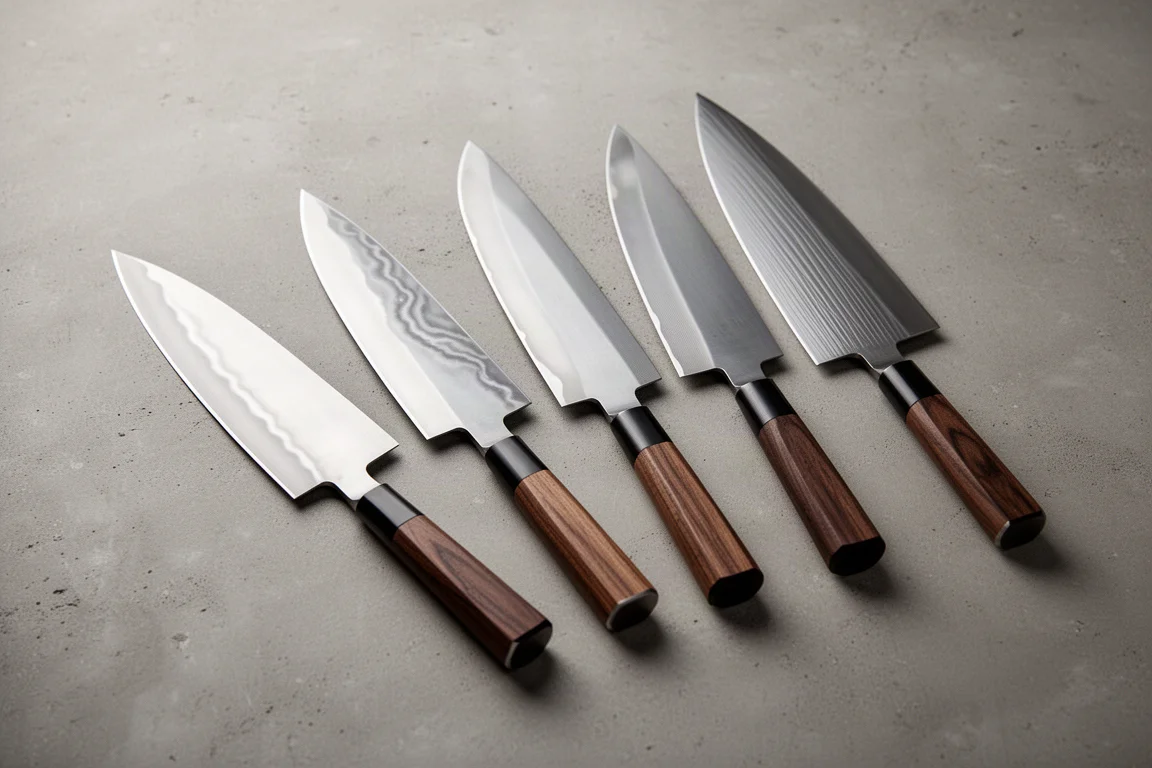
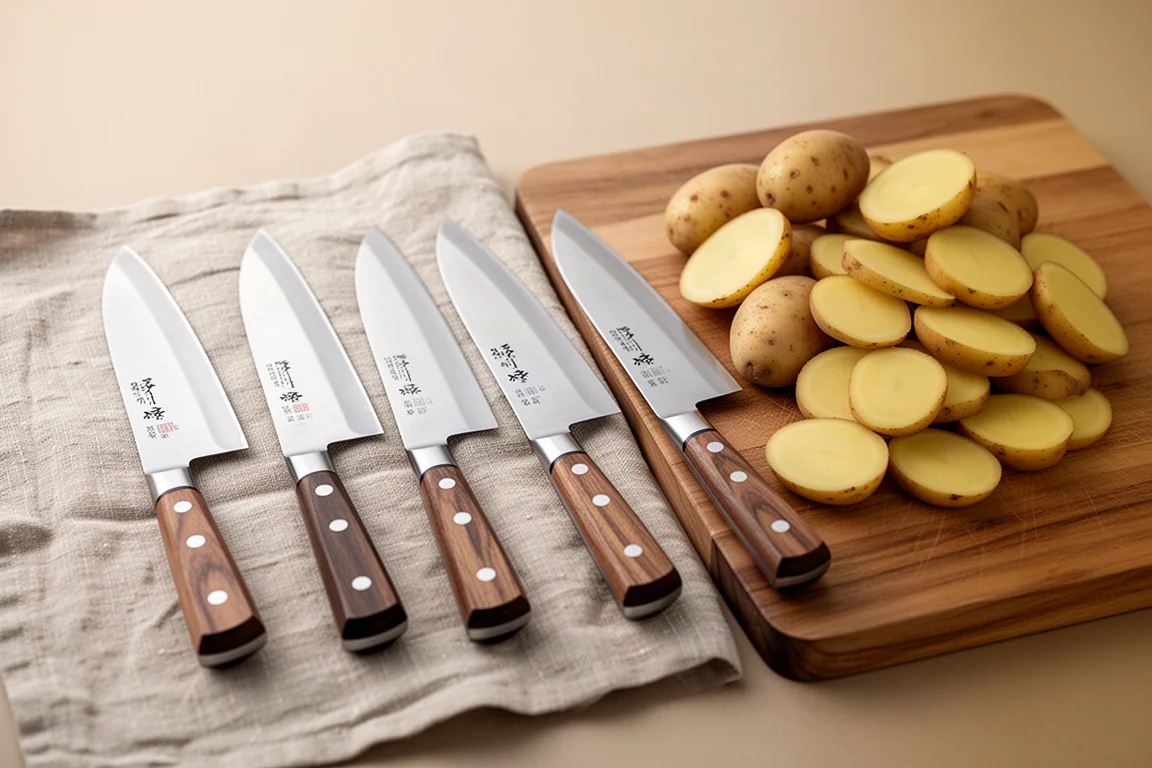
Food release is one of those quiet details that separates a knife you enjoy using from one you fight with. A blade that sheds thin potato slices cleanly lets you keep rhythm while cutting, while a sticky blade means constantly flicking slices off the flat. To find out how much the grind itself matters, five Japanese gyuto knives were put through the same straight-down slicing test on starchy russet potatoes, with as little lateral motion as possible to keep the comparison fair.
The lineup covers five very different grind styles: convex, an S grind, Scandi, and two hollow-ground variants with noticeably different spine thicknesses. The results were clear, but not always in the way you might expect.
How the Test Worked
Each knife was used to cut straight down through the middle of a potato, then straight up and down for thin slices, using as little lateral movement as possible. This is deliberately not the way a knife is typically used for dicing, but it removes technique as a variable and isolates how each grind releases food.
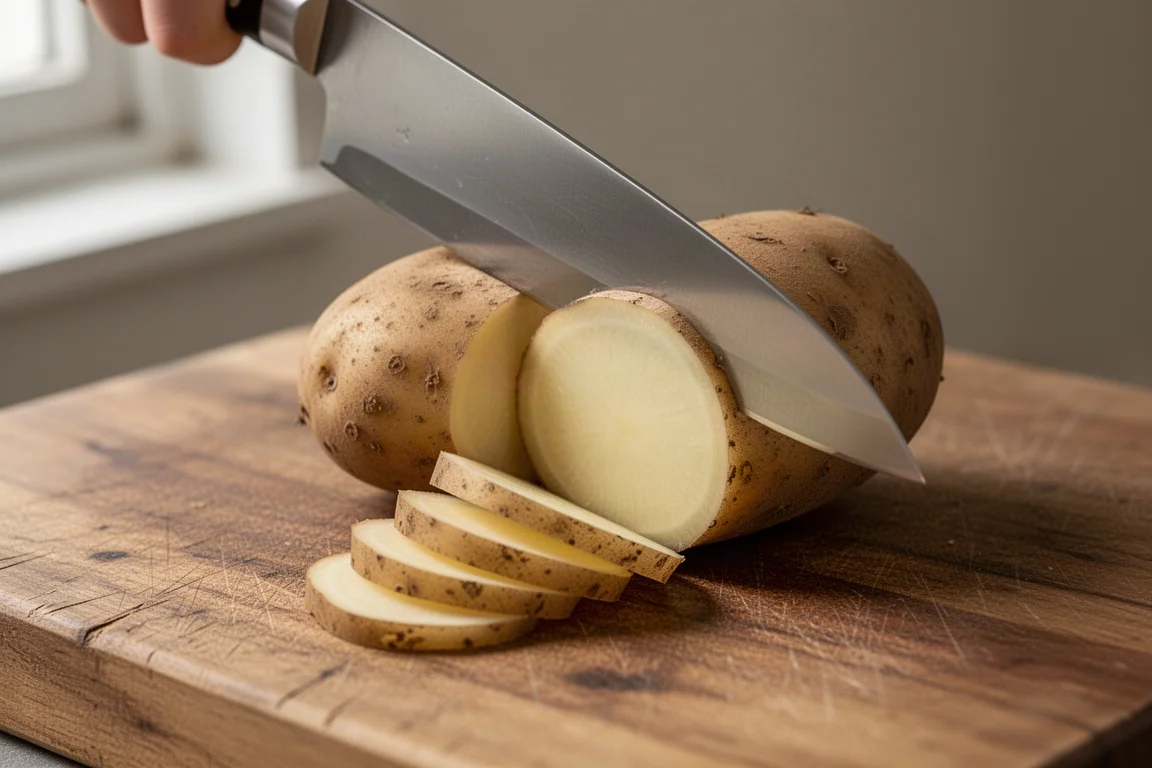
Worth keeping in mind throughout: technique makes an enormous difference. Every knife in this test released cleanly once a slight draw or lateral motion was added. The ranking below reflects worst-case, straight-up-and-down cutting on the stickiest common ingredient there is: the potato.
Best Overall: Tsukada 210mm Gyuto Extra Tall (S Grind)
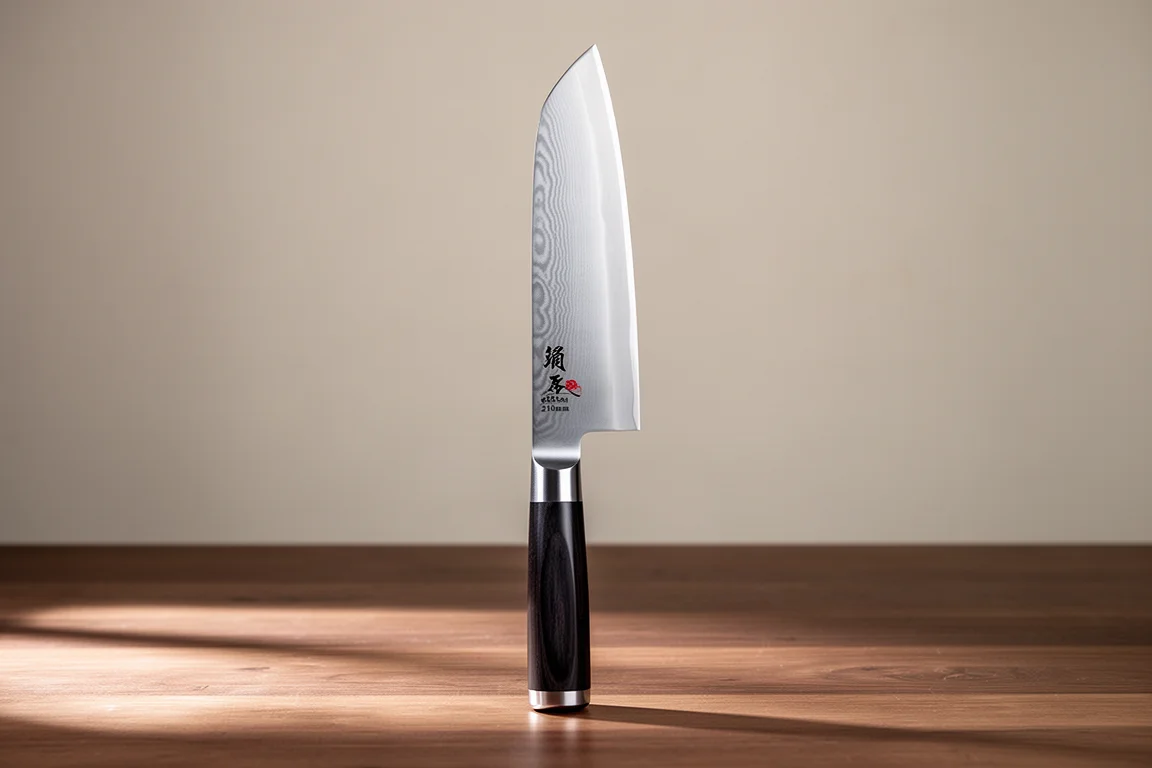
The Tsukada 210mm Gyuto Extra Tall was the standout of the entire test. Cutting straight down with no technique at all, it produced essentially no stickage, slice after slice. Even the testers were surprised at just how clean it stayed.
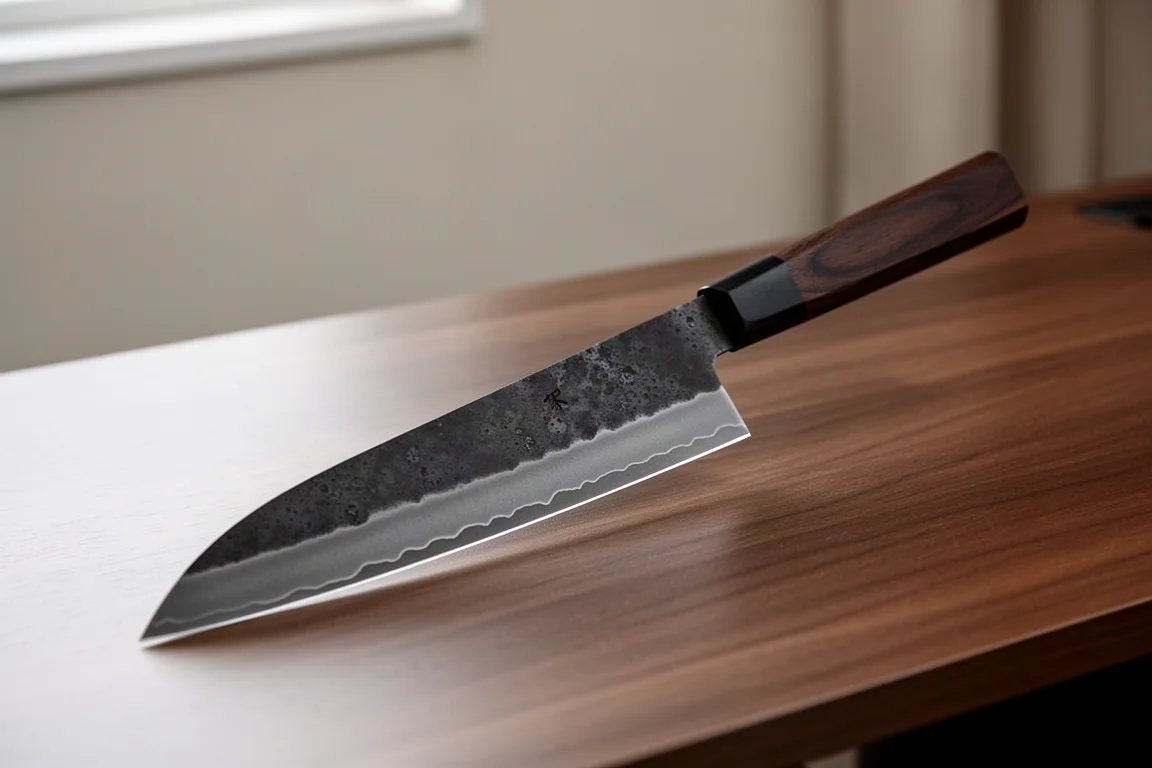
The explanation is the grind: the blade has a distinctive S-shaped curvature that reduces contact area between the food and the steel. S grinds are known for this trait, and the Tsukada demonstrated exactly why they have that reputation. It was comfortably the least sticky knife tested, holding that lead even against a very strong Scandi competitor.
Runner-Up: Moritaka 240mm Kurouchi Gyuto
The Moritaka 240mm Kurouchi Gyuto, with its Scandi grind, was a very close second. Slices flew off the blade with only occasional sticking, and it handled straight-down cuts with confidence.
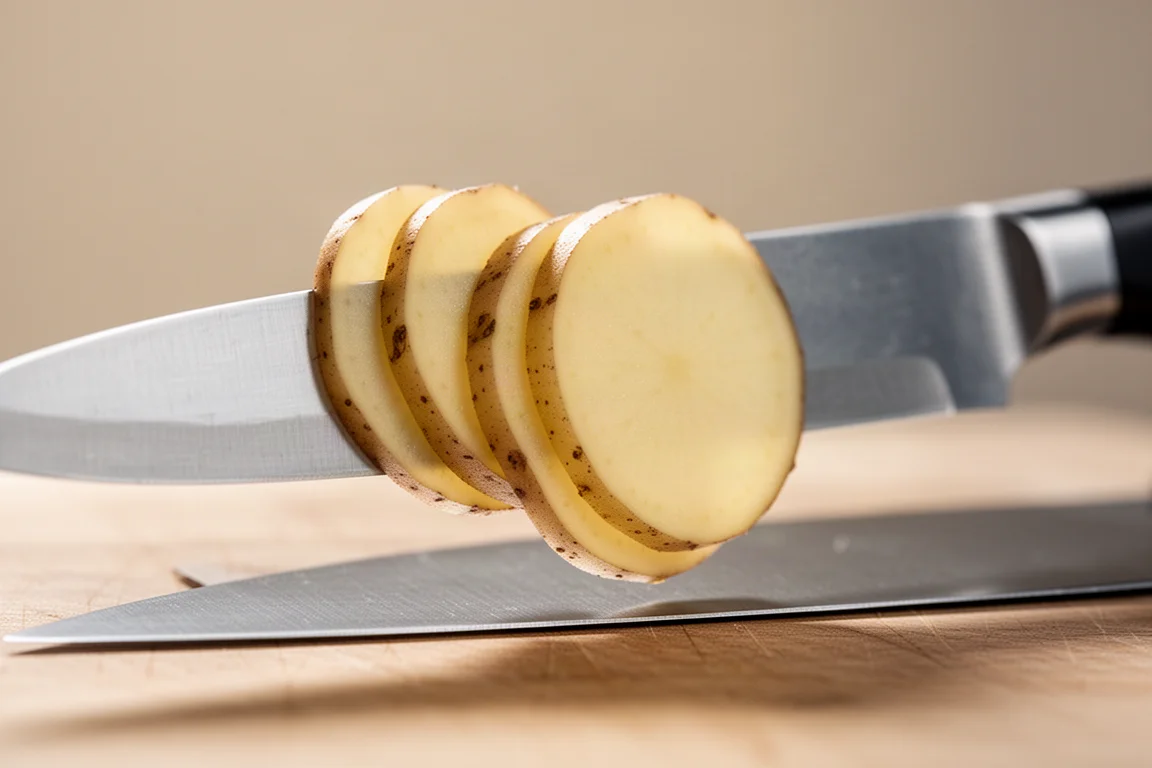
On slices, it performed well enough that the difference only became obvious in a side-by-side: the food released a touch more readily on the S grind knife. The Moritaka still delivered what was described as superb food release, and it would satisfy most cooks without compromise.
Third Place: Ryusen Hamono Fukakaro 210mm Gyuto (Convex)
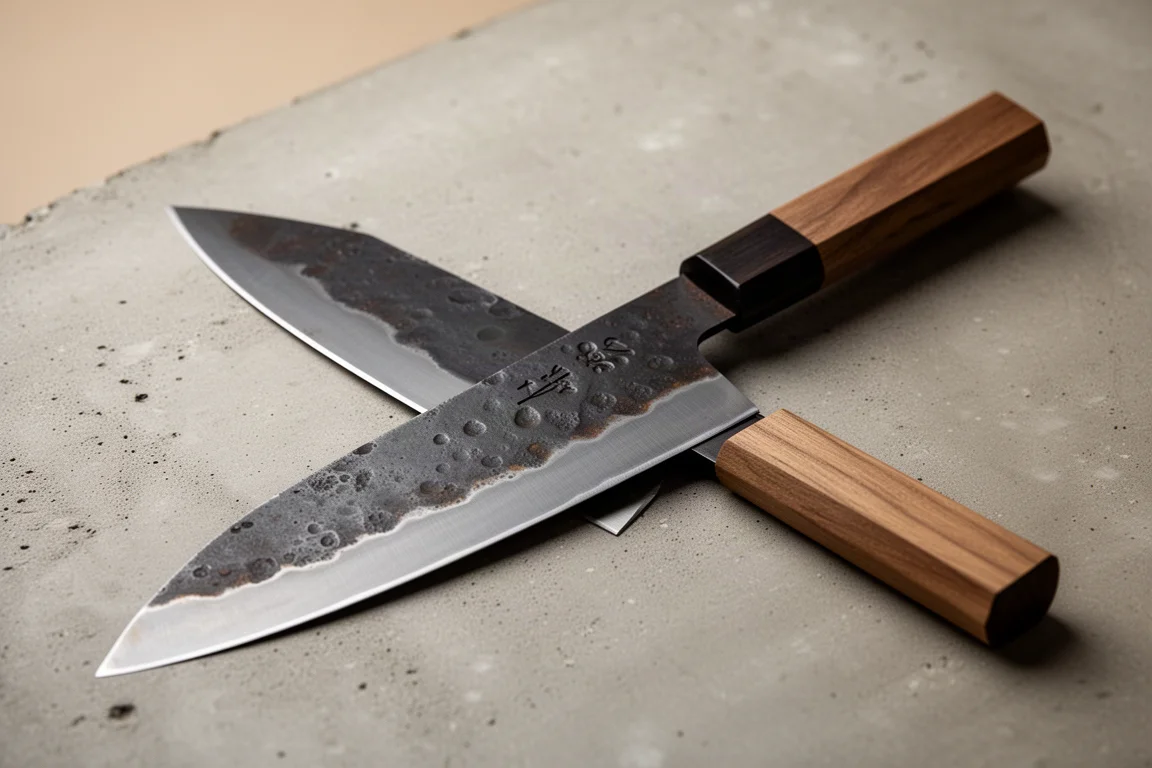
The Ryusen Hamono Fukakaro 210mm Gyuto, ground convex, landed in a solid middle position. The convex profile is generally regarded as good for food release, and this knife lived up to that: only a tiny bit of stickage, even on what is arguably the stickiest ingredient a knife regularly meets.
The slices that did cling came off easily with a quick wipe. If you want a well-behaved, low-maintenance grind that never gets badly gummy, convex remains a dependable choice.
Fourth Place: Yoshikane Sanjo Hollow Ground Gyuto
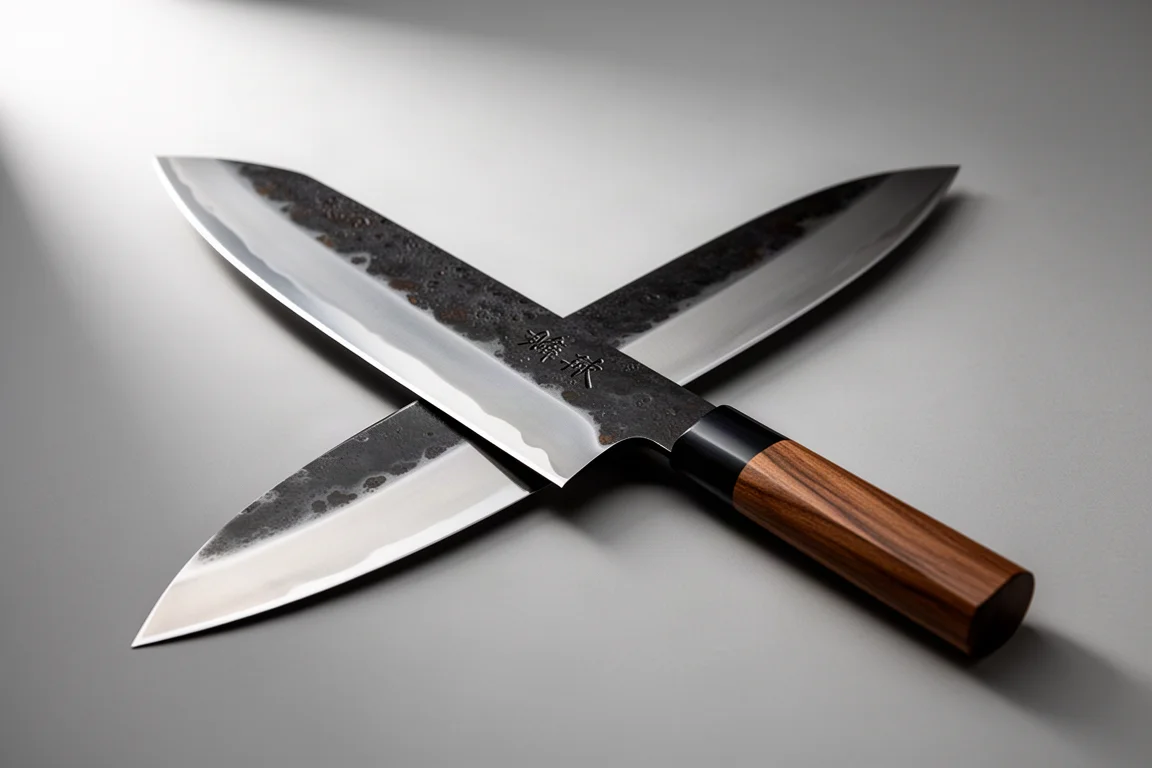
The Yoshikane Sanjo Hollow Ground Gyuto was the stickiest of the five. Hollow grinds offer less flat area than a full flat grind, but in this test that did not translate into better release. Straight up-and-down cuts produced the most sticking of the day, with slices clinging noticeably to the blade.
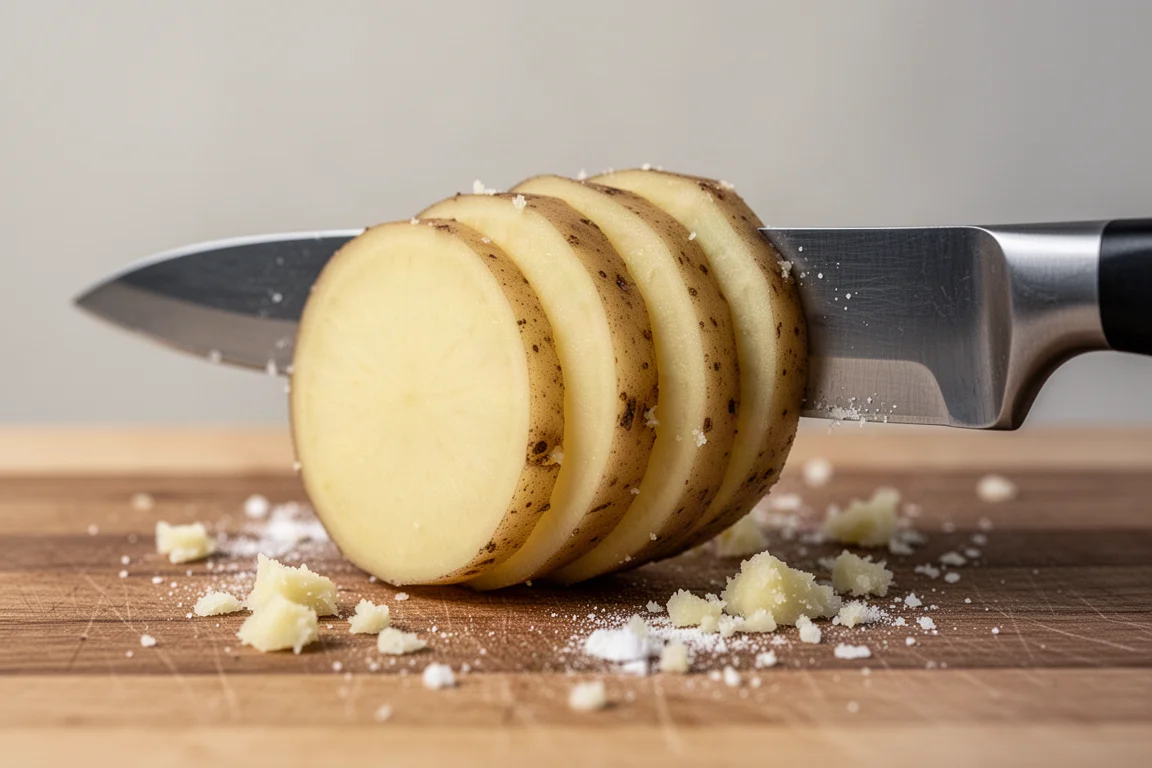
It is not a dealbreaker. With a slight lateral motion, the sticking disappeared entirely, and the knife otherwise performed well. But as a pure food-release comparison, it trailed the leaders clearly.
Last Place: Fujiwara 240mm Kurouchi Gyuto
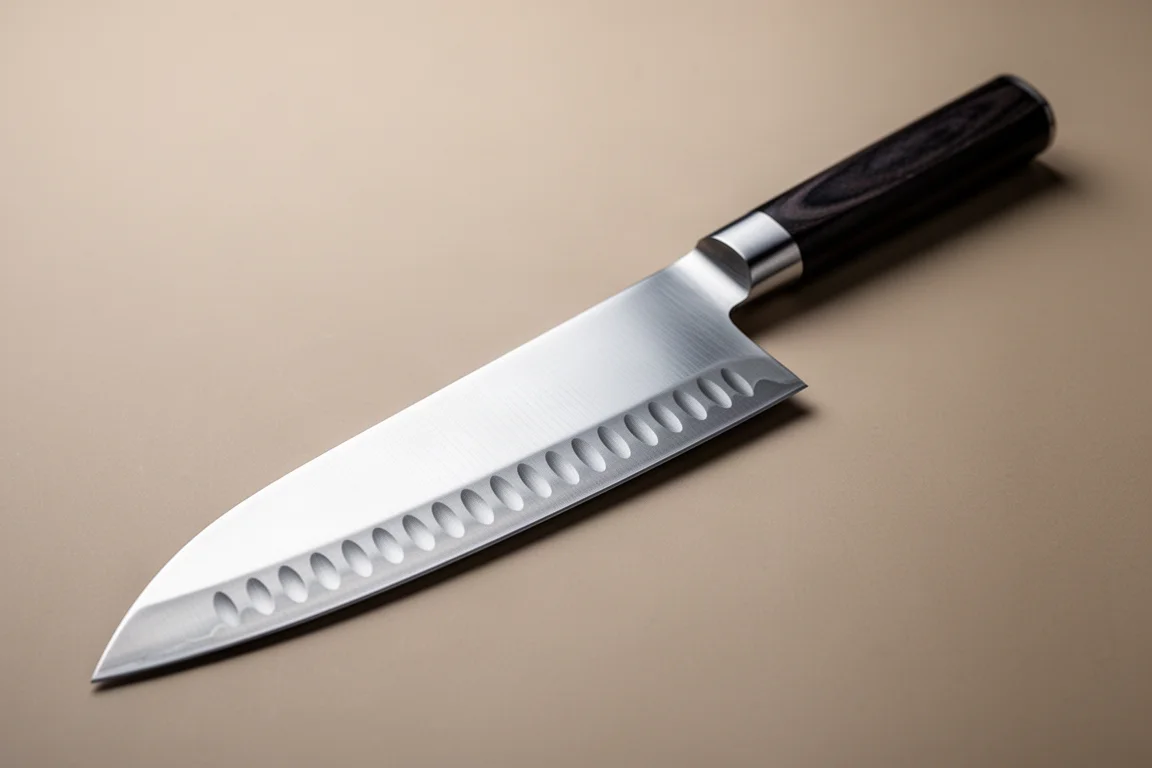
The Fujiwara 240mm Kurouchi Gyuto, a hollow-ground knife with a very thin spine, proved the most confusing result. The first two cuts showed immediate stickage, then performance improved mid-test, only to feel sticky again when more lateral motion was used.
The higher grind line appears to be a factor: it may simply need a larger piece of food to take full advantage of its geometry. It did well in certain respects, but overall it ranked as the stickiest knife in the lineup.
Overall Buying Advice
The final ranking, from most to least sticky, came out as follows: the Fujiwara hollow ground with the thin spine was the stickiest, followed by the Yoshikane Sanjo hollow ground, then the convex-ground Ryusen Fukakaro, with the Moritaka Scandi in second and the Tsukada S grind taking the win.
The broader lesson is that grind geometry genuinely affects food release, with the S grind and Scandi profiles clearly ahead, and convex a reliable all-rounder. But technique remains the biggest lever: adding even a small draw or lateral motion to your cuts eliminated sticking on every knife here. If you cut a lot of starchy vegetables straight up and down, an S grind or Scandi blade like the Tsukada or Moritaka will make the biggest difference.
Conclusion
Food release is largely a function of grind shape, and this comparison showed a real, repeatable spread across five gyuto knives. The S-grind Tsukada was nearly stick-free under the harshest cutting style, the Scandi Moritaka followed closely, and the hollow-ground knives trailed despite their reputation for low blade contact. Choose the grind that matches how you actually cut, and remember that a slight drawing motion will rescue any of these knives on a sticky potato.
Further reading
Related Reviews

Kitchen Knives
Best Chef's Knives 2026: 27 Popular Options Tested and Ranked
A comprehensive review of 27 chef's knives ranging from $18 to $380, with honest assessments of handle comfort, blade balance, and real-world performance.

Kitchen Knives
Best Chef's Knives Under $75: Two Tested Recommendations
Two practical 8-inch chef's knives that balance sharpness, comfort, and durability without premium pricing.

Kitchen Knives
Best Chef's Knives 2026: 27 Options Tested and Ranked
A comprehensive review of 27 chef's knives ranging from $18 to $380, with honest assessments of handle design, balance, blade profile, and real-world performance.