Gravel Bikes
Best Gravel Bikes 2026: Three All-Terrain Builds Compared
A practical comparison of three gravel bikes built for very different terrain, from suspension-equipped trail control to loaded adventure riding and all-day speed.
Introduction
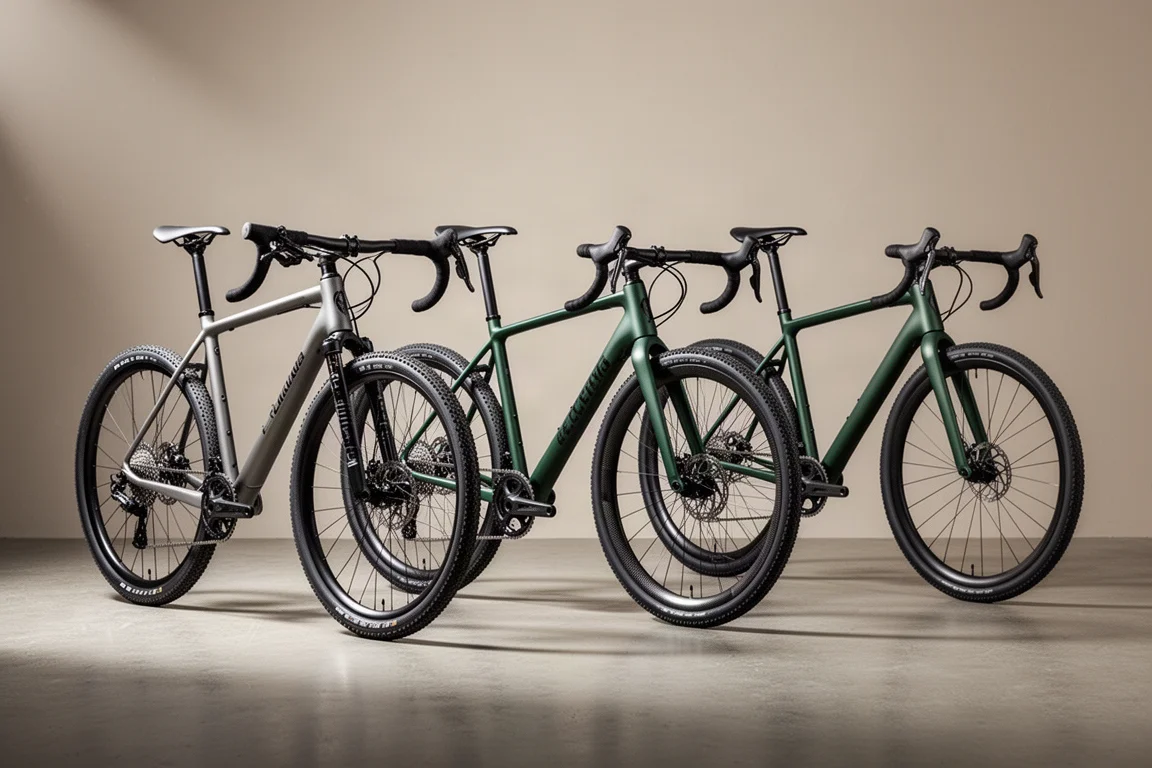
Gravel has become a broad category. It stretches from fast dirt-road racing machines to bikes that sit close to mountain bike territory, and on to rigs built for multi-night bikepacking trips. That range makes choosing one bike genuinely difficult, because the right answer depends almost entirely on where you plan to ride.
To make the decision clearer, we looked at three bikes that represent distinct points on that spectrum: the Giant Revolt X, the Ridley Kanzo Adventure and the Pivot Vault. Each one has a clear personality, and each one is excellent at something the other two approach differently. What follows is a breakdown of the frames, geometry, components and real riding character so you can match a build to your own kind of gravel.
What Separates These Three Gravel Bikes
The three bikes were assessed on how much fun they are to ride, how fast and comfortable they feel on rough surfaces, how they handle when the route turns technical, and what they offer for the money. All three were ridden through a winter and early spring on mixed surfaces: byways, bridleways, towpaths, singletrack and a good deal of tarmac in between, including long days out where fatigue becomes a real factor.
Weight is a useful starting point. The Ridley Kanzo Adventure comes in at 9.09 kg despite relatively large 47 mm tyres, the Pivot Vault is the lightest at 8.81 kg with 40 mm tyres and a two-by Di2 drivetrain, and the Giant Revolt X is the heaviest at 10.5 kg. That extra mass on the Giant does not translate into sluggishness on the road or trail, largely because of its lightweight wheels, and it buys a significant amount of control and comfort that the other two cannot match.

Price also shapes the picture. The Ridley sits at the lower end of the group while still using a carbon wheelset, the Giant lands in the middle, and the Pivot asks considerably more. Value judgements here are not only about the number on the tag, but about how closely the specification matches the price.
Giant Revolt X: Suspension at Both Ends
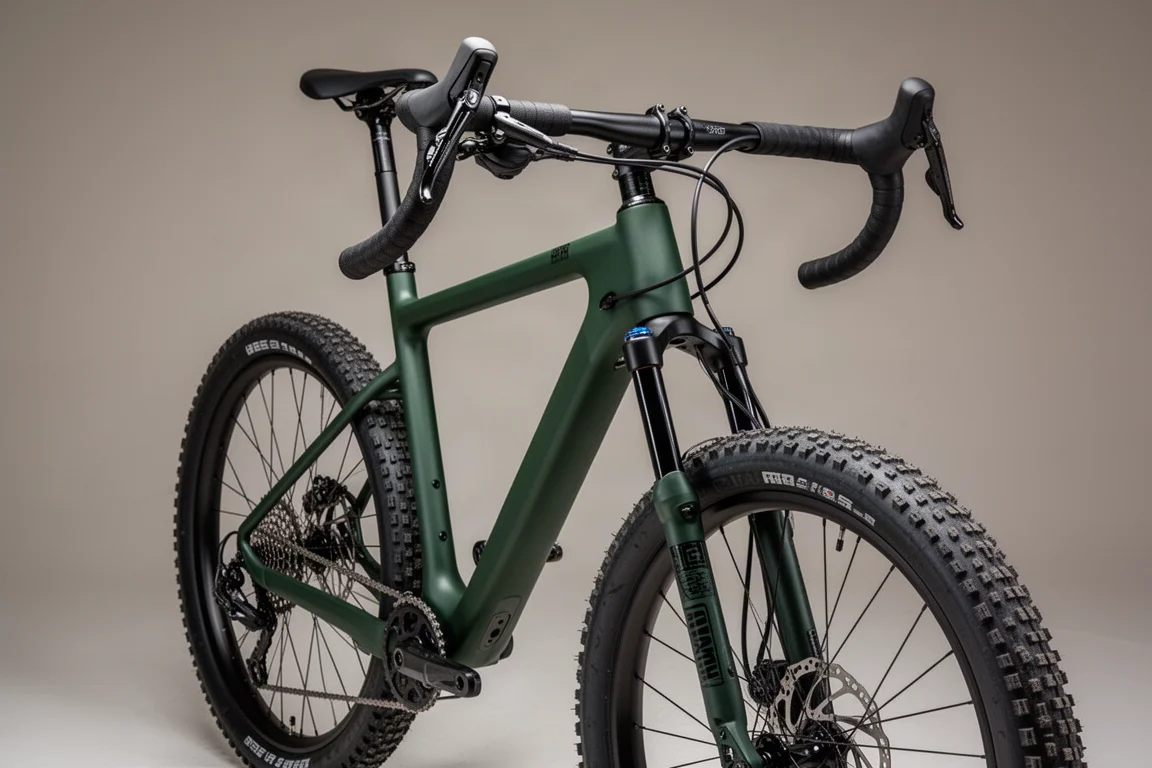
The Revolt X is the bike that blurs the line between gravel and mountain bike. Its geometry is suspension corrected, with a much shorter 145 mm head tube than the standard rigid Revolt, and a RockShox fork with 45 mm of offset. At the rear, the 30.9 mm dropper post does double duty: it offers 100 mm of drop and, when fully extended, another 25 mm of suspension travel. Combined with a long trail figure, a short 80 mm stem and a very wide 48 cm bar with 16 degrees of flare, the front end feels planted and predictable the moment the surface deteriorates.
Flip-chip dropouts let the rear end switch between a generous 45 mm tyre in the short setting and a huge 53 mm in the long position. The drivetrain is a mullet mix of SRAM Rival XPLR AXS shifters and a long-cage GX AXS rear derailleur paired with a 10-52 cassette and a 42-tooth chainring, with Rival brakes and 160 mm rotors. Rolling stock is Giant’s own CXR 1 carbon wheelset at a claimed 1,398 g per pair, with a 25 mm internal width, hookless rims, DT Swiss 350 freehub internals and 54 points of engagement for quick pick-up. The 45 mm CrossCut Grip 1 tyres come set up tubeless.
At roughly £5,499 or $6,200, it delivers front and rear compliance that no rigid bike in this group can replicate.
Ridley Kanzo Adventure: Built for Loaded Adventures
The Kanzo Adventure is designed for riders who want to carry a campsite with them and still enjoy the descents. Its defining frame feature is a pair of super low-slung seat stays, flattened and slender, which introduce compliant flex and free up space for tyres as large as 2.1 inches with room to spare. The oversized down tube flows into a substantial press-fit bottom bracket shell, and the frame is built around one-by drivetrains only, with a classified hub gear available as an option.
Mounting points are exhaustive: bosses on the seat tube, the top tube and the underside of the down tube, mudguard mounts, bento box mounts and triple bosses on each fork leg rated for up to three kilograms of luggage per side, plus internal routing for a rear brake hose and a dynamo cable. The geometry is deliberately different from most rivals, with a slack 70.5 degree head angle, a long 415 mm reach and a high 617 mm stack for balanced, stable handling, while a steep 74 degree seat angle keeps the bike responsive under pedalling.
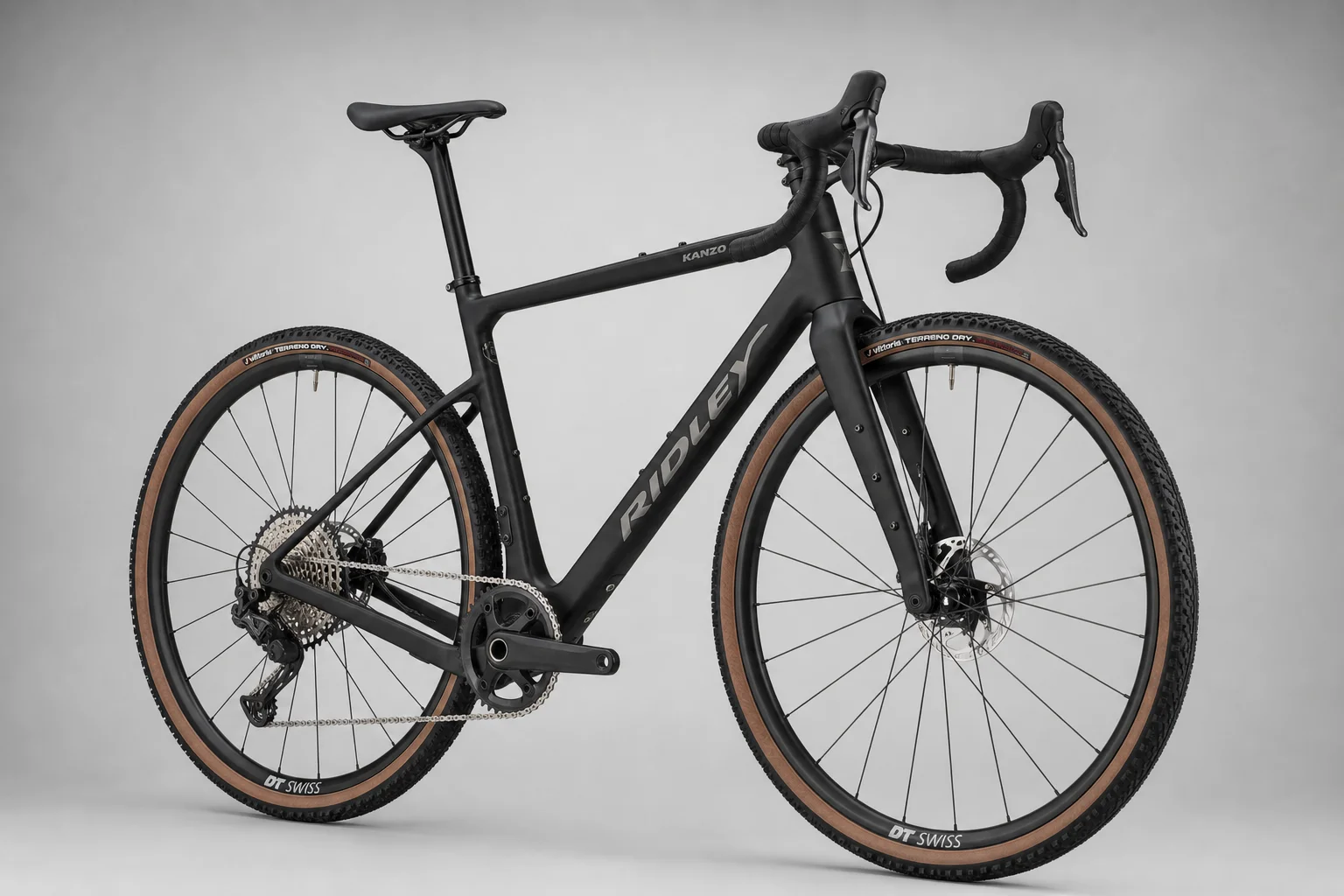
Specification highlights include a Forza Levanto tubeless-ready carbon wheelset with 40 mm deep rims, 30 mm external and 23 mm internal widths, wrapped in 47 mm Vittoria Terreno Dry tyres that use a graphene 2.0 compound. The Rival XPLR drivetrain uses a 42-tooth chainring and a 10-44 cassette, brakes are Rival hydraulic with 160 mm rotors, and finishing kit includes a wide 44 cm Ritchey Venture Max 2 bar with 24 degrees of flare at the drops, a round 27.2 mm seat post and a Selle Italia XLR saddle.
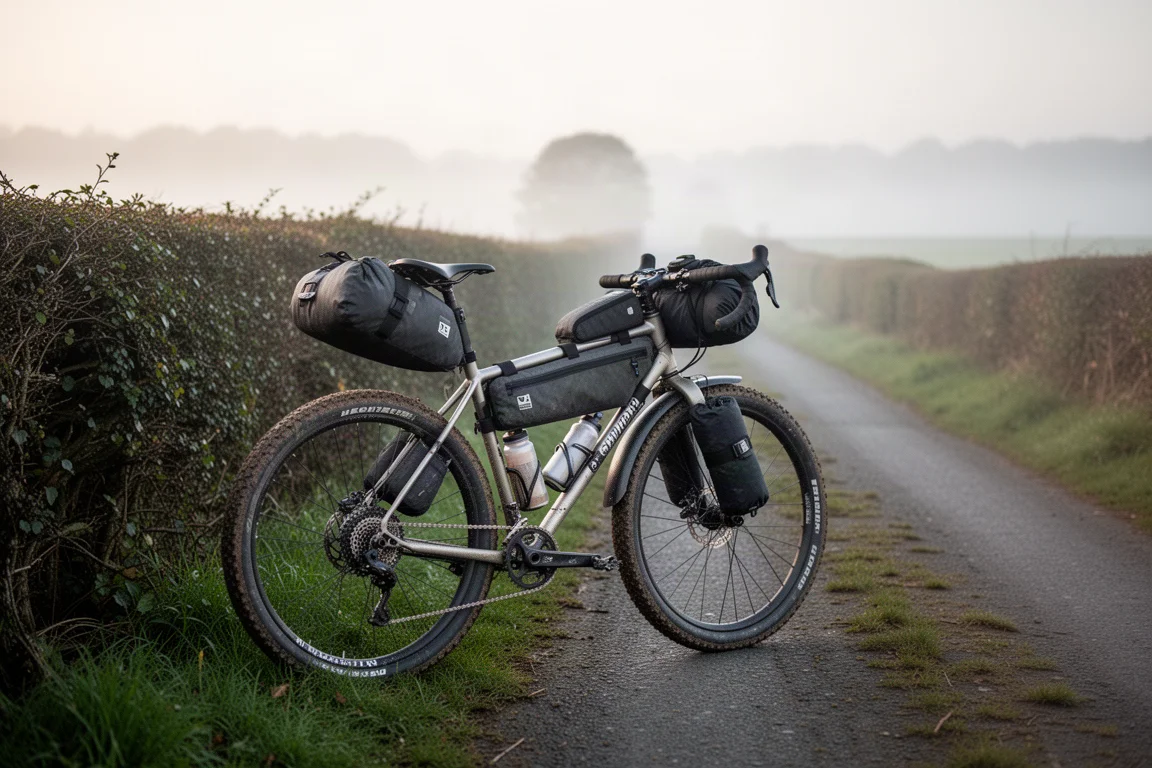
The test bike arrived with tubes fitted rather than set up tubeless. That is a small disappointment on an otherwise complete package, because tubeless would allow lower pressures and more grip from the slick-treaded Terreno Dry tyres in mixed conditions.
At around £4,459 or $6,469, the Kanzo Adventure reads as compelling value for a carbon-wheeled, heavily mount-laden adventure bike.
Pivot Vault: All-Day Speed with a Compliant Rear End
The Vault stands out for its IsoFlex elastomer sleeved seat tube and seat post design. It works with both 27.2 mm and 30.9 mm posts, droppers included, which looks low-tech next to more complex systems but performs convincingly, taking the edge off high-frequency vibration through the saddle. Because the seat tube is occupied, Pivot moved the battery into the down tube with an access port just in front of the BB386 EVO bottom bracket shell. Claimed frame weight is 998 g for a medium, plus 56 g for the IsoFlex insert.
The drivetrain is Shimano’s 12-speed Ultegra R8100 Di2, which shifts smoothly and brakes powerfully. It is an unusual choice on a gravel bike, since it has no clutch or chain management device. Pivot works around the gearing side of that with Praxis carbon cranks and 48/32 adventure chainrings paired to the widest 11-34 Ultegra cassette, giving a broad spread for most rides. The rear end is kept compact with 420 mm chainstays, while a 72 degree head angle and a 45 mm fork offset produce a stable, well-tracking ride.
Wheels are DT Swiss CR1600, tubeless ready with a 22 mm internal width and a 1,730 g pair weight, fitted with 40c Maxxis Rambler tyres set up tubeless. Finishing kit includes an alloy Easton EA70 AX bar and alloy Pivot stem, a WTB saddle and a 27.2 mm carbon seat post. A 40 mm travel RockShox Rudy Ultimate fork swallows energy-sapping chatter effectively, and roots are dulled without disappearing entirely.
Comfort, Tire Clearance and Real-World Use
Comfort is where these bikes diverge most. The Giant Revolt X is the only one here with compliance at both ends, and that combination of a 40 mm front fork and the 25 mm suspension function in the extended dropper post is genuinely transformative on rough, root-strewn surfaces. It is not designed for big drops or heavy landings, but it delivers far more control over broken ground and leaves you fresher on long days.
The Pivot Vault takes a different route with its elastomer-damped rear end, which keeps the back of the bike taut, short and nimble while still cushioning the saddle. The Ridley Kanzo Adventure relies on frame flex from those slender seat stays plus the volume of its 47 mm tyres, and on fast loose descents it feels planted and composed, smoothing tight turns and rocky ground without ever feeling vague.
Tyre capacity matters just as much as suspension. The Kanzo Adventure will take 2.1 inch rubber, the Revolt X will accept 53 mm in its long flip-chip setting, and the Vault stays with a road-adjacent 40 mm. Pivot’s fitment of mudguard mounts, dual-position bottle mounts, bento box mounts and a removable front mech mount makes it versatile year-round, but it is not a haulage machine in the way the Ridley is.
Overall Buying Advice
The clearest way to choose between these three is to decide what your typical ride looks like. If your gravel routes regularly fold in twisty technical singletrack, the Revolt X is the most capable and the most fun of the group, and its suspension setup keeps you fresher on the longest days. If you want to travel with luggage and still enjoy the trails, the Kanzo Adventure is the natural pick thanks to its tyre clearance, mounting options and lower asking price.
The Pivot Vault is the choice for riders who spend more time on fast, wide gravel roads and tarmac than on technical terrain. It tracks beautifully at speed, its rear-end damping works, and it climbs well, but at around £8,000 the specification is harder to justify. An alloy bar where carbon would be expected, a basic-feeling saddle and a midweight DT Swiss wheelset sit oddly on a bike at this price. If outright comfort and smooth-surface pace matter most and the budget allows, it still delivers a genuinely rapid ride.
Conclusion
There is no single best gravel bike in a category this wide. The Giant Revolt X is the most versatile all-rounder here, blending meaningful suspension, stable handling and strong value. The Ridley Kanzo Adventure is the best tool for loaded adventure riding and rough descents at a sensible price. The Pivot Vault is fast, refined and comfortable, provided you are comfortable paying premium money for a road-leaning gravel build. Match the bike to the terrain you actually ride, and any of the three will serve you well.
Further reading
Related Reviews
Gravel Bikes
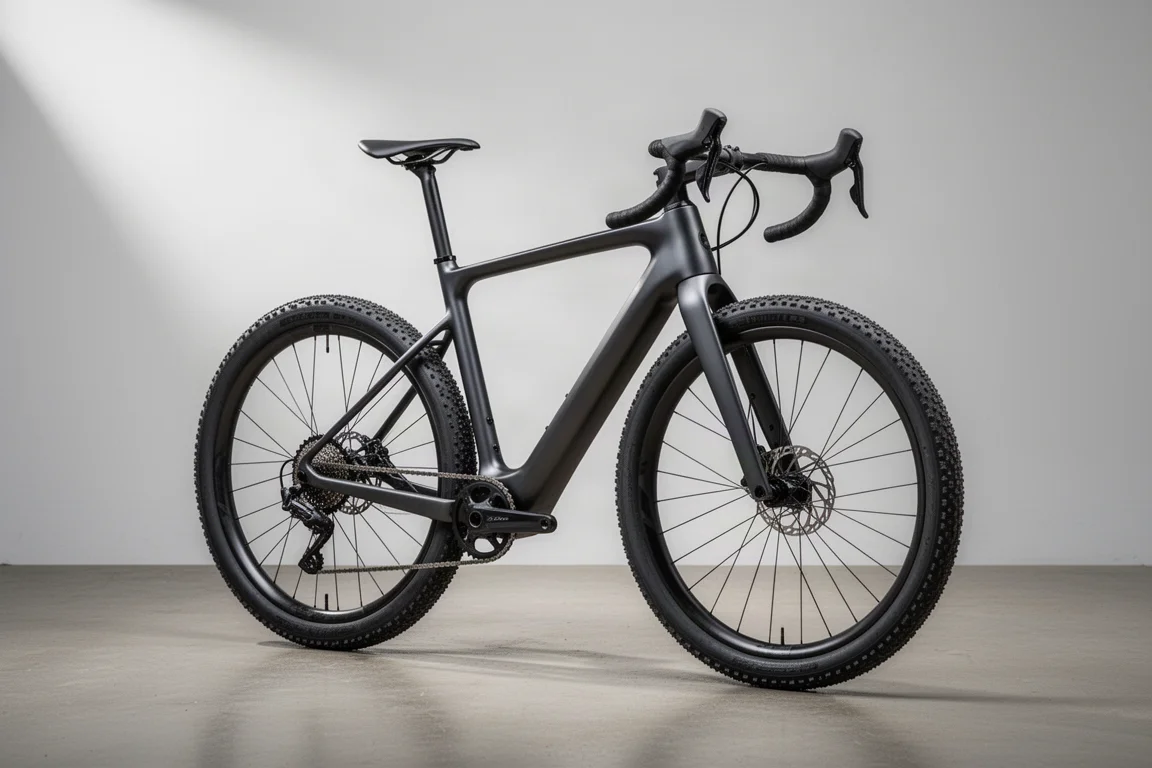
3T Exploro Ultra Review: A Fast Gravel Bike Built for Big Tyres
A close look at the 3T Exploro Ultra, an aero carbon gravel bike designed around wide tyres, with road-like handling, a 980 g frame and genuine rough-terrain capability.
Gravel Bikes
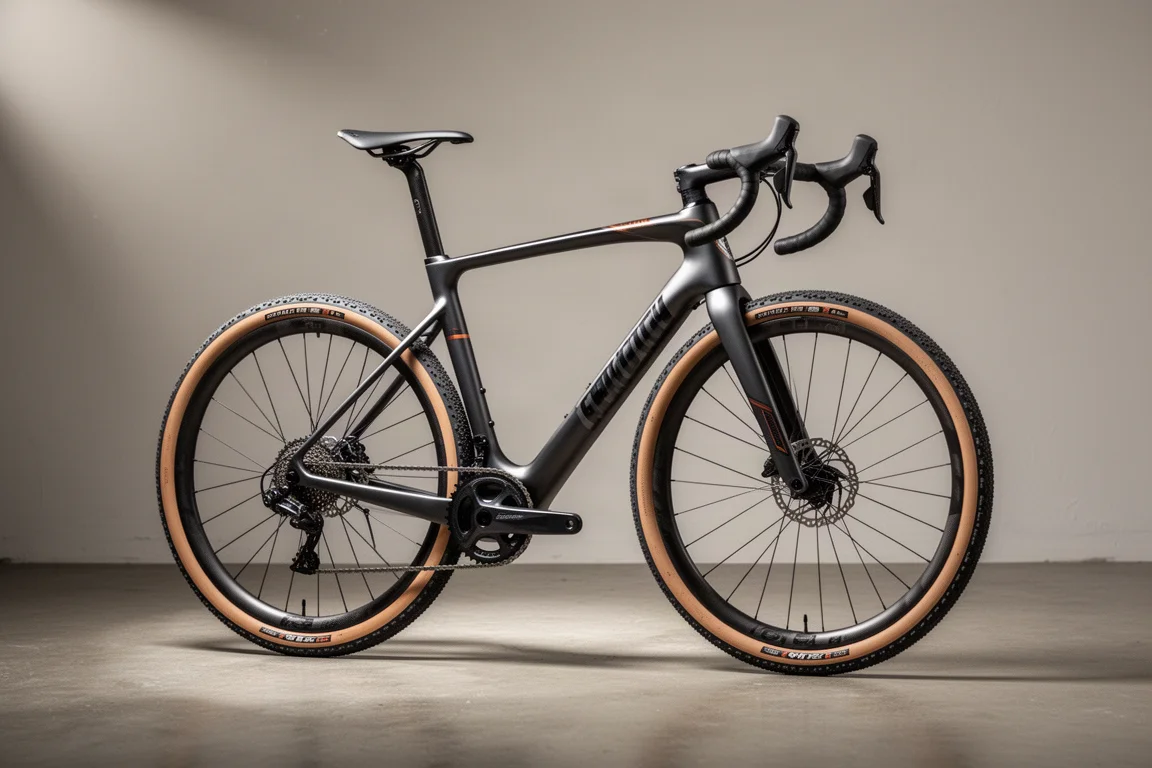
3T Extrema Italia Review: Aero Gravel Speed With Room for 57 mm Tires
The 3T Extrema Italia pairs an aero frame with huge tire clearance, Italian-made carbon and a more comfortable ride than the RaceMax. Here is what to know before buying.
Gravel Bikes
3T Race Max 2 Italia Review: An Aero Gravel Race Bike Made in Italy
A closer look at the second-generation 3T Race Max 2 Italia, covering its aero updates, ride character, tire clearance, internal storage and who it suits.