Hand Tools
Best Framing Hammers Compared: Titanium vs Steel Options Worth a Look
Five framing hammers compared on swing weight, handle grain, head design, and nail holding, from budget titanium finds to steel all-rounders.
Introduction
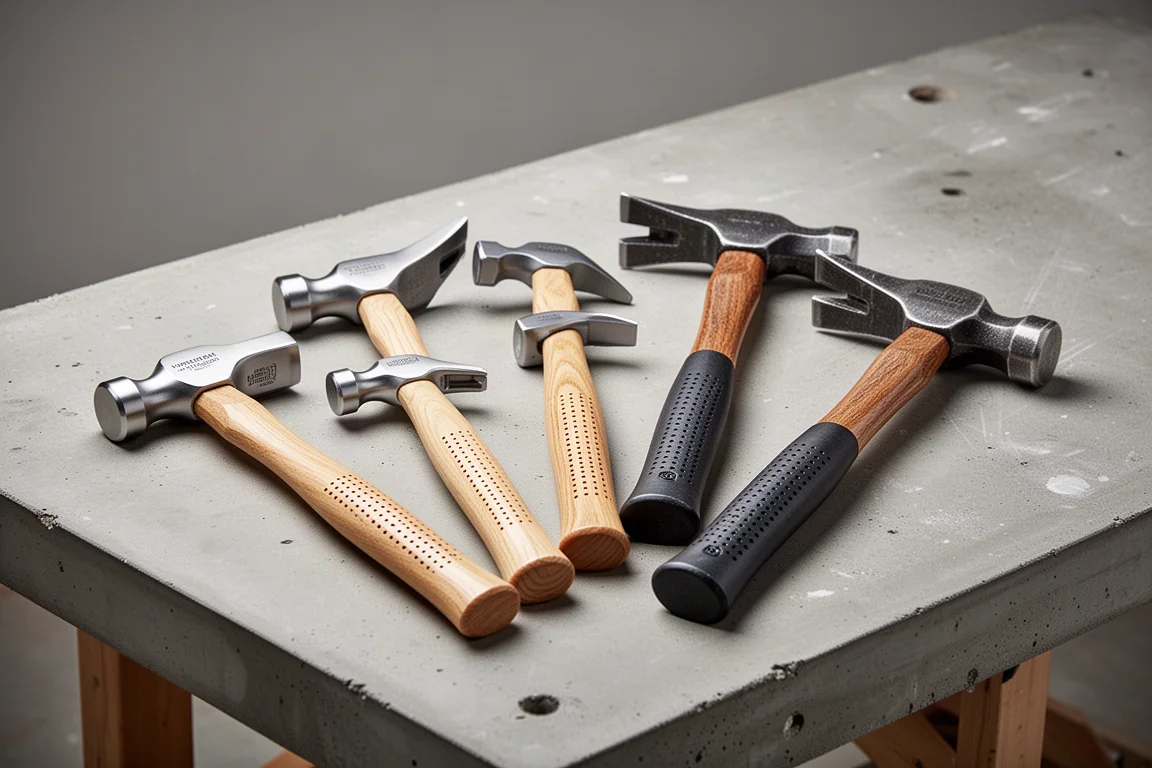
Framing hammers look interchangeable until you weigh them. The head weight on the label is only half the story: how much mass sits in the handle changes how the hammer feels, how fatiguing it is over a long day, and whether a titanium head actually delivers the benefit you are paying for. This comparison looks at five framing hammers, including two 14 oz titanium options, a surprisingly light steel contender from Klein Tools, and two heavier 22 oz steel hammers from Milwaukee and DeWalt.
How We Compared Them
The main yardstick here is the difference between head weight and total weight. A framing hammer with a 22 oz head and a 36 oz overall weight is carrying 14 oz of handle, which is a lot of swing weight that is not doing the striking. Titanium’s appeal is exactly this trade-off: a larger head at a lower head weight, plus a material that transfers more of the initial force into the nail with less reverberation.
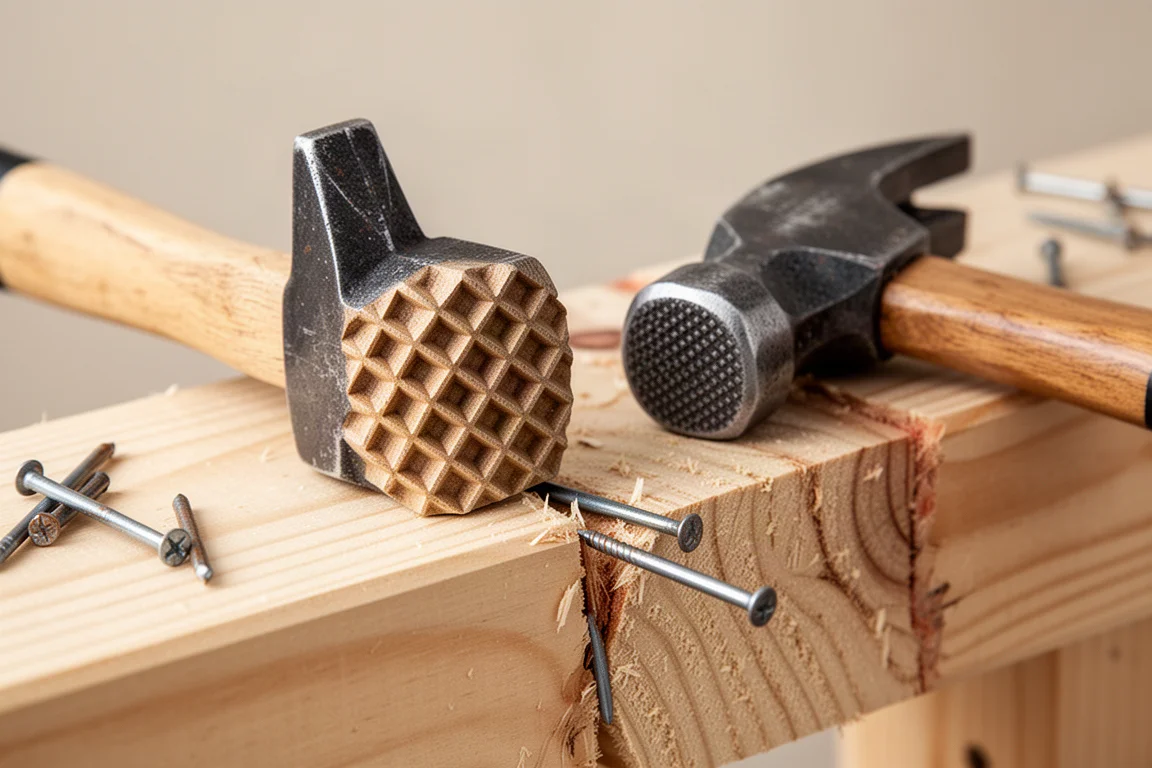
Another consideration is the face. Framing hammers mostly come with a milled face these days, which grips the nail better when your angle is off but leaves a waffle mark on the wood. For framing that is fine. For finish work, a smooth face is the right call.
Head Design and Handle Grain
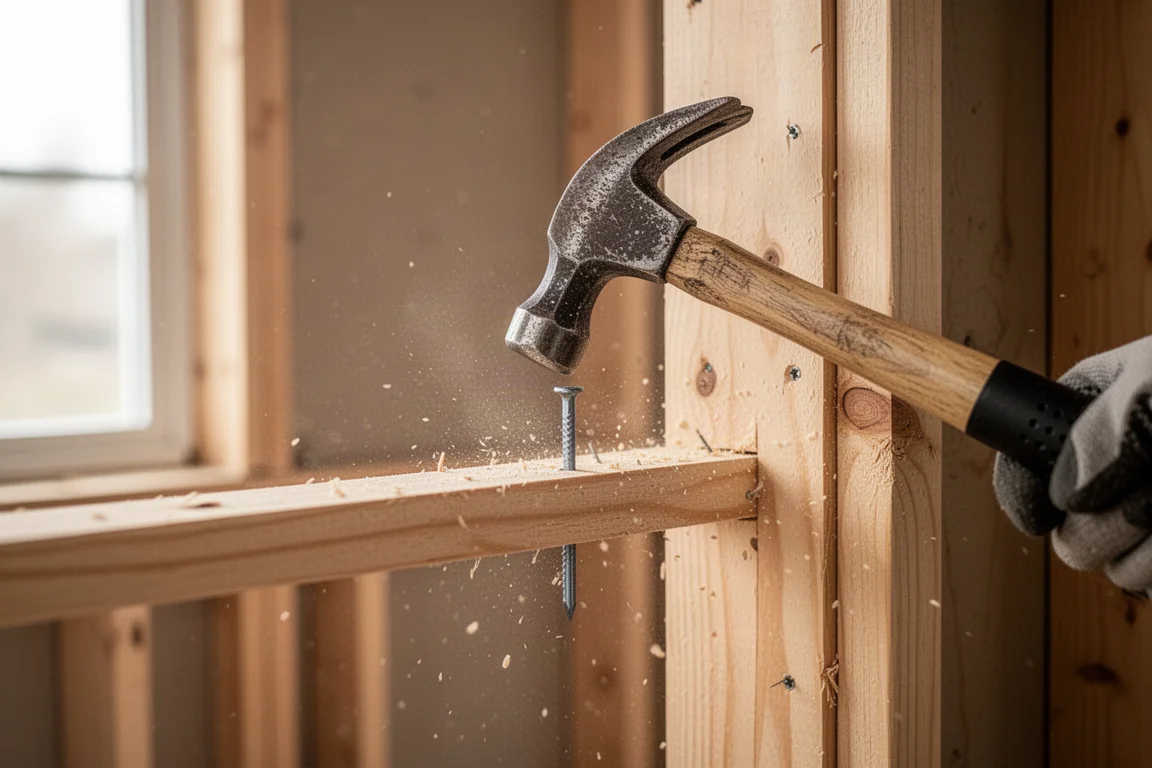
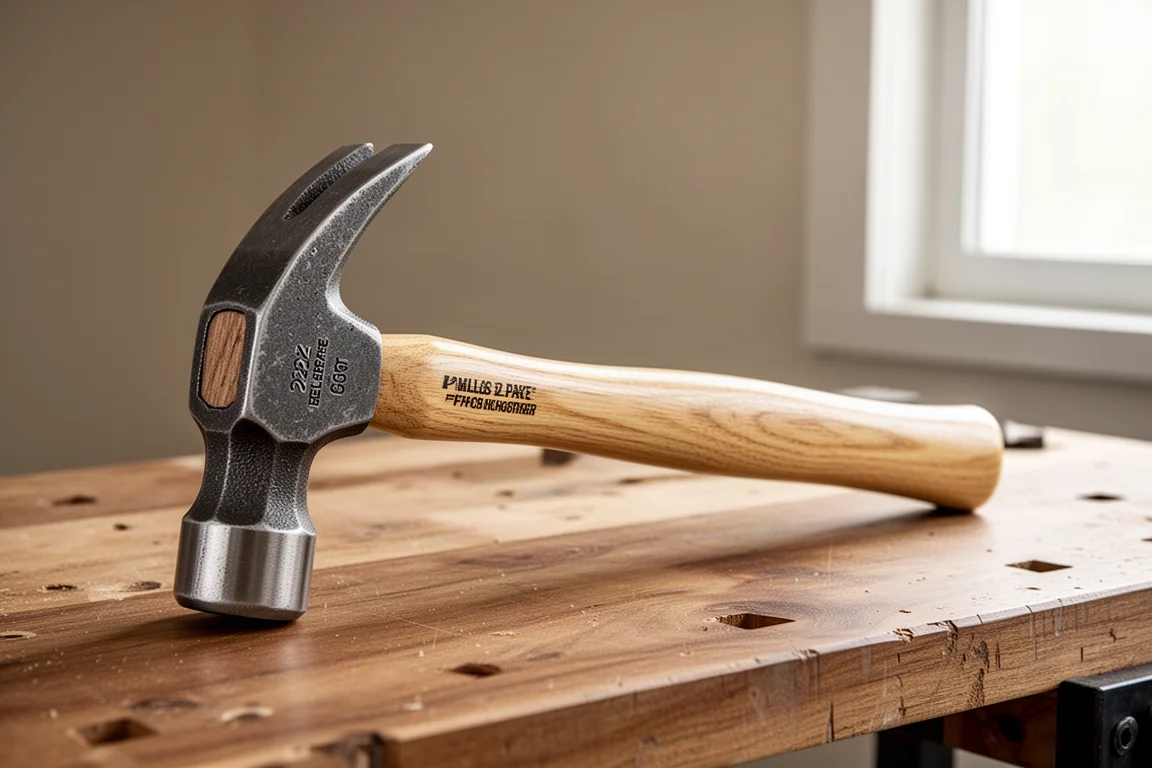
Both titanium hammers on test use a very similar design: straight claw, longer neck, and a large milled striking surface. The differences are subtle, in the cheek shape, the nail holding slot, and how the wedges are seated. Where they really diverge is the handle.
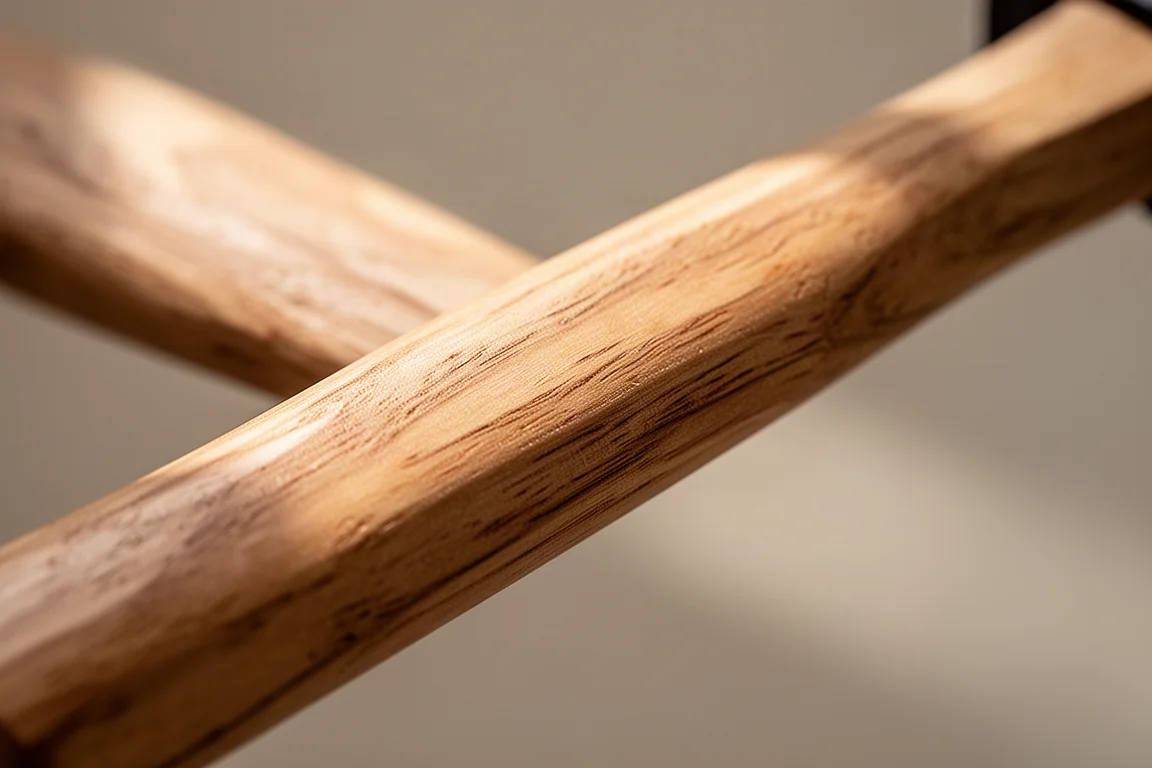
If you have a choice, pay attention to grain orientation. You want the grain lined up with the length of the handle. Handles with grain running sideways can snap off, and that is visible in broken-handle examples if you look closely. In one direct side-by-side, one hickory handle had noticeably worse grain orientation than every example of the other hammer on the shelf. Worth noting: both are made in China and claim American hickory, but hickory alone does not guarantee correct grain orientation or quality. If buying in person, inspect a few units, since finish quality and wedge seating can vary from example to example.
Doyle 14 oz Titanium Framing Hammer
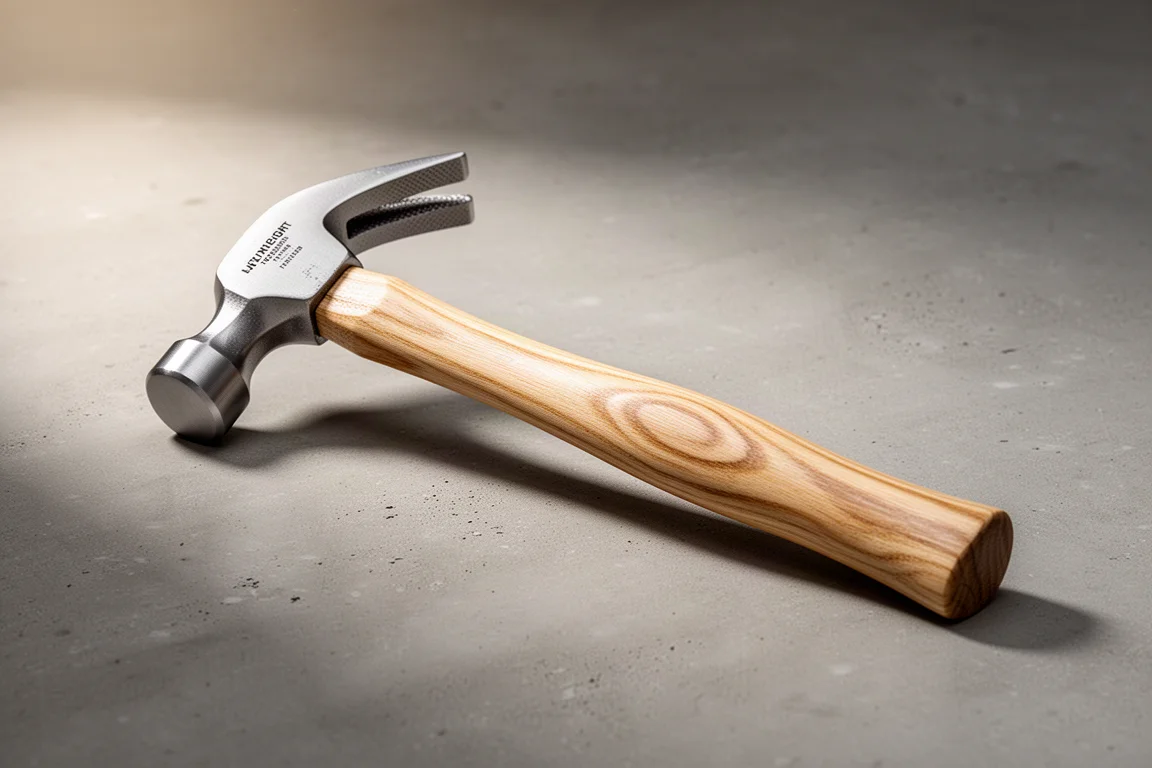
Harbor Freight’s Doyle 14 oz titanium framing hammer is the surprising one: a titanium-head hammer with a design very similar to a well-known 14 oz titanium benchmark. The head, neck, nail holding slot, and hanging arrangement all closely mirror the comparison hammer. One practical advantage when buying in store: examples on the shelf showed better, more consistent handle grain orientation than the comparison unit, and it carries a Harbor Freight lifetime warranty.
On the scale it came in at 26.6 oz total with a 14 oz head, so 12.6 oz of non-head weight. It also has a pronounced swell on the handle that makes it easy to index in the hand, and the swing is completely symmetrical. The handle is on the larger side, and some users have ground it down slightly for a better fit. One caution: titanium can be a little brittle, so the claws cannot be thinned out the same way you can with a steel hammer.
Stiletto 14 oz Titanium Framing Hammer
The Stiletto 14 oz is the established titanium benchmark that the Doyle so clearly imitates. Total weight is 25 oz with the same 14 oz head, meaning only 11 oz of non-head weight, the lightest swing weight in this comparison. The design is nearly identical to the Doyle: similar head, almost identical neck, similar nail holding slot.
Two caveats. First, the handle grain on the example inspected was not as well oriented as it should be, which matters for long-term durability. Second, the circular wedges sit slightly differently, and the finish quality was not as consistent. At roughly $60, it costs about $40 more than the Doyle, and the two feel very similar in use. Unless you specifically want the original, the value case is hard to make.
Klein Tools H80 92H: A Different Take
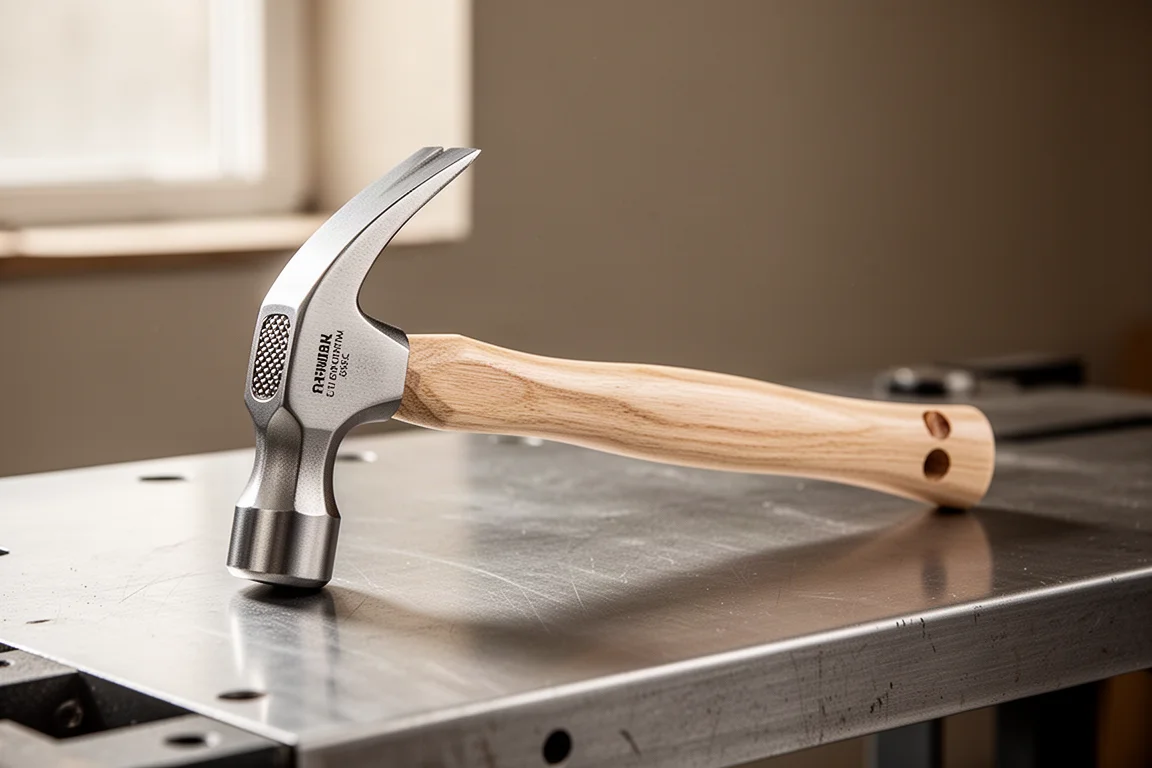
The Klein Tools H80 92H is the sleeper pick. It is a 20 oz steel framing hammer, not titanium, and it came in at just 30.2 oz total. That is roughly a 10 oz difference between head and total weight, which means it feels in the hand much like a titanium hammer in terms of swing weight. It is also about 1.5 inches shorter than the titanium hammers, with a very fine finish and properly seated wedges.
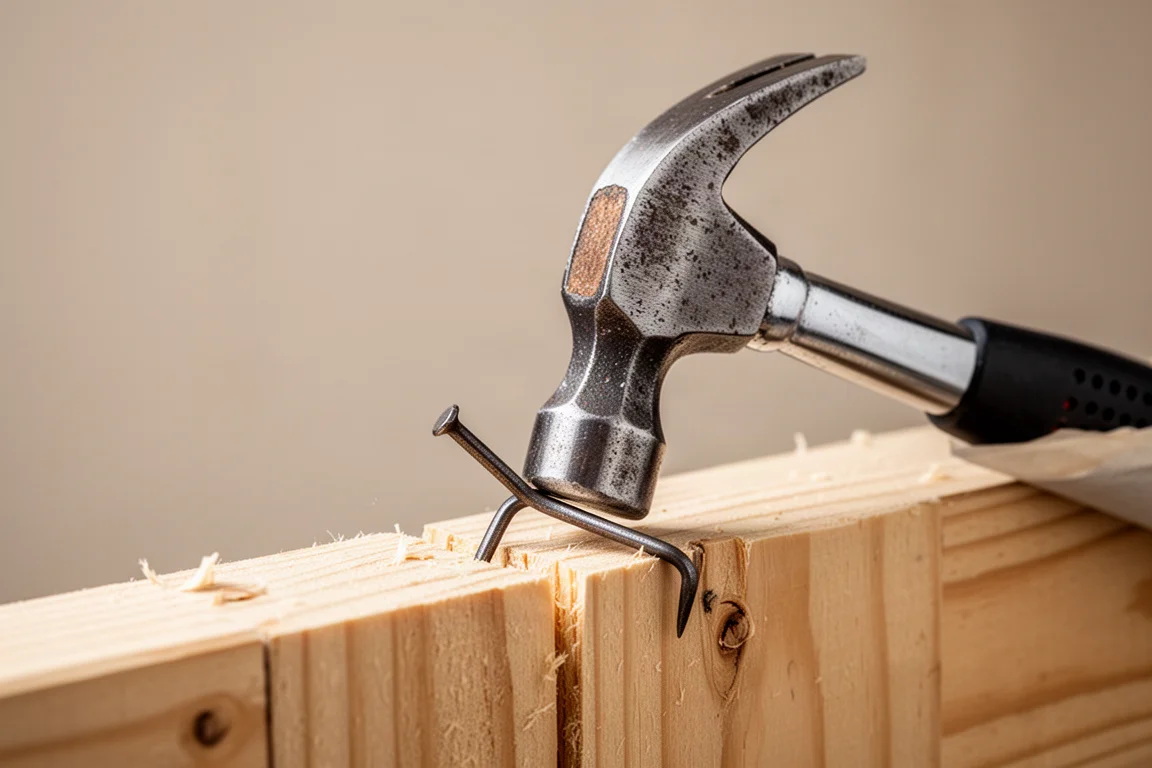
The design breaks with tradition: strong magnetic nail holding, nail removal edges on the head, and a shorter neck so shorter nails can still butt up against the striking surface. Traditional long-neck designs can leave short nails sitting too far back to reach the face. Straight claws are good for separating attached wood and deconstruction work, though not always the best for nail pulling. It was found in store for under $30, though it proved hard to track down online under the H80 92H model number.
Milwaukee and DeWalt 22 oz Framing Hammers
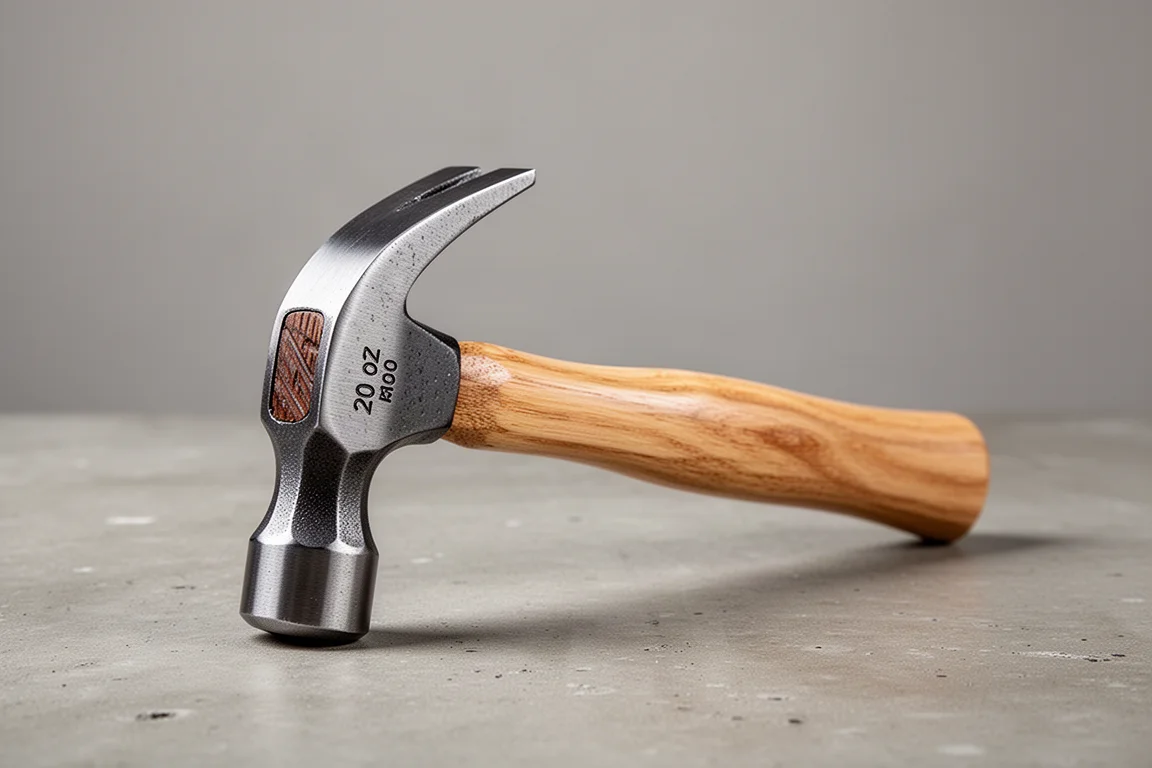
The Milwaukee 22 oz and DeWalt 22 oz represent the traditional steel framing hammer: big head, big swing weight. Milwaukee lists a 22 oz head with a 36 oz overall weight, so 14 oz of that is handle. The DeWalt is 22 oz head and 37 oz overall, an ounce more. Both are familiar, well-built steel hammers, and at the head size they are likely to be up in the high-20s to 30s in overall weight.
If you are used to steel framing hammers like these, the contrast with the titanium options is instructive: much of the difference is not the head at all, it is the handle mass. A metal hammer with so much weight in the handle changes the dynamic of every swing. If you want a big striking face and do not mind the swing weight, they get the job done. If fatigue matters, the lighter-swinging options above deserve a look.
Buying Advice
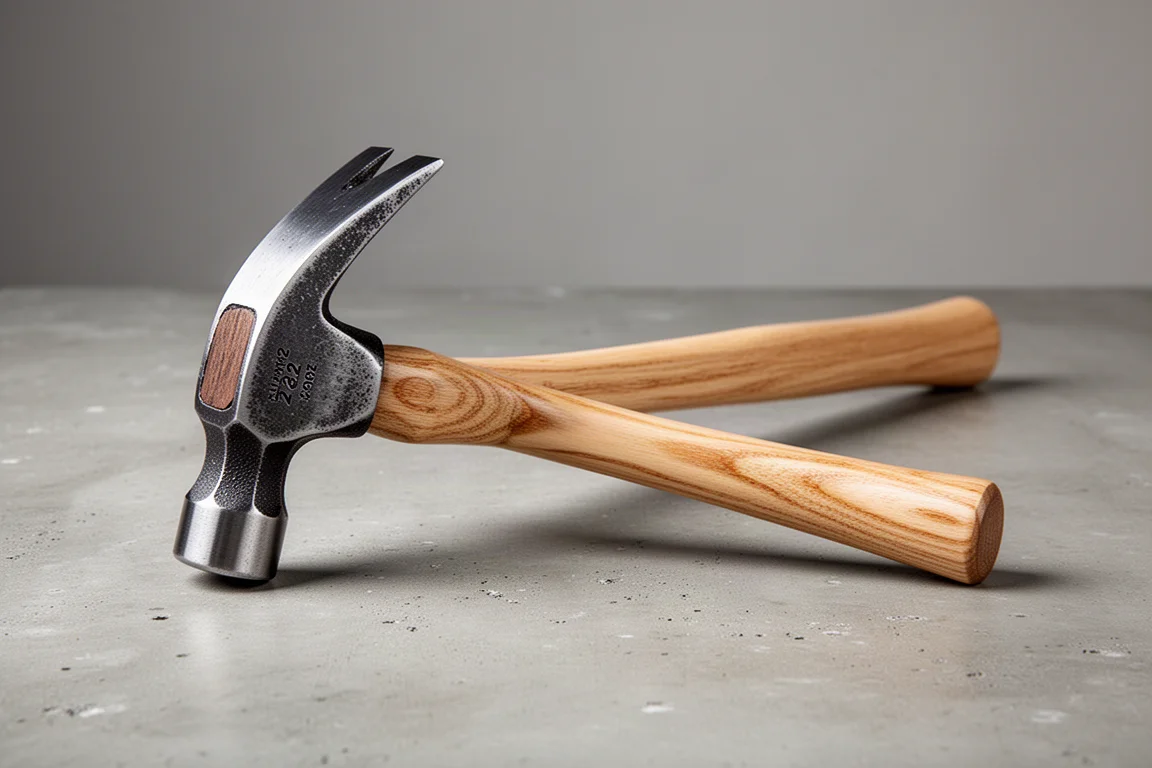
For most framers, the swing-weight numbers are the deciding factor. The Stiletto has the lightest total weight at 25 oz, the Doyle sits close behind at 26.6 oz, and the Klein H80 92H matches the titanium feel in steel at 30.2 oz for under $30. The Milwaukee and DeWalt 22 oz hammers are heavier all-round and better suited to those who prefer a traditional, head-heavy swing.
If buying the Doyle in person, inspect several units and pick the best handle grain and finish; it comes with a lifetime warranty, which helps offset the risk. If you want titanium specifically and can find a well-grained example, the Doyle offers the Stiletto experience for meaningfully less money.
Conclusion
Titanium framing hammers earn their keep through lower swing weight and better force transfer, and the Doyle makes that experience dramatically more affordable, with the caveat that you should choose your example carefully. The Klein H80 92H proves a well-designed steel hammer can feel nearly as light, and the Milwaukee and DeWalt 22 oz hammers remain solid traditional choices for framers who want maximum head mass.
Further reading
Related Reviews
Hand Tools
Best Diagonal Cutters 2026: 16 Pliers Tested for Cutting Power and Durability
We put 16 diagonal cutters through nail, screw, drill bit, and hex key tests to find the best value picks for your toolbox.
Hand Tools
Best Hex L Key Sets 2026: Nine Sets Tested for Real-World Torque
Nine hex L key sets from budget to premium, tested for torque, fit, and durability. See which sets deliver real performance and which ones to skip.
Hand Tools
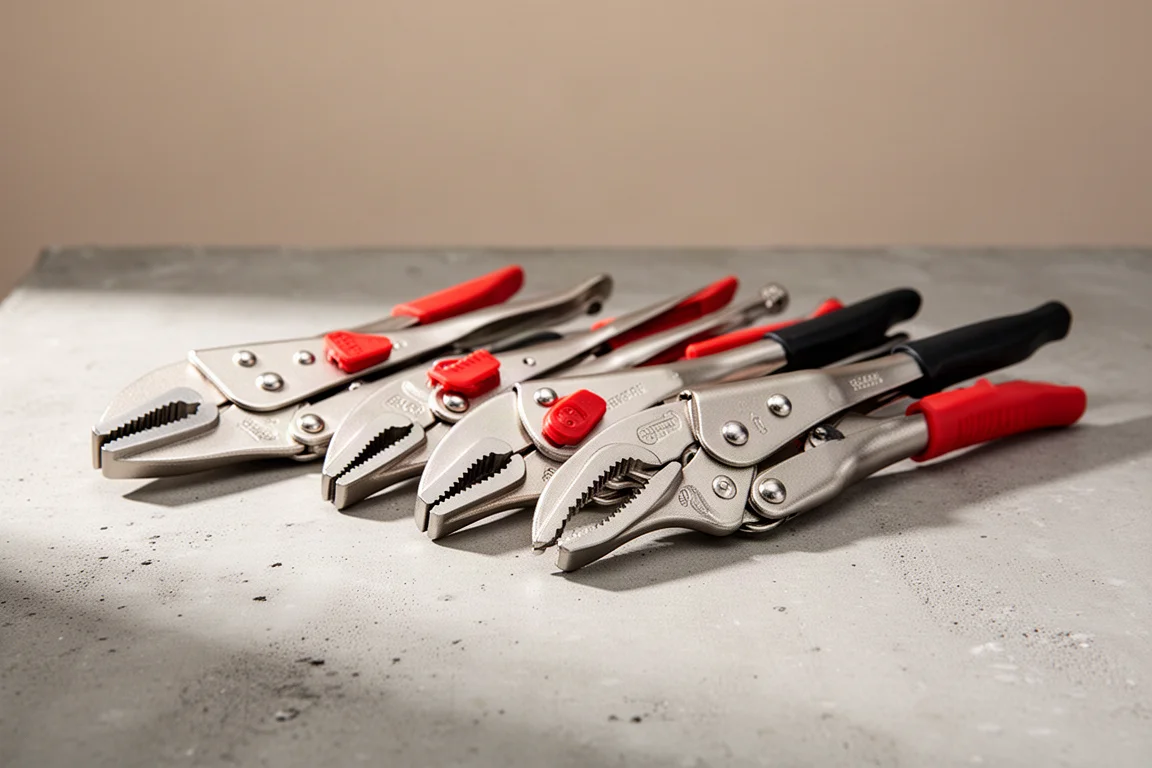
Best Locking Pliers 2026: Top Picks Tested for Grip and Durability
We tested 18 brands of 10-inch locking pliers for grip strength, jaw bite, build quality, and ease of release to find the best options for tough jobs.