Telescopes
Best First Telescopes for Kids: Three Beginner Refractors Worth a Look
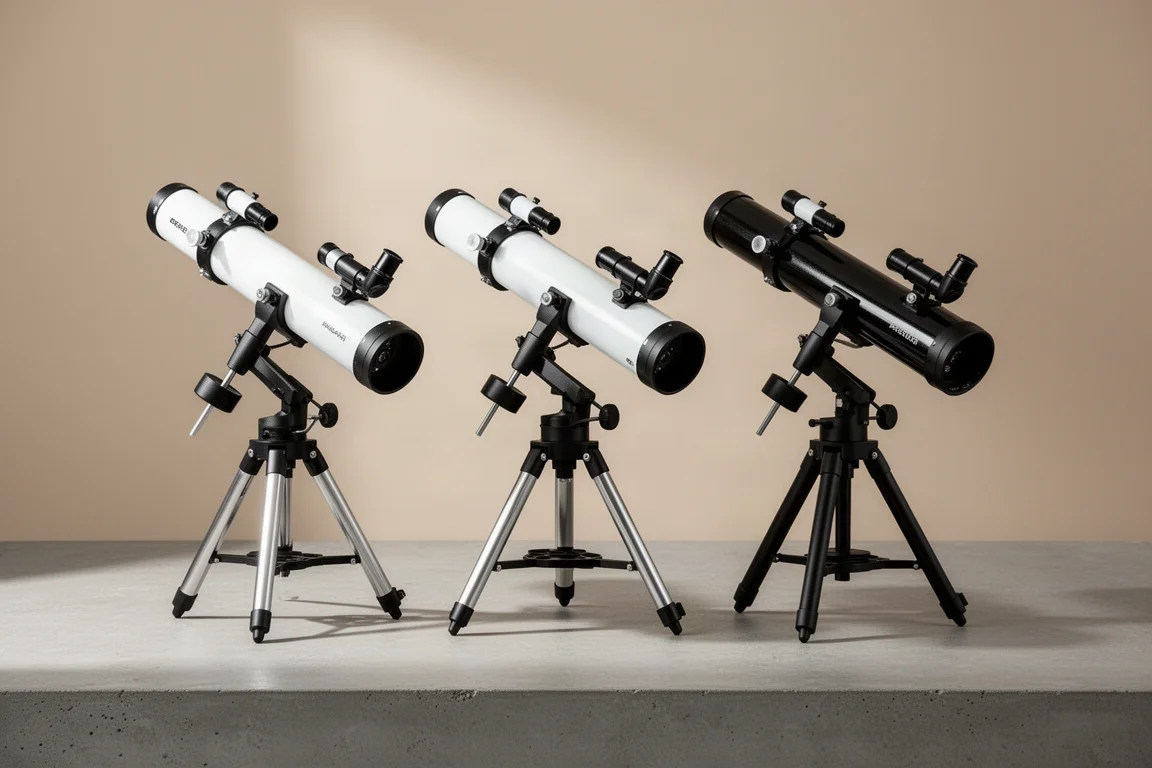
Three beginner-friendly refractor telescopes that make a great first scope for a child getting into amateur astronomy.
Introduction
Few gifts spark a child’s imagination like a first telescope. Whether it is for the holidays or a birthday, giving a kid the tools to explore the night sky can be the start of a lifelong hobby. The hard part is knowing where to start: there are many options at many price points, and it is easy to feel overwhelmed.
This guide narrows things down with three beginner-friendly telescopes that make sense for a child’s very first scope.
What to Look For in a First Telescope
Three main telescope types come up in most first-purchase searches: the refractor, the reflector, and the Dobsonian. Reflectors and Dobsonians offer the best value per inch of aperture in the hobby, but they use mirrors that bring extra maintenance and upkeep, which makes them a less obvious choice for a child. A refractor is the better pick for a first scope: it is low maintenance, easy to move around, and has that classic telescope look that kids respond to.
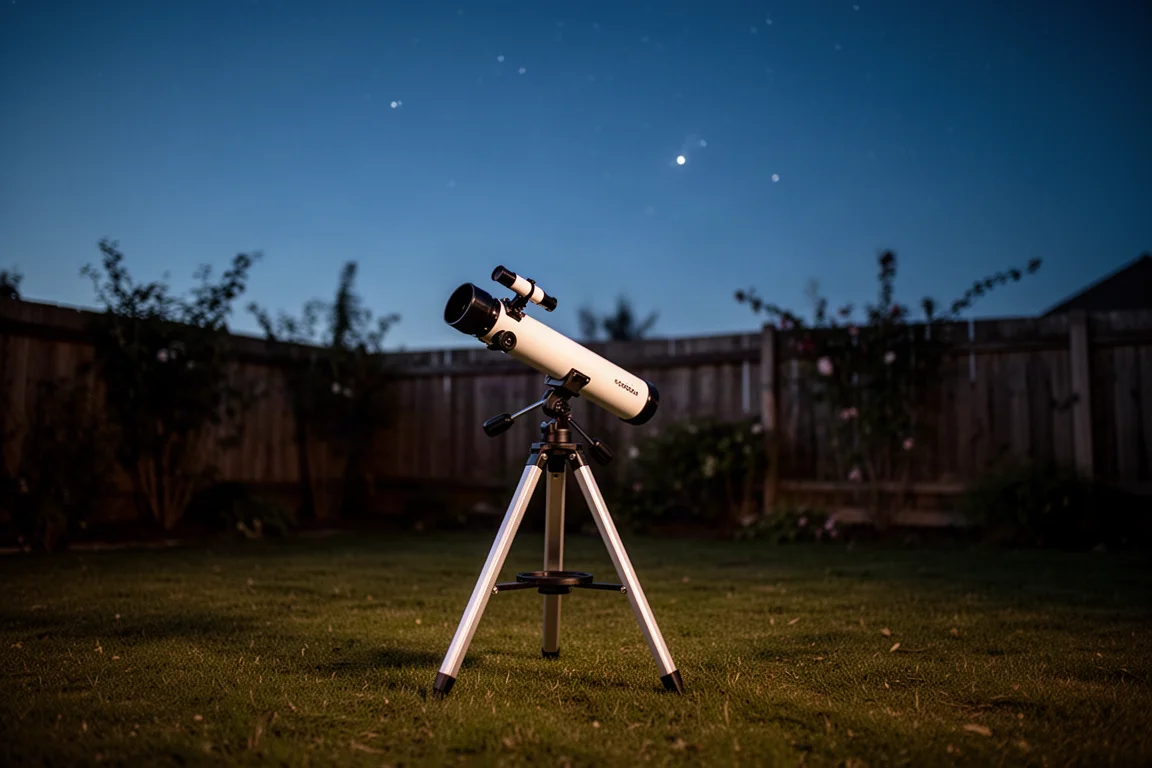
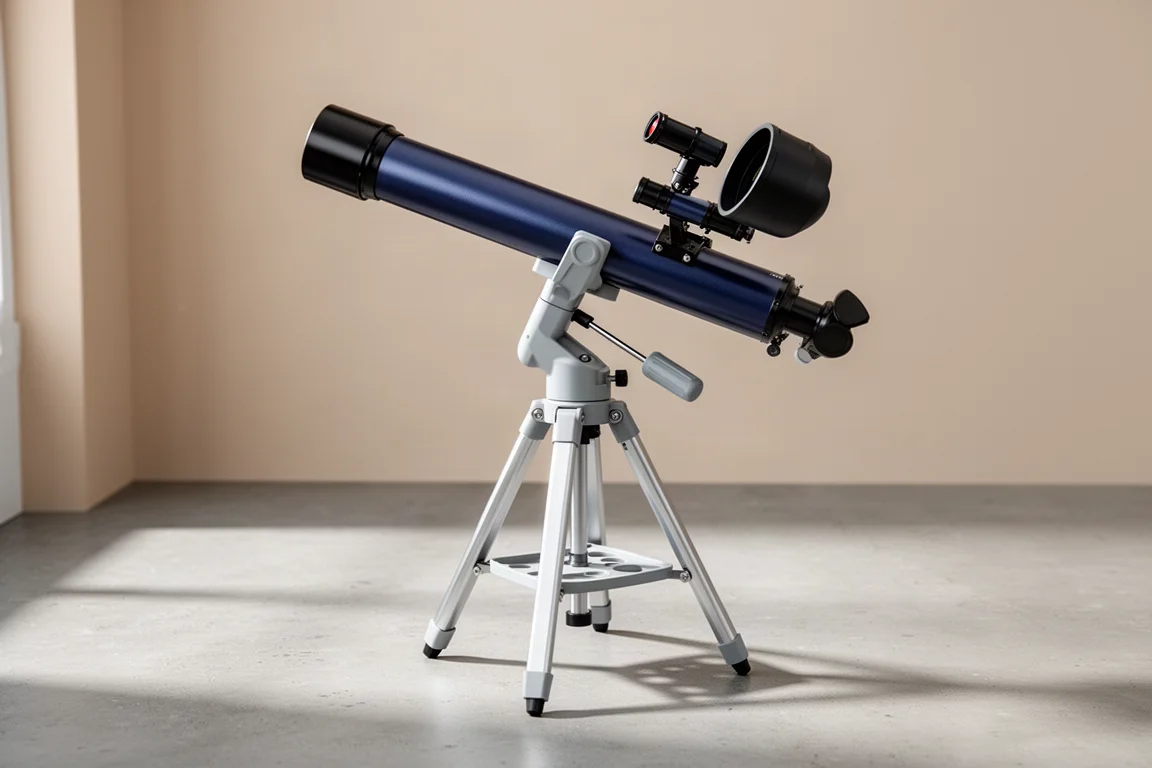
The mount matters just as much as the tube. You will encounter two stand types: alt-azimuth and equatorial. Equatorial mounts require polar alignment and more complicated mechanics simply to point at an object, so they are best avoided for a child. An alt-azimuth mount just points up, down, left, and right, which is far more intuitive for young observers.
Aperture and focal length round out the checklist. A larger aperture gathers more light and reveals more detail at higher magnifications, but for an under-100-dollar budget and a scope a child can carry, a 60 to 70 millimeter refractor is a great starting point. A focal length between 600 and 700 millimeters suits this class of telescope well.
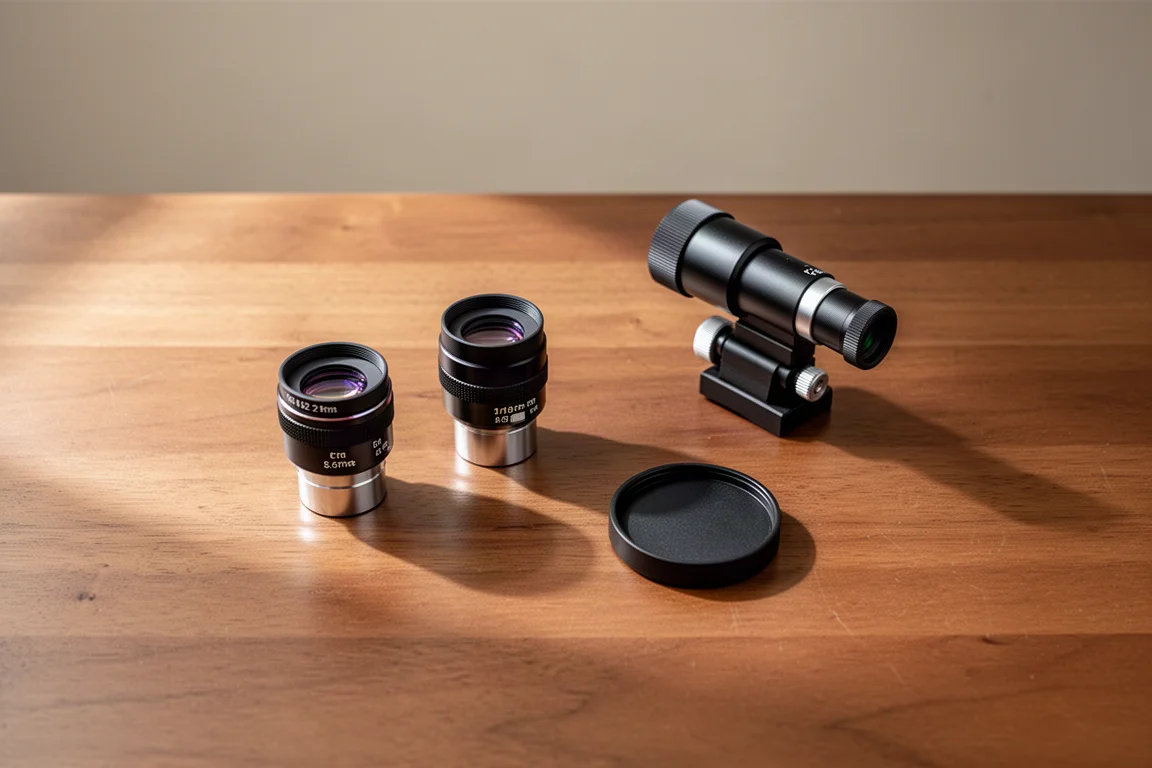
Finally, check the accessories. Quality varies a lot between brands, so at minimum look for a decent finder scope and 1.25-inch eyepieces, ideally two, giving you a good low and medium magnification out of the box.
The Picks: Three Beginner Refractors
Celestron PowerSeeker 60AZ
The Celestron PowerSeeker 60AZ combines a 60 millimeter aperture, a 600 millimeter focal length, and an alt-azimuth mount, making it a solid starting point for most kids. It also comes with a finder scope, two eyepieces, and a Barlow lens, though the included Barlow will not see much use in practice. Depending on your market and region, it normally comes in well under 100 dollars.
Celestron AstroMaster 60 LT AZ
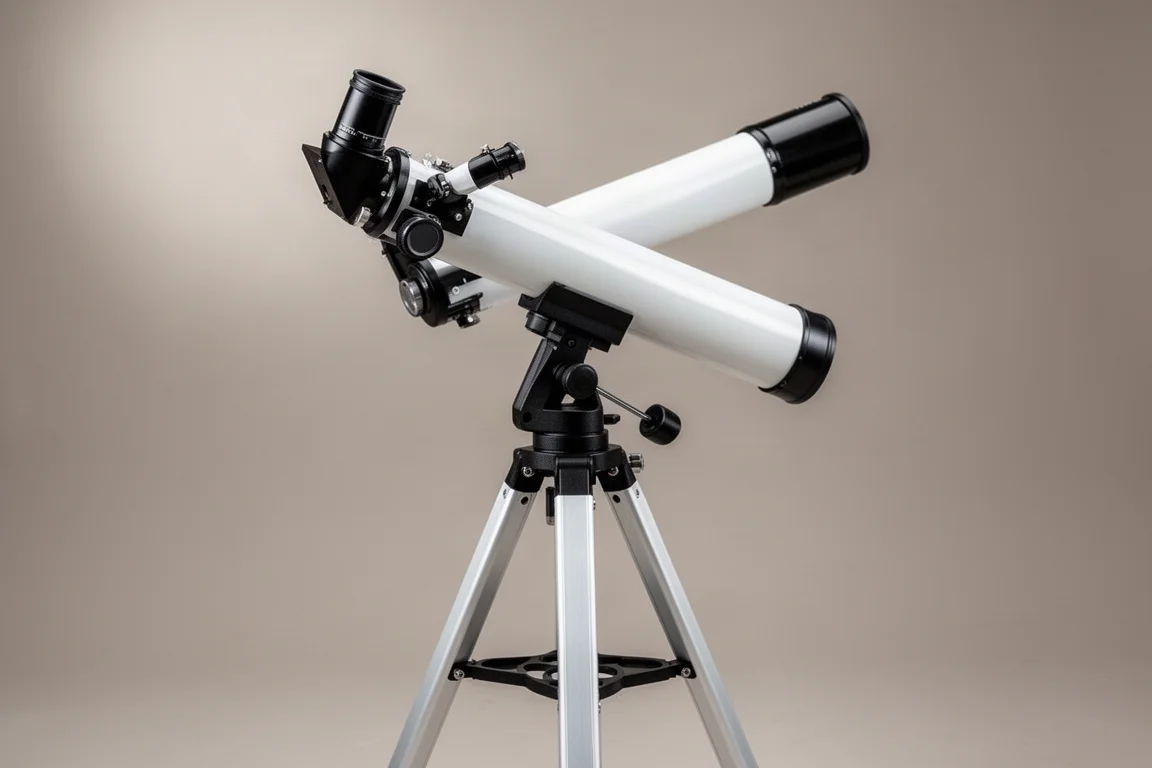
The Celestron AstroMaster 60 LT AZ steps up in build quality with a sturdier tripod, a longer 700 millimeter focal length, a red dot finder scope, and higher quality eyepieces. Those upgrades come at added cost, with the telescope typically landing around 100 dollars on most websites.
Celestron AstroMaster 70AZ
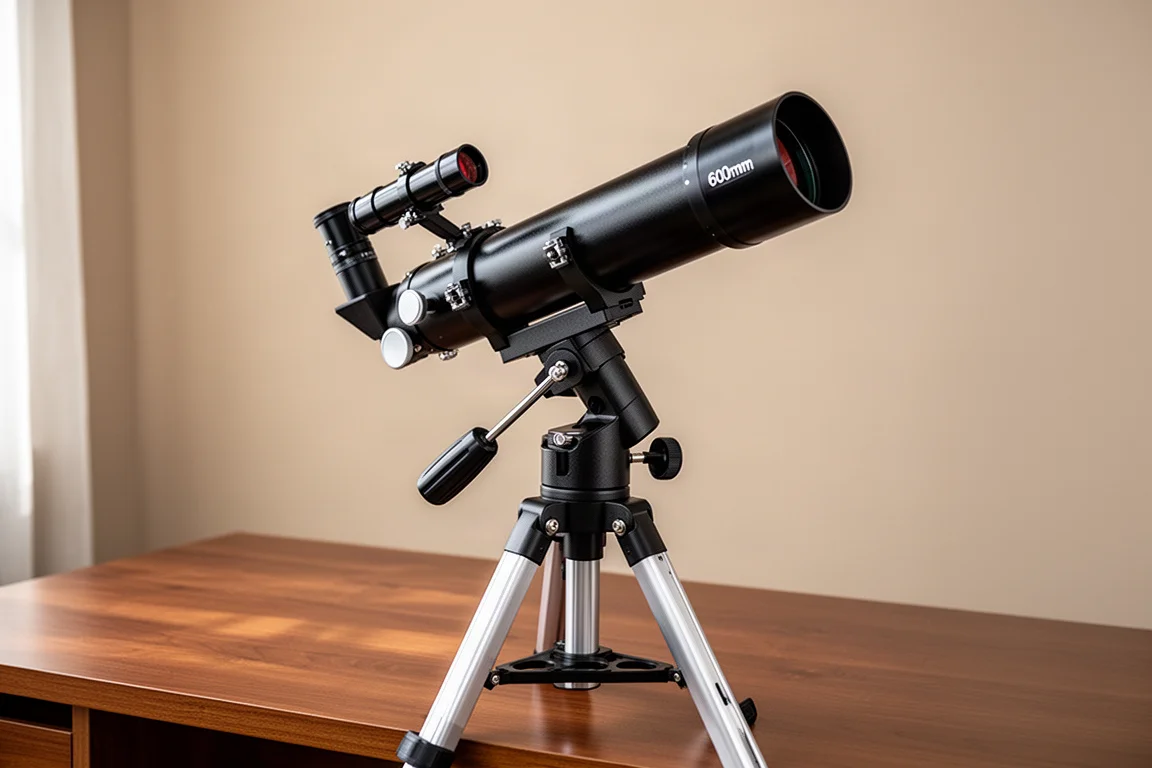
If you want more aperture and do not mind paying well over 100 dollars for a first telescope, the 70 millimeter version of the AstroMaster is worth a look. The extra light gathering gives you more detail on planets and brighter deep-sky targets on most nights of observing.
Getting Started: Observing Tips for the First Night Out
The last thing anyone wants is for a new telescope to sit in a corner collecting dust. A common beginner mistake is starting with the highest magnification eyepiece and scanning the sky, which usually results in seeing nothing. Instead, always start with the lowest magnification eyepiece you have.
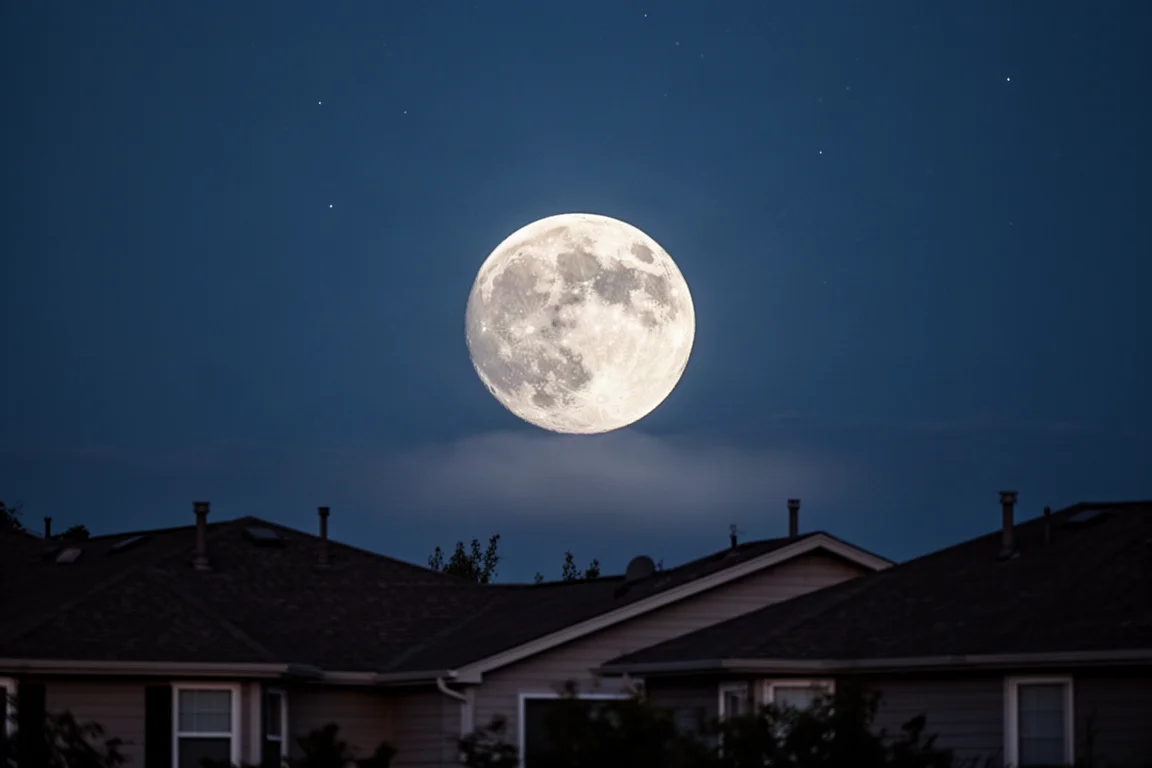
Use the finder scope to locate targets first. It offers the lowest magnification view for scanning, even for something as bright as the moon. Once the moon is in the crosshairs or red dot, switch to a low-power eyepiece.
To calculate magnification, divide the telescope’s focal length by the eyepiece focal length. On a 600 millimeter scope with a 20 millimeter eyepiece, that works out to roughly 30x magnification.
The moon is the perfect first target. Encourage your child to study the craters, track the phases through the month, and simply spend time exploring our closest neighbor in the solar system. From there, move on to the planets. Venus, Jupiter, Saturn, and sometimes Mars are the biggest and brightest targets for most of the year, and you find them exactly the same way: finder scope first, then a low-power eyepiece.
Which One Should You Buy?
If budget is the top concern, the PowerSeeker 60AZ delivers the full starter package for under 100 dollars in most markets. If you can stretch to around 100 dollars, the AstroMaster 60 LT AZ’s sturdier tripod and better accessories are worth the difference. And if the budget allows for well over 100 dollars, the AstroMaster 70AZ’s larger aperture gives a child more room to grow.
It is also worth shopping around across different websites, particularly for different regions, and looking for coupon codes and sales, especially around the holiday season.
Beyond the Planets: The Orion Nebula
For a first object beyond the solar system, the Orion Nebula is hard to beat. During the winter months, find the constellation Orion and train the finder scope on the three stars of Orion’s belt. With a low-power eyepiece in place, scan down from the belt until you find a cloudy patch of sky.

That cloudy region is a stellar nursery, a place where new stars are forming. Seeing it from your own backyard through your child’s new telescope is something neither of you will forget.
Conclusion
A child’s first telescope does not need to be complicated or expensive. A 60 to 70 millimeter refractor on a simple alt-azimuth mount, paired with a finder scope and a couple of good eyepieces, is enough to explore the moon, the planets, and even the Orion Nebula. Pick the option that fits your budget, start at low magnification, and clear skies.
Further reading
Related Reviews

Telescopes
Sightron SJ75 UF and Sky-Watcher HS125: Two Telescopes Worth Watching
A look at two notable telescopes from a recent camera and optics expo: a sharp new astrograph from Sightron Japan and a compact fast reflector from Sky-Watcher.

Telescopes
SV503 102ED Review: A Budget 102mm Refractor That Surprises
The SV503 102ED is an affordable 102mm doublet refractor that delivers surprisingly decent star shapes and a smooth focuser, despite some chromatic aberration and light falloff.

Telescopes
SVBony MK127 Review: A Compact Maksutov-Cassegrain That Surprises
The SVBony MK127 is a 127mm Maksutov-Cassegrain telescope with a unique 0.65x reducer, making it a versatile option for visual astronomy and even some deep-sky imaging.