Telescopes
Best First Telescopes: Four Solid Picks for Visual Astronomy and Astrophotography
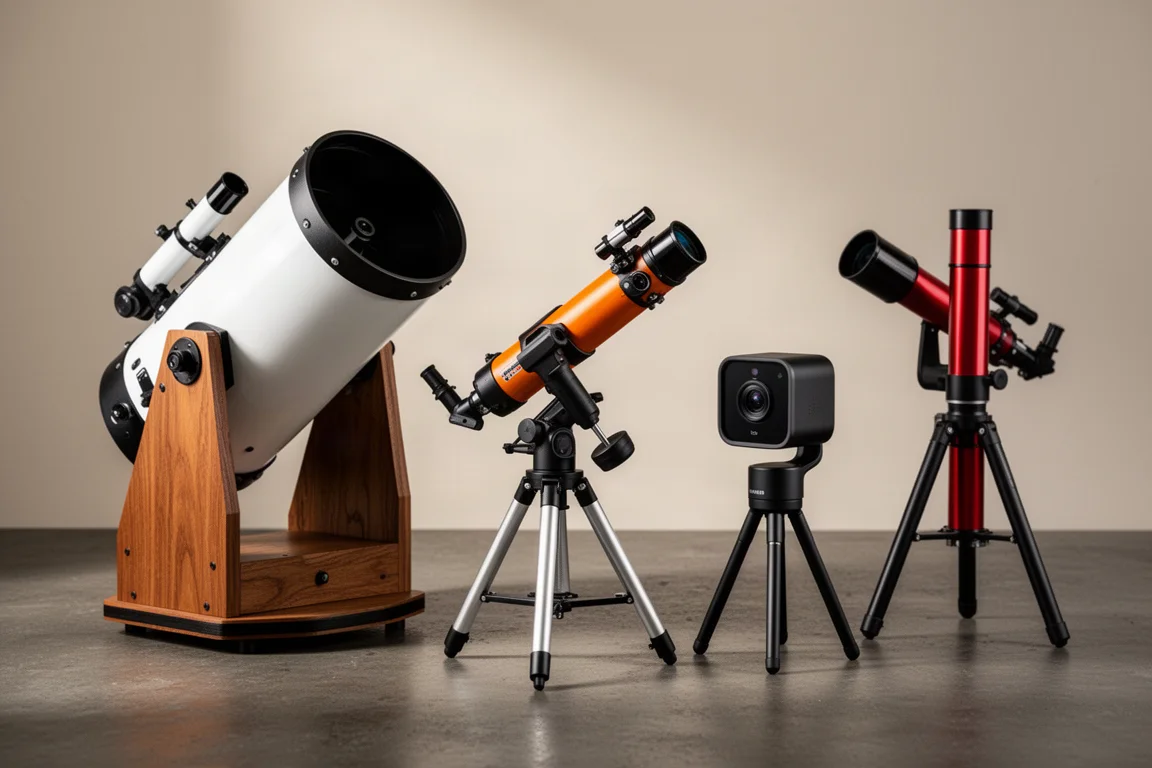
Four telescopes that cover the main ways to enjoy the night sky, from hands-on visual observing to automated deep sky imaging.
Introduction
Buying your first good telescope is a bigger decision than most people expect, because there is no one-size-fits-all instrument. Some people want to see the rings of Saturn with their own eyes. Others want a telescope that finds objects in space automatically. And some want to capture an image of the Andromeda galaxy they can actually share.
This guide covers four telescopes that represent the main ways to enjoy astronomy: a classic manual reflector, a computerized all-rounder, a smart imaging telescope, and a dedicated astrophotography refractor. One of them is very likely the right fit for how you want to observe.
Before You Choose: Know What You Want
Be honest about what you want out of the hobby. Do you want to see planets up close through an eyepiece, or would you rather tap a button and let the telescope find and photograph objects for you? Those are very different user experiences, and the spec sheet will not tell you which one suits you.
It also helps to think about budget and time. Are you prepared to learn how to align, collimate, and eventually stack and edit astrophotos? Or do you just want to show your kids the bands of Jupiter from a campsite? The four picks below sit at different points on that spectrum, and their prices reflect it: the Seestar S50 sits around $500 US, the Apertura AD8 around $700, the Redcat 51 telescope alone around $900, and the Celestron NexStar 8 SE around $1,500.
Best for Visual Astronomy: Apertura AD8 Dobsonian
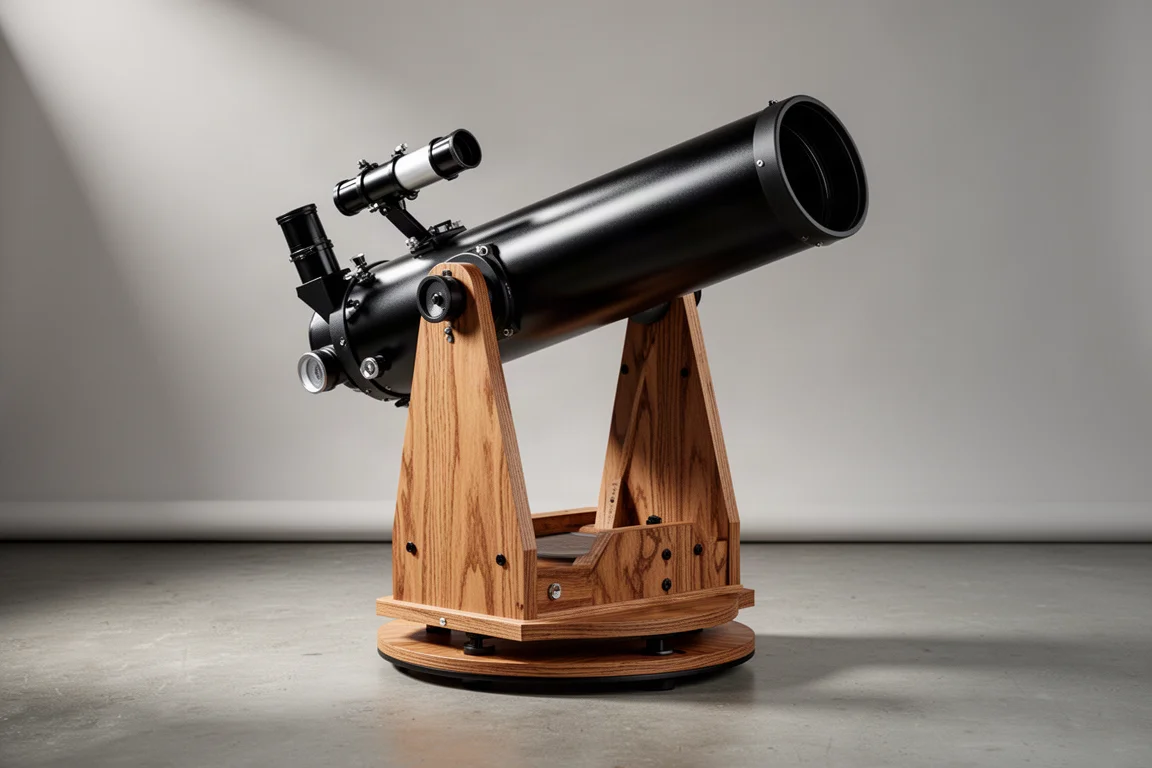
An 8-inch Dobsonian reflector is the go-to recommendation for a reason. The Apertura AD8 collects the most light of anything on this list, which matters enormously for visual astronomy. With it, you can see craters on the Moon, Jupiter, Saturn, Mars, and even the Orion Nebula through the eyepiece, all with your own eyes.
The trade-off is that you point the telescope and find objects yourself. Many people find that adds to the whole astronomy experience, but it does require some patience and a star chart or app. Apertura is the house brand of astronomy retailer High Point Scientific, and these scopes have a strong reputation among buyers.
A few practical notes: the Dobsonian base ships in panels and takes about 30 minutes to assemble. The whole unit is heavy and a bit cumbersome, around 45 pounds, though you can separate the optical tube from the base to move it more easily. As a reflector, it also needs regular collimation to keep the mirrors aligned, which is simpler than it sounds with an inexpensive laser collimator. A 10-inch version exists if you want even more light, but the 8-inch is the sweet spot for most people.
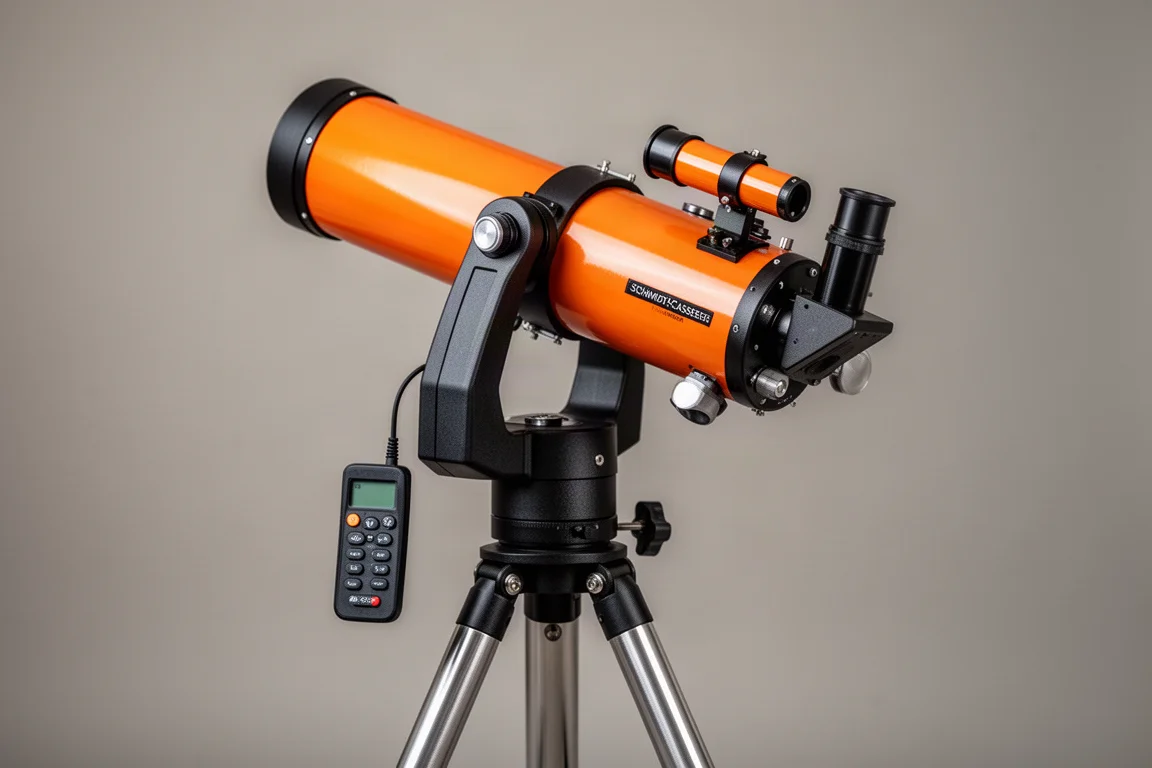
Best Computerized All-Rounder: Celestron NexStar 8 SE
If you want the telescope to point itself but you still want to look through an eyepiece, the NexStar 8 SE is the classic answer. It uses the same 8 inches of aperture for light gathering, at a dimmer f/10 and a long 2,000mm focal length, which makes it even better for the Moon and planets. The computerized tracking mount keeps objects centered, and the hand controller includes a built-in database so you can punch in a target and let the telescope slew to it.
Be aware of a few practical requirements. The mount needs power, so you will want a portable power tank or an outlet at home. You will also need to run a one- or two-star alignment so the telescope knows where it is pointed, and there is a learning curve to get everything functioning well. The single-arm fork mount is known to be a little wobbly, and some owners feel the tube is a bit heavy for it, though it rarely matters for visual use. The included Celestron C8 Schmidt-Cassegrain optical tube is genuinely excellent, and many people eventually move it onto a more robust equatorial mount. Smaller 4, 5, and 6-inch versions exist if the 8-inch is out of budget. Many consider this one of the most well-rounded telescopes you can buy, and it has been around for over a decade for good reason.
Best All-in-One Smart Telescope: Seestar S50
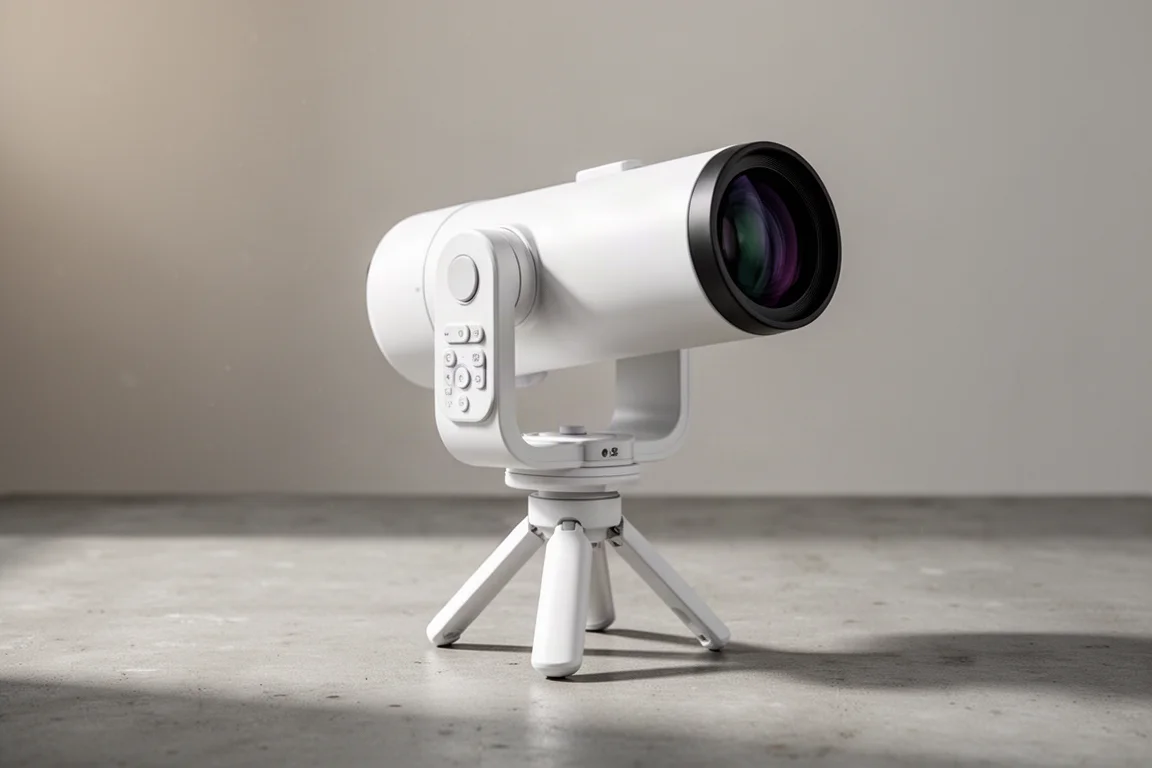
If you are not interested in finding objects manually, a smart telescope makes a lot of sense, and the Seestar S50 has taken the astronomy world by storm. It is a complete all-in-one system: telescope, camera, tracking mount, filters, tripod, and even a carrying bag. You control everything from a mobile app, pick what you want to see, and it automatically finds and tracks the object with no prior astronomy knowledge.
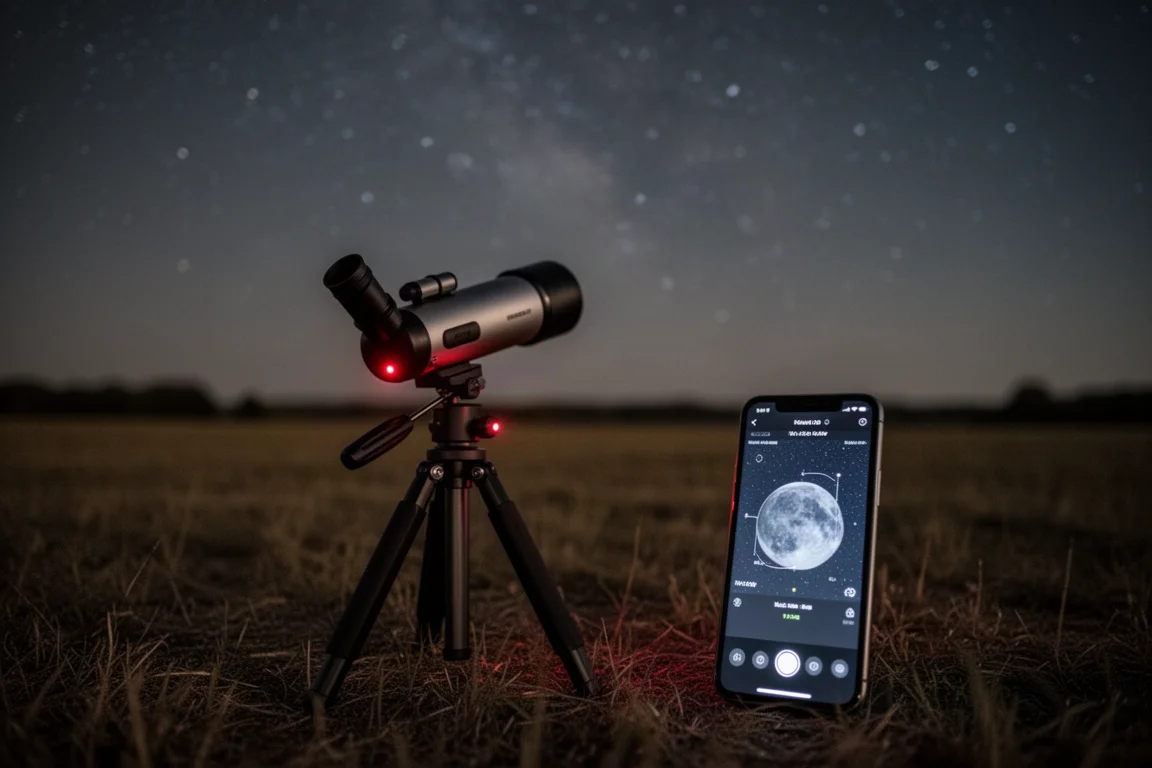
Instead of looking through an eyepiece, you watch a brighter, near real-time stacked image build up on your phone or tablet, one frame at a time. If you want more control, you can pull the raw images off the device and process them yourself just as you would with a full deep sky rig. It excels at the Moon, the Sun (a solar filter is included), and brighter deep sky objects like nebulae and galaxies, producing genuinely shareable photos.
The internal battery runs for a few hours on its own, so a portable power tank is a worthwhile add-on for longer nights. It is compact enough to bring camping or set up in the backyard on a whim, and it held up well even on very cold nights. For beginners who want to test the waters, it is an incredible value. A smaller, cheaper Seestar S30 has also been released, and other smart telescopes are arriving, but the S50 holds its own and should stay a relevant choice for years.
Best for Deep Sky Astrophotography: William Optics Redcat 51
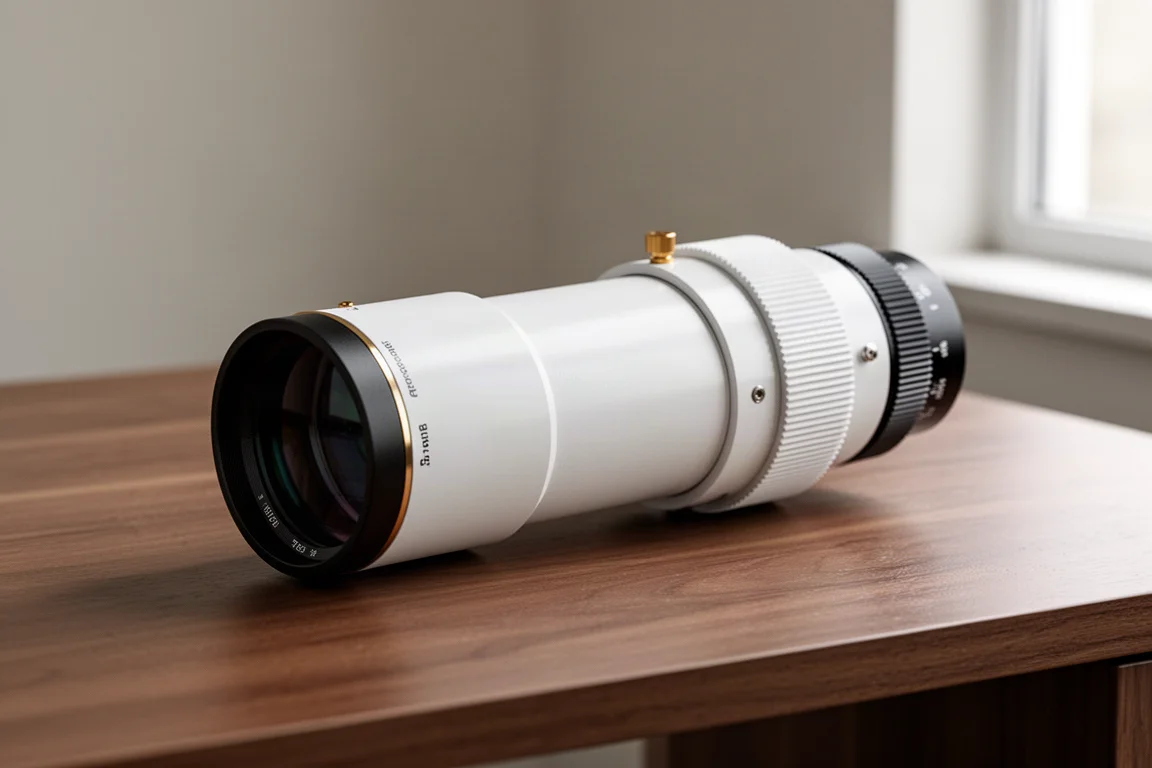
If you want to get serious about astrophotography, the William Optics Redcat 51 is one of the most popular astrophotography telescopes of all time, and for good reason. It has a small aperture and a short 250mm focal length, similar to a telephoto camera lens, but the image quality shows the difference: better color correction, flatness, and star quality than a typical camera lens. As an apochromatic refractor, it is tough to beat in this class.
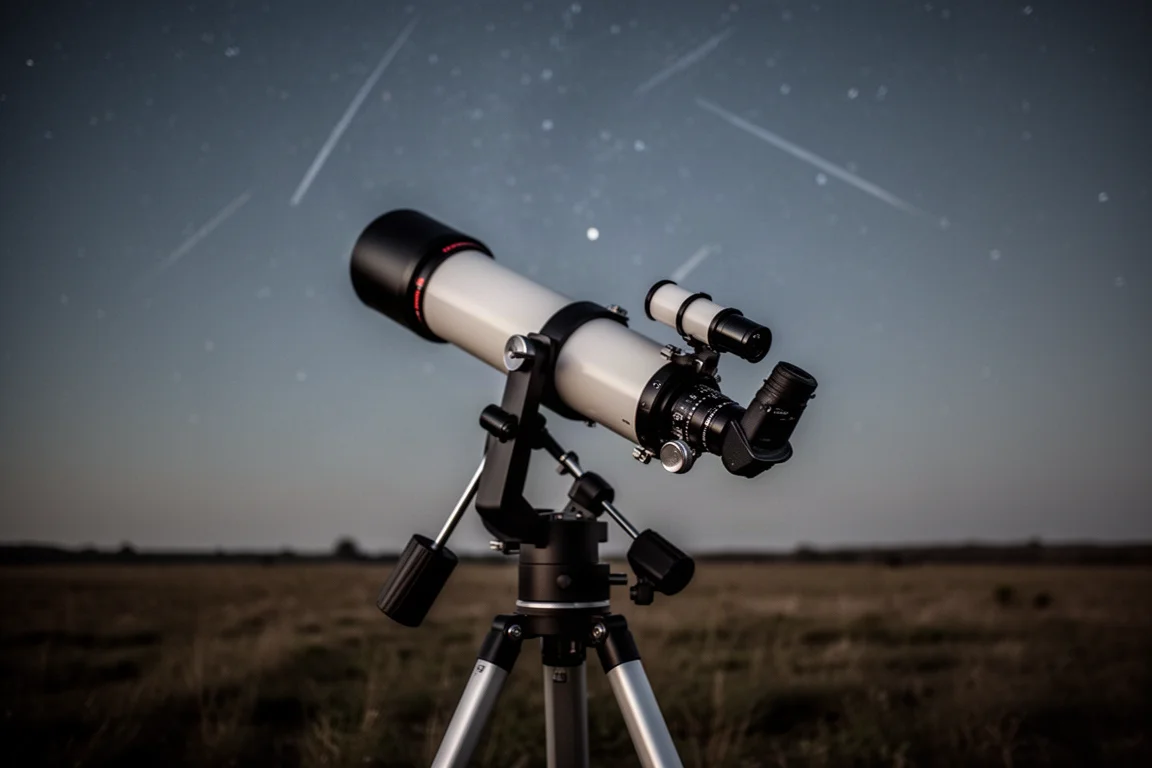
Understand what you are buying, though. This is an astrophotography-only option and it is not great for visual astronomy. It does not include a camera, mount, or filters, so you will need to pair it with a DSLR, mirrorless, or dedicated astronomy camera, plus adapters (cheap and easy to find online), a tracking mount, and imaging software on a laptop or a Wi-Fi controller. With everything added up, a complete deep sky rig around this telescope runs closer to $4,000. It is the most expensive path on this list, but for an astrophotographer it is arguably the most rewarding, and larger Redcat 61 and 71 versions exist if you want more aperture and focal length in a similar package.
Buying Advice
If none of these four stood out, visit a stargazing event held by your local astronomy club. See what members are using, ask to look through it, and ask what they think. There is a very good chance you will find one of these telescopes there.
A telescope is a significant purchase, and not just financially. A frustrating first experience can snuff out the spark that got you interested in looking up in the first place. Match the instrument to the experience you actually want, and you are far more likely to stay in the hobby.
Conclusion
The Apertura AD8 is the best pure visual experience and the most light for your money. The Celestron NexStar 8 SE adds computerized pointing and tracking for observers who want help finding targets. The Seestar S50 makes deep sky imaging almost effortless for beginners at the friendliest price. And the William Optics Redcat 51 is the proven choice for anyone ready to build a serious astrophotography rig. Choose the experience first, and the right telescope follows.
Further reading
Related Reviews

Telescopes
Sightron SJ75 UF and Sky-Watcher HS125: Two Telescopes Worth Watching
A look at two notable telescopes from a recent camera and optics expo: a sharp new astrograph from Sightron Japan and a compact fast reflector from Sky-Watcher.

Telescopes
SV503 102ED Review: A Budget 102mm Refractor That Surprises
The SV503 102ED is an affordable 102mm doublet refractor that delivers surprisingly decent star shapes and a smooth focuser, despite some chromatic aberration and light falloff.

Telescopes
SVBony MK127 Review: A Compact Maksutov-Cassegrain That Surprises
The SVBony MK127 is a 127mm Maksutov-Cassegrain telescope with a unique 0.65x reducer, making it a versatile option for visual astronomy and even some deep-sky imaging.