Flashlights
Fire-Starting Flashlights Tested: Skyfire 1097, Wuben L50 and 4 More Compared
We tested five flashlights, including two designed to start fires, measuring real lumens, throw, battery capacity, runtime and drop survival against the advertising.
Introduction
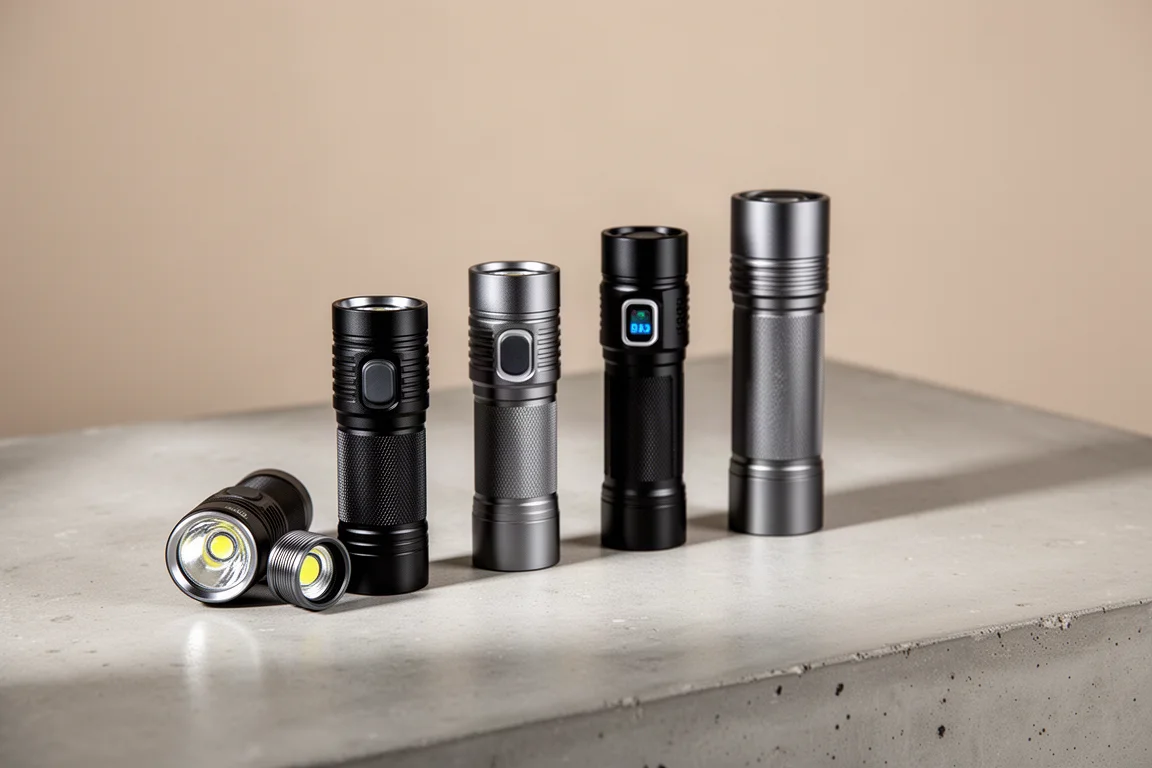
Flashlights advertised as being able to start fires on purpose have quietly become a real category, with models claiming between 1 million and 2.5 million lumens available for as little as around 40 dollars. We bought a batch of these fire-starting lights along with similarly priced regular flashlights, then measured actual lumens, candela and throw distance, runtime, battery capacity, drop durability and real fire-starting ability against every claim.
What We Tested and How
Every light was bought at retail, then run through the same gauntlet: measured lumen output after a 30-second settling period, candela for calculated throw distance, runtime on high, battery capacity versus the advertised figure, increasing-height drop tests, and finally fire-starting trials using the included focusing lenses and plain beam patterns.
The gap between advertised and measured lumens turned out to be dramatic in most cases, but a couple of models genuinely surprised us. Here is how each one fared.
Skyfire 1097
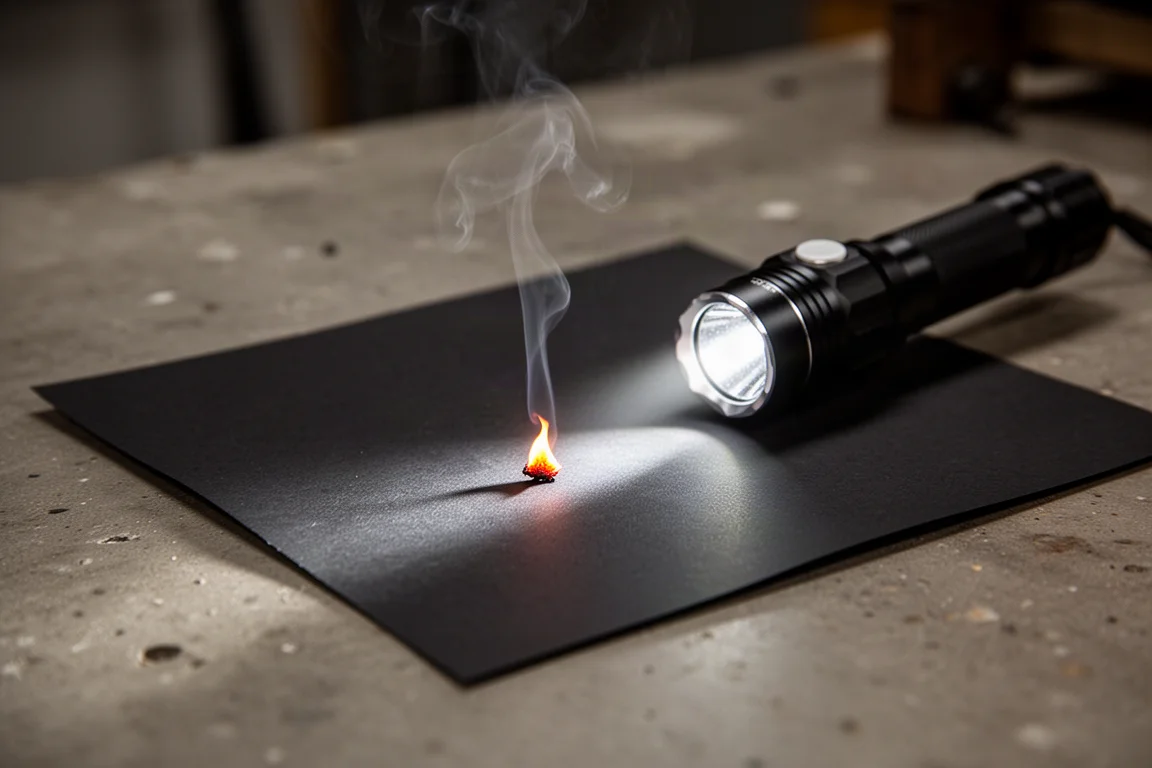
The Skyfire 1097 costs about 40 dollars and claims 10,000 lumens with illumination out to 5,000 ft. It runs a 5,000 mAh 26800 battery, a cell size rarely seen in lights, and includes a threaded focusing lens. Once you find the beam’s cross-section point where it narrows to a pinhole, the light can burn pinholes into dark, absorbent material in quick order, producing visible smoke and glowing embers. White paper scatters too much light, but blue construction paper and black surfaces burn through readily.
Measured after 30 seconds, it produced about 1,150 lumens rather than 10,000, though the tight focus yielded a huge 145,000 candela, calculating out to around 755 m of throw. That falls short of the advertised 1.2 km but is still serious reach. It also held its output relatively well on high and survived 4 and 8 ft drops, failing at 10 ft for a 6 out of 10 durability score.
ES Green Heavy Duty Strong Flashlight
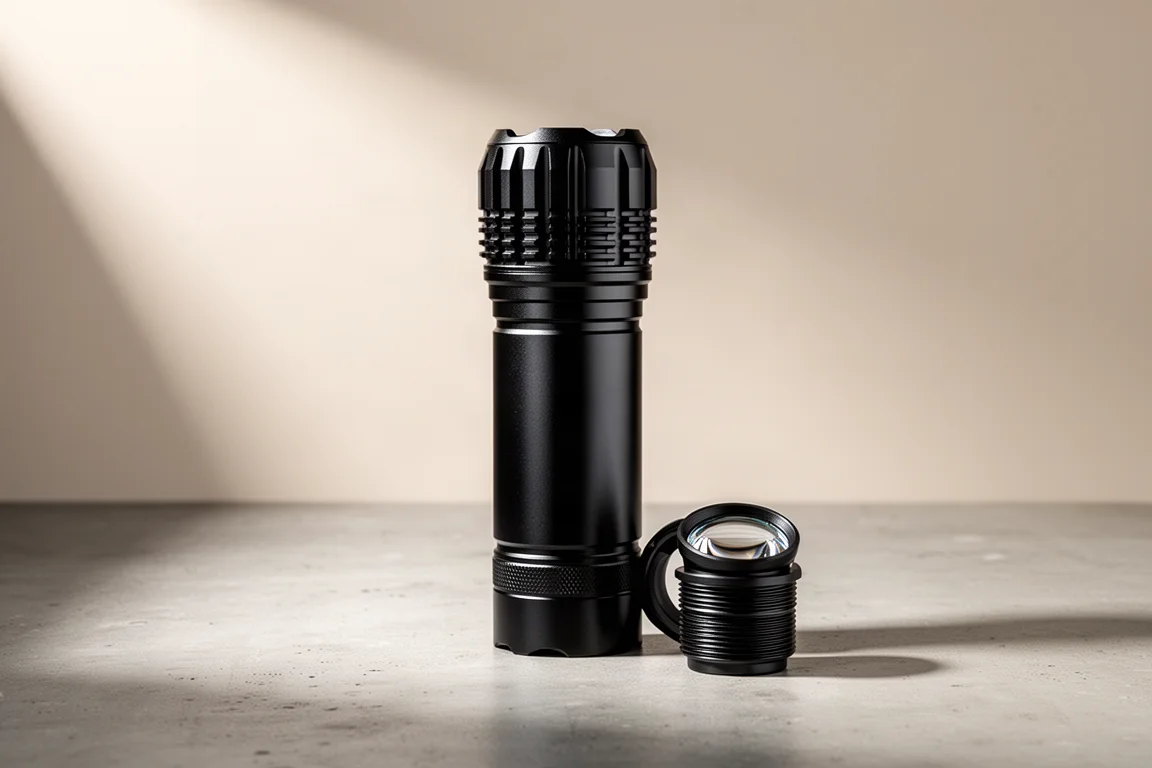
The ES Green heavy duty strong flashlight claims 1 million lumens in its specifications and focuses down into a clean circular beam. It uses a 26650 battery with a stated 6,000 mAh capacity, charges at a modest 1 A maximum over USB-C, has a digital charge display, and skips a strobe mode entirely, shutting directly off with a button press. Those are genuinely high-ranking features in this market.
Measured output was 890 lumens dropping to 840, roughly 0.08 percent of the claim. Decent focus still managed 94,000 candela and 620 m of throw, which is respectable but nowhere near the claimed 1,000 m. In drop testing it developed a kink to the left at the 8 ft mark and died on the next drop, scoring 5 out of 10.
PCAT P Scat
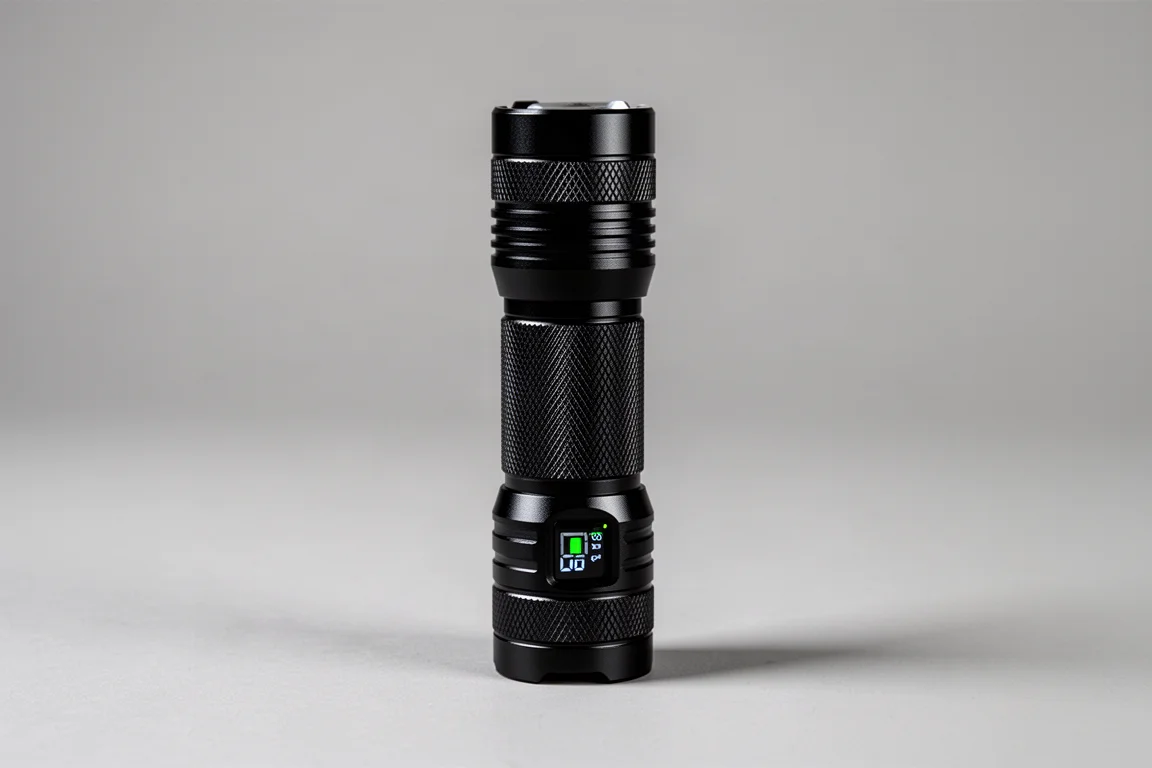
At 27 dollars, the PCAT P Scat claims 1.2 million lumens and stands out with practical extras: a side COB area light with a pleasant color temperature for working around, a magnet on the bottom, and faster 1.8 A charging from its 26650 cell.
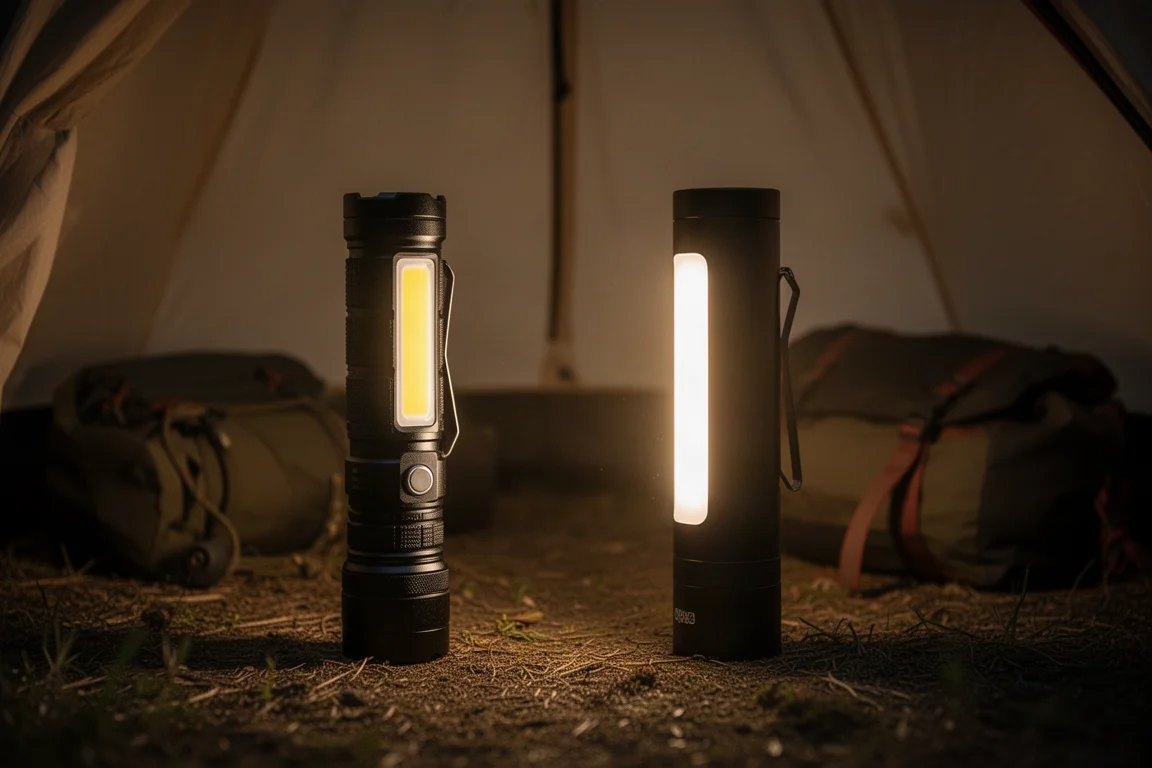
Measured output came in at 930 lumens, settling to 835 by 30 seconds, with roughly 170 to 180 lumens from the area light. Thanks to good focus it still hit about 71,000 to 72,000 candela for 535 m of illumination distance, impressive for such low lumen numbers. At 0.07 percent of its advertised output, it set a new record for the distance between advertising and reality. Durability is where it shone: it survived drops from 6, 8, 10, 14 and 18 ft, losing the magnet along the way, and only broke during the spiking stage for a 9 out of 10.
Wuben L50
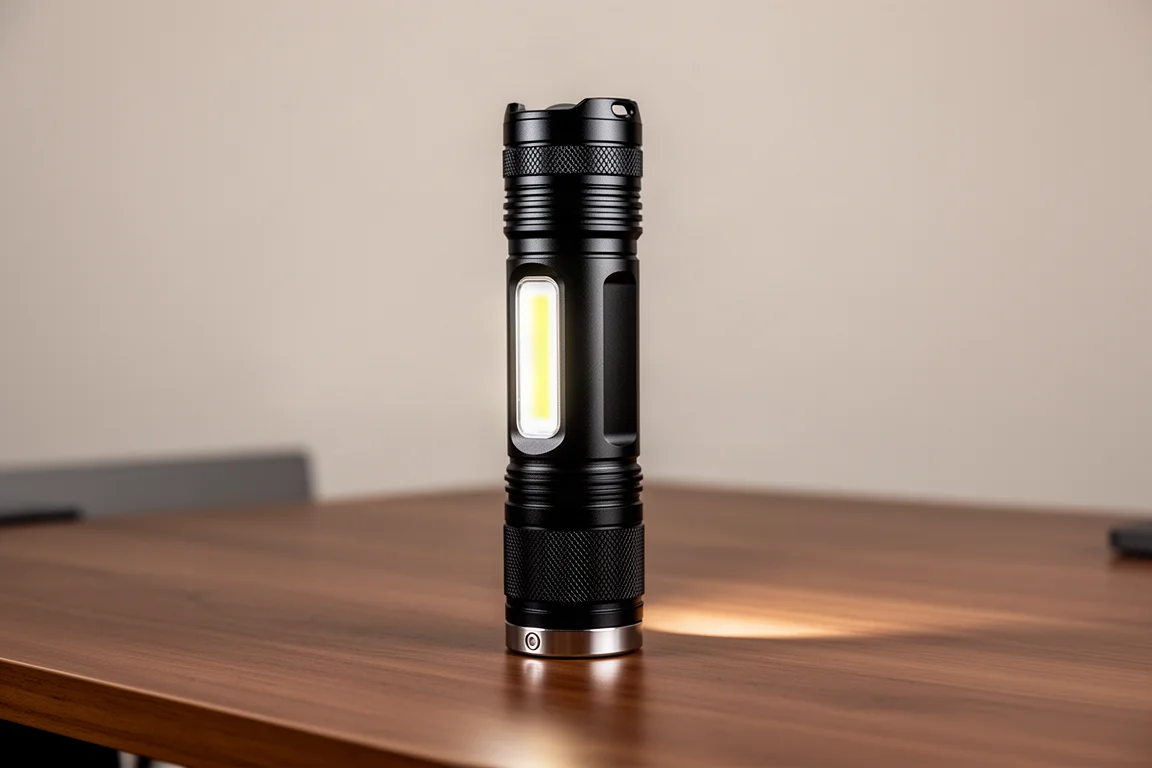
The Wuben L50 is the one name-brand light here with a website and a warranty policy, bought for 34 dollars. It is deliberately simpler and smaller than everything else in this test: an 18650 cell at a claimed 2,600 mAh, a single tail-cap button, and a plain on, high, off interface with no mode cycling.
Measured at 1,340 lumens, it actually exceeded its 1,200 lumen claim, holding output well at 109 percent. Candela of 14,800 gives 243 m of throw, not a thrower, but honest for most purposes. It was the standout performer overall: despite the smallest size and battery, it produced the most total light output across a charge and one of the fastest charge times, and it held its advertised output curve on high, dying around the 2-hour mark. It matched the larger lights by surviving to the 10 ft mark, scoring 6 out of 10.
Philips Fire-Starting Flashlight
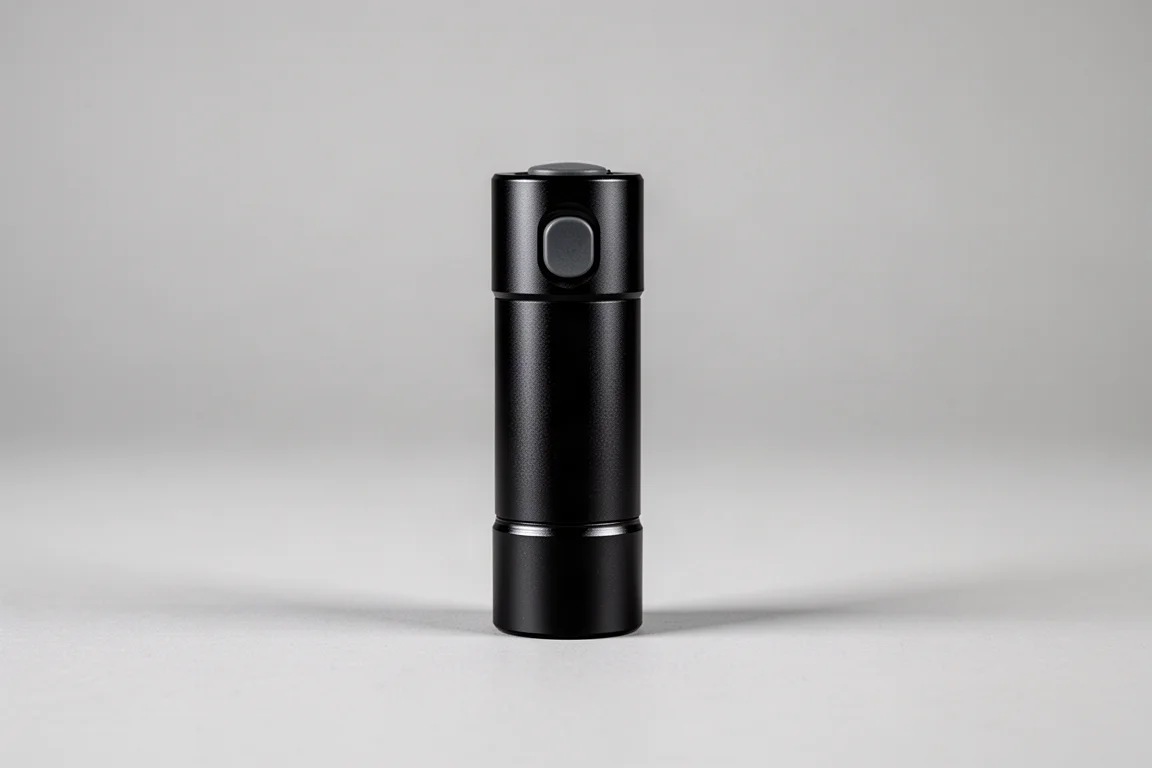
Philips enters the fire-starting category too, at 60 dollars, with very similar specifications to the Skyfire: a claimed 10,000 lumens, a 26800 battery charged at 1.5 to 1.8 A, and a bundled focusing lens, though the lens does not thread onto the light.
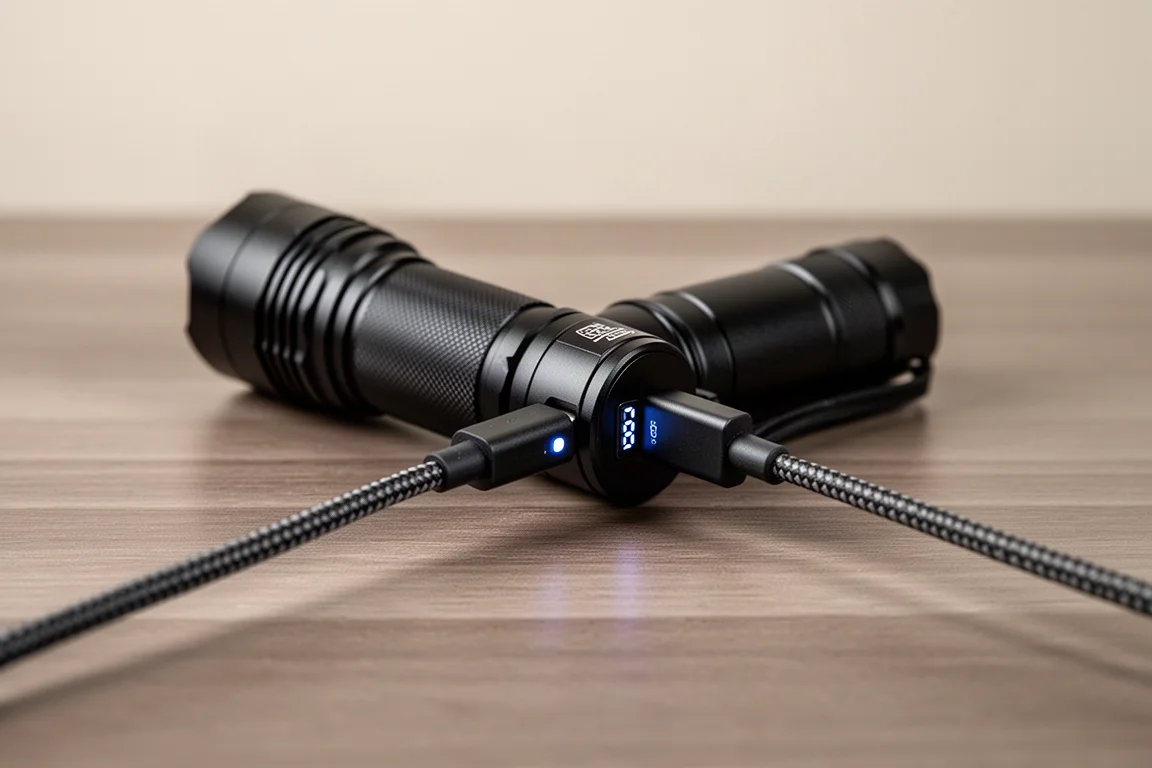
It behaved much like the Skyfire in fire tests, smoking dark fuels easily while leaving light-colored surfaces untouched. Measured output was about 1,545 lumens with 142,000 candela, slightly below the cheaper Skyfire in both, giving 750 m of throw. On high it dropped off within a minute despite its size, and drop testing was odd: at 8 ft the top burst off, activating a mystery area-light mode, followed by flashing behavior and unreliable power. It earned a 4 out of 10.
The 2.5 Million Lumen Model
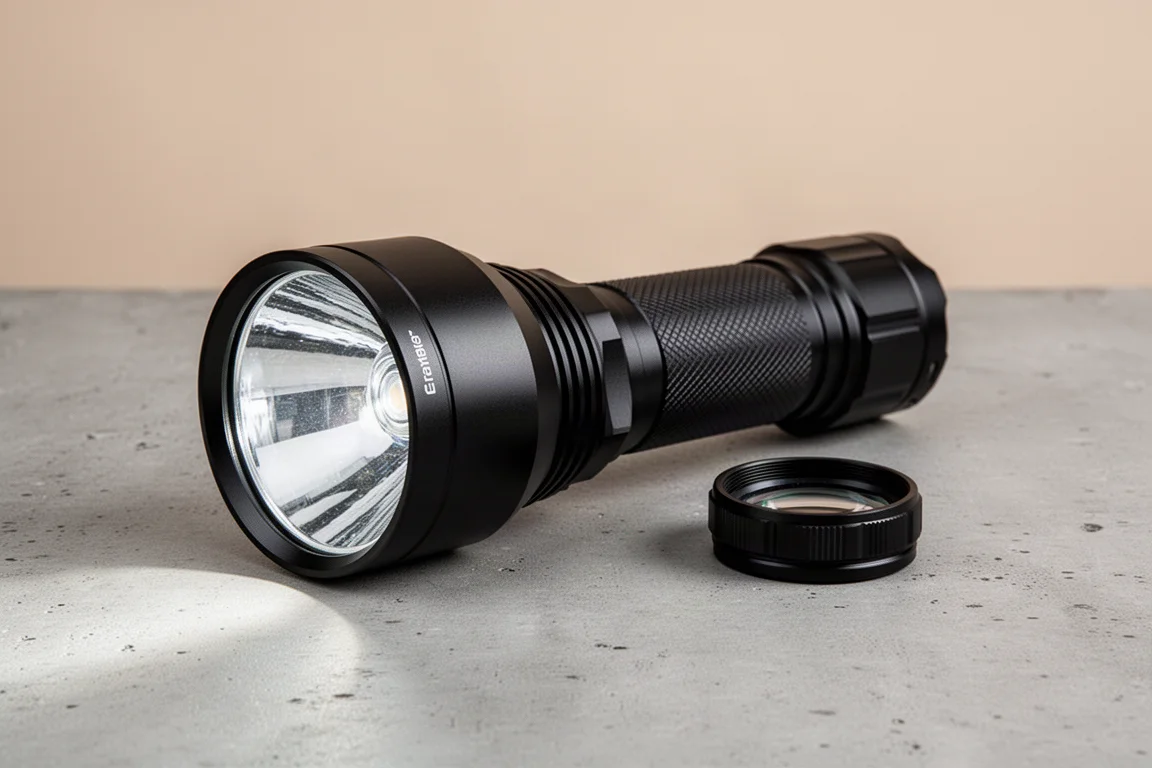
Rounding out the test at 55 dollars is an unnamed generic light advertising 2.5 million lumens, the highest claim we have seen. It has mandatory modes including strobe that you must cycle through to turn off, a square-shaped focused beam, a classic generic COB chip, and 1.5 to 1.9 A charging.
Measured output was about 2,250 lumens settling to 2,110, with roughly 35,000 candela. It is not a terrible light, just a familiar one that has likely been rebranded from a 5,000 lumen listing over the years. It survived drops alongside the Skyfire, failing at 10 ft for a 6 out of 10.
Battery Capacity and Total Output
Measured battery capacities told their own story: the Skyfire’s claimed 5,000 mAh measured an honest 5,000; the ES Green’s 6,000 measured 4,400; the PCAT’s “5,000” 26650 charged in only 2 hours 45 minutes and measured closer to 2,400; the Wuben’s 2,600 measured an accurate 2,500; and the Philips 26800’s 5,000 measured 4,500.
Even so, capacity alone does not explain the results. The Wuben, with the smallest measured battery, still delivered the most total output at around 6,000 lumen-minutes, while larger-battery rivals put out less light over longer runtimes of around 4.5 hours for the PCAT and Skyfire, an hour more for the ES Green and Philips. The drivers in the big-claim lights appear to be wasting watts badly.
Fire-Starting Reality Check
For primitive fire starting you need dark, absorbent fuel, light fluffy tinder around it to catch ignition, and a great deal of patience. Smoke was common, but flames were not. Even an accelerant barely helped until, eventually, the Skyfire caught a flame. Mileage clearly varies, and a flint would be more reliable, but if a flashlight was your only tool, it could at least support a friction fire effort. Notably, the special focusing lenses could be made to work on the other lights too, since anything around 1,000 lumens or more with a tight focus produced smoke and embers.
Drop Test Results
Drop testing from increasing heights, three drops per increment, produced clear separation. The Skyfire and the 2.5 million model survived 4 and 8 ft, sometimes shutting off and needing a restart, and died at 10 ft for 6 out of 10 each.
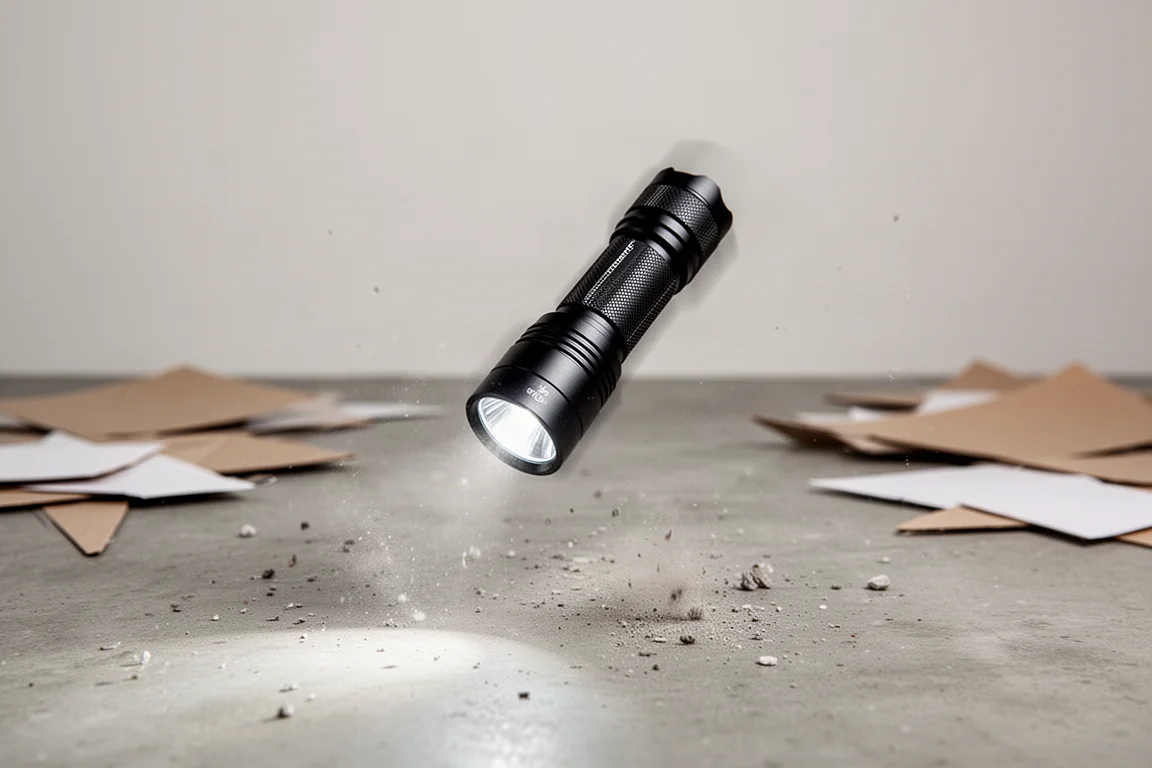
The ES Green quit two drops earlier at 8 ft for a 5 out of 10. The PCAT was the survivor, lasting through the spiking stage for 9 out of 10, while the Philips failed earliest at 4 out of 10 after its top burst off and its modes went unreliable.
Buying Advice
If you want a dependable everyday flashlight, the Wuben L50 is the obvious winner: the only light to meet or beat its claims, the highest total light output despite the smallest battery, simple single-button operation, and a 35 dollar price. It will not redefine flashlights, but finding one that clicks on, does what it says, and stays on until it dies is harder than it should be.
If you genuinely want the fire-starting party trick, the Skyfire does everything the Philips does, slightly better, for 40 dollars instead of 60, down to the seemingly identical warning sheet. Save the money unless the Philips branding matters to you. Fire-starting lights are a real, if niche, category, and a fun one.
Conclusion
The lumens arms race is mostly fiction, with the worst claims measuring in at hundredths of a percent of reality. But honest options exist at the same price points. Buy the Wuben L50 for a trustworthy light, the Skyfire 1097 if the fire-starting lens appeals, and the PCAT if toughness matters most.
Further reading
Related Reviews
Flashlights
Best Flashlights 2026: Brightness, Battery, and Value Compared
We tested 18 flashlights across a wide price range to find the best performers in brightness, battery life, and durability.
Flashlights
Nitecore LA10 Review: A Tiny 2-in-1 Lantern That Nails the Basics
The Nitecore LA10 pairs a pocket-sized lantern with a single AA battery, a magnetic tail cap and a five-year warranty. Here is where it shines and where it struggles.
Flashlights
Wuben G5 Review: A Compact Everyday Carry Flashlight
The Wuben G5 is a small, rechargeable flashlight with a pivoting head, magnetic base, and color modes. Here is how it performs as an everyday carry light.