Everyday Carry
Best EDC Knives for Food Prep: Civivi Refel vs Savi Praxis vs Spyderco Spydie Chef
Three folding knives tested on real kitchen tasks: slicing apples, peeling oranges, and making sandwiches. The results reshuffled our expectations.
Introduction
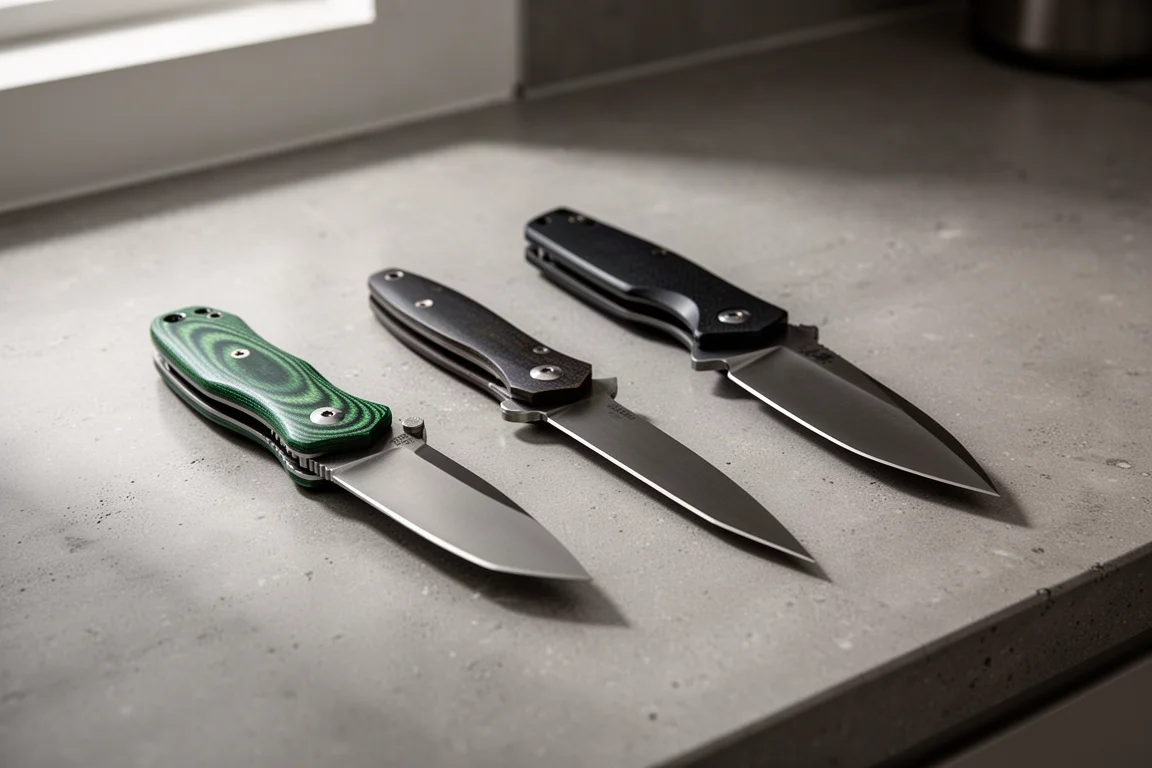
Folding knives rarely get judged on kitchen performance, yet plenty of people use their everyday carry blade to slice an apple, peel an orange, or make a sandwich. That is exactly the question we set out to answer: which of three folding knives, spanning budget to premium, actually handles food prep best?
The lineup covers a popular budget option, a long-time personal favorite, and a purpose-built design. Before the tests, all three pivots were lubed with a food-grade lubricant, since these knives were going straight onto food. If a knife cannot survive a rinse in the sink or a few cuts of fruit, it is not much of a tool.
The Contenders at a Glance
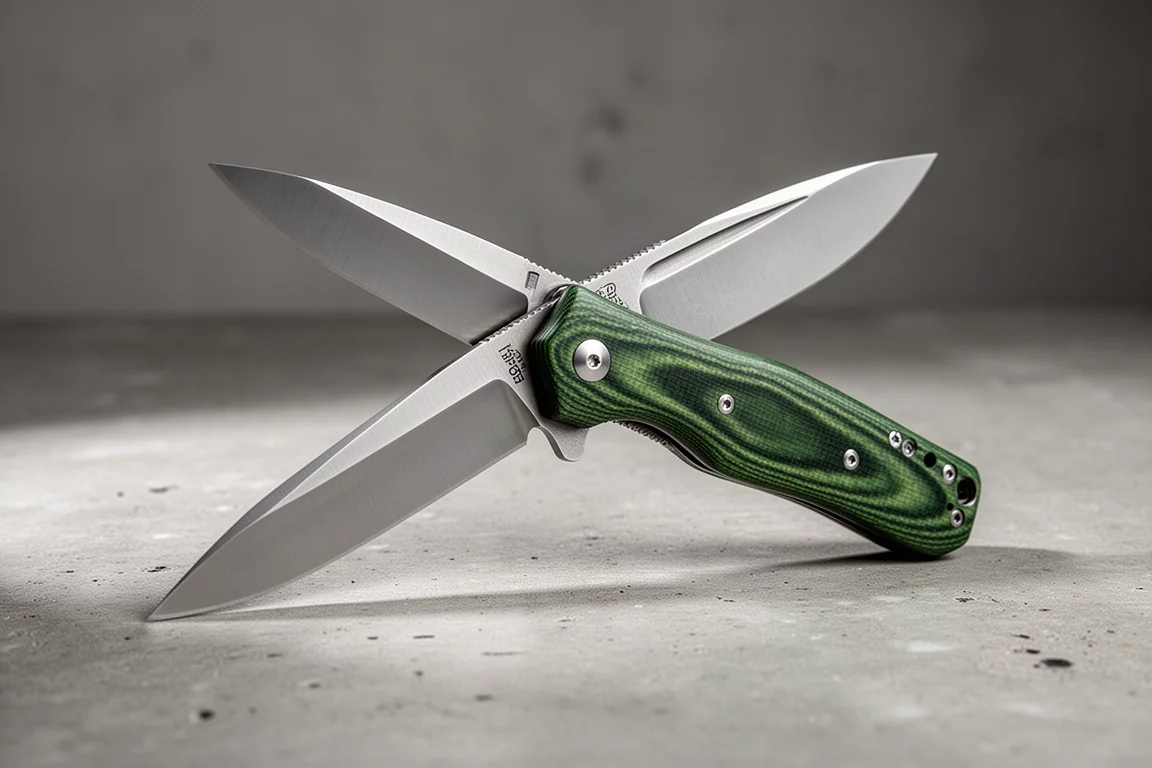
The Civivi Refel is the budget pick of the group, running about $55 with a full flat grind in 14C28N steel and a 3.5-inch blade, which makes it far easier to carry legally than longer-bladed alternatives. 14C28N scores very well on corrosion resistance, which matters for a knife touching juicy fruit and acidic food.
The Savi Praxis has long served as a go-to food prep folder: thin, long, with a nice belly to the edge. Its 3.75-inch blade, however, pushes it past the legal carry limit in many places. The Spyderco Spydie Chef sits at the other end of the budget spectrum as a knife specifically designed for food work.
How the Tests Were Run
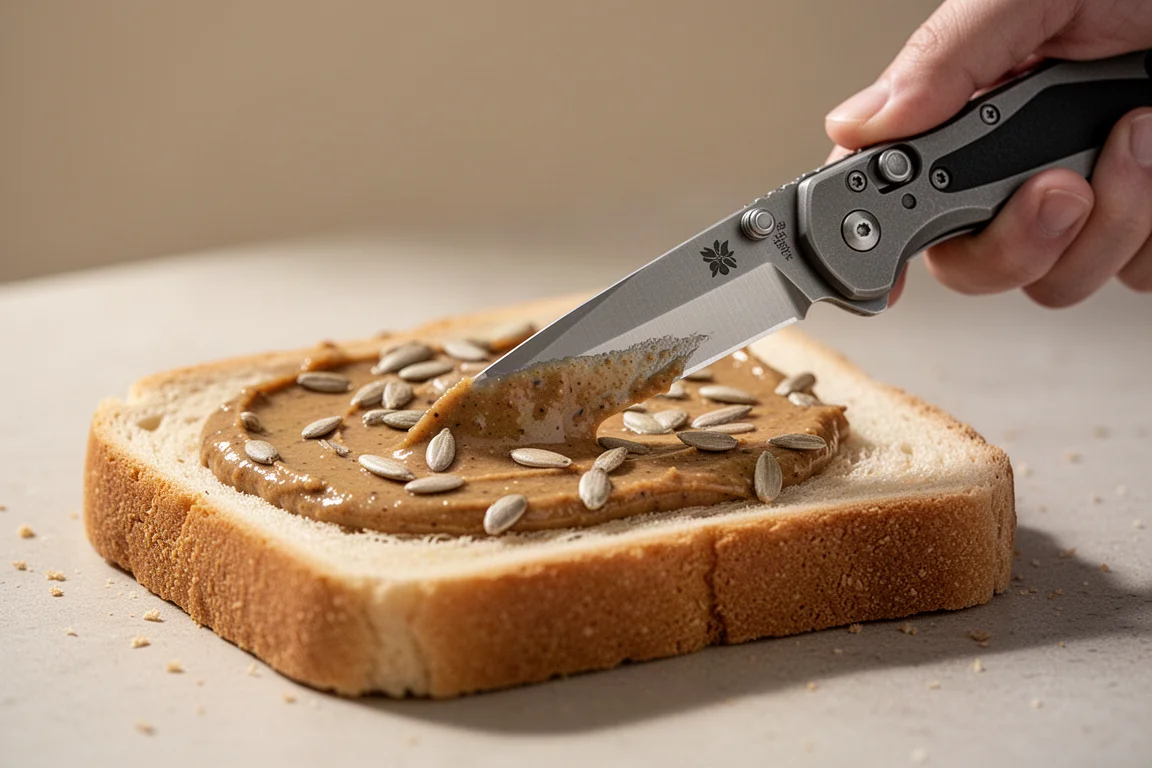
The format was simple and unforgiving: slice apples, peel and cut oranges, and build peanut butter and jelly sandwiches with real spreading involved. Notably, the spread used was actually sunflower butter, which raised an additional challenge, scooping the last bits out of a nearly empty container deep enough to get the flipper tabs messy.
All three knives were compared one to one, side by side, on the same tasks. The results genuinely reshuffled expectations, including which knife came out on top overall.
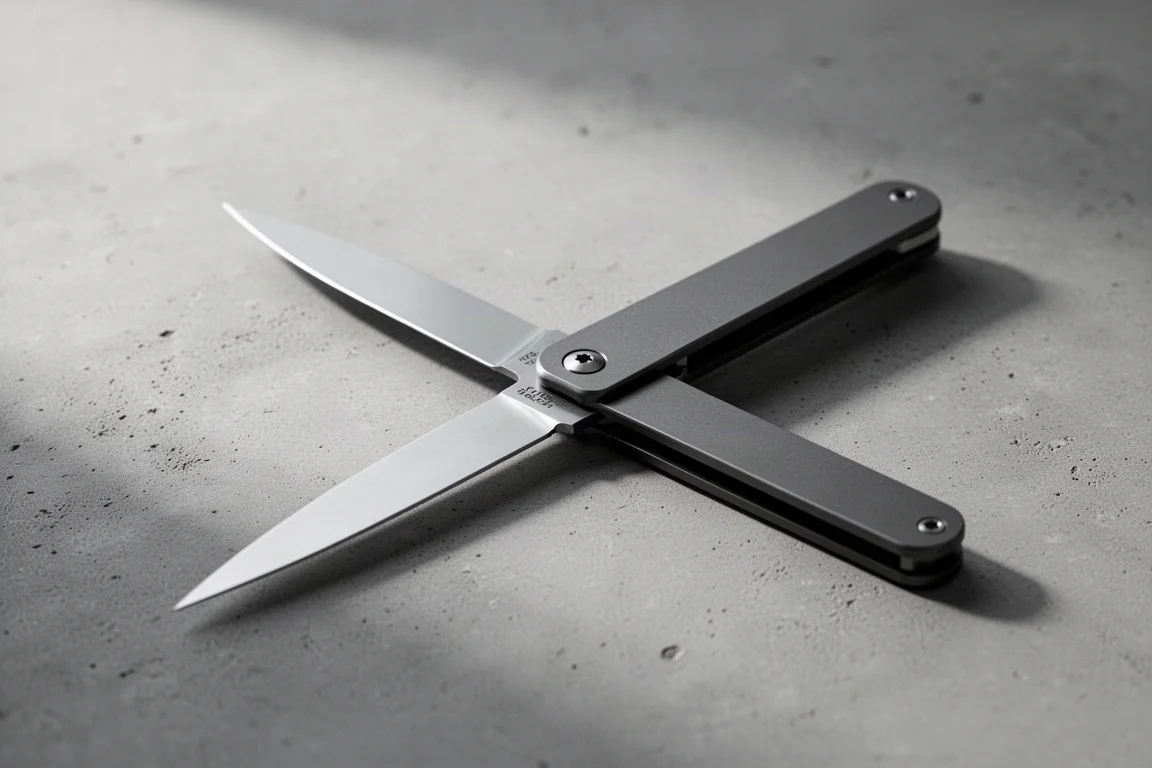
The Biggest Upset: The Refel Cut a Better Apple
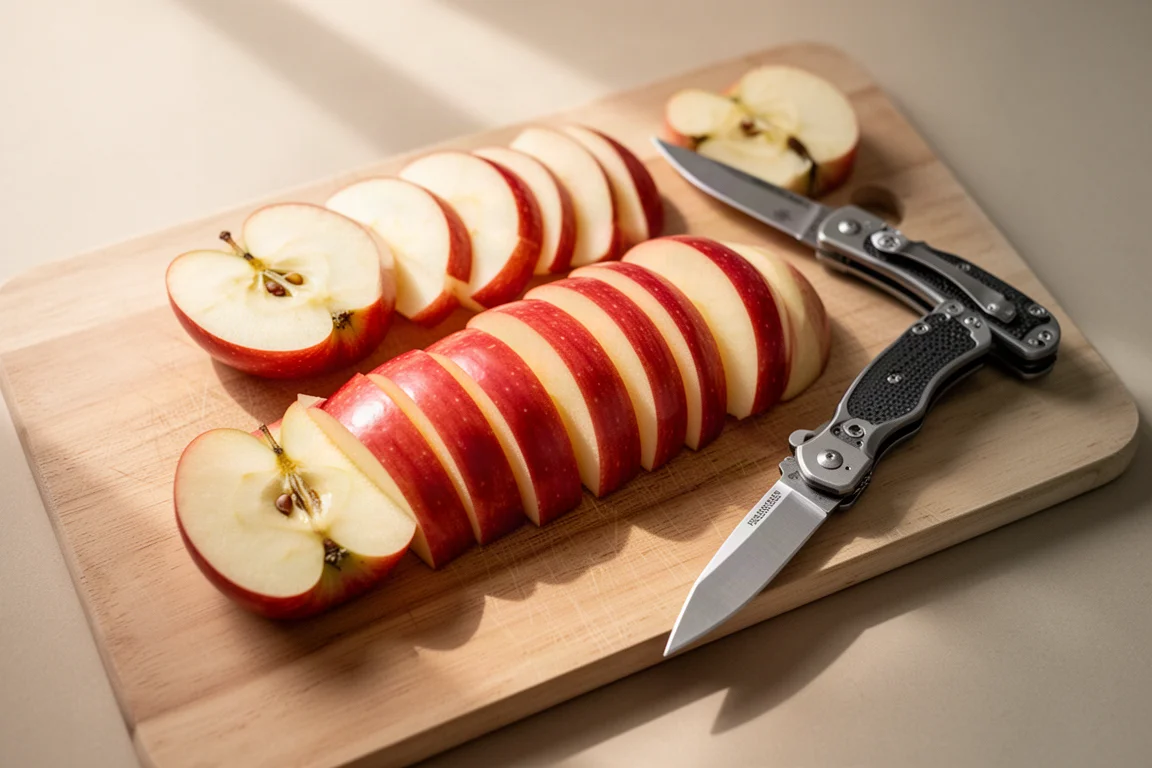
The single most surprising result of the entire comparison was apple slicing. The Refel cut an apple better than either of the other two knives, including the purpose-built Spydie Chef. Less food stuck in it than expected, and cutting the apple without a cutting board, rotating it in hand while holding both pieces, felt easier and more controlled than with the other two.
That extra control may come down to the handle shape, but whatever the cause, the Refel was the clear winner on this task. For a budget knife with a full flat grind and corrosion-resistant steel, that is a strong endorsement.
Peeling Oranges and the Choil Advantage
Orange peeling told a different story. The Praxis shone here because the transition from choil to blade sits at exactly the right depth to keep the edge from digging into the fruit’s flesh. The Refel has a decent transition too, but with both the Refel and the Spydie Chef, cutting depth had to be controlled manually by adjusting how hard you press.
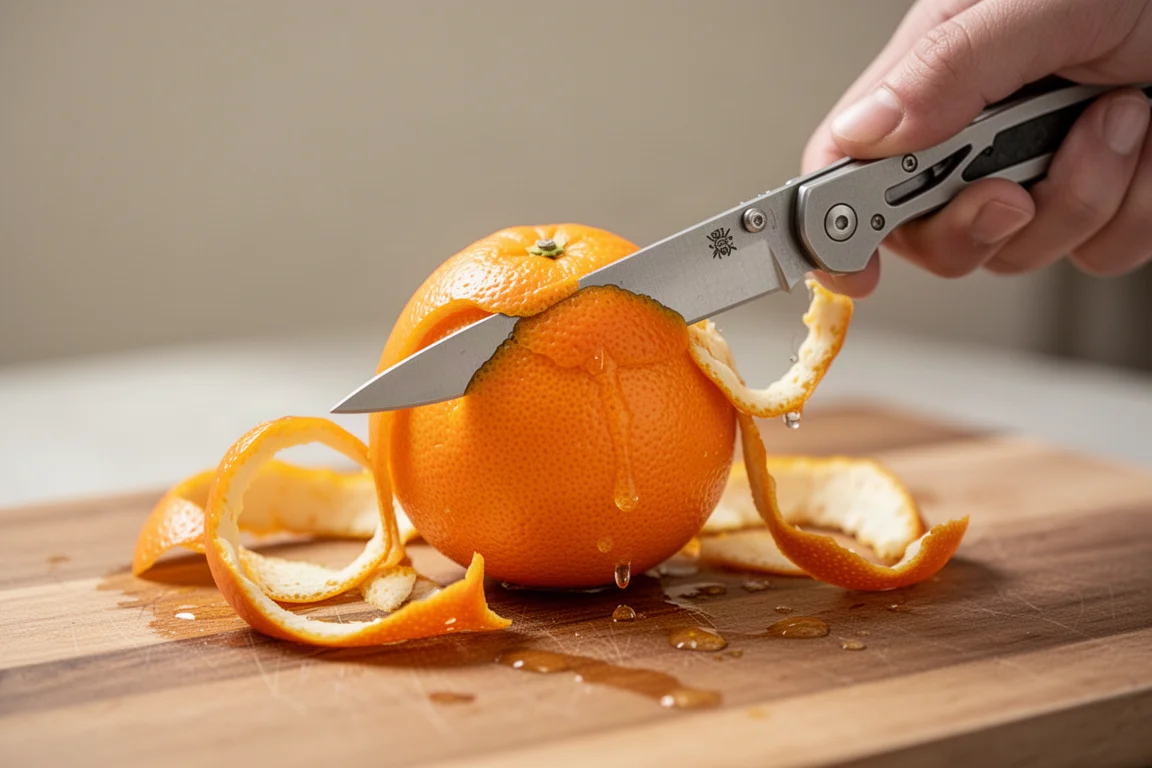
Oranges are easy to peel, but tougher-skinned fruit could be a different matter, and in those cases the shallower transition may not be deep enough for everyone.
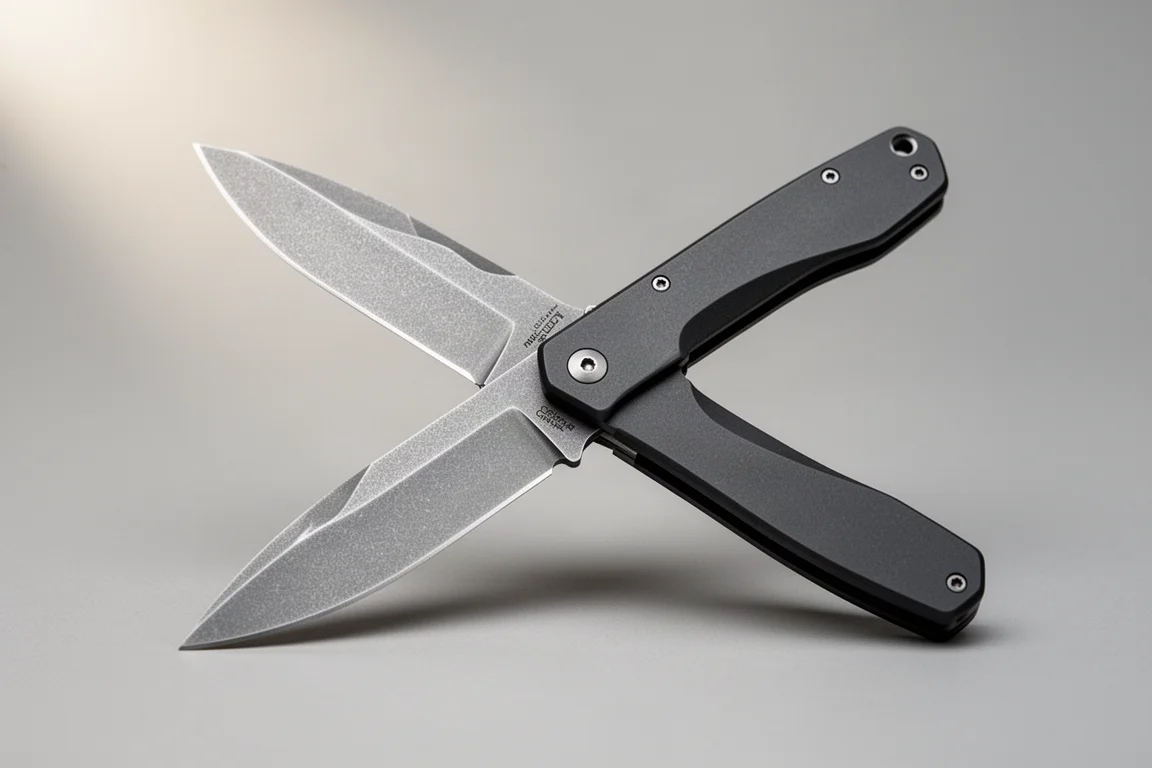
Spreading, Scooping, and the Flipper Tab Problem
Here came another surprise: the Refel spread sunflower butter on bread better than either the Praxis or the Spydie Chef. The Praxis actually turned out to be the worst performer overall in this comparison, largely because of its blade curvature, which hurts spreading performance. It remains a wonderful knife and a personal favorite, just not the best at this particular task.
Both the Refel and the Praxis share one drawback: the flipper tab gets in the way when reaching deep into a jar or container. The Spydie Chef, with no flipper, handled the deep scooping challenge best. The Refel’s swedge, while great looking, also made the blade slightly harder to wipe clean of butter and jelly because there are two edges to work around instead of one.
Grip When Wet: The Surprise Finding
Materials put the Spydie Chef ahead on paper, with its premium steel, but the real-world test of wet hands told another story. Once the handles got really wet, the Spydie Chef’s bead-blasted titanium became noticeably slippery, which is a serious consideration for a knife used around wet, juicy food.
The Refel’s micarta handle did the opposite: it felt like it gripped even better with water on it. For anyone who uses a knife on food and washes it often, that difference in wet grip is not a small detail.
Buying Advice: Which One Should You Carry
So, can the Refel replace the Praxis as a food prep EDC knife? Yes, and in several ways it genuinely performed better, not just equal. At around $55 with 14C28N steel and a 3.5-inch blade that is legal in more places, the Refel is the overall winner of this comparison and the easiest recommendation for budget-focused food prep carry.
The Praxis is still an excellent knife and arguably the best of the three at orange peeling thanks to its choil depth, but its 3.75-inch blade limits carry legality and its curve works against spreading. The Spydie Chef remains ideal on materials and handles deep scooping best, but its slippery-when-wet titanium handle and premium price make it a specialist choice rather than the everyday default.
Conclusion
Food prep was the ultimate test here, and the budget knife won. The Civivi Refel outperformed both the long-standing favorite Praxis and the purpose-built Spydie Chef on the tasks that matter most for daily food use, with better apple slicing, better spreading, and a micarta handle that only gets grippier when wet. If you carry a folder and actually use it on food, the Refel deserves a spot at the top of your shortlist.
Further reading
Related Reviews

Everyday Carry
Everyday Gear That Deserved a Second Look
A roundup of solid everyday carry items: watches, pens, a pencil, a knife, and a smart ring that each earned a place on the table.

Everyday Carry
KORE Tactical Bifold Wallet Review: A Durable Everyday Carry Option
A close look at the KORE Tactical Bifold Wallet, a reinforced nylon wallet with magnetic closure and room for cards, cash, and IDs.

Everyday Carry
Krabby Wallet Review: A Slim, Simple Carry That Has Stood the Test of Time
A closer look at the Krabby Wallet, a slim canvas and elastic design with a loyal following and a simple, functional approach to everyday carry.