Power Tools
Best Die Grinders Compared: Ryobi HP PSB DG01 vs Chief CH14ADG
A cordless brushless die grinder takes on a bargain-priced half-horsepower air tool, with measured output and battery differences worth knowing before you buy.
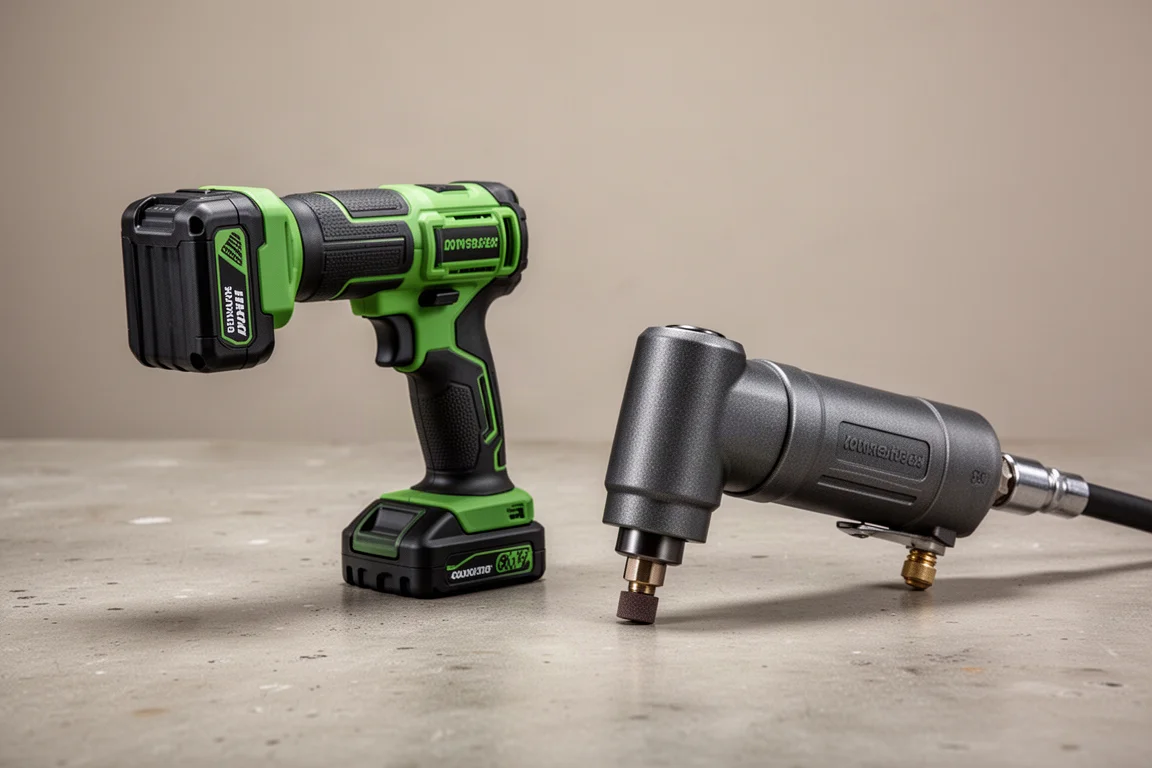
Introduction
Cordless die grinders have been quietly catching up to the pneumatic tools they are often marketed against, but marketing claims and measured output are two different things. We put two very different contenders head to head: the Ryobi HP PSB DG01, an 18V brushless cordless model retailing for $149, and the Chief CH14ADG from Harbor Freight, a half-horsepower rated air tool that costs around $60. The goal was simple: find out how much real power each one delivers and which makes more sense for typical one-handed grinding work.
The Lineup
The Ryobi HP PSB DG01 is notably larger than a compact 12V class die grinder, which is likely part of why it can push more power. It is still very much a one-handed tool, however, and considerably smaller than the biggest 18V die grinders on the market. Despite the extra size, it sells for roughly $50 less than comparable premium cordless options. Ryobi does not publish power figures, only claiming it is up to two times more powerful than pneumatic equivalents, so we measured everything ourselves.
The Chief CH14ADG, meanwhile, represents a step up in the air tool category from the one-third horsepower grinders we had previously tested. At one-third to one-quarter the price of the cordless options, it is still two to three times pricier than Harbor Freight’s cheapest right angle grinders, which sets up an interesting value question.
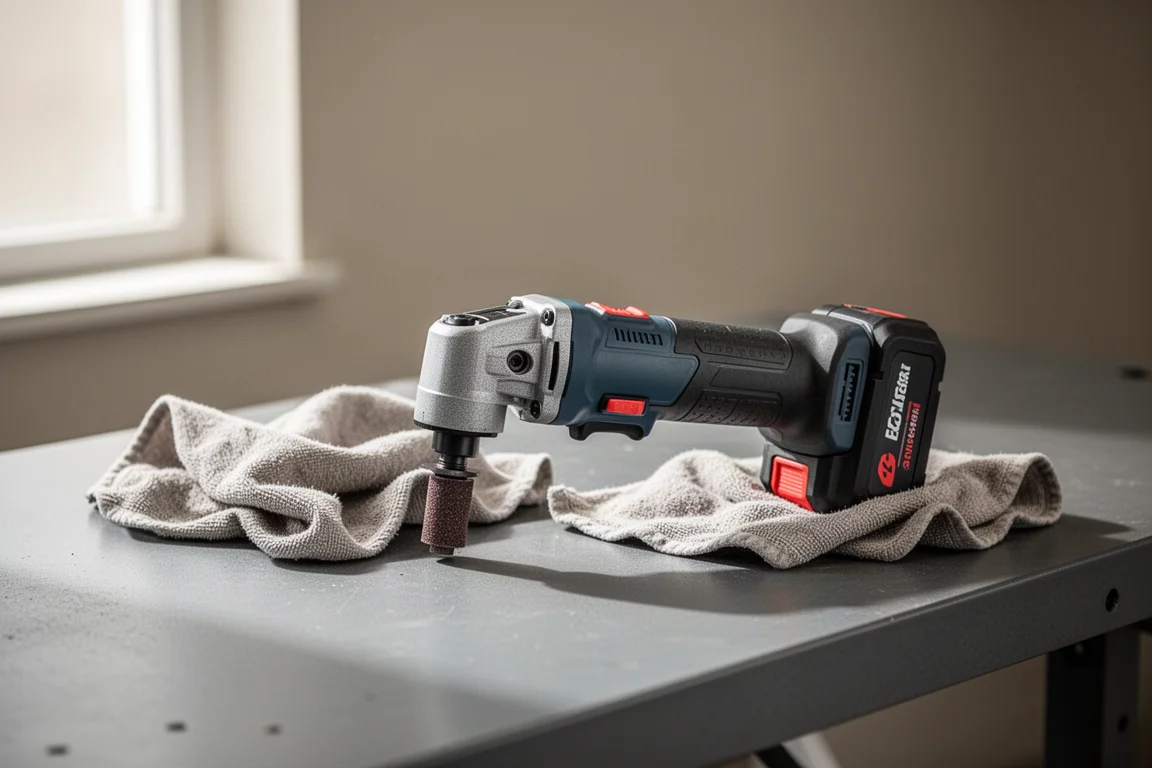
Chief CH14ADG: The Air Tool Baseline
The Chief is a bit chunkier than a typical one-third horsepower die grinder, which costs it some points on size, and it displaces 375cc of water. On the bench, running on 110 PSI with high-flow fittings and a 3/8-inch line, it turned about 17,000 RPM under a 130-watt equivalent load, similar to one-third horsepower tools and slightly above the best 12V cordless grinders.
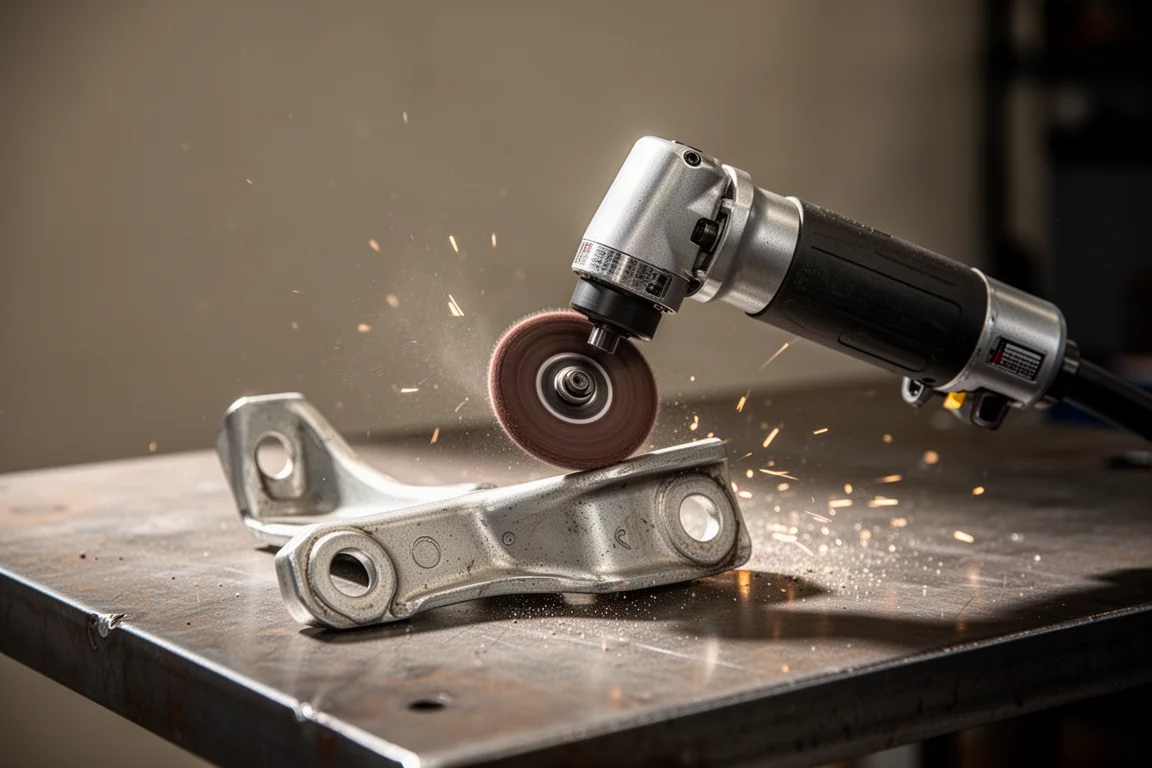
Under heavier load it impressed. It powered through 270, 280, and 300 watts without much complaint, working harder at 320 watts before needing the load eased to recover. After repeated testing, it settled at 300 watts sustained with 320-watt short bursts, which works out to roughly 0.43 horsepower as measured. That translates to a genuinely healthy half-horsepower right angle die grinder, one that rarely bogged down with a three-inch disc, felt well balanced, and ran without the vibration we have noticed on cheaper pneumatic models.
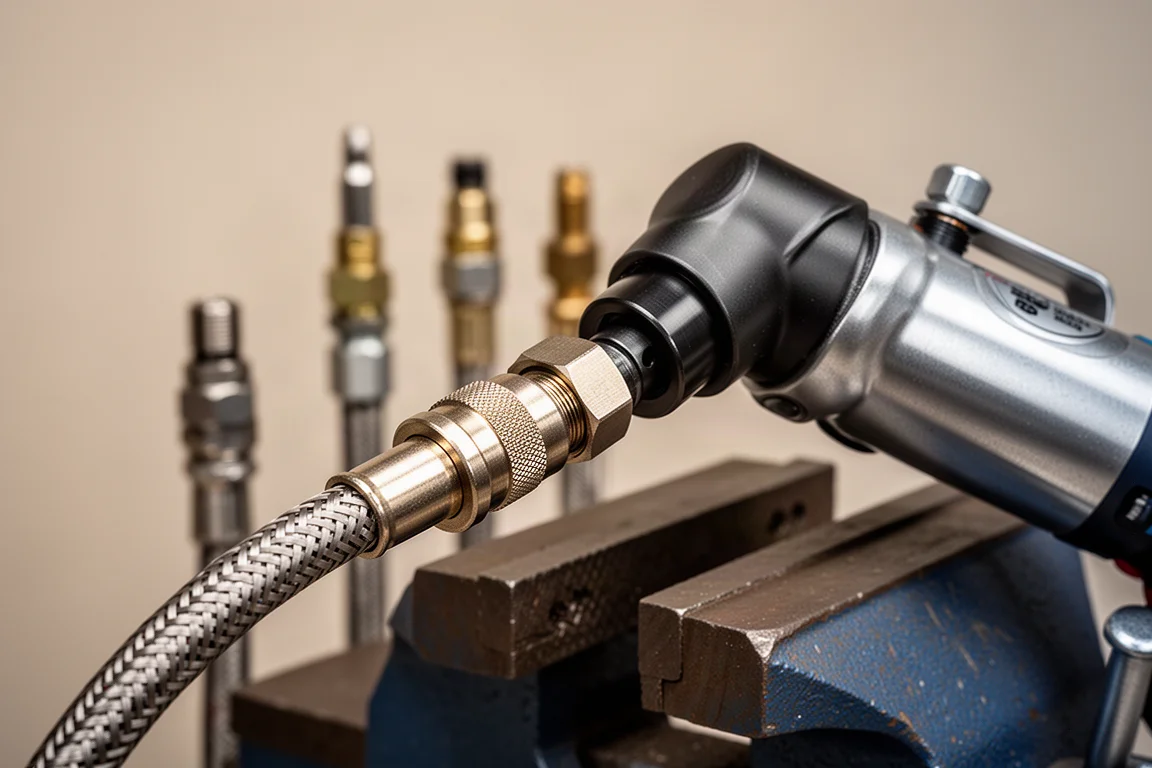
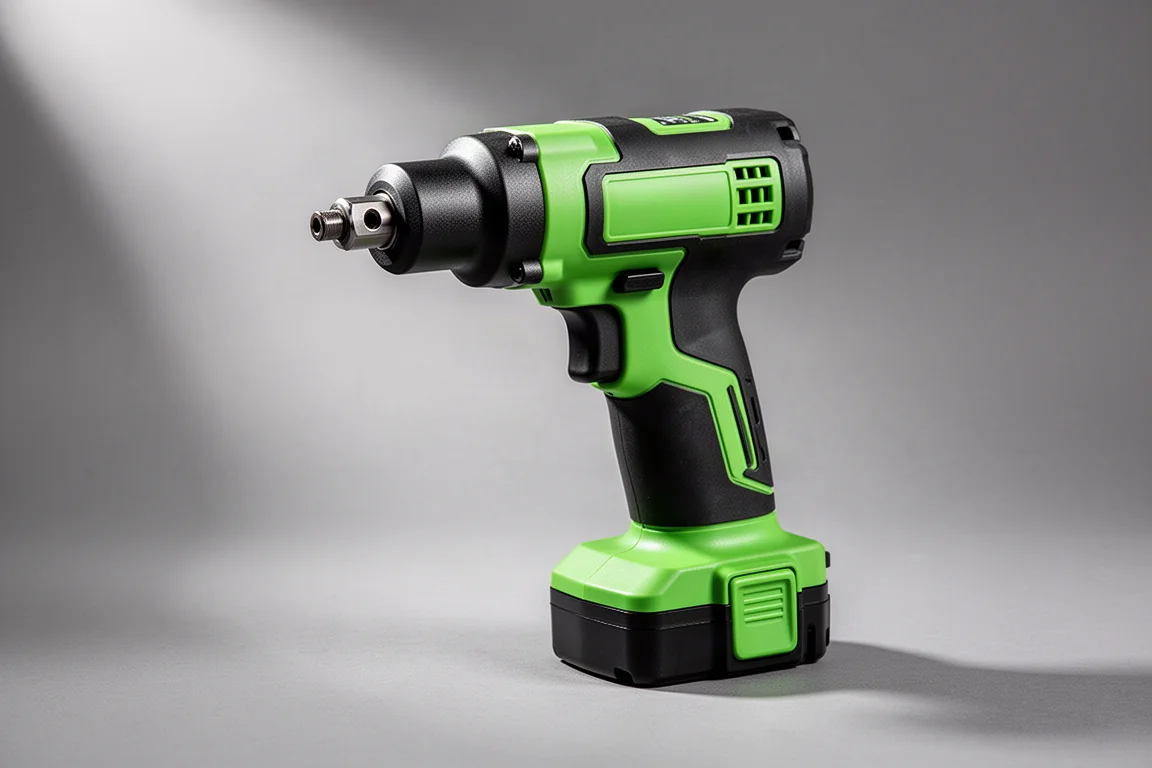
Ryobi HP PSB DG01: Battery Choice Matters
The single biggest takeaway with the Ryobi is that battery selection changes its output dramatically. With the small 1.5Ah pack, it barely managed 130 watts, a performance weak enough that we would skip that battery entirely for this tool. A standard bargain 4Ah battery was a different story, revving to about 18,100 RPM at 130 watts, the most we have ever recorded from a die grinder at that load, and sustaining roughly 290 watts before falling off.
The 3Ah 21700-cell pack (the P195) proved to be our favorite, delivering 320 watts sustained with 340-watt peaks before tripping into protection mode. Interestingly, the 4Ah High Performance battery Ryobi recommends was not clearly better, topping out around 310 to 320 watts even after cooling, possibly because the tool lacks HP contact pickups. With a 9Ah pack, the tool entered protection mode faster than with any other battery.
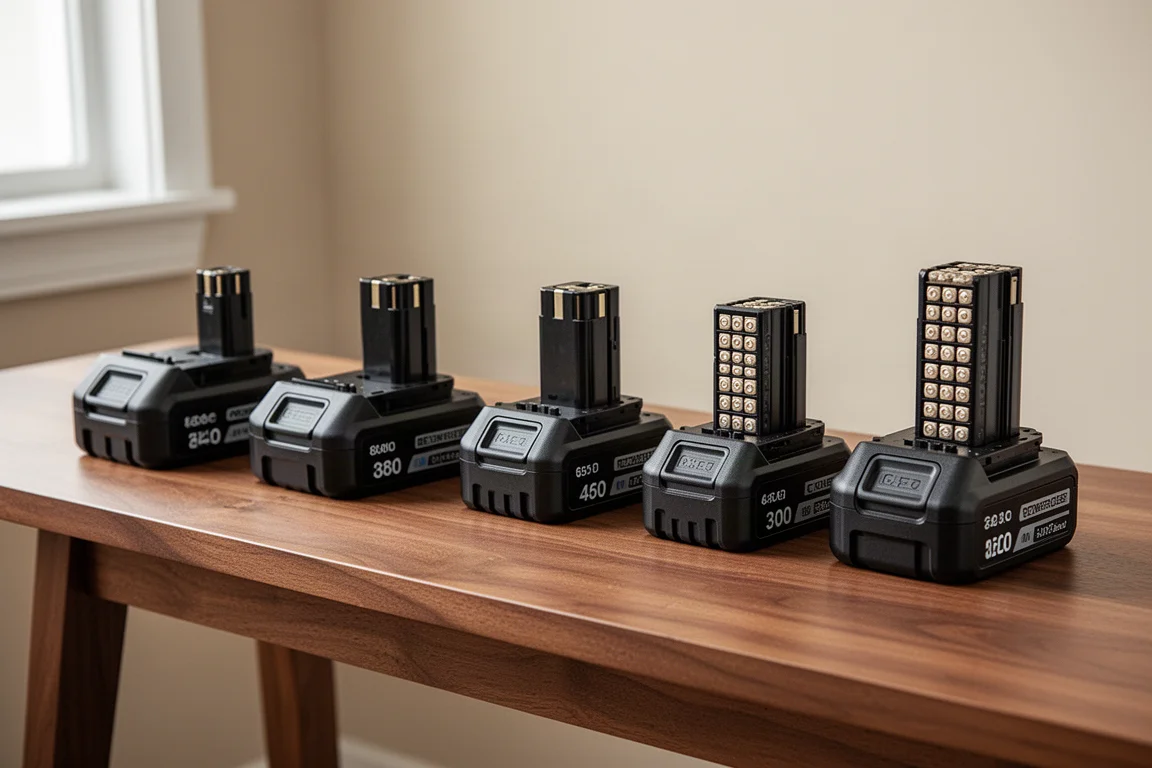
Across every battery, 330 watts was the ceiling, yielding 340-watt peaks and 320 watts sustained, or about 0.46 horsepower as measured. That edges out the Chief’s figure, and in grinding use the Ryobi almost never entered protection mode and rarely slowed down unless the battery was running low. At 1,100 to 1,200cc of water displacement depending on the battery, its footprint is the main drawback; it is simply a big tool in this class.
Scoring and Results
In our point scoring, the Chief earned 752 points thanks to its smaller size and much lower price, while the Ryobi scored 731 with the 3Ah battery and 680 with the 4Ah High Performance pack. The Chief takes first place, but the margin was far closer than expected given the Ryobi’s bulky footprint.
The Ryobi stands as the best one-handed cordless die grinder we have tested, and one of the lowest-priced cordless options available. Its biggest limitation is the awkward battery shape that inflates its size, which makes you wonder what a brand like DeWalt could do with a 20V die grinder and a high-output battery format. Until something like that arrives, the Chief remains the pick if you need more air power, and the Ryobi looks like a dominant force in the non-two-handed size class of automotive die grinders.
Overall Buying Advice
If you already own pneumatic infrastructure and want maximum measured power per dollar, the Chief CH14ADG is easy to recommend: it delivered honest half-horsepower-class performance, ran smoothly, and costs about $60. It does depend on a good compressor setup with high-flow fittings to hit those numbers.
If you want cordless convenience and are already invested in a battery platform, the Ryobi HP PSB DG01 is the strongest one-handed cordless die grinder we have measured. Pair it with the 3Ah 21700-cell battery for the best balance of output and control, and budget for the fact that the battery choice affects performance as much as the tool itself.
Conclusion
The Chief CH14ADG wins on price, size, and measured value as an air tool, while the Ryobi HP PSB DG01 edges it on raw measured horsepower and offers the freedom of cordless use, provided you feed it the right battery. Between the two, the right pick comes down to whether you value a $60 shop tool with compressor dependence or a $149 cordless platform tool with a bit more top-end output.
Further reading
Related Reviews
Power Tools
Best 1-Inch Pistol Impact Wrenches: Three Heavy-Duty Options Compared
We compare three 1-inch pistol impact wrenches, from a budget-friendly Harbor Freight model to a premium Caterpillar unit, to help you choose the right one.
Power Tools
Best 3/4-Inch Impact Wrenches 2026: Five Contenders Compared
We compare five 3/4-inch impact wrenches across price and performance, from a budget Amazon option to Snap-on's most powerful model yet.
Power Tools
Best Budget Cordless Tools 2026: Walmart Finds That Punch Above Their Price
We tested five cordless tools from Walmart, including a high-torque impact wrench that trades blows with Milwaukee and a $35 duster that outperforms its price class.