Power Tools
Best Die Grinders Tested: Air vs Cordless Head to Head
Five die grinders measured on a real dynamo rig: two Milwaukee M12 cordless models, an Onyx 201 air grinder, and two budget Harbor Freight options, ranked on watts, RPM, and size.
Introduction
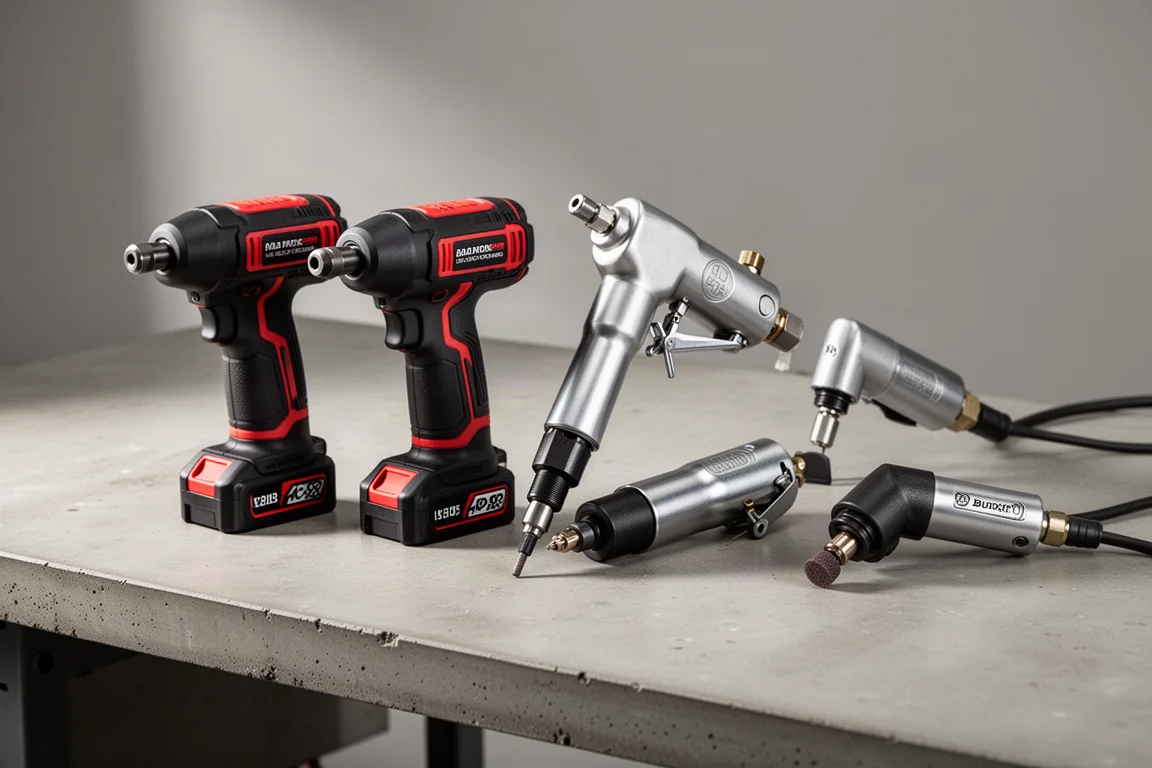
Die grinders have long been the territory of air tools, with a few bulky corded or cordless oddballs thrown in. That changed when two Milwaukee M12 models arrived promising roughly one-third horsepower in a package close to the size of a real air grinder. To settle the air-versus-cordless question properly, we put five die grinders on a custom dynamo rig and measured actual output in watts, not marketing horsepower.
The contenders: the Milwaukee M12 Fuel 2486-20 straight die grinder, the Milwaukee M12 right angle die grinder, the Onyx 201 straight air die grinder rated at one-third horsepower, a small Harbor Freight right angle air die grinder rated at one-quarter horsepower, and Harbor Freight’s premium half-horsepower model held in reserve as a comparison benchmark.
How We Tested: The Dynamo Rig
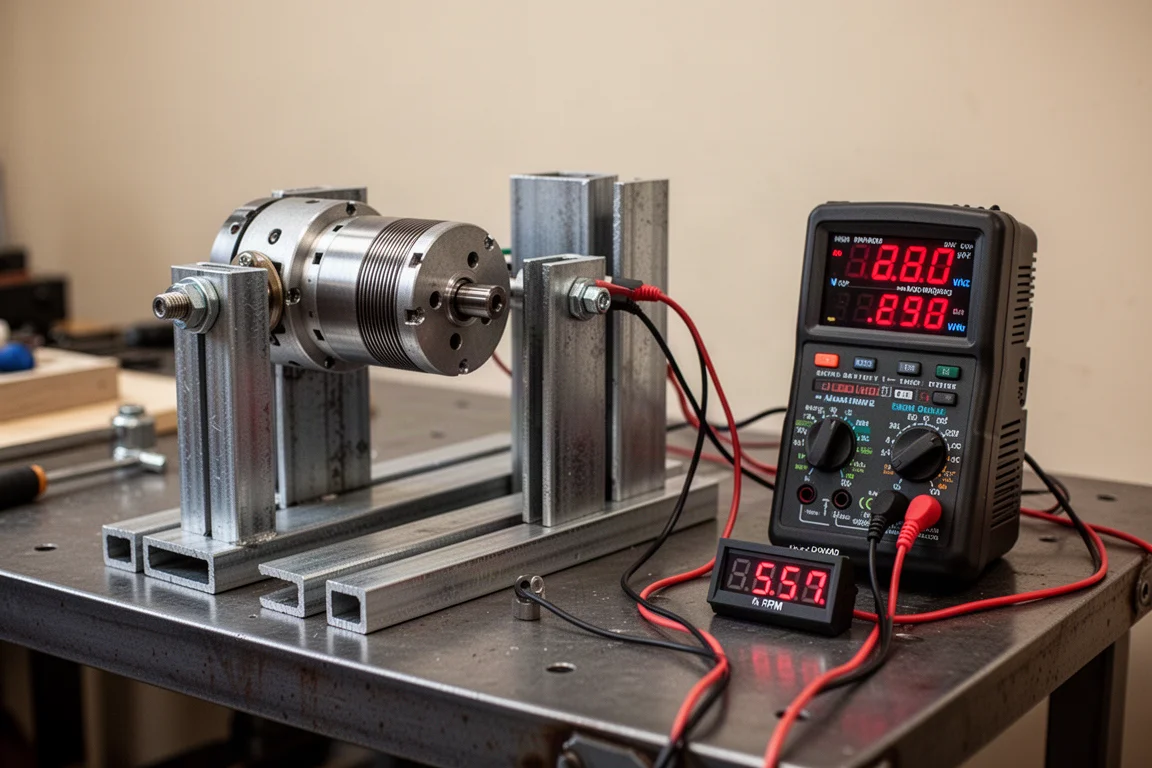
Rather than trust claimed specs, we built a dynamo. The heart of it is a high-RPM DC spindle motor, the kind used in CNC routers, capable of at least 20,000 RPM. Spinning it backwards with a die grinder turns it into a generator, and the shaft happens to mate neatly with quarter-inch die grinder shanks. A battery load tester soaks up the generated watts, straining the grinder until it bogs down, while a hall effect sensor and a five-digit digital display show live RPM.
One important reality check before the results: air tool horsepower ratings refer to the motor inside the tool, not what you get at the collet. A manufacturer’s own dynamo chart for a one-third horsepower right angle air tool showed just 0.293 horsepower of actual output. In other words, even air tools fudge their numbers, so everything here was scored on what each grinder could genuinely sustain.
Milwaukee M12 Fuel 2486-20 Die Grinder
The 2486-20 is notable for being the first cordless die grinder to approach air tool size; most previous cordless models were essentially old corded designs with a battery bolted on. With the compact CP 2.0 battery, the tool ran steadily at 130 watts but would eventually cut out into heat protection mode under a 140 watt load. Swapping to the larger XC 6.0 battery changed the picture dramatically: peak power climbed to 170 watts with 150 watts sustainable, and average RPM improved by about 3,000 over the small pack.
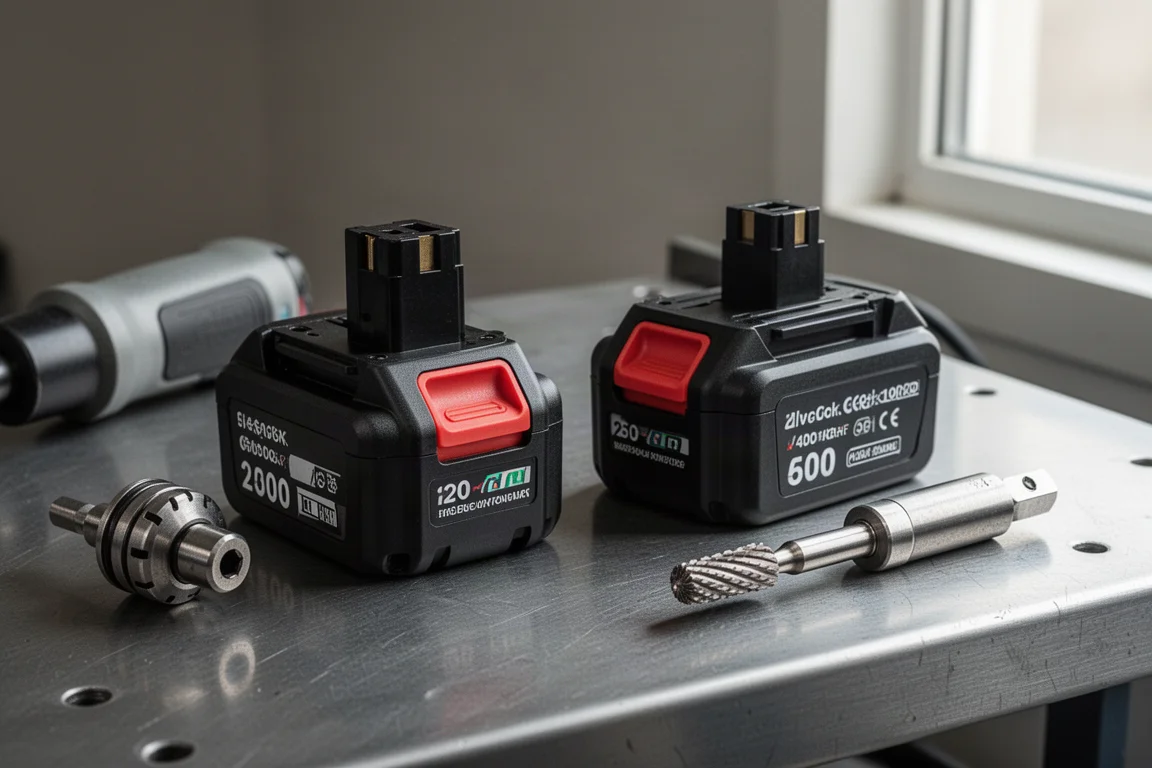
In real terms, 170 peak watts is about 0.228 horsepower, a bit under the quarter-horsepower mark and well short of the one-third horsepower Milwaukee implies. The tool’s measured volume came out to 525 milliliters with the CP 2.0 and 600 milliliters with the XC 6.0 pack, so the bigger battery costs real space. Still, on our scoring it earned 276.1 points overall, the best total of the two Milwaukee models and the strongest points-per-price value in the test at 11.63.
Milwaukee M12 Right Angle Die Grinder
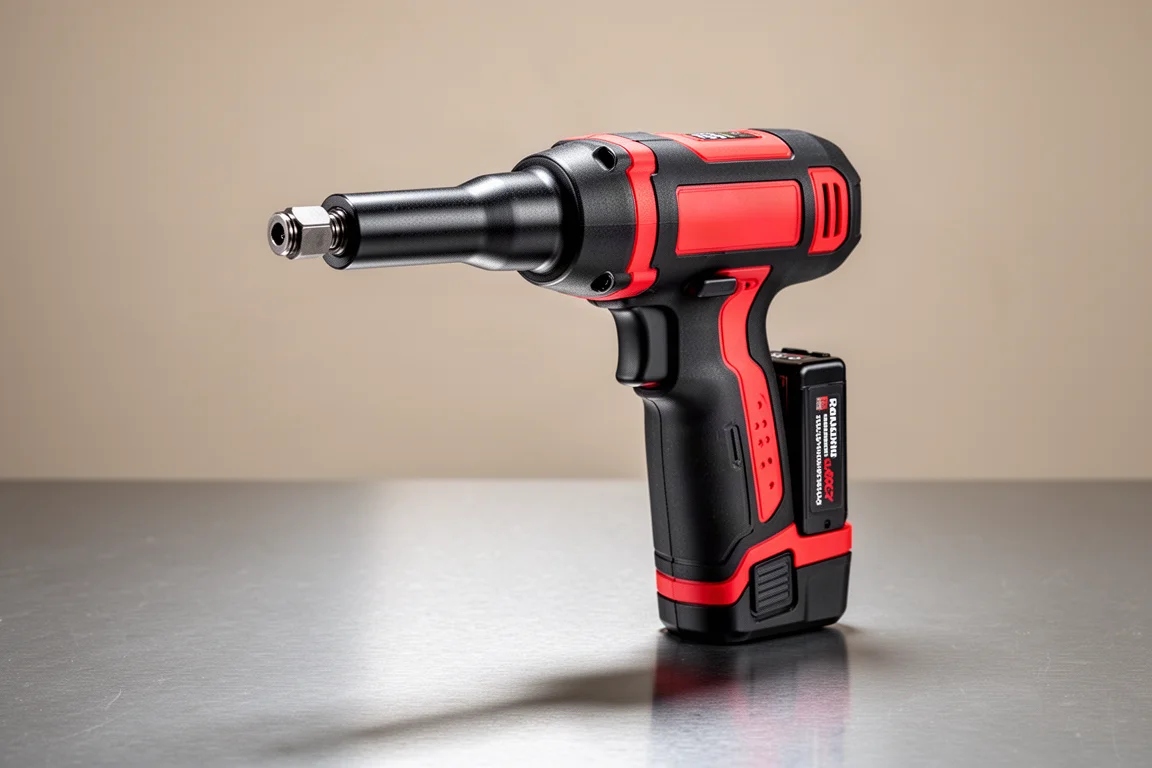
The right angle M12 was borrowed for comparison, and it surprised us. Its motor sits in line with the output shaft, which should be an advantage over gearboxes, and on the dyno it ran over 2,000 RPM above the straight M12 using the same CP 2.0 battery. It sustained 150 watts comfortably, peaked around 170 watts for the same 0.228 horsepower figure, and scored 273.8 points, just behind its straight sibling.
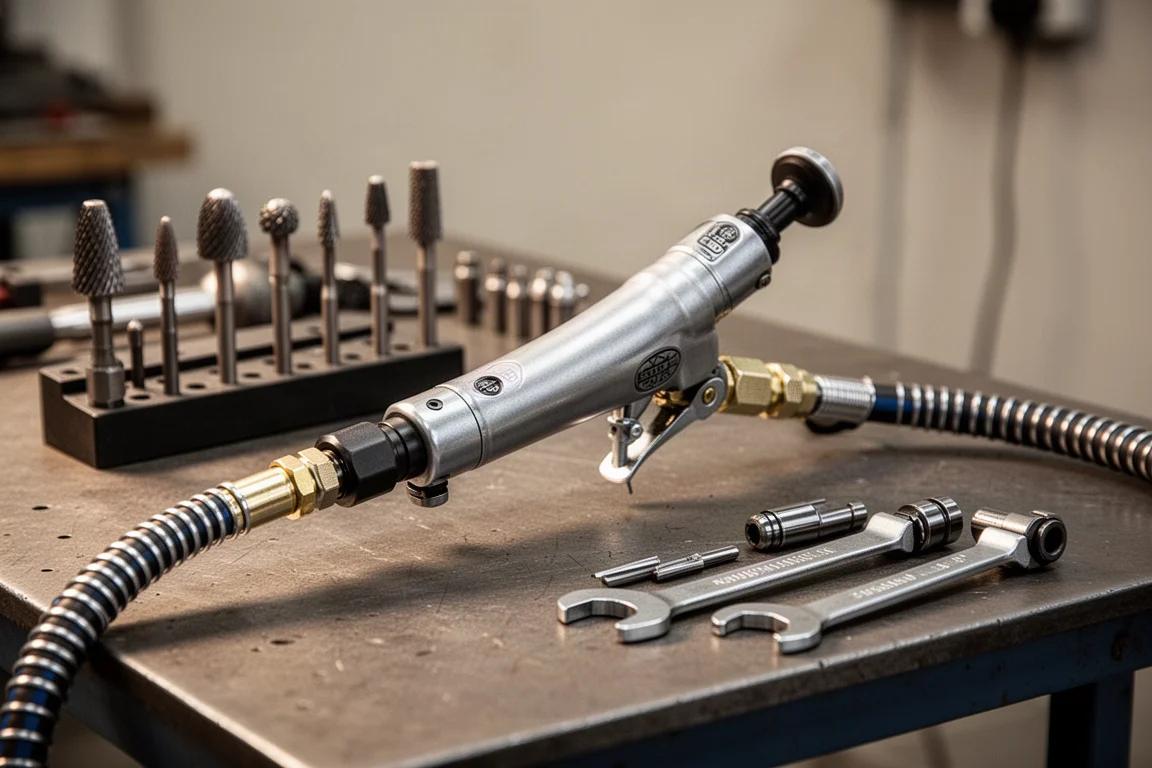
It is a slightly fickle tool under heavy load: even 160 to 180 watt levels would sometimes trigger a cutout after only one to three seconds of use, and its volume displacement was larger than the straight model’s. On value it still scored a healthy 6.62, second best in the test. If your work favors right angle access, it holds its own against the 2486-20.
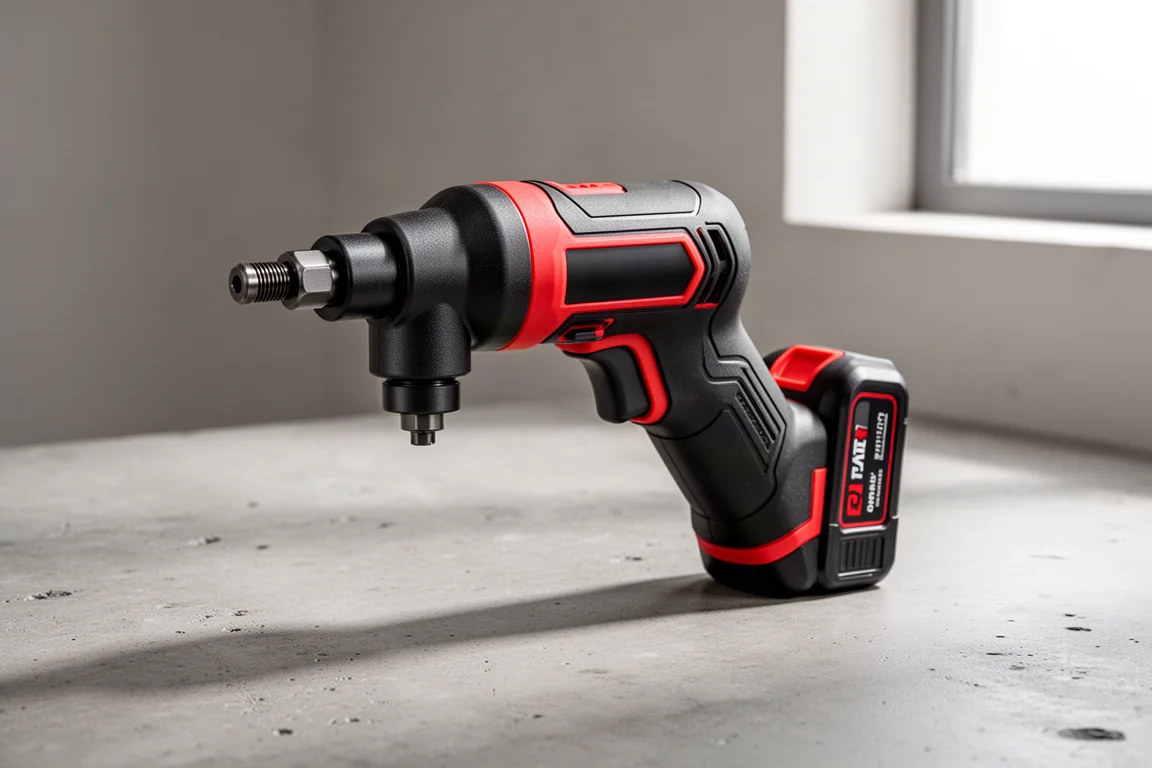
Onyx 201 Air Die Grinder
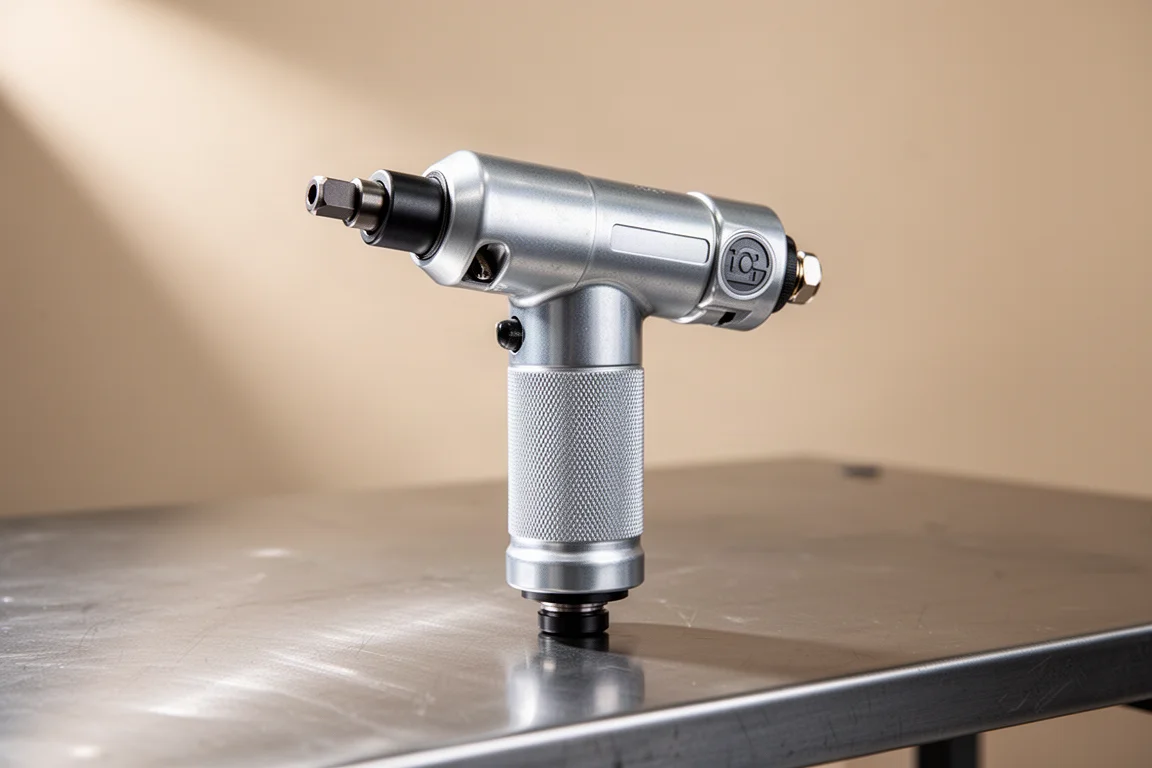
The Onyx 201 is the straight air die grinder rated at one-third horsepower, and on the dyno it was the class of the field. Fed 100 to 110 PSI through a typical 3/8 inch hose setup, it averaged 17,200 RPM at a 130 watt load, matching or beating the M12 straight depending on battery. It peaked at 210 watts and held a steady 200 watts, which works out to 0.28 horsepower, right in line with the 0.297 real-world figure typical for a one-third horsepower air tool.
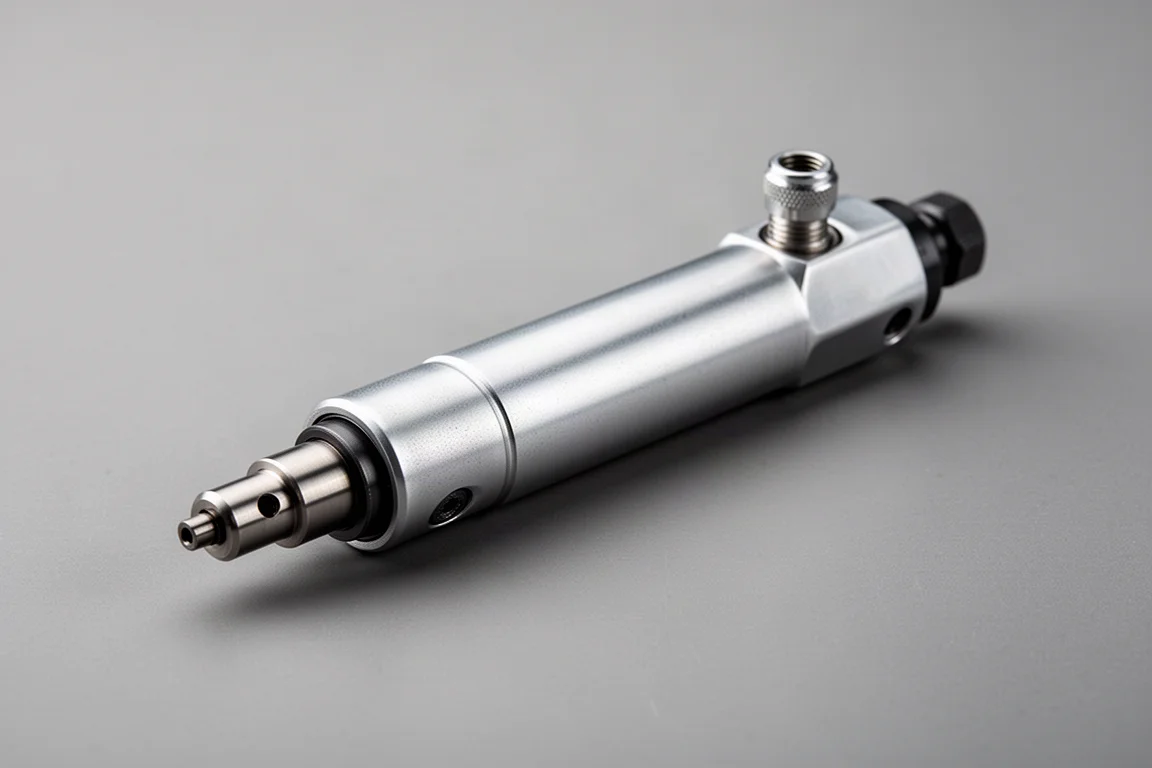
Harbor Freight Right Angle Die Grinder
This quarter-horsepower-rated budget right angle grinder sells for $25 or less and is considerably smaller than the M12 right angle. On the dyno it managed only around 100 watts, roughly 0.134 horsepower, and about 10,000 RPM at that load, roughly half of its no-load speed. Up front, the head sounds like a box of rocks and spits gear oil out of the head while running, and the oil it loses is not pneumatic oil.
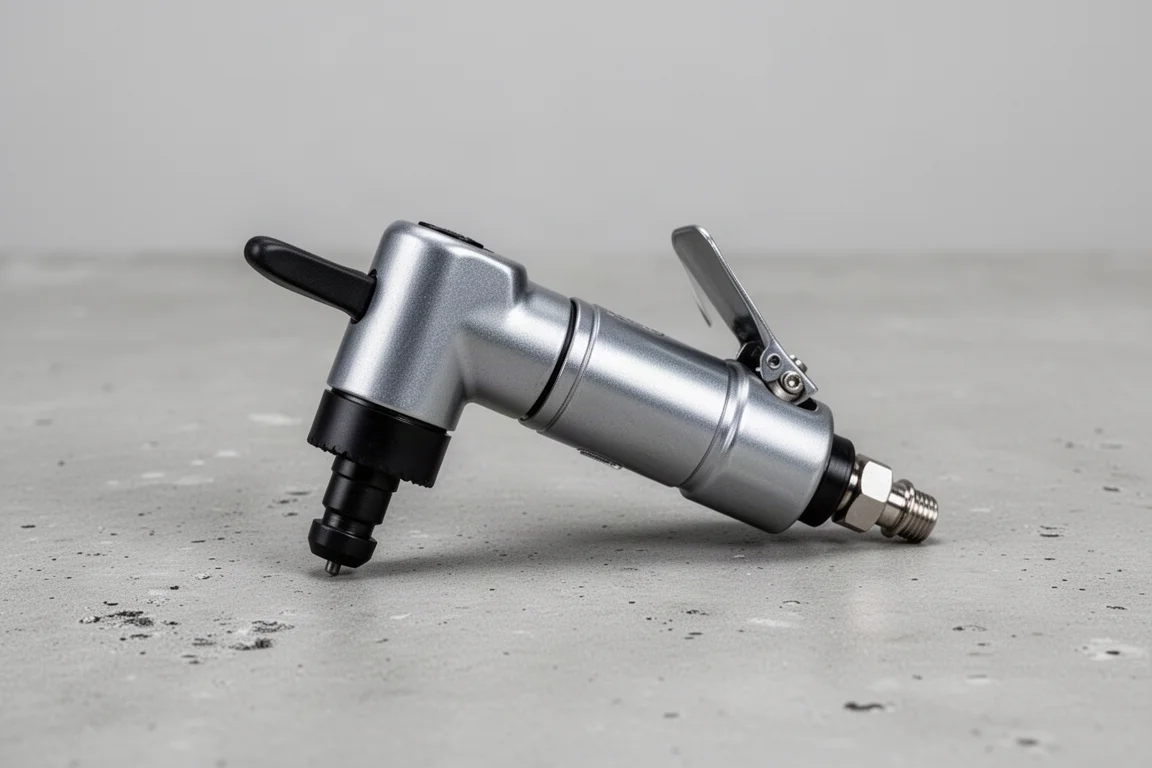
Harbor Freight 1/3 Horsepower Air Die Grinder
Harbor Freight’s premium in-house brand offers a half-horsepower die grinder at roughly four times the price of their budget unit, and we kept it on standby in case the other tools pushed numbers high enough to require it. They never did. Nothing in this test came close to needing that ceiling, so it stayed on the shelf. For the price-focused scoring, the budget Harbor Freight right angle managed just 1.39 points per dollar tier, and the verdict on that small grinder was blunt: with its power shortfall and the oil-leaking head, it is the one tool here we would not risk.
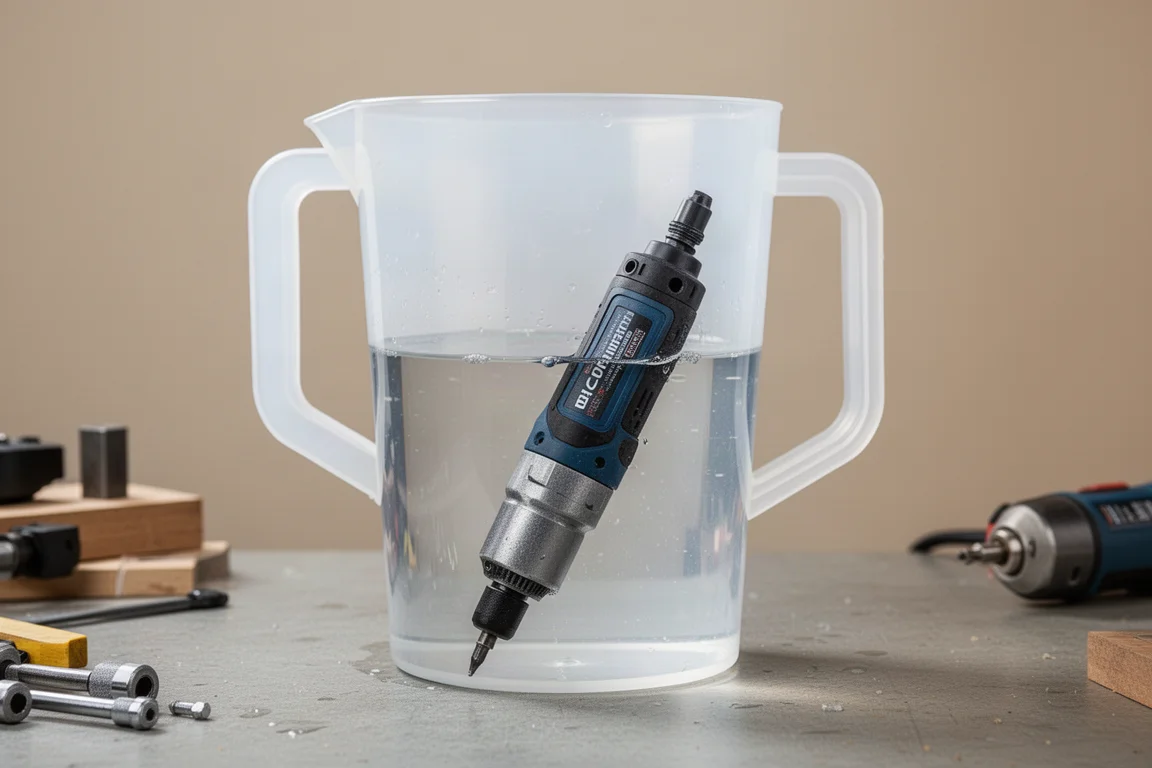
As a general buying principle for tools like these, it pays to stick with brands known for making air tools. Harbor Freight makes some decent air tools here and there, but the small right angle unit tested here is not one of them.
Overall Buying Advice
On raw performance, the air tools still lead: the Onyx 201 scored 407.2 points and the right angle air grinder 397, with Milwaukee in the middle and the budget Harbor Freight unit at the bottom on 177. But when you factor price into the ranking, the cordless Milwaukee models dominate on value, scoring 11.63 and 6.62 points respectively against 1.39 and 1.38 for the air tools. If you already run a serious compressor setup, the Onyx 201 is the pure performance pick. If you want a die grinder without hoses and compressors, the M12 Fuel 2486-20 is now genuinely usable rather than a compromise.
One more interesting finding from the battery swap: the difference between the CP 2.0 and XC 6.0 packs was dramatic at times, which suggests a rig like this could serve as a solid way to compare battery performance across brands with real numbers.
Conclusion
The dyno results tell a clear story. Air die grinders still deliver the most actual power, with the Onyx 201 posting 0.28 real horsepower and the right angle air unit close behind. The Milwaukee M12 models fall short of their implied one-third horsepower but offer honest output near a quarter horsepower, compact size, and the best value in the test by a wide margin. The budget Harbor Freight right angle grinder is the clear avoid, while the larger Harbor Freight premium unit never even needed to enter the ring.
Further reading
Related Reviews
Power Tools
Best 1-Inch Pistol Impact Wrenches: Three Heavy-Duty Options Compared
We compare three 1-inch pistol impact wrenches, from a budget-friendly Harbor Freight model to a premium Caterpillar unit, to help you choose the right one.
Power Tools
Best 3/4-Inch Impact Wrenches 2026: Five Contenders Compared
We compare five 3/4-inch impact wrenches across price and performance, from a budget Amazon option to Snap-on's most powerful model yet.
Power Tools
Best Budget Cordless Tools 2026: Walmart Finds That Punch Above Their Price
We tested five cordless tools from Walmart, including a high-torque impact wrench that trades blows with Milwaukee and a $35 duster that outperforms its price class.