Hand Tools
Best Deburring Tools for DIY Work: Milwaukee Deburring Pen vs Milrose
Two affordable deburring tools compared for everyday drilling and cutting cleanup, with real-world use on plastic pipe and fittings.
Introduction
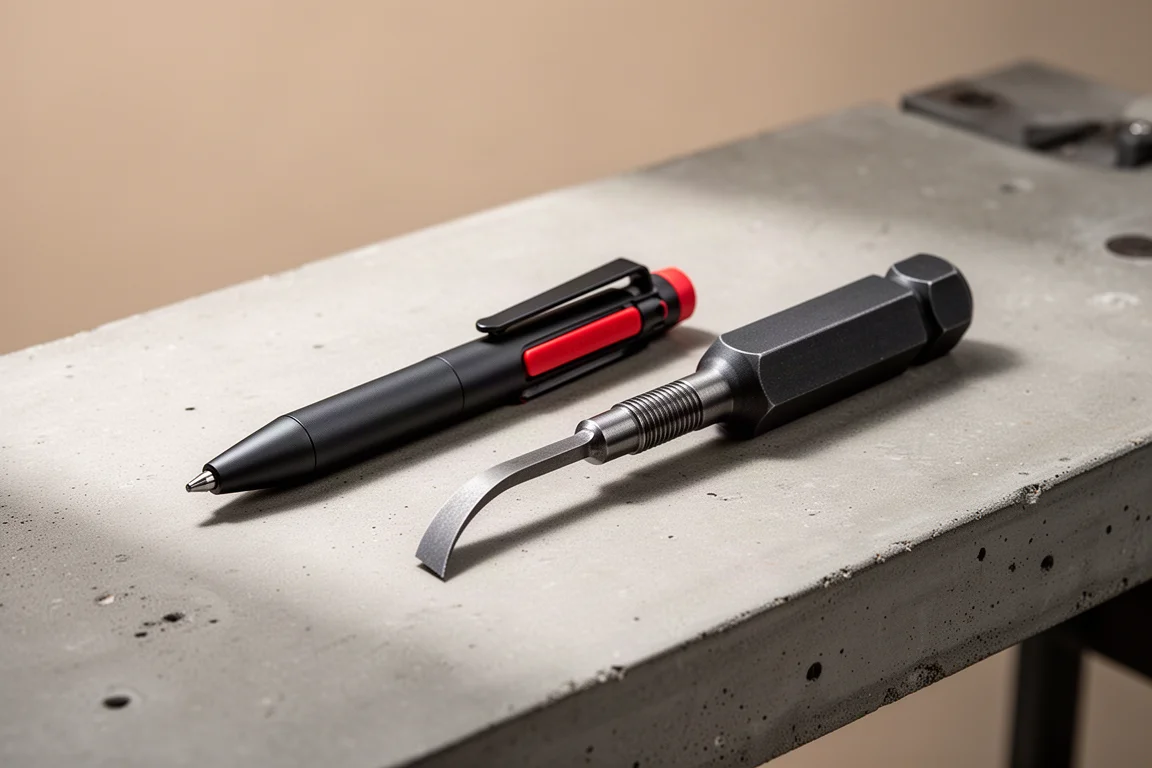
Deburring tools are one of those small, cheap workshop items that quietly save you from ragged cuts, splinters of plastic, and sharp edges left behind by drills and saws. We put two long-serving options side by side: a slim pen-style tool from Milwaukee and a traditional handled tool from Milrose. Both are inexpensive, both work well, and each suits a slightly different kind of user.
What a Deburring Tool Actually Does
A deburring tool is essentially a hardened blade mounted at the tip of a handle. You insert it into a drilled hole or run it along the edge of a cut, and it slices away the leftover material that drilling or sawing leaves behind. The result is a clean, smooth edge in just a couple of quick strokes.
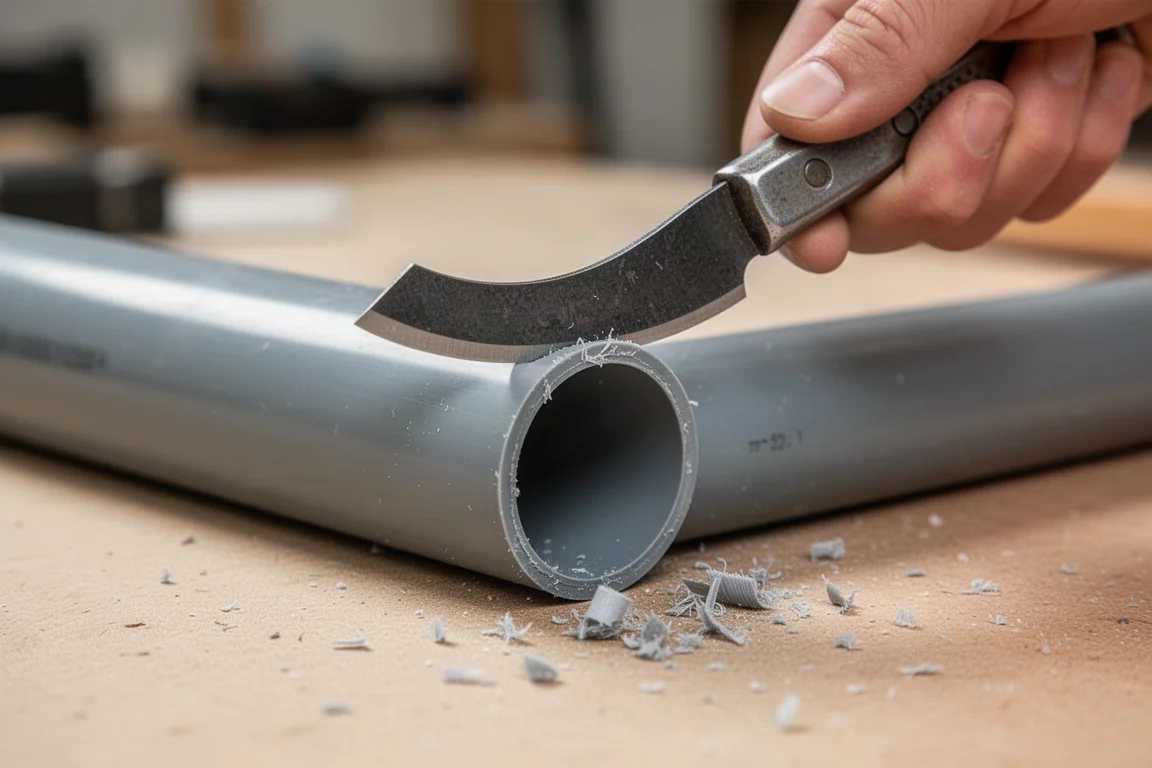
You can work the outer edge of a hole or reach inside and make a sweep around the inner wall. On softer materials like plastic pipe, a single pass produces a noticeably cleaner finish than a drill or saw cut alone, and it takes very little hand strength.
Evaluation Criteria
We focused on three practical questions: how cleanly the blade cuts inside holes and along edges, how comfortable the tool is to use for repeated passes, and whether the design makes sense to carry and store. Price and blade replacement also factored in, since deburring tools are wear items.
The Milwaukee Deburring Pen
The Milwaukee deburring pen gets its name from its format: a slim, pen-shaped body with a pocket clip that makes it genuinely handy to carry. Its biggest advantage is size. It fits into tight internal spaces where bulkier handled tools struggle, and it needs no real grip strength to use effectively. If it wears out, you simply buy another one rather than tracking down spare cutters.
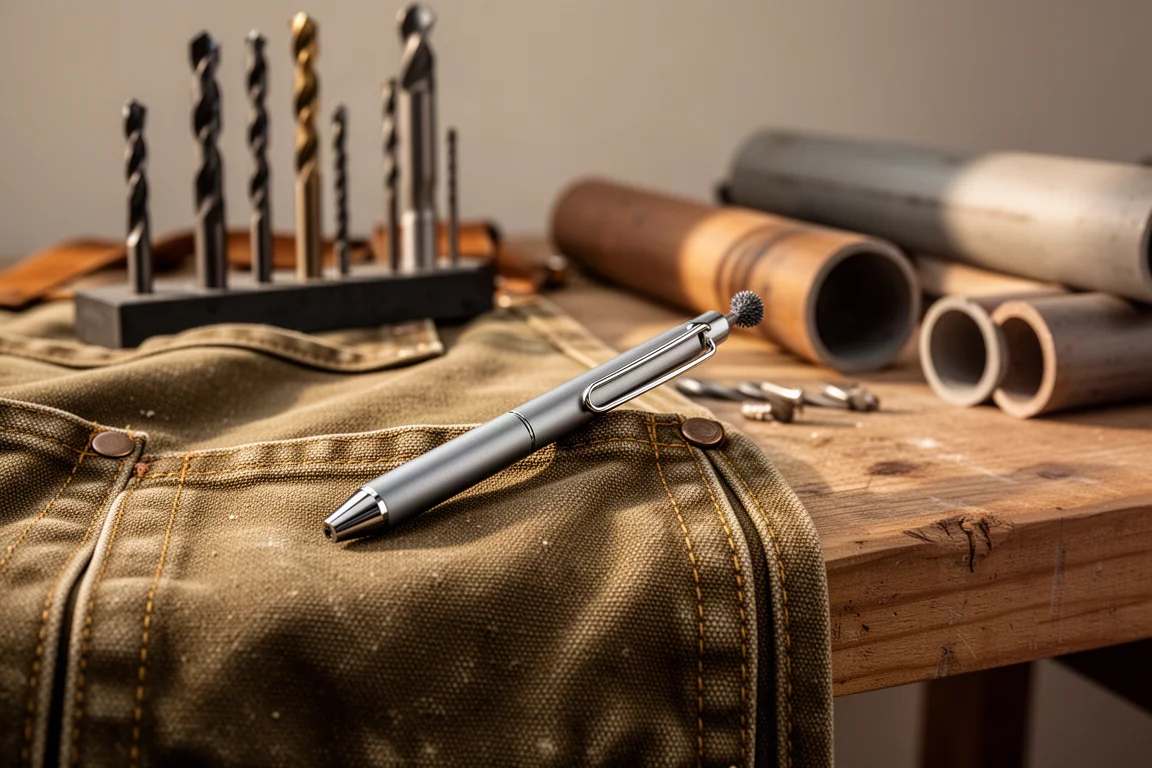
It is our current favorite of the two, mostly because it is so easy to get into confined areas. The one caveat: the blade does not appear to be user-replaceable. There is a hex fitting at the end, but even a 3 mm hex key would not turn it by hand force, so treat the whole tool as disposable.
Home Depot carries it for under $10, and Amazon lists it for around $11.
The Milrose Deburring Tool
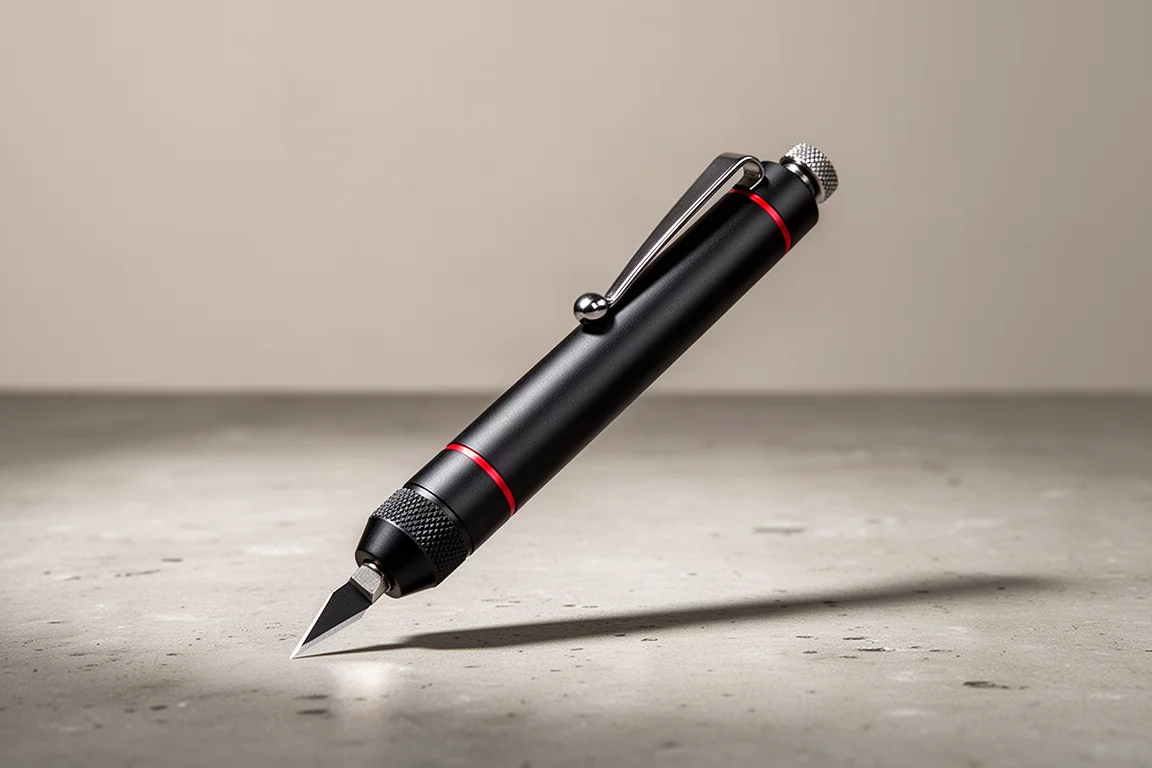
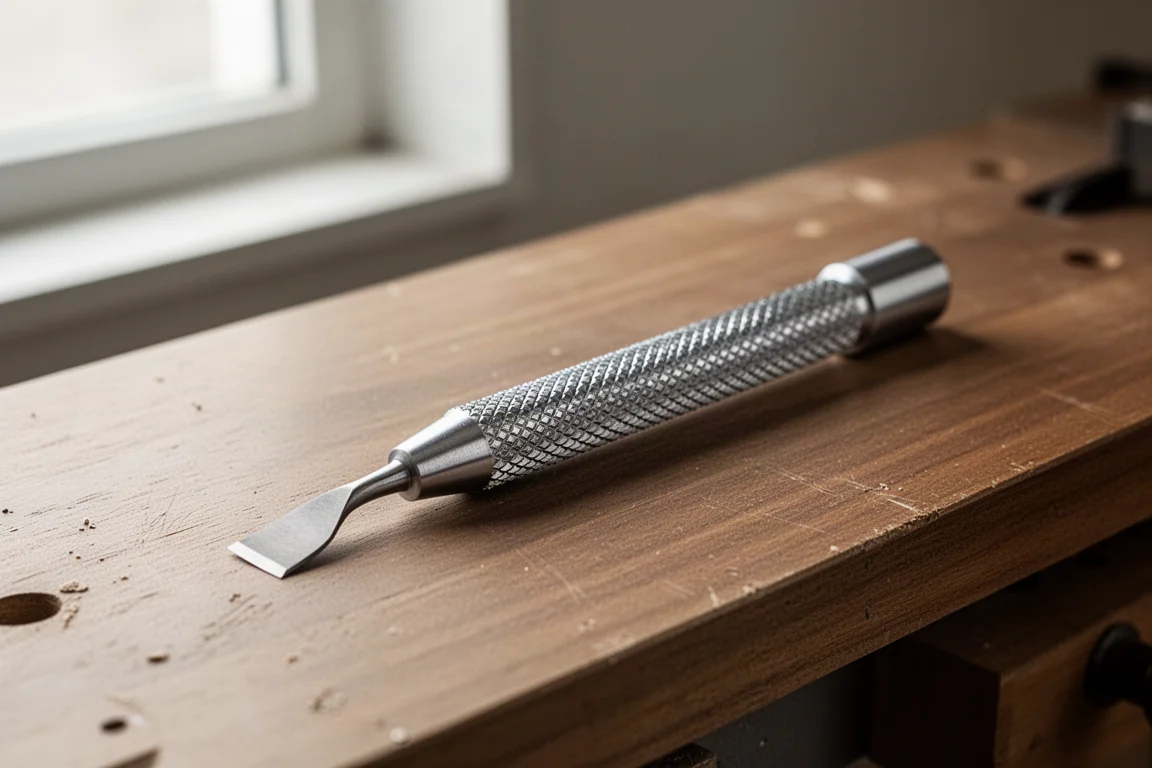
The Milrose is the more traditional design, with a longer handle and a blade that looks slightly better finished when examined up close. In use, though, the difference between it and the Milwaukee is small. Both make a clean slice around the outside of a hole and a smooth swath on the inside.
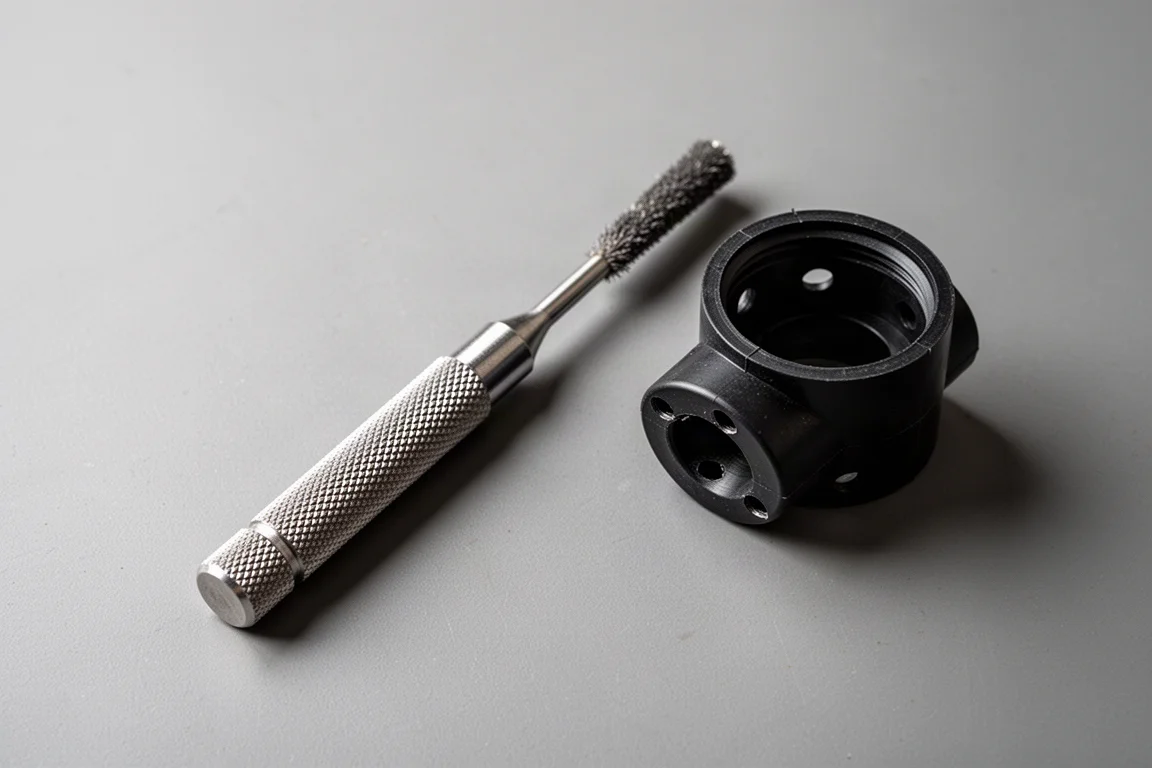
Its bulkier head is a bit tougher to work inside tighter holes compared with the slimmer Milwaukee, but for general edge cleanup it performs about the same. It has been around a long time and remains available, listed on Amazon for around $13, a little more than the Milwaukee.
How They Compare
In day-to-day use there is not a whole lot of difference in cutting quality. The Milwaukee wins on portability and access to tight spaces, while the Milrose offers a marginally nicer blade finish and a more conventional grip. Neither of these two offers replaceable cutters. If you want swappable blades and built-in spare storage, older classic designs in this category offer exactly that, and there are many specialized blade shapes for specific deburring jobs.
Home Depot has also introduced its own in-house brand version, so the entry-level shelf has more options than it used to.
Buying Advice
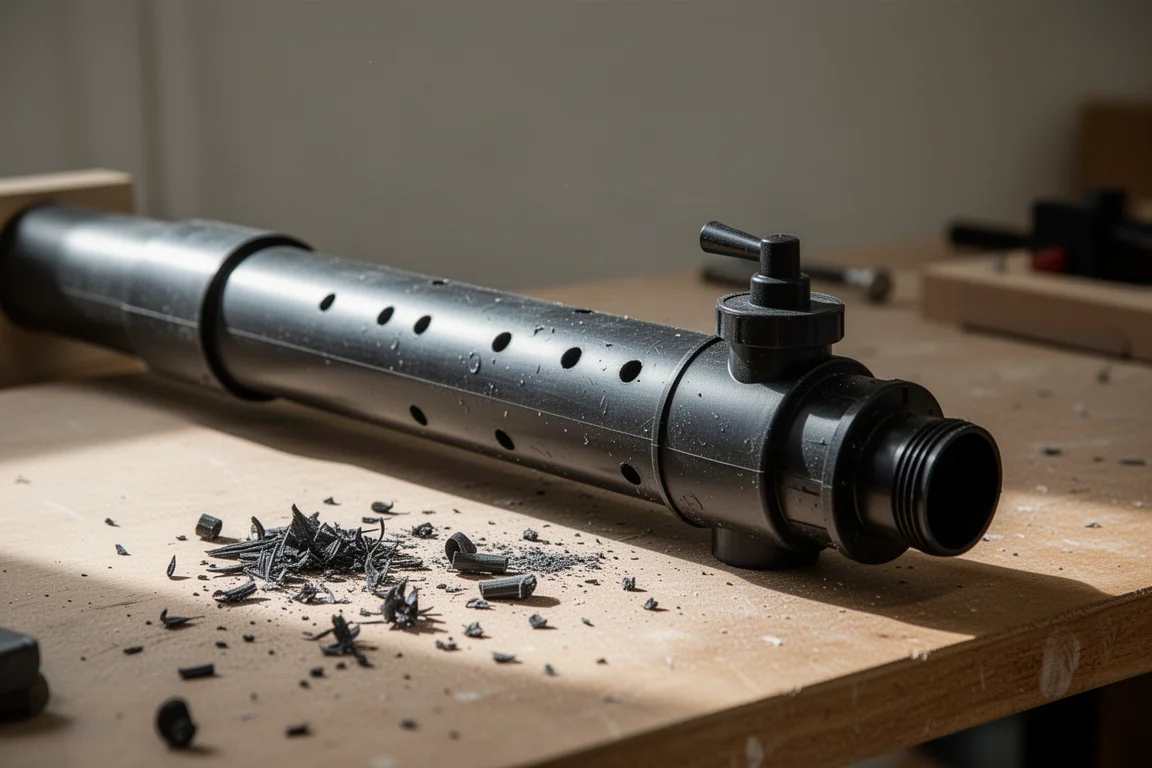
If you do a lot of drilling or cutting and want something that lives in a pocket, the Milwaukee deburring pen is the easy pick: cheap, tiny, effective, and disposable by design. If you prefer a familiar handled tool and do not mind paying a couple of dollars more, the Milrose is a solid, long-lasting choice. If you go through blades frequently, consider a classic design with replaceable cutters instead.
Conclusion
Both tools do the same basic job well, and both cost roughly the price of a sandwich. Pick the Milwaukee pen for size and convenience, or the Milrose for a traditional feel and a slightly better-finished blade. For most DIYers, either one will be a meaningful upgrade over scraping burrs by hand.
Further reading
Related Reviews
Hand Tools
Best Diagonal Cutters 2026: 16 Pliers Tested for Cutting Power and Durability
We put 16 diagonal cutters through nail, screw, drill bit, and hex key tests to find the best value picks for your toolbox.
Hand Tools
Best Hex L Key Sets 2026: Nine Sets Tested for Real-World Torque
Nine hex L key sets from budget to premium, tested for torque, fit, and durability. See which sets deliver real performance and which ones to skip.
Hand Tools
Best Locking Pliers 2026: Top Picks Tested for Grip and Durability
We tested 18 brands of 10-inch locking pliers for grip strength, jaw bite, build quality, and ease of release to find the best options for tough jobs.