Power Tools
Best Cordless Trim Nailers: DeWalt vs Milwaukee 15 and 18 Gauge
Four cordless trim nailers compared on noise, weight, power, and serviceability to help trim carpenters pick the right pair.
Introduction
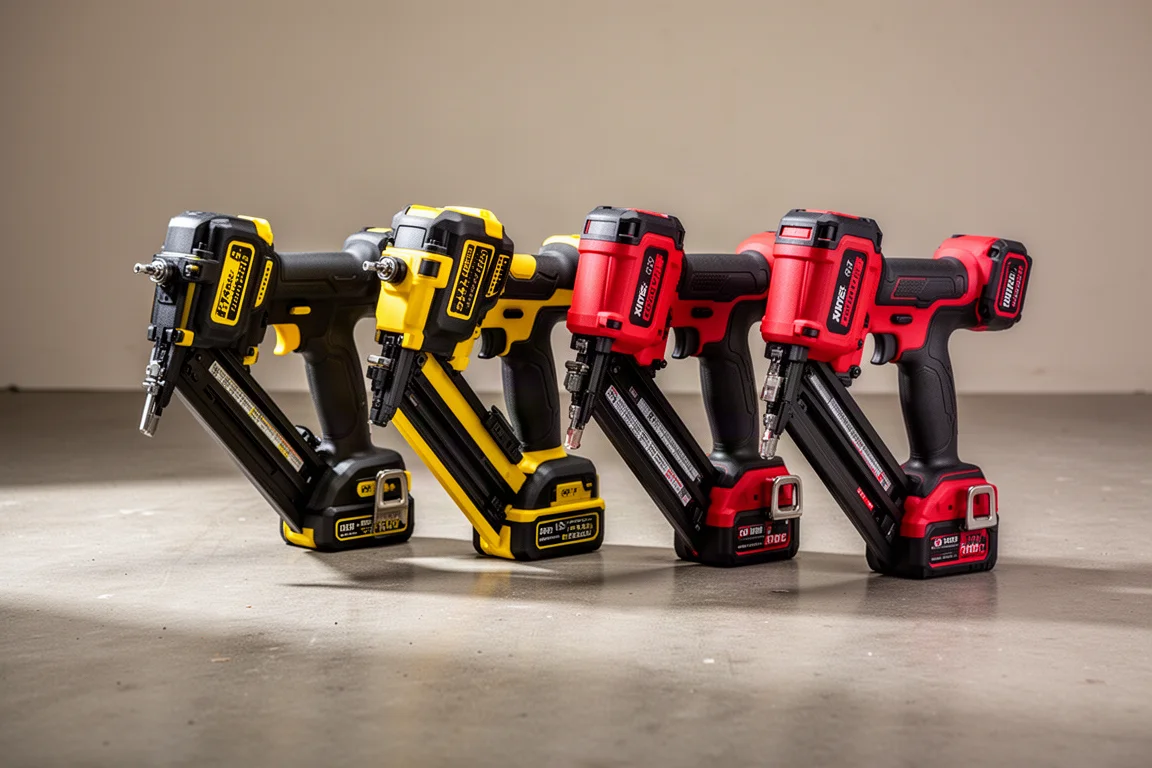
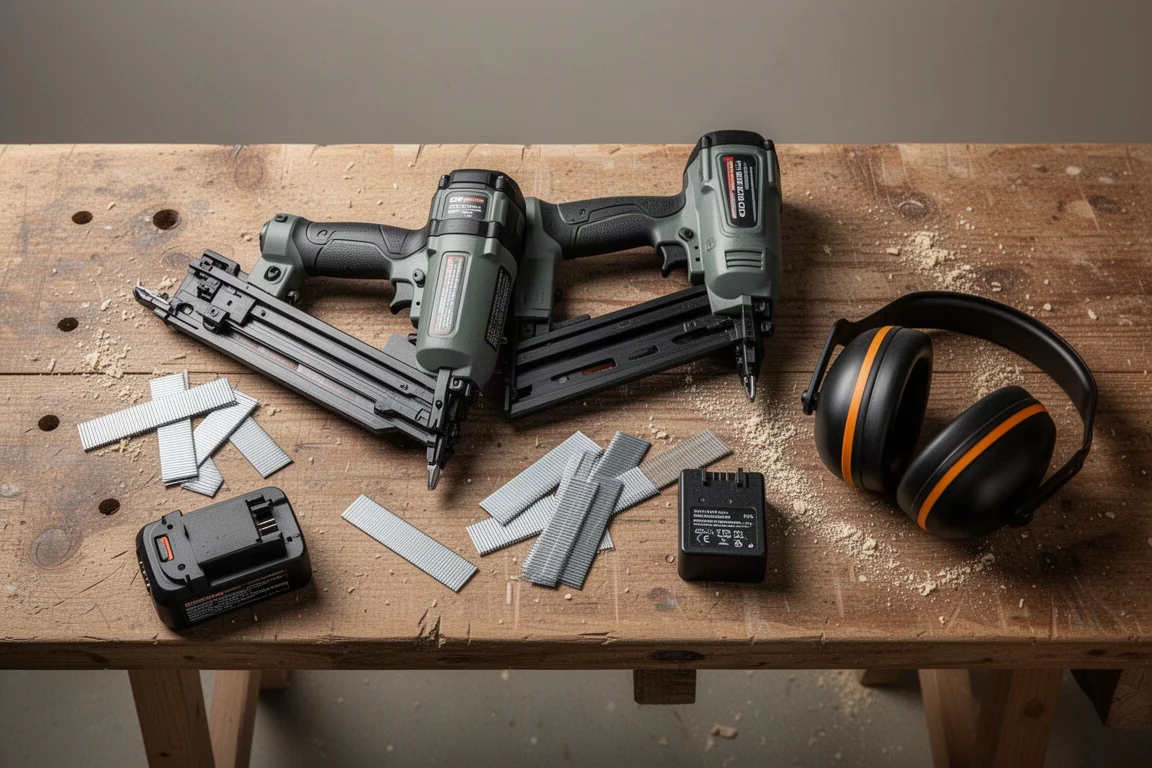
For trim carpenters, the 15-gauge and 18-gauge cordless nailers are the two tools that live on the truck every day, and the DeWalt and Milwaukee versions of each are the most common choices on job sites. This comparison looks at all four: the DeWalt 15-gauge and 18-gauge trim nailers and the Milwaukee M18 Gen 2 15-gauge and 18-gauge trim nailers, based on real trim installation work inside and outside houses, with thousands of nails driven through the DeWalt pair. The key differences come down to noise, front-end bulk, weight, serviceability, and raw power when sinking a nail through hard trim.
How They Work, and Why Noise Matters
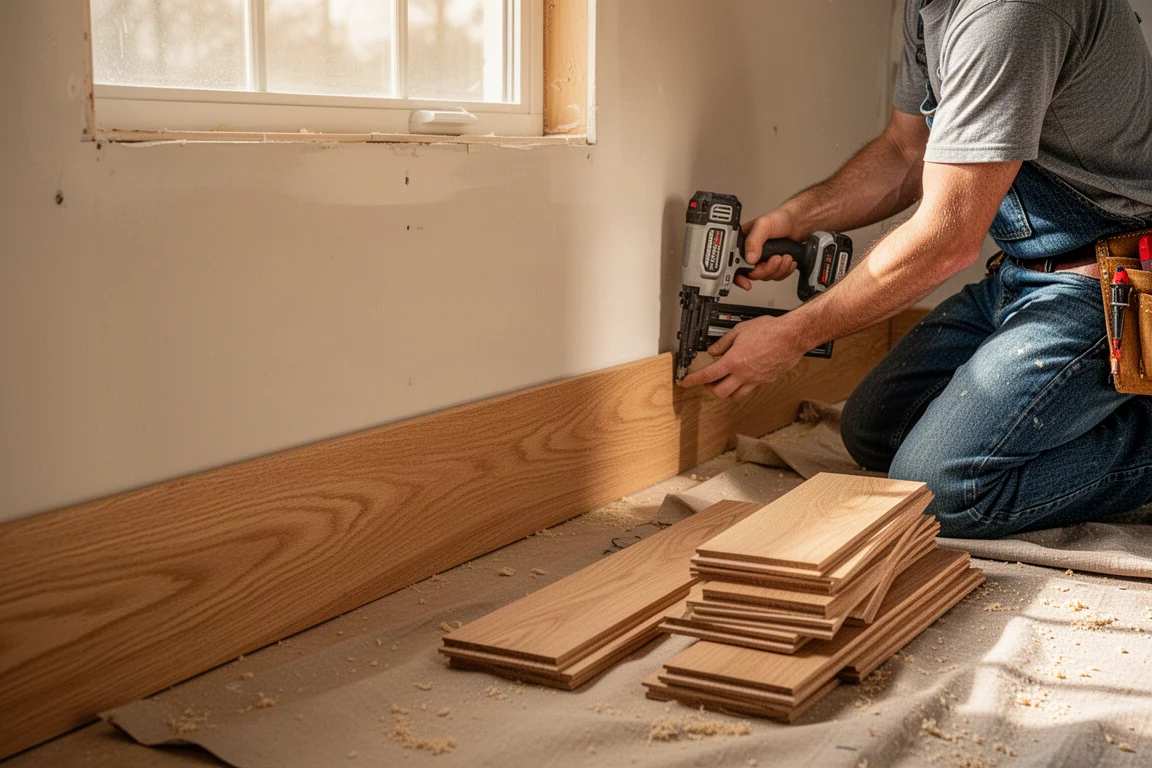
The DeWalt nailers use brushless motors that spin a flywheel-style track to engage the drive pin, which makes them noticeably loud. After firing a nail, the motor takes about 18 seconds to wind down, so when you are installing baseboard and shooting a nail every few seconds, you hear that noise the entire time. Hearing protection is recommended, especially for anyone using these tools all day.
The Milwaukee Gen 2 nailers take a different approach. The 15-gauge model uses a nitrogen air spring to drive nails, which means the tool stays silent until you pull the trigger, then goes immediately silent again. For long days of interior trim, that difference is the biggest single reason many carpenters switch platforms.
The trade-off is bulk. The Milwaukee nitrogen design adds weight and size to the front of the gun, while the DeWalt is slimmer up front with more reach and an inline magazine, where the Milwaukee magazine sits off to the side.
Weight and Balance
Measured with 5 amp-hour batteries, the weights tell a consistent story:
| Nailer | Weight with 5Ah battery |
|---|---|
| DeWalt 15-gauge | 7.2 lb |
| Milwaukee M18 Gen 2 15-gauge | 8.3 lb |
| DeWalt 18-gauge | 6.1 lb |
| Milwaukee M18 Gen 2 18-gauge | 7.3 lb |
The DeWalt pair is about a pound lighter in each size, and the slimmer front end gives it more reach into tight spots. On the 18-gauge pair the two guns have roughly the same reach, but the Milwaukee is still the more compact, bulkier-feeling tool overall.
Serviceability, Controls, and Features
A major advantage for the DeWalt pair is self-service. Every part, from the motor to the outer clamshell, is available through DeWalt’s parts website. Milwaukee does not even publish part numbers for most components of these nailers, because of the compressed air mechanisms, so they expect you to send the tool in for service.
On controls, the DeWalt nailers have no on/off switch: drop the battery on and they are ready, with a single or bump fire selector. Bump fire mode is the practical default since you can single fire in bump mode, but not the reverse. There is also a trigger safety lockout button, dual work lights, a reversible belt hook, and extra tip storage on both sizes. The 15-gauge adds a 16-inch-on-center guide for spacing marks.
Depth of drive is tool-less on both DeWalt guns, though the button adjustment works acceptably rather than impressively. The 15-gauge has a nicely weighted pusher you can grab from both sides, and it locks down when pulled fully back.
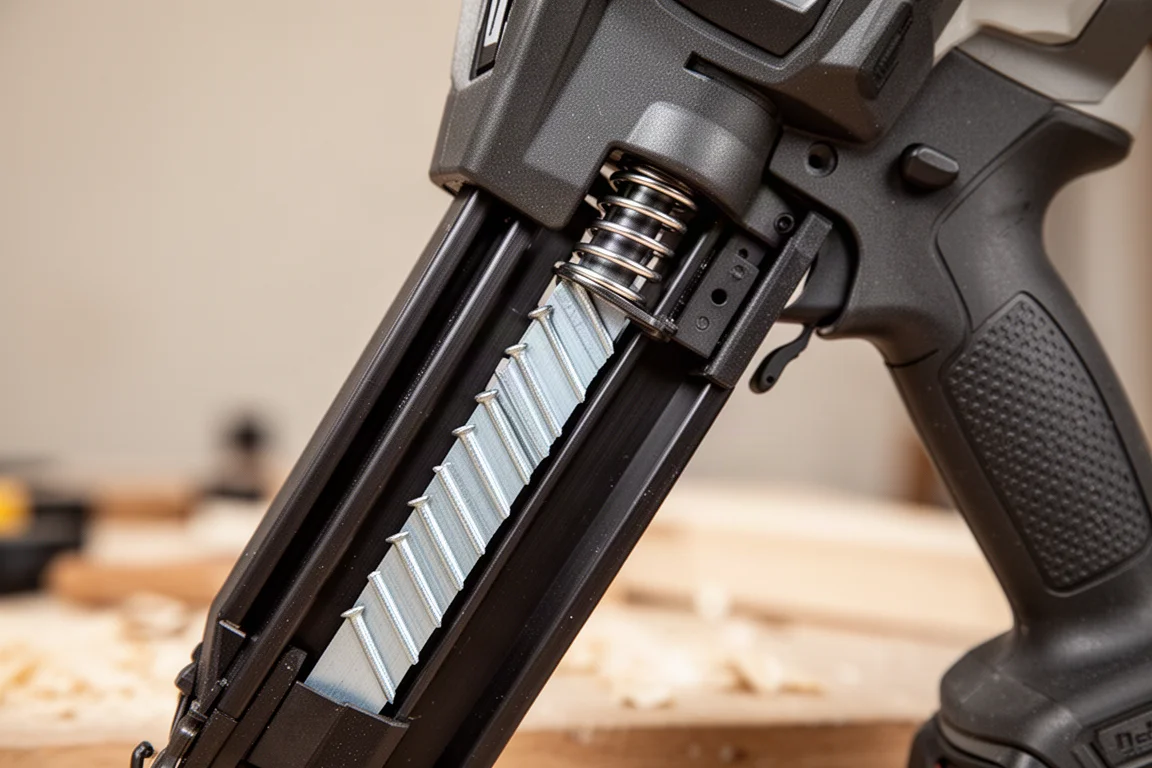
Jam handling is well thought out. Both DeWalt sizes rarely jam, but when one does, the tool-less jam clearance lets you pop the hood and pull out the stuck nail after removing nails and battery. A stall release lever frees a stuck drive pin or striker. The 15-gauge even includes a small pencil sharpener built in.
Power Test: Sinking Nails Through Trim and Drywall
A practical test drove two-inch 18-gauge nails through oak stair tread over drywall, and two-and-a-half-inch 15-gauge nails through the same buildup. Note the fastener ranges: the 18-gauge DeWalt accepts 5/8 to 2-1/8 inch nails, and the 15-gauge accepts 1-1/4 to 2-1/5 inch nails.
One common misconception with the DeWalt flywheel design is that you need to let the motor rev up before each shot. In bump fire mode the first nail needs a brief rev-up, but after that you can tap tap tap without waiting.
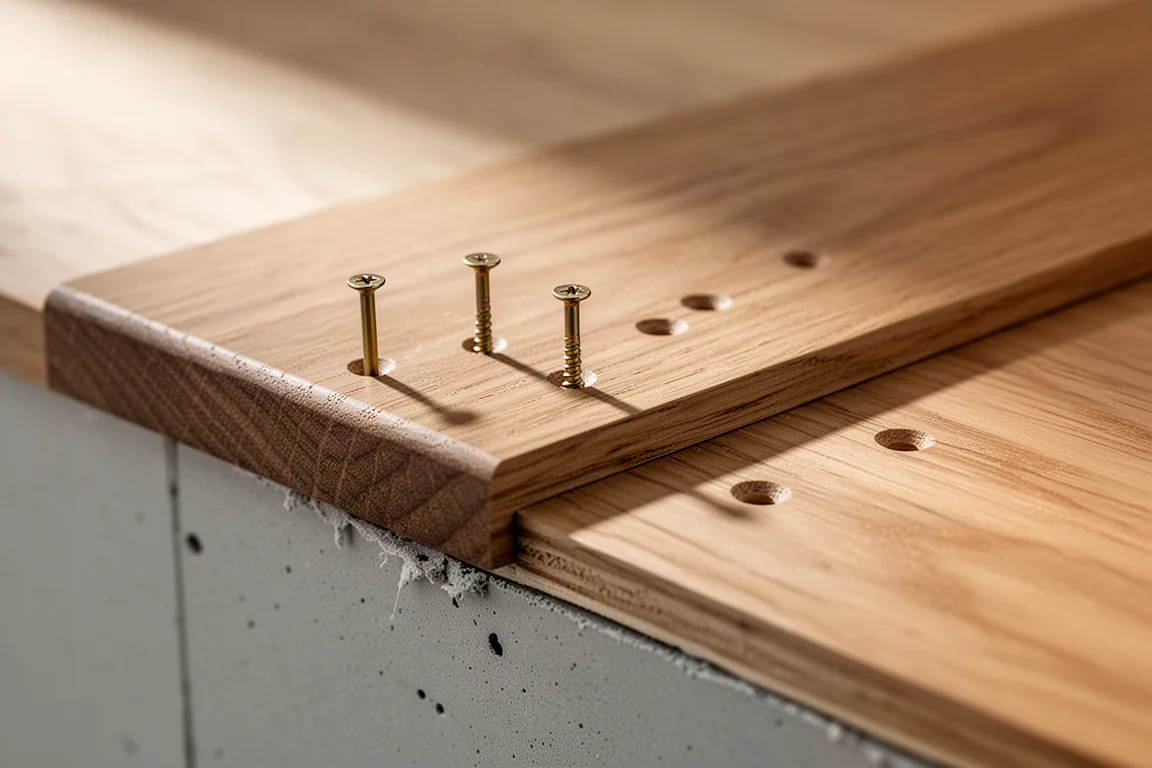
In the hardest test, shooting while the material bounced on the floor, the Milwaukee nailers kept sinking nails without effort, while the DeWalt guns needed careful straight-on contact and the right angle. The first shot from a fresh battery can leave a nail slightly proud, too. In real-world trim work, though, the DeWalt pair has never had a problem sinking nails, and the Milwaukee pair is simply more forgiving.
Buying Advice
Both platforms run all day on a single 5 amp-hour battery, and battery adapters let you run Milwaukee nailers off DeWalt batteries if you want quiet performance without switching platforms. Here is how each model shakes out.
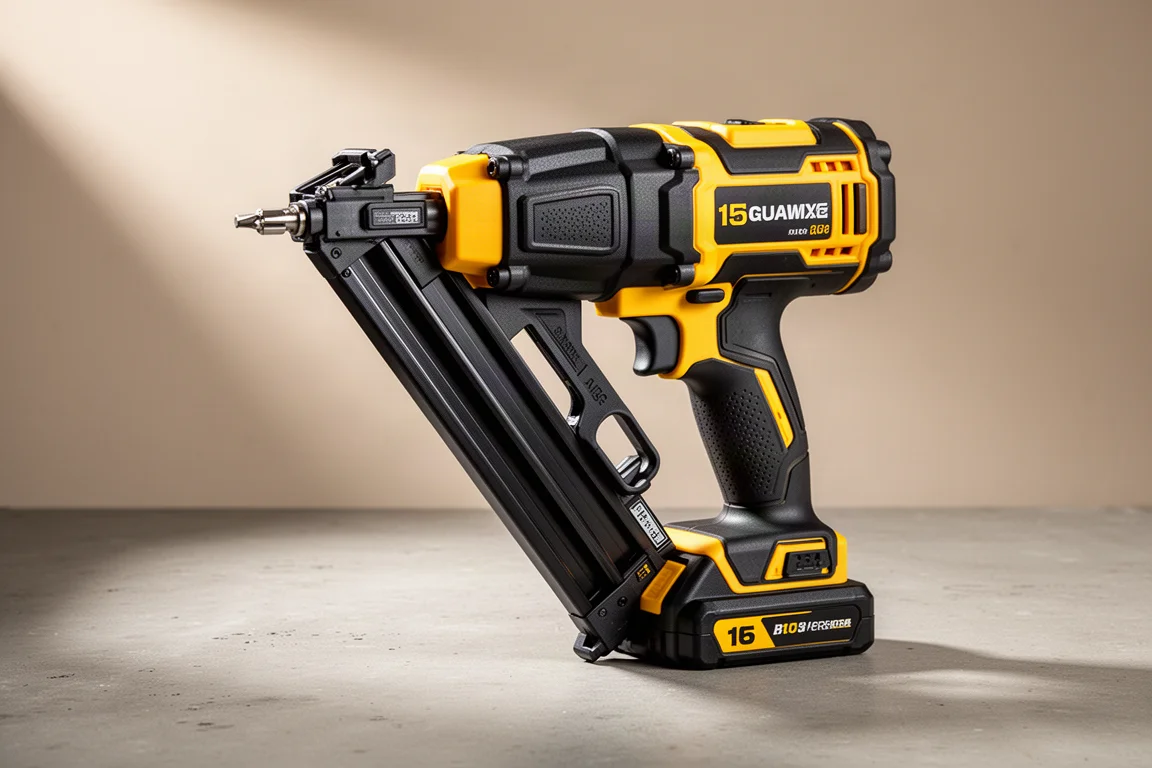
DeWalt 15-Gauge Trim Nailer
The slimmer front end, inline magazine, and full self-service availability make this a dependable framing-out tool for trim work, though the flywheel noise is constant during use and it weighs 7.2 pounds with a 5Ah battery.
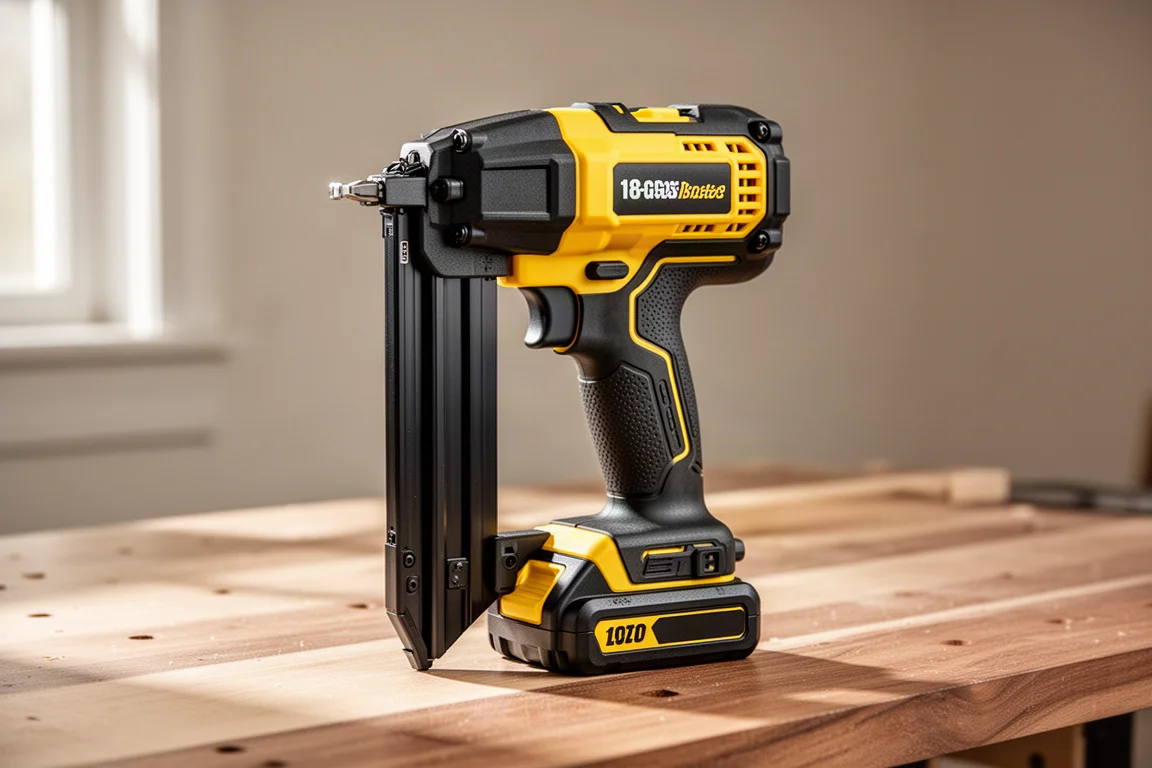
DeWalt 18-Gauge Trim Nailer
At 6.1 pounds with a 5Ah battery this is the lightest of the four, with the same tool-less jam clearance, tip storage, and selectable bump fire. It occasionally leaves the first nail slightly proud until the motor warms up.
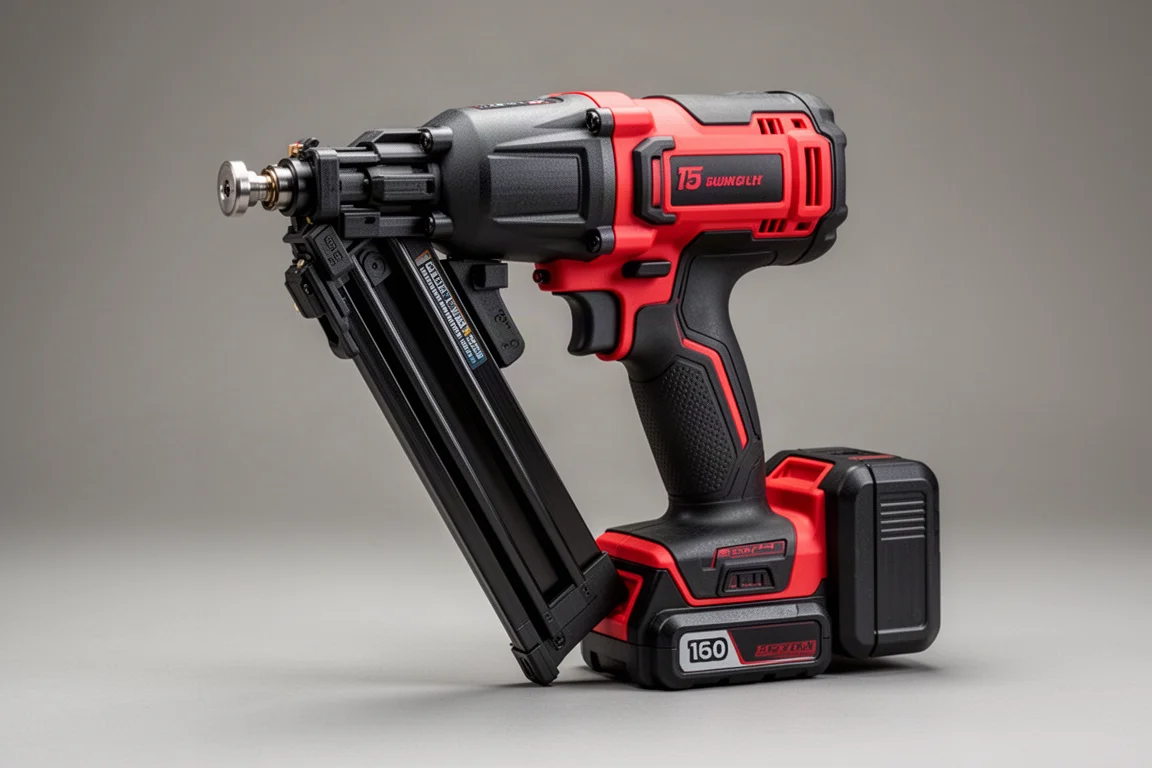
Milwaukee M18 Gen 2 15-Gauge Finish Nailer
The nitrogen air spring makes this the quiet choice in the larger gauge, and it proved the most forgiving when sinking long nails through oak trim and drywall. The cost is 8.3 pounds with a 5Ah battery and limited user-serviceable parts.
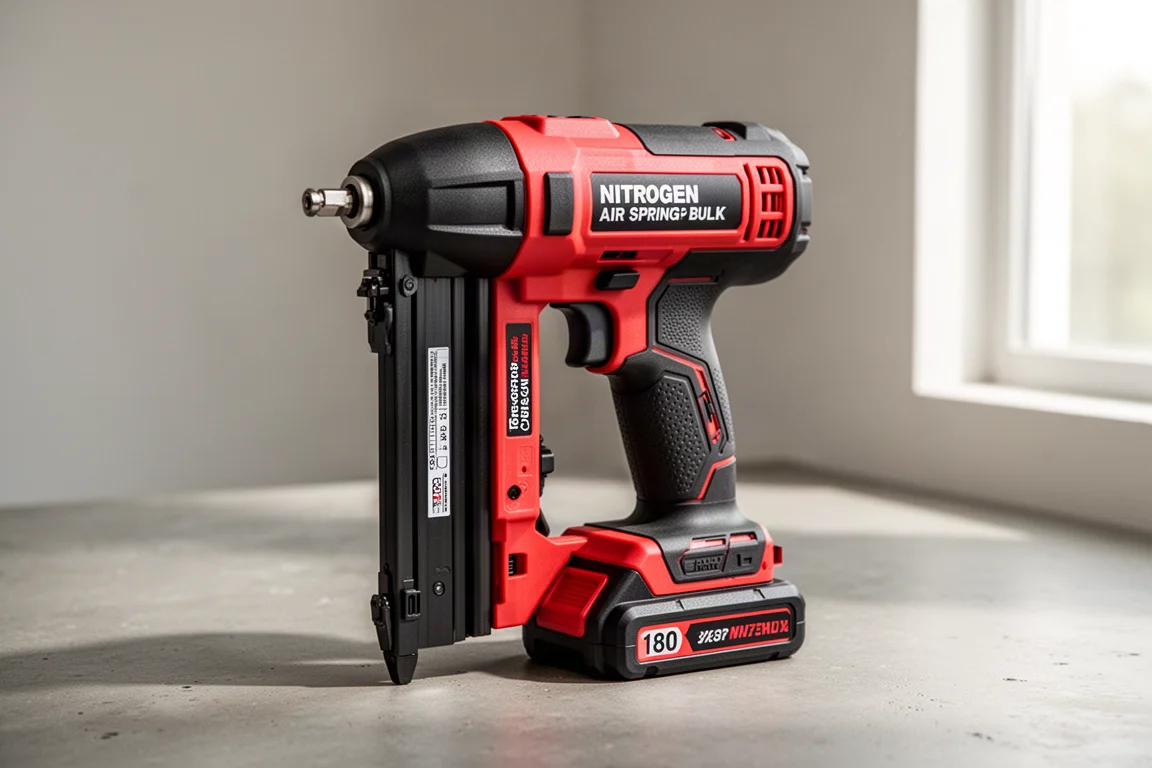
Milwaukee M18 Gen 2 18-Gauge Trim Nailer
Weighing 7.3 pounds with a 5Ah battery, this quieter 18-gauge option leaves fewer tip marks in soft pine than the DeWalt, which is why many trim carpenters carry it alongside the larger Milwaukee. It is bulkier up front than the lighter DeWalt equivalent.
Which Should You Buy?
If noise is your top priority, the Milwaukee Gen 2 pair is the easier way to get through a day of installation, and they proved slightly more forgiving in the hardest power test. If you value lighter weight, a slimmer front end with more reach, and the ability to service the tool yourself with published parts, the DeWalt pair remains a solid choice that has proven reliable over thousands of nails.
Conclusion
The DeWalt 15 and 18 gauge nailers are lighter, slimmer, and fully self-serviceable, while the Milwaukee Gen 2 nailers are quiet, forgiving, and easier on the ears during long trim days. Matching the platform to your priorities, rather than to your existing batteries alone, is the smartest way to choose between these four capable trim nailers.
Further reading
Related Reviews
Power Tools
Best 1-Inch Pistol Impact Wrenches: Three Heavy-Duty Options Compared
We compare three 1-inch pistol impact wrenches, from a budget-friendly Harbor Freight model to a premium Caterpillar unit, to help you choose the right one.
Power Tools
Best 3/4-Inch Impact Wrenches 2026: Five Contenders Compared
We compare five 3/4-inch impact wrenches across price and performance, from a budget Amazon option to Snap-on's most powerful model yet.
Power Tools
Best Budget Cordless Tools 2026: Walmart Finds That Punch Above Their Price
We tested five cordless tools from Walmart, including a high-torque impact wrench that trades blows with Milwaukee and a $35 duster that outperforms its price class.