Power Tools
Milwaukee M18 Fuel vs DeWalt 20V MAX XR: Cordless Hammer Drill Comparison
Two pro-grade 1/2-inch hammer drills put through fastening, drilling, and concrete work to see where each one earns its place in your kit.
Introduction
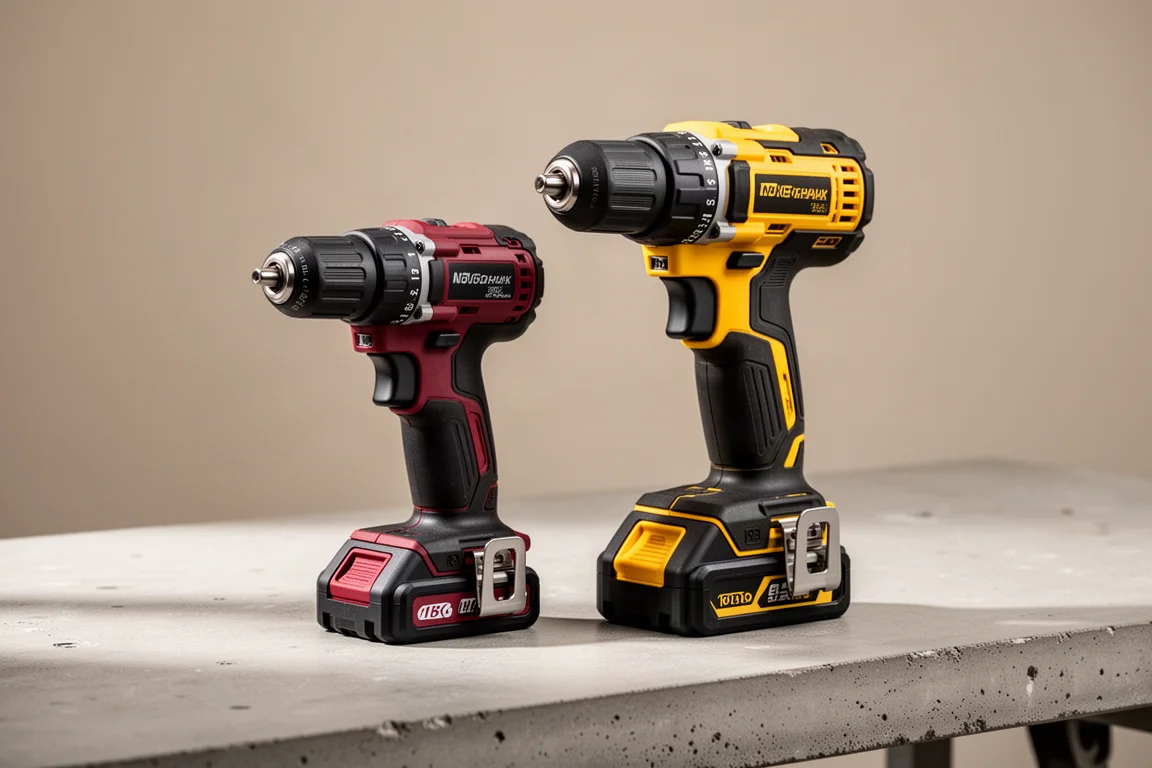
If you are shopping for a serious 1/2-inch cordless hammer drill, two models keep coming up: the Milwaukee M18 Fuel 1/2” Hammer Drill/Driver and the DeWalt 20V MAX XR Brushless Cordless 1/2” Hammer Drill/Driver. Both were put through a side-by-side battery of real-world tasks, from driving drywall screws to boring large holes in hardwood and drilling concrete.
The short version: the Milwaukee is the lighter, more wieldy option, while the DeWalt brings more brute force for heavy-duty and larger-diameter work. Here is how the numbers break down.
Milwaukee M18 Fuel 1/2” Hammer Drill/Driver
The Milwaukee M18 Fuel 1/2” Hammer Drill/Driver weighs in at 3.2 lb and was released in 2022 with a kit price of $299. That lighter form factor proved a real advantage throughout fastening tests. In the wood screw driving tests, the Milwaukee kept pace step for step, and its lighter weight made the work noticeably easier to control over long runs of fasteners.
One observed trade-off: in a bit-wobble comparison, the Milwaukee showed a slightly wider orbit than its competitor. It is minimal, but if chuck-to-bit concentricity matters for precision boring, it is worth noting.
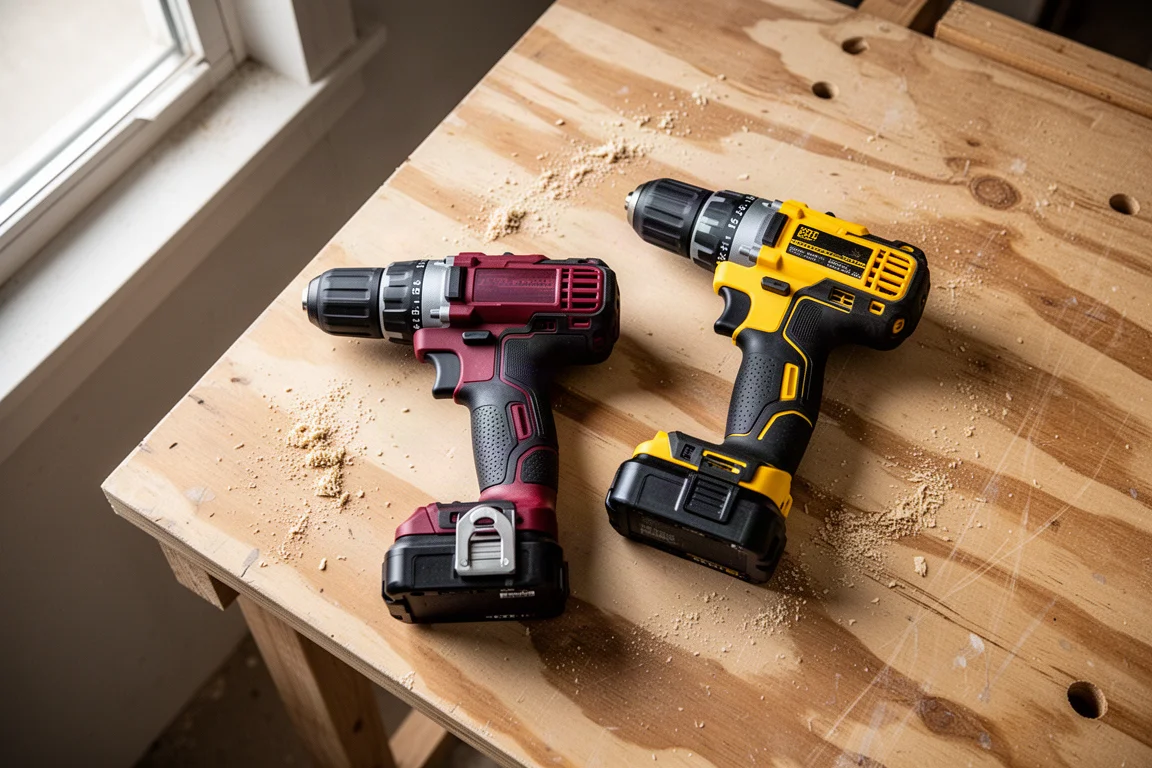
In stall tests the Milwaukee was impressively quick, completing the task in roughly four seconds in speed one, and it consistently showed strong runtime, holding a high battery charge through repeated heavy tests despite running a smaller amp-hour pack than its rival.
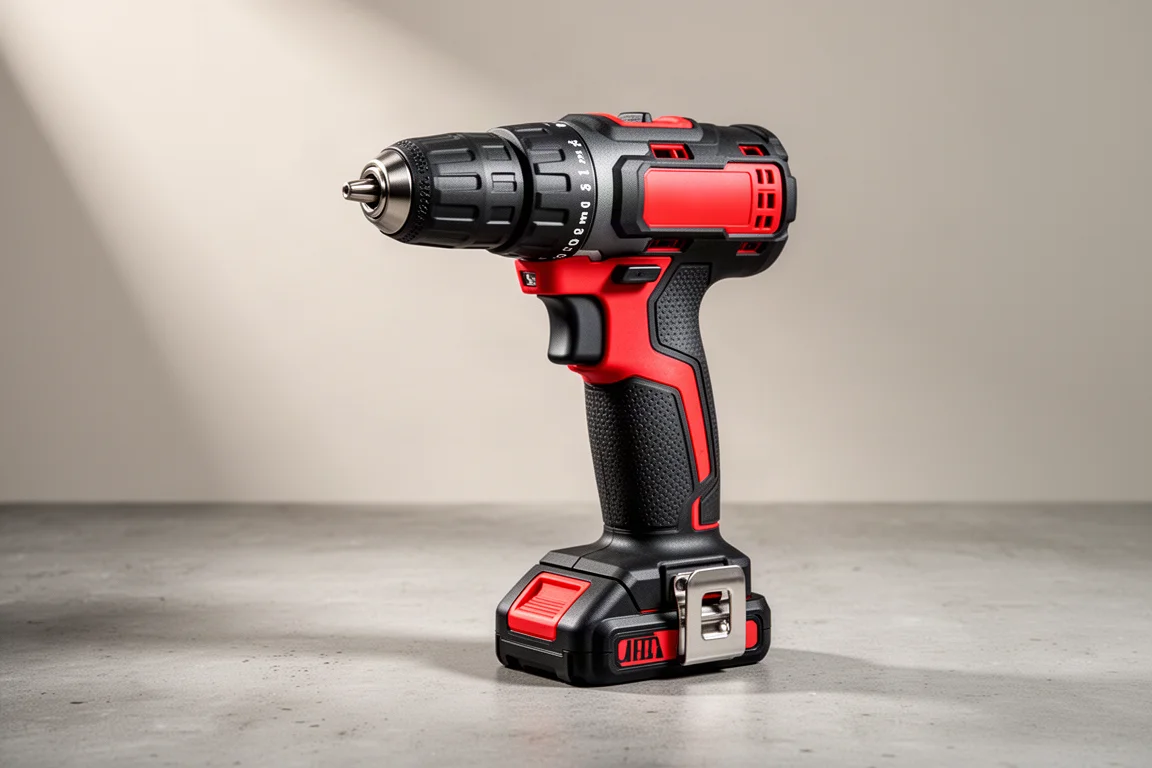
DeWalt 20V MAX XR Brushless Cordless 1/2” Hammer Drill/Driver
The DeWalt 20V MAX XR Brushless Cordless 1/2” Hammer Drill/Driver comes in at 4.1 lb and is new for 2024 with a kit price of $349. The kit includes one XR Power Pack 8 Amp Hour battery that delivers 1,530 unit watts out at a max of 2,000 RPM. That battery technology is a big part of the story.
At 1.8 lb heavier, the DeWalt is less wieldy for smaller fastening tasks, but it had zero problem completing every fastening test the Milwaukee did. When the work got bigger, the gap widened in DeWalt’s favor.

Where Each Drill Wins
For everyday fastening, the Milwaukee’s lighter weight and easy handling make it the more pleasant tool to use all day. Its anti-rotation system also engaged predictably during hard-wood boring tests, though the user still had to stay square to the workpiece.
For heavy-duty tasks, the DeWalt pulled ahead. In large-diameter hole boring tests, the DeWalt completed the job in 1 minute 45 seconds compared to roughly 2 minutes for the Milwaukee. The difference came down to the DeWalt’s 3-speed transmission combined with that high-output 8 Ah battery. It delivered more usable power in hammer mode as well.
Heavy-Duty Torque: Lag Screws and Timber
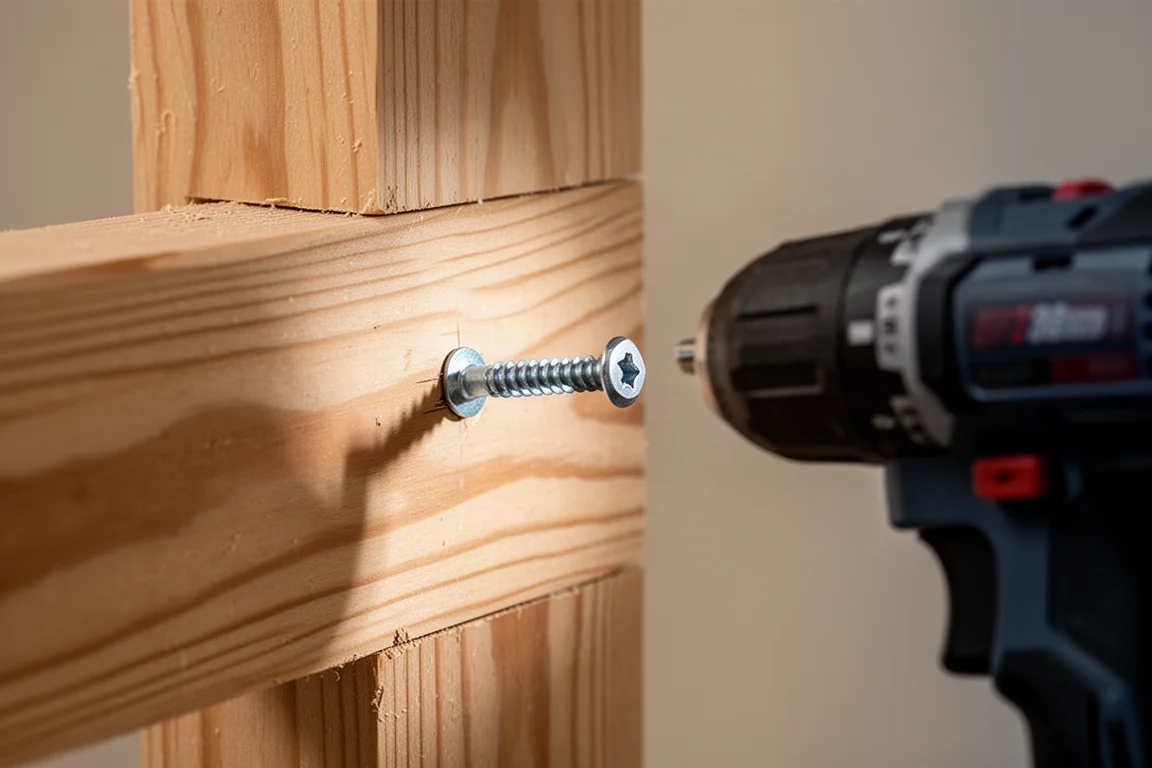
In the half-inch by 10-inch power lag test, the Milwaukee actually drove the fastener deeper in speed three, showing impressive torque despite its smaller battery. Re-inserting the tool for one more pull only confirmed the result.
But the big-picture takeaway from these tests was form factor: the Milwaukee’s lighter body made prolonged high-torque driving easier to manage, while the DeWalt simply out-powered it on the biggest fasteners, staying level with the Milwaukee on deep driving thanks to raw output.
Concrete Drilling and Heat Management
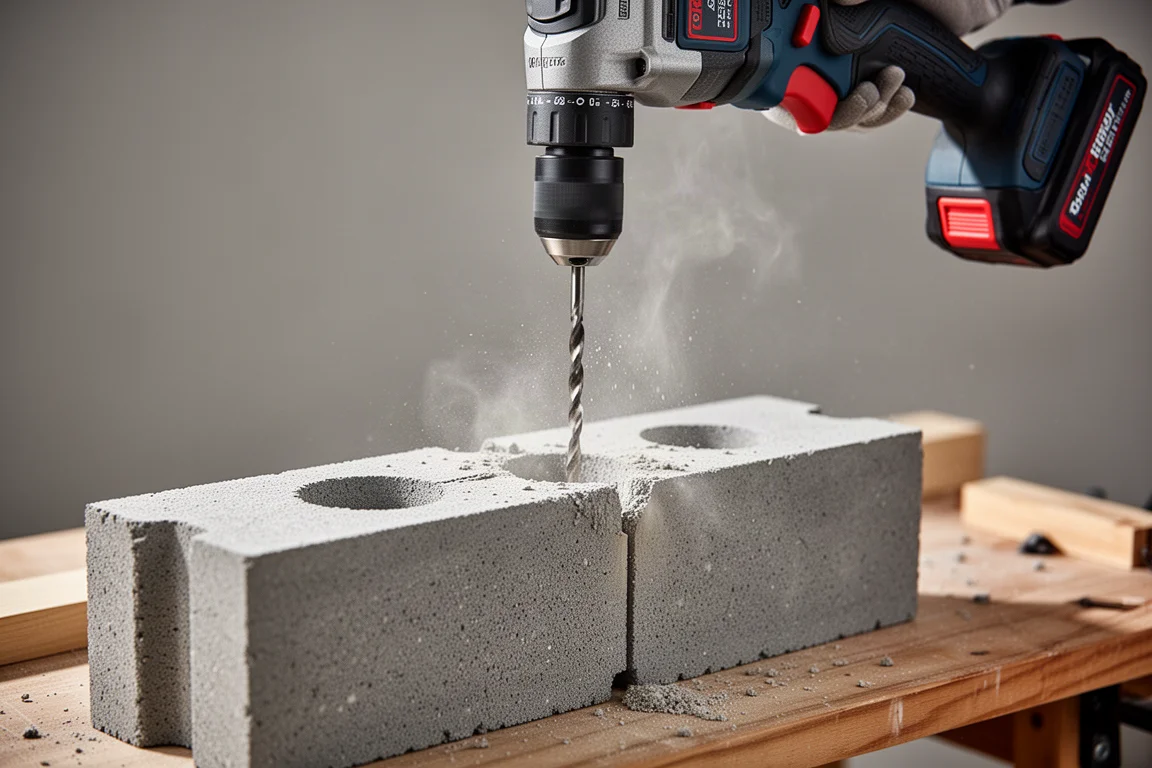
In side-by-side concrete drilling tests with hammer mode engaged, both drills handled the work, but the DeWalt with the Power Pack battery genuinely jumped ahead on the larger-diameter holes. One quirk observed on the DeWalt: under heavy vibration, the tool seemed to momentarily jump out of gear, and releasing and re-depressing the trigger restored power.
Temperature readings told an interesting story. Near the motor the DeWalt measured around 109 degrees at the hottest point, while at the battery connection the tool read 89 degrees and the battery itself sat in the low 80s. The tool ran hot while the battery stayed remarkably cool. That matters over time: a cooler-running battery should deliver more charge cycles and last longer, and the newer battery design runs more efficiently than older style packs.
Which One Should You Buy?
If you want the lighter, more wieldy drill for general fastening and daily use, the Milwaukee M18 Fuel is the easier tool to live with, and its stall recovery and torque are genuinely impressive for its size. If your work involves larger holes, heavy lag screws, concrete, and long runtime, the DeWalt’s 3-speed transmission and 8 Ah Power Pack give it the edge where power matters most.
Conclusion
Both are excellent hammer drills, and the scoreboard was closer than the raw wins suggest. The Milwaukee wins on wieldability and weight; the DeWalt wins on raw power, large-hole speed, and battery technology. Match the drill to the work you actually do most, and either choice will hold up well.
Further reading
Related Reviews
Power Tools
Best 1-Inch Pistol Impact Wrenches: Three Heavy-Duty Options Compared
We compare three 1-inch pistol impact wrenches, from a budget-friendly Harbor Freight model to a premium Caterpillar unit, to help you choose the right one.
Power Tools
Best 3/4-Inch Impact Wrenches 2026: Five Contenders Compared
We compare five 3/4-inch impact wrenches across price and performance, from a budget Amazon option to Snap-on's most powerful model yet.
Power Tools
Best Budget Cordless Tools 2026: Walmart Finds That Punch Above Their Price
We tested five cordless tools from Walmart, including a high-torque impact wrench that trades blows with Milwaukee and a $35 duster that outperforms its price class.