Power Tools
Best Cordless Framing Nailers Compared: Six Battery-Powered Nailers Tested
Six cordless framing nailers from Craftsman, Ridgid, DeWalt, Metabo HPT, Milwaukee, and Paslode go head to head on consistency, power, cold weather, and battery drain.
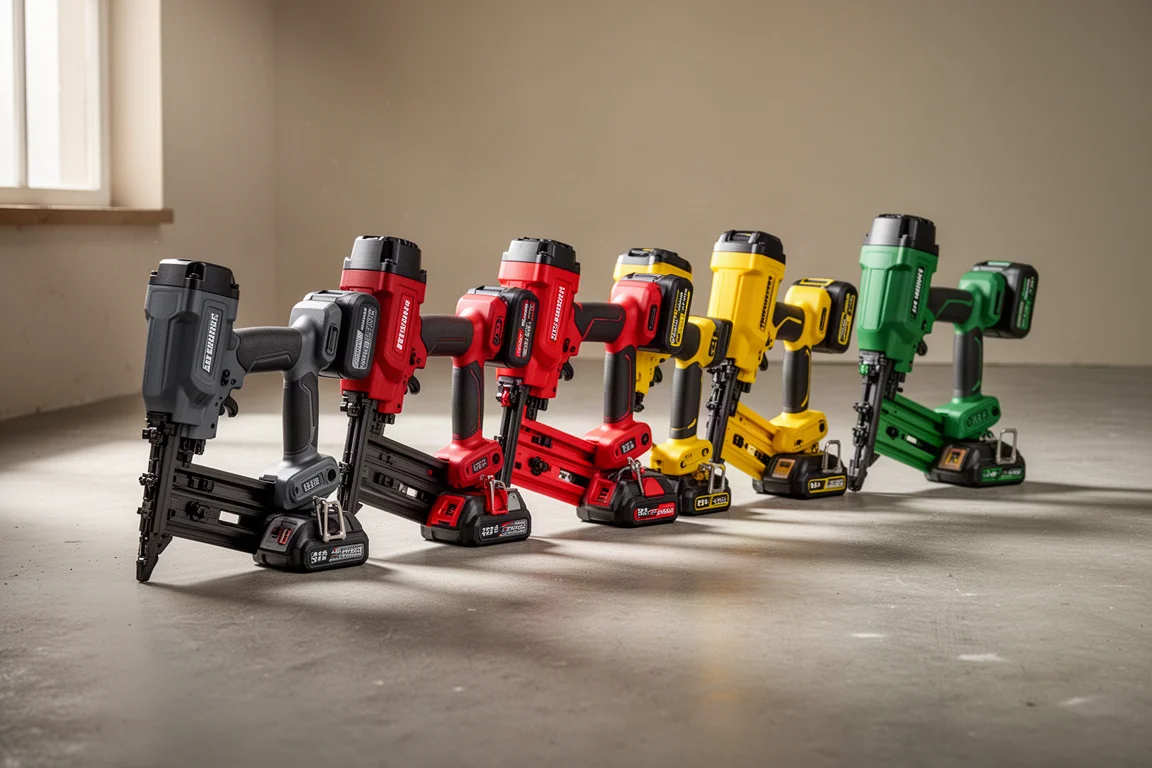
Introduction
Battery-powered framing nailers have come a long way, and ditching the air hose is one of the more satisfying upgrades you can make on a framing job. The catch is that not all cordless nailers deliver the same consistency, power, or cold-weather reliability. This comparison puts six cordless framing nailers through the same series of tests: nail depth consistency, power into oak and composite lumber, performance in freezing temperatures, and whether performance drops as the battery drains.
All six tools were tested with 3-1/4 inch by 0.131 hot dip galvanized smooth shank nails. The Craftsman, DeWalt, Ridgid, and Milwaukee were run on 4 amp hour batteries, while the Metabo HPT used its supplied 3 amp hour pack.
How We Compared the Nailers
Before diving in, it helps to understand the angle difference between the magazines. A 21-degree strip holds 25 nails with a full head, while a 30-degree strip holds 37 clipped-head nails, so 30-degree nailers typically hold more nails in the same magazine length. Tests covered consistency with a fixed 10 lb downward force, drive speed for 25 nails, hard-material power, cold temperature behavior, and performance on partially drained batteries.
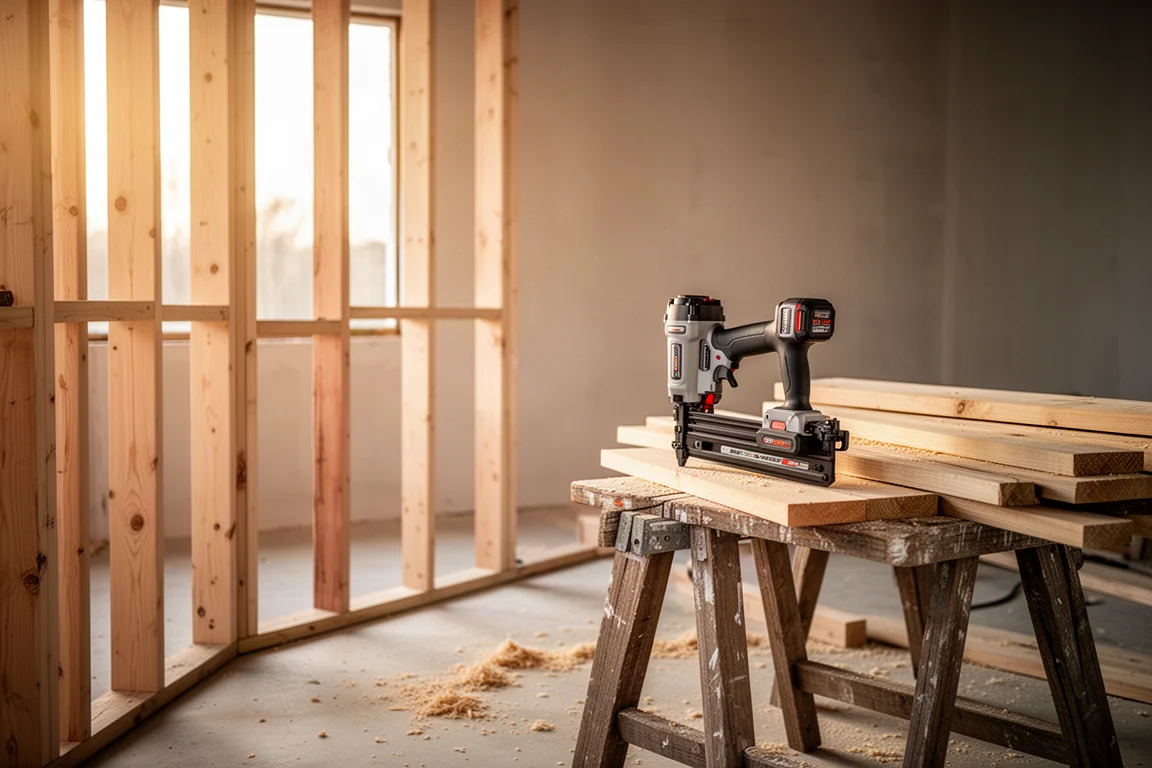
Craftsman 21-Degree Cordless Framing Nailer
At $329 for the bare tool, the Craftsman is a 21-degree brushless nailer with tool-free depth adjustment, an LED jam indicator, a rafter hook, on-board tool storage, dry fire lockout, and a 2 to 3-1/4 inch nail range. It holds up to 49 nails and weighs 10.6 lb with a 4 amp hour battery and nails, making in Mexico.
Consistency was mixed, with four perfect nails but one too high and five too low, plus noticeable recoil that lifted the tool off the board. It is also the loudest here at 108.5 dB and needs just over half a second to spin up before each nail, which slowed it to 20.1 seconds for 25 nails. It struggled on oak, could not fully bury nail heads, and repeatedly jammed in composite lumber. It also performed poorly in cold temperatures. The one bright spot: it is compact at 13-3/4 inches tall, fitting easily between studs.
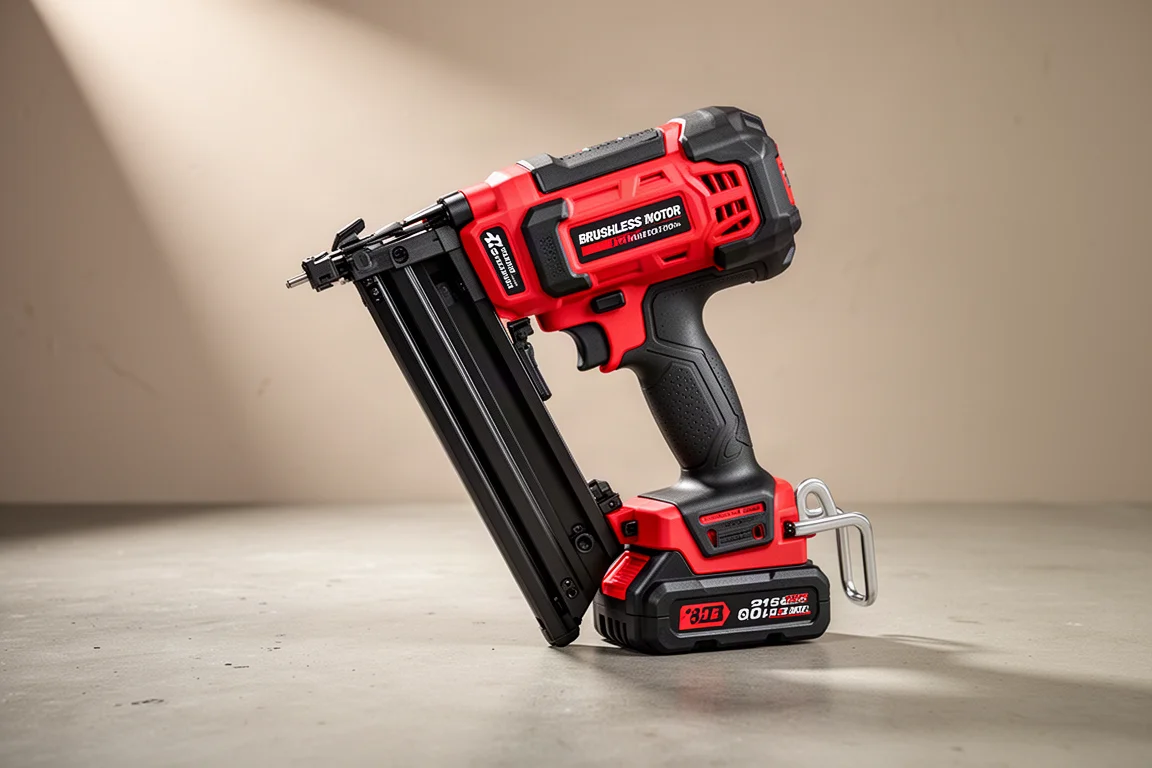
Ridgid 21-Degree Cordless Framing Nailer
For $349, just $20 more than the Craftsman, the Ridgid is also a 21-degree brushless nailer, claiming pneumatic-level power, three nails per second, and up to 750 nails per charge. It offers a selectable mode switch between contact actuation and single sequential actuation, holds 33 nails, and drives 2 to 3-1/2 inch nails. It weighs 10.7 lb and is much quieter than the Craftsman at 87.9 dB.
It delivered almost immediate firing with no ramp-up sound and noticeably less recoil. Consistency was good, with six perfect nails, two too deep, and two too shallow. It finished second in the speed test at 12.3 seconds for 25 nails. On oak it drove nails but could not fully bury the heads, and after cold exposure it would not fire at all. In composite lumber it completed all three nails without malfunctions, though they stuck out 7/16 to 9/16 of an inch.
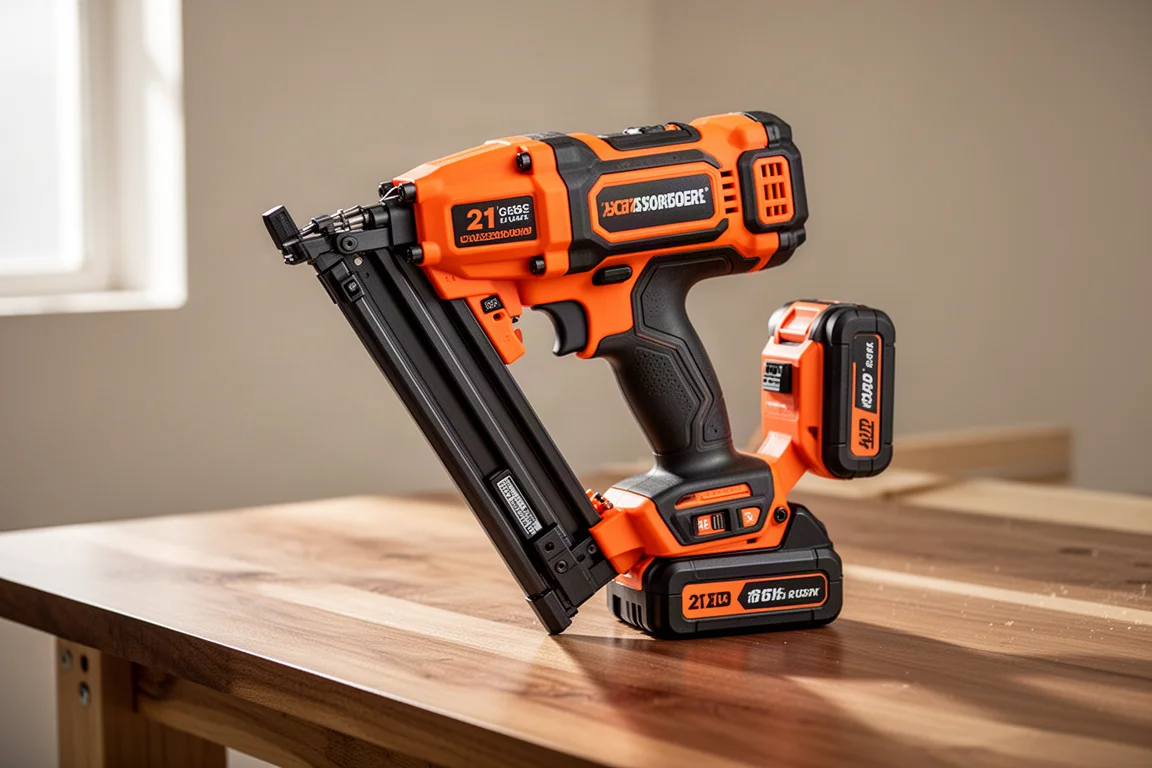
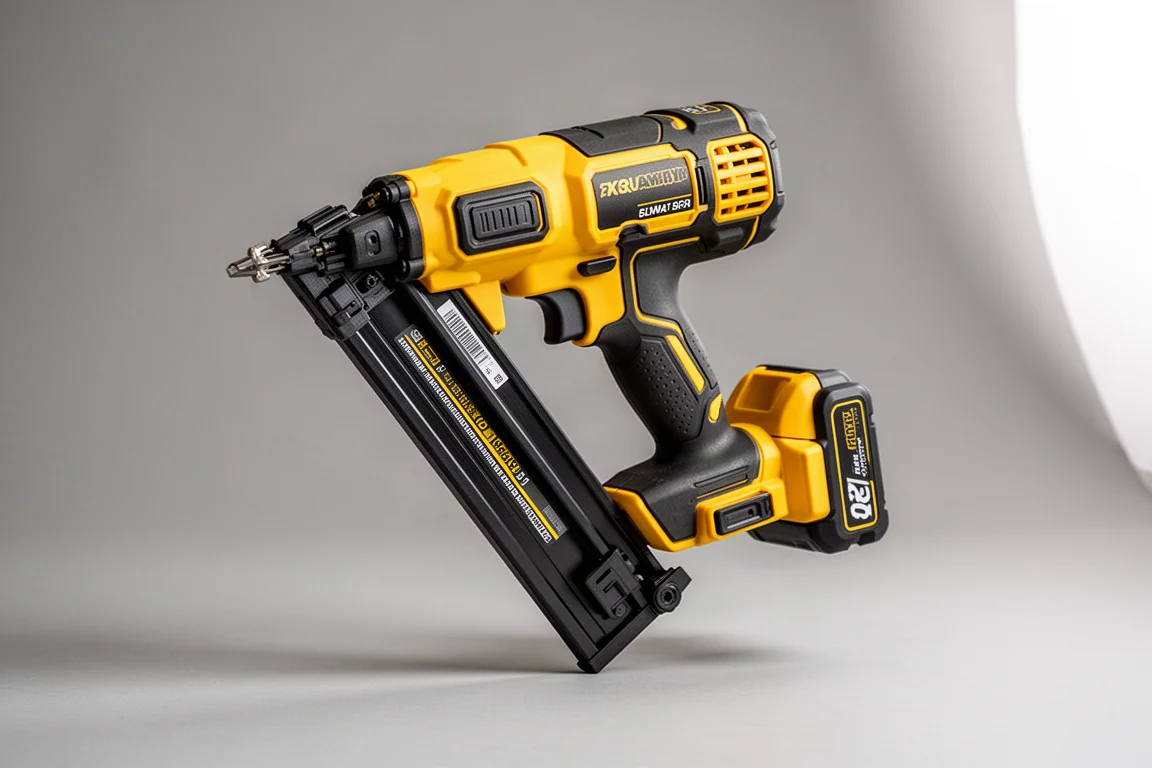
DeWalt 30-Degree Cordless Framing Nailer
At $350 bare, the DeWalt is a 30-degree brushless nailer that claims consistent penetration into soft and hard joints. It has a two-speed selector switch to optimize speed for fastener lengths, an easily accessible nose piece for jam clearing, an LED jam indicator, a 2 to 3-1/2 inch nail range, and a 55-nail capacity. It is the lightest of the full-size tools at just over 10 lb, made in Mexico, and about as loud as the Craftsman at 107.3 dB.
In sequential mode it needs over half a second to wind up, but in bump fire mode it fires immediately when the contact tip fully seats. Consistency was strong with seven perfect nails and three too deep, though recoil was significant. It ran 15 seconds for 25 nails and drove nails into oak but again could not fully bury the heads. It held its performance with a partially drained battery and was compact at 13-3/4 inches tall, but it needed resets on every composite nail and came up short 1/4 to 7/16 of an inch.
Metabo HPT 21-Degree Cordless Framing Nailer
At $369 including the battery and charger, the Metabo HPT is a 21-degree brushless nailer using an air spring drive system that claims pneumatic-like performance. A switch flips between sequential and bump fire modes, it handles 2 to 3-1/2 inch nails, and it holds 37 nails. It weighs 10.5 lb with the 3 amp hour battery and measures 100.3 dB.
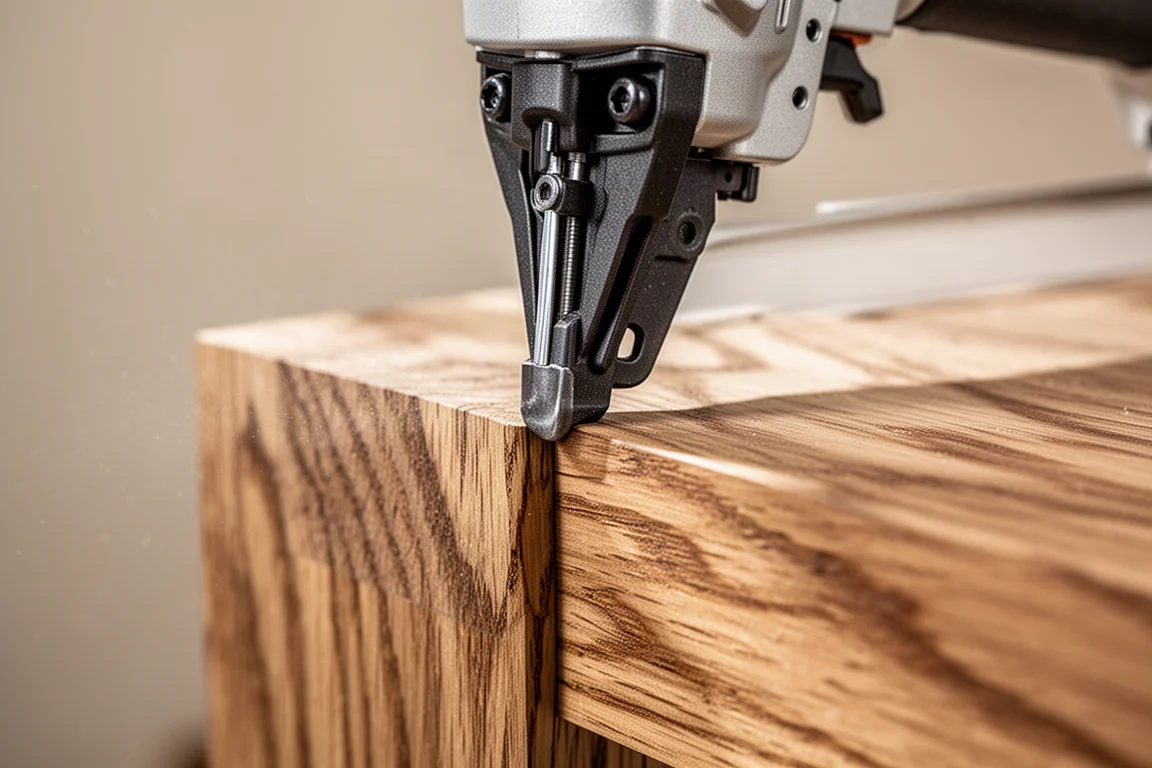
Firing is immediate in both modes with zero ramp-up time, and recoil is roughly on par with the Ridgid and far less than the DeWalt or Craftsman. Consistency was very good with seven perfect drives and three slightly deep. It was slower in bump fire at 17.9 seconds for 25 nails when pushed too hard, held performance on drained batteries, but really struggled on both oak and composite lumber, leaving nails proud by up to 3/4 of an inch. Where it shines is angle work: its contact tip lost grip only at 56.2 degrees, second best in the test, and its 1.75 inch offset gives good access against vertical surfaces. The rafter hook does feel a little oversized.
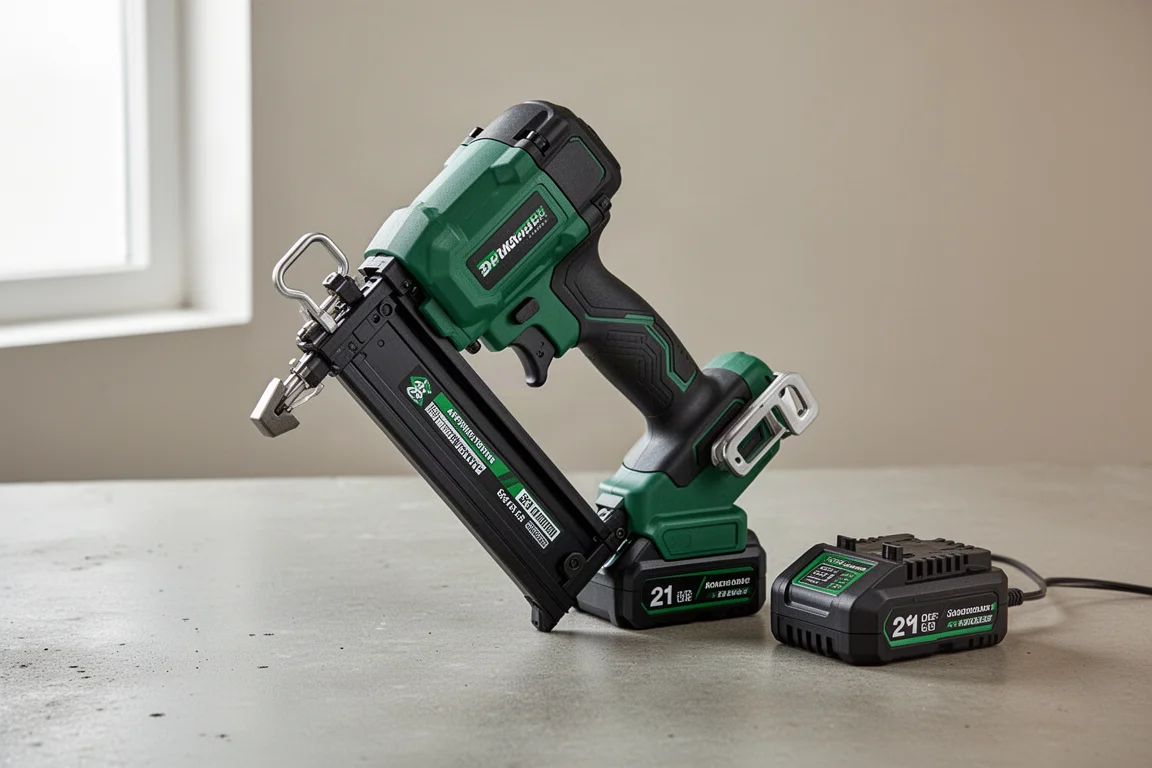
Milwaukee Cordless Framing Nailer
At $379 bare, the Milwaukee is a 21-degree brushless nailer claiming power to nail engineered lumber at three nails per second. It drives 2 to 3-1/2 inch nails, is made in China, and is by far the heaviest at over 12 lb, though it is quiet at 89.8 dB.
It fired immediately in both sequential and bump fire modes with no ramp-up sound and low recoil, and it posted the best consistency results with eight perfect drives, one too deep, and one too shallow. It was the fastest nailer here at 10.4 seconds for 25 nails. On oak, it completely buried the nail heads with power to spare, and in composite lumber it was the only tool to fully drive all three nails with zero malfunctions. It also held performance with a drained battery and handled cold weather better than most, needing only a warm battery swap to keep going.
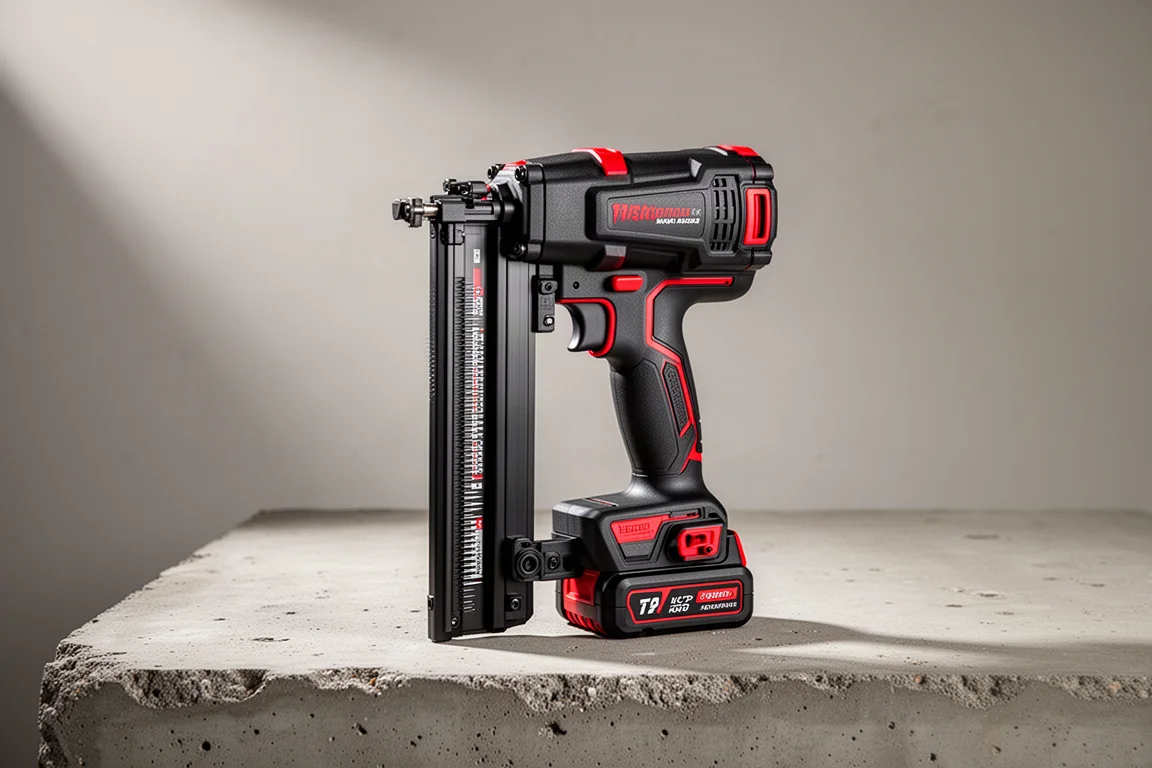
Paslode 30-Degree Cordless Framing Nailer
At $460 including the battery and charger, the Paslode is a 30-degree nailer with a drop-in fuel system delivering instant power for 1,200 nails and a claimed 9,000 shots per charge, plus the claim of being the lightest cordless nailer on the market. It is designed and assembled in the USA, with the battery from Japan and charger from China. Fuel cells run around $14, and the tool weighs just 7.9 lb at 104.8 dB.
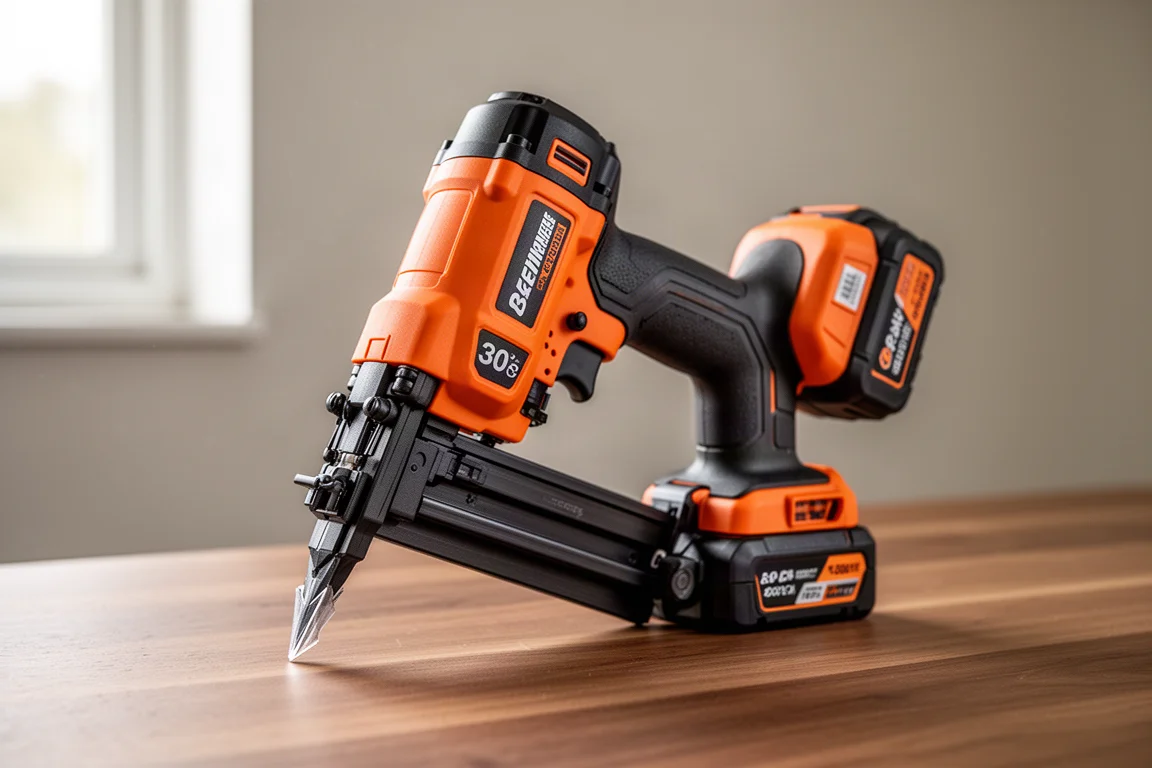
It fired instantly with the least recoil in the group, drove six perfect nails with two deep and two shallow, and one nail notably stuck up a quarter inch. Its fan motor runs while in use, and the purchased unit lacked the bump fire trigger, which held it to 14.1 seconds for 25 nails. It did reasonably well on oak but struggled badly on composite lumber, leaving nails proud by an inch to an inch and a quarter. Its real superpower is the contact tip: with the most aggressive, sharpest tip and an amazing set of teeth, it gripped wood until an impressive 76.1 degrees, the best angle performance by far, and its 1.63 inch offset is the best for tight vertical access.
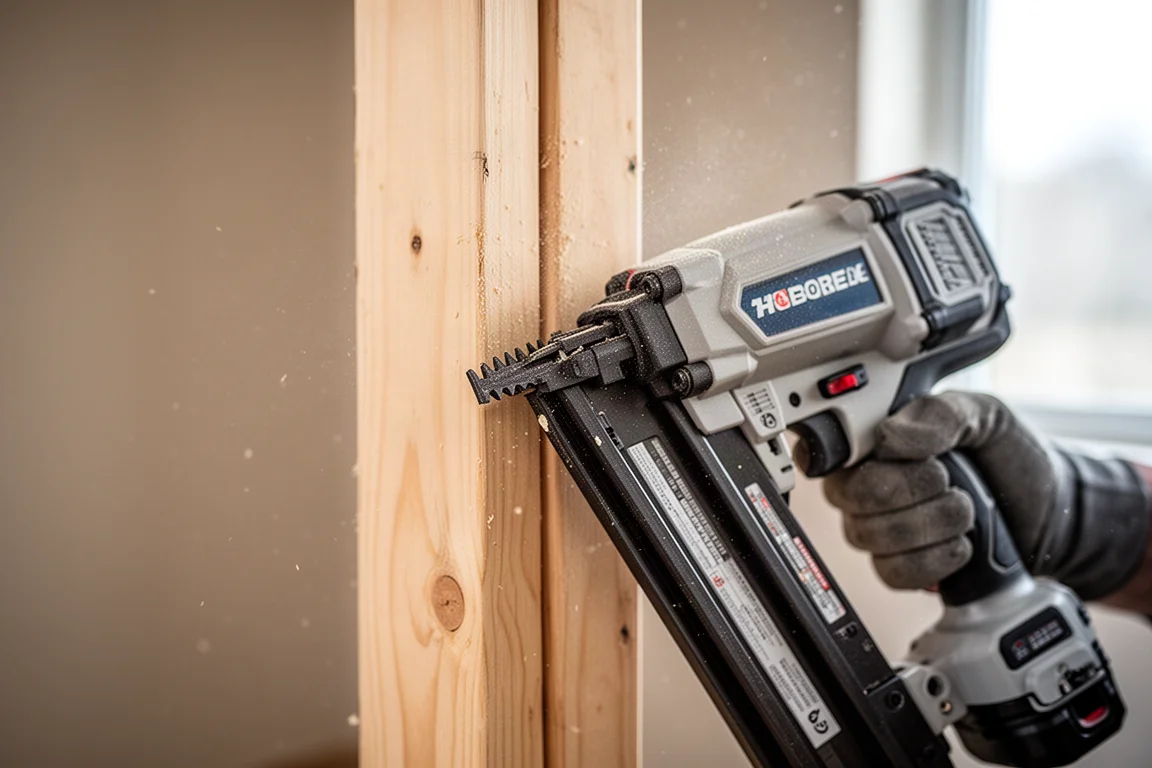
Power Test: Oak and Composite Lumber
On oak at the highest power setting, only the Milwaukee fully buried the nail heads, with the Craftsman, Ridgid, and DeWalt coming up just short and the Metabo and Paslode leaving nails visibly proud. In 4 inches of composite lumber, the story repeated itself: the Milwaukee drove all three nails flush without a single malfunction, the DeWalt and Craftsman finished around 0.3 inches proud with multiple resets needed, and the Metabo and Paslode left nails sticking out by roughly an inch. Interestingly, most nailers performed the same or slightly better without extra downward force on the tool.
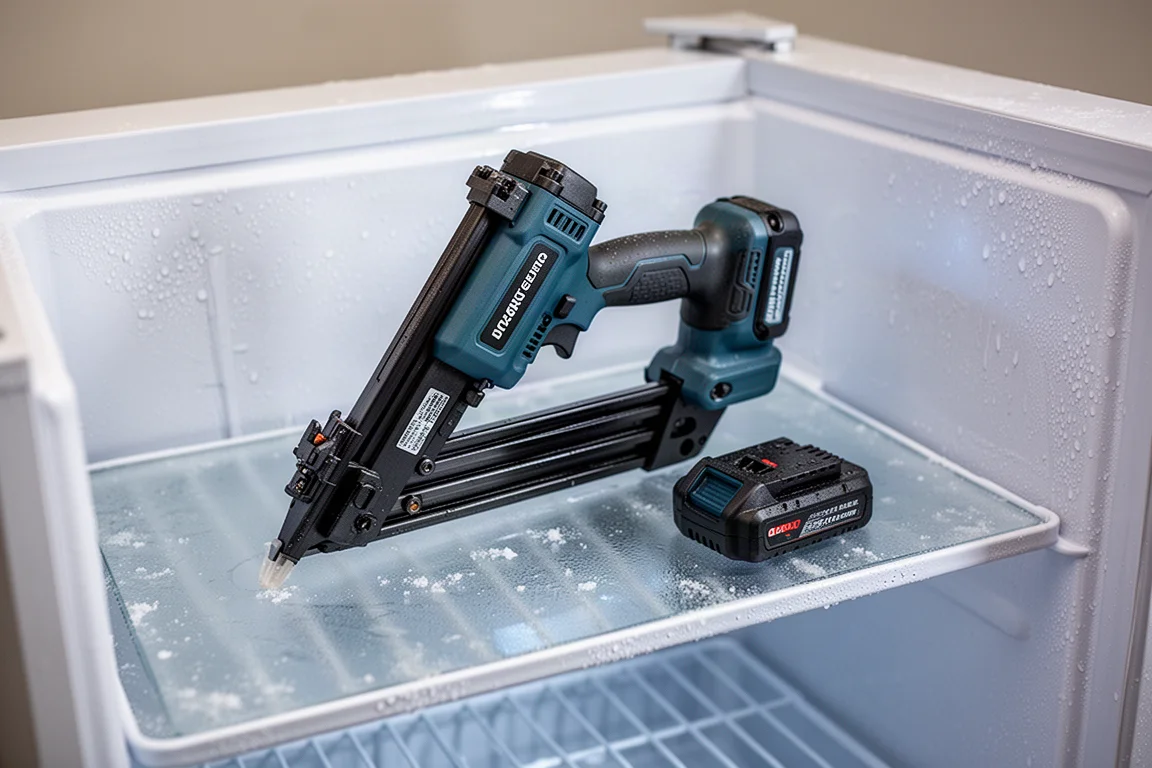
Cold Temperature Test
After sitting in a 0-degree F freezer, the Craftsman could not rev up at all and only partially drove nails with a warmed battery. The Ridgid was disabled entirely, the DeWalt needed a warmed battery to mostly seat nails, and the Metabo would not drive nails even warm. The Milwaukee needed one warm battery swap and then drove nails extremely well. Only the Paslode worked straight from the cold, though with mixed nail seating on its last two shots. The battery drain test showed only the Craftsman losing depth on a partially drained pack; every other nailer performed identically down below 18 V.
Toe Nailing and Contact Tip Design
A well-designed contact tip makes angled toe-nailing far easier, and here the differences were dramatic. The Craftsman and DeWalt lost grip at around 18 to 19 degrees, the Ridgid at 26.1 degrees, the Milwaukee at 52.6, the Metabo at 56.2, and the Paslode at 76.1 degrees, by far the best grip on wood when nailing at an angle. For fitting between studs on 16-inch centers, the Craftsman and DeWalt are the most compact at 13-3/4 inches tall, while the Ridgid at 15 inches is the least compact. The Paslode offers the best offset at 1.63 inches for driving nails near walls, with the Metabo close behind at 1.75 inches.
Overall Buying Advice
Judged purely on performance, the Milwaukee came out on top with the best consistency, the fastest drive speed, the only flawless oak and composite results, and an average finish of 1.5 across the tests. The Paslode and Ridgid tied at an average finish of 3.25. The Milwaukee’s main drawback is weight at around 12 lb, so if overhead work or all-day handling matters more, the Paslode at 7.9 lb or the well-rounded Ridgid deserve a close look. If quiet operation matters, the Ridgid and Milwaukee are the only tools under 90 dB.
Conclusion
For pure performance, the Milwaukee cordless framing nailer is the strongest pick, dominating the power and speed tests. The Paslode wins on weight and angled nailing, the Metabo HPT on balanced handling and included battery, and the Ridgid on quiet, consistent value. Matching the tool to your jobsite priorities, weight, noise, cold weather, or raw power, will get you the right nailer for the money.
Further reading
Related Reviews

Power Tools
Best 1-Inch Pistol Impact Wrenches: Three Heavy-Duty Options Compared
We compare three 1-inch pistol impact wrenches, from a budget-friendly Harbor Freight model to a premium Caterpillar unit, to help you choose the right one.

Power Tools
Best 3/4-Inch Impact Wrenches 2026: Five Contenders Compared
We compare five 3/4-inch impact wrenches across price and performance, from a budget Amazon option to Snap-on's most powerful model yet.

Power Tools
Best Budget Cordless Tools 2026: Walmart Finds That Punch Above Their Price
We tested five cordless tools from Walmart, including a high-torque impact wrench that trades blows with Milwaukee and a $35 duster that outperforms its price class.