Power Tools
Best Cordless Circular Saws: 10 Saws Put Through Real Cutting Tests
Ten 7-1/4 inch cordless circular saws compared on cutting speed, power under load, braking, vibration, noise, and build quality.
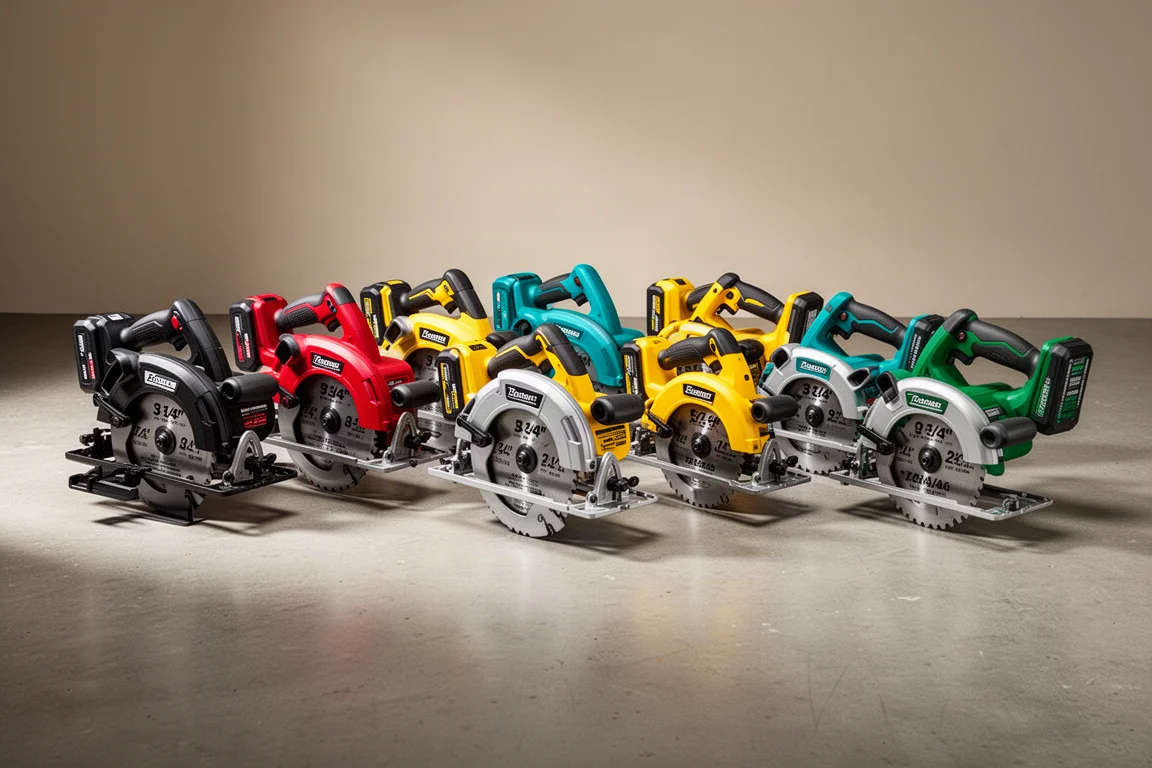
Introduction
Cordless circular saws come in every price band, from around $70 tool-only to $300 for a full kit. The obvious question is whether the budget saws genuinely fall short or whether some of them punch well above their price. To find out, ten 7-1/4 inch cordless circular saws were run through a consistent test set: cutting speed through 2x4 lumber under controlled pressure, power reserve under heavier load, trigger and brake responsiveness, vibration, noise, bevel and depth accuracy, and overall build quality.
Every saw was tested with a fresh Diablo framing blade, blade depth set to 2 inches, bevel at 0 degrees, and 4 amp hour batteries for all brands except Flex, where a 5 amp hour pack was the closest available option. Here is how each saw performed.
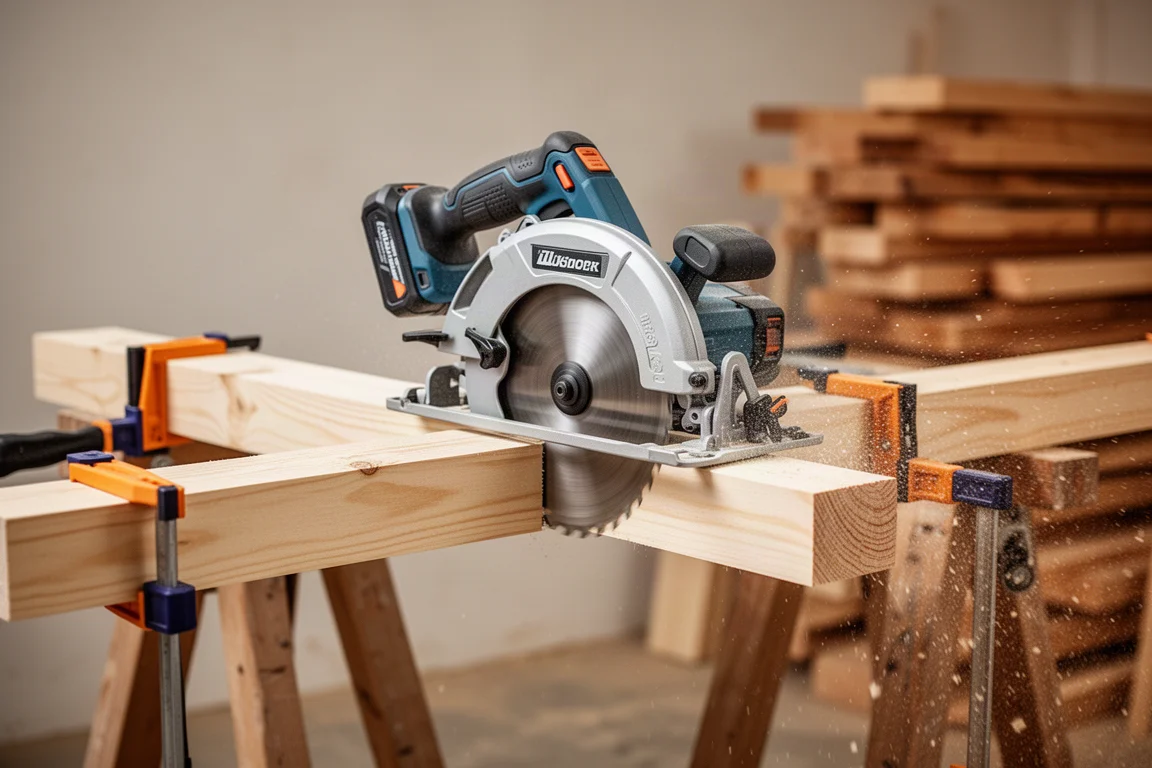
Ridgid 7-1/4” Cordless Circular Saw
At $70 for the tool only, the Ridgid is the cheapest saw in the group. It claims 3,700 RPM and measured 3,401, cutting a 2x4 under 5 lb of pull in an average of 2.9 seconds, the slowest of the ten. Its standout feature is the blade brake, stopping from full speed in just 0.3 seconds, the fastest measured, and it cycled trigger-to-stop five times in only 4.1 seconds, the quickest electronics in the test.
The downsides: it uses a brushed motor, weighs 8 lb 5.3 oz, measures 80.1 decibels, and its bevel was off by 2 degrees in accuracy testing, the only saw in the group that missed. The hardware linking the motor housing to the shoe also allows about 2 degrees of wobble. On the plus side, bevel adjustments are easy to make on the go with positive stops at 15, 22.5, 30, 45, and 56 degrees, and depth adjustment is straightforward.
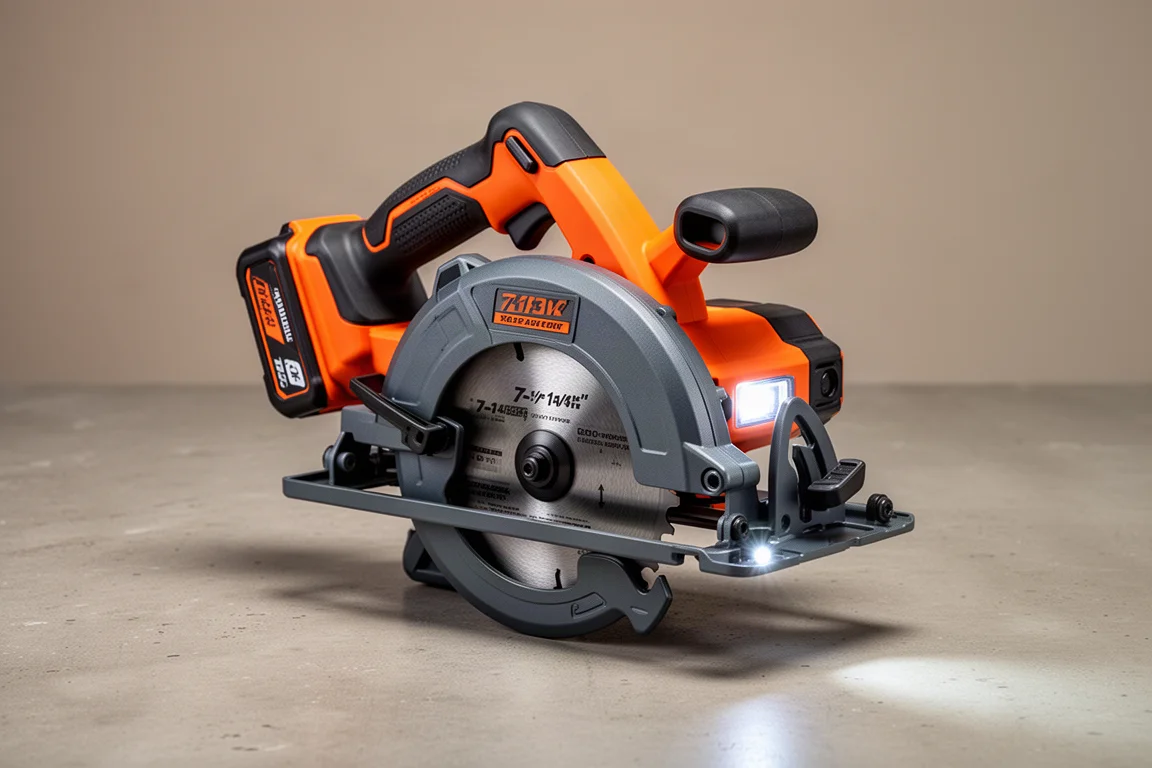
Craftsman Cordless Circular Saw
Also $70 tool-only, the Craftsman is the value story of the group. It uses a brushless motor claiming up to 5,000 RPM (measured about 500 short), and averaged 1.92 seconds per cut, roughly 37% faster than the Ridgid. Under load it impressed most of all: at 7.5 lb of pressure it cut in 1.51 seconds, and at 10 lb it posted 1.26 seconds, the fifth fastest heavy-load time overall.
Trade-offs include the loudest-adjacent noise at 89.9 decibels, a slightly slower 0.35 second blade stop, trigger lag on startup (5.72 seconds for five full cycles), the highest vibration among the budget trio at 15.72 mm/s², and a plastic blade guard. Bevel stops sit at 22.5 and 45 degrees and depth adjustment is less user-friendly than some rivals, but for $70 the performance is hard to argue with.
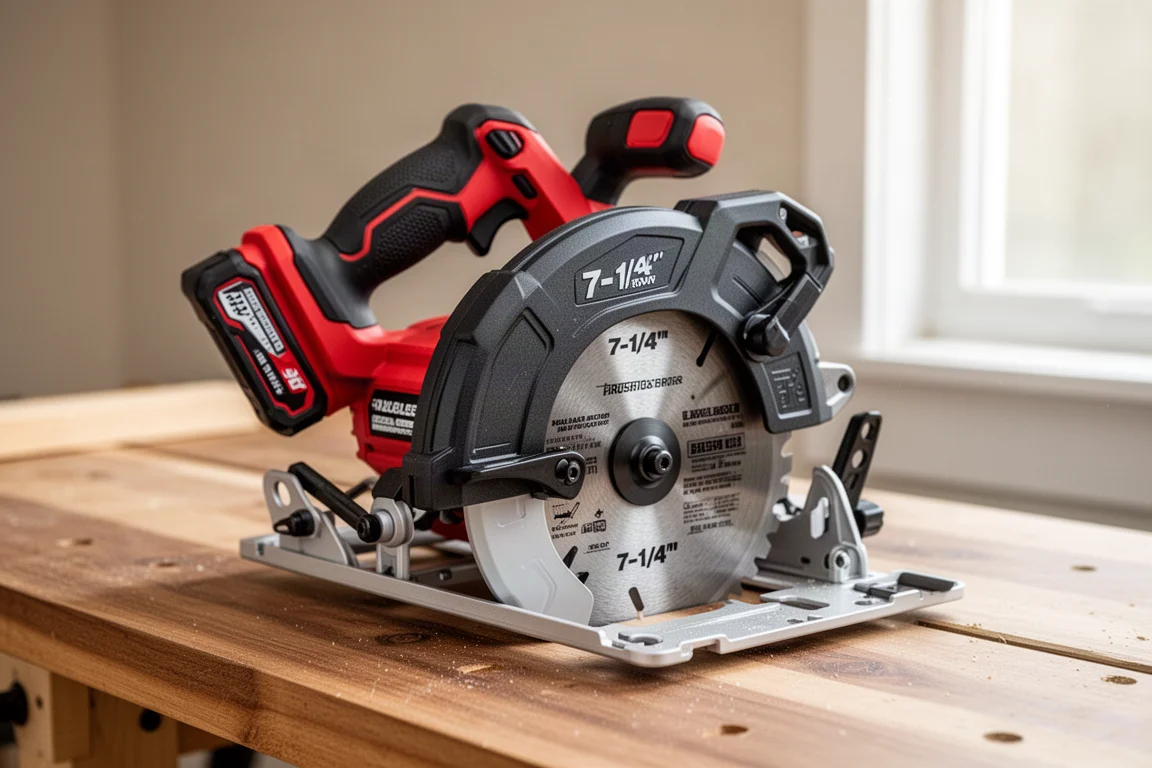
Ryobi One+ HP Circular Saw
At $115 tool-only, the Ryobi One+ HP claims up to 4,300 RPM and 325 cuts per charge, measuring 4,193 RPM. It averaged 2.27 seconds per cut, about 15% slower than the Craftsman, and it stalled about halfway through a board at 7.5 lb of pressure. The blade brake is the slowest here at 1.06 seconds, roughly three times longer than the Ridgid, and five trigger cycles took 11.15 seconds due to noticeable trigger lag.
It is the lightest saw tested at 6 lb 9.3 oz, runs at 87 decibels, and has thoughtful touches like a direct line-of-sight depth gauge and a dust blower. There are no positive bevel stops, however. It suits light-duty users already invested in the Ryobi One+ battery system who value low weight over cutting muscle.
Worx Nitro Circular Saw
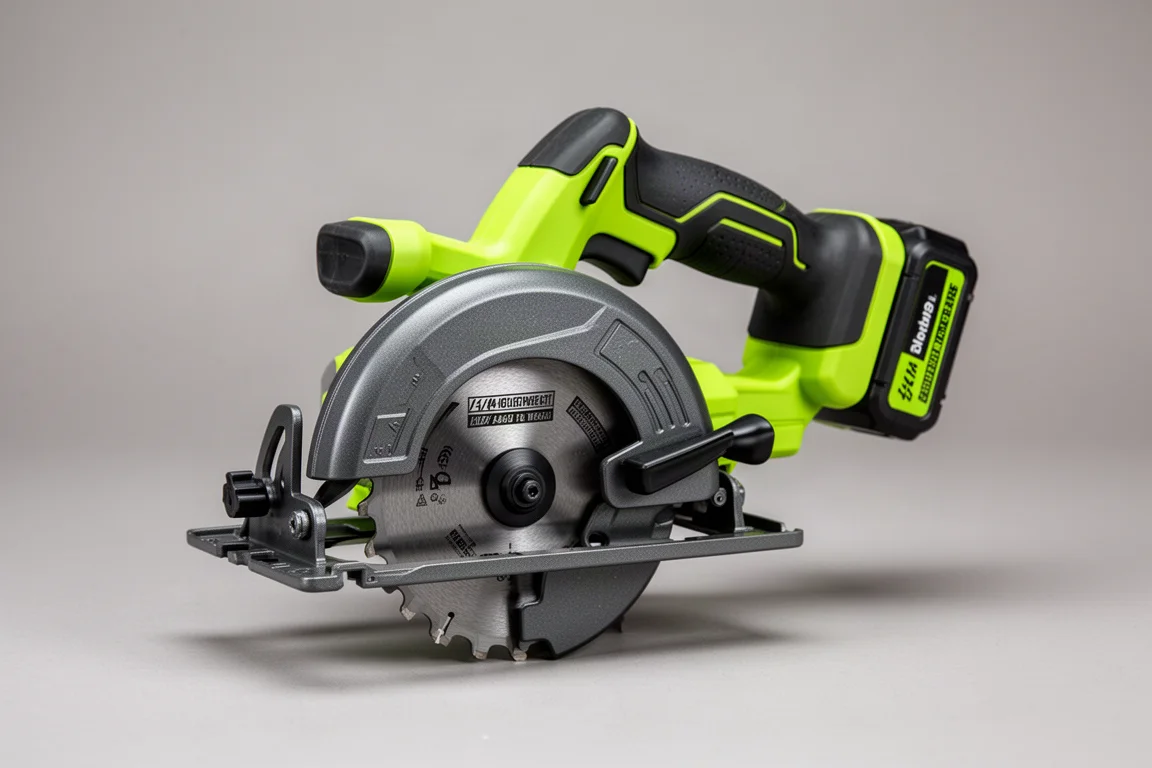
The Worx Nitro costs $118 tool-only and brings a brushless motor claiming up to 6,100 RPM, the highest claim in the group, with 5,646 measured. It averaged 1.63 seconds per cut, briefly taking the lead over the Craftsman. Like the Ryobi, though, it stalled at 7.5 lb of pressure, so its power reserve is limited despite the blade speed.
Bevel adjustment requires loosening two butterfly nuts front and rear, the markings are harder to read than most, and there is only a 45 degree bevel stop. It is the second lightest saw at 6 lb 8.6 oz, measures 84.7 decibels, and stops the blade in 0.65 seconds. Five trigger cycles took 8.57 seconds. It comes with a 24 tooth blade.
Kobalt XTR Circular Saw
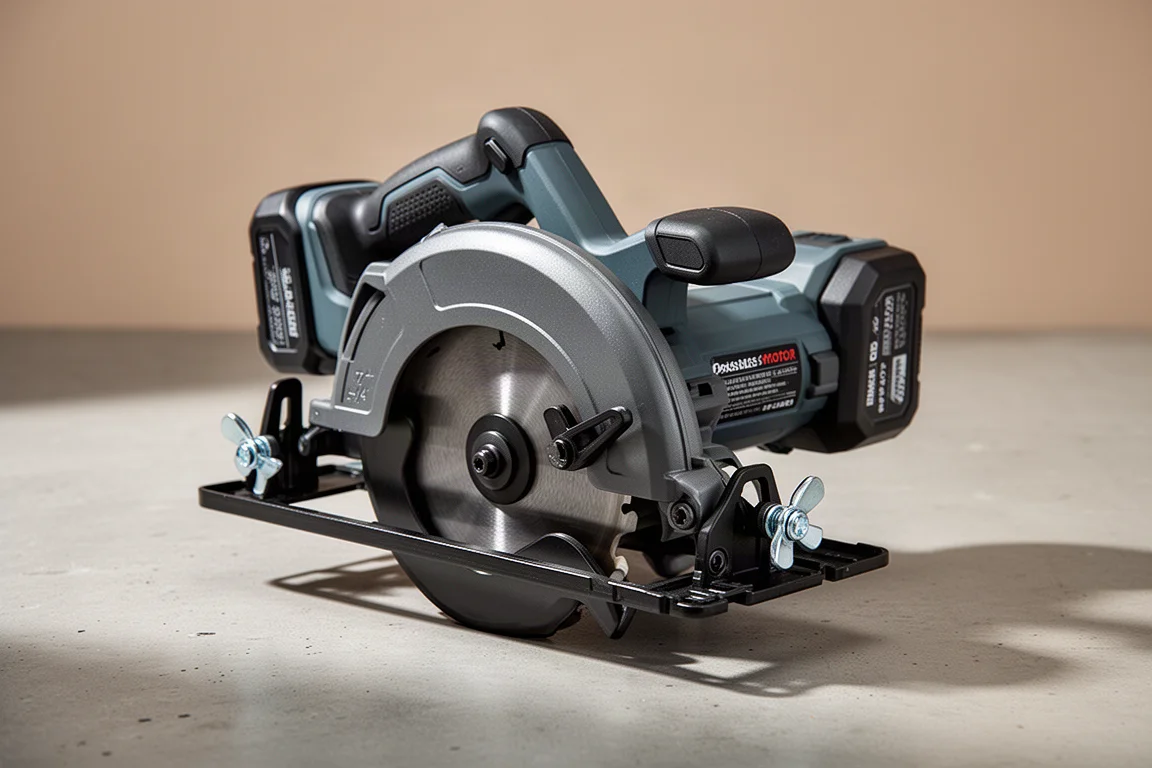
At $150 tool-only, the Kobalt XTR includes a blade and advertises a 24V platform where most competitors run 18 to 20V. Its brushless motor claims 5,500 RPM (5,331 measured) and it averaged 1.48 seconds per cut, finishing second overall in the base speed test. It stalled just short of completing a cut at 7.5 lb of pressure, so it does not belong in the heavy-load conversation.
Highlights include a metal blade guard, easy-to-read bevel indicator with stops at 22.5, 45, and 56 degrees, an excellent depth line of sight, a rafter hook, and the smoothest vibration figure outside the Makita at 3.41 mm/s². It weighs 8 lb 14.9 oz, the heaviest in the lineup, runs at 84.4 decibels, and stops the blade in 0.6 seconds.
DeWalt Flexvolt Advantage Circular Saw
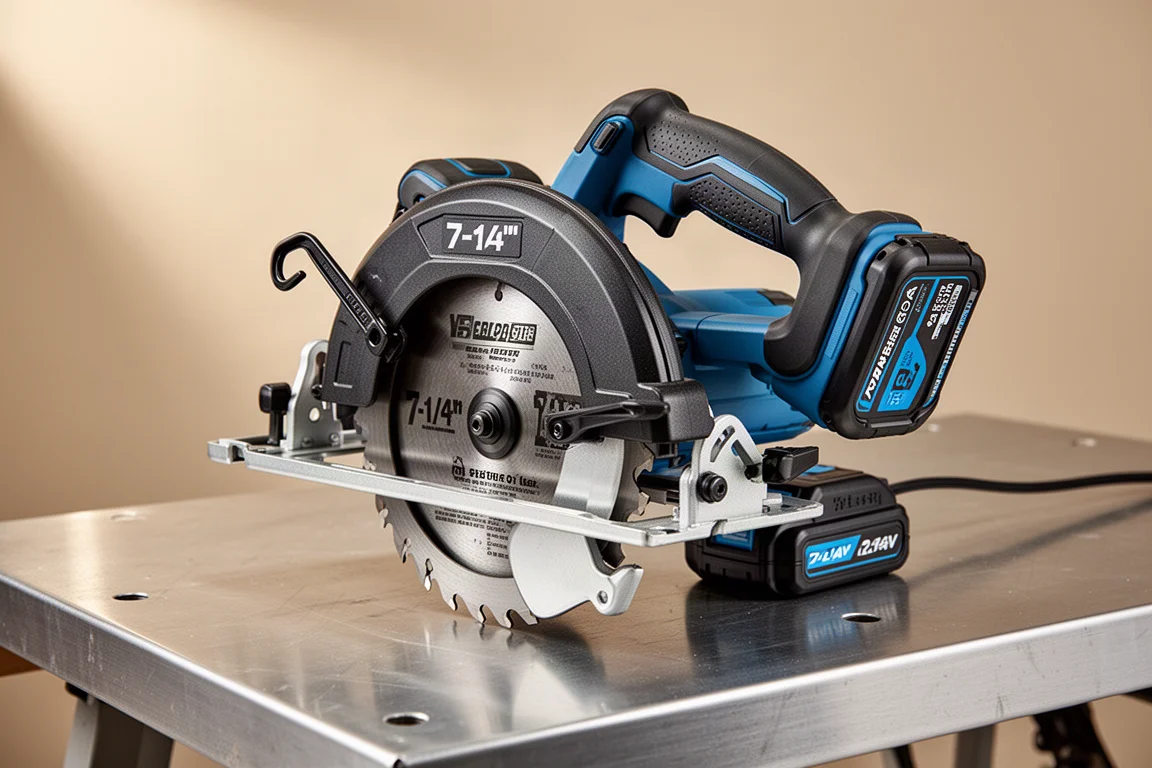
Also $150 tool-only, the DeWalt uses a brushless motor claiming 5,500 RPM (5,275 measured) and its Flexvolt Advantage design accepts both 20V and 60V batteries. It averaged 2.12 seconds per cut, only mid-pack, but handled 7.5 lb of pressure in 1.41 seconds. At 10 lb it stalled, though a 12 amp hour battery let it complete a cut in 0.9 seconds, showing how much battery matters.
It is the loudest DeWalt-tested saw at 91.1 decibels, weighs 7 lb 15.5 oz, stops the blade in 0.55 seconds, and cycled five times in 7.3 seconds. Build quality is solid with a metal blade guard, rafter hook, bevel stops at 22.5 and 45 degrees, and an easy rear-view depth indicator. It is made in Mexico.
Makita 36V Circular Saw
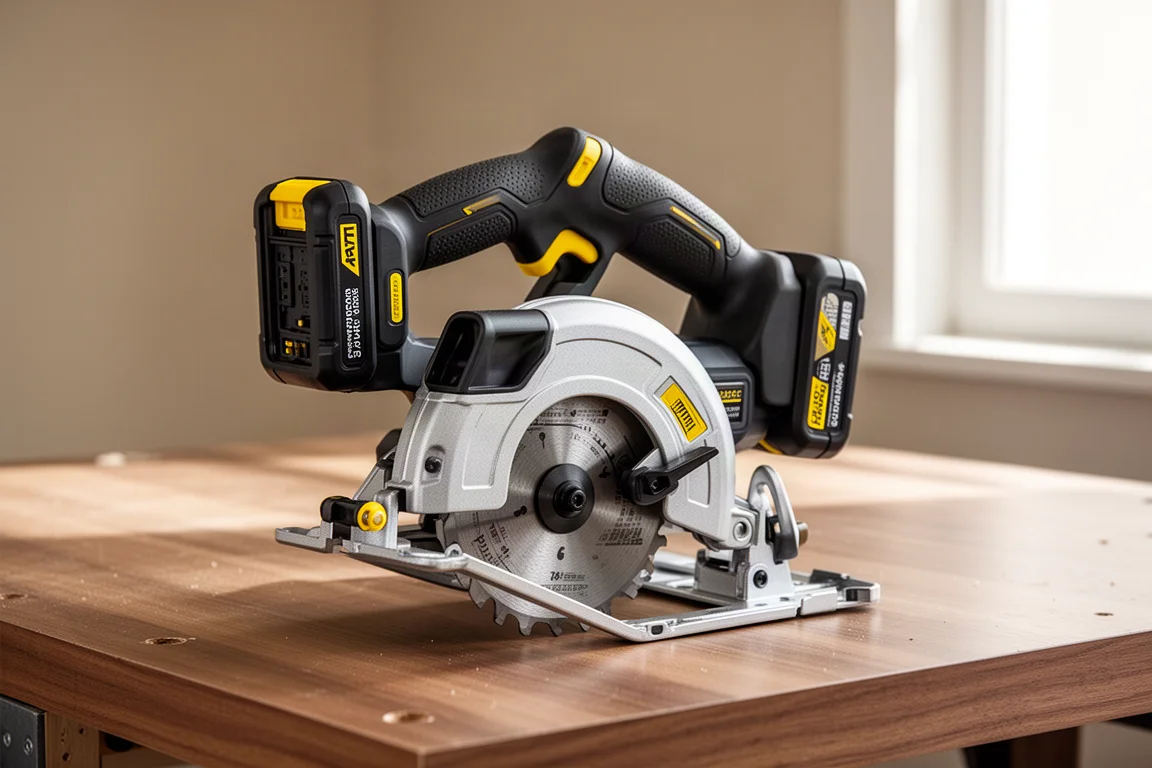
At $170 tool-only, the Makita runs on two 18V batteries for 36V total, and the kit version includes a blade, two batteries, a charger, and a carrying bag. Its brushless motor delivers 6,000 RPM claimed (5,812 measured), the third highest in the group, and it averaged 1.81 seconds per cut. Under load it was superb: 1.16 seconds at 7.5 lb and 0.9 seconds at 10 lb, finishing second overall when all pressure levels were considered.
It is also the smoothest saw tested at just 1.05 mm/s² of vibration, with a diecast magnesium base, blade guard, and blade cover. Positive bevel stops sit at 22.5, 45, and 56 degrees, dual battery level indicators are included, and it stops the blade in 0.75 seconds. It weighs 7 lb 11.9 oz and measures 91.4 decibels.
Bosch Core 18V Circular Saw
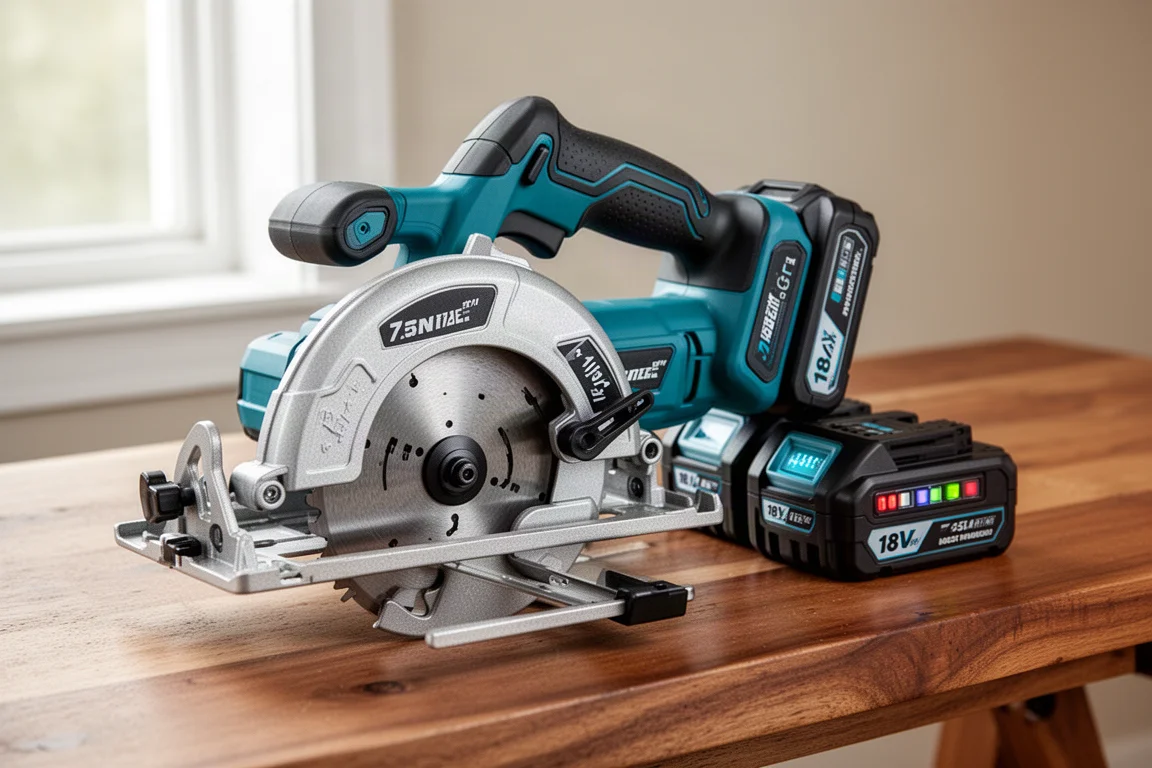
The Bosch costs $219 tool-only and is the only saw in the group made in Hungary. Its Core 18V brushless motor claims 5,000 RPM (4,977 measured), yet it averaged 1.76 seconds per cut, matching the much faster-spinning Makita. Under load it was excellent, cutting in 1.46 seconds at 7.5 lb and 1.06 seconds at 10 lb, good for fourth overall.
It is one of the quietest saws at 83.5 decibels, vibrates little at 3.71 mm/s², stops the blade in 0.55 seconds, and cycled five times in 7.3 seconds. Standout features include a 360 degree pivoting dust port that directs dust away whether you hold the saw left or right handed, a durable metal blade guard, ball-detent bevel stops at 22.5 and 45 degrees, and very user-friendly depth adjustment. It weighs 8 lb 8.3 oz.
Milwaukee Fuel Circular Saw
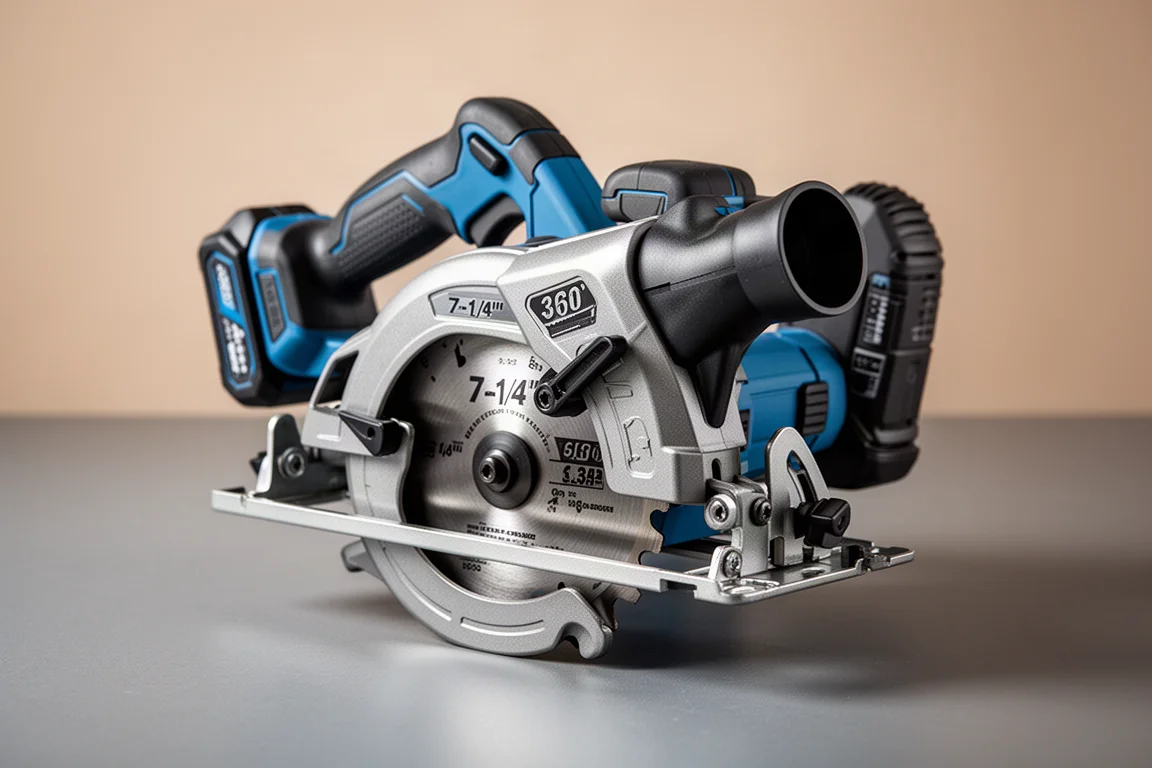
At $274 tool-only, the Milwaukee Fuel claims 5,800 RPM and measured 5,848, second fastest of all ten saws. It averaged 1.62 seconds per cut, and under load it tied the Makita at 7.5 lb (1.16 seconds) and hit 1.0 second at 10 lb. With a 12 amp hour battery it posted 0.75 seconds, the fastest single cut seen outside the Flex. In overall performance ranking it finished a very close second behind the Flex.
It has a durable metal blade guard, rafter hook, and one of the most user-friendly depth-setting designs, but no positive bevel stops, so bevel tweaks take a few extra seconds. It is the loudest saw tested at 98.3 decibels, weighs 8 lb 11.8 oz, vibrates at 11.4 mm/s², and has excellent 0.45 second brakes considering its blade speed.
Flex 24V Circular Saw
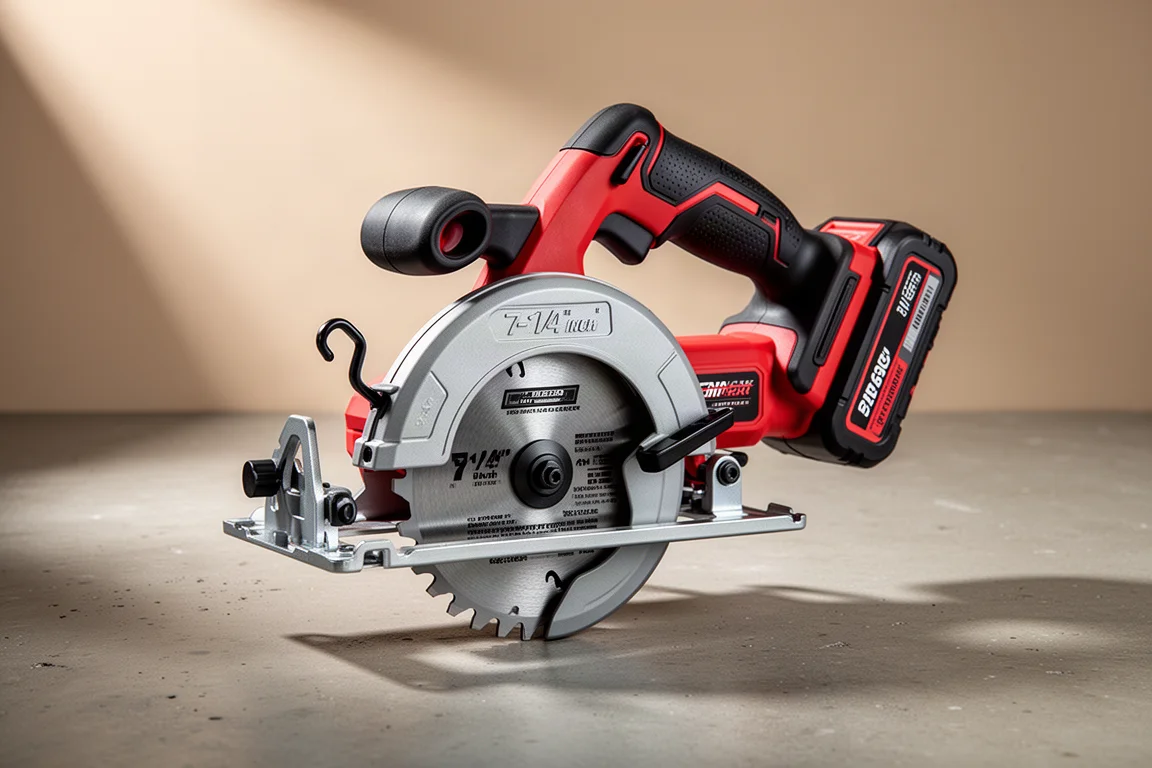
At $300 including an 8 amp hour battery and charger (no tool-only option was available), the Flex is the performance winner of the group. Its 24V brushless motor claims 5,800 RPM and measured 5,925, the highest of all. Testing with a 5 amp hour battery for fairness, it cut a 2x4 in 1.31 seconds three times in a row, and under load it led everywhere: 0.85 seconds at 7.5 lb and 0.8 seconds at 10 lb, the best times of the entire test. With its included 8 amp hour pack it ripped through a board in 0.65 seconds, the fastest single cut recorded.
It also ranked first on overall performance with an average finish of 2.6. Features include a rafter hook, blade change tool stored at the rear, bevel stops at 22.5 and 45 degrees, and practical depth markings for 2x4 and plywood thicknesses rather than raw numbers. It weighs 8 lb 13.2 oz, measures 90.3 decibels, stops the blade in 0.5 seconds, and vibrates noticeably at 25 mm/s².
Overall Buying Advice
Looking purely at performance, the Flex finished on top with the Milwaukee a close second, and both are easy recommendations if you are already invested in either battery platform. If budget comes first, the Craftsman is the surprise of the test: at $70 it finished third overall in performance despite a build that is not as durable as the pricier brands, and it was one of only five saws to complete a cut under 10 lb of pressure.
If weight matters most, the Worx, Ryobi One+ HP, and Craftsman all came in just over 6.5 lb, while the 24V Flex and Kobalt are the heaviest at nearly 9 lb. The Makita and DeWalt sit just under 8 lb. On measured RPM the Flex led at 5,925, followed by Milwaukee at 5,848 and Makita at 5,812. On braking, the slow-spinning Ridgid stopped fastest at 0.3 seconds, with the Craftsman close behind at 0.35. On vibration, the Makita was smoothest at 1.05 mm/s². Bevel and depth accuracy were good across the board except for the Ridgid’s 2 degree bevel error, and every saw’s blade guard cleared board edges without hanging up.
Conclusion
There is more to a circular saw than its price tag. The Flex 24V is the performance pick, the Milwaukee Fuel is nearly its equal, and the Makita 36V pairs top-tier smoothness with serious power under load. But the Craftsman proves a $70 saw can still deliver genuinely competitive cutting, making this one of the more interesting value stories in cordless tools. Match the saw to your battery platform, your typical workload, and your budget, and any of these can be the right choice.
Further reading
Related Reviews

Power Tools
Best 1-Inch Pistol Impact Wrenches: Three Heavy-Duty Options Compared
We compare three 1-inch pistol impact wrenches, from a budget-friendly Harbor Freight model to a premium Caterpillar unit, to help you choose the right one.

Power Tools
Best 3/4-Inch Impact Wrenches 2026: Five Contenders Compared
We compare five 3/4-inch impact wrenches across price and performance, from a budget Amazon option to Snap-on's most powerful model yet.

Power Tools
Best Budget Cordless Tools 2026: Walmart Finds That Punch Above Their Price
We tested five cordless tools from Walmart, including a high-torque impact wrench that trades blows with Milwaukee and a $35 duster that outperforms its price class.