Power Tools
Best Cordless Belt Sanders Compared: AEG, Milwaukee and HiKOKI Put to the Test
Three cordless belt sanders tested on real timber: material removal, stall resistance, dust collection and battery appetite compared side by side.
Introduction
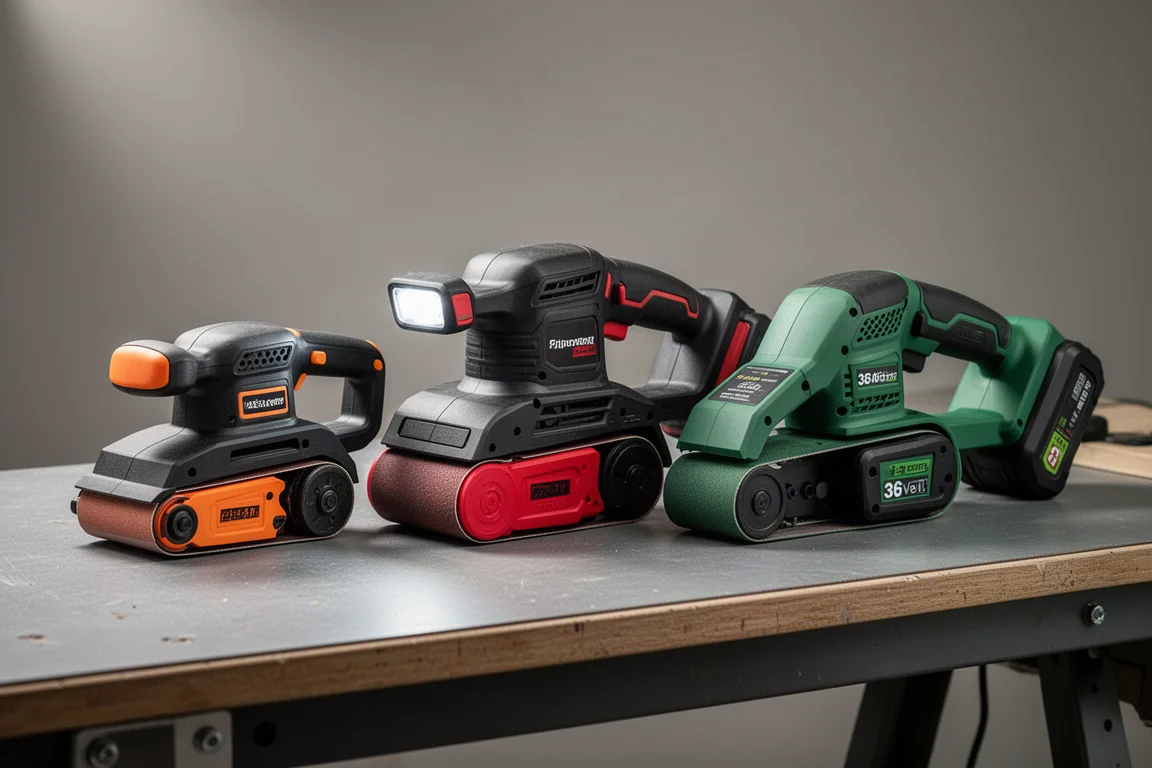
Cordless belt sanders used to be a niche curiosity, but three models now make a real case for going battery powered: the AEG (RIDGID) BHBS18B 18V, the Milwaukee 18V cordless belt sander, and the HiKOKI (Metabo HPT) 36V cordless belt sander. All three were run through the same real-world tests on rough timber, including material removal, stall resistance, dust collection and battery consumption. The result is a clearer picture of what a cordless belt sander can and cannot do, and which one is worth the money.
The Contender: AEG (RIDGID) BHBS18B 18V
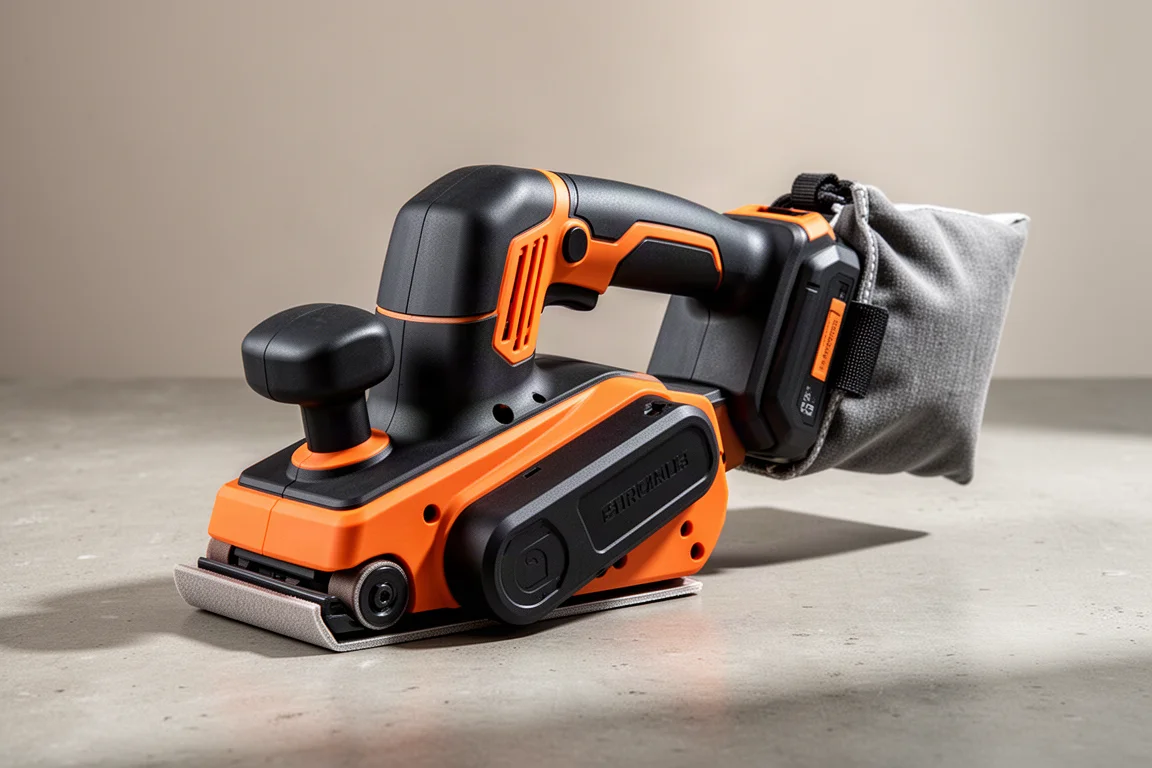
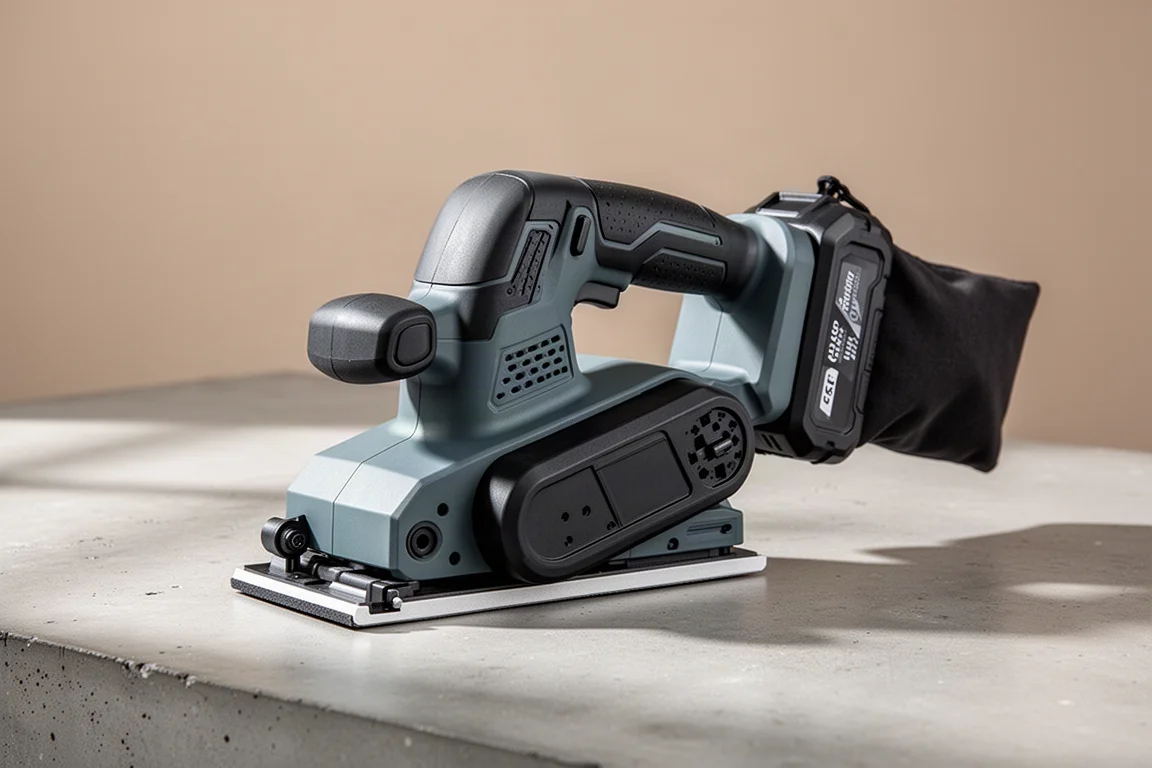
The AEG (RIDGID) BHBS18B is the most affordable of the three and a surprisingly complete package. It uses 3 inch by 18 inch belts (75 x 457 mm), with an 80 grit and a 120 grit belt included in the box, plus a dust bag with a clip-on end that stays put in use. The front of the tool is flat, so with a little setup the belt can run nearly flush against a wall, missing only by a couple of millimetres.
Speed is variable from 135 to 300 metres per minute, and the front handle slides up and down, adjusted with a small onboard Allen key. There is a belt release lever, a side tracking dial for keeping the belt centred, and a trigger lock for extended runs. Fitting a belt is straightforward: match the arrows, get it close to centre, lock it on, then adjust tracking on start-up.
In use on weathered decking, it stripped material far faster than a random orbital sander, with about 30 seconds of work producing a dramatic before-and-after difference. It also ran longer than expected: roughly 19 lineal metres of 140 mm wide decking on a single 6Ah battery, with the fuel gauge hovering on its last bar for a surprisingly long stretch before giving up. The dust bag filled completely in that single charge, which is a lot of material moved. The trade-off is that its material removal rate is the lowest of the three, so you work longer per area, which partly cancels the runtime advantage.
Feature Check: What the Milwaukee Adds
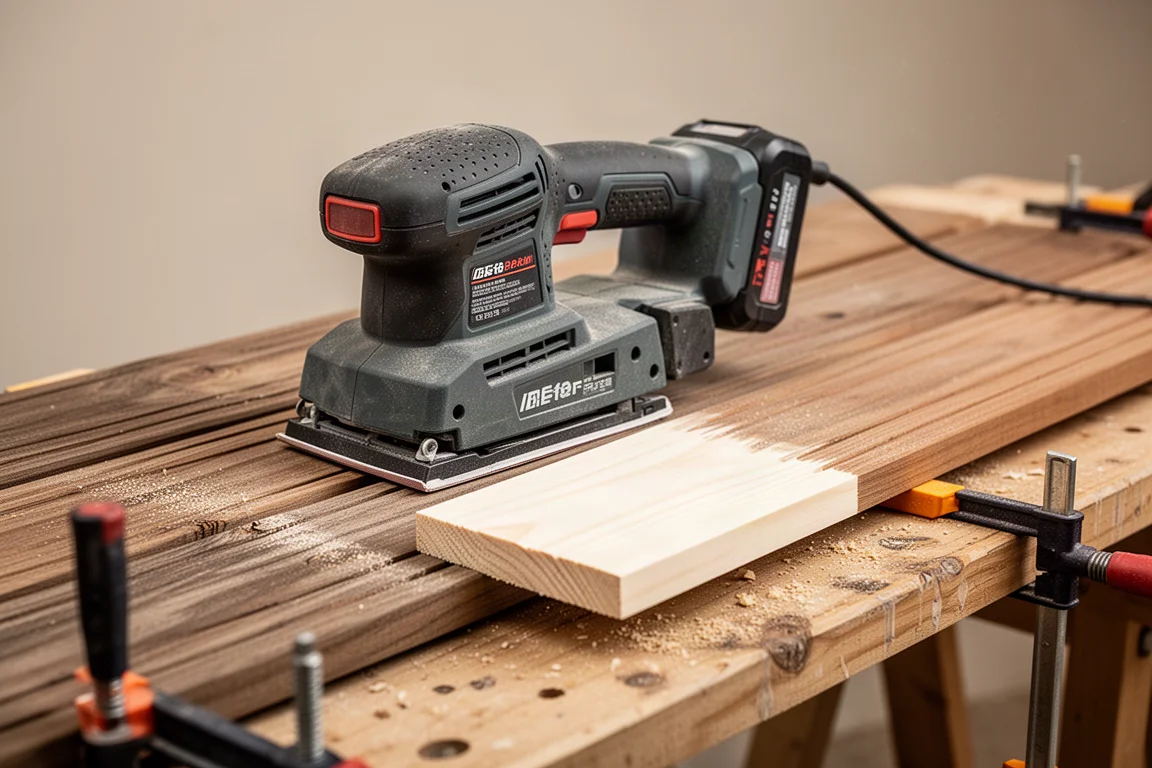
The Milwaukee is effectively the big brother of the AEG and shares the same 3 inch by 18 inch belt format. Its standout difference is the front handle: instead of needing a tool to reposition it, a lever lets you slide it tool-less and lock it back down, which is handy for getting flat against a wall since the handle can tuck behind the front of the machine.
It also brings lighting, absent on both rivals. A side light helps when working close to skirting boards or edges, and a front light, shaded slightly by the housing, still proves useful in dim corners. A rubber bumper on the front protects the work surface, something neither the AEG nor the HiKOKI offers. The base plate the belt runs on is slightly nicer than the AEG’s, and the belt tracking mechanism feels a little more solid, though both remain a touch flimsy in that area.
One quibble: the variable speed dial sits in a less intuitive spot than the AEG’s, and the markings are nearly illegible black-on-black plastic. In the same bench tests it stalled second-hardest, requiring real downward pressure before cutting out, and it clearly out-removed the AEG, though not by the same margin the HiKOKI managed over it.
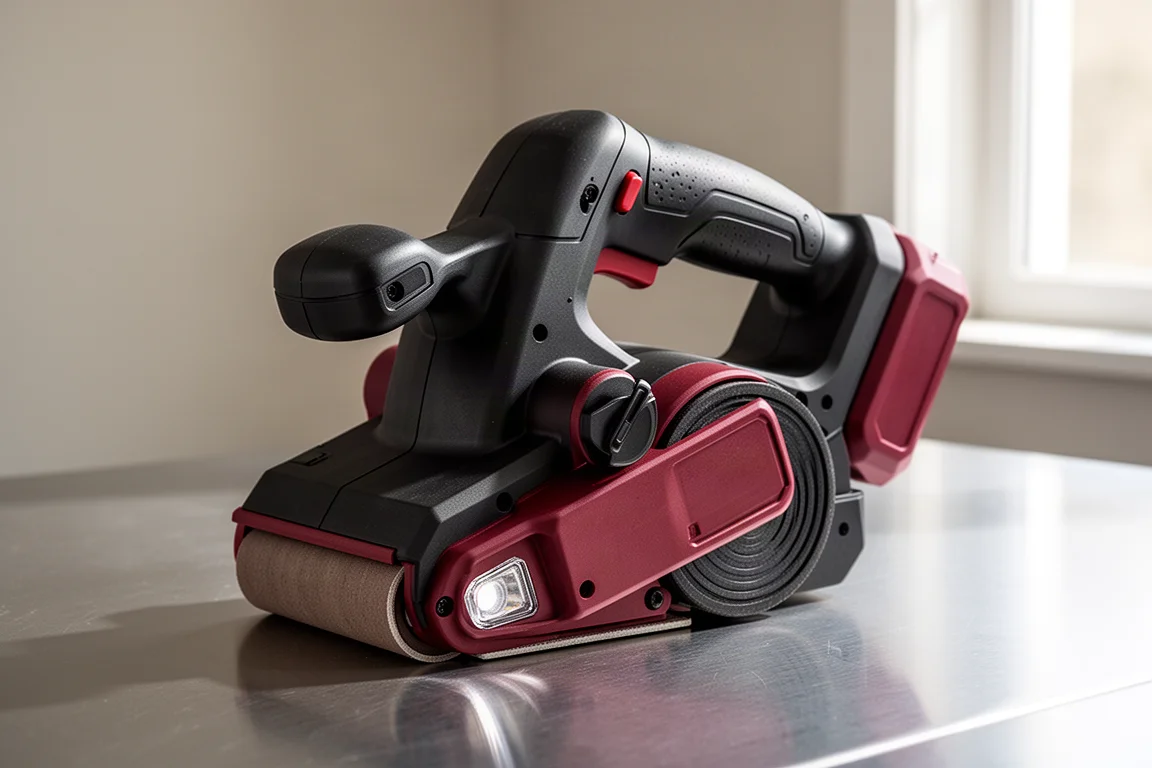
The Standout: HiKOKI (Metabo HPT) 36V
The HiKOKI, sold as Metabo HPT in North America, is the most powerful of the trio and it shows. It is a 36V tool running the largest battery the platform offers in this configuration (a 4Ah 36V pack, equivalent to 8Ah at 18V), and it uses a longer 3 inch by 21 inch belt (75 x 533 mm), giving more sandpaper in contact with the work.
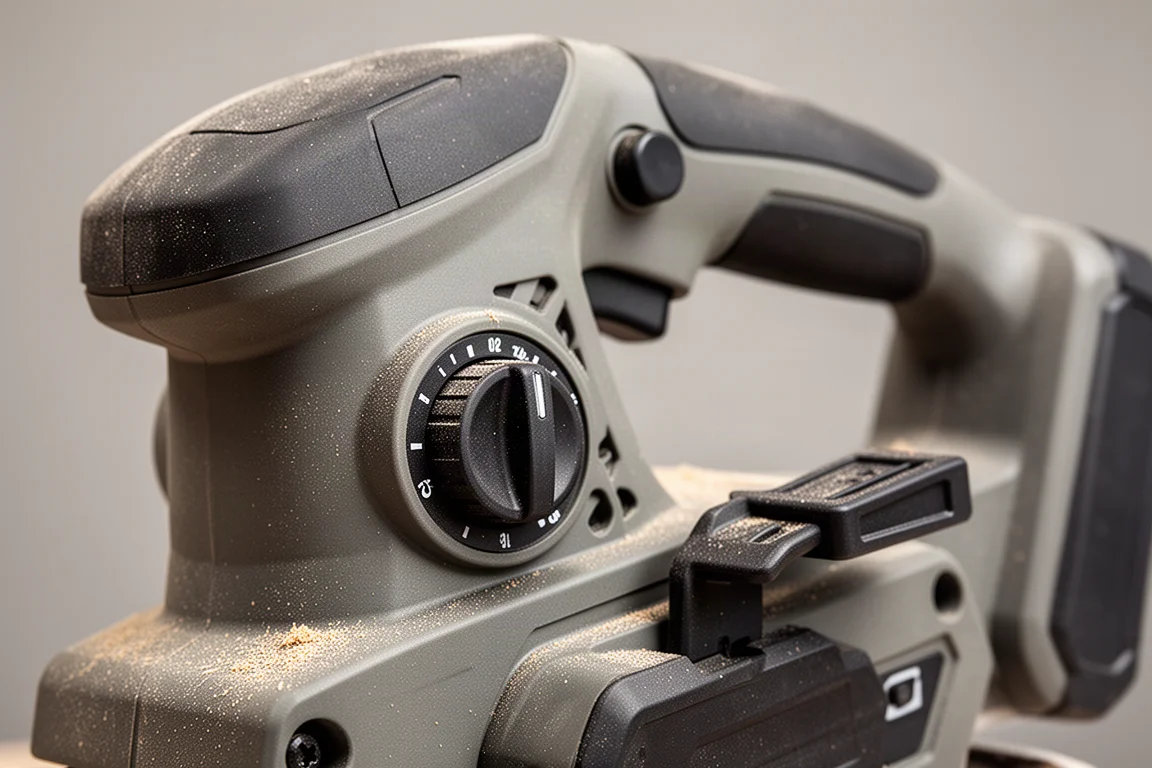
Its variable speed range is the widest, from 122 to 450 metres per minute, and the dial sits at the top of the handle in an easy-to-reach spot. The signature feature is an auto mode, which neither rival offers. Beyond that it is a deliberately simple, solid-feeling unit with no lights and a fixed front handle, though the handle does not protrude past the front of the tool anyway.
In the stall test it was in a class of its own: it took pushing down with body weight on top of the tool before it finally cut out, making it clearly the strongest of the three. And in material removal, once the HiKOKI had been tried, going back to the other two felt sluggish. It chewed through timber so much faster that the other two became hard to want to use.
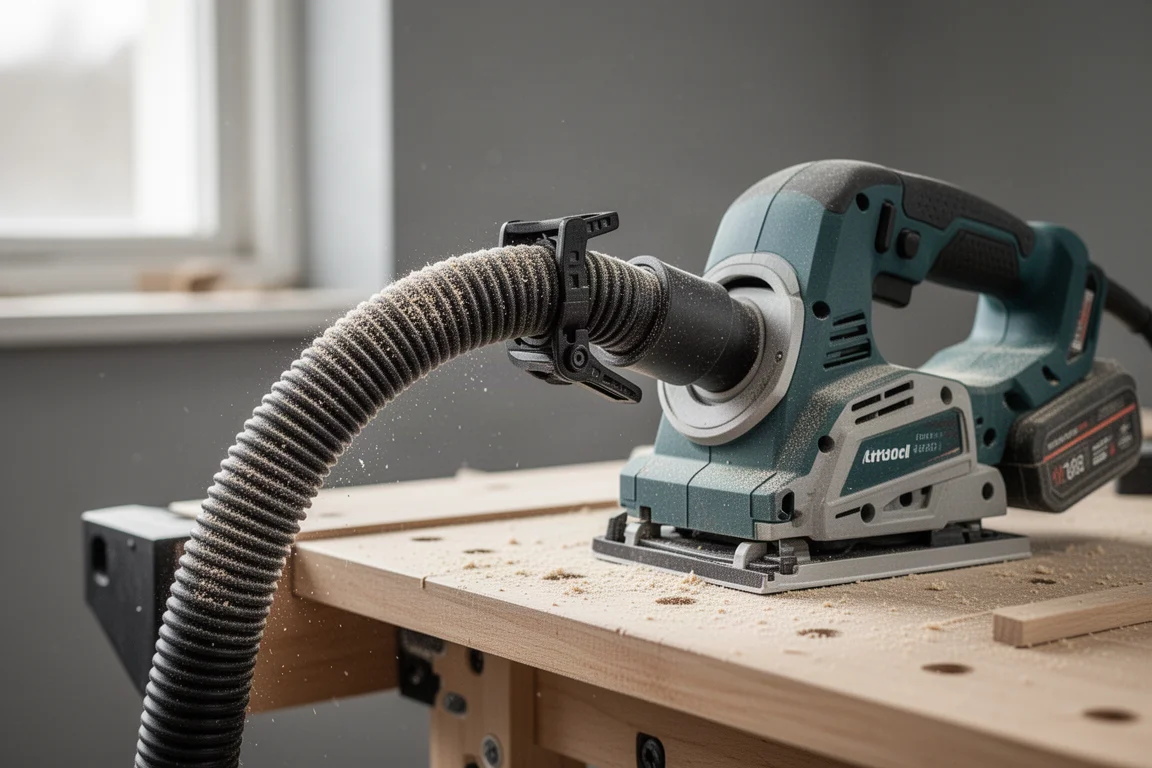
There are two compromises. First, it drinks batteries: sanding one side of a 2.5 metre slab was enough to drop the biggest battery to its last bar, so a full job would need several packs or the second trick. That trick is an AC power adapter that attaches to the tool, letting you run it off mains power all day, which is genuinely useful for site work like flooring where runtime matters most. Second, its dust collection was the worst of the three, with the tool constantly getting dusty all over; the Milwaukee was the best in that respect, looking almost clean after the same work.
Dust Collection and Runtime
Across all three tools, dust and battery behaviour told a consistent story. The Milwaukee collected dust best, the AEG’s bag filled quickly but effectively, and the HiKOKI spread dust around the tool itself while still collecting a reasonable amount. All three drained batteries quickly during heavy sanding, dropping roughly a full charge for a modest amount of aggressive work on rough cypress. If you plan to sand an entire floor or similar, a stack of spare batteries is essential, or in the HiKOKI’s case, the AC adapter solves it outright.
Weight is close: the HiKOKI and AEG each came in around 3.5 kg bare (measured with a belt and a little dust), the AEG feeling slightly lighter at 2.9 kg by feel, and the Milwaukee within about 50 grams of the HiKOKI. None of them will strain your arms, but all of them will strain your battery stock.
Which One Should You Buy?
On price, the AEG is clearly the cheapest, with a sizable jump to the other two; the HiKOKI sits in the middle, with the Milwaukee the priciest. In material removal, the ranking mirrors power: the AEG removes the least, the Milwaukee a clear step up, and the HiKOKI another big jump beyond that, helped by its higher voltage and longer belt. All three handle similarly well on the bench, and quirks like the AEG’s tendency to start slightly off-flat are things you adapt to quickly.
A belt sander is a roughing tool, not a finishing tool. It rips off old finish, flattens dips and levels boards fast, but it will leave grooves if you tilt it, so a random orbital or sheet sander is still needed for the final pass. And all cordless versions share one reality: they are battery hungry, so expect short runtimes under pressure and plan accordingly.
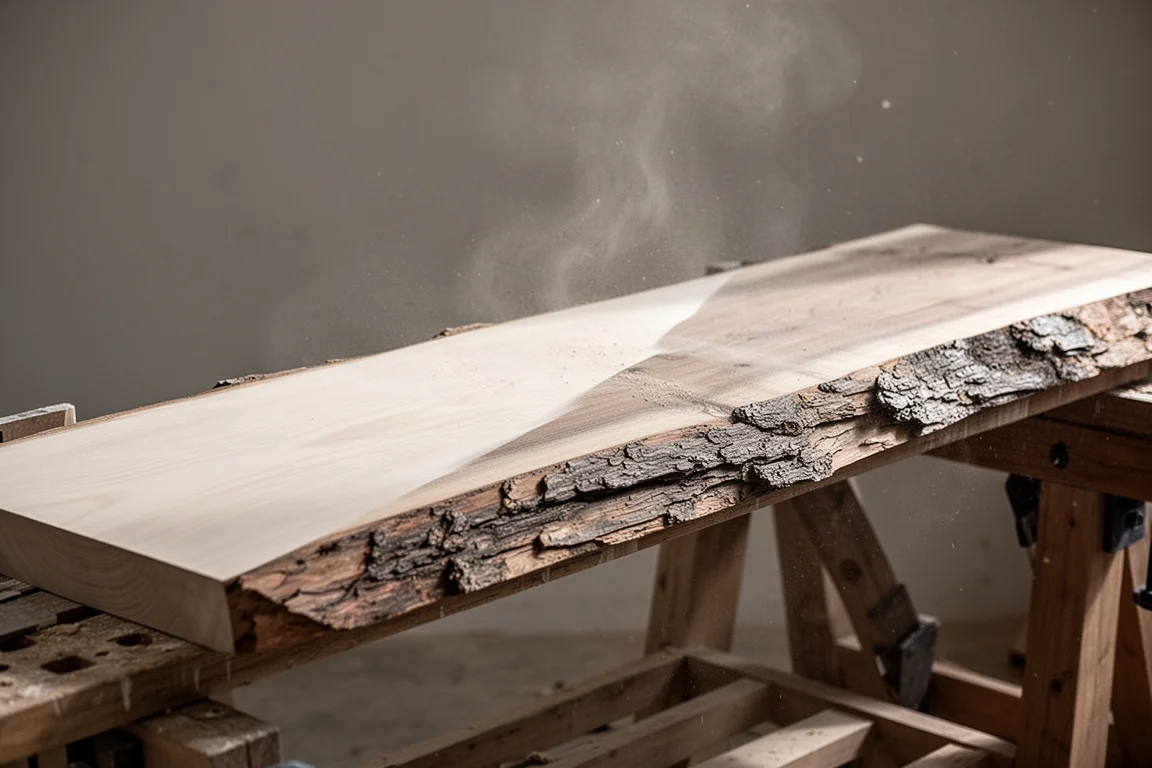
If one gets the recommendation, it is the HiKOKI. It removes material so much faster than the other two, feels the most solid, offers the auto mode and the widest speed range, and the AC adapter option makes long jobs practical. That said, all three proved capable, and if budget is the deciding factor, the AEG is a very capable entry point that does the core job well.
Conclusion
Cordless belt sanders have genuinely arrived. The AEG BHBS18B delivers solid performance at the friendliest price, the Milwaukee adds power, lights and thoughtful details like the tool-less handle, and the HiKOKI 36V stands out as the fastest, strongest and most complete package if you can live with its battery appetite. Pick the HiKOKI for heavy work and site use, the Milwaukee for power and features at the top end, or the AEG if you want capable belt sanding without the premium. Whichever you choose, keep the timber well secured, mind the belt tracking, and keep a finishing sander handy for the final pass.
Further reading
Related Reviews
Power Tools
Best 1-Inch Pistol Impact Wrenches: Three Heavy-Duty Options Compared
We compare three 1-inch pistol impact wrenches, from a budget-friendly Harbor Freight model to a premium Caterpillar unit, to help you choose the right one.
Power Tools
Best 3/4-Inch Impact Wrenches 2026: Five Contenders Compared
We compare five 3/4-inch impact wrenches across price and performance, from a budget Amazon option to Snap-on's most powerful model yet.
Power Tools
Best Budget Cordless Tools 2026: Walmart Finds That Punch Above Their Price
We tested five cordless tools from Walmart, including a high-torque impact wrench that trades blows with Milwaukee and a $35 duster that outperforms its price class.