Power Tools
Best Cordless Angle Grinders: Four 4-1/2 to 5-Inch Tools Put to the Test
Hart, Makita, Milwaukee M18 and Hercules angle grinders compared on real measured power, runtime, vibration and price.
Introduction
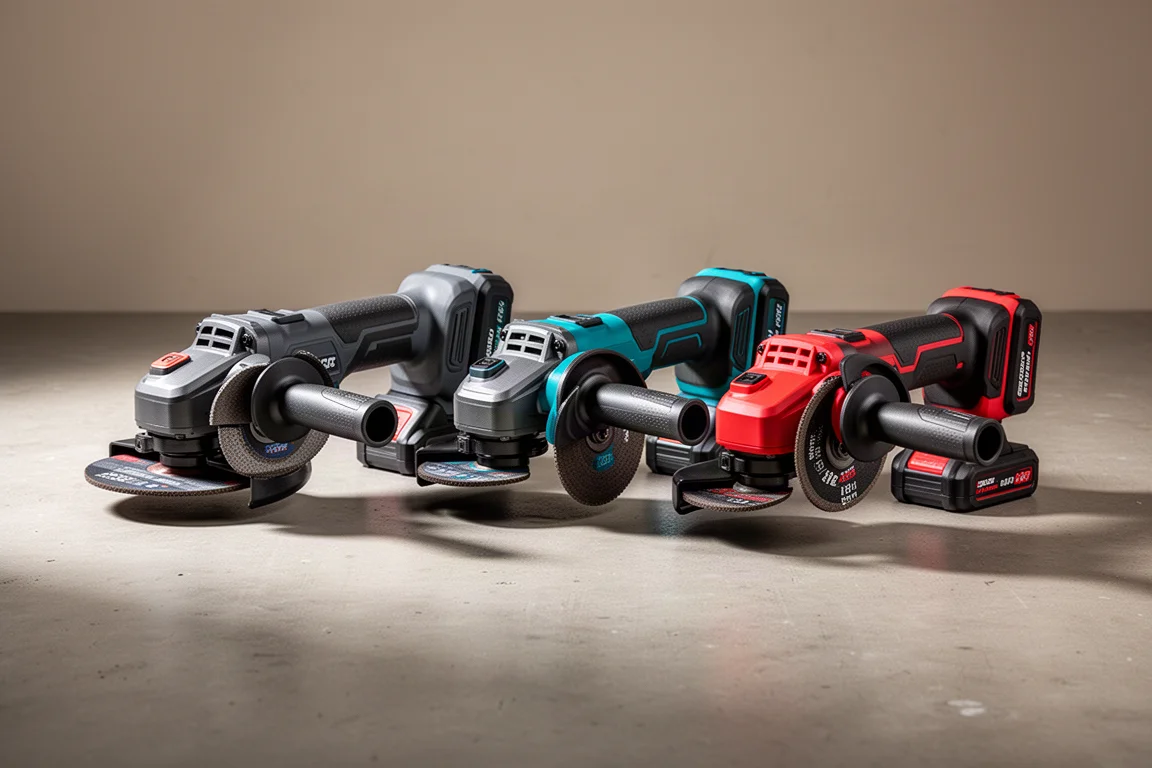
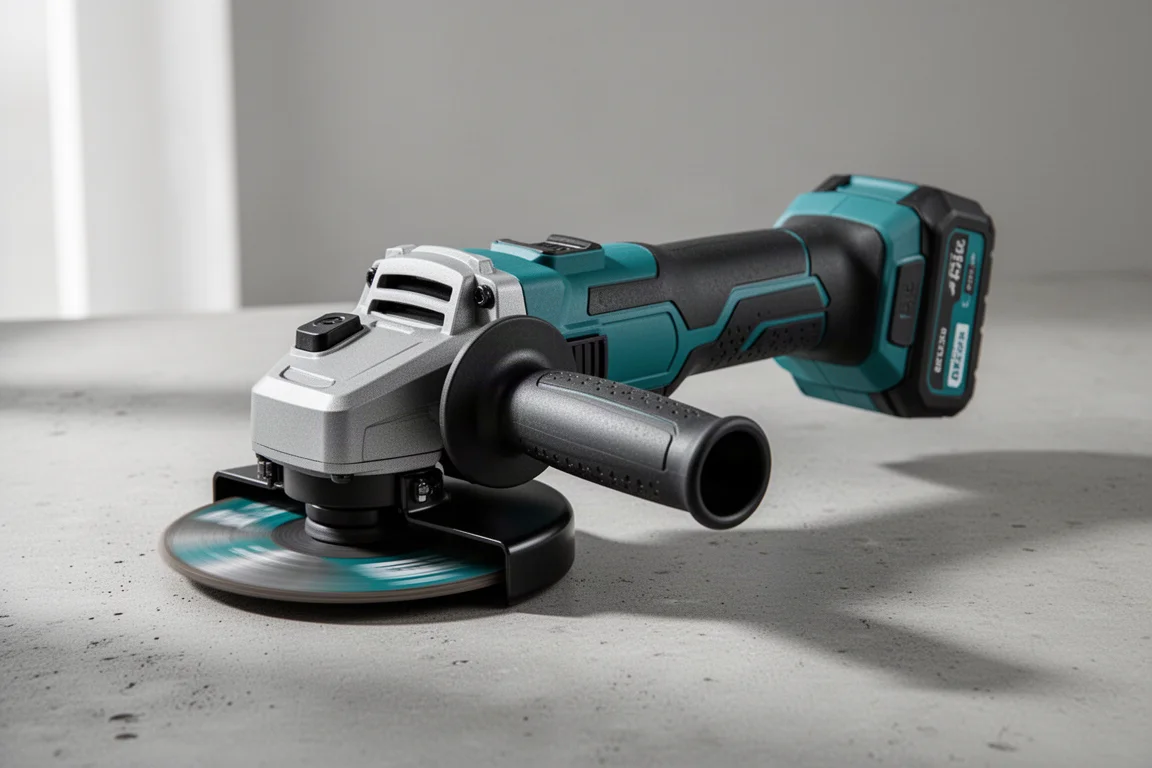
Cordless angle grinders are one of those tools where the marketing numbers tell you almost nothing. Advertised free speed does not describe how the tool behaves once you lean on a cut, and almost no brand publishes real power or runtime figures. To get past that, we measured four of the most requested 4-1/2 to 5-inch models: the Hart 20V brushless, the Makita LXT 18V, the Milwaukee M18 2888, and the Harbor Freight Hercules 20V. Each was tested on a dynamometer rig to capture actual output power, working RPM under load, runtime on the paired battery, and vibration.
How We Approached the Comparison
The test rig pulls a measured 200 W load, just over a quarter horsepower, to see what RPM each grinder holds while doing representative work. From there, load is ratcheted up until the tool cuts out or drops below half its free speed, which reveals true peak output. Runtime was measured by running each tool at that 200 W load until the battery died, capturing both duration and disc speed over time. Vibration was measured in a supported hand with a disc installed, since readings change dramatically otherwise.
One note worth flagging early: labels like 18V and 20V Max describe the same nominal voltage class. The Hercules, despite its 20V branding, works out to roughly 18 working volts, just like the rest of the field.
Power Under Load
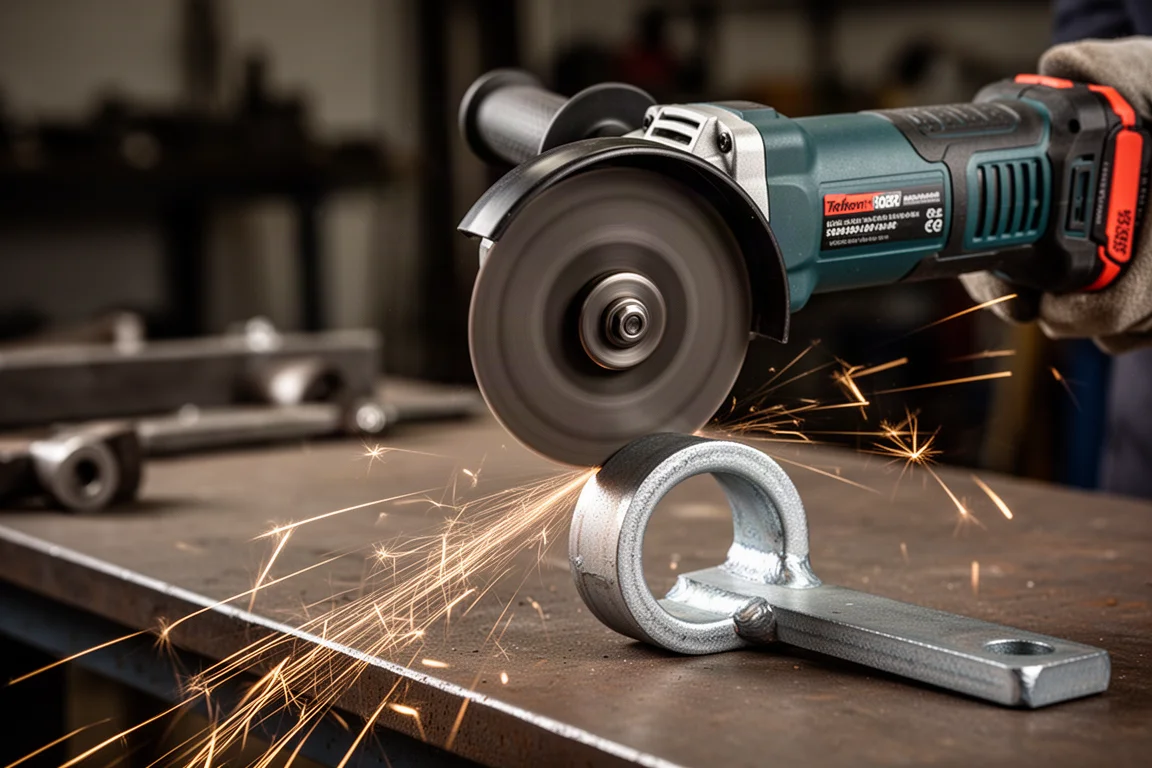
This is where the rankings get interesting. The Makita LXT managed about 420 W before cutting out on its standard 5 Ah pack, and 460 W with the 6 Ah battery, which happens to match the Hercules on a 5 Ah pack. The Hart kept its RPM remarkably well under pressure and pushed to roughly 550 W on its standard 4 Ah pack, which is more than the Hercules achieves even with a larger 21700-cell 8 Ah pack.
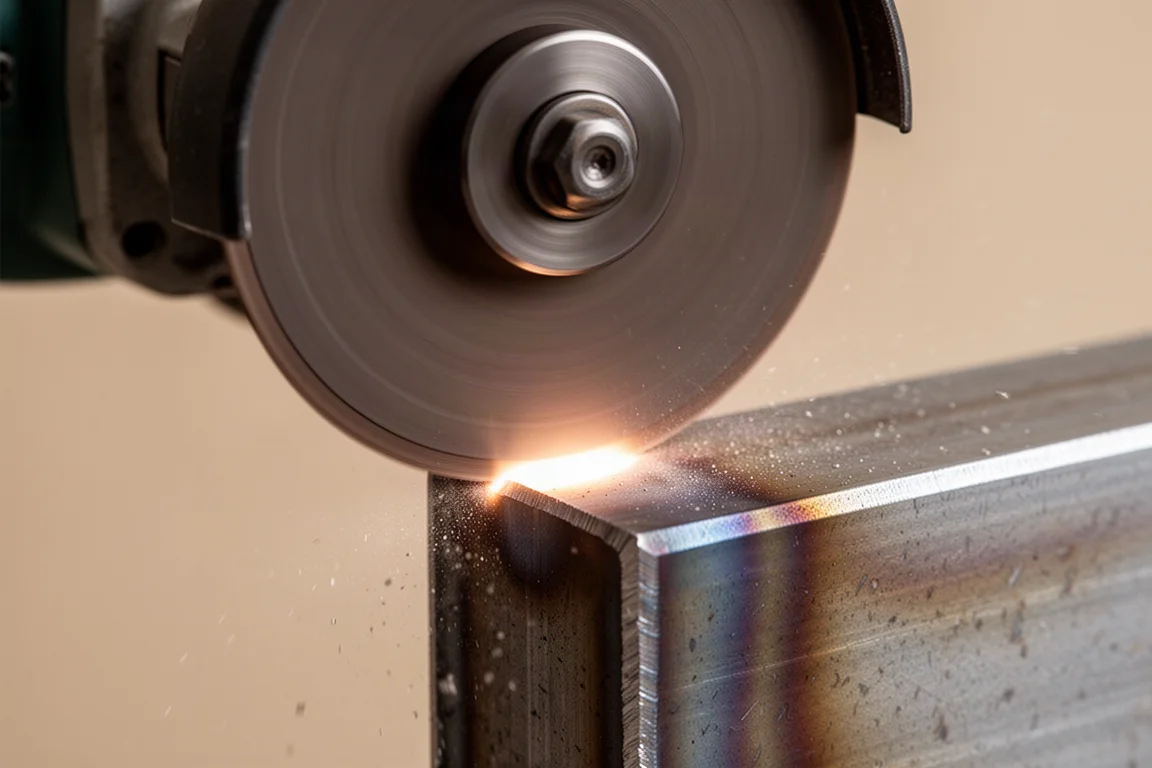
The Milwaukee M18 2888 sits in a league of its own, reaching about 670 W, which backs up its 11 amp corded-class claim reasonably well. Back-calculating from power and RPM puts that closer to 930 W output, roughly a 9.5 to 10 amp corded equivalent rather than a full 11. One practical discovery: the M18 makes the same power with a 6 Ah High Output battery as with the 8 Ah, so the smaller pack is worth considering if you already own one. With a standard 5 Ah pack, though, it makes less power than the Hart.
Working Speed and Handling
Under a 200 W load, the Hart held around 7,000 RPM, the fastest of the group, meaning it moves more material under light loads than most competitors. The Makita produced about 5,860 RPM on the 5 Ah pack and a surprising 6,350 RPM on the 6 Ah pack, which was not expected from identical cell counts. The Milwaukee was the slowest at roughly 6,260 RPM, likely because it is geared for more torque.
Weight matters here too. The Hart package with battery comes in at just 5.1 lb, the lightest of the group, which is a genuine bonus for overhead work like exhaust hangers. The Milwaukee with its 8 Ah High Output pack is the heaviest at 6.4 lb. Both the Milwaukee and Makita feature a brake that stops the disc quickly after you release the trigger, and both offer speed adjustment dials, though in practice the dial does little until you drop it to the lowest settings, and the tools still hit peak power even on low.
Runtime on a Battery
Runtime is a deciding factor for many buyers and virtually no brand advertises it. Running at a 200 W load until empty, the Hart died first, with the Makita close behind, lasting only about 30 seconds longer on its 6 Ah pack. Oddly, the Makita’s 5 Ah pack ran 20 to 30 seconds longer than the 6 Ah in testing, which appears to be a known quirk of higher-capacity packs cutting out early even with charge indication remaining.
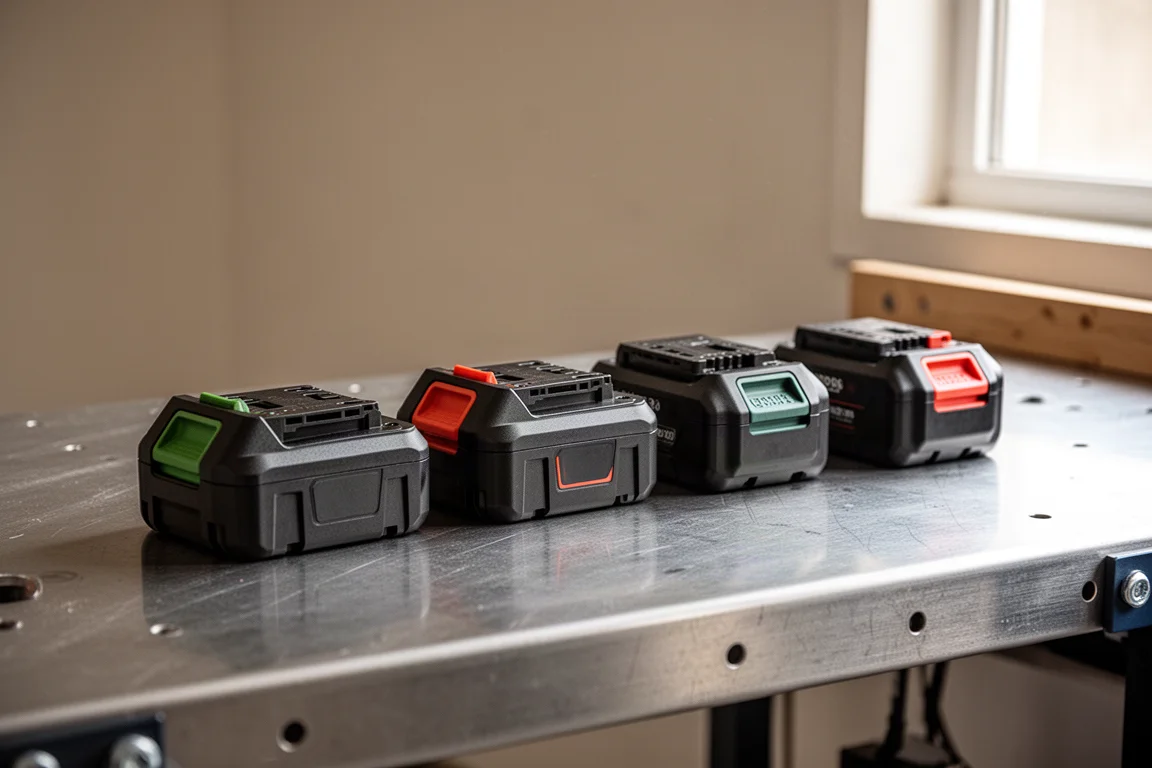
The Milwaukee lasted roughly 16 minutes at load, performing about 83,000 disc RPM worth of work in that time, but it actually ran for less time than the Hercules on the same 8 Ah capacity while also holding a lower disc speed. That makes the M18 the least efficient of the group, similar in efficiency to the Hart, whose larger pack buys roughly twice the runtime of smaller ones.
Vibration and Build Quality
Vibration turned out to be a meaningful differentiator. With a disc installed and the tool supported, the Makita is remarkably smooth, and its readings were actually cut in half when a 4-1/2-inch disc was fitted. The Hart and Milwaukee, which share manufacturing origins, posted similar vibration levels to each other. The Hercules is the harshest of the bunch by a wide margin, with a character best described as a box of rocks compared to the Makita.
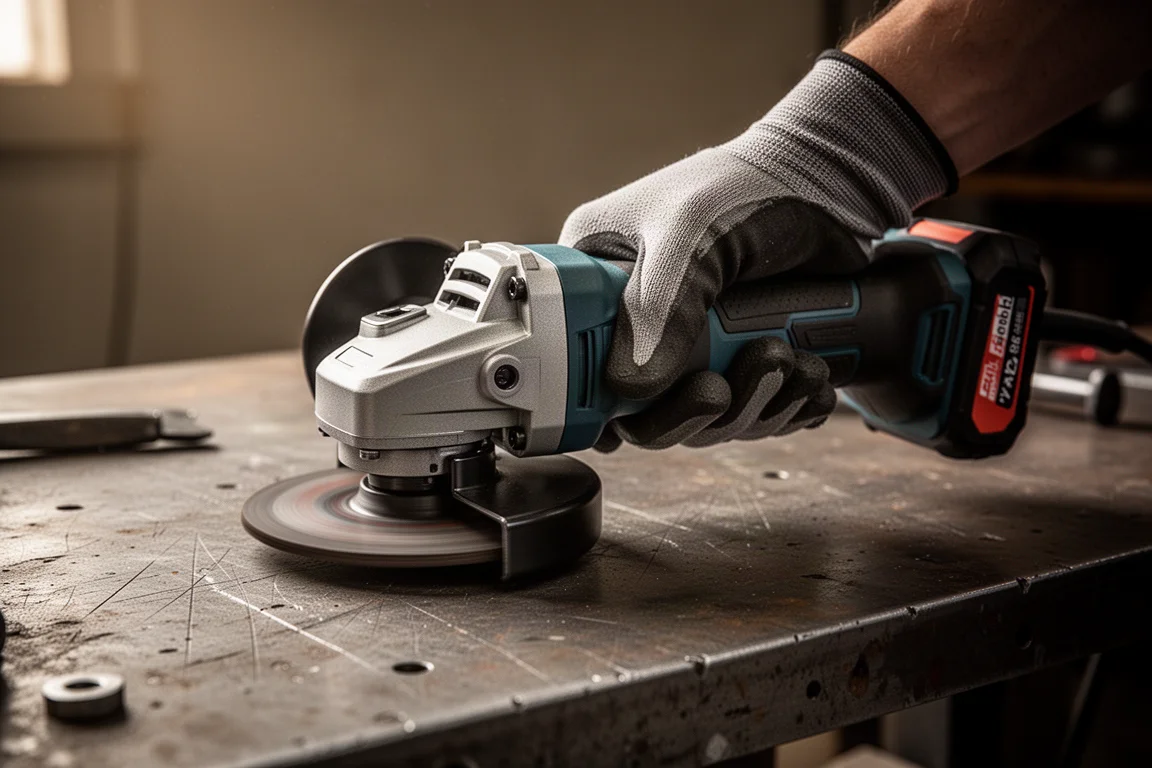
That matters even if you do not run these tools all day like corded grinders. Measured vibration is a reasonable proxy for comfort, build quality, and possibly tool life, and it is part of what the premium options charge for.
The Rankings
Combining power, working speed, runtime, weight, vibration and price into a single score, the Milwaukee M18 2888 takes first place at 105.9 points, its power-hungry motor well fed by available 21700-cell packs. The Hercules follows at 88.7, then the Hart at an eye-opening 128.7 points-per-dollar figure that makes it a standout value, and finally the Makita, whose smoothness was not enough to lift its 18V model higher despite respectable overall scoring.
The biggest upset is the Hart. It was included as the budget entry and ended up outperforming tools costing significantly more on a per-dollar basis. A 6 Ah Hart pack exists but currently costs more than the tool itself, which is why the tested configuration pairs it with the standard pack.
Buying Advice
If you want maximum cutting power and already invest in high-output battery packs, the Milwaukee M18 2888 justifies its premium. If price per performance is your priority, the Hart is hard to beat at its kit price. The Hercules delivers strong power for the money but expect noticeably more vibration. The Makita LXT remains the pick for anyone who values smooth, comfortable operation and a vast existing battery platform, even if raw measured power trails this field.
Conclusion
Measured testing separates these grinders in ways spec sheets never will. The Milwaukee wins on outright power, the Hart wins on value, the Hercules holds strong on power with the worst comfort, and the Makita trades some output for the smoothest feel in the group. Matching the tool to how you actually grind, overhead cuts, long sessions, or occasional metalwork, matters more than any single number on the box.
Further reading
Related Reviews
Power Tools
Best 1-Inch Pistol Impact Wrenches: Three Heavy-Duty Options Compared
We compare three 1-inch pistol impact wrenches, from a budget-friendly Harbor Freight model to a premium Caterpillar unit, to help you choose the right one.
Power Tools
Best 3/4-Inch Impact Wrenches 2026: Five Contenders Compared
We compare five 3/4-inch impact wrenches across price and performance, from a budget Amazon option to Snap-on's most powerful model yet.
Power Tools
Best Budget Cordless Tools 2026: Walmart Finds That Punch Above Their Price
We tested five cordless tools from Walmart, including a high-torque impact wrench that trades blows with Milwaukee and a $35 duster that outperforms its price class.