Power Tools
13 Compact Chainsaws Tested: Is the $35 Mini Saw as Good as the $280 One?
Thirteen one-handed mini chainsaws went head to head in speed, torque, hardwood cuts, and durability. Here is how the budget knockoffs stack up against the name brands.
Introduction
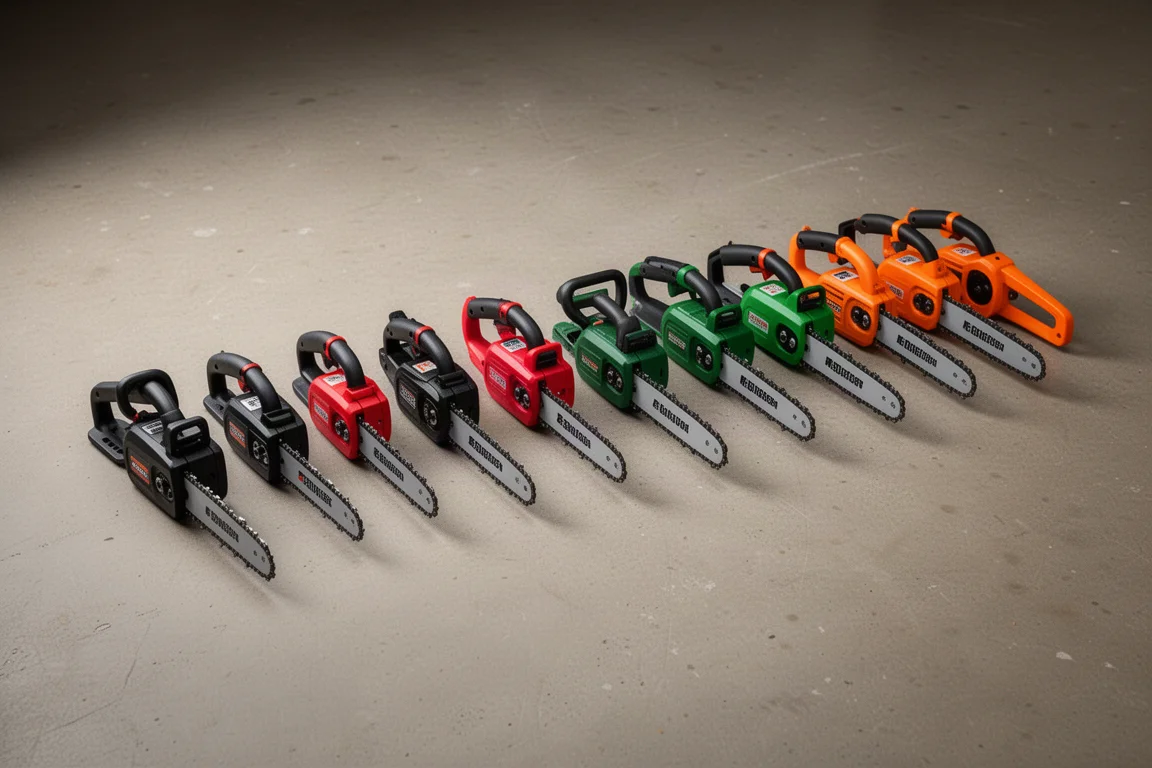
Compact chainsaws are handy because you can run them with one hand and they are very light. The obvious question: is that $35 mini saw just as good as the one that costs $280? Thirteen saws went through the same battery of tests to find out, covering trigger response, sprocket speed, cutting speed through a 2x8, torque, hardwood performance, and a brutal back-to-back torture test.
How We Tested
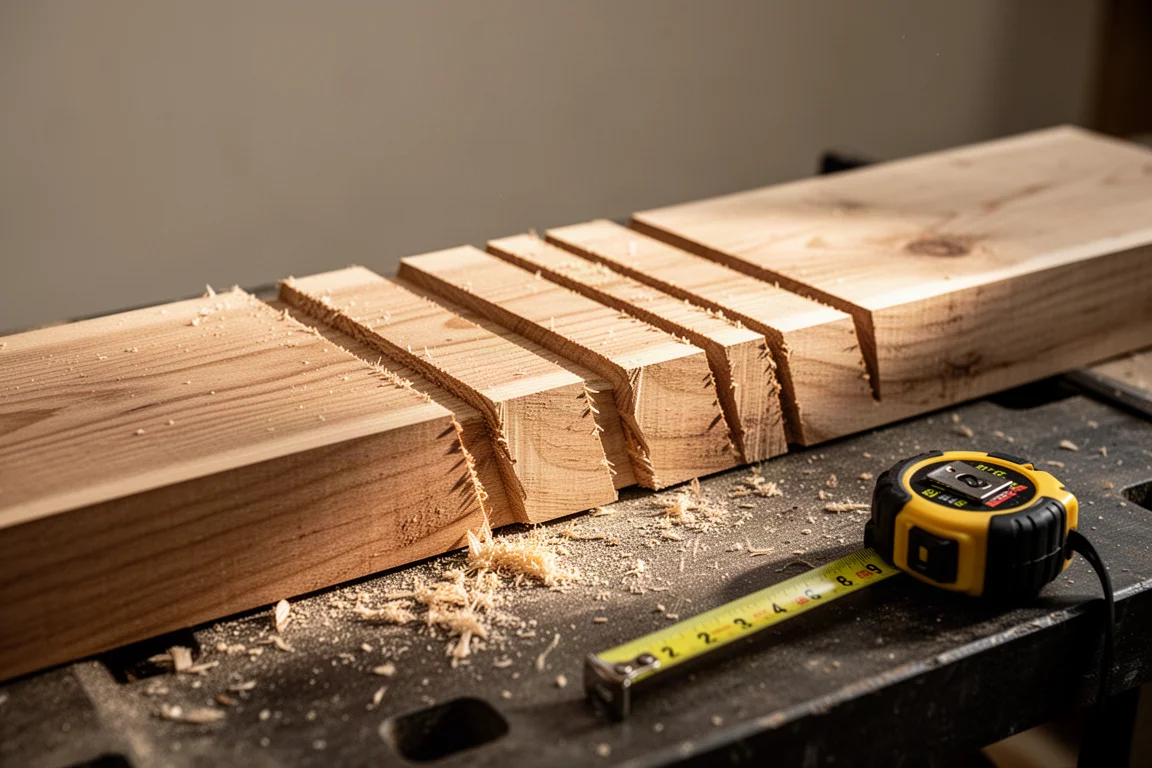
Every saw faced the same gauntlet: time to full RPM, sprocket speed, three timed cuts through a 2x8 board, a loaded torque test, hardwood log cuts, a continuous-run torture test until overheating or battery drain, and noise measurement at two feet from a sound meter. For a baseline, a Corona handsaw cut through the 2x8 in 13.83 seconds.
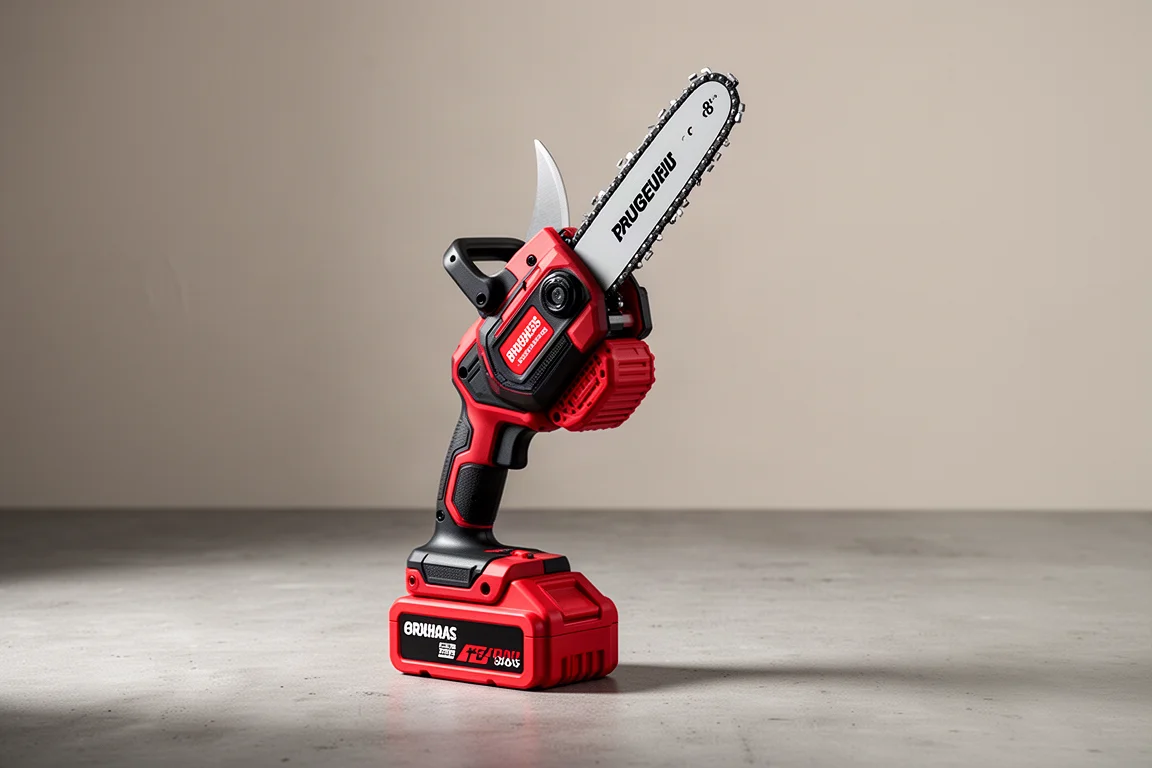
Mechanic Ant Compact Chainsaw: The $35 Entry Point
The least expensive saw in the lineup, the Mechanic Ant costs $35 and comes with two chains, a charger, and a 21V 1500 mAh battery. No carburetor, spark plug, or pre-mixed fuel. The claimed motor output is 550 W, and the saw reaches full RPM almost immediately, in about 1/10 of a second, with the sprocket spinning at 2,915 RPM. It weighs just under 2.5 lb.
Servicing requires the included tool, and chain tension needs a screwdriver. There is no automatic oiler, so you will have to oil the chain manually, and the safety switch is designed for right-hand users. It cut the 2x8 in as fast as 12.08 seconds, faster than the handsaw baseline, and held 10 lb on the torque test, which is respectable for a $35 kit. In the torture test it ran out of battery at 4:46 before taking damage. It is also one of the quietest saws at 91.7 dB.
Knockoff DeWalt Compact Chainsaw: Fast but Fiddly
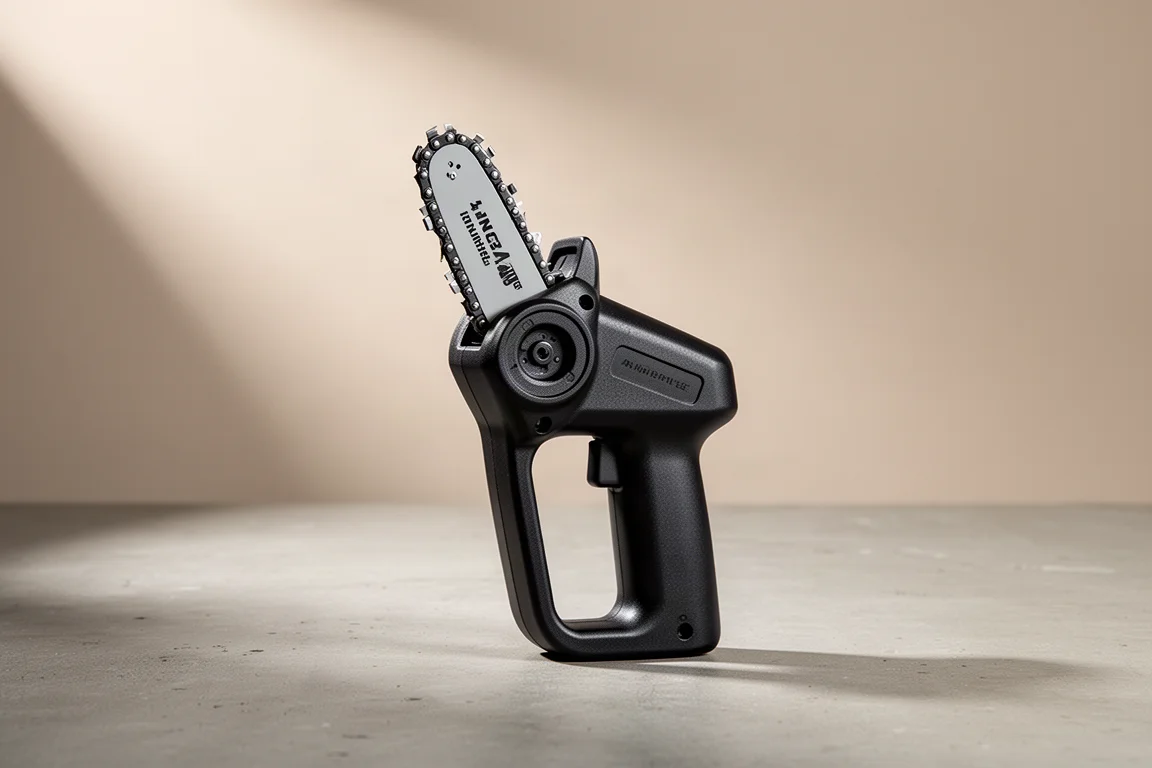
Why spend $130 on a genuine DeWalt when a knockoff costs just $40? It does not come with a battery but runs on the 20V DeWalt battery pack. The listing claims a brushless motor, 450 W of working power, a replacement chain, and the ability to cut a 6-inch log in 6 to 10 seconds. It reached full RPM in about half a second with faster RPM than the Mechanic Ant, and it cut the 2x8 in a very good 5.72 seconds.
The downside is serviceability: no tools are needed to remove the bar and chain, but several tiny spring-loaded parts can be easily lost during a field repair, making it the most difficult bar and chain to service in the lineup. It weighs 3.565 lb, hit 4,424 RPM, overheated at about 4:10 in the torture test but recovered after cooling, and managed 9.91 seconds in hardwood.
Knockoff Makita Compact Chainsaw: Smooth and Quick
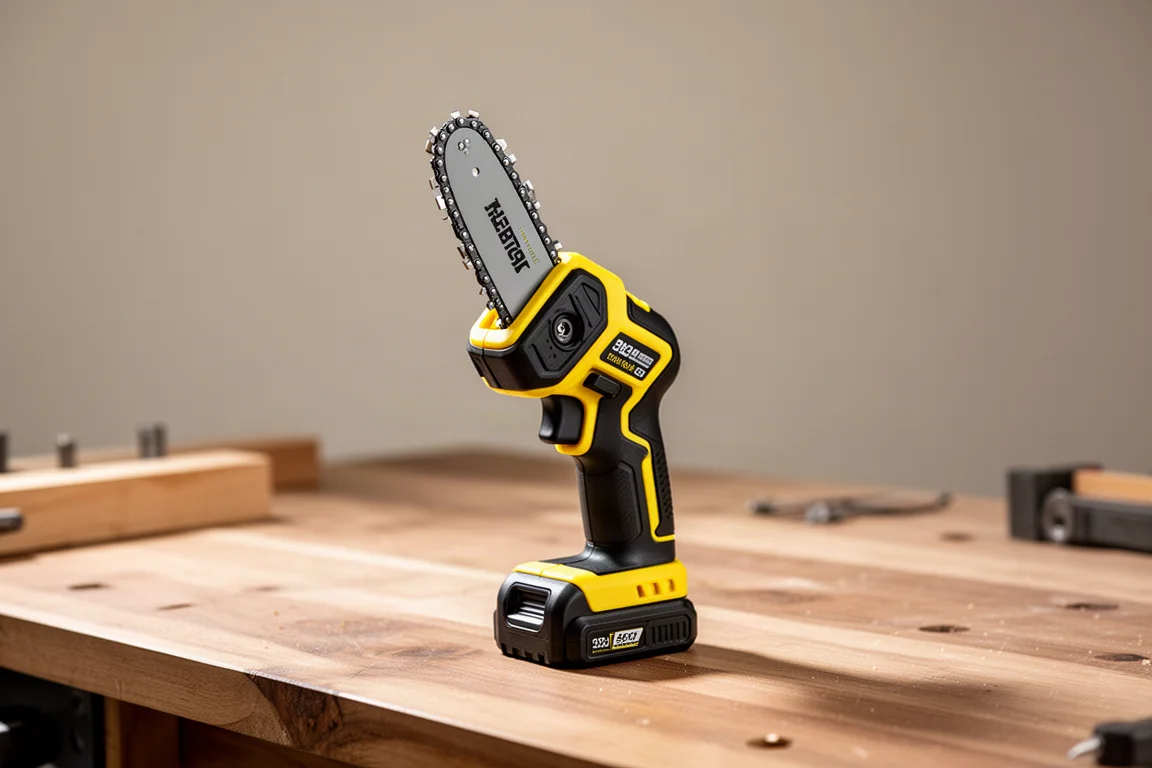
A genuine Makita runs $166, but the knockoff is only $49 and uses a genuine Makita battery. The listing claims a high-efficiency brushless motor and an 8-second cut through a 6-inch log. It reached full speed in about half a second and posted the highest chain speed of the knockoff group at 3,897 RPM, cutting the 2x8 in 6.34 seconds twice, and it felt nearly as smooth and vibration-free as the knockoff DeWalt.
There is no automatic oiler. The chain cover comes off without tools, but tensioning needs the included screwdriver. It weighs 3.245 lb, and in the torture test it overheated after 4 minutes and ran a combined 8:37 after cooldown. On hardwood it managed 10.01 seconds, just behind the knockoff DeWalt.
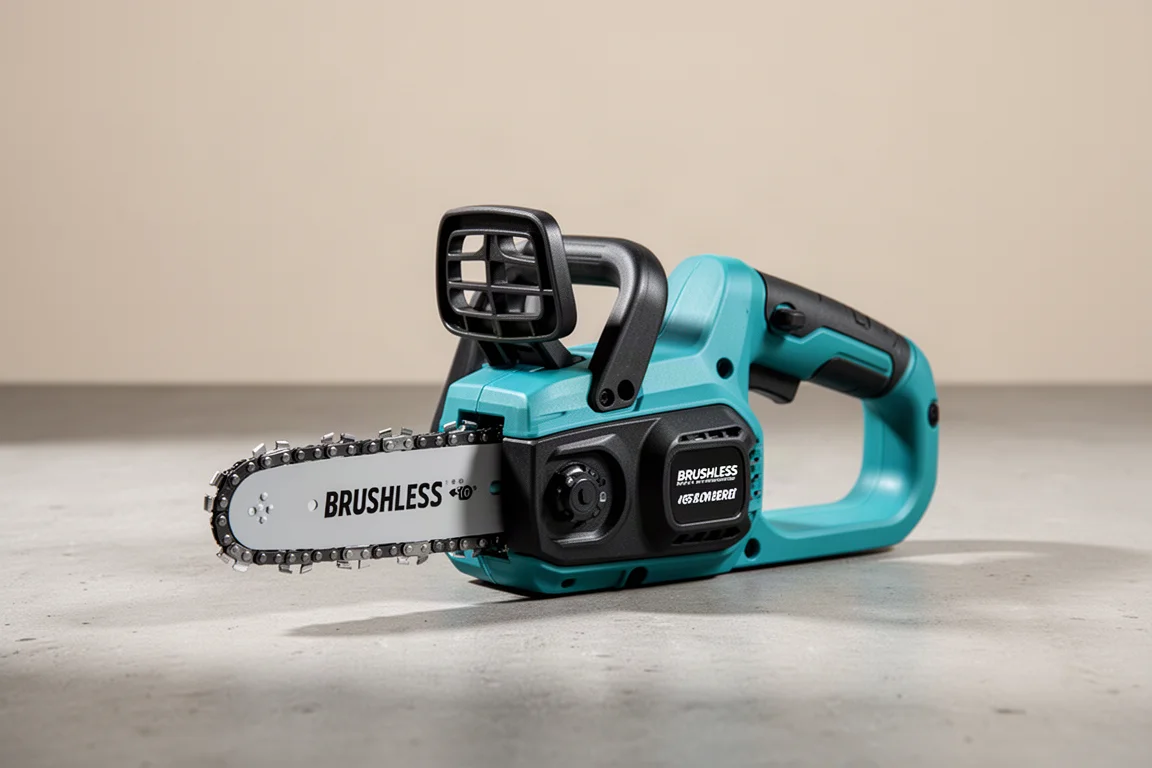
Knockoff Milwaukee Compact Chainsaw: The Surprise Performer
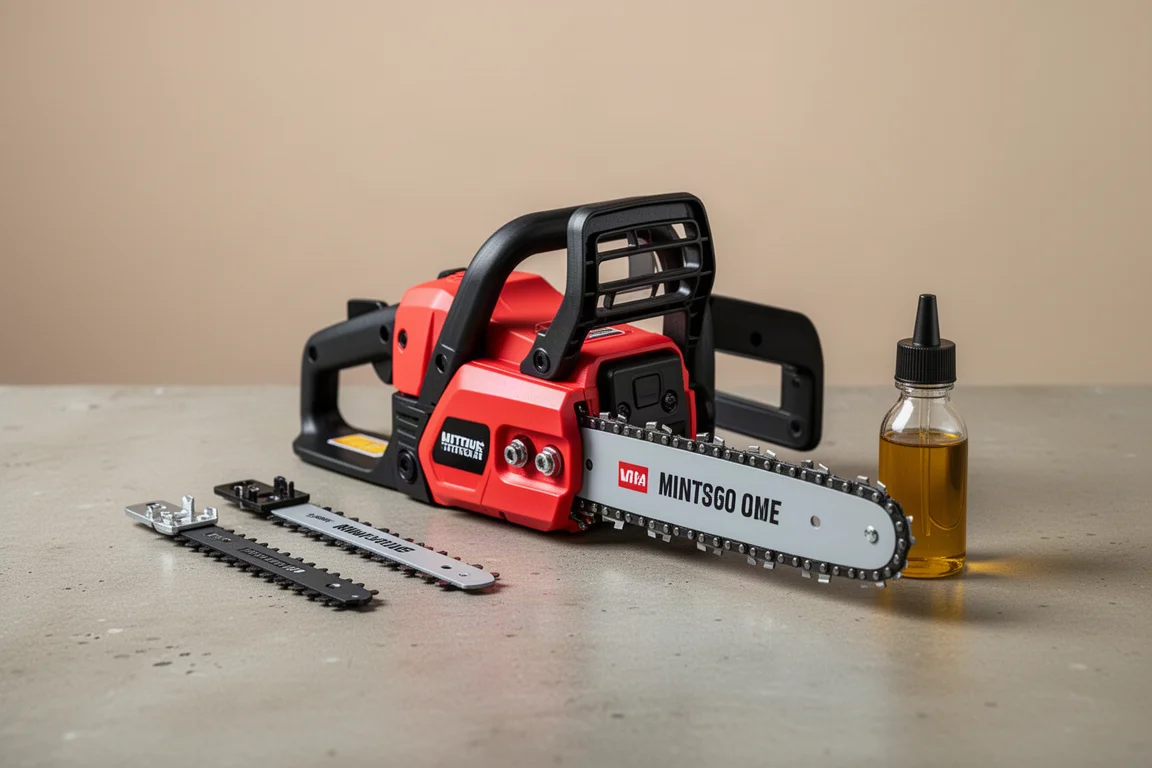
A genuine Milwaukee costs $279, but this knockoff was $70 before the coupon and $54 after. It is impressively equipped for the money: an automatic oiler, both a 6-inch and an 8-inch bar, included bar and chain oil, a brushless motor, tool-free chain tensioning, and a safety switch on both sides for left- and right-hand users. It hit full speed in 0.35 seconds, faster than the knockoff DeWalt and Makita, and turned a strong 4,219 RPM.
Servicing is easy thanks to a built-in wing nut and chain tensioner on the side cover, and the oiler proved to work well in testing. With a 6A battery it weighs 5.325 lb. It cut the 2x8 in as fast as 3.34 seconds, held an outstanding 26 lb on the torque test, and cut hardwood in 5.26 seconds, tying for third overall. In the torture test it never overheated and drained its 3Ah battery at 5:44. Considering price and performance, it is a great saw for occasional use.
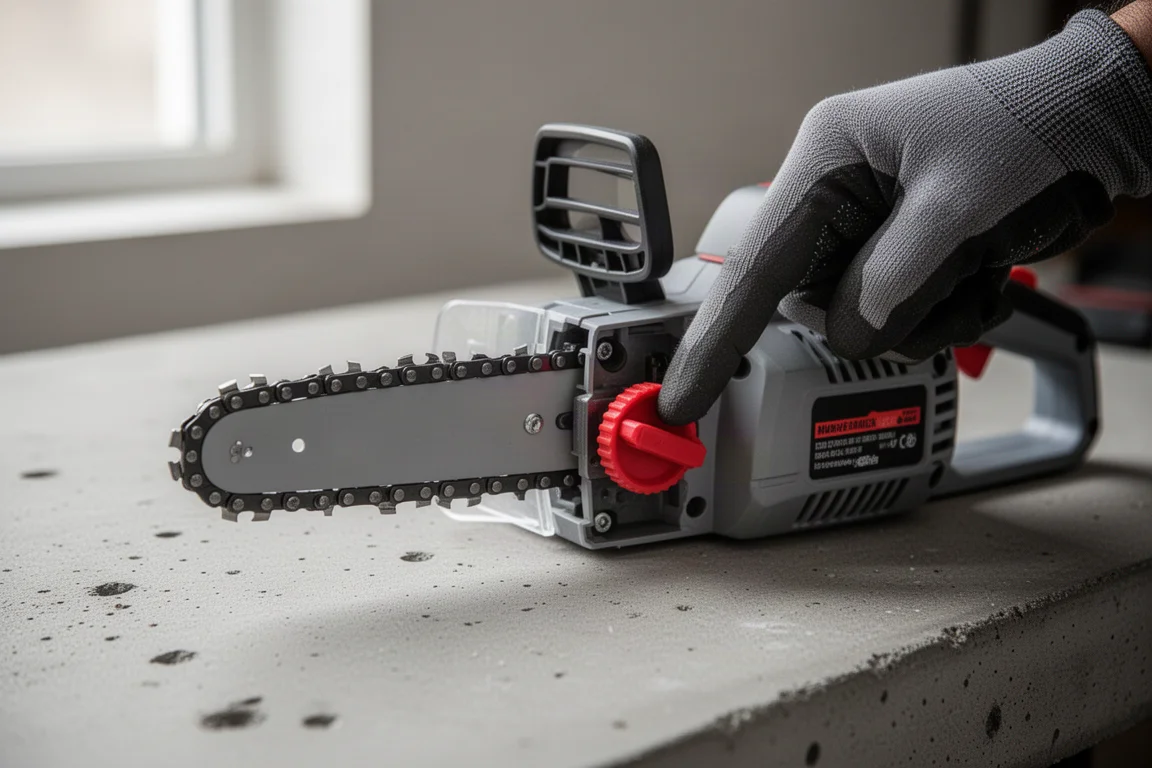
Works Compact Chainsaw: Quiet but Underpowered
At $79 for the saw only, without battery or charger, the Works claims an impressive chain speed of 22 ft per second and minimal vibration with its 5-inch bar. It reached full speed in just over half a second and turned 3,148 RPM, slower than the knockoff DeWalt, Makita, and Milwaukee.
It lacks an automatic oiler and a brushless motor. A wing nut holds the side cover, and the included slotted screwdriver stores onboard. It weighs 4.57 lb. On the 2x8 it managed 4.9 seconds, but torque is its weakness: only 9 lb on the dyno, and it struggled in hardwood at 10.68 seconds. Its saving grace is noise: at 90.3 dB it is the quietest saw in the entire lineup.
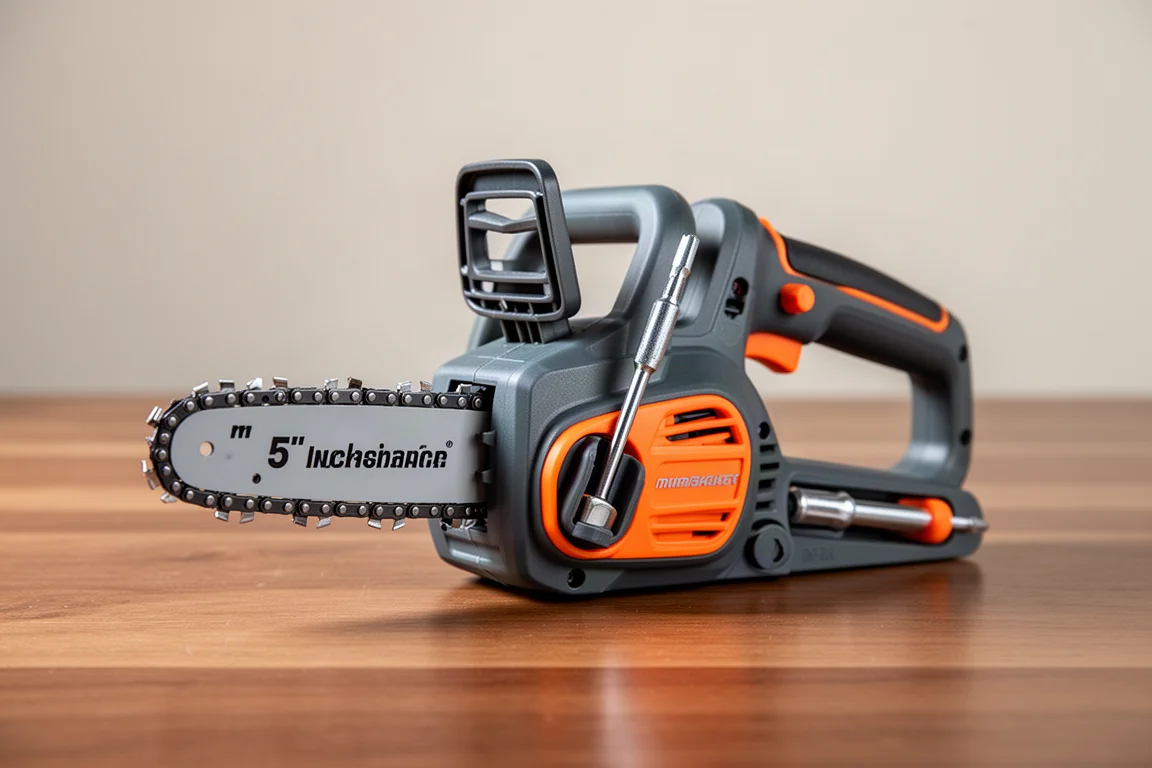
Workpro Compact Chainsaw: Two Batteries, Modest Power
For $90 including the saw, two batteries, and a charger, the Workpro offers good value on paper. The guide bar is 6.3 inches, it comes with two extra chains, and the listing claims a chain speed of 16.4 ft per second and an 8-second cut through a 4.3-inch branch. It weighs a very light 3.19 lb.
It has no brushless motor and no automatic oiler. Tool-free tensioning is built into the side cover, though the tensioner knob is a bit difficult to work with. The safety release suits both hands. On the 2x8 it powered down twice on the first cut and finished in 14.7 seconds, and torque measured only 5 lb, the lowest of the affordable group. In hardwood it took nearly 23 seconds. Fast cutting is simply not this saw’s strength.
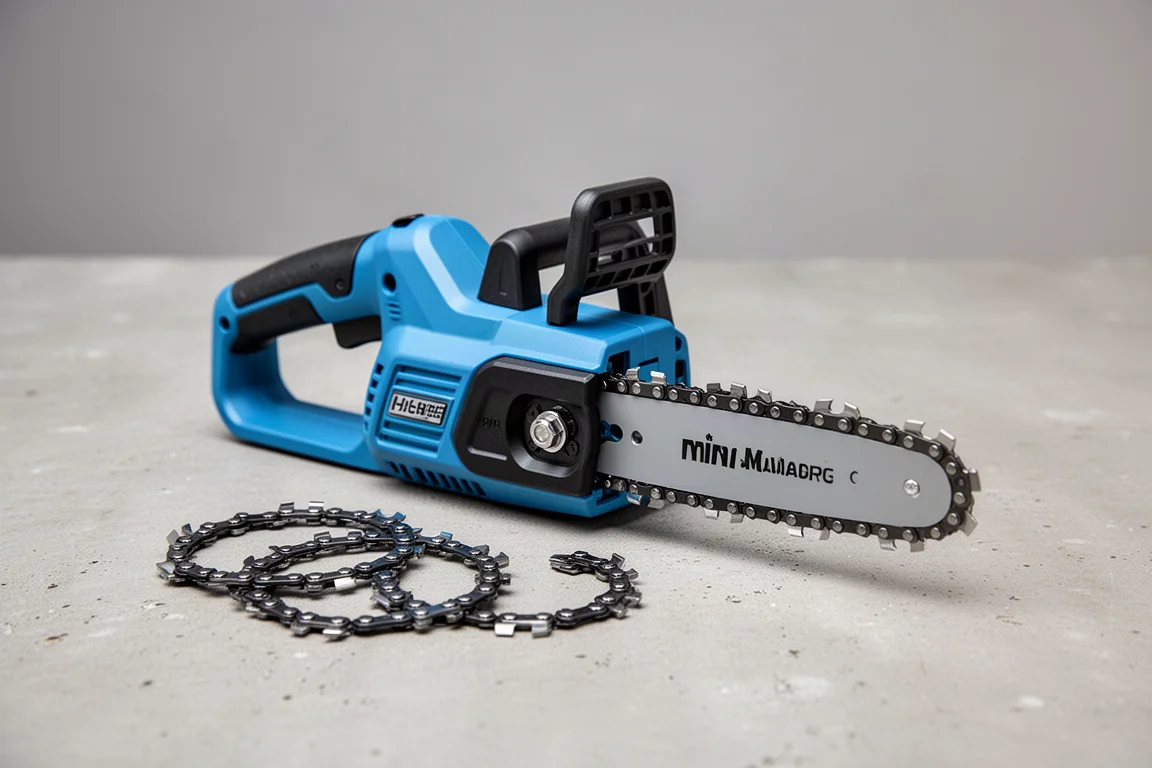
Greenworks 24V Compact Chainsaw: Fastest Sprocket Speed
At $100 for the saw only, the Greenworks steps up to a 24V system, and it comes with a brushless motor, a safety lock for both hands, and tool-free chain adjustment. It posted the highest sprocket speed in the entire test at just over 5,200 RPM, and its tensioning dial is very easy to use. It weighs 3.385 lb.
The trade-off is throttle response: it took 1.75 seconds to reach full speed, the slowest in the test. On the 2x8 it hit 4.58 seconds, second only to the knockoff Milwaukee at that stage, and it needed noticeably less downward force than most saws. The dyno result was 17 lb, above average, but hardwood exposed a torque deficit at 8.93 seconds. In the torture test it powered down several times and lasted 5:17 on the 2Ah battery.
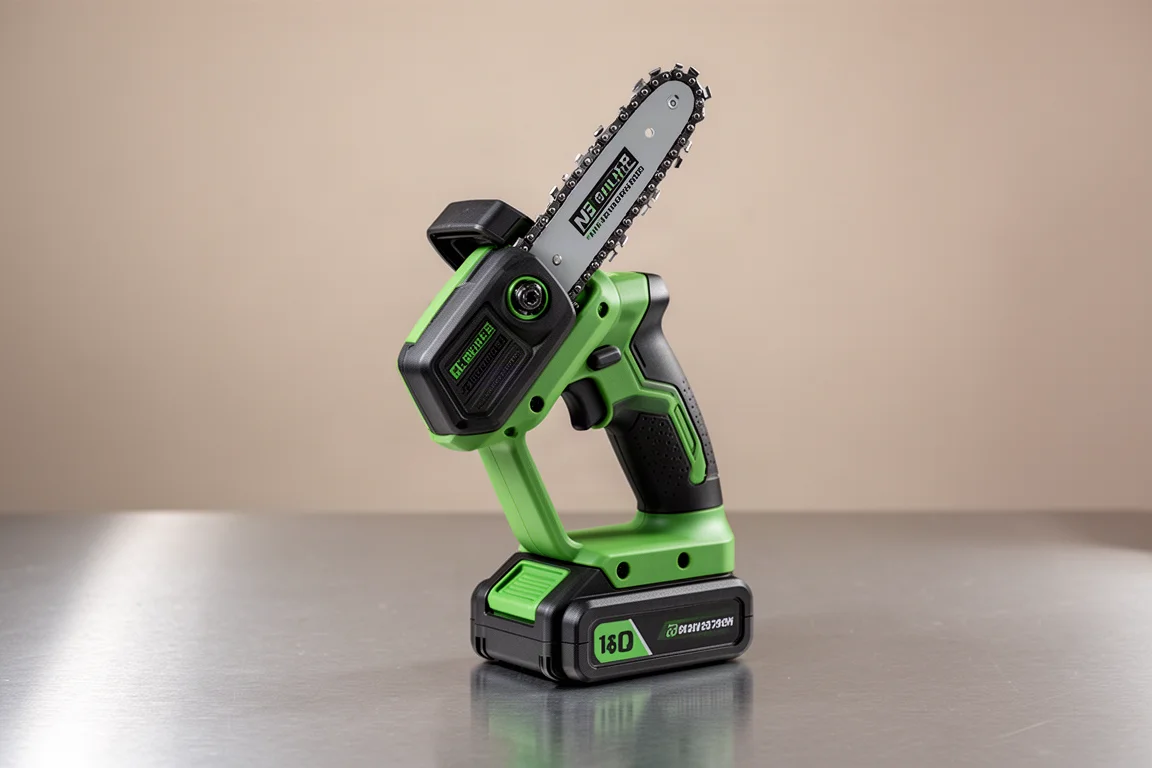
Craftsman Compact Chainsaw: Torque Over Speed
At $129 including a 2Ah battery and charger, the Craftsman offers up to a 4-inch cut capacity and an integrated tip guard for upper cuts. It is quick to get up to speed in 0.3 seconds, but chain speed is low at 2,088 RPM, so it grinds its way through cuts. What it lacks in speed it makes up in torque: 36 lb on the dyno, the most of any name-brand saw except Milwaukee.
It has no automatic oiler and, frustratingly, does not include the wrench or screwdriver needed for tensioning. It is right-hand oriented and heavy at 5.8 lb, and it vibrates noticeably more than the others. Still, it cut the 2x8 in 3.75 seconds with the 4Ah battery and managed 8.62 seconds in hardwood.
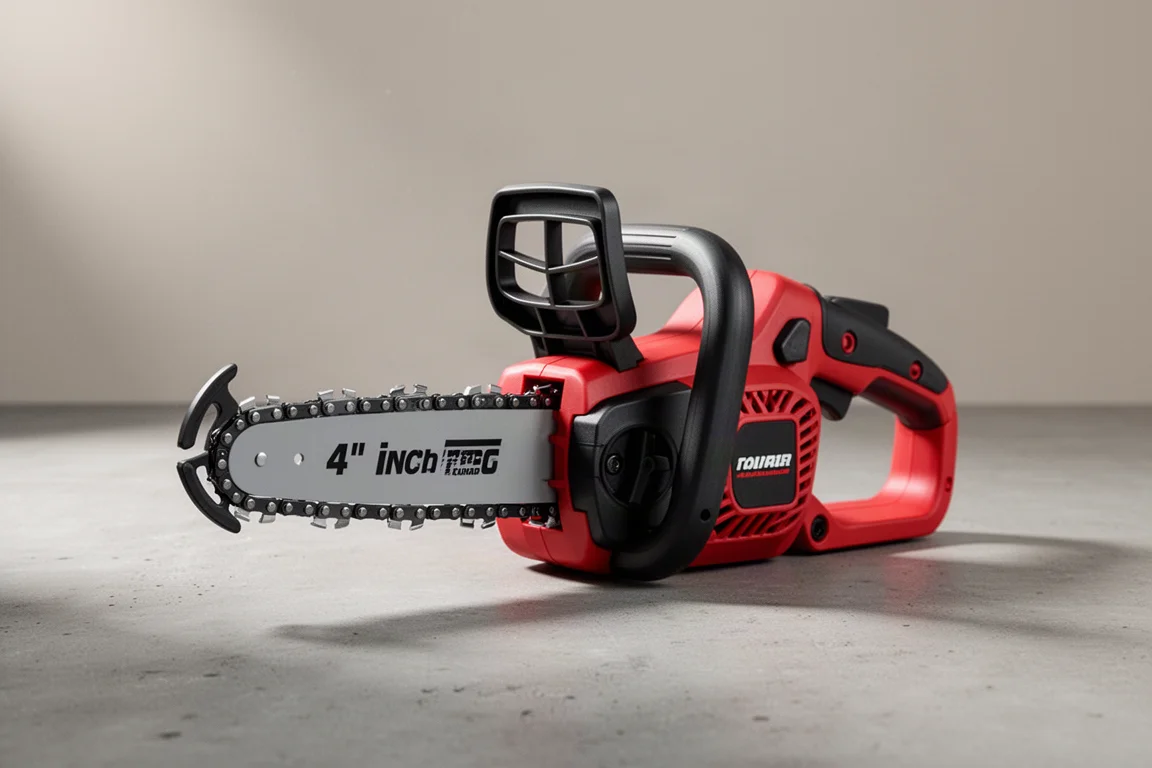
DeWalt 20V Compact Chainsaw: Second Fastest Cutter
At $130 for the saw only, the genuine DeWalt runs on the 20V battery with a claimed high-efficiency brushless motor and an 8-inch bar, the largest in the group alongside the knockoff Milwaukee. It includes an automatic oiler, though in testing it needed a bar removal to clear what appeared to be an air pocket before oil flowed. It reached full RPM in about 0.6 seconds and posted 4,709 RPM, second only to the Greenworks.
With a 5Ah battery it weighs just over 6 lb. The bar and chain take more effort to remove and install, but the design is more durable than most of the cheaper brands. On the 2x8 it hit 2.87 seconds, and in hardwood it managed 7.07 seconds. The dyno showed a great balance of speed and torque at 21 lb.
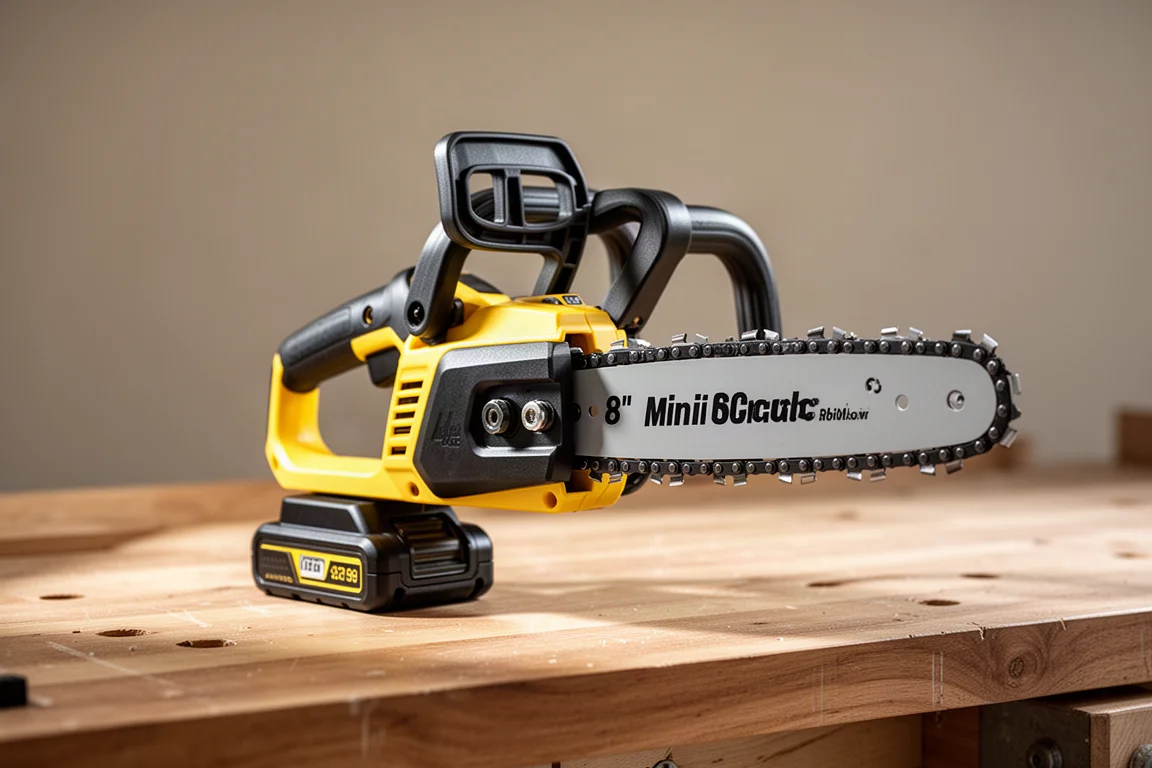
Kobalt 24V Compact Chainsaw: The Best Balanced Kit
For $149 including the saw, a 2Ah 24V battery, and a charger, the Kobalt delivers adjustable trigger speed for precise control, a 6-inch bar, tool-free chain tensioning, an automatic oiler, and a trigger lock for both hands. It has a soft start taking 1.2 seconds to max RPM, and it turned 3,933 RPM.
With a 4Ah battery it ripped through the 2x8 in just 2.1 seconds, second fastest overall, and in hardwood it cut Osage orange in 3.75 seconds, also second. The dyno showed 18 lb of torque. It weighs 4.1 lb, tensioning is easy, and the oiler worked flawlessly. Efficiency is excellent too: 31.7 cuts through a 3.5-inch log per amp hour, second only to the Milwaukee.
Ryobi Compact Chainsaw: A Torque Monster
At $150 for the saw only, the Ryobi comes with a 6-inch bar and chain, tool-free tensioning, and a trigger lock for both hands. Its claim of an oil-free design sets it apart, and it is made in Vietnam rather than China. With a 4Ah high-performance battery, the brushed motor hit full speed in just 0.2 seconds, nearly the quickest throttle response in the test.
Chain speed is its weakness at 2,563 RPM, but torque is a genuine strength at 31 lb, third best on the dyno. It cut the 2x8 in 3.7 seconds and hardwood in 5.26 seconds, tying for third overall. The torture test drained its 4Ah battery in just over 7.5 minutes. It weighs 5.255 lb.
Makita Compact Chainsaw: Well Built but Torque Limited
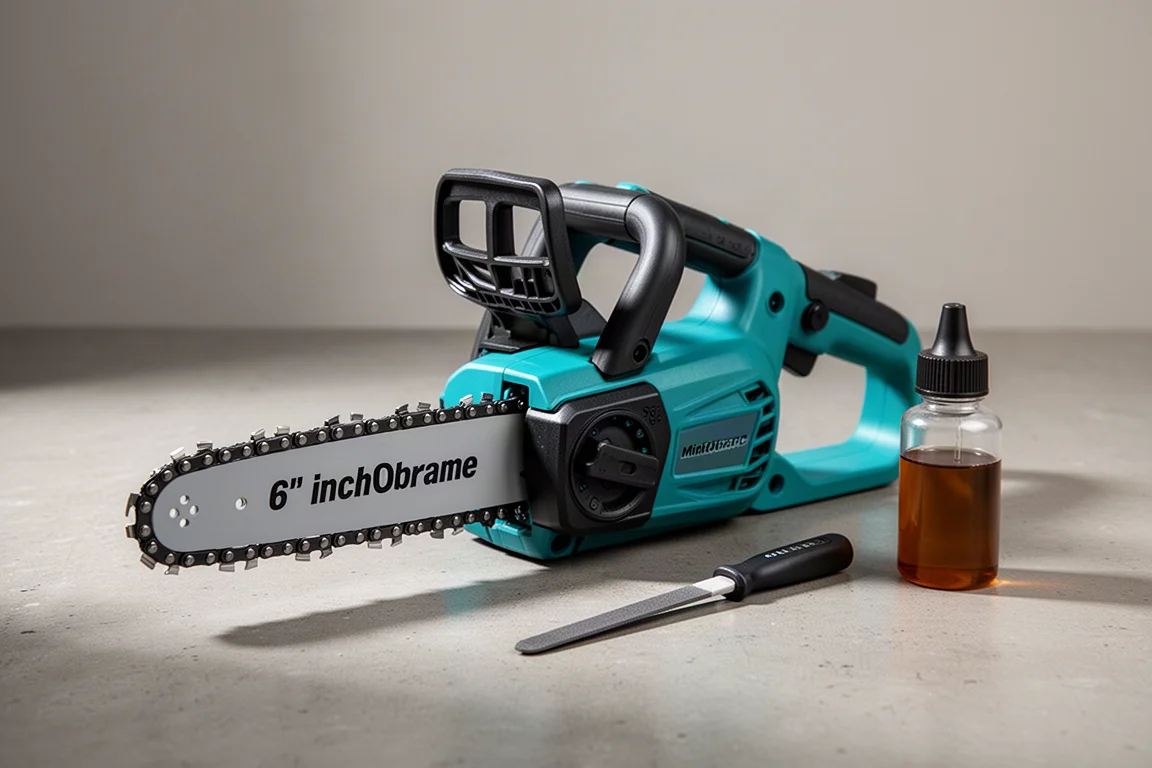
At $166 for the saw only, the Makita includes a Makita-built brushless motor, tool-free chain adjustment, an automatic oiler, and a kit with bar and chain oil plus a file for sharpening the chain. The claim of up to 140 cuts in 2-inch cedar with a 2Ah battery speaks to its efficiency focus. It reached full speed in 0.3 seconds and turned just over 4,000 RPM.
The design is durable, with two metal dowels to position the bar and a metal stud anchoring the side cover, though you need a screwdriver to align the dowel pin. On hardwood it struggled at 12.29 seconds, and the dyno showed only 4 lb of torque, the lowest in the test. It weighs 4.29 lb with a 5Ah battery, and in the torture test its battery lasted nearly 10 minutes.
Milwaukee M18 FUEL Pruning Saw: The Overall Champion
At $279 for the saw, charger, and Red Lithium High Output XC 6.0 battery, the Milwaukee M18 FUEL makes a bold claim: the fastest cutting pruning saw, faster than a 25cc gas saw. It reaches full throttle in under 1 second, in testing just 0.3 seconds, and it claims the power to cut hardwoods, which the numbers back up. The automatic oiler and variable speed trigger worked flawlessly.
It posted 2,531 RPM, but RPM is not everything: the dyno could not stop it at 94 lb of downward force, an enormous margin over the field. It cut the 2x8 in 1.79 seconds, by far the fastest, and hardwood in 2.92 seconds, also the fastest. Efficiency per amp hour is the best at 41.5 cuts. It is the heaviest saw at 7.3 lb, and the included wrench and screwdriver store on the saw itself.
Overall Winners and Buying Advice
Across every graded event, the Milwaukee M18 FUEL ran circles around the competition with a best average finish of 1.5. The Kobalt followed at 3.5, and the knockoff Milwaukee shocked with 3.75 despite its $54-after-coupon price. On noise, the Works (90.3 dB) and Mechanic Ant (91.7 dB) are the quietest; the Greenworks is the loudest at 103.1 dB.
If you want speed without delay, the Mechanic Ant reaches full RPM almost instantly, with the Ryobi close behind at 0.2 seconds. For the best all-around value, the knockoff Milwaukee is hard to beat for occasional use, even if it is not as rugged and well-built as the name brands. For serious work, the Kobalt balances speed, torque, weight, and efficiency better than anything else at its price.
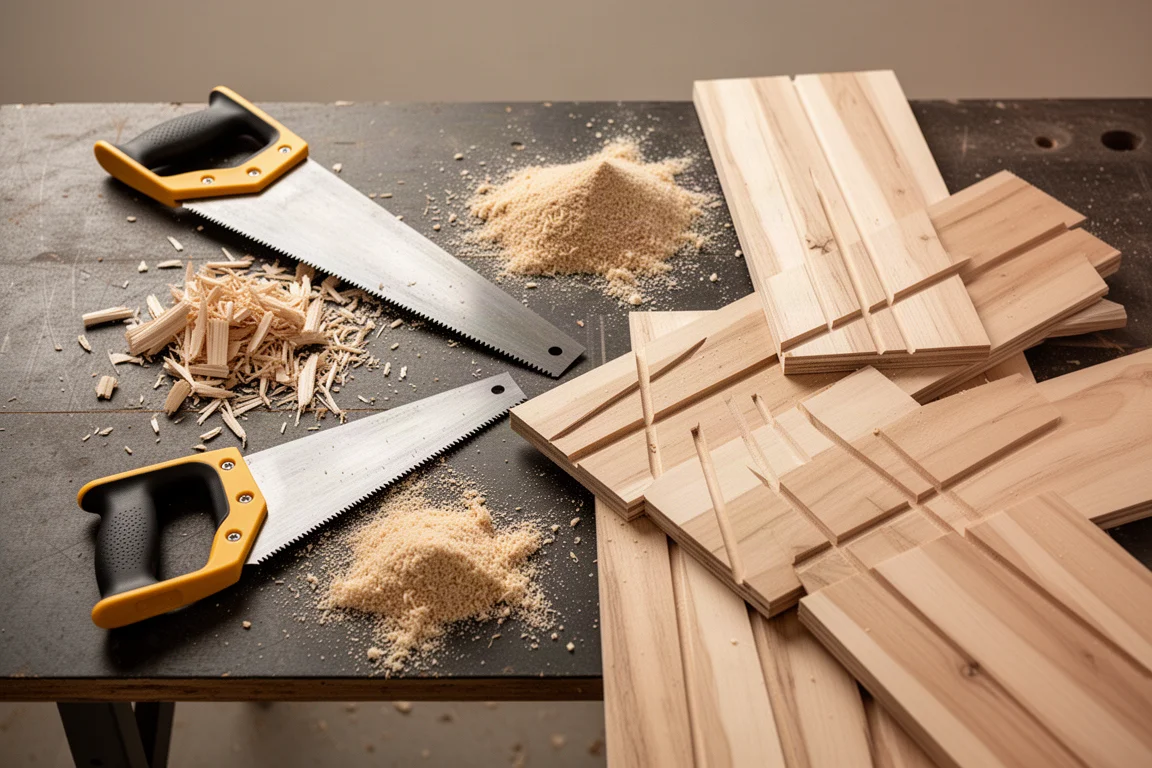
Compact chainsaws have improved a lot in recent years, and having one that handles with a single hand is genuinely useful around woods and overgrown property. Freeing up one hand to hold and control a branch, rather than having thorny limbs exact some revenge, is the whole appeal of this category.
Conclusion
The Milwaukee M18 FUEL is the outright performance king, the Kobalt is the best-balanced name-brand kit, and the knockoff Milwaukee is the value pick of the year. If your needs are light, the $35 Mechanic Ant and $40 knockoff DeWalt prove that small budgets can still buy real cutting capability. Match the saw to the wood you actually cut, and any of these will beat fighting with a handsaw.
Further reading
Related Reviews
Power Tools
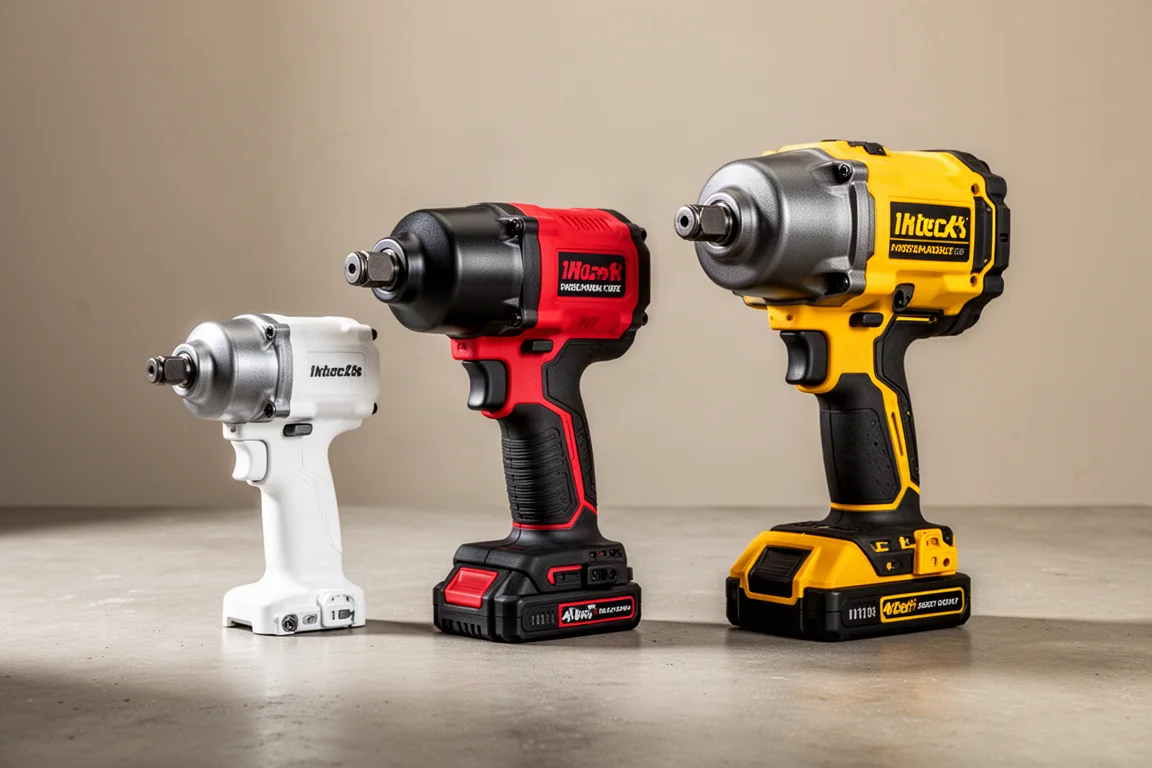
Best 1-Inch Pistol Impact Wrenches: Three Heavy-Duty Options Compared
We compare three 1-inch pistol impact wrenches, from a budget-friendly Harbor Freight model to a premium Caterpillar unit, to help you choose the right one.
Power Tools
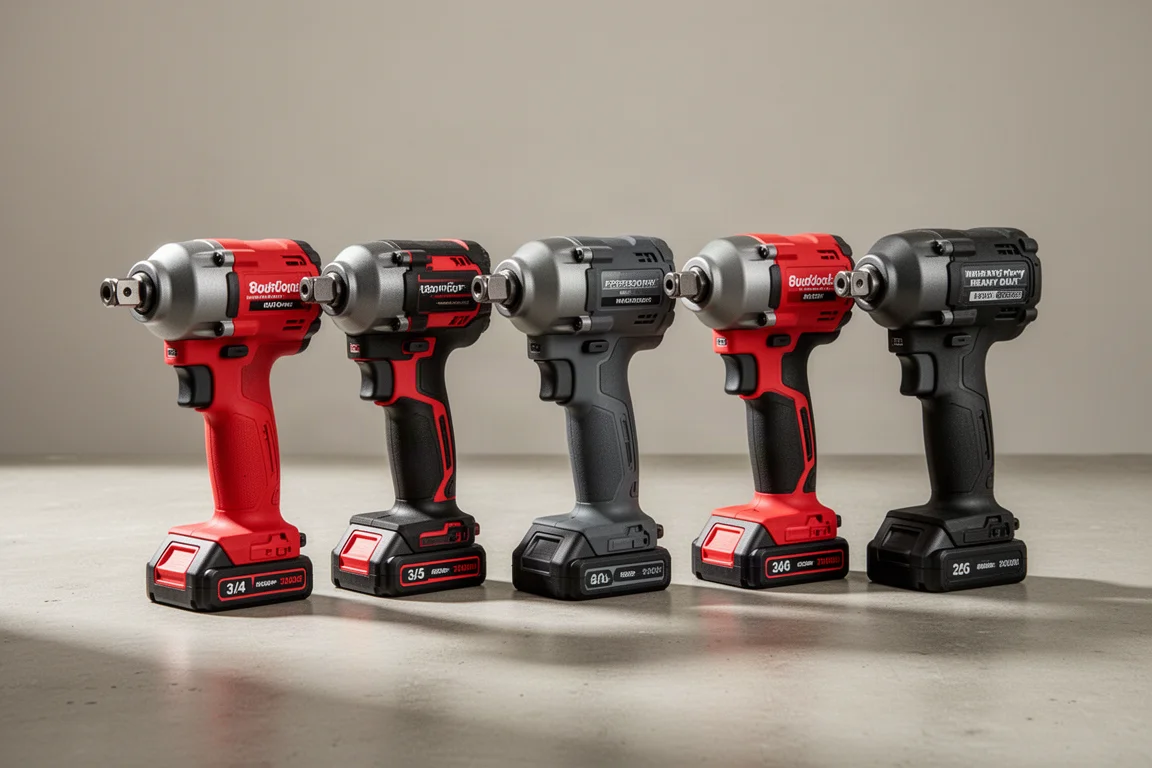
Best 3/4-Inch Impact Wrenches 2026: Five Contenders Compared
We compare five 3/4-inch impact wrenches across price and performance, from a budget Amazon option to Snap-on's most powerful model yet.
Power Tools
Best Budget Cordless Tools 2026: Walmart Finds That Punch Above Their Price
We tested five cordless tools from Walmart, including a high-torque impact wrench that trades blows with Milwaukee and a $35 duster that outperforms its price class.