Power Tools
Best Circular Saws Compared: Worx 40V vs Hercules vs Skil Worm Drive
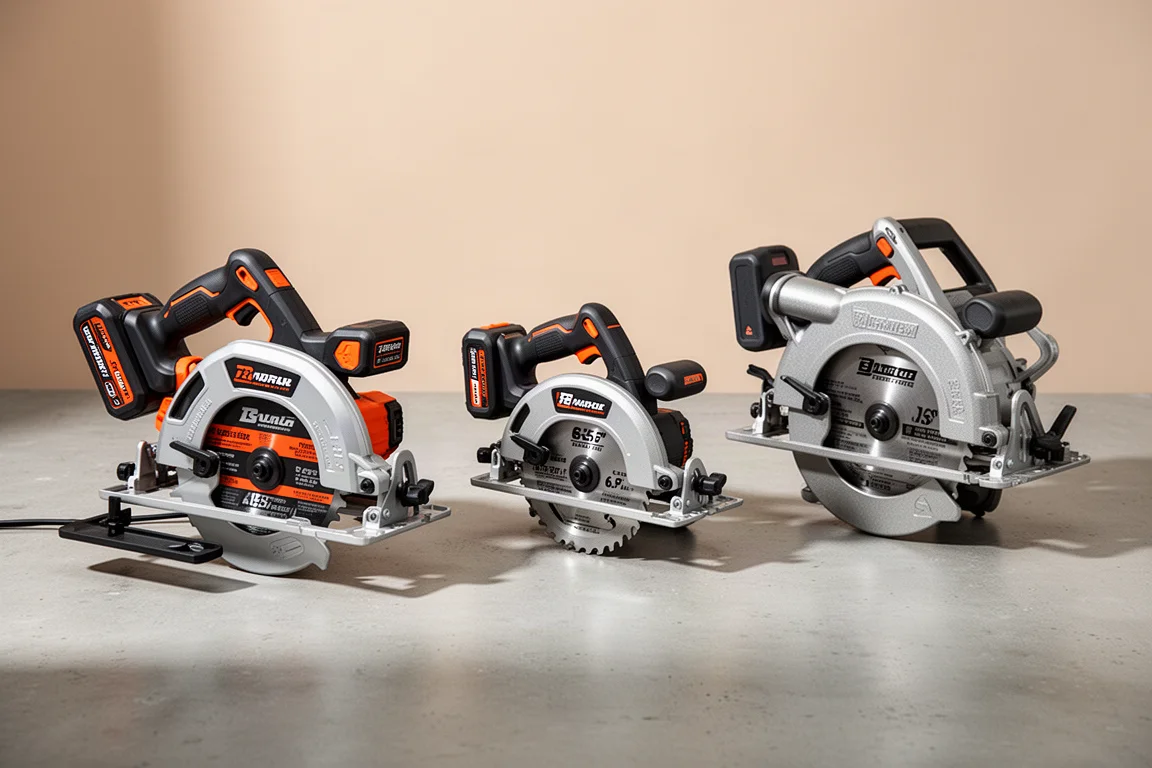
Three circular saws at three price tiers go head to head: a dual-battery Worx, a value-focused Hercules, and the professional-grade Skil worm drive.
Introduction
Picking a circular saw used to be simple: you bought the one your local hardware store stocked. Today the market splits into three camps: DIY and homeowner saws, prosumer tools that punch above their price, and the professional-grade saws tradespeople still swear by. We lined up one saw from each tier, fitted all three with brand-new Diablo blades, and put them to work on real cuts to see where each one actually belongs.
This comparison covers the new Worx 40V dual-battery brushless circular saw, the Hercules 6-1/2 inch cordless saw, and the Skil worm drive circular saw. Here is what we found, and who each saw is really for.
Why Compare These Three Saws
The three saws occupy distinct positions in the market. The Skil worm drive is the professional benchmark, the kind of saw many carpenters still treat as the gold standard. The Hercules sits in what you might call the value-pro tier: brushless, backed by a 5-year warranty, and running on a single 20V battery. The Worx is the newcomer, a dual-battery 40V saw that lands firmly at the top of the DIY range and into prosumer territory.
One quick note on blade sizes: the Hercules runs a 6-1/2 inch blade while the other two run 7-1/4 inch. That is not a coincidence. With a single 20V battery feeding it, the smaller blade spins faster and helps make up for the limited power, a common trick to squeeze more performance out of a budget saw.
Worx 40V 2x20V Brushless Circular Saw
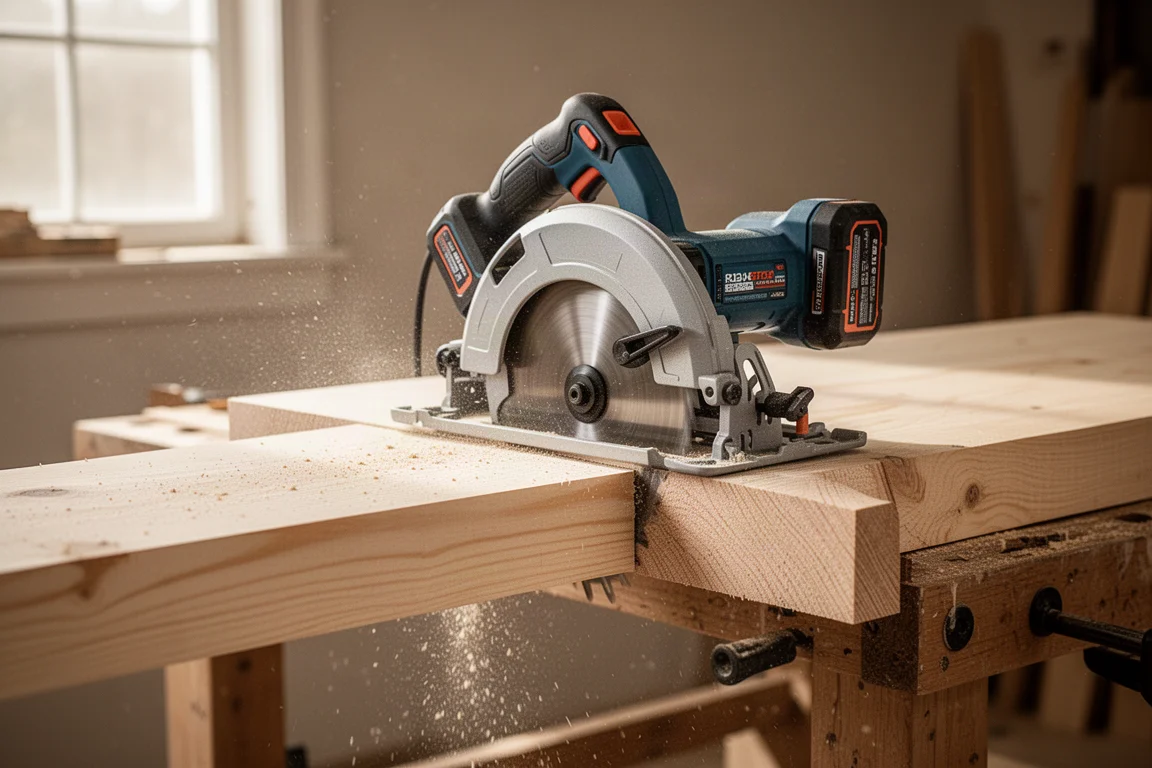
The Worx is a 7-1/4 inch, right-facing brushless saw powered by two 20V batteries. The big worry going in was weight and balance: with two batteries on board, would it feel bulky or awkward? In practice, none of that held up. The saw balances well, sits firmly on the wood, and is genuinely comfortable to grip. Of the entire group, everyone agreed it has the best ergonomics.
The aluminum base plate is another plus. Stamped steel plates, like the one on the Skil, can flex if you push the saw the wrong direction; we did not see that with the aluminum. The levers are large and easy to grab with or without gloves, the push-button blade lock is easy to use, and there is onboard Allen key storage so you never lose the one tool you need for blade changes.
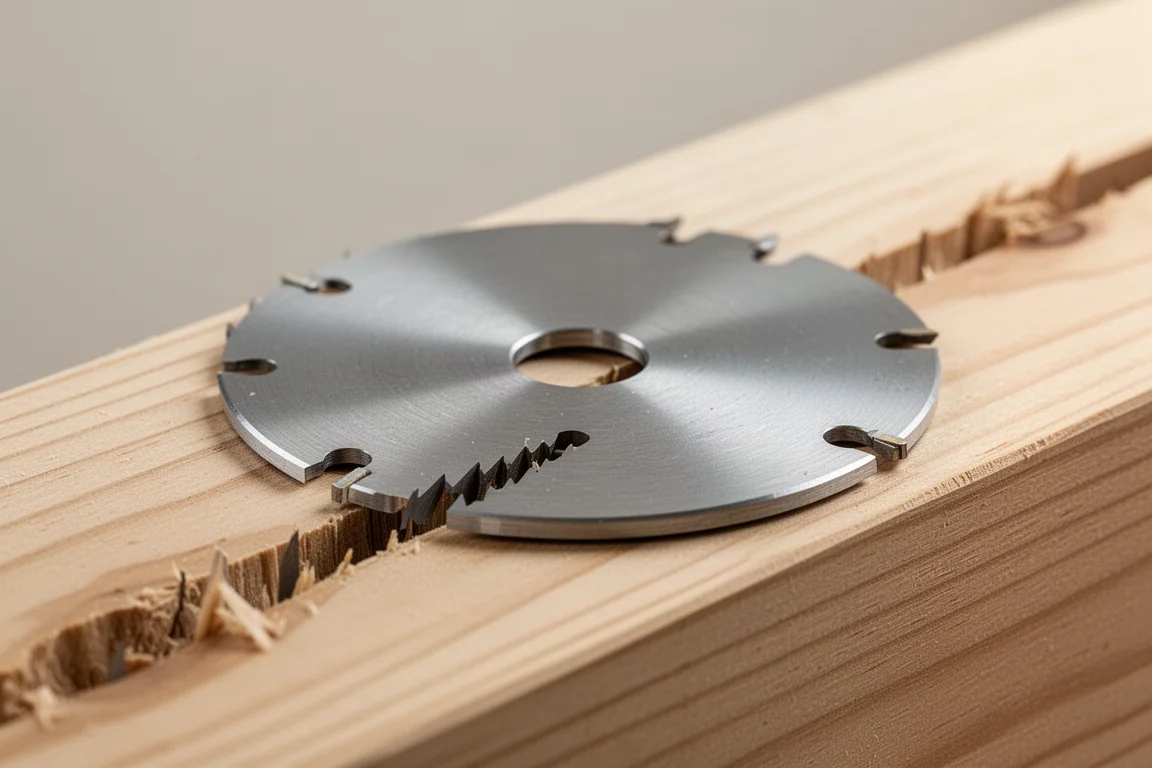
There are a few small compromises. The angle markings are hard to read in bright sunlight, so plan on filling in the numbers with paint if you use this saw daily. The frame hanger is short and awkward, nothing like the Skil’s full-length hanger that hooks right over a timber. And it is not a rear-handle saw, though it is not cramped and top-heavy either.
Performance was smooth and consistent. Where the Hercules occasionally needed a slower feed to let the blade catch up, the Worx never hesitated. The dual battery setup also unlocks Worx’s broader PowerShare system: the same batteries power the 20V, 40V, and even 80V lines, covering everything from drills and mitre saws to mowers, trimmers, and hobby tools. A notable bonus for a right-facing saw: the dust is kicked away from you and across the board rather than back at your feet, which made an immediate difference compared to the Hercules.
Pricing is straightforward: $130 tool-only, or $200 with batteries and a charger, backed by a 3-year warranty. One claimed feature worth mentioning is the smart energy regeneration technology, which converts cutting momentum back into stored battery power, similar in principle to regenerative braking in electric cars.
Hercules 6-1/2 Inch Circular Saw
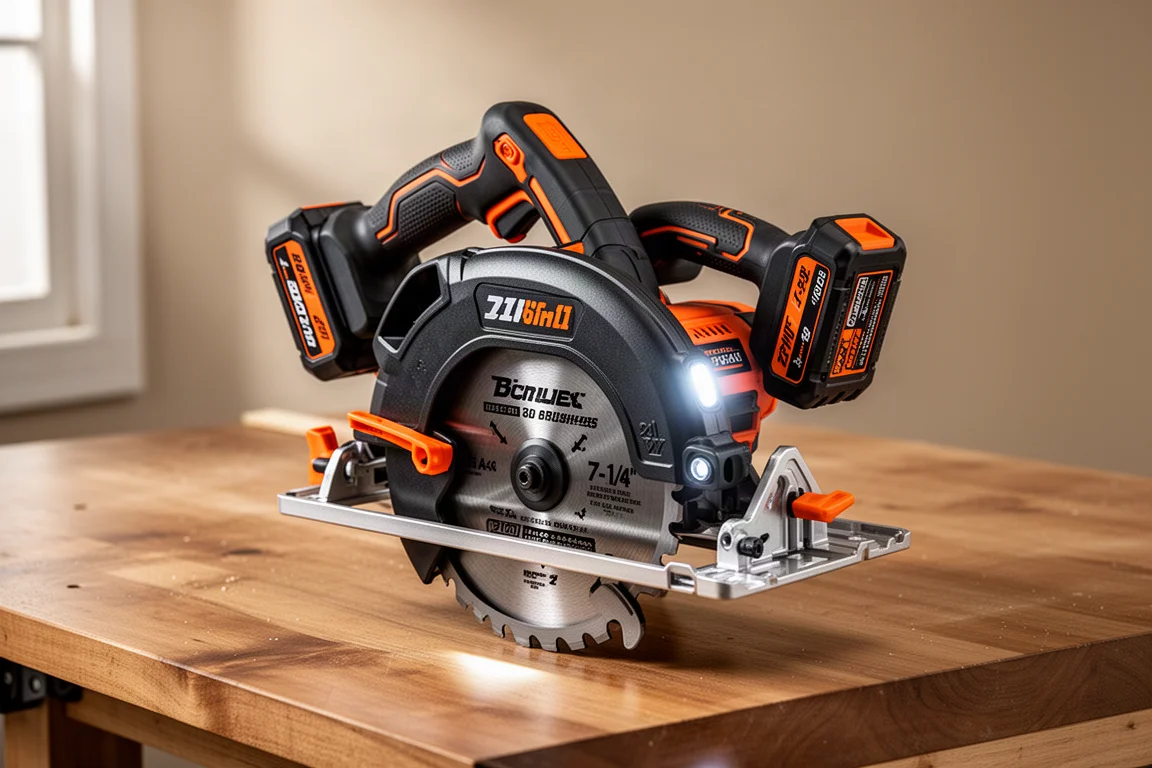
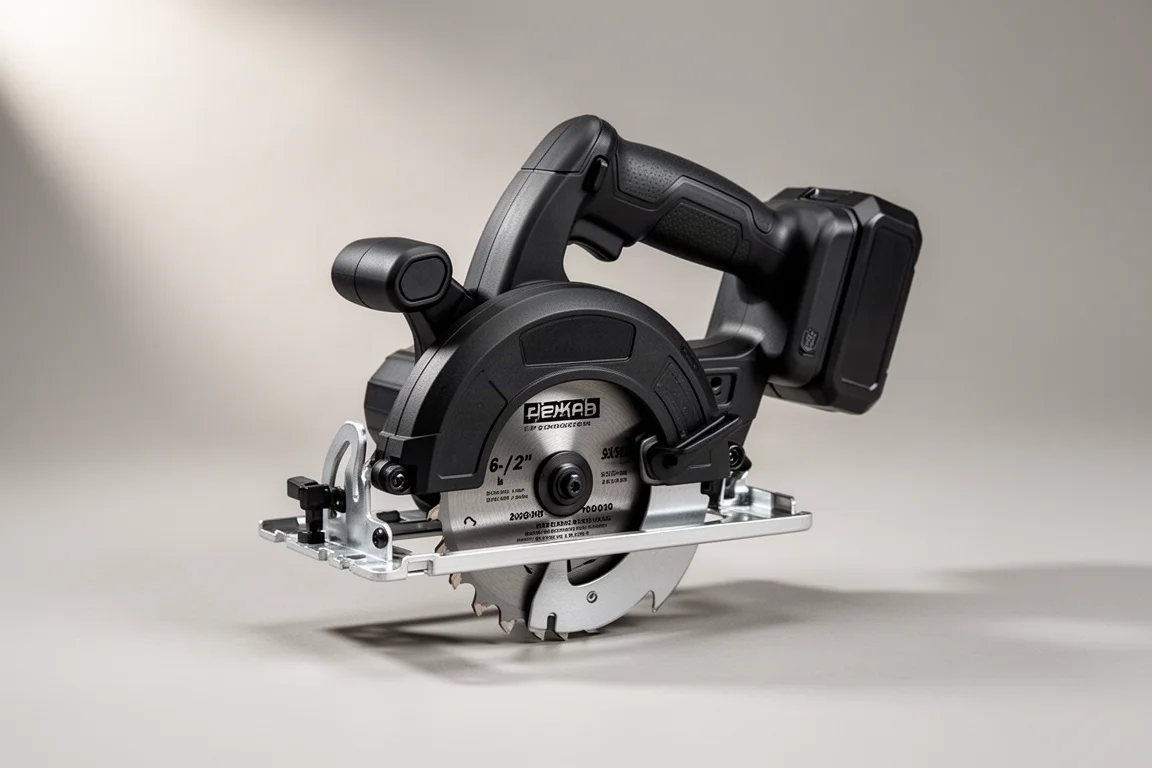
The Hercules is a value-focused pro saw: brushless motor, 5-year warranty, and a single 20V battery. Its smaller 6-1/2 inch blade compensates for the limited battery power by spinning faster, and on straightforward cuts it works well.
It is also the lightest and quickest of the three, which is exactly why one tester picked it as a favorite. For fast breakdown cuts and quick material trimming, it is easy to grab, easy to carry, and gets the job done with minimal fuss.
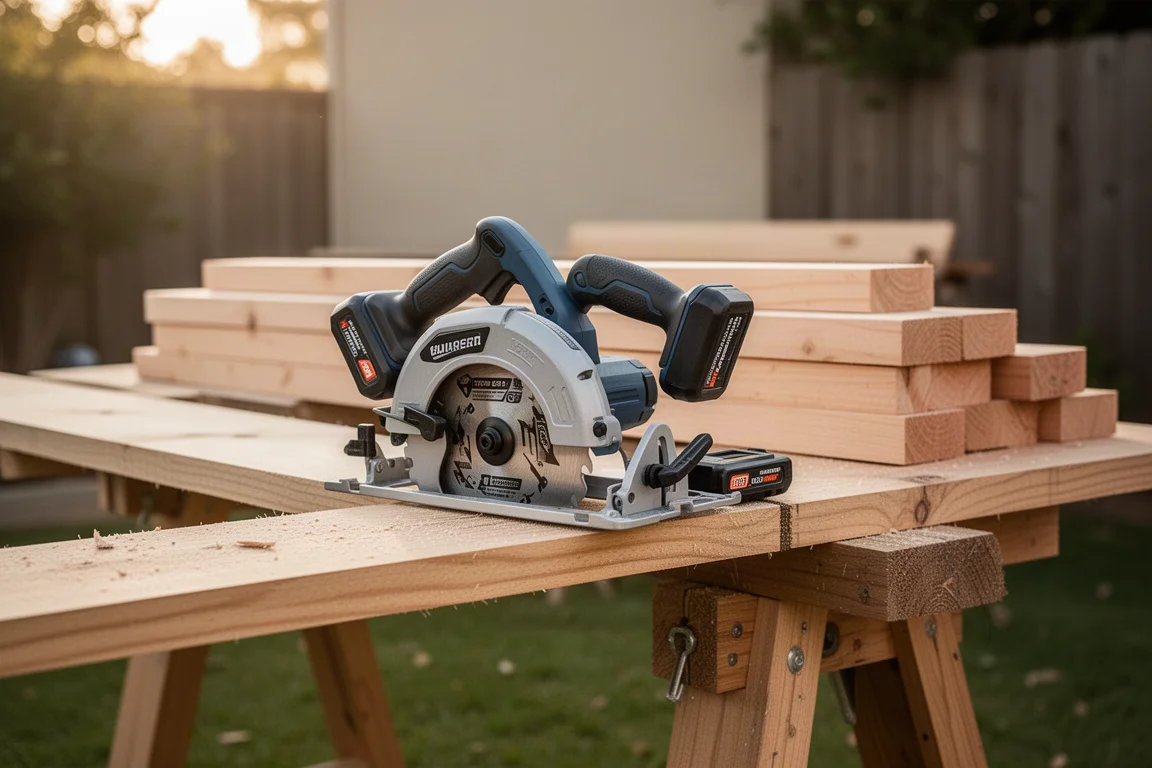
The trade-off shows up during sustained or tougher cuts. There were moments where the saw clearly preferred a slower feed, letting the blade and motor catch up rather than being forced through. The other complaint is dust direction: as a right-facing saw, it throws sawdust back toward the user, which makes a dust port and extraction setup almost a necessity for indoor work.
For the price tier, though, it is a capable saw with real warranty backing. It simply asks you to respect its limits.
Skil Worm Drive Circular Saw
The Skil worm drive is the professional-grade option here, and the difference is something you feel the moment you pick it up. It delivers power smoothly and steadily, plowing through every cut without a hint of hesitation. As one tester put it, using a high-end professional tool after budget tools is like sitting in a Porsche after a Camaro: both are fine, but suddenly you understand what the fuss is about.
The worm drive design is the classic trades format, and its corded power means it never runs out of charge. That makes it a tool worth keeping even in a battery-powered collection, because there are always situations where batteries are dead or charging is not an option.
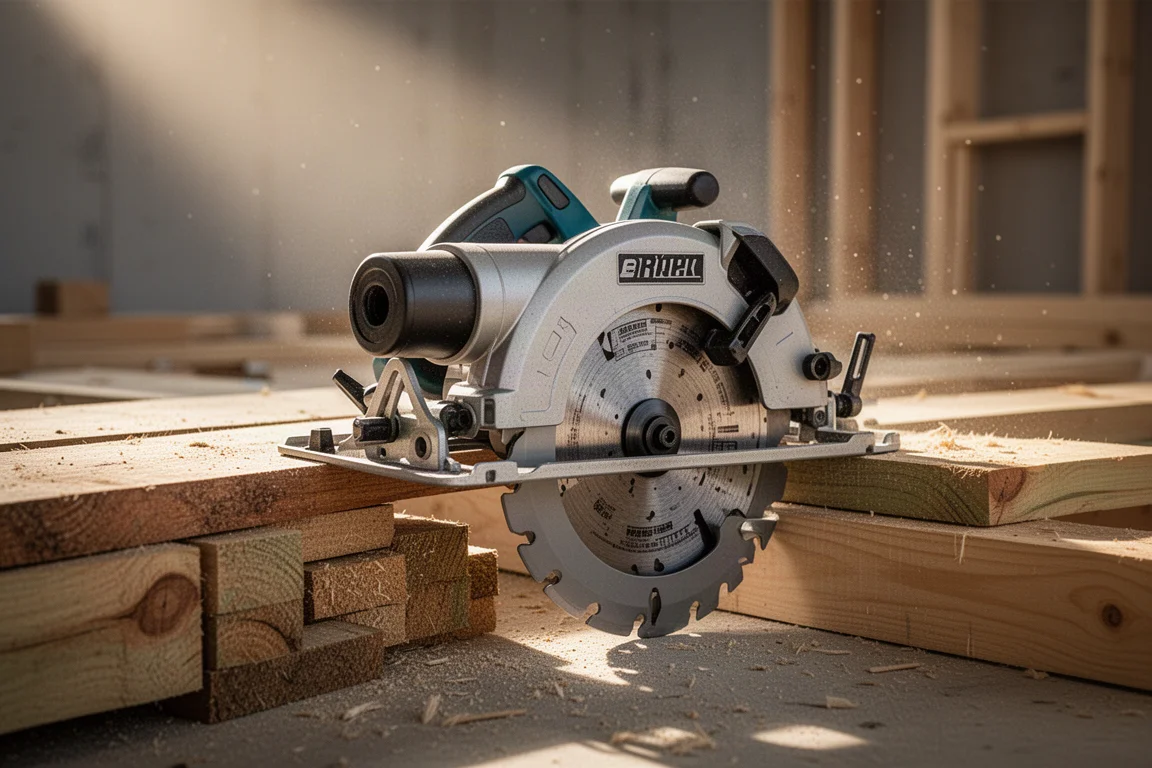
Its weaknesses are ergonomics and weight. It was universally rated as the worst to hold in the group, with thin, hard handles that would demand gloves during a full day of use. The stamped steel base plate can flex under lateral pressure, and there is no cordless convenience at all.
Which Saw Should You Buy
The consensus after testing was remarkably consistent across every age and experience level. For quick cuts and simple material breakdown, the Hercules is the easy grab: light, fast, and simple. For a real project, the Worx is the pick, combining cordless convenience with prosumer-level performance and the best ergonomics of the group. The Skil remains a superb backup and a genuinely professional tool, but its cord and its handles mean it is no longer the default choice for everyday DIY work.
If you are building a battery system, the Worx has an additional argument in its favor: one battery platform spanning 20V, 40V, and 80V tools, from drills to mowers to e-bikes and scooters. That kind of flexibility is rare at this price.
Conclusion
There is no single winner here, because these saws answer different questions. The Hercules wins on speed and simplicity for light tasks, the Worx wins for real projects with its balance, comfort, and battery versatility, and the Skil wins wherever raw, corded professional power matters most. Match the saw to the work you actually do, and any of the three can be the right choice.
Further reading
Related Reviews
Power Tools
Best 1-Inch Pistol Impact Wrenches: Three Heavy-Duty Options Compared
We compare three 1-inch pistol impact wrenches, from a budget-friendly Harbor Freight model to a premium Caterpillar unit, to help you choose the right one.
Power Tools
Best 3/4-Inch Impact Wrenches 2026: Five Contenders Compared
We compare five 3/4-inch impact wrenches across price and performance, from a budget Amazon option to Snap-on's most powerful model yet.
Power Tools
Best Budget Cordless Tools 2026: Walmart Finds That Punch Above Their Price
We tested five cordless tools from Walmart, including a high-torque impact wrench that trades blows with Milwaukee and a $35 duster that outperforms its price class.