Hand Tools
Best Center Punches: Manual and Automatic Picks That Earned Their Place
Seventeen center punches tested on aluminum, mild steel, medium-hard steel, and hard steel. These are the ones that came out on top.
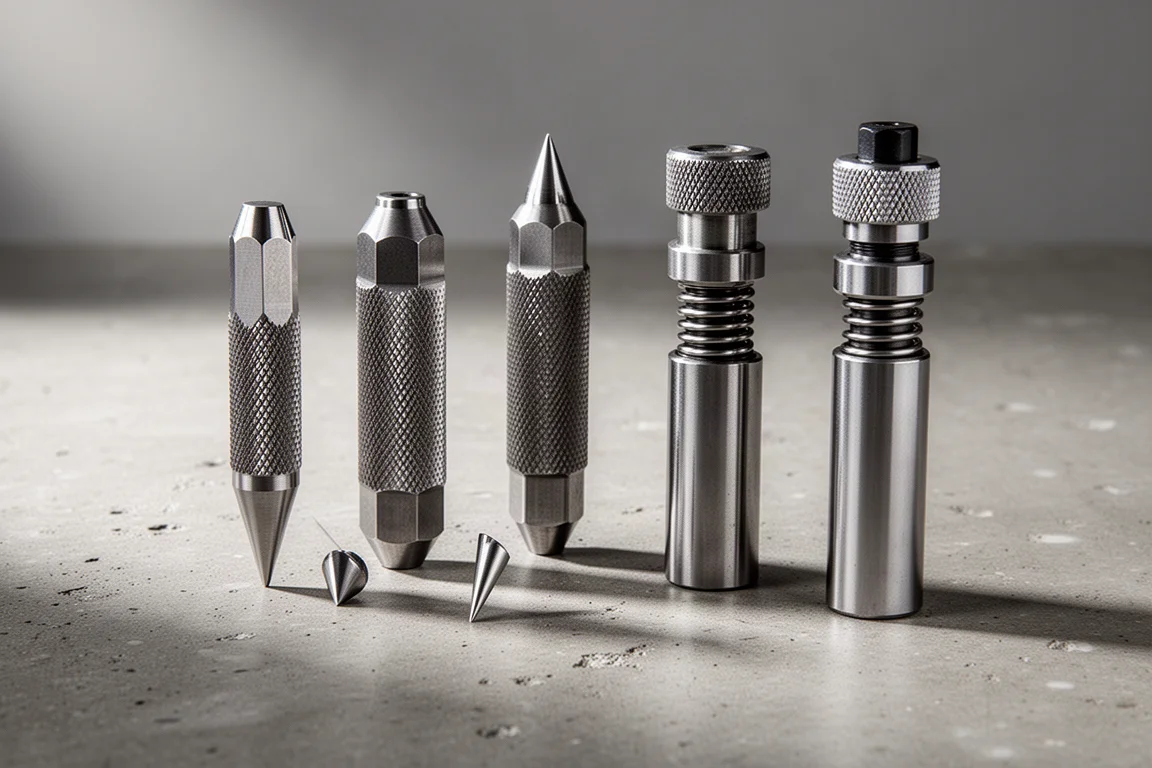
Introduction
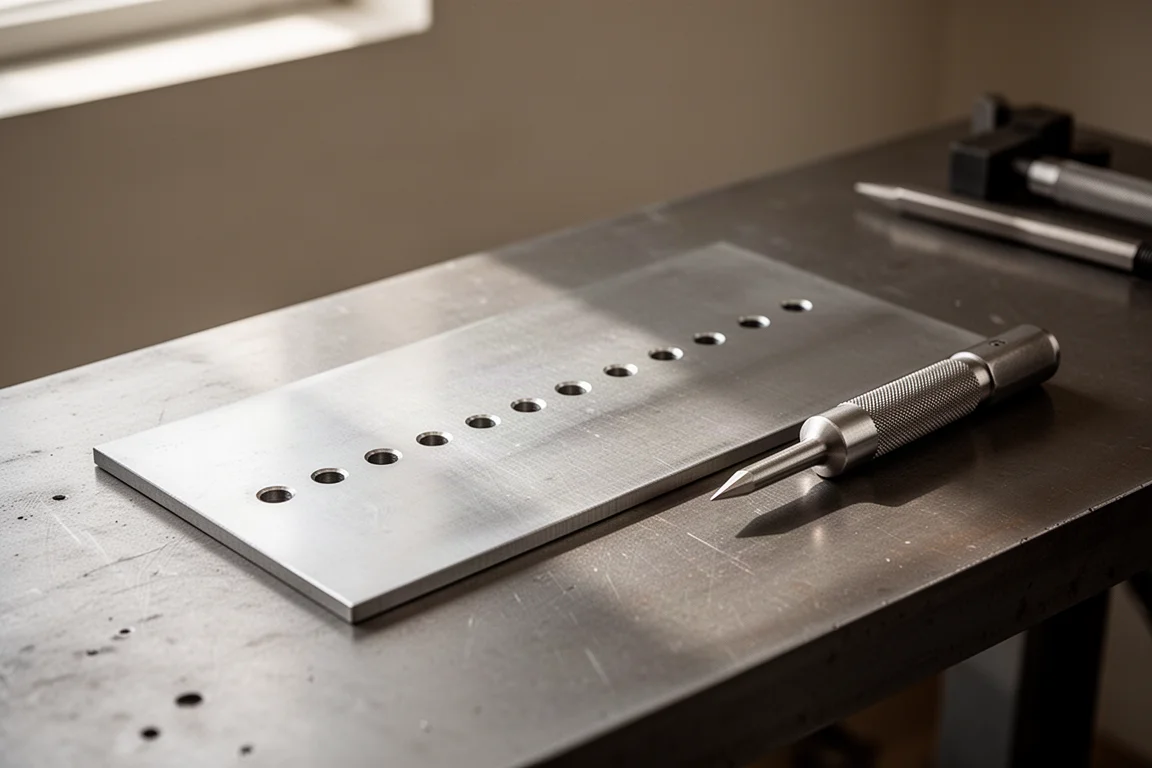
A center punch is one of those workshop tools nobody thinks about until a drill bit walks off a marked spot and ruins a part. A good punch makes a small, clean indentation that gives the drill tip something to bite into, and it also earns its keep marking layout lines, piercing sheet metal, and starting holes in hard materials.
But is a budget punch just as good as a premium one? To find out, ten manual punches and seven automatic punches went head to head across aluminum, mild steel, medium-hardness steel, and very hard steel. The results separated the field clearly: a few brands dominated every material, a few budget picks punched far above their price, and one expensive automatic was genuinely disappointing.
How the Testing Worked
Every punch was held in a clamp and struck with a heavy 6.7-pound steel pin dropped from a fixed height, 3.5 inches for the aluminum test and 5 inches for the harder steels. Crater depth was measured with a dial indicator, since eyeballing diameter is too imprecise to compare fairly. Each punch was also inspected after every round for tip damage, mushrooming, or chipping.
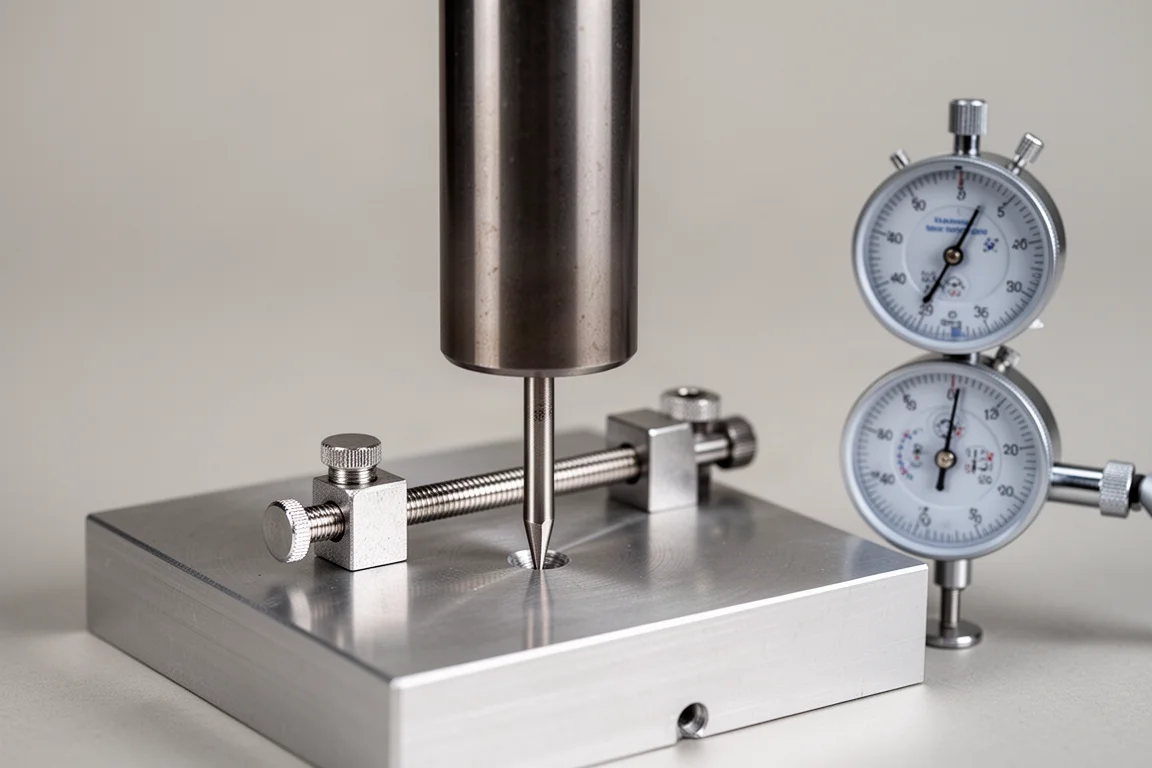
That combination of indentation depth and condition after impact tells you most of what you need to know: how much energy a punch transfers into the workpiece, and whether it can survive repeated blows on hard steel without blunting.
Best Overall Manual Punch: Stahlwille Center Punch
The Stahlwille standard punch, made in Germany, finished first overall among manual punches with an average placement of 1.2 across all tests, and it won on nearly every material. It is built like a tank, showed the smallest bounce of any manual punch, and turned its strikes into the deepest craters: 0.0395 inches on aluminum, 0.0365 on mild steel, 0.031 on medium-hard steel, and an outstanding 0.03 inches on very hard steel with no visible tip damage.
At around $14, it costs no more than several mid-pack competitors, which makes its dominance even more impressive. If you want one manual punch that handles everything from soft aluminum to hard steel, this is the pick.
Best Manual Precision: Starrett Center Punch
The Starrett manual punch, made in the USA from specially selected, hardened and tempered steel, took the deepest single indentation of the entire test at 0.041 inches on aluminum. Its knurled grip and ground shank give excellent control, and it consistently ranked at or near the top on every material, tying with Snap-on for second place overall at an average placement of 2.2.
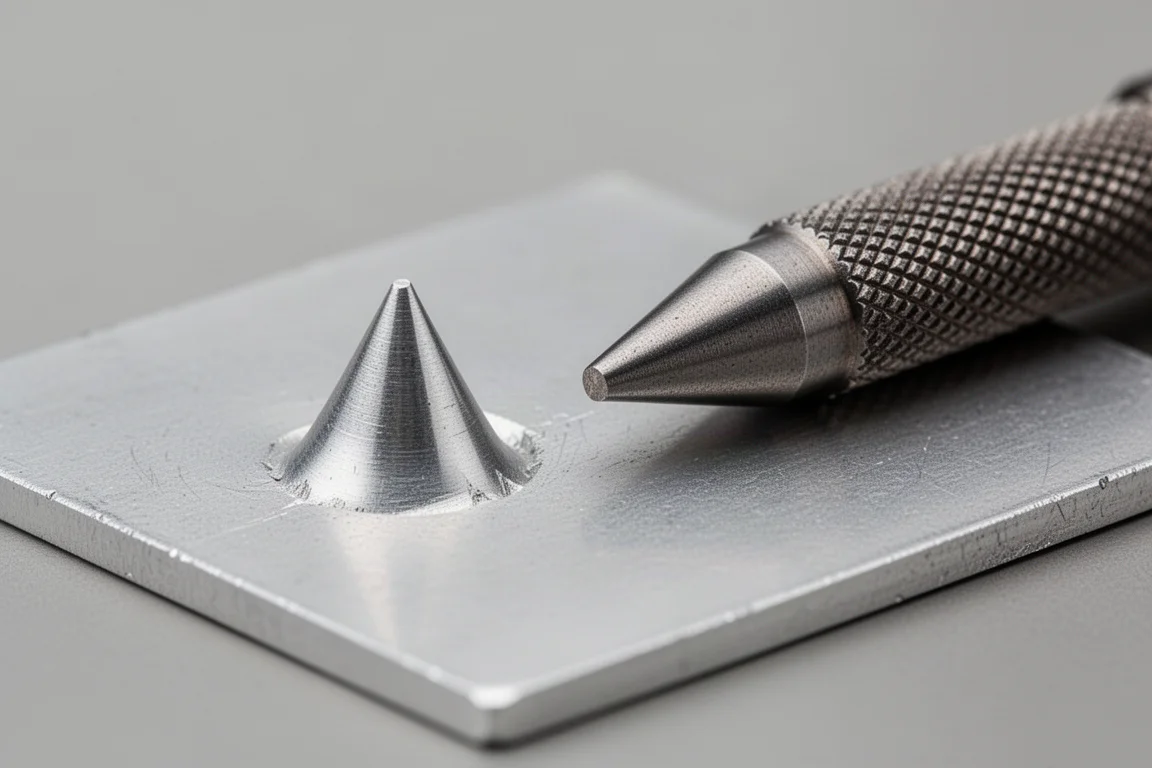
At roughly $17, it is a strong alternative to the Stahlwille if you can find it at a similar price, and its needle-sharp tip held up remarkably well even on hard steel.
Premium Contender: Snap-on Center Punch
Snap-on is the most expensive manual punch tested at about $31, and its modified parabolic striking design is meant to direct force to the center of the tool while controlling mushrooming and chipping. It delivered, finishing second overall in the manual class with strong showings on mild steel (0.032), medium steel (0.027), and hard steel (0.0285), with no visible tip damage throughout.
It performed better than average everywhere but never quite beat the Stahlwille, so the premium price buys proven durability rather than a performance edge. Worth it if you are already invested in the brand’s ecosystem.
Honorable Mentions Among Manual Punches
Several other manual punches are worth knowing about. The Williams and Klein Tools punches, both around $8 and made in the USA, delivered solid results, though the Klein tip suffered noticeable damage on hard steel. The GearWrench, made in Taiwan, performed consistently well and stayed undamaged, as did the Stanley Proto on softer materials before struggling on the hardest steel. The Hazet punch from Germany held up on hard steel with no visible damage.
The cautionary tale is the Mayhew: the cheapest of the manual brands at $4.75 per punch, it did fine on soft materials, but its tip took heavy damage on hard steel and ended up as blunt as a failed automatic. Budget manual punches are fine for light work, but do not expect them to survive repeated blows on hardened steel.
Best Automatic Center Punch: Spring Tools
The Spring Tools hammerless, single-ended center punch is designed specifically for marking ultra-hard materials, and it won every performance category among automatic punches. It delivered a 0.03-inch indentation on aluminum, 0.028 on mild steel, and 0.0195 on medium steel, all class-leading numbers that rival some manual punches. On hard steel it still beat every other automatic by a clear margin, though it picked up a small amount of tip damage doing so.
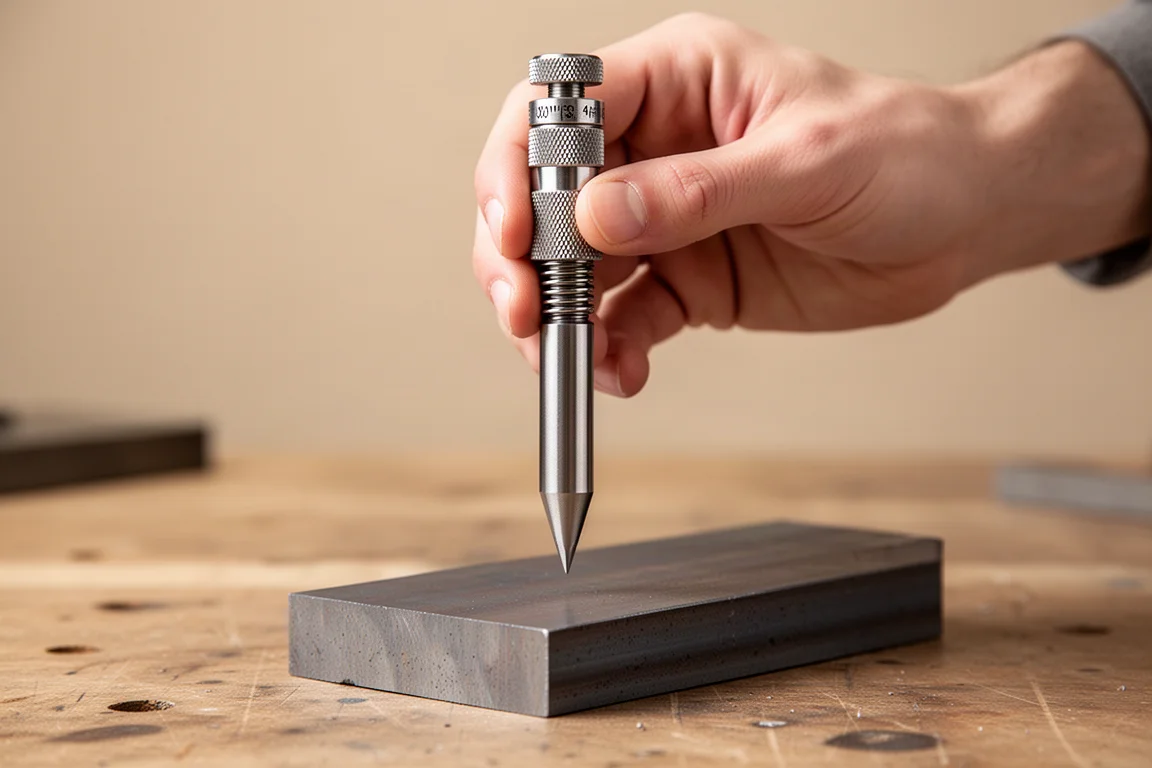
At around $15, made in the USA with a high-speed steel tip that can be sharpened without losing its RC65 hardness, it is the automatic punch to buy if you want hammer-free operation without giving up much depth.
Runner-Up Automatic: SaberCut Extreme
The SaberCut Extreme pairs an S2 impact steel tip with an aluminum alloy core, and its large handle makes single-handed deployment noticeably easier than most competitors. It placed second among automatics with 0.0295 inches on aluminum, 0.0235 on mild steel, and 0.018 on medium steel, though the hardest steel held it back at 0.0095.
It needs roughly 20 to 45 pounds of spring force to deploy depending on the tension setting, which is more effort than softer-hitting automatics but part of why it hits harder. At about $35, it is a capable all-around automatic for general shop work.
Buying Advice
For manual punches, the Stahlwille is the safest bet at any budget, and the Starrett is equally excellent if the price is close. If your work is limited to soft materials like aluminum, cheaper options like the GearWrench or Williams are perfectly serviceable, but avoid hammering any budget manual punch into hardened steel.
For automatic punches, the Spring Tools is the clear winner and a great value at $15. Keep in mind that automatics generally hit with about half the force of a manual punch and a hammer, so they suit softer materials and convenience-focused work; for maximum depth on hard steel, a manual punch remains the right tool.
Conclusion
The testing made one thing obvious: price does not predict performance. A $14 German-made Stahlwille beat a $31 Snap-on, and a $15 Spring Tools automatic embarrassed several more expensive rivals. Match the punch to the material, favor hard steel capability if you work with hardened parts, and either of the two top manual picks or the Spring Tools automatic will serve you for years.
Product link
View more details for Stahlwille Center Punch
This product is mentioned in the review. Check the specifications, options, and compatibility before buying.
View more details for Stahlwille Center PunchFurther reading
Related Reviews
Hand Tools
Best Diagonal Cutters 2026: 16 Pliers Tested for Cutting Power and Durability
We put 16 diagonal cutters through nail, screw, drill bit, and hex key tests to find the best value picks for your toolbox.
Hand Tools
Best Hex L Key Sets 2026: Nine Sets Tested for Real-World Torque
Nine hex L key sets from budget to premium, tested for torque, fit, and durability. See which sets deliver real performance and which ones to skip.
Hand Tools
Best Locking Pliers 2026: Top Picks Tested for Grip and Durability
We tested 18 brands of 10-inch locking pliers for grip strength, jaw bite, build quality, and ease of release to find the best options for tough jobs.