Camping Stoves
Best Camping Stoves 2026: Five Options for Every Kind of Trip
A practical shortlist of camping stoves covering alcohol, canister and integrated systems, with the trade-offs that matter before you buy.
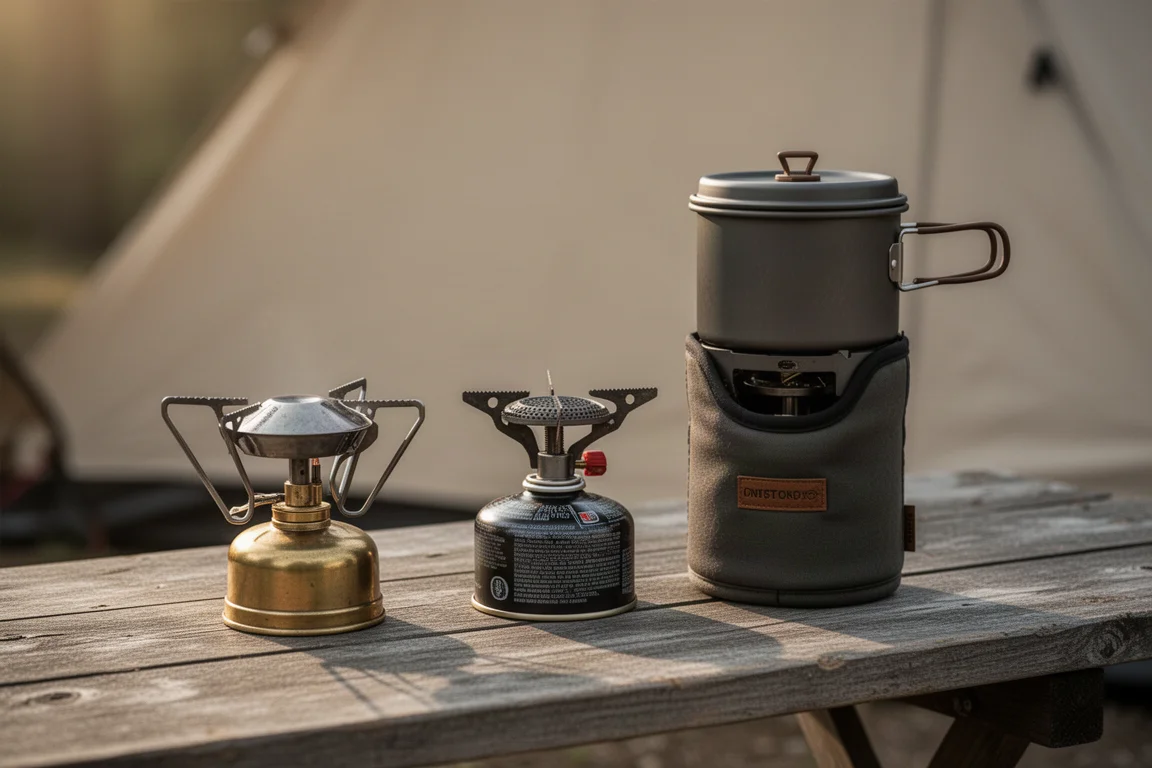
Introduction
A camping stove is one of those purchases where a specification sheet tells you very little. Two stoves can weigh the same and cost the same, yet behave completely differently once the wind picks up or the temperature drops below freezing.
The biggest dividing line is fuel. Wood, solid fuel tablets, alcohol and gas canisters each bring their own trade-offs in availability, running cost, wind resistance and cooking control. Narrowing a large collection down to a shortlist comes down to one question: which stove would you actually reach for if you could only keep one?
This guide covers five options that survived that process. One is the overall pick, three solve a specific problem well, and one small accessory turns the winner into a genuinely versatile cooking setup.
What Matters Most in a Camping Stove
Fuel availability comes first. Alcohol, in the form of bioethanol or methylated spirits, is sold in hardware stores, filling stations and many corner shops, and it costs very little. Canister gas is convenient but more expensive, and you cannot assume a replacement canister will be on a shelf when you need one.
Wind protection matters almost as much. A flame that gets pushed away from the base of a pot wastes fuel and stretches boil times, so a windshield, a cone or a low-profile burner design is often worth more than a small weight saving.
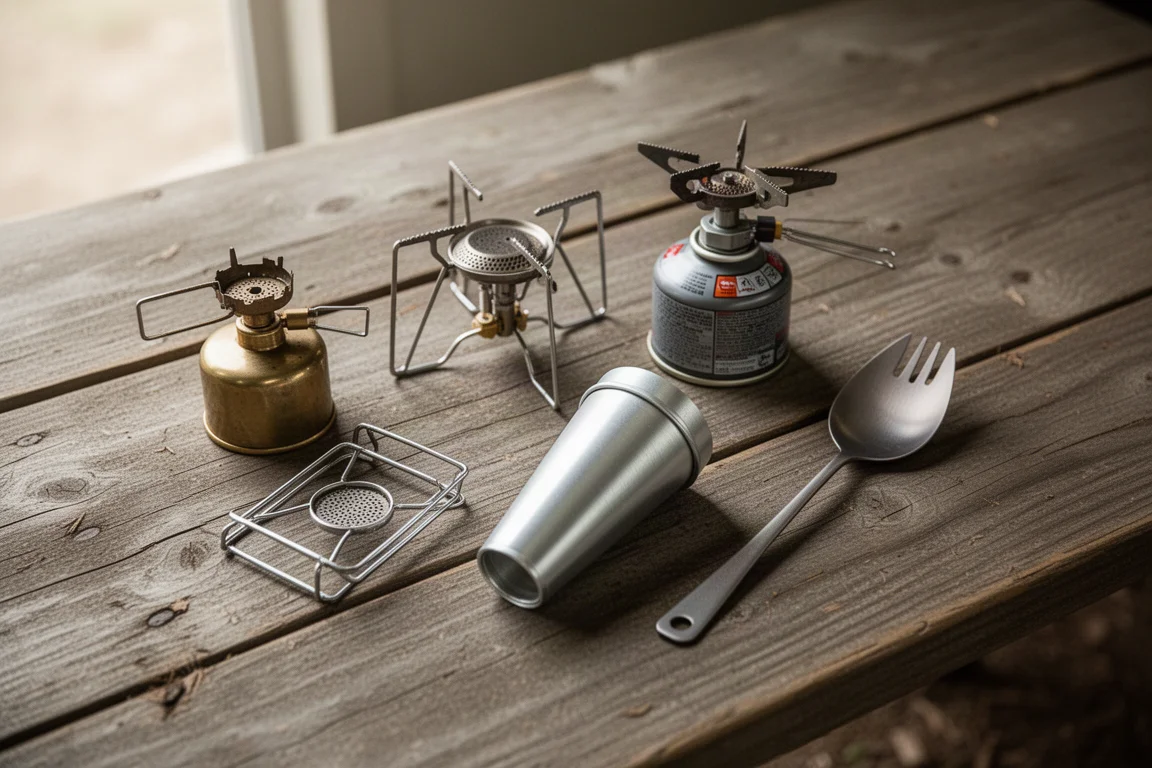
Temperature control is the third factor, and it is the one that separates a stove for boiling water from a stove for cooking. A simmer ring or a fine valve lets you cook eggs, fish or a proper pan meal instead of rehydrating a pouch.
Then there is weight, pack size and durability. Ultralight alcohol setups and titanium canister burners disappear into a pack, while integrated systems take up more room but carry their own pot, lid and insulation. Durability is hard to judge from a listing, so it usually comes down to how simple the design is and how few parts can fail.
Trangia 27: The Best All-Round Alcohol Stove
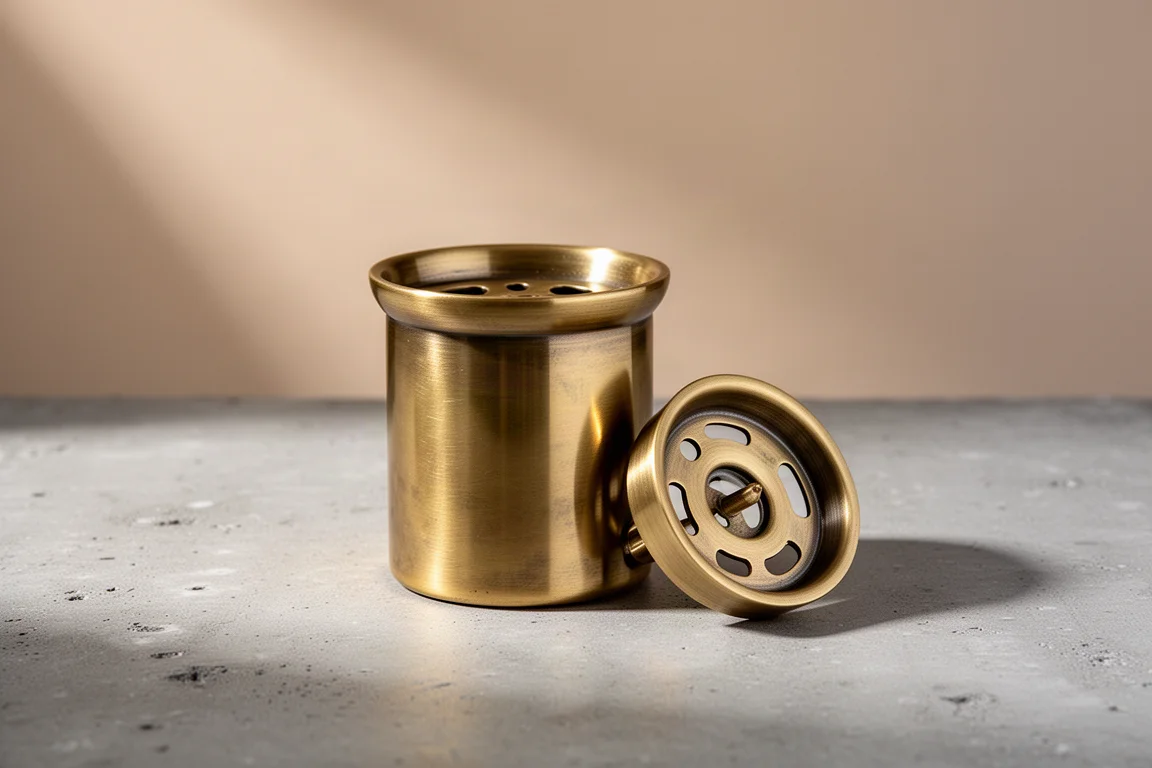
The Trangia 27 is a small alcohol burner, and its appeal is that there is almost nothing to it. You fill the burner, light it and cook. There are no valves, no pressurised seals and no ignition system to go wrong, which is why these burners last for years. The only part that has ever needed replacing is a small rubber seal inside, and that costs around £1.50.
Fuel is the other big advantage. Bioethanol costs roughly £8 for two litres, and methylated spirits or ethanol can be picked up from most filling stations, corner shops and hardware stores. Running costs stay low even on long trips.
Cold weather does not stop it. Below freezing, a small wick rolled from tissue paper and dropped into the burner helps it light easily, and once it is going the output stays consistent. Putting it out is just as simple: close the simmer ring and drop it over the burner to smother the flame.
Trangia Triangle: The Pot Support That Makes It Work
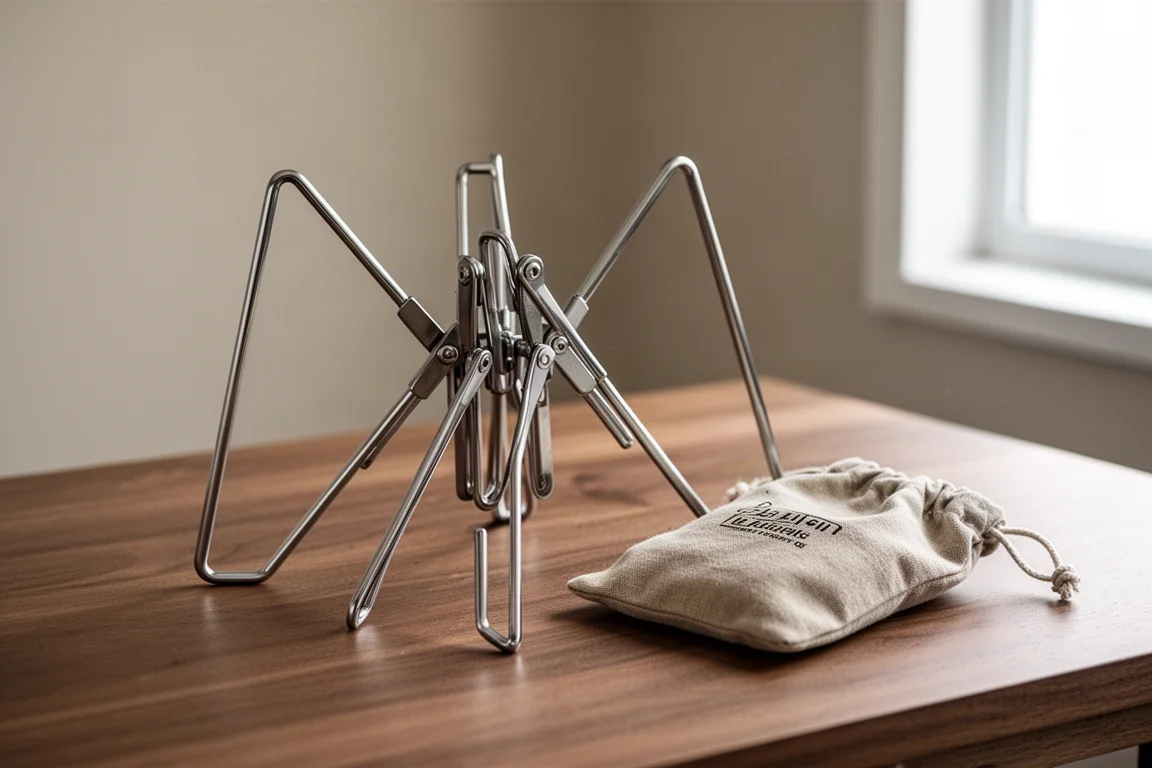
The Trangia 27 burner cannot take a pot directly, so it needs a support. A basic support costs only a few pounds, but the Trangia Triangle is the more capable option: the burner sits inside it, the simmer ring still fits underneath the pot, and the three arms hold a frying pan or a kettle steadily.
The one limitation is small-diameter pots, which can wobble on the wider arms. A simple workaround is to lay a couple of tent pegs across the supports and rest the pot on those, and a custom-made ring does the same job neatly.
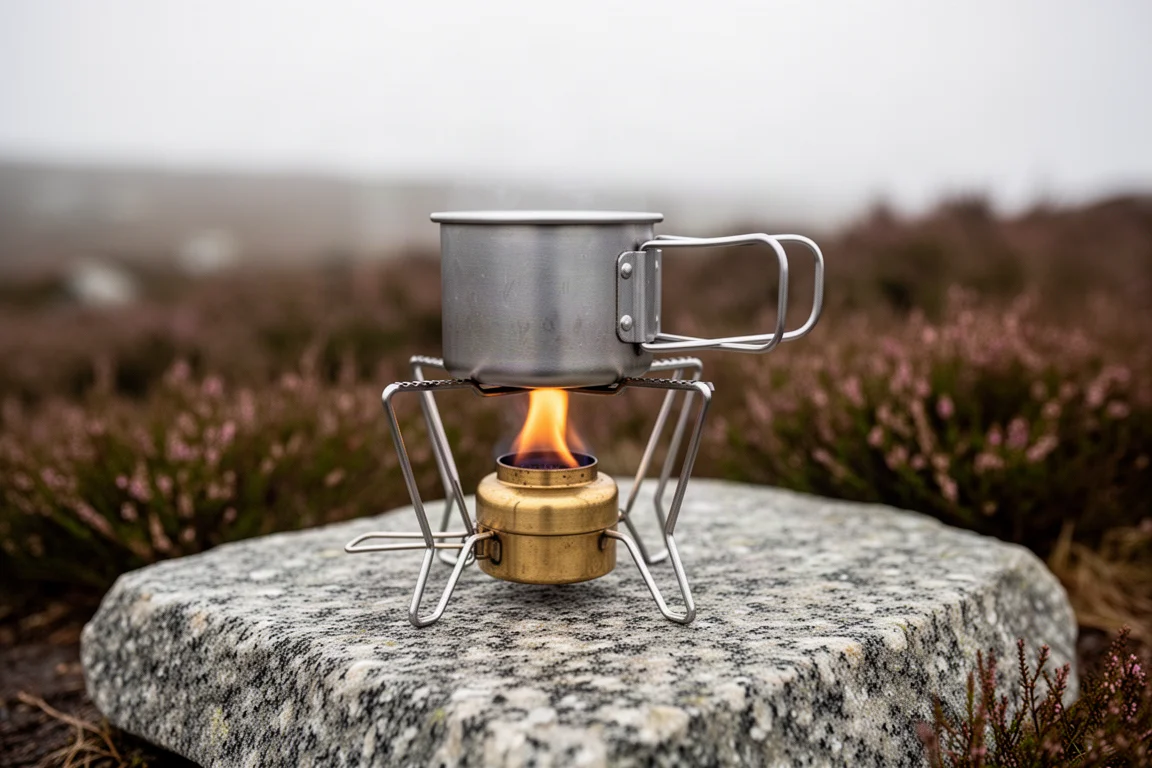
The Triangle folds completely flat and comes with a small bag, so it slides into a pot, a sleeve or a plastic bag without taking up meaningful space. It also lifts the burner clear of the ground, which reduces the chance of knocking an alcohol pot over.
MSR Pocket Rocket 2: The Lightweight Canister Stove
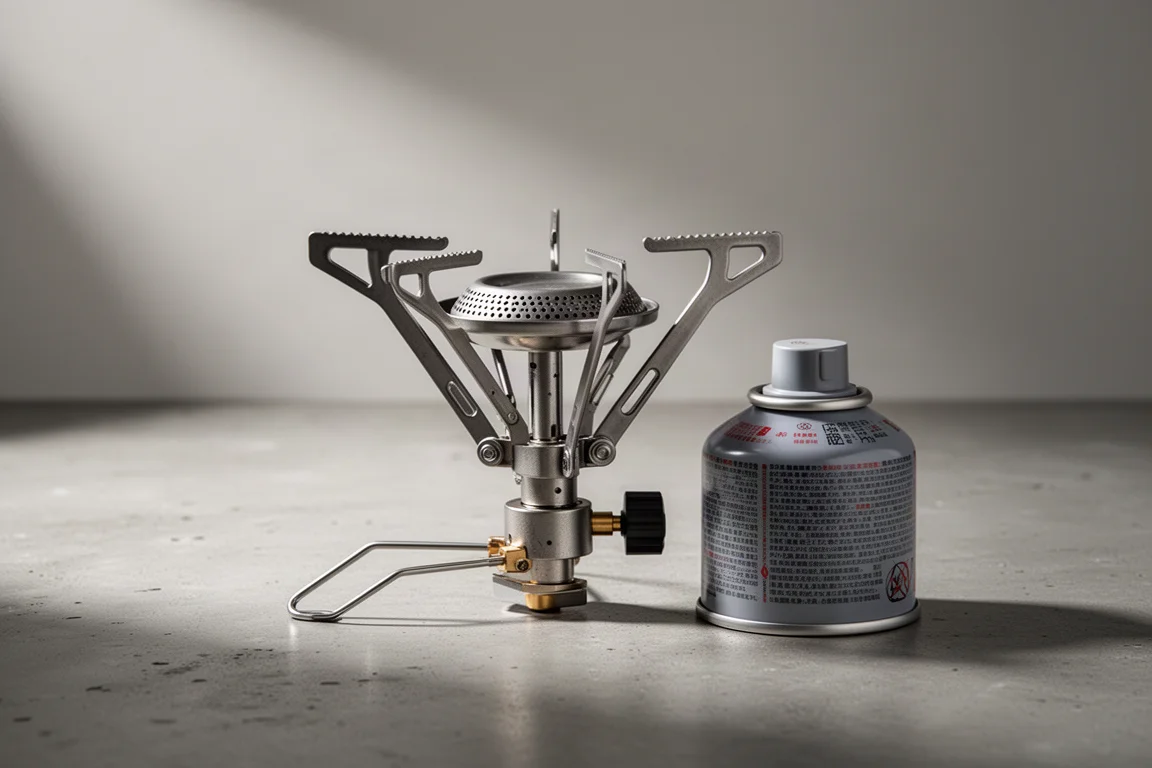
Screw-on canister stoves are the most popular option for good reason. The MSR Pocket Rocket 2 threads onto the top of a gas canister, the valve opens, and you are cooking within seconds.
It is quick to boil water, the simmer control is decent, and the three pot support blades do a useful job of keeping the flame lit when the wind picks up. It weighs almost nothing and packs down small enough to disappear into a side pocket.
The trade-off is efficiency. An integrated system with a heat-exchanger pot will boil faster and use less gas, and in exposed conditions the Pocket Rocket 2 still benefits from a windshield. At under £30, though, it remains one of the easiest stoves to recommend.
Jetboil Minimo: The Fast Integrated System
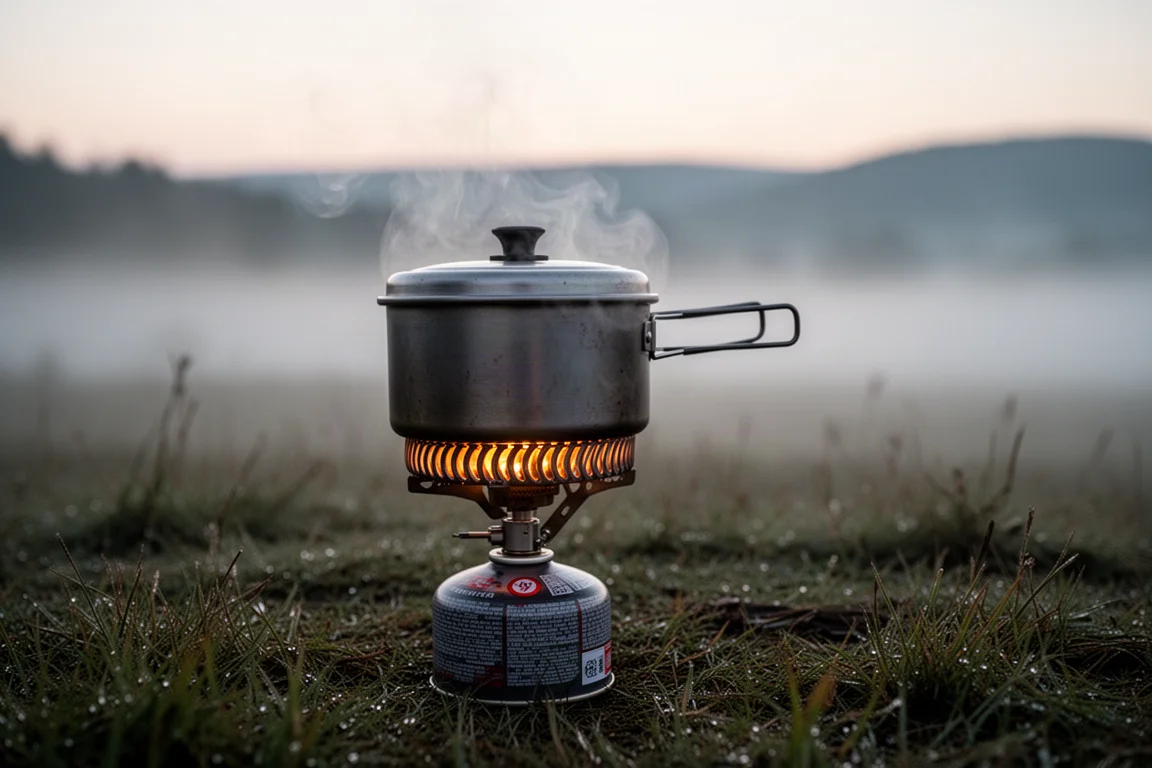
The Jetboil Minimo is an integrated system: the burner, pot, lid and insulation sleeve are designed to work together, and everything except the gas canister packs inside the pot. A small canister fits too if you remove the frying pan support first.
The heat exchanger built into the base of the pot is what makes it fast. Boil times are quick, the insulated sleeve keeps heat in, and the simmer control is fine and accurate enough for omelettes and other food that needs a gentle heat. There is a built-in igniter, and an additional pan support lets you use a frying pan or saucepan on top.
The compromises are cost and flexibility. The system sits in the £100 to £150 range, the canisters it uses are expensive and not stocked everywhere, and the whole package is bulky compared with a bare burner. If you only camp occasionally, that is a lot of money for something a simpler stove can handle.
Carrying a spare lighter or a ferro rod is sensible with any stove, and it is worth doing here too in case the igniter ever fails.
Stormin’ Norman Cone: The Ultralight Alcohol Cone
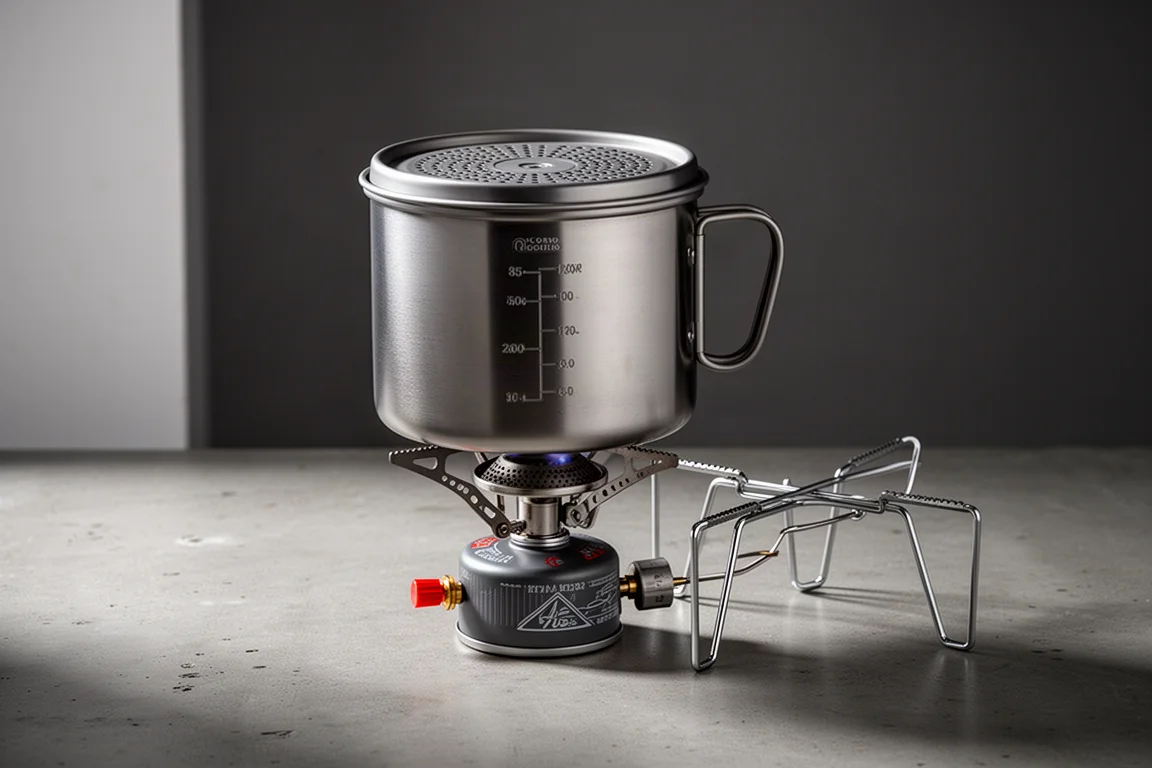
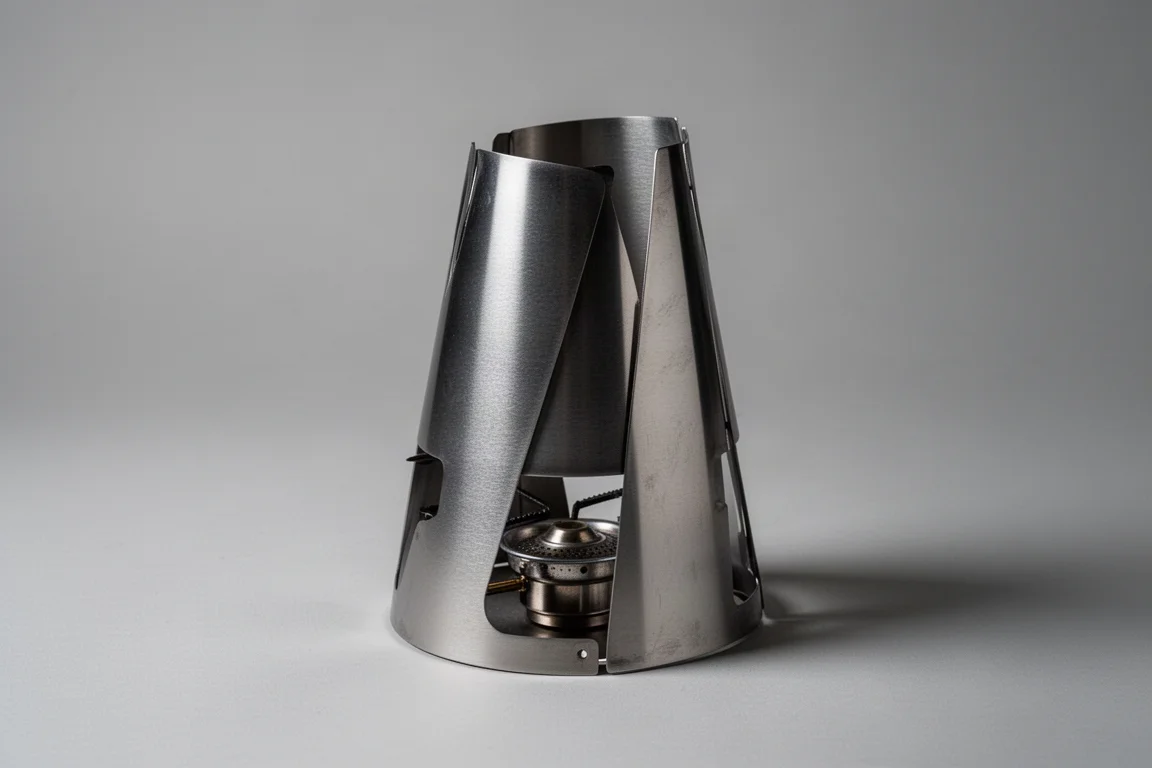
The Stormin’ Norman Cone is about as light as a cooking setup gets. The cone rolls up and fits inside your pot, and the burner that goes with it weighs roughly 100 grams, with a small ring to stop it rattling in transit.
Setup takes seconds: pour a little alcohol into the burner, light it, drop the cone over the top and slot the pot into the cone. That arrangement gives full wind protection and sets the pot at the right height above the flame, so very little heat is wasted.
It is a one-trick pony, and a good one. Boiling water for dehydrated meals is exactly what it is built for. A frying pan does not work on it and there is no way to dial the flame down, so it is not the stove for anyone who wants to cook properly. Fuel remains cheap, and the whole kit packs into a very small pot.
Stoves That Did Not Make the Shortlist
A few well-known options fell away for practical reasons. The BRS 3000 is a tiny titanium canister burner that weighs almost nothing and usually costs around £10 to £15, but it proved less reliable and less efficient than the stoves above, which makes it a backup rather than a primary stove.
The Appalachian Avenue is a multi-fuel kit with a small wood stove and an alcohol burner. It works, but at over £100 for the set it is poor value. The Fire Dragon BCB gel fuel stove is a different proposition: at around £5 it is remarkable value and simple to use, but the gel burns dirty and leaves soot over the base of your pot.
The Soto WindMaster sits in the £40 to £50 bracket and handles wind well thanks to its low profile, though it came out behind the other canister stoves in a direct comparison. Wood stoves, meanwhile, have the advantage of free and endless fuel and suit woodland camping, but they are a poor fit for trips above the treeline where there is nothing to burn. A generic budget canister stove at £7 or £8 with a piezo igniter will get you cooking, but it does not match the refinement of the stoves on the shortlist.
Which Stove Suits Which Trip
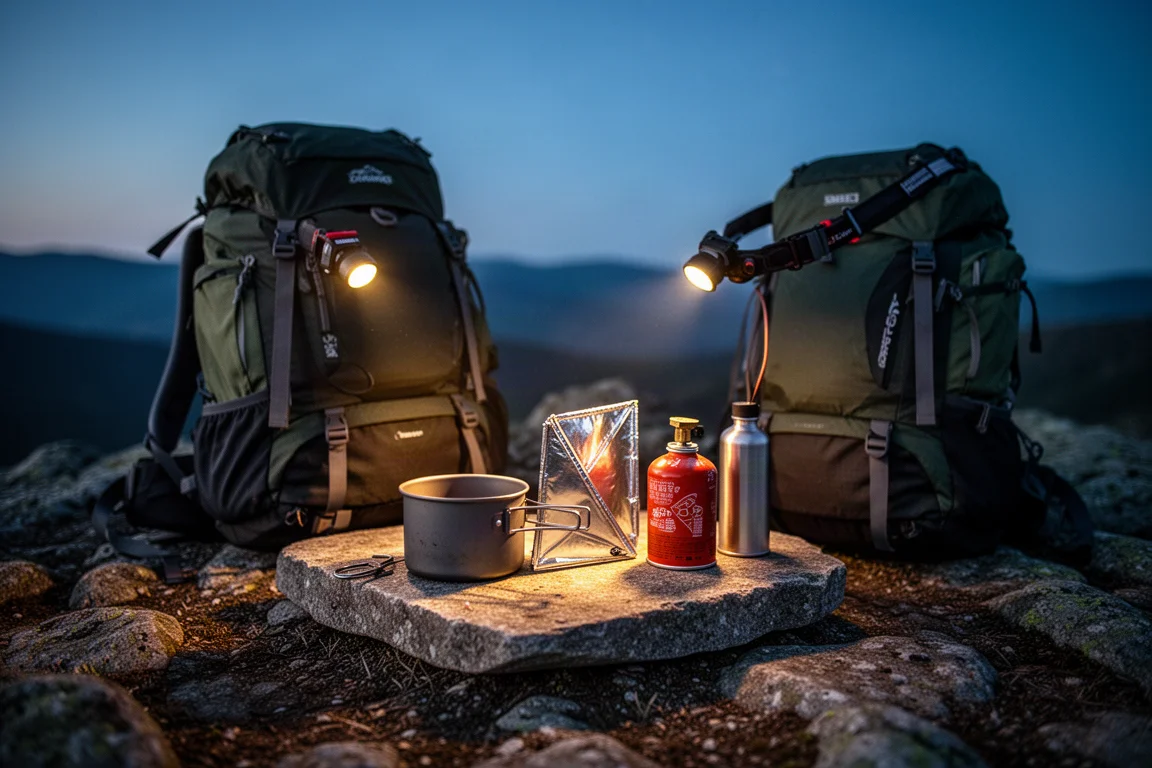
Match the stove to the trip and most of the decision makes itself. If your meals are dehydrated pouches and your priority is a light pack, the Stormin’ Norman Cone or a small canister stove covers everything you need.
If you want to cook real food, the calculation changes. The Trangia 27 with the Trangia Triangle handles frying pans and simmering, runs on fuel you can buy almost anywhere, and will keep working for years. The Jetboil Minimo does the same job faster and with less fuss, at a much higher price and with a heavier pack.
For cold-weather trips, alcohol has the edge because it lights reliably below freezing with a simple wick and the fuel is easy to source. For short trips where speed matters more than weight, an integrated system is hard to beat.
Conclusion
If only one stove could come along, the Trangia 27 with the Trangia Triangle is the pick. It is inexpensive, close to indestructible, its fuel is cheap and available almost everywhere, and the simmer ring gives it enough control to cook properly rather than just boil water.
The Jetboil Minimo is the faster, more convenient stove and the one that gets used most often, but it is expensive, bulky and dependent on canisters that are not always easy to find. That is the trade-off worth thinking about: speed and convenience on one side, simplicity and independence on the other.
Further reading
Related Reviews
Camping Stoves
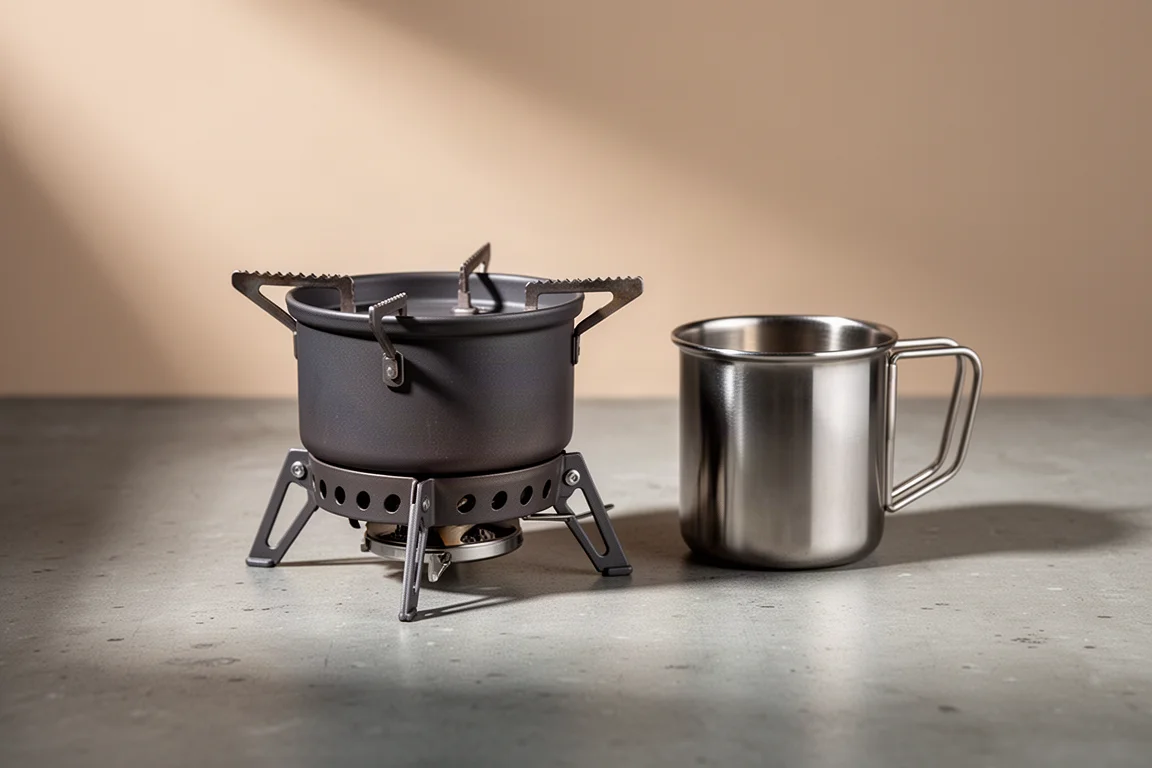
BCB Fire Dragon Mini Cooker Review: A Tiny Folding Stove With Real Trade-Offs
A palm-sized, fuel-flexible folding stove that heats water well enough, but brings flame control, stability, and fuel cost questions worth understanding first.
Camping Stoves
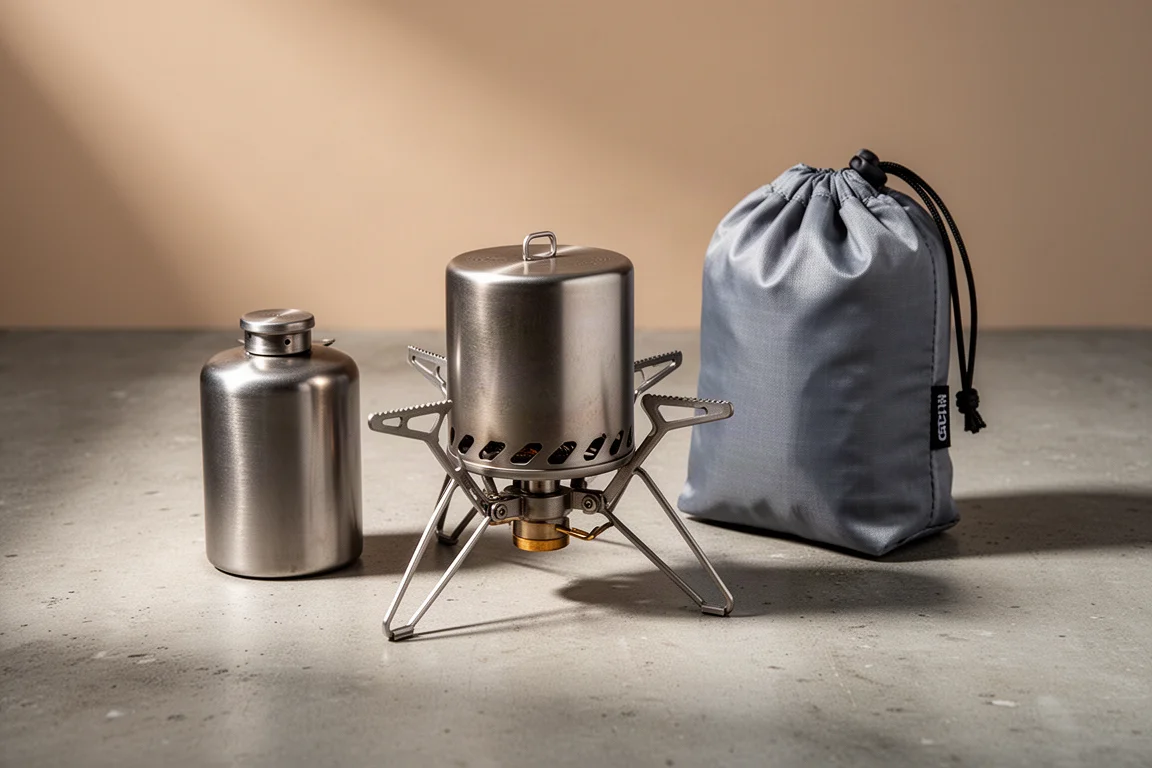
Boundless Voyage Titanium Alcohol and Wood Stove Review: Ultralight Cooking, Two Ways
A titanium alcohol and wood burning stove kit that weighs 4.5 oz complete, boils two cups of water in about 10 minutes, and costs $36.
Camping Stoves
BRS 32 Dual Burner Stove Review: A Folding Two-Burner That Packs Down Flat
A detailed look at the BRS 32, a slim folding dual burner camping stove that expands into a stable cooking platform for around $60.