Kitchen Knives
Best Bunka Knives Under $300: Three Hatsukokoro Picks Worth a Close Look
Three Hatsukokoro bunka knives covering carbon, semi-stainless, and stainless builds, with honest notes on performance, maintenance, and feel.
Introduction
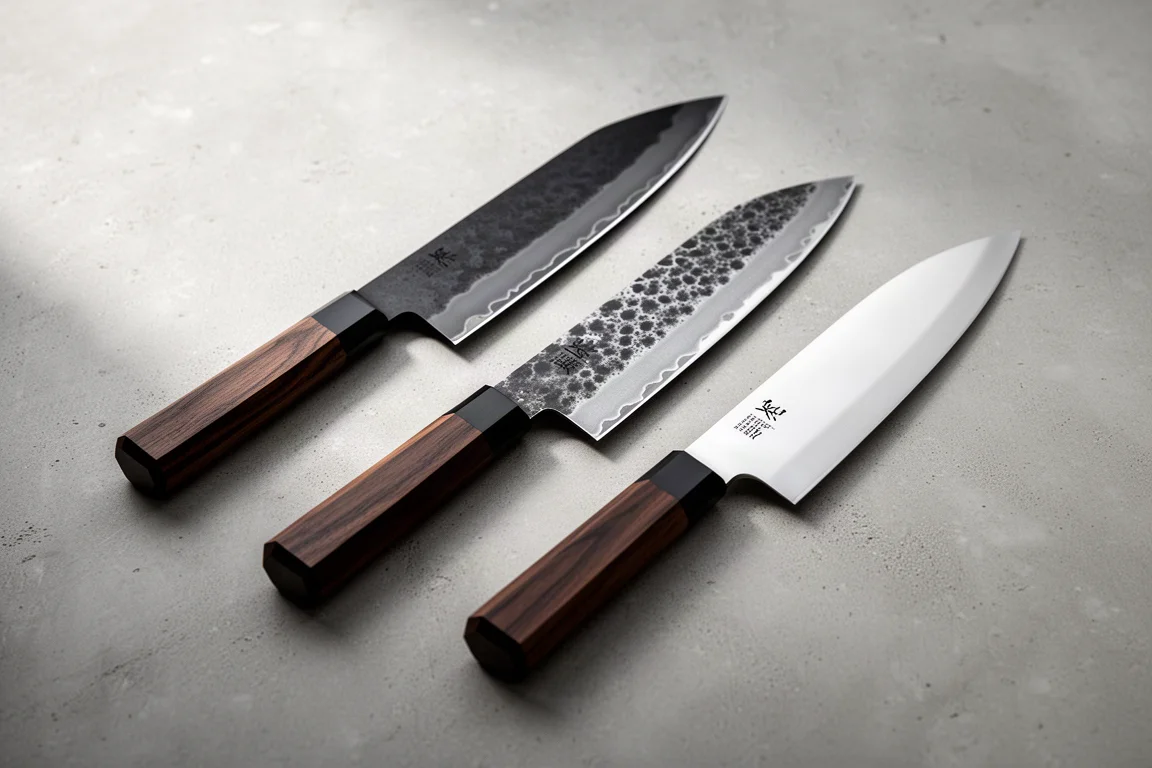
The bunka is one of the most versatile Japanese knife shapes: tall enough for confident up-and-down chopping, with a wide blade that handles vegetables, onions, and everyday prep work without complaint. In the sub-$300 range, three Hatsukokoro bunkas stand out for offering genuinely strong cutting performance without the fragility or the price tag of higher-end blades.
We tested all three through carrots and onions to see how each handles real kitchen work. Here is how they compare.
Hatsukokoro Hayabusa Aogami Super Bunka
The Hayabusa uses Aogami Super steel with stainless cladding, which means the only part of the blade that can rust is just past the clad line near the edge. For anyone getting into carbon steel, this makes maintenance far more forgiving than most blue or white steel knives, and in practice the steel is not especially reactive.
The out-of-the-box sharpness is excellent: it glides through tomato skins with no trouble. It is not as thin behind the edge as some competitors, which actually works in its favor, since this series has a reputation for ruggedness rather than delicacy.
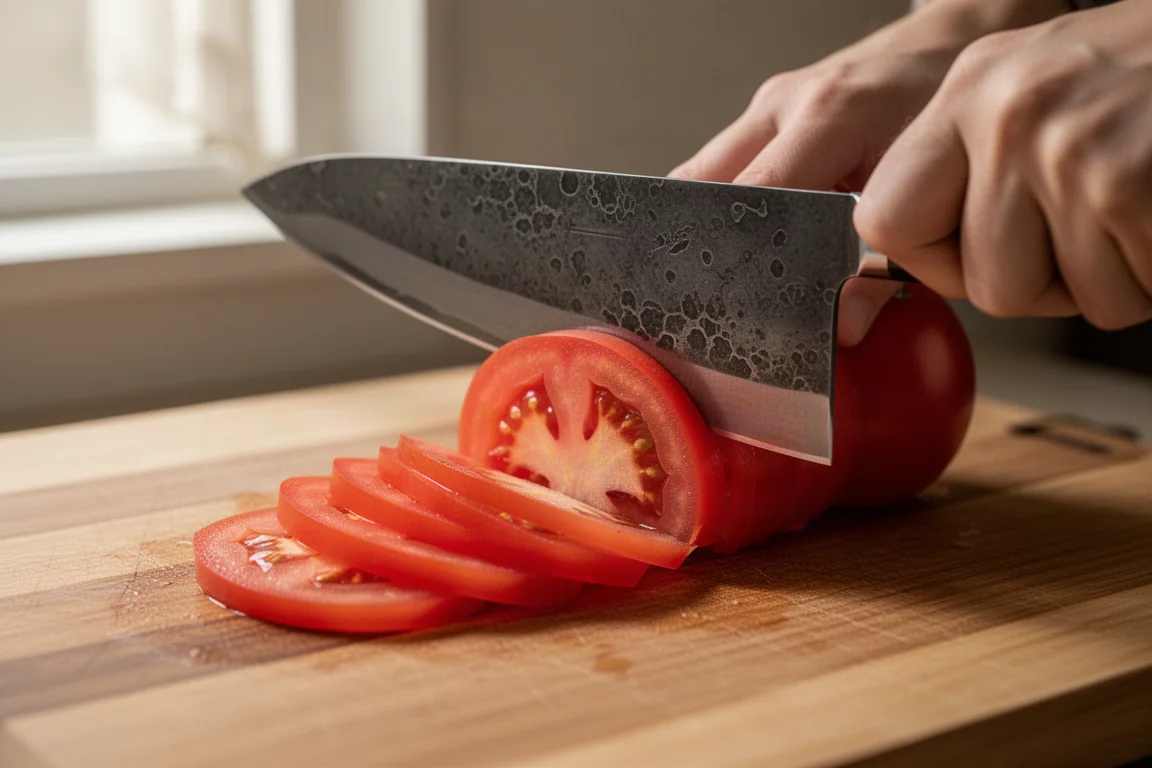
The mono ebony octagonal handle feels great in the hand, and the spine and choil are nicely sanded. The balance point sits slightly further back than some buyers might prefer, but it is not a dealbreaker. The blade is super tall, which makes up-and-down chopping on onions feel especially comfortable, and it has solid food release, likely helped by its convex edge geometry. Of the three, the Hayabusa also has the nicest fit and finish. Aogami Super is a standout steel overall: great cutting performance, easy sharpening, and relatively easy maintenance thanks to added elements that make it less reactive than Aogami #2, and far less reactive than Shirogami steels.
Hatsukokoro Aokitai Bunka 200mm
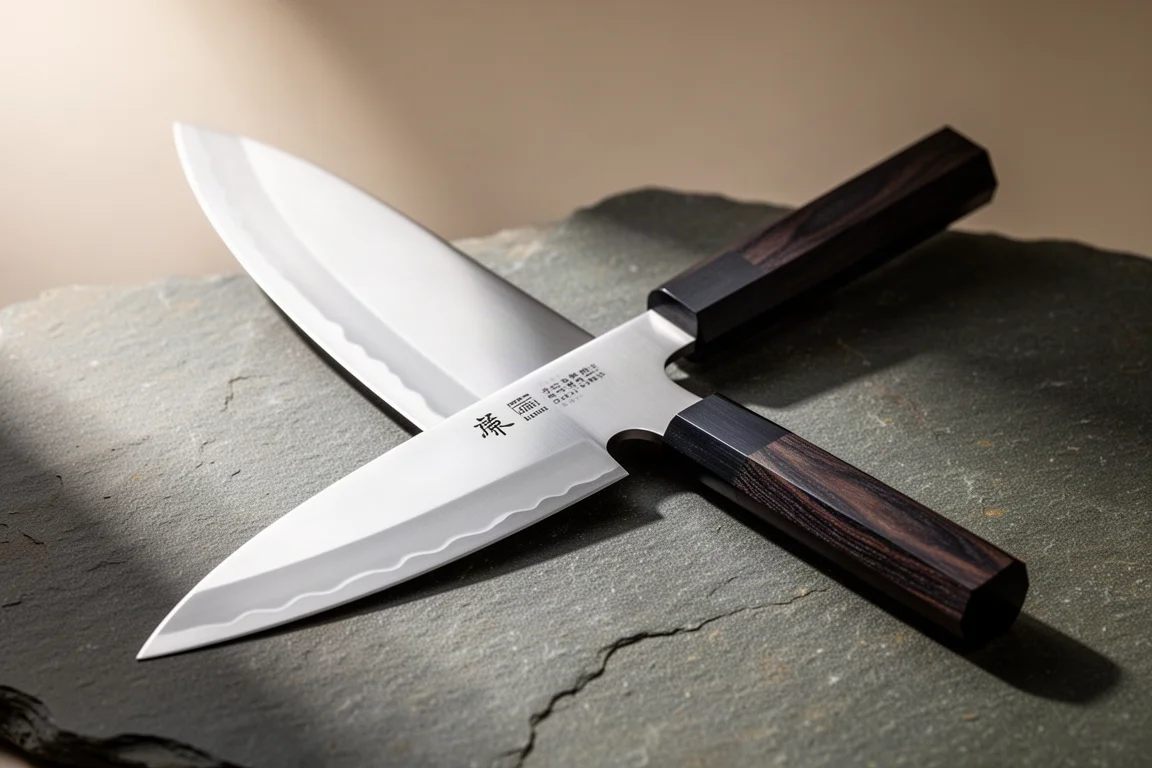
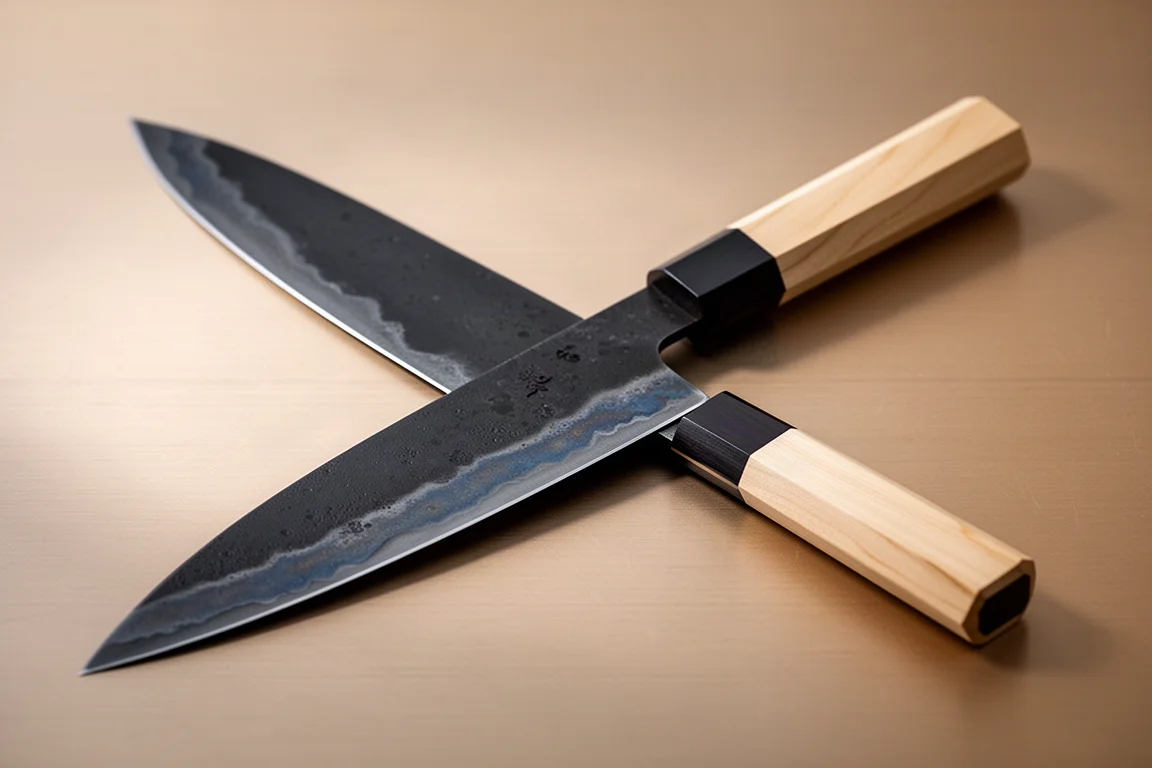
The Aokitai is the longest of the three at 200mm, almost pushing into kiritsuke territory, and it is made from Aogami #2 with iron cladding. It wears a stabilized birch handle with a G10 liner, and it is genuinely one of the prettiest handles in the group.
The trade-off is maintenance. Because of the iron cladding, the whole blade can rust, unlike the Hayabusa where only the area past the clad line is vulnerable. The kurouchi finish helps slow rust down, and a developing patina of black, blue, and dark grey tones protects the blade further and looks great over time. Watch out for red, brown, yellow, or orange coloring, which signals actual rust.
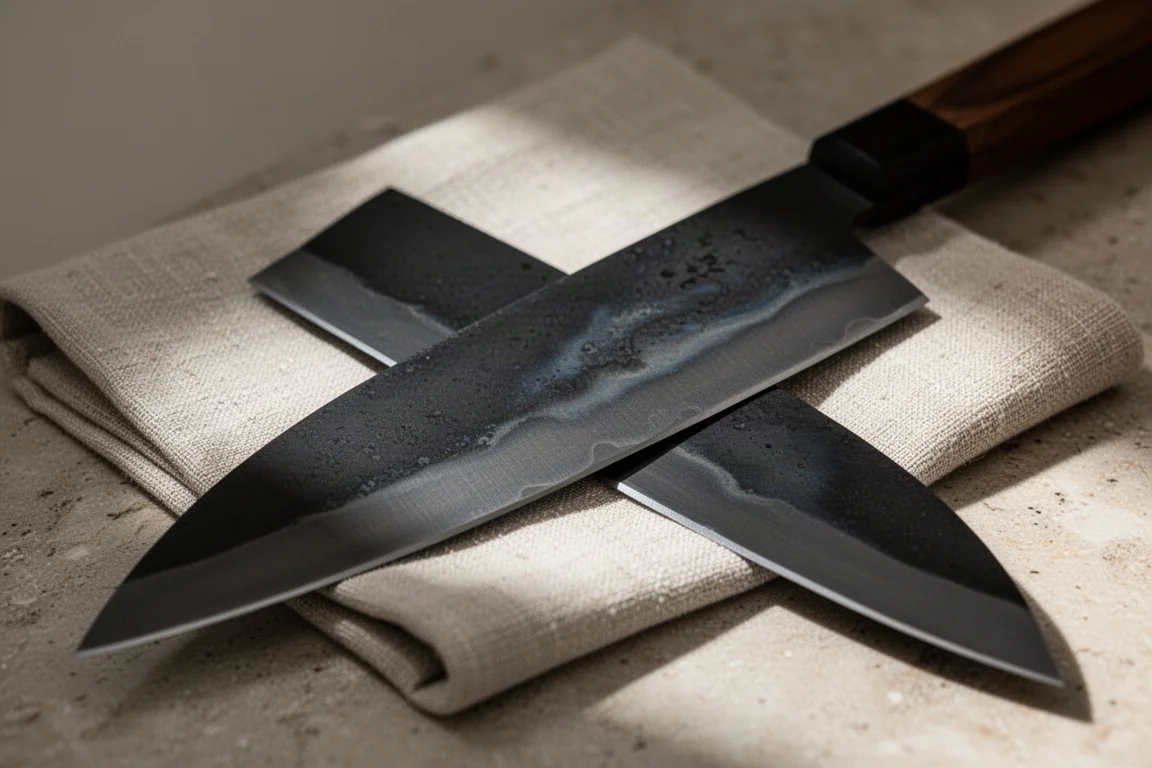
The blade is very thin, super flat, and it moves through food with ease. It is not the most delicate knife in the world, and these have proven popular with few coming back for repairs, but it is not as robust as the Hayabusa. Food release is the weak point here: the more concave geometry means stickier performance on carrots and similar produce. Rock chopping also feels a bit clunky when the flat heel hits the board. Still, the tall blade and nimble feel make slicing and push cutting genuinely enjoyable, and edges on these sharpen up to super sharp with little effort.
Hatsukokoro Ginrei Bunka
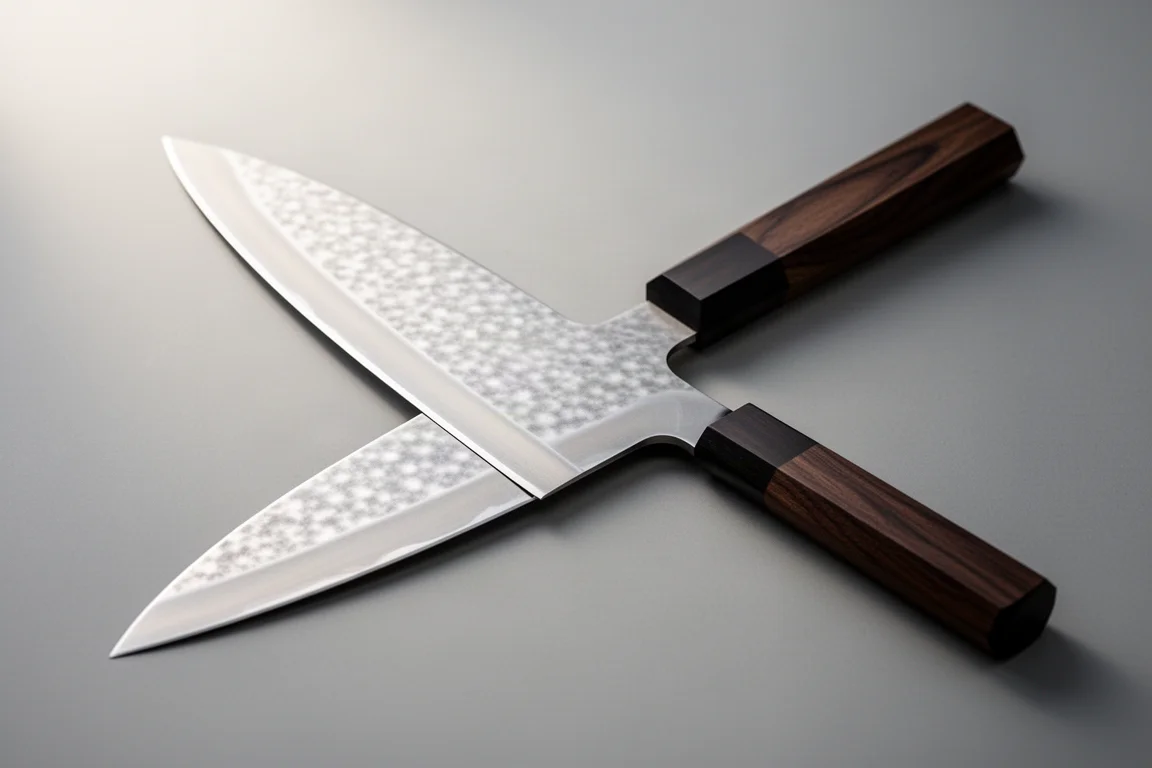
The Ginrei is the fully stainless option of the trio. Technically considered semi-stainless, the steel sits around 10% chromium, below the roughly 14% threshold for true stainless, but with stainless cladding it behaves essentially like a stainless steel knife. You still want to keep it dry and clean, but it is the lowest-maintenance choice here.
Visually, it is the most striking of the three. The nashiji finish catches the light beautifully along the clad line, paired with the same gorgeous handle found on the Aokitai. It is also the most robust knife in this comparison, offering really nice cutting performance without being super delicate.
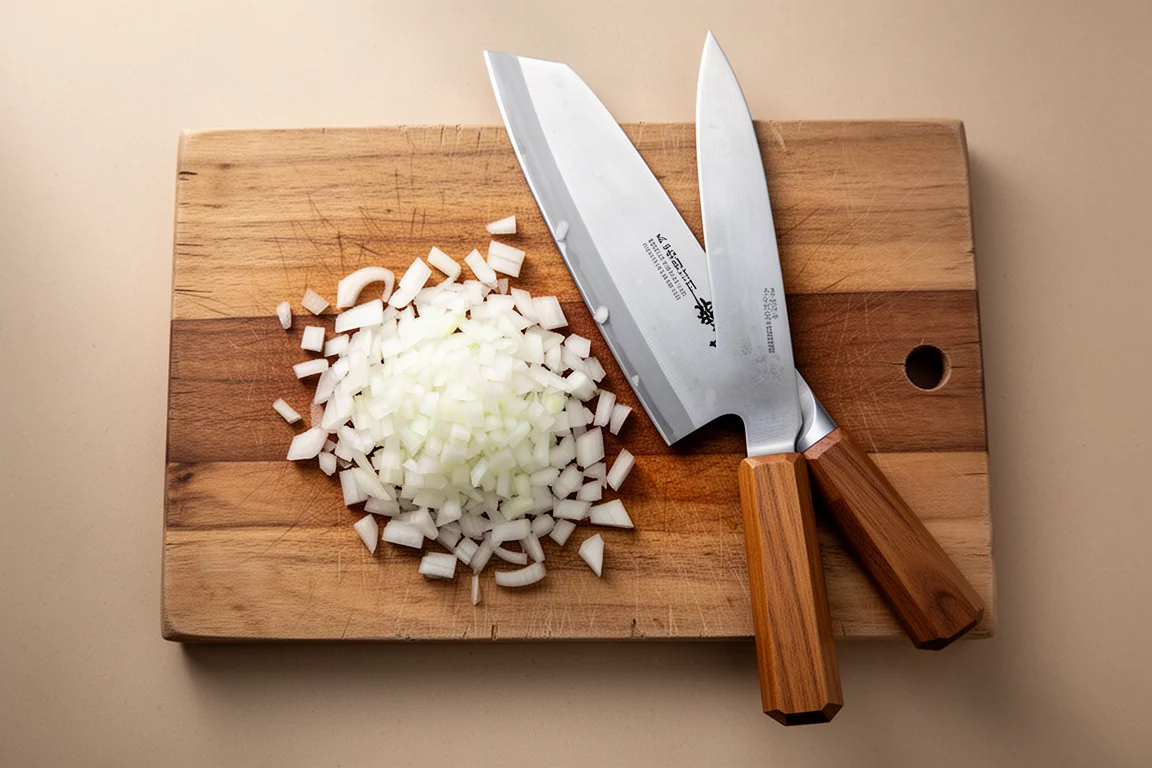
Being the shortest of the three, tougher tasks like carrots and sweet potatoes take a bit more effort than with the longer blades, but it handles them better than expected. It feels great for rock chopping, food release is solid, and the edge out of the box is sharp and tidy. Two honest notes: the balance point sits fairly far back, and the spine and choil are not as well sanded as on the Hayabusa. Even so, it feels fantastic in use.
Which One Should You Buy?
All three are stellar knives; at this level, everything tested performs well, and going up toward the $500 range mostly buys aesthetics rather than meaningful performance gains.
If pure cutting performance is the priority, the Aogami-based options lead the way. If you want strong performance without difficult care, either the Hayabusa or the Ginrei is the better fit. For personal use, the Aokitai stands out for its looks, its thin and nimble feel, and the slight extra heft. For gifting, the Ginrei delivers the biggest unboxing impression with its nashiji finish and beautiful handle. And for the best fit and finish with a tall, comfortable blade, the Hayabusa remains a fantastic pick.
Conclusion
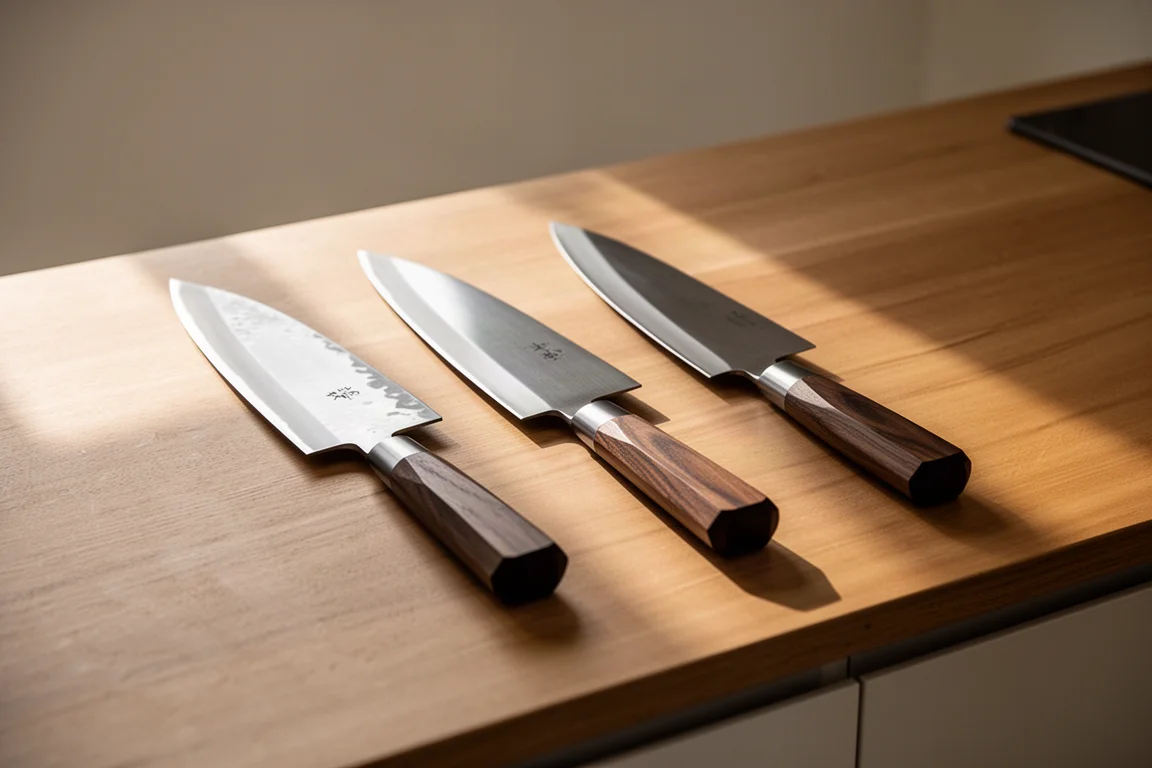
Each of these bunkas earns its place under $300: the Hayabusa for rugged carbon steel with forgiving maintenance, the Aokitai for length, thinness, and pure performance, and the Ginrei for stainless convenience and standout looks. Whichever direction your priorities lean, one of these three is likely to fit.
Further reading
Related Reviews

Kitchen Knives
Best Chef's Knives 2026: 27 Popular Options Tested and Ranked
A comprehensive review of 27 chef's knives ranging from $18 to $380, with honest assessments of handle comfort, blade balance, and real-world performance.

Kitchen Knives
Best Chef's Knives Under $75: Two Tested Recommendations
Two practical 8-inch chef's knives that balance sharpness, comfort, and durability without premium pricing.

Kitchen Knives
Best Chef's Knives 2026: 27 Options Tested and Ranked
A comprehensive review of 27 chef's knives ranging from $18 to $380, with honest assessments of handle design, balance, blade profile, and real-world performance.